
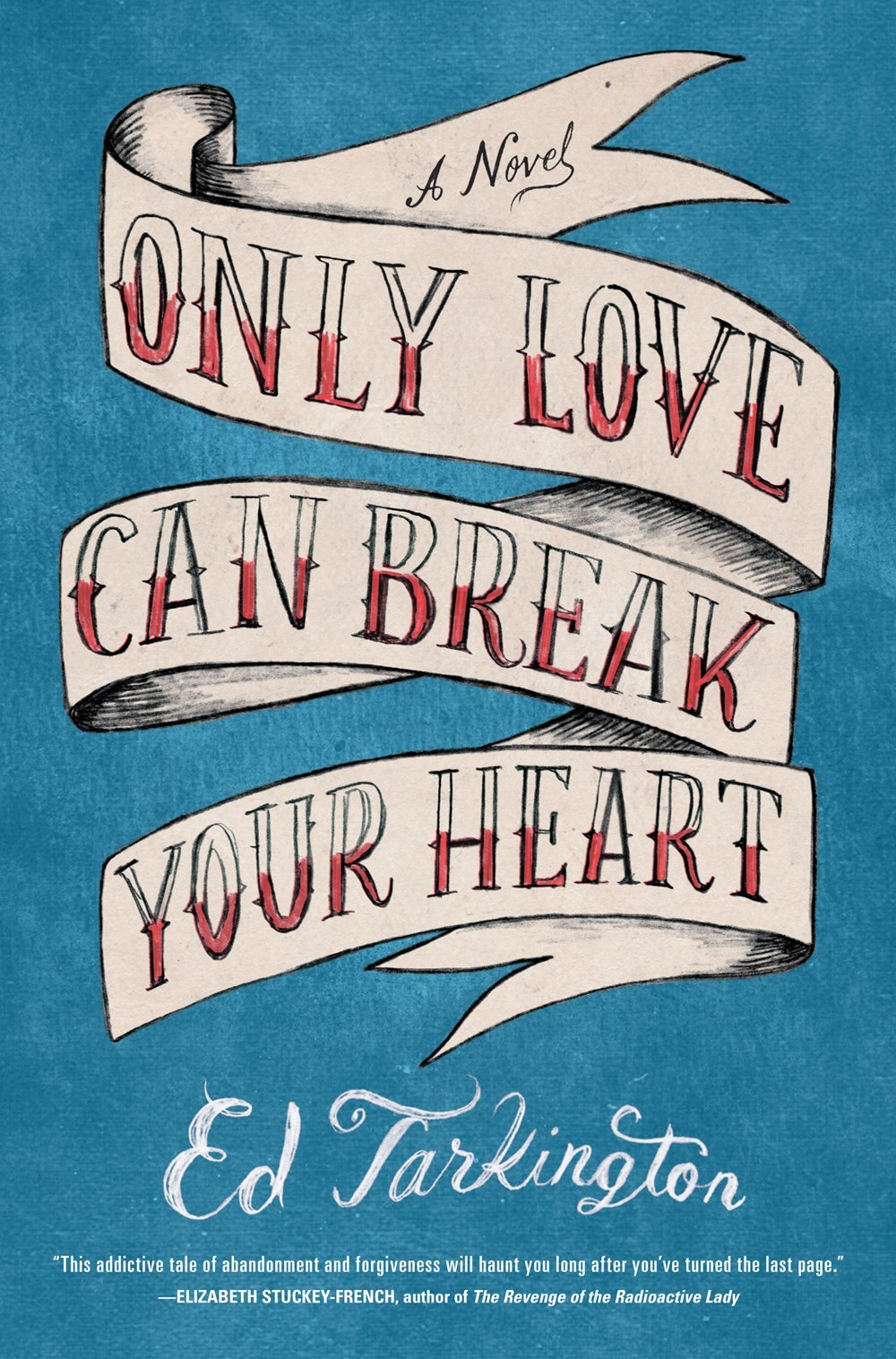
The whole time I was reading Ed Tarkington’s debut novel Only Love Can Break Your Heart, I was having this weird deja vu. I don’t know whether it was specific plot points – although the story isn’t particularly original – or just the book’s general vibe. In any case, it was very reminiscent of M.O. Walsh’s My Sunshine Away or any number of Thomas H. Cook’s mysteries. This is high praise, trust me.
The narrator of Tarkington’s novel is Richard “Rocky” Askew. He’s telling this story from some distant point in the future, but when the book opens he is seven and lives with his father, “the Old Man”, mother, Alice, and his older-by-eight-years step brother, Paul, who “had a reputation around town as a “bad kid.””
Rocky worships Paul, hangs on his every word, and follows him around like a puppy. He is equally smitten with Leigh, Paul’s girlfriend, daughter of the town’s judge. When the novel opens, Paul suggests a visit to Twin Oaks, the huge unoccupied mansion with a violent history near the Askew’s property. Turns out, someone (Brad and Jane Culver) has purchased the house and Paul is shot on the property. This incident sets off a strange chain reaction of events – perhaps too many for one book – that includes a failed business deal, a romantic tryst between a teenaged Rocky and the Culver’s adult daughter, Patricia, and a double homicide. This murder comes late in the novel and propels the novel’s final chapters forward to its tidy conclusion.
Only Love Can Break Your Heart is not a story which is driven by plot. This is a story about family, love, regret. The novel takes place, for the most part, in the 70s and 80s. Paul introduces to Rocky to music, including Neil Young, whose song “Only Love Can Break Your Heart” provides the title of book. This is a novel that is very much steeped in a time and place. That’s one of the novel’s admirable traits. Actually, there is a lot to like about this book even though sometimes I felt like I wanted more of one thing (why did Paul “kidnap” Rocky; where did Paul disappear to and why?) and less of another (the choice of Equus as the high school play felt a little too on the nose).
Still, I enjoyed my time with Rocky and although there wasn’t a huge emotional payoff at the novel’s conclusion, this was still a great read.
 The Ludic Reader