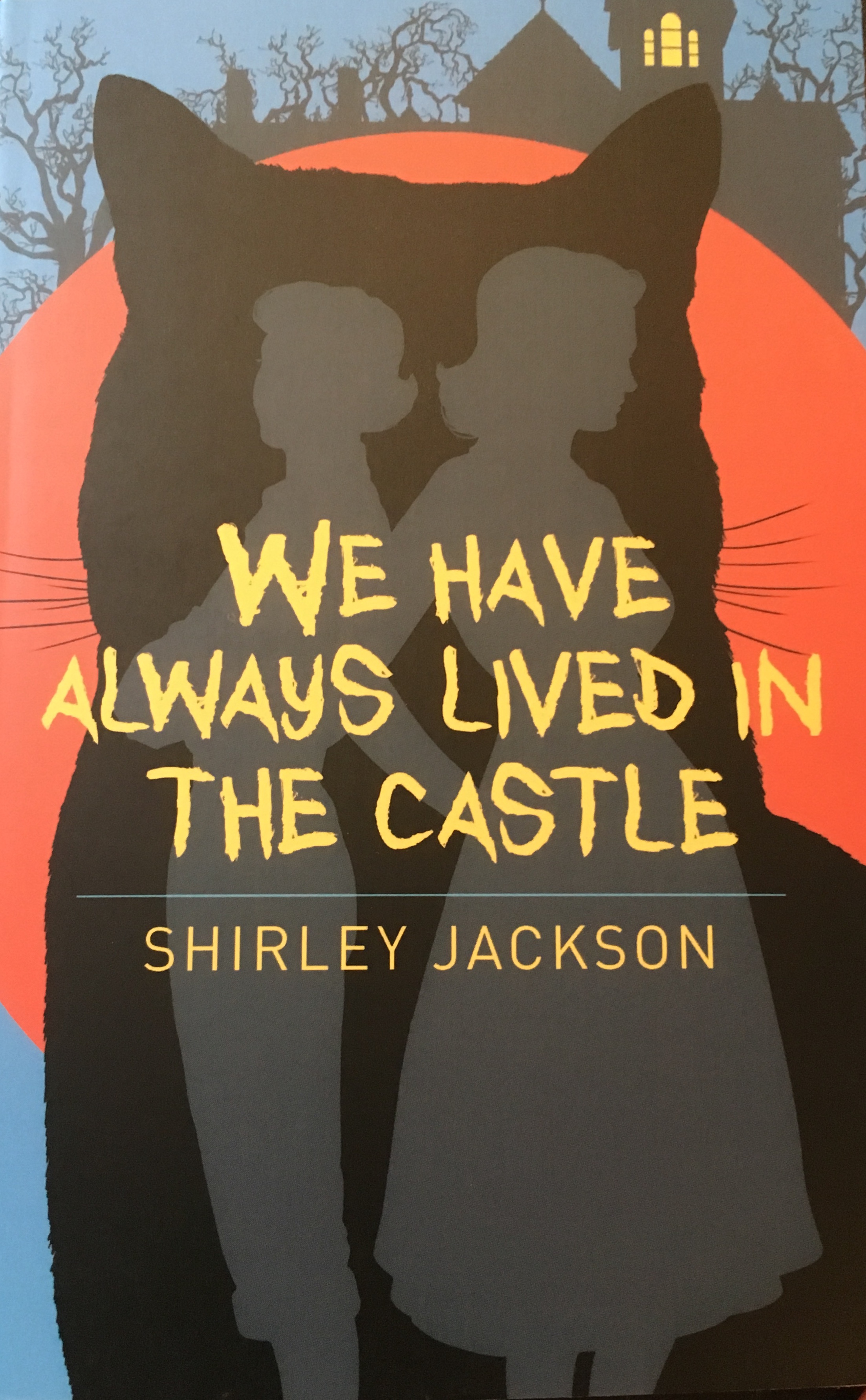
Published in 1962, We Have Always Lived in the Castle is Shirley Jackson’s sixth and final novel. Jackson died three years after its publication, at the age for 48. I am, of course, aware of some of Jackson’s work. We always teach her short story “The Lottery” at school and I watched the creepy adaptation of her novel The Haunting of Hill House on Netflix when it came out a few years ago. I have always wanted to read We Have Always Lived in the Castle, but somehow I never got around to it. Until now.
Mary Katherine, or Merricat, our narrator, lives with her older-by-ten-years sister, Constance, and wheel-chair bound uncle, Julian, at the Blackwood estate. “Everyone else in my family is dead,” she tells us. Their life is very isolated and part of that has to do with the fact that Constance was accused (and acquitted) for poisoning the rest of her family. The people in the village regard them with hostility and suspicion. In fact, Constance has become a bit of a recluse, meaning that it falls to 18-year-old Merricat, to run the errands.
Fridays and Tuesdays were terrible days, because I had to go into the village. Someone had to go to the library, and the grocery; Constance never went past her own garden, and Uncle Julian could not. Therefore it was not pride that took me into the village twice a week, or even stubbornness, but only the simple need for books and food.
It is clear that this is not a normal household, but it is also clear that Merricat and Constance love each other. Merricat has taken it upon herself to protect her significantly depleted family. She buries precious objects in the woods surrounding the property and casts spells, but things change when their cousin Charles arrives. It is clear that he is a charming grifter and starved for attention, Constance falls under his spell. Merricat is not so easily persuaded and she does whatever she can to make him go away.
If you are looking for a book with an unreliable narrator, this one will definitely do the trick. This house is full of secrets, and not all of them will be answered–but that’s part of the book’s charms. The climax of the story is unexpected and dramatic and the family dynamics are unsettling. It’s a short book, but it packs a punch.

