
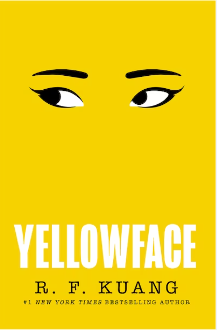
R. F. Kuang’s novel Yellowface — a book about as buzzy as its possible to be right now — is the story of June Hayward, a struggling writer with one mediocre published novel under her belt. June is “friends” with Athena Liu, a celebrated Chinese-American novelist, who shot to fame after her debut novel was published and has since gone on to further acclaim and a Netflix deal. (Here’s how readers will know that this book is very much of the moment; it’s not enough to be published — you want to be nominated for awards, Internet famous, and optioned for a streaming service adaptation.)
The truth of the matter is, June doesn’t really like Athena all that much. Athena doesn’t have any friends and June is convinced that people find her as “unbearable” as she does.
She’s unbelievable. She’s literally unbelievable.
So of course Athena gets every good thing, because that’s how this industry works. Publishing picks a winner – someone attractive enough, someone cool and young and, oh, we’re all thinking it, let’s just say it, “diverse” enough – and lavishes all its money and resources on them.
June is not without some talent, but she’s just “brown-eyed, brown-haired June Hayward, from Philly.” No one is interested in stories by white female writers. When Athena dies accidentally (not a spoiler — the novel’s first line tells us this happens), June does the unthinkable: she steals an unfinished manuscript from Athena’s desk. The manuscript needs some work, but June can see that it is a “masterpiece.” The problem is that it’s the story of the “unsung contributions and experiences of the Chinese Labor Corps”, a subject about which June knows nothing. It’s barely even a draft, but June acknowledges that she can “see where it’s all going and it’s gorgeous.” It’s so gorgeous, that June feels that she should finish it.
I know you won’t believe me, but there was never a moment when I thought to myself, I’m going to take this and make it mine. It’s not like I sat down and hatched up some evil plan to profit off my dear friend’s work. No, seriously – it felt natural, like this was my calling, like it was divinely ordained.
This is a novel that is tuned into the publishing world, the social-media-famous landscape, and online bullies. When June/Athena’s novel is published to critical acclaim, June feels validated and deserving. There’s no imposter syndrome here because she feels as though she worked every bit as hard on the novel as Athena did. So what if she’s not Chinese (as some of the critics says). She did her research. When there is any criticism of the book, June can chalk it up to Athena’s contribution: she always knew Athena was a fraud. The only thing she had going for her was the fact that she wasn’t white.
This novel seems very timely given the trouble other writers have faced because they were writing from a point of view that was clearly not part of their experience. (American Dirt springs to mind.) If you are a voracious reader and pay attention to things that happen on social media, you’ll certainly get some of the references Kuang makes.
June isn’t a particularly likeable character– neither is Athena for that matter. June isn’t trying to hide her theft from herself or the reader, but she does spend a lot of time justifying it. I ripped through this book waiting for the other shoe to drop and loved every minute of it.
 The Ludic Reader