Slightly Foxed is a company that is making books – one at a time. The process is so personal; it is just one reason why books are – imho – superior to eReaders.
Read the story at The Telegraph
Slightly Foxed is a company that is making books – one at a time. The process is so personal; it is just one reason why books are – imho – superior to eReaders.
Read the story at The Telegraph
We readers often dream of having the perfect spot to curl up with a good book. Huffington Post has found sixteen!
Simon is one of the most prolific readers and writers I’ve met in the blog world. His site is chock-a-block with reviews and bookishbits. He writes “Savidge Reads to stop boring everyone he meets who may not be a book addict with tales, fact and reviews of books he has read, wants to read or you must read.”
Simon’s blog is a great place to connect to the book world, particularly in the UK, and he has has fingers in a lot of book pies. If you are new to book blogs – Savidge Reads is a great place to start.
By now you’ve probably all figured out that I own more books than I’ll ever be able to read – unless I live to be 100 with my eyesight and brain intact. Of course, I don’t care that I have too many books. Seriously, I don’t. And I no longer have any real angst over putting aside books that I don’t like. I give them a fair shake and then, well, I send them to The Book Graveyard.
Books are like a relationship.
I am superficial. I am attracted to the pretty. (Don’t judge me.) I like a nice cover and a good blurb. I like a book that sucks me in from the opening lines and holds me by the throat until the final pages. Okay, wait a minute, that sounds a bit like I am attracted to psychopaths.
Some books demand a little more from you. They aren’t superficial; they want a relationship with you. And they make you work for it. Often times I start a book and, for whatever reason, I just don’t get into them. The Book Thief springs to mind. I also set aside The Knife of Never Letting Go because after the first couple of lines, which I loved, I just wasn’t feeling it. I returned to both of those books after a short hiatus and as many of you know, I have raved about them incessantly. Other books challenge you from the start and keep challenging you until the final page is turned. I think of A.S. Byatt’s Possession.
So, what is it then? Why are some books hard work, but worth the effort, while others are not? Why do books that don’t grab you one day, seem un-put-down-able a few days later? Why are some books re-readable year after year?
Here is a list of reasons I will break up with my book.
1. Style over substance. Okay, like I said, I am attracted to the pretty. But I am also more – how should I say this – seasoned. I am less enthralled by a beautifully written book with nothing to say. It doesn’t take long for the pretty to wear off. I’ll compare it to being at the bar. Across the room you see this gorgeous guy. You make eye contact. Then you realize he isn’t actually looking at you; he’s looking at his reflection in the mirror behind you. A book that works so hard to be literary, to impress, but is really just naval gazing loses my interest pretty fast.
2. Unbelievable characters. I don’t have to like the characters, but I do have to believe in them. Even if the author has chosen to put them in crazy situations, I want to share their journey. I can’t travel with characters who fail to earn my respect or admiration or sympathy. So, I’m back at the bar. Handsome guy across the room. Eye contact made. You move towards each other. He buys you a drink. Then he starts talking and after about five minutes you realize he’s as dumb/self-involved/humourless/dull… as a pet fence. You stop listening to him because you stop caring about him. Characters like that.
3. S-L-O-W/tooquick plot. Not every novel is driven by plot. Some stories don’t depend on what happens as much as to whom it happens. I don’t have a preference. Pacing is everything. Back at the bar, you’ve consumed your drink(s); there’s potential. And then he sticks his tongue down your throat. Whoa, buddy, didn’t see that coming! Timing is everything. If you are building suspense, build it. If your characters are going to do the horizontal mambo, let them take their time; but if nothing happens for page after page after freakin’ page while the author describes cutlery and grass clippings, sorry, it’s over. Or, if without any character development or too much exposition the book lands me in an unreasonable place, we’re through.
4. Bad writing. Come on. Who is going to slog through a poorly written book? Not me. Not anymore. It’s amazing to me that these things get published! I mean, Twilight, okay. New Moon. Seriously!? And two more after that? Yikes. Books like that come with buzz – like your handsome friend at the bar. Until he opens his mouth and, dude, you need some breath mints or something.
I might give a book a second chance. I have, too, because sometimes I’m not on my game. Or – my bar friend is all that and a bag of chips, but I’m just not in the mood. Other books have languished on my shelves for years and years because I have it in my head that I should read them: William Trevor’s The Story of Lucy Gault, which I have attempted more than once and never get past page 50; 0r Stephen King’s The Stand, which always flummoxes me with too many characters; or Jayne Anne Phillips’ Shelter, which I’ve owned for 20 years, tried to read on several occasions and still can’t get into. I just can’t seem to quit those books. Yet. They’re like that guy at the bar – not so flashy, kind of awkward, tries too hard – but you keep giving them another chance to impress you.
The perfect book is like the perfect relationship. All the stars align. You’re ready for each other and you come together with realistic expectations which are perfectly met. Sure, there might be rough patches, but you work through them. And when you finish that final page, you take that book with you in your heart. Like a good partner. Okay – maybe even better.
Riel Nason, author of the terrific novel The Town That Drowned, tweeted this morning about some book purses she found on Etsy. Riel, who is very crafty herself (check out her beautiful quilts) wondered how she felt about books being turned into purses. Novel Creations takes hardcover books and repurposes them into pretty little handbags.
I actually have a book purse. Years ago I came across them at a craft sale. I think I paid $12 for mine.


A quick Google search yielded some great (or, okay, strange) ideas for repurposing your old books.
9 Ways to Turn Old Musty Books Into Something Cool
Cool Non-Literary Uses for Books
80 Awesome Ideas For All Your Old or Unwanted Books
And this Pinterest page offers New Uses for Old Books
I’m not crafty – but some of these ideas are sort of cool. What do you do with old books?
When I was a kid I consumed a lot of historical romances aka bodice rippers. You know – books with handsome, muscled men and beautiful virginal women with breasts falling out of their dresses on the cover. I believe Fabio featured as the model on many of those covers back in the day.
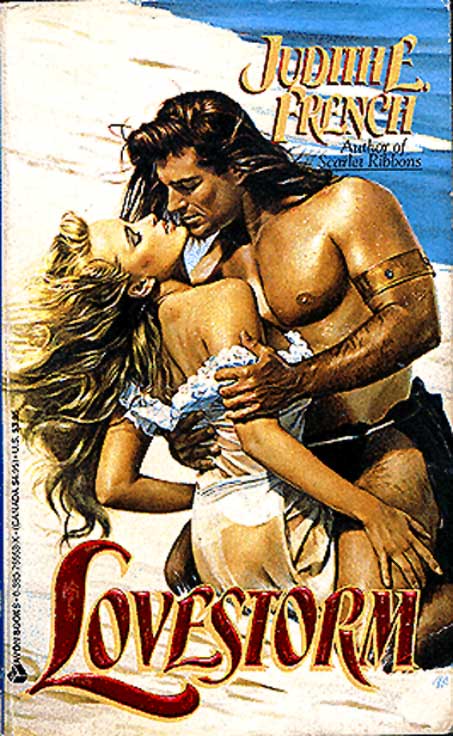
I was partial to Kathleen Woodiwiss and Rosemary Rogers. These were authors that my mother read and, shockingly, there was a lot of s-e-x. And even more euphemisms. All I really remember about the books was was that the sex was pretty graphic, and having had no real-life experience, pretty um…wow.
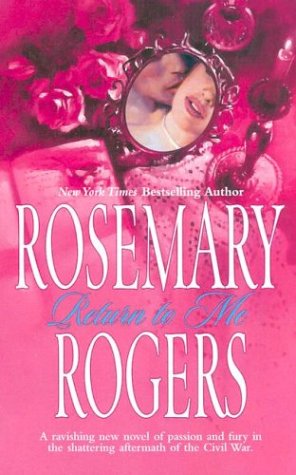
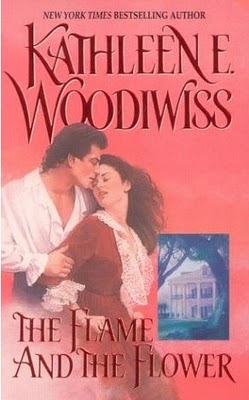 My grandmother was a big consumer of Harlequins, but I never really liked them all that much. After reading Rogers and Woodiwiss, the stories seemed rather tame by comparison. I was no longer a romance virgin and I wanted the good stuff. (Even though I was clearly too young to know what the “good stuff” was, exactly.)
In my early twenties I discovered LaVyrle Spencer and I still remember the day I started reading her novel Morning Glory. I fell totally under Ms. Spencer’s thrall and read into the wee hours of the morning. I consumed several more of her novels after that before I sort of tired of the genre.
Many of my friends would call me a romantic and yeah, okay, I’d probably say the same thing about myself. I suppose I only have these books to blame. Where else would I get the idea that some big strappin’ hunk of guy was going to swoop into my life and make everything better? Of course, I now realize it’s ridiculous – and I am perfectly capable of looking after myself and have been for years – but still {insert sigh}. Those breeches. That hair. Those muscles. {shakes head} Sorry. Ridiculous. Of course, I’d want an equal partner in everything and modern romance novels get that, I think. Women don’t need men to complete them.
Back on Valentine’s Day, I did a huge post about romance – the most romantic moments in fiction (including tv and movies because those characters had to be written before they hit the screen.) Revisit let’s talk about love.
Stylist.co.uk just posted a list of the Top 50 Most Romantic Lines from Fiction. I’d love to hear your favourites.
Flavorwire has come up with a pretty good list of fictional bookstores, although I felt compelled to add Carlos Ruiz Zafon’s Cemetery of Forgotten Books from his novel The Shadow of the Wind. (I realize it technically doesn’t count, but it always sounded like a pretty cool place to me!) I also always loved Ellen’s bookstore, Buy the Book.
Do you have a favourite fictional bookstore?
“The origin of the Latin word for book, liber, comes from the Romans who used the thin layer found between the bark and the wood (the liber) before the times of parchment. The English word comes from the Danish word for book, bog, meaning birch tree, as the early people of Denmark wrote on birch bark.”
This interesting book fact came from The Wee Web. There are many more to be found there.
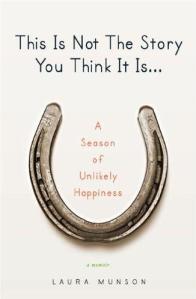 When Laura Munson’s husband of 15 years (together for 20) tells her he doesn’t think he loves her anymore, that he doesn’t know whether he ever did, Munson’s reaction is unusual. She tells him she doesn’t buy it. Say what? Having been in a similar position myself, I applaud her position. And it is a position, one that she defends over the course of one long, hot Montana summer. She loves her husband, David. They have built a life together away from their priviledged backgrounds. They have children together. Their finances are a tangled marital web. But what Munson sees are all the positives and decides to take her happiness into her own hands and hopefully rechart her marital course.
I wonder if This Is Not The Story You Think It Is might have helped me in those early days after my husband left me? If I had adopted Munson’s ‘honey, you need to find your own truth and happiness, but do not make me the fall guy’ stance, would it have made any difference? I sincerely doubt it. I certainly see the similarities between my life and Munson’s. Like her husband, mine was/is clearly trying to relive the glory days (my God, mid-life crises are predictable!). Unlike Munson, though, I didn’t have a plan; I had fetal position grief, disbelief, anger. In fact, I was the poster child for the five stages of grief. Thankfully, I have amazing kids and thus a reason to at least attempt business-as-usual. And I have supportive friends and family. And, thankfully, the worst of the grief has passed.
Munson’s tact was proactive rather than reactive – amazing considering she didn’t see her husband’s confession coming. Somehow she found the quiet centre of her heart, the place where she was able to take a breath and consider her options. The few people she told offered their own sage advice – much of it reduced to “kick the asshole to the curb.” And she would have been within her rights, of course. Her husband was certainly acting like an ass: he went out and didn’t come home and he didn’t call, and when he did come home he was usually drunk and slept the day away, he broke promises to his kids. He went dirt biking and fishing and golfing with ‘the boys’. Except, Mr. Munson wasn’t a boy – he was a barely employed 40-something with a mortgage and two kids. Through it all, Munson bit her tongue because “the definitive truth I know for sure is this: my husband is in crisis, whether or not he is having an affair. Whether or not he loves me. And I love him.”
Wow.
In this day and age of replacing the broken stuff with newer, cheaper stuff, Munson’s attitude is laudable. She’d invested a lifetime in her marriage. She and her husband had built a life together, had children together, wanted the same things for their futures. Munson wasn’t just going to walk away without a fight. Except, even more admirably, she wasn’t fighting. Instead, Munson says this:
I’m not going to try to justify his behavior, because I know it’s not justifiable. I simply want to understand instead of freak out. It’s not behavior I’m willing to put up with for too long. Whatever “too long” will come to mean. But in the meantime, am I to react to the part of society that wants us to lie about our marriages being somehow perfect? Until they’re not. Black and white. One false move and you’re out.
…
But I’m opting for a different strategy, and I’m going to believe it will work in a way that fighting, persuading, and demanding never have. Because whether or not he comes back to me, I will be ultimately empowered by my committment not to suffer. It’s a way of life. A way to life.
This Is Not the Story You Think It Is is remarkable in its honesty, its humour and its hope. I wish my marriage had had a different ending; I wish it with all my heart. But I can’t change what has happened. I can, however, follow Munson’s advice and take responsibility for my own happiness. Like her, I choose not to suffer.
 I honestly don’t know what to make of Sonya Hartnett’s YA novel, Surrender, except to say that days after I finished it, I am still thinking about it.
I am dying: it’s a beautiful word. Like the long slow sigh of a cello: dying. But the sound of it is the only beautiful thing about it.
Meet Anwell. He’s 20 and some unnamed disease (some degenerative disease or cancer, maybe) is eating him up, slowly and painfully. Confined to a bed, tended to by his Aunt Sarah, he is spending his final days on earth remembering all the days that came before.
Hartnett’s novel is not a straightforward tale. I am a pretty proficient reader and sometimes I really felt lost in the story. I definitely felt lost in the prose, which is beautiful.
Breathing is an undertaking: it takes minutes to sigh. My ribcage is the hull of a wrecked and submerged ship. My arms, thin as adders, are leaden as dropped boughs. the mattress, my closest friend, has been carved by the flesh of my unfleshed bones into a landscape of dents. The soul might rise, but the body pulls down, accepting the inevitable, returning to where it began.
Anwell – or Gabriel as he is called by his closest (only) friend, Finnigan, lives in a scrubby community somewhere in rural Australia. His father, a lawyer is distant; his mother is frail. Neither of them pay very much attention to Anwell. Anwell had an older brother, Vernon, but he’s dead now. Anwell is responsible. And this is where the story gets tricky.
I have a theory abut the book, but despite having read several reviews I haven’t found anyone else who might share it.
*spoiler alert*
*spoiler alert*
I actually don’t think that Finnigan is real. I think the fact that Anwell killed his brother damaged him irrevocably. The further the book went along, the more convinced I was that Anwell had suffered from sort of psychic break and that Finnigan was a manifestation of a sick mind.
Whether I am right or wrong, though, does not detract from Hartnett’s vivid, poetic prose, or the novel’s heartbreaking conclusion.
 The Ludic Reader