Twisted – Laurie Halse Anderson

When I started Laurie Halse Anderson’s YA novel Twisted, I was sure that it was going to be a five star read. A few years back, predating this blog, I read this author’s award-winning book, Speak, which tells the story of a young girl who is sexually assaulted at an end-of-the-summer party and chooses to spend her sophomore year mute.
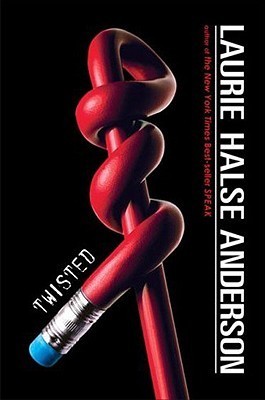
Twisted is the story of high school senior Tyler Miller. At the end of grade eleven, he gets in a bit of a pickle by doing graffiti on the school. He has spent most of his high school years as a bit geek, a video game nerd who is either ignored or bullied. But during the summer between junior and senior year, in an effort to make some money to pay for the damage and as part of his court mandated restitution, Tyler gets a job (and a new physique) doing maintenance work at the school (restitution) and landscaping for Mr. Pirelli ($). He starts his senior year a different person, on the outside at least.

…the labor had turned me from Nerd Boy into Tyler the Amazing Hulk, with ripped muscles and enough testosterone to power a nuclear generator.

Tyler has a massive crush on Bethany Milbury, the “Alpha Female of George Washington High–the most beautiful, the most popular, the Queen Bee. She was also the daughter of my dad’s boss, and the sister of the guy who had been making my life hell for years.” Still, it seems Tyler’s changed appearance is not unappealing to Bethany and suddenly it seems like Tyler’s wet dream might become reality.

Twisted is more than just the story about the guy getting the girl (plus he doesn’t actually get her in the end.) This is a story about complicated family relationships, being true to yourself, mental health, friendship, siblings. I was so sure I was going to LOVE it because Tyler’s voice was so funny in the beginning and I was really rooting for him to get his shit together.

Somehow, though, the story loses its early momentum and some of its themes feel under developed. So, while the pay off wasn’t exactly there for me, I still think Twisted is a worthwhile read and many teenagers, particularly young men, will likely find it relatable.

Claiming Georgia Tate – Gigi Amateau

Twelve-year-old Georgia Tate lives with her maternal grandparents in Ripley, Mississippi. Her mother is dead and her father, Ray, lives with his wife, Sissy, in Florida. Let’s just say it: he is an awful human being. When Gigi Amateau’s novel Claiming Georgia Tate begins, Georgia is actually in Florida visiting her father, but it is soon clear to both Georgia and the reader that she is not safe.

Georgia’s life in Ripley is safe and happy. Her grandfather is the town preacher who takes Georgia fishing and clearly loves her. Her grandmother, while no nonsense, is supportive and loving. Georgia’s life is filled with small-town things: church, family meals, community. She can’t really imagine any other life and then two things happen in quick succession. She finds out a family secret and she is sent to live with her father permanently.

It’s hard to say much more about the book. It’s not very long and it’s not really driven by plot. This is a book about family, both the family you are born to and the family you find along the way. Georgia is lucky to meet a couple characters later in the book who end up being instrumental to her survival.

Your heart will break for Georgia Tate, but you will also be reminded of the goodness that exists in the world, and that’s a reminder we can certainly use right now.

The Way I Used to Be – Amber Smith

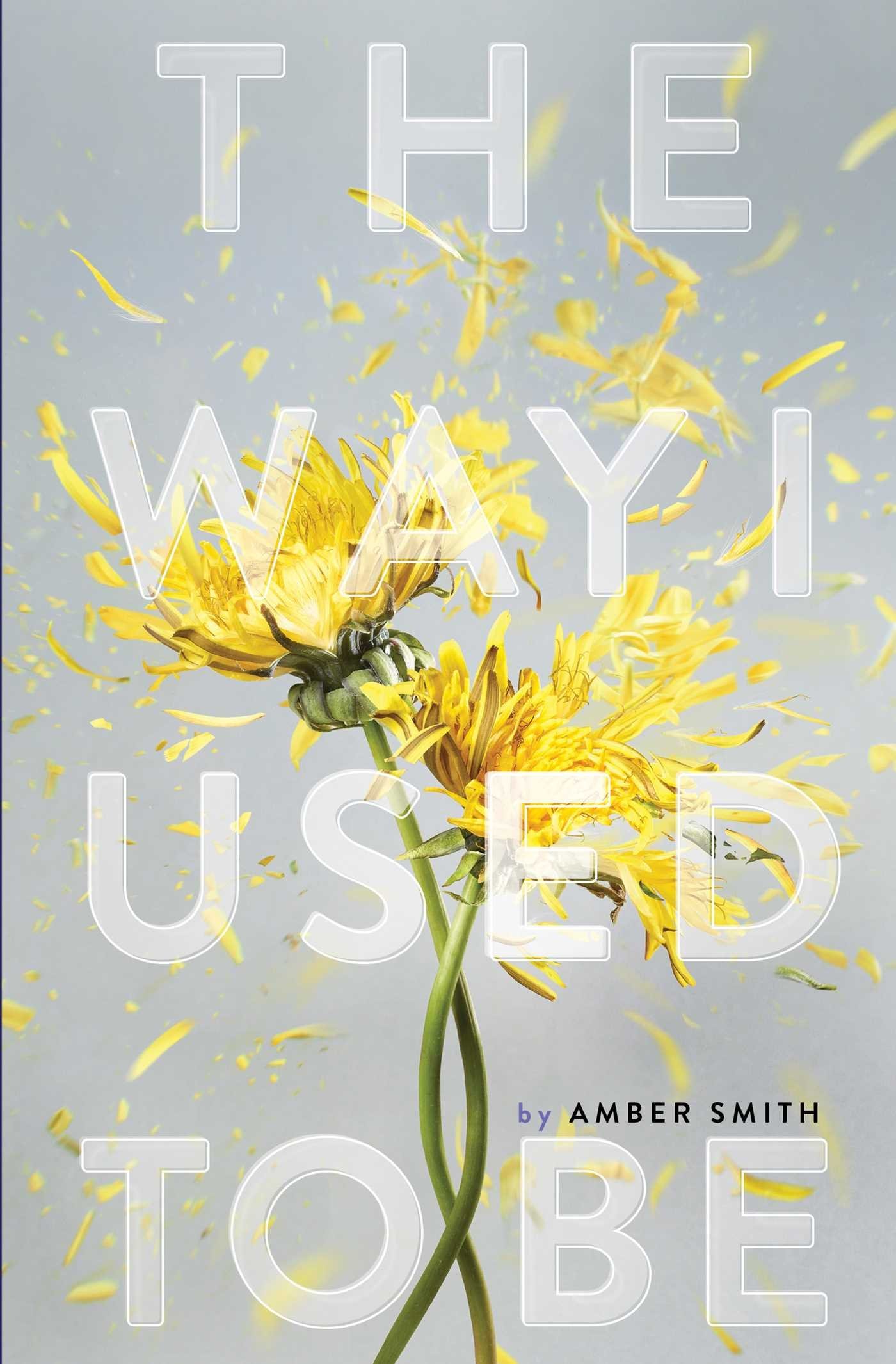
Eden McCrorey is just fourteen when her older brother Caelin’s bestie, Kevin, slips into her room one night and rapes her.

I don’t know a lot of things. I don’t know why I didn’t hear the door click shut. Why I didn’t lock the damn door to begin with. Or why it didn’t register that something was wrong–so mercilessly wrong–when I felt the mattress shift under his weight. Why I didn’t scream when I opened my eyes and saw him crawling between my sheets. Or why I didn’t try to fight him when I still stood a chance.

Kevin has been an extended part of the family as long as she can remember and although Caelin is already in college, brother and sister have always been close. But she can’t tell Caelin what happened; she can’t tell anyone. Instead, she buries the trauma deep and tries to protect herself by becoming a different person. By sophomore year she has quit band, replaced her gasses with contacts, and taken up smoking.

She also meets Josh, a popular and attractive athlete in his senior year. For reasons that don’t quite make sense, Josh takes a sincere interest in her. Before he can say “Do you want to be my girlfriend?” they’re having sex. He doesn’t know she’s only 14 (about to be 15) because she has lied to him. And she keeps lying, to herself too. When their relationship goes belly-up, Eden continues to pursue mindless and meaningless sexual encounters, often fueled by alcohol and weed.

Amber Smith’s debut The Way I Used to Be follows Eden through her four years of high school. She’s a train wreck of a person, but no one seems to notice. Not her parents who are virtually absent and when they are in the picture they don’t seem to acknowledge that their sweet, pliable, and kind daughter has disappeared. Eden’s best friend, Mara, also doesn’t seem to notice that things are not quite right, but she is a teenager, too, so I think that could be forgiven. Watching Eden self destruct (and be smart enough to know that is exactly what is happening) is painful. Each bad decision leads to another bad decision.

This book could certainly be triggering for some readers, and healing for others, but it is not without its issues. My main problem was the relationship with Josh. She is so odd when he first meets her, so hot and cold, I couldn’t really understand what drew him to her. But he stays in her corner until she makes it impossible.

The opening chapter of this book is so compelling and horrifying and Eden’s journey to healing so self-destructive that this book probably won’t be for everyone, but it’s definitely worth a read.

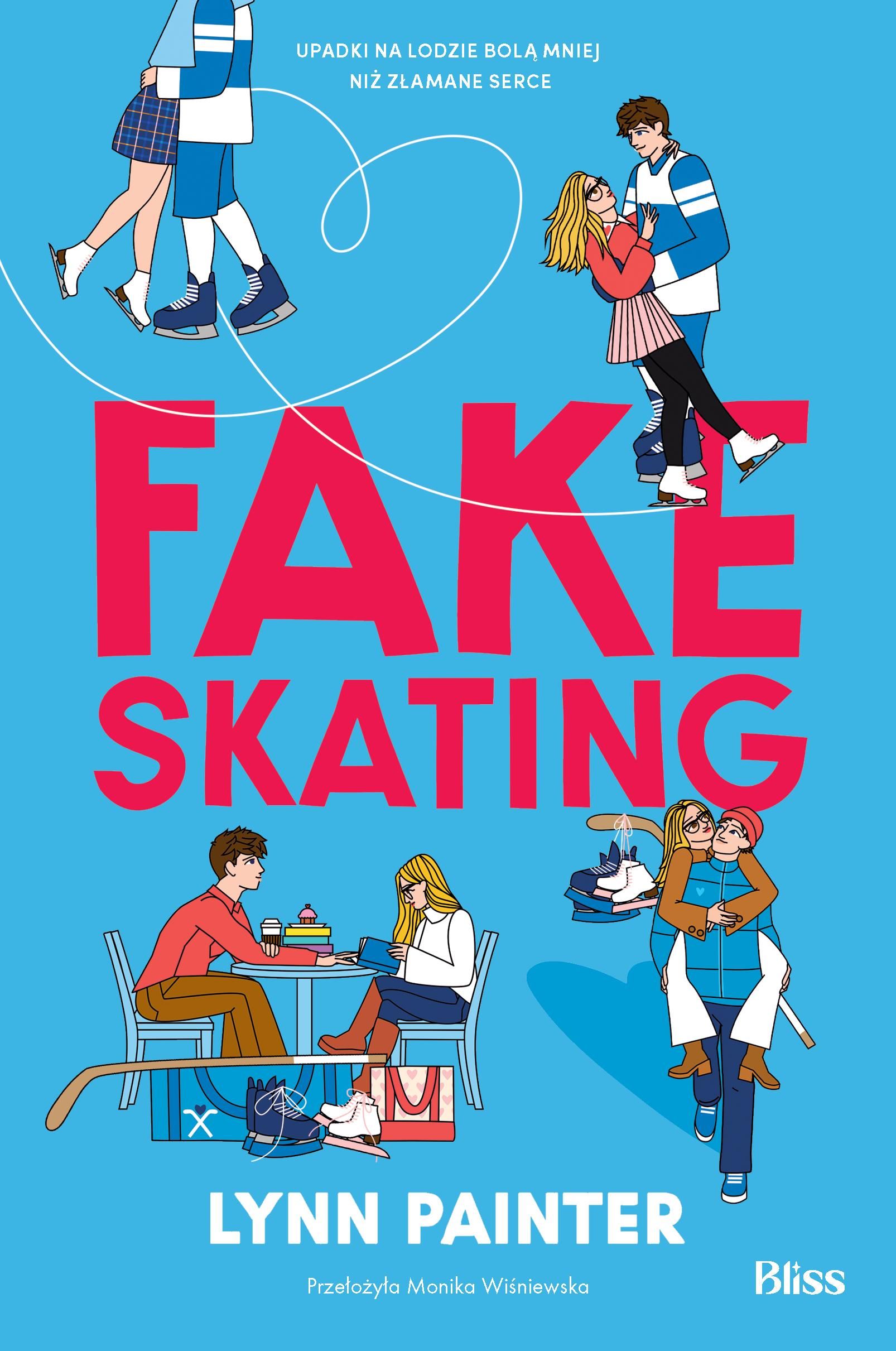
Fake Skating – Lynn Painter

A couple years ago I read Lynn Painter’s YA novel The Do-Over and I really enjoyed it. I bought Fake Skating on a whim but, sadly, I didn’t have the same reading experience this time around.

Dani’s an army brat and has never lived anywhere for more than a couple of years, but now her parents are getting a divorce so she and her mom have moved back Southview, a small town in Minnesota where her mother, Hannah, grew up.

Alec and Dani were childhood besties. They really only saw each other once a year when Dani’s mother, Hannah, brought her back to Southview to visit her grandparents and best friend Sarah, Alec’s mom. For that month they were inseparable, but it’s been five years since they’ve seen each other or communicated in any way and both of these teens have feelings about that.

Neither Alec or Dani are the 12-year-olds they once were. Dani suffers from social anxiety and just wants to put her head down (although this will be difficult because she is so beautiful) and get through her senior year so she can graduate and go off to Harvard. Alec is no longer the awkward kid Dani once knew; he’s Southview’s star hockey player ‘Zeus’ so named, I guess, because he is huge. And hot.

Southview is a big hockey town. In fact, Dani’s grandfather is a bit of a hockey legend, even though he isn’t the grandfather Dani remembers. Anyway, Alec is sort of passive-aggressively mean to Dani and their initial interactions are awkward until Alec finds that he needs Dani’s help: in fact, he needs her to be his fake girlfriend.

Look fake dating and childhood besties to enemies to lovers are tropes that you either like or don’t. I personally don’t care about this sort of stuff when I read YA because I am mostly reading it so I can talk about it with students. My issues with this book have more to do with the length of it. At 432 pages it was about 200 pages too long because it’s really repetitive. I also hate when I have to hear about what song a character is listening to, which I did a lot every time Alec put his earbuds in. Also, there was an extraordinary amount of swearing in this book and I am no prude. It just seemed unnecessary and when expletives are overused, I find it really distracting.

Dani and Alec are sort of one dimensional characters — more outlines than people. Of course you know where a story like this is going, but it took way too long to get there and, ultimately, I just didn’t care about either of them.

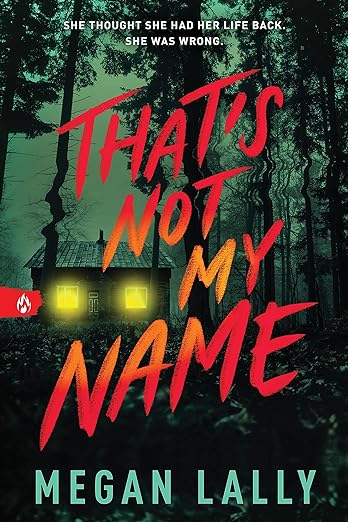
That’s Not My Name – Megan Lally

Megan Lally’s YA thriller That’s Not My Name starts with a bang and pretty much kept me on the edge of my seat until the very end.

I think I might be dead.

I try to gather my bearings, but I can’t see. I feel nothing. Not even my own body. The lack of sensation, the way the silence wraps me in a hug and squeezes–it’s unnerving. I want it to stop–

Until the pain comes.

The police pick up a girl on the side of the road. She doesn’t know how she got there; she doesn’t even really know where there is. She doesn’t know her name. When her father shows up at the police station, she doesn’t recognize him. She was in a car accident, he explains. Or at least that’s what he thinks must have happened. He produces all her identification–her name is Mary–so the cop who found her feels comfortable releasing her into his care.

Then, in another town, we meet Drew. “Life really goes to shit when everyone thinks you killed your girlfriend,” he says. Lola has been missing for five weeks. She vanished without a trace and Drew was the last person to see her alive. Everyone, including the cops, think Drew must have done something to her, but they haven’t found a body so he hasn’t been charged with a crime.

As Mary slowly starts to doubt the veracity of her circumstances, Drew starts to do more to find out what happened to Lola, including following leads that the police won’t. It all makes for a page-turning ride that doesn’t exactly deviate from the tried and true thriller tropes but still manages to deliver a fast-paced narrative that teens will gobble up. I read it in one sitting.

Take Me There – Carolee Dean

Seventeen-year-old Dylan Dawson just can’t seem to catch a break. When Carolee Dean’s YA novel Take Me There opens, Dylan and his best friend, Wade, are on the run. They’ve been in trouble before and even did a stint in juvie together and because Wade had rescued Dylan from a sticky situation when they were locked up, Dylan just can’t give up on him up now.

Dylan and Wade are headed to Texas. That’s where Dylan’s father, Dylan Dawson Sr, is currently sitting on death row. Dylan hasn’t seen his father or communicated with him in any way since he’d been locked up eleven years ago. But his execution date is imminent and Dylan has questions only his father can answer.

Dylan is also trying to put as much distance between them and members of the Baker Street Butchers, a gang of street thugs who had tried to bring the teens into the fold in a plan that had gone horribly wrong, thus the running. But leaving California also meant leaving Jess, a girl Dylan had known as a kid and later, by sheer coincidence, reconnected with. Their blossoming romance helped Dylan imagine a different sort of life for himself and that’s where he thought he was headed until things took a sharp turn at murder.

The truth is, Dylan has a lot of cards stacked against him. His mother has never been quite the same since his father’s arrest. Dylan is unable to read and dropped out of high school. The positive male role models in his life are few and far between, although the man who owns the garage where he and Wade work is definitely a contender.

Dylan is a sympathetic character and he always tries to do the right thing. People don’t always do right by him, though, and it’s hard to watch him struggle against the system and the people who haven’t always had his best interests at heart.

Although the book falls apart a little at the end, I flew through this story and I know lots of my students will really enjoy it.

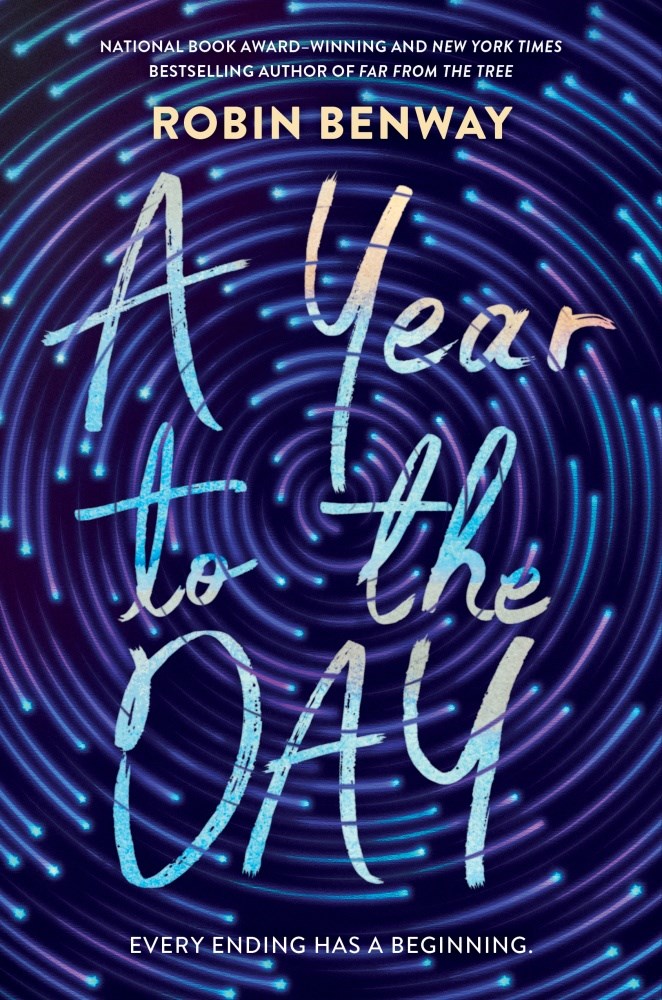
A Year to the Day – Robin Benway

Robin Benway’s novel A Year to the Day is a love letter to sisters. The novel starts on the one year anniversary of the car accident that killed Nina, Eleonora aka Leo’s older sister. Leo and Nina’s boyfriend East were also in the car when they were struck by a drunk driver. Leo doesn’t remember what happened, not really.

Benway takes an unusual route to tell the story by working backwards from the one year anniversary to the day before the accident and it’s an effective structure to let us see how grief permeates the lives of the people in Nina’s life and also how time really does offer some modicum of relief. On the one year anniversary of Nina’s death, Leo thinks

about how sometimes things are gone, just like that, even as their absence still takes up space in your heart, their place carved out forever, reminding you of what has been and what will never be again.

Leo’s mother lives in a little cocoon of grief, where she watches HGTV and doesn’t always wash her hair. Leo feels like ‘that girl’, all eyes on her as she attends school. Her father and his new wife, Stephanie, are expecting their first baby. Although her parents aren’t really friendly, they are certainly united in their grief and Stephanie is kind and thoughtful. So, the adults in her life certainly prop Leo up. She also becomes closer to East, not in a romantic sense, but when the book opens we see that she is hanging with him and his friends and as the narrative unspools backwards we learn how much this relationship sustains them both.

We only ever see Nina through Leo’s eyes. She “always made sure that you knew her, that you knew what she was doing, where she was going, what she liked and hated. Nina wasn’t shy about any of that, about being herself.” She was someone Leo greatly admired and depended on. She was her favourite person, the “compass in our family, the rudder, the North star.”

I loved Benway’s novel Far From the Tree (I didn’t write a review of that book, but I talked about it here). I also found this book well written and thoughtful, but just a bit slow. The final few pages of the book were very effective though.

If He Had Been With Me – Laura Nowlin

Several of the female students in my Young Adult Lit class have read and raved about Laura Nowlin’s debut novel If He Had Been With Me. They all told me that they bawled their eyes out and I do love a good tear-jerker, so I decided to give it a go.

Autumn and Finny have been best friends forever. Partly it has to do with the fact that their mothers are best friends, practically sisters. (In fact, the kids call each other’s mother aunt.) Partly it has to do with proximity; they live next door to each other.

Then, at the end of middle school the two, for reasons that are not really clear – but probably make sense to 12 years olds – the two stop speaking. In high school, Finny morphs into the most popular and beautiful guy in school and Autumn, ousted by the cheerleaders, finds herself sitting on the steps to nowhere with a group of outliers, one of whom, Jamie, ” a dark-haired Adonis, a Gothic prince” becomes her boyfriend.

The novel follows this cast of characters for all four years of high school, which seems like a bit much since they don’t really do anything. Jamie tries to convince Autumn to do the deed, but she puts him off. Her parents’ marriage falls apart. She and her mom continue to spend time with Finny and his mom even though it is AWKWARD. Finny starts dating Sylvie, a super popular girl. It’s all pretty melodramatic – kind of just like high school is.

We know from the very beginning that there is some sort of catastrophic accident and so we are hurtling (well, not really hurtling because this book is L-O-N-G) towards this event. I guess I can see how teenagers would find this story and this relationship between Finny and Autumn romantic and heart-breaking.

Sadly, it didn’t work for me. The book needed a really good editor, someone to tell Nowlin to strip away all the repetition. The main characters are tropey to the max: the manic pixie dream girl and the hot soccer star who shouldn’t love each other, but do love each other, but despite the fact that they have known each other their whole lives, can’t find the words to have a meaningful conversation. I didn’t particularly like Autumn, if I am being honest. Finny was a non-entity. Other characters were interchangeable and one-dimensional.

Apparently there’s a sequel where we see this whole story play out from other points of view. Why?

No tears were shed.

The Safest Lies – Megan Miranda

Seventeen-year-old Kelsey and her mother live in a fortress of a house; it even has a safe room in the basement. Kelsey has always felt safe there and, in fact, “The black iron gates used to be [her] favorite thing about the house.” She acknowledges that her life isn’t like the lives of her classmates. For starters, her mother hasn’t left the house in 17 years. For another, she has to meet with Jan.

Seeing Jan was part of my mother’s deal to keep me. Jan was assigned by the state. I’ve come to rely on her, but I also don’t totally trust her, because she reports to someone else, who decides my fate. My mother relies on her even more, and trusts her even less.

Although previously homeschooled, Kelsey now attends high school and on her way home one day she has a car accident. Ryan, classmate and local volunteer firefighter, is first on the scene and “saves” her from certain death. His heroism lands the pair in the paper and that’s when Kelsey’s life starts to unravel.

She does something she shouldn’t and sneaks out of the house one night to see Ryan receive a medal for saving her life. When she returns home, she discovers the gate at the front unlocked, and when she makes her way inside, her mother is missing. It’s a big deal because, remember, mom hasn’t been outside in 17 years.

Megan Miranda’s YA thriller The Safest Lies is pretty much what you’d expect from a book of this type. A plucky heroine, a solid love interest, a couple red herrings, a mystery and enough action to propel the plot forward. I was pretty invested when there seemed to be stakes (who are the shadowy figures lurking around and I guess that safe room will come in handy after all, eh?) It doesn’t necessarily wrap up as satisfactorily or as believably as I might have hoped, but as a seasoned thriller reader, that’s to be expected.

Teens probably won’t be able to turn the pages fast enough.

Shattering Glass – Gail Giles

Although Gail Giles is now a well-known name in the world of YA, she had to start somewhere and that somewhere was with her 2002 debut Shattering Glass.

Young Steward, so named due to a complicated family tree, narrates the story of what happens when his best friend, Rob, decides to elevate class doofus, Simon Glass, from zero to hero.

Simon was textbook geek. Skin like the underside of a toad and mushy fat. His pants were too short and his zipper gaped about an inch from the top. And his Fruit of the Looms rode up over his pants in back because he tucked his shirt into his tightey-whiteys. He had a plastic pocket protector, no joke, crammed with about a dozen pens and a calculator.

Rob is the most popular guy in their Texas high school. “He wore confidence like the rest of us wore favorite sweatshirts.” When he decides to make a bit of a project out of Simon, none of the members of their group including the handsome Bobster and star football player Coop raise an objection. Coop, in particular, seems to form an authentic relationship with Simon, but Young has a different view because “Simon Glass was easy to hate.” Young can’t say no to Rob though, although he does wonder why Rob is so eager to change Simon’s social standing.

The novel follows Simon’s gradual metamorphosis from nobody to somebody and how this act also changes the dynamic between the friends. It is clear from the beginning that something awful has happened. Each chapter begins with a short comment from some other secondary character, which allows readers to anticipate an event that the main narrative builds towards. Let’s just say that the book’s title is not merely figurative.

The book examines bro culture to a degree. Why do people follow others even when their conscience tells them they shouldn’t? Young is sympathetic, but also frustrating as he makes one bad choice after another. Even his decision at the novel’s expected but startling climax does nothing to redeem him.

Shattering Glass is a solid book. It’s well written and there’s lots to talk about.