The most romantic lines in fiction

When I was a kid I consumed a lot of historical romances aka bodice rippers. You know – books with handsome, muscled men and beautiful virginal women with breasts falling out of their dresses on the cover. I believe Fabio featured as the model on many of those covers back in the day.
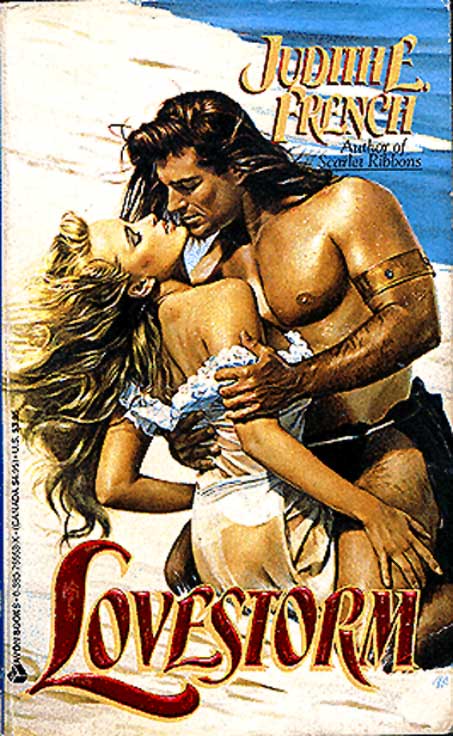
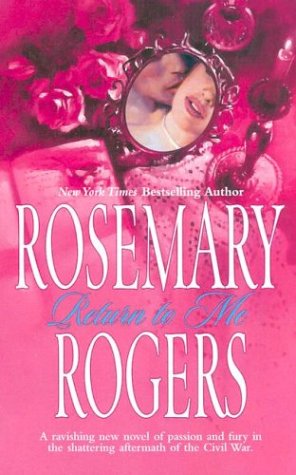
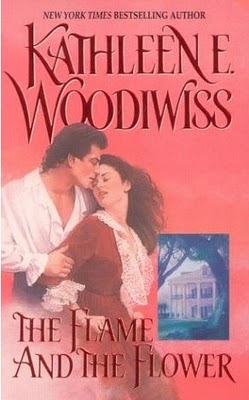
I was partial to Kathleen Woodiwiss and Rosemary Rogers. These were authors that my mother read and, shockingly, there was  a lot of s-e-x.  And even more euphemisms. All I really remember about the books was was that the sex was pretty graphic, and having had no real-life experience, pretty um…wow.
My grandmother was a big consumer of Harlequins, but I never really liked them all that much. After reading Rogers and Woodiwiss, the stories seemed rather tame by comparison. I was no longer a romance virgin and I wanted the good stuff. (Even though I was clearly too young to know what the “good stuff” was, exactly.)

In my early twenties I discovered LaVyrle Spencer and I still remember the day I started reading her novel Morning Glory. I  fell totally under Ms. Spencer’s thrall and read into the wee hours of the morning. I consumed several more of her novels after that before I sort of tired of the genre.

Many of my friends would call me a romantic and yeah, okay, I’d probably say the same thing about myself. I suppose I only have these books to blame. Where else would I get the idea that some big strappin’ hunk of guy was going to swoop into my life and make everything better? Of course, I now realize it’s ridiculous – and I am perfectly capable of looking after myself and have been for years – but still {insert sigh}. Those breeches. That hair. Those muscles. {shakes head} Sorry. Ridiculous. Of course, I’d want an equal partner in everything and modern romance novels get that, I think. Women don’t need men to complete them.

Back on Valentine’s Day, I did a huge post about romance – the most romantic moments in fiction (including tv and movies because those characters had to be written before they hit the screen.) Revisit let’s talk about love.

Stylist.co.uk just posted a list of the Top 50 Most Romantic Lines from Fiction. I’d love to hear your favourites.
The Ten Best Fictional Bookstores in Pop Culture

Flavorwire has come up with a pretty good list of fictional bookstores, although I felt compelled to add Carlos Ruiz Zafon’s Cemetery of Forgotten Books from his novel The Shadow of the Wind. (I realize it technically doesn’t count, but it always sounded like a pretty cool place to me!)  I also always loved Ellen’s bookstore, Buy the Book.

Do you have a favourite fictional bookstore?

Interesting book facts

“The origin of the Latin word for book, liber, comes from the Romans who used the thin layer found between the bark and the wood (the liber) before the times of parchment. The English word comes from the Danish word for book, bog, meaning birch tree, as the early people of Denmark wrote on birch bark.”

This interesting book fact came from The Wee Web. There are many more to be found there.

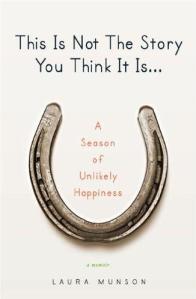
This Is Not The Story You Think It Is – Laura Munson

When Laura Munson’s husband of 15 years (together for 20) tells her he doesn’t think he loves her anymore, that he doesn’t know whether he ever did, Munson’s reaction is unusual. She tells him she doesn’t buy it. Say what? Having been in a similar position myself, I applaud her position. And it is a position, one that she defends over the course of one long, hot Montana summer. She loves her husband, David. They have built a life together away from their priviledged backgrounds. They have children together. Their finances are a tangled marital web. But what Munson sees are all the positives and decides to take her happiness into her own hands and hopefully rechart her marital course.
I wonder if This Is Not The Story You Think It Is might have helped me in those early days after my husband left me? If I had adopted Munson’s ‘honey, you need to find your own truth and happiness, but do not make me the fall guy’ stance, would it have made any difference? I sincerely doubt it. I certainly see the similarities between my life and Munson’s. Like her husband, mine was/is clearly trying to relive the glory days (my God, mid-life crises are predictable!). Unlike Munson, though, I didn’t have a plan; I had fetal position grief, disbelief, anger. In fact,  I was the poster child for the five stages of grief. Thankfully, I have amazing kids and thus a reason to at least attempt business-as-usual. And I have supportive friends and family. And, thankfully, the worst of the grief has passed.

Munson’s tact was proactive rather than reactive – amazing considering she didn’t see her husband’s confession coming. Somehow she found the quiet centre of her heart, the place where she was able to take a breath and consider her options. The few people she told offered their own sage advice – much of it reduced to “kick the asshole to the curb.” And she would have been within her rights, of course. Her husband was certainly acting like an ass: he went out and didn’t come home and he didn’t call, and when he did come home he was usually drunk and slept the day away, he broke promises to his kids. He went dirt biking and fishing and golfing with ‘the boys’. Except, Mr. Munson wasn’t a boy – he was a barely employed 40-something with a mortgage and two kids.  Through it all, Munson bit her tongue because “the definitive truth I know for sure is this: my husband is in crisis, whether or not he is having an affair. Whether or not he loves me. And I love him.”

Wow.

In this day and age of replacing the broken stuff with newer, cheaper stuff, Munson’s attitude is laudable. She’d invested a lifetime in her marriage. She and her husband had built a life together, had children together, wanted the same things for their futures. Munson wasn’t just going to walk away without a fight. Except, even more admirably, she wasn’t fighting. Instead, Munson says this:

I’m not going to try to justify his behavior, because  I know it’s not justifiable. I simply want to understand instead of freak out. It’s not behavior I’m willing to put up with for too long. Whatever “too long” will come to mean. But in the meantime, am I to react to the part of society that wants us to lie about our marriages being somehow perfect? Until they’re not. Black and white. One false move and you’re out.

But I’m opting for a different strategy, and I’m going to believe it will work in a way that fighting, persuading, and demanding never have. Because whether or not he comes back to me, I will be ultimately empowered by my committment not to suffer. It’s a way of life. A way to life.

This Is Not the Story You Think It Is is remarkable in its honesty, its humour and its hope. I wish my marriage had had a different ending; I wish it with all my heart. But I can’t change what has happened. I can, however, follow Munson’s advice and take responsibility for my own happiness. Like her,  I choose not to suffer.


Surrender – Sonya Hartnett

I honestly don’t know what to make of Sonya Hartnett’s YA novel, Surrender, except to say that days after I finished it, I am still thinking about it.

I am dying: it’s a beautiful word. Like the long slow sigh of a cello: dying. But the sound of it is the only beautiful thing about it.

Meet Anwell. He’s 20 and some unnamed disease (some degenerative disease or cancer, maybe) is eating him up, slowly and painfully. Confined to a bed, tended to by his Aunt Sarah, he is spending his final days on earth remembering all the days that came before.

Hartnett’s novel is not a straightforward tale. I am a pretty proficient reader and sometimes I really felt lost in the story. I definitely felt lost in the prose, which is beautiful.

Breathing is an undertaking: it takes minutes to sigh. My ribcage is the hull of a wrecked and submerged ship. My arms, thin as adders, are leaden as dropped boughs. the mattress, my closest friend, has been carved by the flesh of my unfleshed bones into a landscape of dents. The soul might rise, but the body pulls down, accepting the inevitable, returning to where it began.

Anwell – or Gabriel as he is called by his closest (only) friend, Finnigan, lives in a scrubby community somewhere in rural Australia. His father, a lawyer is distant; his mother is frail. Neither of them pay very much attention to Anwell.  Anwell had an older brother, Vernon, but he’s dead now. Anwell is responsible.  And this is where the story gets tricky.

I have a theory abut the book, but despite having read several reviews I haven’t found anyone else who might share it.

*spoiler alert*

*spoiler alert*

I actually don’t think that Finnigan is real. I think the fact that Anwell killed his brother damaged him irrevocably. The further the book went along, the more convinced I was that Anwell had suffered from sort of psychic break and that Finnigan was a manifestation of a sick mind.

Whether I am right or wrong, though, does not detract from Hartnett’s vivid, poetic prose, or the novel’s heartbreaking conclusion.

Me and Mr. Jones

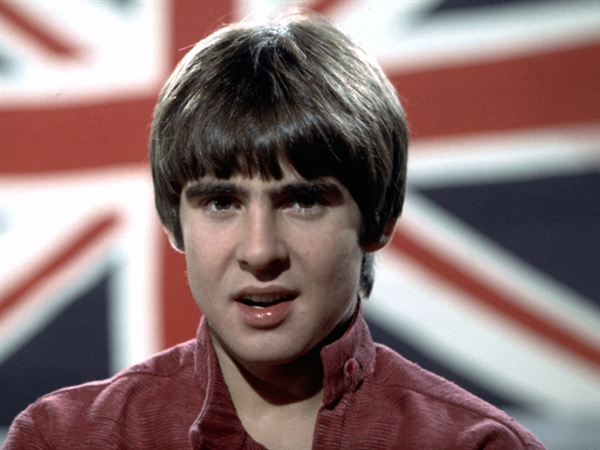
I can’t even pretend to be young anymore, especially now that Davy Jones has died, suddenly, from a heart attack.  I mean, I came home from work, fired up my laptop to check my email and Twitter and the news greeted me like a smack in the face. Davy Jones. Davy freakin’ Jones. Even his name sounds perpetually youthful.

I’ve been a fangirl for ever. And Davy Jones was my first ever boy crush. I was young, only 5,  when The Monkees aired on tv, so I am guessing that I fell in love with Mr. Jones during re-runs at a not-too-much-later date.  But love him I did. Maybe it was only because he was impossibly cute and had that groovy British accent (and England would have been totally exotic to me). It probably wasn’t because I understood  The Monkees, which I remember as being sort of goofy and loud and the best bit was always when the band sang.

I loved The Monkees’ music, though. If you didn’t know any better, you might be able to dismiss them as a made-up TV band pre The Partridge Family (albeit with  slightly more  pedigree because we all know Danny Bonaduce was not playing that bass, right?) But what you might not know is that at the height of their popularity, in 1967, The Monkees sold more albums than The Beatles and The Rolling Stones combined times two! Those are some serious bragging rights.

Of course as a kid I didn’t know – or care – about that. All I knew was that when Davy sang “Day Dream Believer” or “Valleri” he was singing to me and I was swooning. (Or, okay, singing along into my hairbrush slash mic.)

I saw The Monkees live once in the mid 80s. They were doing a reunion tour with Herman’s Hermits and Gary Puckett and the Union Gap and ended up at Ontario Place. I took my father. It was a beautiful summer day and while it was pleasant to listen to the first two acts, but I was really waiting for The Monkees. Mike Nesmith had declined to be part of any reunion, even way back then, but it didn’t matter. Peter, Mickey and Davy rocked that joint. And I sang every single song at the top of my lungs – joyfully. Because that music was joyful. And it still is.

There are tributes flying all around the Internet. Here. And here.  And here.

It will be interesting to see what the media makes of Davy’s death and his place in pop music’s canon (especially given all the fuss over Whitney) in the coming days. No disrespect to Ms. Houston, but she did kinda have a hand in her own demise. Davy, on the other hand, is being remembered as a man who loved his fans, loved to perform and never once badmouthed the  tv show that made him an international superstar.

I am not ashamed to admit that his death has made me very sad.

Book spoilers

I NEVER read the last page of a book – there’s something SO wrong about that. But say you want to dazzle people at a cocktail party with your bookishness – these guys happily spoil the endings of 50 novels for you in just four minutes. Personally, I can’t watch!

How do you choose what to read next?

I was sort of looking forward to a weekend of being snowed in. I love knowing that the weather prohibits me from getting out and I don’t feel even remotely guilty about curling up on the couch in my pyjamas with whatever book I am currently reading. But the storm they were predicting overnight Friday night never materialized, at least in this part of the province. So, I ended up doing my typical weekend stuff – most of which consists of driving kids to various events and activities.

If I had been able to stay snuggled indoors all weekend, I probably would have finished the book I am currently reading: Laura Munson’s This Is Not the Story You Think It Is.  Then I would have enjoyed starting the next book chosen for our book club, The Slap by Christos Tsiolkas.

Which brings me to today’s Sunday Salon topic: how do you choose what to read next? Do you have a small bedside stack? Do you have way too many books on your tbr pile (so then how do you choose?) Do you head out to the bookstore? I’d love to hear how you go from finished book to new book?