Things Change – Patrick Jones

When sixteen-year-old Johanna accepts a ride home from a meeting with Paul, even she is surprised when she boldly asks him to kiss her. Paul is sort of a well-known figure at their high school, not because he’s an athlete or a particularly good student, but because he is funny and good-looking. People want to be around him. Johanna, on the other hand, is studious and  not very popular. Her one and only friend, Pam, calls her “Books” and the two girls have a standing date at the local bookstore on Saturday.

Patrick Jones’ debut novel Things Change will appeal to fans of realistic fiction. Johanna will be immediately recognizable to young girls; they will either see themselves or someone they know in her. Like many teenage girls, Johanna tries to please her parents, tries to balance school and life and falls head over heels in love with a boy who is fighting his own demons. Because one thing Things Change is not is a straight up love story.

Paul and Johanna eventually hook up and it’s all sunshine and roses – except for when it’s not. Paul is possessive and jealous and has a temper that causes him to lash out at Johanna, inflicting physical and emotional pain for which he is almost immediately contrite. But that’s the pattern, right? And Johanna – young and inexperienced – does what many much older women in her situation might do: she makes excuses, tries to be perfect, forgives.

Although the third person narration is mostly limited to Johanna’s point of view, Jones does something smart,  giving the reader a glimpse of Paul’s psyche by letting us read letters he writes to his dead father. I say it’s smart because it prevents Paul from being a one dimensional monster and the book from being a one-note cautionary tale. Paul’s demons in no way excuse his deplorable behaviour, but it does make him human and somewhat sympathetic.

Patrick Jones used to be a Young Adult librarian and Things Change certainly demonstrates that he’s listened to and observed teens carefully. This book doesn’t preach nor talk down to his target audience. It’s not overly graphic, but there is some sexual content and bad language. That said, I will happily be recommending it to readers in my classroom – both those students who claim they don’t like to read and those who want to read compelling and realistic fiction.

Chasing Boys – Karen Tayleur

Chasing Boys is the story of Ariel, El for short, who has moved from her swanky school and big house to a new school and an apartment with her older sister, Bella, and her mom. Dad – whereabouts unknown, but clearly he’s left a void in Ariel’s life which she is in desperate need of filling. So, there’s this boy. His name is Eric and he’s a star basketball player and practically the most perfect boy at school. Everyone has a crush on him, but he has a girlfriend. And not just any girlfriend, but the popular and pretty (and, as it turns out, decent and nice) Angelique.

So, is Karen Tayleur’s first YA novel anything more than your standard girl chases boy teen romance? Well, no and yes. For starters, El is a likeable character and the first person narration is swiftly paced and often quite funny. El is smart and attractive, but doesn’t really feel like she fits in anywhere other than with her two best friends, Desi and Margot. She’s also trying to work through abandonment issues and for that she meets with a therapist, Leonard, once a week. The thing is, she can’t actually talk to Leonard.  “If I was talking to Leonard,”  she muses, “which I am not, I would ask him a question.”

Eric isn’t the only boy orbiting El’s life. There’s also Dylan.

Dylan slumps in the seat and glances at me. I realize he’s the newest guy at school and I give him my catatonic stare – the one I use when I want the other person to look away. It’s usually pretty effective. He has a thin white scar, almost invisible, that travels from his bottom lip and disappears under his chin, and just for a moment I wonder how it got there. His lips curl into a sneer and I look straight ahead.

El tries to balance school and home and her crush on Eric and Dylan’s passive-aggressive interference in her life with varying degrees of success.  For the teen reader who is looking for a book that is entertaining and not particularly challenging, Chasing Boys will likely fit the bill.

Scary books for All Hallows’ Eve

Hallowe’en is the time of year when everyone starts making a list of scary books. Of course, everyone has a different idea of what is scary. Sort of a Saw versus The Others kind of thing. I can actually take a little bit more graphic violence on the page than I can on the screen and so I would never go see Texas Chainsaw Massacre. That said, despite the fact that I have heard that The Cabin in the Woods has a pretty high squick factor, I may have to bite the bullet and watch it because I have so much love for Joss Whedon. (Edited to add: Saw this movie and it was awesome in all the right ways…and not too gross even for a wimp like me!)

But I digress:  this post is about books, not movies. And it’s not a definitive list by any stretch; it is limited by my own reading.

Here is my list – in no particular order – of books which have scared me over the years. Not all of these books are ‘horror’ in the strictest sense of the word – but all of them have sent shivers up and down my spine.
Two monstrous evils. The quiet suburban town of Hamstead is threatened by two horrors. One is natural. The hideous, unstoppable creation of man’s power gone mad. The other is not natural at all. And it makes the first look like child’s play.

I barely even remember what this novel is about; I read it 35 years ago. What I do remember is this: my room was in the basement away from everyone else in the family. I started the book one weekend when the rest of the family was out of town.  I slept with the lights on.
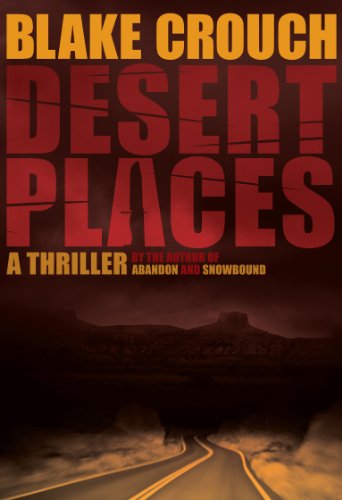
Greetings. There is  body buried on your property, covered in your blood. The unfortunate young lady’s name is Rita Jones. In her jeans pocket you’ll find a slip of paper with a phone number on it. Call that number. I strongly advise against going to the police, as I am watching you.

In the same vein as Dean Koontz, Blake Crouch’s novel was a high speed adrenaline rush, with enough creepy bits to keep me turning the pages long past midnight.
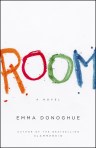
 

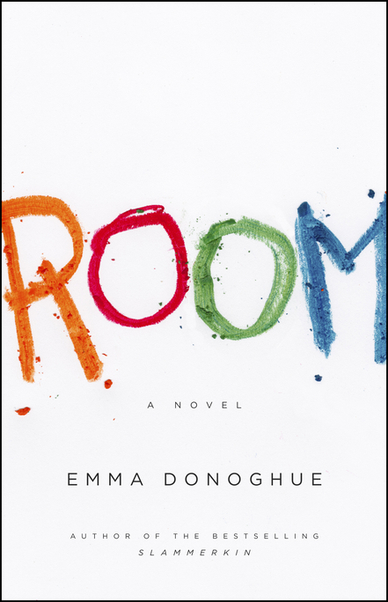
It’s where he was born. It’s where he and Ma eat and sleep and play and learn. There are endless wonders that let loose Jack’s imagination – the snake under Bed that he constructs out of eggshells; the imaginary world projected through the TV; the coziness of Wardrobe beneath Ma’s clothes, where she tucks him in safely at night, in case Old Nick comes.

I recently finished this beautifully written, but ultimately creepy tale of a mother and son in captivity.
 

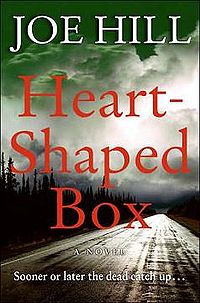
Judas Coyne is a collector of the macabre: a cookbook for cannibals…a used hangman’s noose…a snuff film. An aging death-metal rock god, his taste for the unnatural is as widely known to his legions of fans as the notorious excesses of his youth. But nothing he possesses is as unlikely or as dreadful as his latest discovery, an item for sale on the Internet, a thing so terribly strange, Jude can’t help but reach for his wallet.

Stephen King’s son’s debut novel is fantastic fun and also really freakin’ creepy.
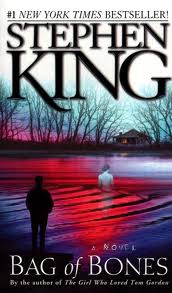
Bag of Bones recounts the plight of forty-year-old bestselling novelist Mike Noonan, who is unable to stop grieving even four years after the sudden death of his wife, Jo, and who can no longer bear to face the blank screen of his word processor.

I would consider myself a huge King fan, even though I haven’t read all his books and there have been a few I haven’t liked. But the books I’ve liked, I’ve liked a lot and Bag of Bones is one helluva ghost story.


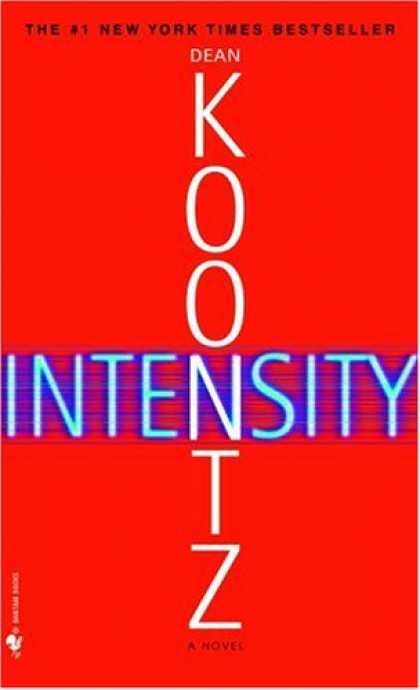
Chyna Shephard is a twenty-six-year-old woman whose deeply troubled childhood taught her the hard rules of survival, and whose adult life has been an unrelenting struggle for self-respect and safety. … Suspicions she learned in childhood still make her uneasy in unfamiliar houses – even this one, where her closest friend is sound asleep down the hall. And in this case her most disturbing instincts prove reliable. A man has entered the house…
I could NOT put this book down and I was afraid the entire time I read it. If you’ve never read Koontz, this is a great place to start.
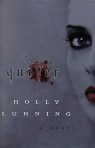
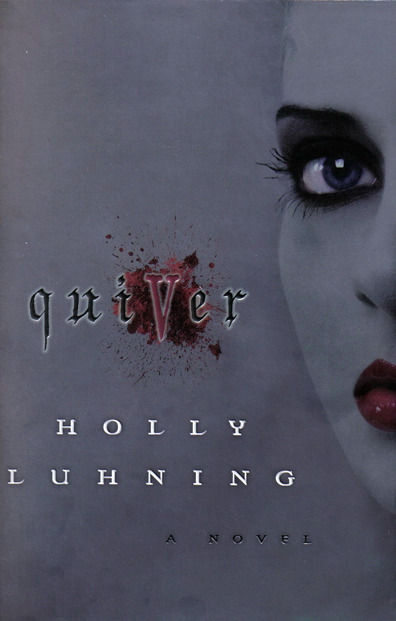
In  sixteenth-century Hungary, Countess Elizabeth Bathory tortured and killed over six hundred servant girls in order to bathe in their blood; she believed this brutal ritual would preserve her youth and beauty.

Um, hello. creepy. This debut by a Canadian is really good. And scary.
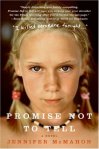
 

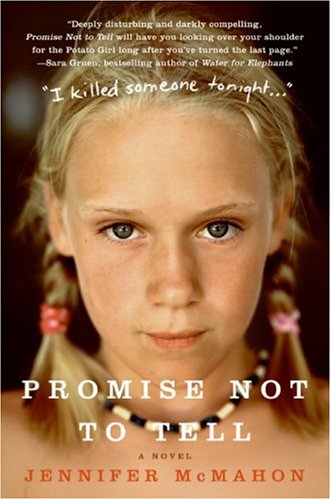
Three decades earlier, forty-one-year-old school nurse Kate Cypher’s dirt-poor friend Del – shunned and derided by classmates as “Potato Girl” – was brutally slain. Del’s killer was never found, while the victim has since achieved immortality in local legends and ghost stories.

This is part mystery and part ghost story and all good.
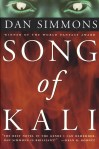
 

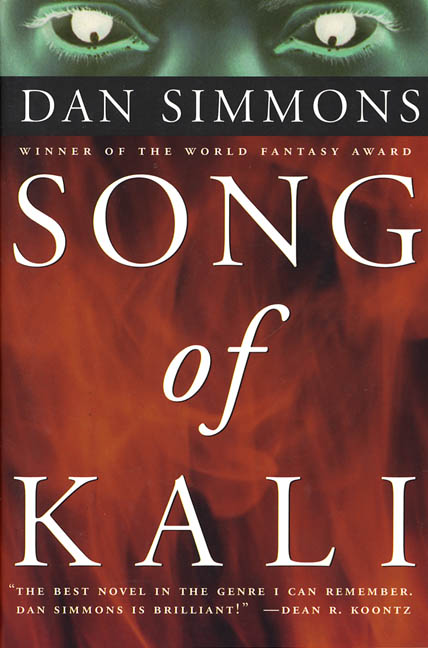
One of the great masterpieces of horror of this century, Song of Kali will leave an indelible imprint on your soul. Once you read it, you’ll never forget it. Never.

Okay, so I know publishers say that stuff to get you to buy the book, but I have to admit that Song of Kali, while perhaps not scary in the traditional sense(whatever that is), really did freak me out and stayed with me for a long time.
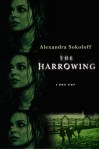
 

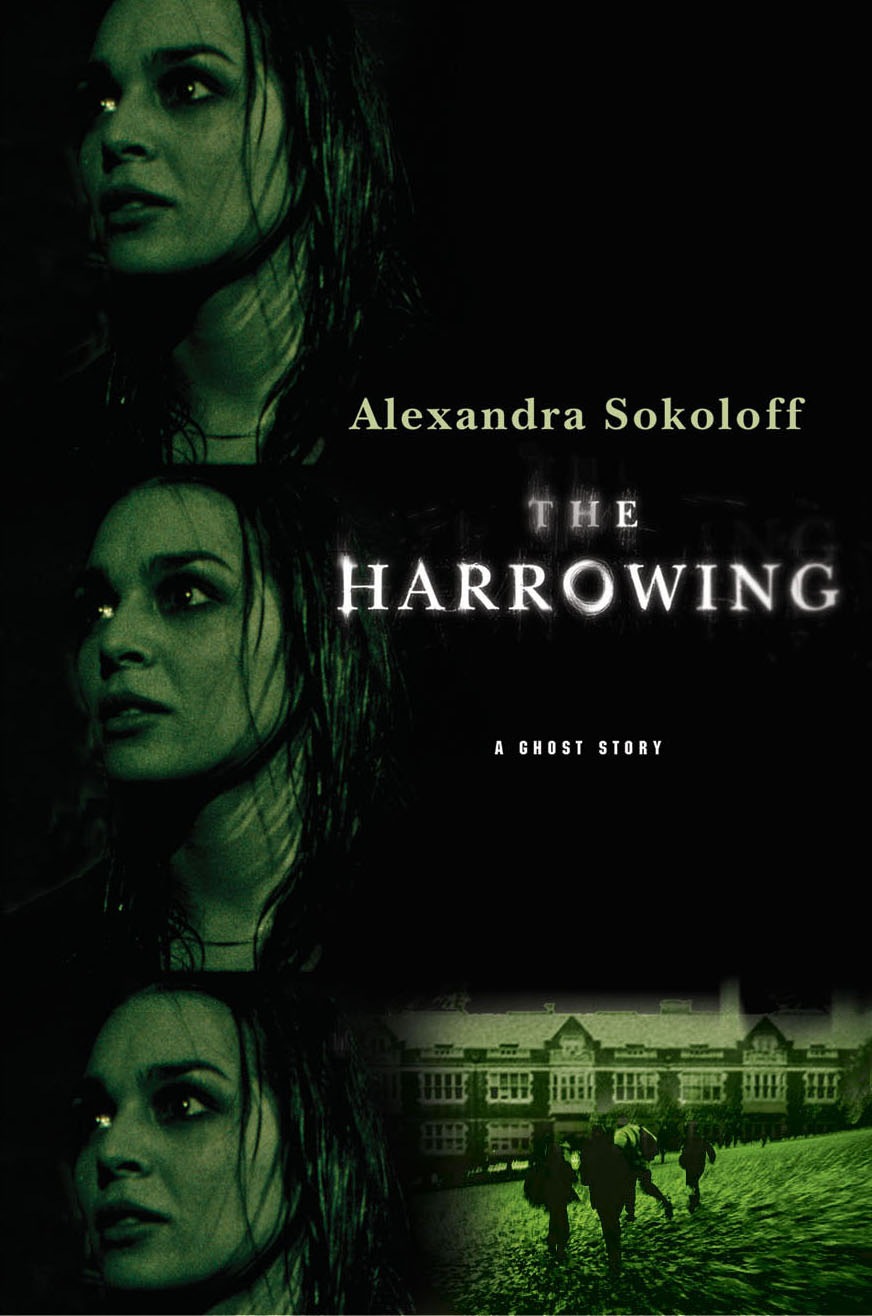
Baird College’s Mendenhall echoes with the footsteps of the last homebound students heading off for Thanksgiving break, and Robin Stone swears she can feel the creepy, hundred-year-old residence breathe a sigh of relief for its long-awaited solitude. or perhaps it’s only gathering itself for the coming weekend.

Despite the stereotypical cast of characters, this book was really scary. Really. Scary.
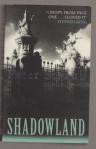
 

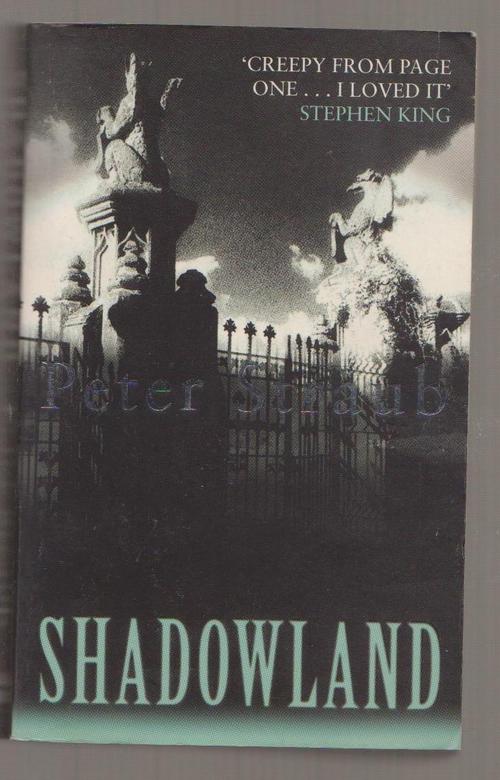
In a private school in New England, a friendship is forged between two boys that will change their lives forever. As Del Nightingale and Tom Flanagan battle to survive the oppressive regime of bullying and terror, overseen by the sadistic headmaster, Del introduces Tom to his world of magic tricks.

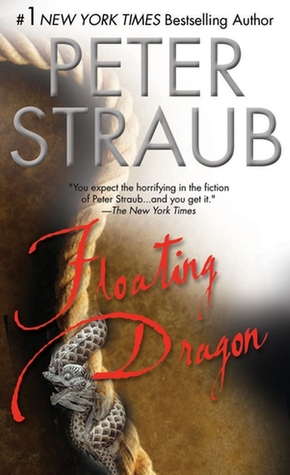
I love Peter Straub and this is a book that has stuck with me for many, many years.
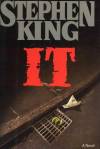
 

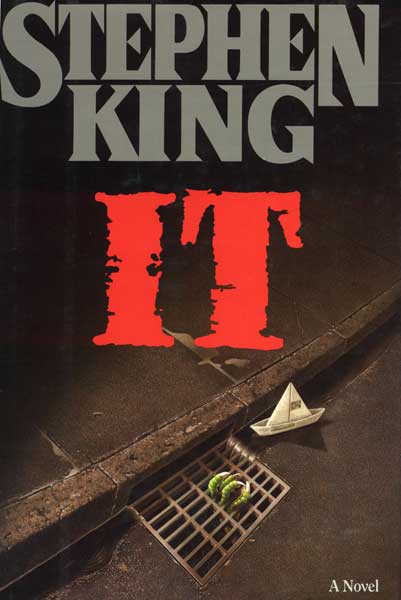
They were seven teenagers when they first stumbled upon the horror. Now they were grown-up men and women who had gone out into the big world to gain success and happiness. But none of them could withstand the force that drew them back to Derry to face the nightmare without and end and the evil without a name.

I carried this book everywhere the year it came out.  Not only was it – 25 years ago when I first read it-supremely scary, King’s characters were breathtakingly human and fragile and brave. I actually cried at the end of this book. I gave this book to a student in my grade ten class last year who claimed it was impossible to be scared by a book. Yeah.
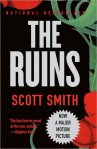
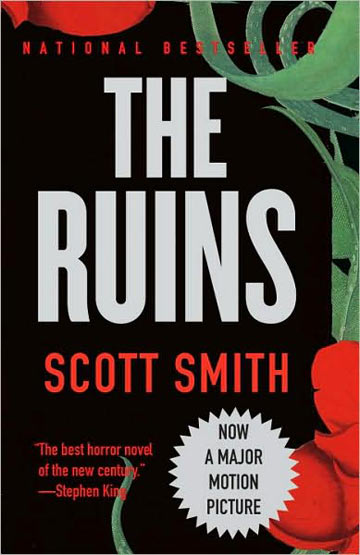
Two young couples are on a lazy Mexican vacation – sun-drenched days, wild nights, making friends with fellow tourists. When the brother of one of those friends disappears, they decide to venture into the jungle to look for him. What started out as a fun day trip slowly spirals into a nightmare when they find an ancient ruins site…and the terrifying presence that lurks there.

It isn’t so much the ‘ancient presence’ that’s the most scary thing about this book – although that’s pretty scary too. If you’ve already read The Ruins, I highly recommend Smith’s first book, A Simple Plan. It’s a roller coaster ride to hell.
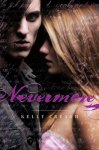
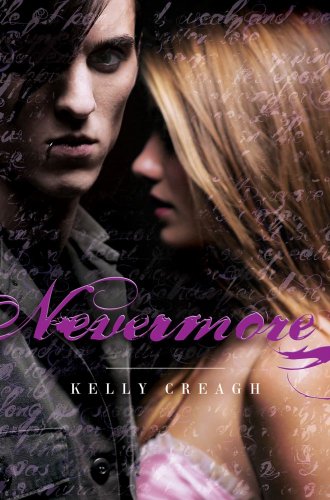
Cheerleader Isobel Lanely is horrified when she is paired with Varen Nethers for an English project, which is due –so unfair- on the day of the rival game. Cold and aloof, sardonic and sharp-tounged, Varen makes it clear he’d rather not have anything to do with her either. But when Isobel discovers strange writing in his journal, he can’t help but give the enigmatic boy with piercing eyes another look.

Fans of Edgar Allan Poe will be especially intrigued by this YA novel. Plus, my heart did race with fear more than once.
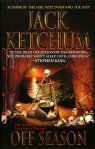
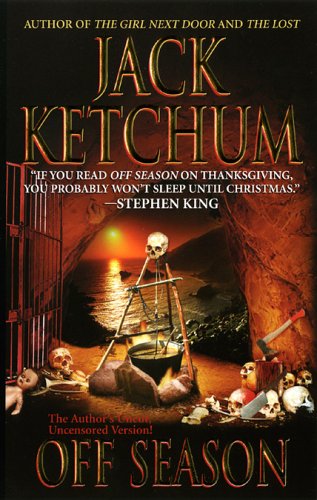
September. A beautiful New York editor retreats to a lonely cabin on a hill in the quiet Maine beach town of Dead River – off season – awaiting her sister and friends. Nearby, a savage human family with a taste for flesh lurks in the darkening woods, watching, waiting for the moon to rise and night to fall…

There’s a high gross out factor with this book. Also, really frightening.
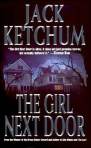
 

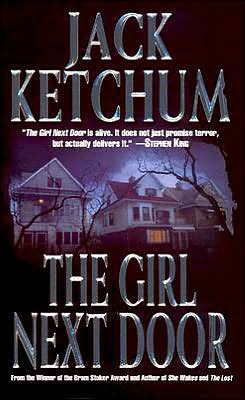
Suburbia. Shady, tree-lined streets, well-tended lawns and cozy homes. A nice, quiet place to grow up. Unless you are teenage Meg or her crippled sister, Susan. On a dead-end street, in the dark, damp basement of the Chandler house, Meg and Susan are left captive to the savage whims and rages of a distant aunt who is rapidly descending into madness.

This book is beyond scary because it illustrates the horrible things we do to each other.  It’s based on a true story and it’s a story Ketchum tells without fear. Seriously disturbing.

How about you? Read any really good scary stories?
Nevermore – @Kelly_Creagh

I’ve been trying to finish Kelly Creagh’s debut YA novel Nevermore for the past few nights. Kids in bed, kitchen clean,  email answered. Check, check, check. With my cat Lily curled beside me, I finally settle down to the book and read until my eyes are burning.  I actually finished it during my 4th period Writing class today. (We read for the first 30 minutes on Tues and Thurs!) I have SO much love for this book.

Isobel Lanley is a popular sixteen-year-old cheerleader. In many ways she is just what you’d imagine her to be; she’s pretty, dates a hunky football player and sits with the ‘in’ crowd at lunch. But Isobel’s world takes a flying leap from normal when she is paired  with Varen Nethers to do an English project.

He sat in the back row against the far corner, slumped in his seat and staring straight ahead through shreds of inky locks, his thin wrists lined in black leather bands specked with hostile silver studs.

Isobel can’t believe her crappy luck. Not only are they going to have to work together, but they are going to be researching Edgar Allan Poe. And Varen is clearly hostile towards her. A simple (although slightly unconventional) phone number exchange sets off a chain of events that isolates Isobel in ways she couldn’t ever imagine. And then things start to get really weird.

Kelly Creagh’s book is so much fun, I couldn’t wait to read it every day. Voya called it an “English teacher’s jewel box,” and it’s easy to see why. Although I am not an expert on Edgar Allan Poe (and I don’t mean to imply that you have to be in order to enjoy this book), I did catch many of the allusions. Nevermore is a well-written, intelligent, puzzle of a book that will appeal to any reader – young or old – who likes a novel with a little meat on its bones.

Although it’s likely that Nevermore will get stuck with the ‘paranormal romance’ tag, I think that label actually does the book a disservice. Yes, there is romance – but you wait for hundreds of pages before Isobel and Varen even kiss. Ratchet up the angst, why don’t you. (And, Ms. Creagh, was that some Buffy speak I caught in there?) There were moments in this book when I was seriously creeped out. One menacing character, Pinfeathers, is super-creepy. Reynolds is another character that is difficult to figure out. Is he good? Is he deceitful?

And, best of all, Isobel is a terrific character. She’s smart and brave and resourceful. And I can’t wait to see what happens to her  in Nevermore‘s sequel, Enshadowed.

I am really looking forward to passing this one on to students in my class.


Considering books w/ thanks to @suchabooknerd & @ShelfAwareness

I followed a tweet to Such A Book Nerd‘s post answering these questions, which she got from Shelf Awareness. I can never resist a good meme.

On your nightstand now:

Kelly Creagh’s fabulous YA novel, Nevermore (which I am thoroughly enjoying.)

But my bedside table (actually a hope chest) is  home to a big pile of books – some of them waiting to be read, some half read, some destined for my Book Graveyard. They include:

The Flight of Gemma Hardy (which I hope to read in the next few days as Margot Livesay will be reading at The Lorenzo Society  on November 9.); Midnight is a Lonely Place – Barbara Erskine; Juliet – Belinda Seaward; Pharos – Alice Thompson; The Night Bus – Janice Law; The God of Small Things – Arundhati Roy; The Essential 55 – Ron Clark; The Tarnished Eye – Judith Guest; When I Was a Loser – John McNally; Girls in White Dresses – Jennifer Close; The Savage Garden – Mark Mills; The Hand That First Held Mine – Maggie O’Farrell and The Golden Book of Bovinities, the latest book of poetry by my dear friend, Robert Moore. Yeah, I have a small problem.

Favorite book when you were a child:

I have a lot of favourite childhood books. Going WAY back: Uncle Wiggly, which I remember my mom reading to my brothers and me. I was a huge Bobbsey Twins fan. I always got a couple new books for birthdays and Christmas. I loved Trixie Beldon. I loved A Little Princess by Frances Hodgson Burnett

Your top five authors: (subject to change, of course)

I love Carolyn Slaughter, Helen Dunmore, Helen Humphreys, Thomas H. Cook, and Lisa Reardon

Book you’ve faked reading:

Sometimes I just say…I read it a long time ago; I don’t really remember it. Ha!

Book you’re an evangelist for:

Sorry – I pimp lots of books.

The Knife of Never Letting Go – Patrick Ness (so far I have two girls in my grade ten class reading through the Chaos Walking Series)

The Book of Lost Things – John Connolly

The Book Thief – Marcus Zusak

Book you’ve bought for the cover:

While I do enjoy a good cover, it’s rarely the sole reason I buy a book. There are too many books I want to read (too many on my physical shelves waiting to be read) to waste a purchase on a pretty cover.

Book that changed your life:

Jane Eyre changed my reading life at a young age, but lots of other books have impacted me in positive ways. For example, Carolyn Slaughter has written a couple books – The Banquet & The Story of the Weasel – which showed me a fearlessness that has stayed with me. And the book I’ve  reread the most, Velocity by Kristin McCloy, continues to speak to me in ways I can’t explain.

Favorite line from a book:

I love this line from Thomas H. Cook’s novel Breakheart Hill: This is the darkest story that I ever heard, and all my life I have laboured not to tell it.

And from Velocity:  Sometimes in my dreams you rise up as if from a swamp, whole, younger than I remember, dazzling, jagged, and I follow you into smoky rooms, overwhelmed by the sense of being in the presence of an untamed thing, full of light, impossible to control.

I would quote more, but the question asks for a line, so I’ll resist.

Book you most want to read again for the first time:

Jane Eyre – but it’s been so long since I first read it, that it would probably feel like the first time.

If you could encourage any beginning writer, what would you say?

Just write. Don’t edit yourself; don’t second guess yourself; don’t censor yourself; be fearless.

If you answer this meme, be sure to let me know; I’d love to read your answers.

#WhatIwrite and #whyIwrite it

The National Writing Project is once again sponsoring the Why I Write project. If you are at all connected to social media, you’re likely aware of this initiative. Professional and amateur writers are posting their responses to the question using hashtags #whatiwrite, #nwp and #dayonwriting.

As a teacher, I believe wholeheartedly in getting students to write. Getting them to believe in the value of the written word is often slightly more problematic. But of course, they don’t realize how much real-world writing they actually do: the texts, the blogs, the emails, and the FB status updates are all examples of writing and have as much value as the literary essay my grade ten students are currently writing.

I’ve been a life-long writer. Ever since I figured out my parents’ little blue Brother typewriter and could start typing out my stories, I’ve been hooked on words. I love their power and their potential to create a world; I love the music they can create, the emotional impact they can have. Even when they frustrate me, I love them.

Like many teens, I wrote a lot of sappy poetry in high school. I wrote short stories about boys who broke my heart. I wrote hundreds of letters to pen pals all around the world. Perhaps I wouldn’t have considered those letters ‘real writing’ back then, but each epistle honed my ability to commit thoughts to paper coherently and creatively.

When I graduated from high school, my parents gave me an electric  typewriter. Don’t mock me; it was 1979. That thing weighed about 50 pounds and the correction cartridge was bigger than an 8-track, but still – I felt I now had the potential to write the next great Canadian novel. Because that’s what I wanted: to be a writer.

Oh, I know.

Still…I do write. A lot. I’ve written hundreds of pages of fan fiction. I’ve written dozens of newspaper articles. I’ve written feature stories for magazines. I’ve written half of a really dumb novel. (And rewritten that half a zillion more times.) I have close to four hundred posts here at The Ludic Reader. I am inching up on 1000 tweets.

I do love that the Internet offers writers the opportunity to share what they’ve written. Community is important. But even without it, I think I’d still write. It helps, sometimes, to just listen to my thoughts and then try to sort them out on paper – or in cyberspace. Writing gives me the opportunity to be more than I am.

The Year of Magical Thinking – Joan Didion

Joan Didion’s well-regarded memoir The Year of Magical Thinking recalls the year following the death of her husband and writing partner John Gregory Dunne. Didion and Dunne were married for 40 years and were literary royalty. They counted many other famous writers and celebrities among their friends. It would seem that theirs was a charmed life. John Gregory’s famous brother, Dominick, writes about his brother’s death here.

“Life changes fast. Life changes in an instant,” Didion writes. And while we certainly all know this is true, Didion experiences it first hand at a particularly trying point in her life.

She and her husband have just returned from the hospital where their only daughter Quintana is recovering from a particularly virulent flu. They’ve just sat down to dinner  when Didion looks up from her salad and sees him slumped over the table.

I have no idea what subject we were on, the Scotch or World War One, at the instant he stopped talking.

I only remember looking up. His left hand was raised and he was slumped motionless. At first I thought he was making a failed joke, an attempt to make the difficulty of the day seem manageable.

I remember saying Don’t do that.

As it turns out, Dunne had a bad heart and was living on borrowed time. None of that lessens the shock of his sudden passing for Didion. Although her prodigious skill with the written word is apparent in this memoir, her grief over the loss of her husband is as raw for her as for any of us. Death is the great equalizer. Didion is forced to come to terms with Dunne’s death even as she continues to deal with her daughter’s illness. (In a sad post script, Quintana died just a couple years later from the complications of her illness. There has also been some speculation that Quintanta died, ultimately, of acute pancreatitis caused by alcoholism. She was just 39.)

In the early days after Dunne’s death, Didion tries to keep it together. She keeps expecting Dunne to walk through the door; she continues to store information to share with her husband at a later date. She says: “Of course I knew John was dead…Yet I was myself in no way prepared to accept this news as final: there was a level on which I believed that what had happened remained reversible. That was why I needed to be alone…I needed to be alone so he could come back.”

The Year of Magical Thinking is not a romantic memoir. Didion, despite her sorrow, turns a clear, at times even dispassionate, eye on the nature of grief. She’s been trained to do that, of course. Does it lessen the impact of the story she has to tell? Not really. But was I as emotionally engaged as I thought I would be. Not really.


With apologies to @Robby_Benson

Ah, Robby. He of the soft voice, the blue, blue eyes, the abs. It’s true, I loved you BIG when I was a teenager and you were on the cover of Tiger Beat. When my friends were lining up to see Annie Hall, I was waiting to see One on One. Again. Robby was a huge star in the 70s (starring in 15 movies!) and I was a moon-eyed teen in the 70s and thus we were a match made in celluloid heaven.

But then Robby grew up and so did I. He went on to a career behind the camera (he’s directed hundreds of sitcom episodes including Ellen and Friends ) and he was the voice of the beast in Disney’s Beauty and the Beast, has taught Film Studies at the University of South Carolina and NYU and has written a couple books.

That brings me to my apology. I am sorry to say that Benson’s first novel, Who Stole the Funny? has ended up in my Book Graveyard. I tried, really. Even though when I bought the book – at least three years ago, so you can see that it has languished on my tbr shelf for a while – I didn’t figure it would be my cup of tea, I had to buy it. For old time’s sake.

With a career as long and varied as Robby’s, I have no doubt the novel is authentic (and perhaps even authentically funny), but I just didn’t get it. And yes, it’s true, a handful of pages is probably not a fair shake…but just, no.

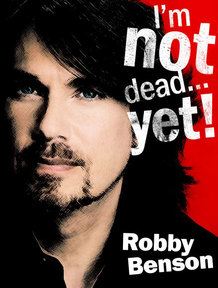
That said, Robby has a new book out, I’m Not Dead…Yet. This book seems more my cup of tea – it’s a medical memoir which recounts the story of Robby’s four (count ’em) open heart surgeries. Although this is not a subject with which I have much personal experience, I would be interested in hearing about his journey. So, I am willing to give Robby Benson, author, another try.

In the meantime, there’s always RobbyBenson.com

The Day I Killed James – Catherine Ryan Hyde

People die of love.

Eighteen-year-old Theresa believes this to be true, or at least she claims she does in Catherine Ryan Hyde’s YA novel, The Day I Killed James. We meet her at the beginning of her therapy sessions with Dr. Grey. She doesn’t like him very much.

I’ve thought about dumping him and getting  somebody else, but that would be the easy way out, which I’m not entirely sure I deserve.

So why is Theresa in therapy? Well, James, the buff boy next door – who has been trying to get her attention forever – ends up dead after she takes him to an end-of-year party in an effort to make her boyfriend, Randy, jealous. It isn’t until weeks after his death that Theresa can admit to perhaps liking him…just a little bit.

If I had felt it any more strongly, I might have cracked like a china cup. It was like a pressure inside me, like an old steam boiler, and I just lay there hoping it would hold. Hoping I would hold.

Theresa isn’t a horrible person and taking James to the party to make Randy jealous isn’t the worst thing she could have done, but the aftermath of that event sends Theresa off on a journey of self discovery that is actually long overdue.  Theresa has some things to work out and while James might be the catalyst, some of her problems pre-date him.

I didn’t like the beginning of The Day I Killed James very much. The story is told mostly as a series of journal entries prescribed by Dr. Grey. Things improve a little bit in the novel’s second part. Theresa is now Annie and she’s left home not so much to sort out her life, but to escape it. She soon discovers that it’s almost impossible to avoid all human contact. Her sudden ‘relationship’ with a precocious eleven-year-old girl named Cathy ups the ante a little – but also seems slightly forced.

However, when all is said and done, I think teens will quite like the story of what it means to love and how important it is to take care of each others’  heart.

Stitches – David Small

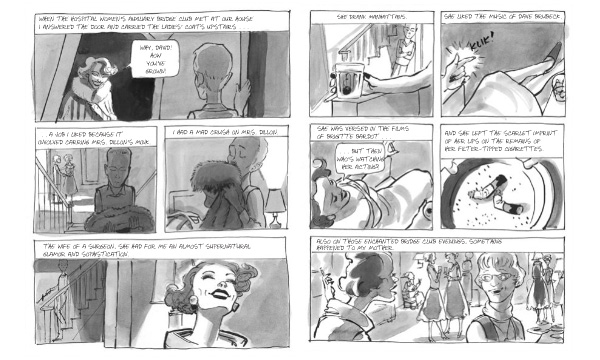
I am not a graphic novel aficionado, but David Small’s Stitches  has been on my tbr radar for a while. Small’s memoir of growing up in 1950’s Detroit with an older brother, a radiologist father and a bat-shit crazy mother (although the discovery of her secret life makes her a tad more sympathetic) has won a slew of accolades and was a finalist for several major awards including the National Book Award.

I can’t comment on the quality of the art – or how it compares to the art of other graphic novels because I don’t have any frame of reference. All the pictures are simple and black and white, but they were very effective drawings.

The story of David’s life begins at six. The reader learns a little bit about his family, his absent father, his cold and distant mother.  Memoirs aren’t meant to dissect an entire life; rather, this is the story of one life-altering moment. A growth on David’s neck, discovered when he is 11, must be removed. The diagnosis: a cebaceous cyst. It takes David’s parents three and a half years to organize the surgery – not just one operation, but two. When David wakes up from the second operation, he discovers that his vocal chords have been severed and he is, for all intents and purposes, mute.

I read Stitches in an afternoon. It’s a sad tale, made darker because of the author’s muted drawings. For anyone wondering whether it is possible to have a worthwhile life after a craptastic childhood, Stitches is proof-positive.