Hang the Moon – Jeannette Walls

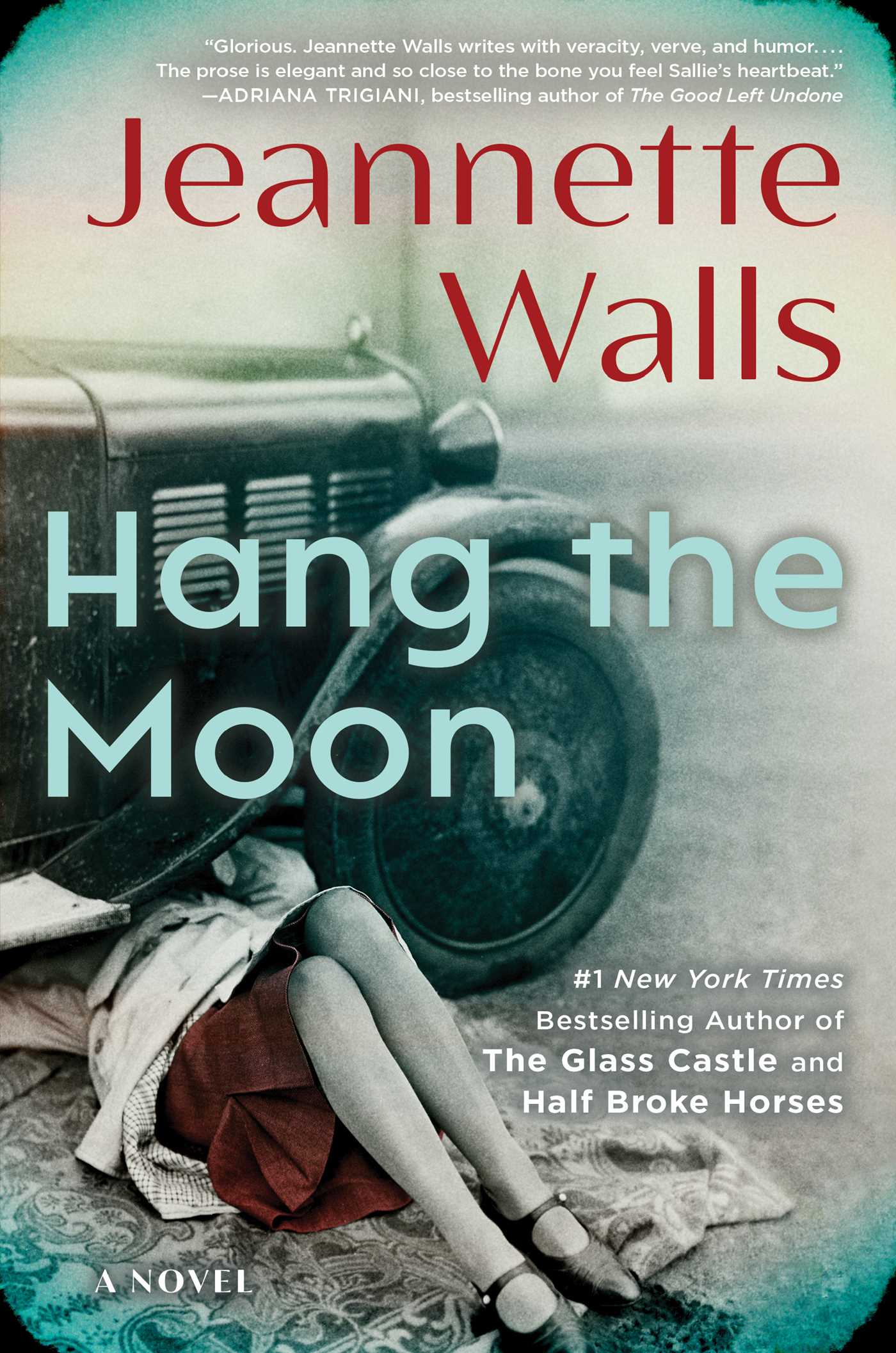
I wouldn’t have read past page 10 if not for the fact that Hang the Moonwas this month’s book club read. Although I read and enjoyed Jeannette Walls’ memoir The Glass Castle years ago, this is the only other book I have read by her and I certainly won’t be reading anything else. In fact, since this is a Heather’s Pick – it will be going back to the bookstore for a refund.

Sallie Kincaid is the daughter of Duke Kincaid, a larger-than-life figure in a small town in the 1920s. Sallie admires her father even though, as it turns out, he’s not really worthy of that admiration. When she is eight, she causes an accident that injures her step-bother Eddie and she is sent away to live with her Aunt Faye. When she returns to the Big House, she is 17. Do we really know what happens during that time? How she is molded by this experience? How it shapes her opinion of her father and the other members of her family? Nope.

Back at the Big House, Duke gives Sallie a job collecting the rents from all the farmers who live on his land. She’s really good at it…because she just is. She can drive a car, and shoot a gun, and also talk to people. Sallie says “it is a horrible job, grueling and dusty, grimy and greasy, thankless and endless. And I love it.” Sallie is determined to carve her own way in the world, and to win her much-adored (but undeserving) father’s approval.

Despite the accolades this book received – including a starred review from Kirkus – I thought this book was just awful. I didn’t believe any of the characters. It was an eye-rolling, over-the-top series of “shocking” deaths and familial reveals that just strained credulity.

Save your time and money.

Everything We Lost – Valerie Geary

Valerie Geary (Crooked River) is definitely an auto-buy author for me. Although Everything We Lost wasn’t what I was expecting, I still found the book well-written and thoughtful.

Lucy Durant was just 14 when her older brother, Nolan, 16, disappeared. Although life wasn’t particularly easy for the siblings (their father left and their mother turned to alcohol), they have always been close, that is until Nolan’s former best friend, Patrick, starts paying attention to Lucy and she decides that Nolan and his interest in the stars and UFOs is just too uncool.

After Nolan goes missing, Lucy goes to live with her father and that’s where we find her, ten years later, with a stalled life. Her father, Robert, is about to remarry and he feels that it’s time for Lucy to get on with her own life.

They were kicking her out. She had seen this coming, was surprised it hadn’t happened sooner, like after she dropped out of college her freshman year, but still her eyes blurred with tears that she quickly blinked away. She wasn’t ready. She would never be ready.

At loose ends, Lucy returns to Bishop, the small California town where she grew up. She feels as though she might finally be able to unravel the tangled truth of what happened the night that her brother disappeared. That means she’s going to have to talk to her mother, from whom she’s been estranged for the past decade. It also means that she is going to have to try to remember what happened on that last night she and Nolan were together.

Lucy and Nolan take turns telling the story of what happened leading up to the night Nolan goes missing. Nolan’s narrative illustrates his growing isolation, and fascination with outer space. He is convinced of the existence of life on other planets and extraterrestrials. He spends all his time watching the sky and taking notes about what he sees. When he meets a strange and beautiful girl called Celeste, he is sure that she is from another planet.

Everything We Lost is really a coming-of-age story, even though Nolan’s disappearance is an intriguing mystery. Geary writes Lucy and Nolan’s story as believer and non-believer. From the outside looking in, it is easy to dismiss Nolan’s increasing paranoia as just that: the men in the black cars are watching him; the lights in the sky are from space ships; he imagined Celeste before she miraculously appeared in his life.

Although I have my suspicions about what happened to Nolan — and I think the clues are in the story — Geary doesn’t offer any easy answers, and I am okay with that. Everything We Lost isn’t a quick read, but I enjoyed the book.

Brother – Ania Ahlborn

Ania Ahlborn’s novel Brother is like getting throat punched. Well, I haven’t actually ever been throat punched, but I can imagine what it’s like.

Michael Morrow is nineteen and lives with his older brother Rebel, younger sister Misty Dawn, and their parents, Wade and Claudine in a remote part of Appalachia. Another sister, Lauralynn, no longer lives at home. It is clear from the book’s opening lines that life at the Morrow house is not normal.

Michael twisted in his bed, the threadbare blanket he’d used all his life tangled around his legs. A girl was screaming bloody murder outside….Those girls usually went quiet fast. They’d yell so hard they ended up making themselves hoarse. Them’s the perks of livin’ in the wilderness, Momma had once said. You scream and scream and ain’t nobody around to hear.

It’s hard to talk about this book without spoiling the dark and sinister things that happen in this house, but I think you’ll get the idea pretty quickly. And trust me when I say – this book goes there, all the way there. And even though Michael is a part of it all, he is also an incredibly sympathetic character. His life cracks open a little bit when he meets Alice, a girl about his age who works at a local record store.

She looked like Snow White from Lauralynn’s old book of fairy tales, except a hundred times more beautiful and wearing all black, looking about as modern as the music sounded.

Meeting Alice gives Michael a sense of hope. She reminds him that the world is big and full of possibility, if he can only find a way to escape his family. But that is easier said than done. The major problem is his brother Reb, a quick-tempered drunk who is impossibly cruel and cunning. Reb easily manipulates Michael and it isn’t until the novel’s unbelievable climax that you realize just how evil he truly is.

There are no moments of levity in Ahlborn’s book; it’s as black as pitch. And that makes it sort of odd to admit that I loved it, but I really did. Despite the atrocious acts committed by Michael, I just wanted him to find a way to escape. I watched him struggle to make sense of his life and if anyone was deserving of a redemptive ending, it was certainly him.

He was starting to see how he could separate himself from the responsibility of the things he’d done in his life. The fear. The manipulation. The sense of duty that had been beaten into him.

In the sections focused on Reb, we are provided with a glimpse into how his own experiences have shaped him. It doesn’t actually make him any more likeable, though. Claudine, the book’s most reprehensible character, has a horrifying backstory, too, but I really didn’t like her.

Brother is a pulse-pounding, emotionally resonate and horrifying novel and I highly recommend it…if you have a strong stomach and aren’t prone to nightmares.

Lessons in Chemistry – Bonnie Garmus

I don’t know what it is about hyped books, but I rarely like them as much as everyone else does. It probably says more about me than it does about the book, really. Everyone and their dog loved Bonnie Garmus’s novel Lessons in Chemistry and I was actually looking forward to reading it when it was chosen for my RL book club. Sadly, it just wasn’t for me.

The novel is about Elizabeth Zott, a brilliant woman who is a chemist without the credentials because she was forced to leave her program after being sexually assaulted by a lecherous professor. It’s the sixties and there is no recourse for her. When she files a complaint, the cops ask her if she would “like to make a statement of regret” for defending herself. It’s the 60s and that’s the world Elizabeth is living in.

When the novel opens, Emily Zott is working as the host of a cooking show called Supper at Six. She is not a natural in front of the camera and she certainly won’t play the games demanded of her by the studio execs including smiling a lot and wearing tight fitting clothes. She does, however, tap into something women seem to want: someone who sees them and understands them.

You’d never find Elizabeth Zott explaining how to make tiny cucumber sandwiches or delicate souffles. Her recipes were hearty: stews, casseroles, things made in big metal pans. She stressed the four food groups. She believed in decent portions. And she insisted that any dish worth making was worth making in under an hour.

The novel unravels Elizabeth’s story backwards from this point. We learn how she ended up, a single mother, in front of the camera. We watch as her relationship with Calvin Evans, a brilliant and award-winning chemist unfolds, from its antagonistic meet cute to its tragic ending. We watch as she struggles to be taken seriously in the man’s world of science. We watch her teach her dog, Six-Thirty, to understand human words.

Lessons in Chemistry is a book crammed with characters and ideas and lessons about chemistry equality, but none of it is subtle. The narrative isn’t just Elizabeth’s, either. We get to hear about Calvin and his personal tragedies. We even get to hear from the dog. Yep. This book tried so hard to be funny, but mostly I just rolled my eyes at how unbelievable these characters were. The ideas are sound; the delivery not so much.

I wanted to like it, but I just didn’t.

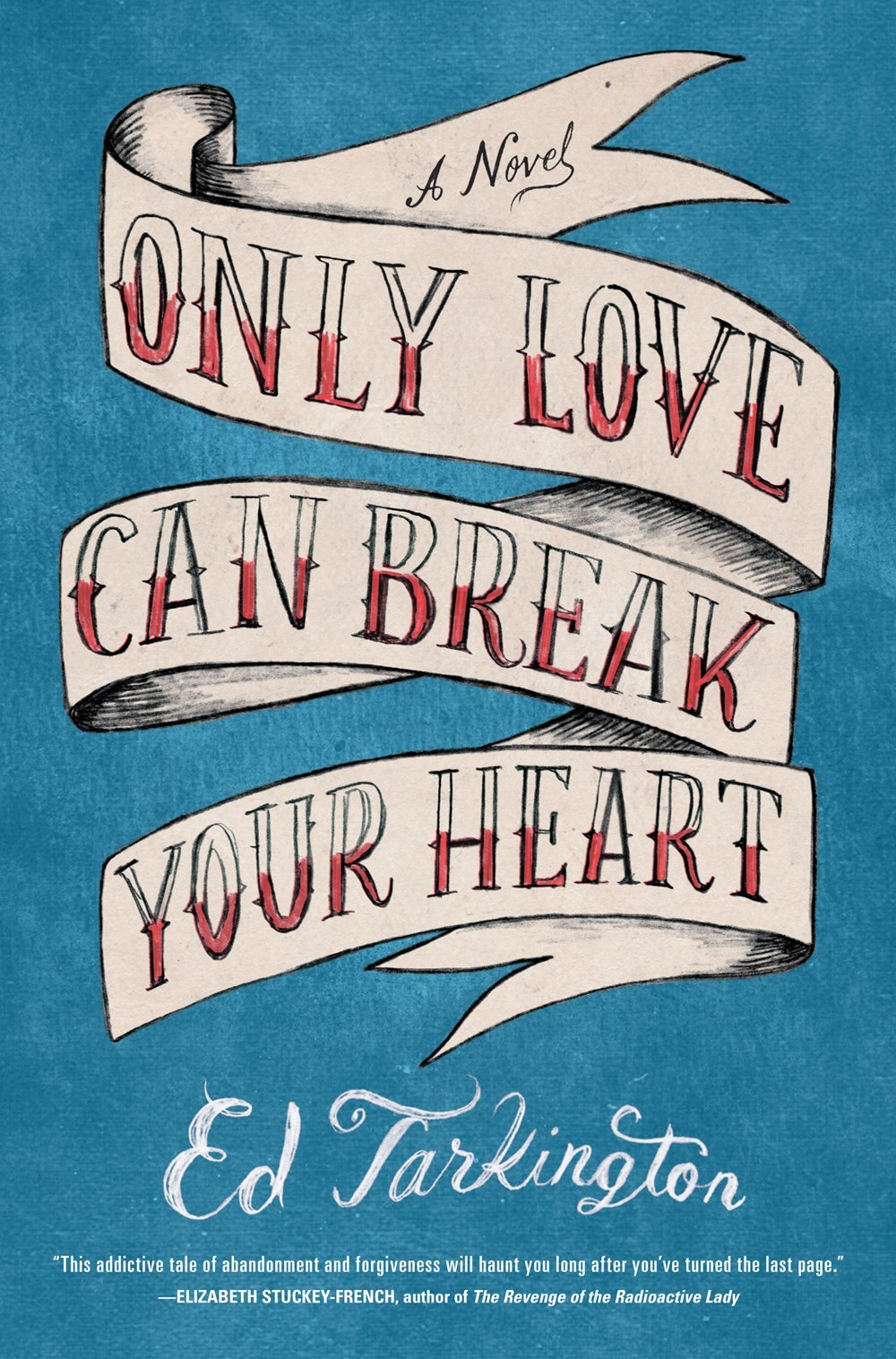
Only Love Can Break Your Heart – Ed Tarkington

The whole time I was reading Ed Tarkington’s debut novel Only Love Can Break Your Heart, I was having this weird deja vu. I don’t know whether it was specific plot points – although the story isn’t particularly original – or just the book’s general vibe. In any case, it was very reminiscent of M.O. Walsh’s My Sunshine Away or any number of Thomas H. Cook’s mysteries. This is high praise, trust me.

The narrator of Tarkington’s novel is Richard “Rocky” Askew. He’s telling this story from some distant point in the future, but when the book opens he is seven and lives with his father, “the Old Man”, mother, Alice, and his older-by-eight-years step brother, Paul, who “had a reputation around town as a “bad kid.””

Rocky worships Paul, hangs on his every word, and follows him around like a puppy. He is equally smitten with Leigh, Paul’s girlfriend, daughter of the town’s judge. When the novel opens, Paul suggests a visit to Twin Oaks, the huge unoccupied mansion with a violent history near the Askew’s property. Turns out, someone (Brad and Jane Culver) has purchased the house and Paul is shot on the property. This incident sets off a strange chain reaction of events – perhaps too many for one book – that includes a failed business deal, a romantic tryst between a teenaged Rocky and the Culver’s adult daughter, Patricia, and a double homicide. This murder comes late in the novel and propels the novel’s final chapters forward to its tidy conclusion.

Only Love Can Break Your Heart is not a story which is driven by plot. This is a story about family, love, regret. The novel takes place, for the most part, in the 70s and 80s. Paul introduces to Rocky to music, including Neil Young, whose song “Only Love Can Break Your Heart” provides the title of book. This is a novel that is very much steeped in a time and place. That’s one of the novel’s admirable traits. Actually, there is a lot to like about this book even though sometimes I felt like I wanted more of one thing (why did Paul “kidnap” Rocky; where did Paul disappear to and why?) and less of another (the choice of Equus as the high school play felt a little too on the nose).

Still, I enjoyed my time with Rocky and although there wasn’t a huge emotional payoff at the novel’s conclusion, this was still a great read.