A Little Princess -Frances Hodgson Burnett

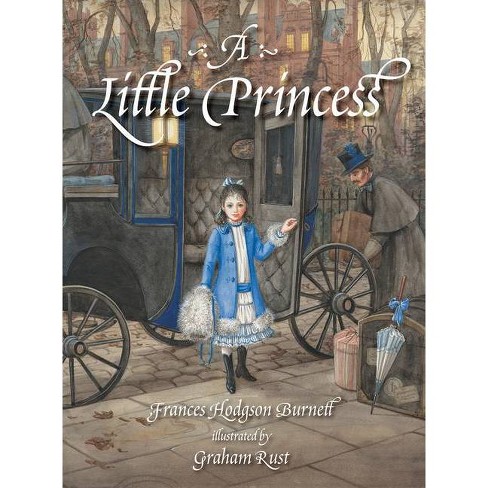
This month’s theme for our school’s student book club was childhood classics and students were invited to read or re-read a beloved story. I chose Frances Hodgson Burnett’s A Little Princess, a story I have read several times over the course of my life, but not for at least twenty years.

This is the story of Sara Crewe. At seven, she and her father leave their lives in India and head to London, England, where Sara is to become a pupil at Miss Minchin’s Select Seminary for Young Ladies. Sara’s mother is dead and she and her father share a close bond and “They had always played together and been fond of each other.”

Sara is a curious, self-possessed child, with “a queer old-fashioned thoughtfulness in her big eyes.” She seems to draw the ire of Miss Minchin almost immediately, but she befriends several of her classmates, and the housemaid, Becky, by telling them imaginative stories.

When something horrible happens to change Sara’s financial position, Miss Minchin send her to the attic to live with Becky and mistreats her horribly. Plucky Sara never complains, though. She has her imagination to keep her company, and soon enough, she draws the attention of the Indian gentleman that lives next door and the family across the square.

I loved A Little Princess when I first read it as a kid and I still love it now. Sara is so determined to see the good in everyone and her intelligence and kindness are admirable traits.

Time spent with Sara Crewe is always well spent.

The Darkest Corners – Kara Thomas

Eighteen-year-old Tessa is returning to her childhood hometown of Fayette, Pennsylvania to visit her incarcerated father who is dying of cancer. This isn’t the only reunion she’s facing. When she moved to Florida to live with her grandmother, she left behind her best friend Callie and the trauma of having to testify in a murder trial. She and Callie are estranged now, which makes the fact that she is going to be staying with Callie and her parents slightly uncomfortable.

Home is both different and the same. There’s a reminder around every corner of the summer when she was nine and Callie’s cousin Lori was murdered. She and Callie were material witnesses in the trial that put Wyatt Stokes behind bars, not only for Lori’s murder but for a string of other homicides. Not long after she lands back in Fayette, another girl is killed and it’s impossible not to see the similarities between this girl and all those who came before. But how is it possible, when Wyatt Stokes is behind bars? Things just don’t add up and so Tessa (and eventually Callie) start to dig into their memories of what happened that long ago summer.

The Darkest Corners is a fun read, but it’s definitely better if you read it in one or two sittings because there is a lot going on and a lot of character names to keep track of. Some of these characters have very little to do and are not much more than names on a page. They drive a certain part of the plot and are dropped like hot potatoes. Other characters, like Tessa and Callie, are more rounded. The last fifty pages – although perhaps not all that believable – flew by.

Mostly though, it was a good time.

When I Was Ten – Fiona Cummins

Something horrible happened at Hilltop House.

Fiona Cummins’ thriller When I Was Ten travels back in forth between then (the immediate aftermath of the crime and then even further back to the time leading up to it) and now, twenty years later.

After Brinley, one of two main characters, reveals that she was struck by lightning when she was twelve, she also tells us that the parents of her childhood friends, Sara and Shannon, were “Stabbed fourteen times with a pair of scissors in a frenzied and brutal attack.”

Catherine Allen, the other protagonist, lives a quiet life with her husband, Edward, and twelve-year-old daughter, Honor. She “only wants to be ordinary” but the truth is that her story is anything but.

How are these two women connected? That part of the mystery is easily solved, but there is so much more to come in Cummins’ novel about childhood friendship, family relationships, and abuse. As Brinley, a journalist, starts to revisit her part in what happened at Hilltop House, the book picks up steam and the last half was pretty much unputdownable. Cummins was a journalist, so she has some interesting observations about the parasitic nature of true crime journalism.

Overall, I really enjoyed this book.

In the Path of Falling Objects -Andrew Smith

Jonah, 16, and Simon, 14, have left their home and are heading to Arizona to find their older brother, Matt, whom they hope will have returned from the Vietnam War and will be waiting for them. They’ve got nothing but the clothes on their backs, a crumpled ten dollar bill, Matt’s letters to Jonah, Jonah’s notebook, and a loaded pistol.

The brothers are at odds with each other, but that’s because Jonah is trying to honour Matt’s wishes that he look after Simon and Simon clearly doesn’t want to be looked after. They have a brother’s code though and it turns out, they’re going to need it.

When the1940 black Lincoln Cabriolet passes them, Jonah knew “It was as out of place in the dessert as a sailboat would have been, and it was the kind of car you knew had to carry stories with it, but I had no intention of finding out what those stories told.”

The driver, Mitch, and his passenger, Lilly, stop for the boys and thus begins their nightmare.

I felt like I was being swept along by something that had already gone too far. I knew I didn’t like Mitch from the moment I saw him, but there was something about that girl…

From the moment the boys get in the car, it is clear that Mitch is nuts. (Well, readers will know that from the book’s very first page.) The novel is almost unbearably suspenseful as we are swept along across the desert. Is Lilly Mitch’s girlfriend? Prisoner? Is she manipulating Mitch or the boys? I was so concerned for their safety.

Interspersed with their “adventure”, we read Matt’s letters to Jonah, which are filled with the horrors he is experiencing in Vietnam, a notoriously brutal and unforgiving conflict.

Andrew Smith has written a compelling, brutal, nail-biting story about survival, brothers and the horrors to be found at war and right here at home. I loved it.

The St. Ambrose School For Girls – Jessica Ward

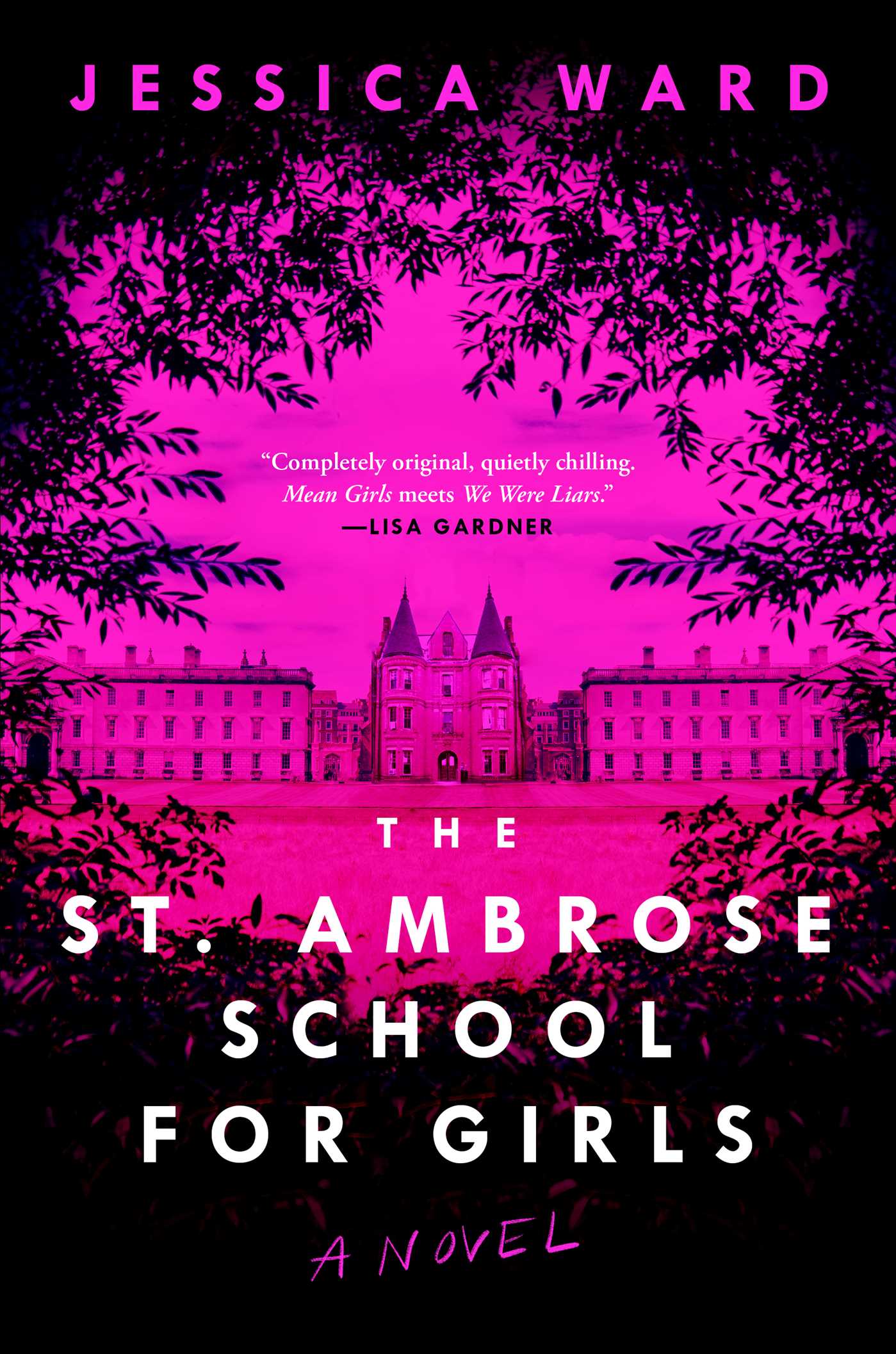
The St. Ambrose School for Girls by Jessica Ward (perhaps better known as J. R. Ward) has been compared to everything from The Secret History (laughable) to We Were Liars (um, okay maybe in the sense that like Candance, Sarah Taylor is an unreliable narrator). I think I bought the book because I liked the cover and I like dark academia. I still like the cover and I still like dark academia, but this book was…annoying.

Fifteen-year-old Sarah Taylor has won a scholarship to the prestigious St. Ambrose School in Massachusetts. There is NO WAY she’d have been able to attend without the scholarship. Her father is MIA and her mother is a lunch lady who trades in boyfriends as often as one might change their socks.

Sarah, who says she is going to tell people her name is ‘Bo’, but never actually does, is an odd duck.

Unlike the other girls I see walking around campus–who look like they’ve stepped out of the rainbow page of a United Colors of Benetton ad–I’m dressed in black and loose clothing. I’m also not wearing shoes, but lace-up boots with steel toes. My hair is dyed jet black, although my mouse-brown roots are starting to show already, a trail of mud at night.

Things don’t really start smoothly for Sarah. For starters, she finds herself in Greta Stanhope’s crosshairs from day one. When they meet, Sarah notes that Greta “somehow manages to smile wider and narrow her stare at the same time. It’s a cute trick. If you’re Cujo.”

Then the pranks start. They’re minor things, but they are upsetting to Sarah. Her roommate, the star athlete Ellen “Strots” Strotsberry, encourages Sarah to ignore Greta and her minions. “Just don’t give ’em what they’re looking for and they’ll get bored.” Easier said than done, but honestly, the pranks are so benign they’d be easy enough to ignore. And the fact that they make up three quarters of this book is frustrating because nothing happens until about the last fifty pages.

In fact, so much of nothing happens that I started to be distracted by Ward’s weird writing tick of starting multiple sentences with “As.” And when I say multiple, I mean it – sometimes as many as three or four on a single page and it drove me crazy!

The St. Ambrose School For Girls was a long book. The last fifty pages were marginally better, but the truth of the matter is that I didn’t care about any of these characters – even the so-called ‘mean girl’ wasn’t mean enough and the plot was neither “riveting” nor “twisty.”

Not for me.