Broken Country – Clare Leslie Hall

I am clearly more of a sucker for the hype than I originally thought. I watch a decent amount of BookTube and follow a few bookish accounts on Insta. (I ditched Facebook a few months ago, but haven’t abandoned this Meta dumpster fire product yet – mostly because I have found it less dominated by advertising.) I have been seeing Clare Leslie Hall’s book Broken Country lauded all over the place and, of course, it’s a Reese’s Book Club pick. (I love that Reese is such a bookworm and that she is turning these books into movies and series.) The clincher for me was the book had been compared to The Paper Palace and regular readers of this blog will know that that was my favourite book of 2021. (Miranda Cowley Heller, author of The Paper Palace, even blurbed Broken Country.)
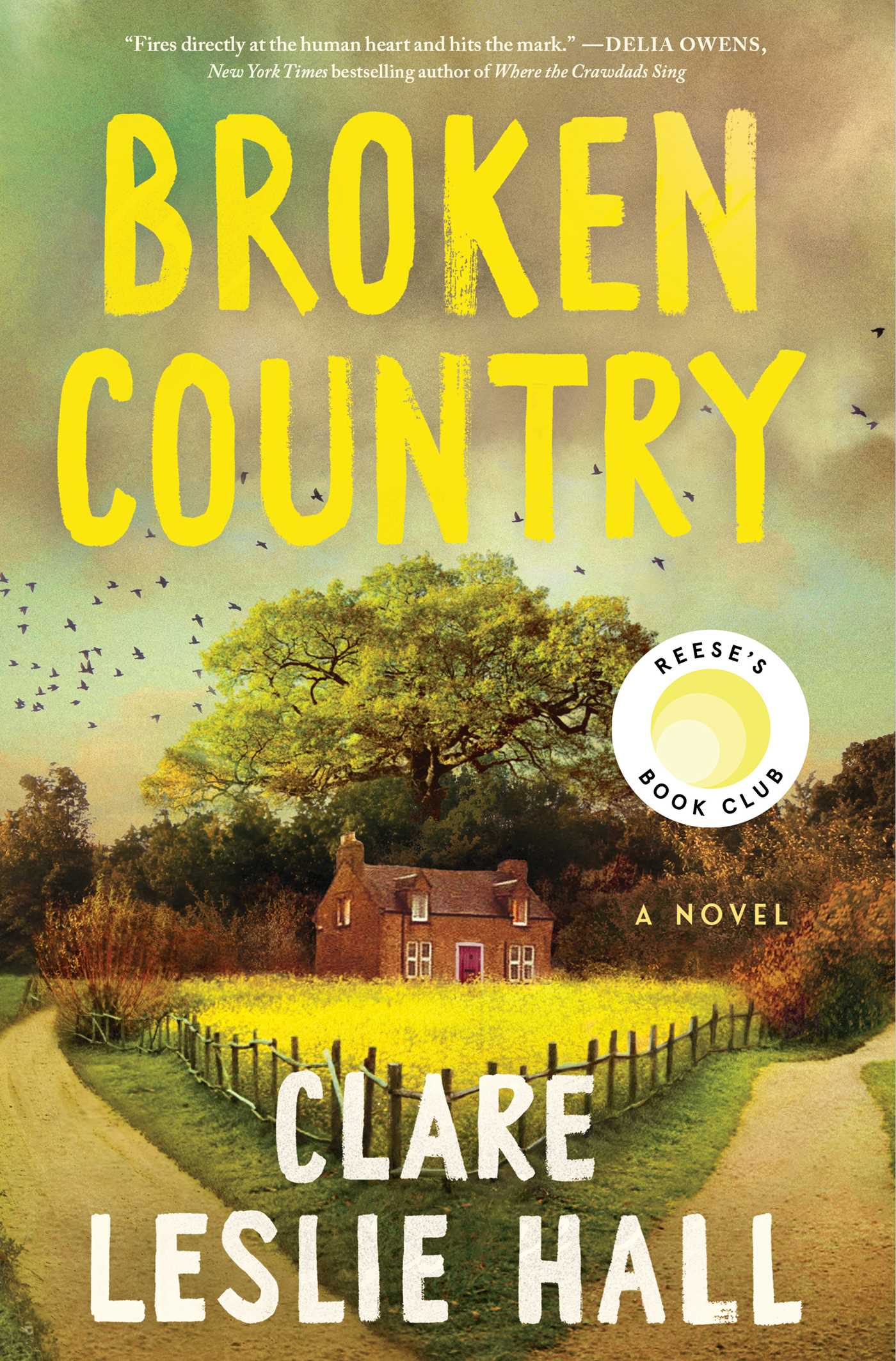
It is 1968 and Frank and Beth are happily married, living a quiet but busy life on their farm in North Dorset. They have had some recent heartbreak, the loss of their son, Bobby, but they’re healing and they have each other and Frank’s younger brother, Jimmy, who is like a little brother to Beth.

In all the fantasies over the years of meeting Gabriel Wolfe again, driving his child and his dead dog home was never one of them.

So, who is this man who upsets the apple cart of Beth’s life? They’d met thirteen years before, when they were teenagers and Beth was out walking and ended up on private land owned by Gabriel’s wealthy family. Beth has heard of him through the small-town grapevine. He was “the famously handsome boy from the big house.” Of course he’s beautiful (they always are), but Beth also remarks that “He’s not my type at all.” (Yeah, totally believable.)

Their relationship is swift and intense and all-consuming, until it isn’t (for reasons I will let you discover on your own, but it’s pretty standard Romance 101 fare). After things end with Gabriel, Beth returns home and into the waiting arms of Frank, who has been carrying a torch for her since they were kids. They build a life together and it’s a life that Beth loves. Until Gabriel resurfaces at his family home, Meadowlands.

Look, Broken Country, was easy peasy to read. I finished it in a couple sittings. I am a sucker for anything angsty and when I started this book I was sure it was going to fill my angst cup to overflowing.

You can live a whole lifetime in a final moment. We are that boy and girl again with all of it ahead, a glory-stretch of light and wondrous beauty, of nights beneath the stars.

Broken Country starts with a murder trial, and so that propels the book along because it’s a while before you learn the circumstances of who and why. There are a couple twists you might not see coming. The writing is decent. The characters are all good people trying to make the best choices they can under the circumstances they are presented with. The issue is that I just didn’t understand the insta-love between Gabriel and Beth, like, at all. And truthfully, I wasn’t even really rooting for them. We are shown their relationship in flashbacks, but it wasn’t anything earth shattering. Same with Beth’s relationship with Frank. By all accounts, he’s a top-shelf guy. And he sticks by Beth even when some might say he shouldn’t. And then there’s Jimmy – whose reaction to business that is not his is, imho, over the top.

Lots of people have gushed about the inherent heartbreak in the story of these people, but I wasn’t moved. I could see all the moving parts, I was just never invested. I think loads of people will (and have) love this book. I don’t begrudge the time I spent with it at all. It was just okay for me.
Gone to See the River Man – Kristopher Triana

Kristopher Triana is a new-to-me author, but I think he is relatively well known in the horror community, particularly for readers of cosmic or extreme horror. To be honest, I don’t think I knew much about what constituted those two subgenres of horror, so I did a little research. According to Wikipedia, cosmic horror (also known as Lovecraftian or eldritch horror) is “is a subgenre of horror, fantasy, or weird fiction that emphasizes the horror of the unknowable and incomprehensible more than gore or other elements of shock.It is named after American author H.P. Lovecraft (1890–1937). His work emphasizes themes of cosmic dread, forbidden and dangerous knowledge, madness, non-human influences on humanity, religion and superstition, fate and inevitability.” Extreme horror didn’t have its own entry on Wiki, but it has been called splatterpunk, which is described as a “literary genre characterised by graphically described scenes of an extremely gory nature.”

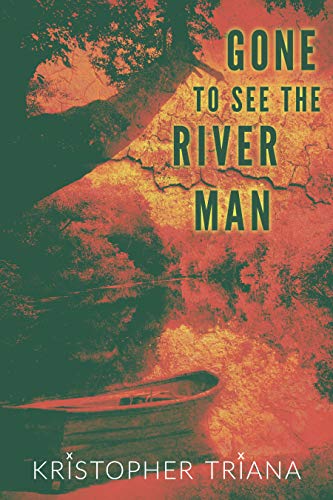
So that brings us to Triana’s novel Gone to See the River Man, a book that has been described as both cosmic and extreme. What exactly was I getting myself into? I wondered.

Thirty-nine-year-old Lori lives with her older sister Abby, not necessarily because she wants to but because Abby needs care. Lori doesn’t have much of a life. She works at a diner, has just broken up with her boyfriend, and is obsessed with Edmond Cox, a notoriously violent sexual sadist and serial killer. Cox isn’t the first incarcerated psychopath Lori has corresponded with, but she really feels the two share a special bond. She’s visited him a handful of times at Varden prison and she has just agreed to do Cox a favour.

“You’ll find the key in the chest,” he said, reiterating the letter’s instructions. “You’ll find it deep in the low valley of Killen, along the Hollow River, in the shack I done told you about. The one they never knew about.”

“You can count on me. I’ll bring the key as soon as –“

“Nah. Ya ain’t gonna bring it to me. I ain’t the one the key belongs to no more, see? Ya gotta take it to The River Man.”

So, not really understanding the quest or who The River Man is, Lori and her sister set out on a journey that will change her life forever.

Gone to See the River Man surprised me and I mean that in a good way. I tracked it down (not necessarily easy because it’s not traditionally published) because I had heard a lot of book tubers talk about it and I thought, sure, I’ll give it a go. I thought the writing was terrific. Lori herself was a complex character and certainly not who I expected her to be. As her story unravels (told in flashbacks), we see that she has some darkness in her that makes her attraction to Cox more understandable.

As she and Abby head out into the wilderness, first looking for the shack and the key and then heading down the river to find the River Man, things do get weird. Extreme? I don’t know – maybe I have a high tolerance for squick. There was definitely some of that, but mostly the imagery was nightmarish without being necessarily gratuitously violent.

Not gonna lie: I thought this book was great.

Dark Horses – Susan Mihalic

By page fifteen of Susan Mihalic’s novel Dark Horses, I knew that I was in for a ride – and not just because this is the story of fifteen-year-old equestrian Roan Montgomery. This early into the story I’d learned that Roan is a skilled rider and shares a special bond with her horse, Jasper, that her relationship with her mother is tenuous partly because she’s having an affair with a teacher at Roan’s school, and that her relationship with her father, Monty, is close. And when I say close I mean he enters the bathroom while Roan is in the tub and kisses her, “his mouth gentle and persuasive.”

Roan only cares about riding and her life revolves around training. Her father was an Olympic medal winner and now trains Roan. She goes to school because she has to, but what she really wants is to do well at competitions so that she can earn a spot on an Olympic team.

Roan’s life is pretty insular. Although their farm, Rosemount, employs a handful and people, including Gertrude and Eddie who have been there since before Roan was born, Roan is isolated. She doesn’t have friends or a cell phone; her life is strictly controlled by her father. That is until she starts getting to know Will Howard, a guy at school.

Her friendship with Will amps up the tension between Roan and Monty because she has to keep Will a secret. And she has to keep the sexual relationship with her father a secret from Will. Mihalic does an interesting thing with the incestuous relationship. Roan is trapped by her complicated feelings for her father: she loves him and she loathes him, sometimes at the same time. She acknowledges how confusing it is that “I didn’t fight or scream, […] my body responded to his, the ease with which he made me come–the fact that I came at all.” She has spent a long time compartmentalizing all these feelings. She admires her father’s coaching abilities. But she is becoming increasingly uncomfortable with the sexual relationship. There’s no saying no to Monty.

There’s nobody reading this book who is going to think what Monty is doing to Roan is anything but abuse, but Roan is only coming to that realization as her feelings for Will grow. When Monty realizes that Will is a real threat to this prison he has kept Roan in, he tightens the noose. Then there is no question that he is raping his daughter. It’s devastating.

It’s not right to say that I “enjoyed” this book, although I did fly through it, wholly invested in Roan’s story. If I have one complaint it’s that I hated the way the book ended. Well, maybe ‘hate’ is too strong a word. Something big had to happen, for sure, and something big does happen. For me, it just wasn’t big enough. I hated Monty Montgomery and he just didn’t suffer enough.

Dark Horses is an unflinching look at sexual abuse and what it means to be a survivor. It’s graphic and certainly has the potential to be triggering, but I thought it was a compelling read.

The Four – Ellie Keel

Donna Tartt’s 1992 novel The Secret History is the dark academia novel all others aspire to be. This is a sub-genre of fiction that I really love, so I am drawn to books that feature isolated campuses, academics, and shifting loyalties. Ellie Keel’s debut The Four definitely scratched the itch.

Rose Lawson is one of four scholarship students admitted to the prestigious High Realms school. Telling the story of her time at the school from some years in the future, Rose paints a picture of extreme privilege and cruelty. She is saved from total desolation due to her friendship with the other scholarship students, Lloyd and Sami and her roommate Marta.

The novel opens with Rose’s admission that

It would have made our lives a lot easier if Marta had simply pushed Genevieve out of our bedroom window on our third day at High Realms. Certainly, it would have been tragic. […] She would have died instantly.

Genevieve Locke is a member of the Senior Patrol (aka a prefect), a member of the hockey team (field hockey as the story takes place in England) and she treats Marta and Rose with “lofty derision”. The truth is most of the students the four friends encounter at school are cruel and horrible, but all of the scholarship students count themselves lucky to have been chosen to attend.

Then something horrible happens and three of the friends find themselves desperately working together to protect the fourth member of their group. The Four has all the things I love in a book like this: secrets, unreliable narrators, a labyrinthine school, and surprising twists and turns that will keep you guessing until the very end. Keel is an award-winning theatre producer, but she is also a gifted writer and I will definitely be watching to see what she writes next.

Nightwatching – Tracy Sierra

When you read as many thrillers as I do, it’s hard to be not to feel as though you’ve read it already. Tracy Sierra’s debut Nightwatching definitely offers a few surprises for discerning readers.

Our unnamed narrator wakes up in the middle of the night to the realization that “There was someone in the house.”

It’s a terrifying notion because she is alone with her two young children and a snowstorm is raging outside. When she steps out of her room to investigate, she sees him at the end of the hall.

He was tall. His arms hung loose and long. His presence had the distantly familiar rancidness of something wrong and rotten she’d tasted before but couldn’t quite place.

All this woman knows is that she needs to keep her children safe. And thus begins a very long night of cat and mouse. The woman knows something about the house that she is quite certain the intruder does not know, and that’s the existence of a secret room. But even that will not guarantee long-term safety, so there are hard decisions to be made.

As they hide, the woman mulls over the details of her marriage, past trauma, and her acrimonious relationship with her father-in-law. These sections were perhaps not as exciting as other parts of the book. This book also has some interesting things to say about trauma and whether or not women are believed. I don’t want to say too much about that, but I have to admit to feeling like I was being gaslit. Is the woman a reliable narrator? Could I trust what I was being told?

While some parts of the book were a tad slow, there were lots of moments when the pages turned themselves and, at the end of the day, I felt like the book really delivered on its promise. Sierra is definitely a writer to keep your eye on.

Mercury – Amy Jo Burns

When 17-year-old Marley West moves to Mercury, Pennsylvania with her single mom, Ruth, she has no idea just how much her life is about to change. At a baseball game she meets Baylor Joseph, oldest of the three Joseph boys, sons of local roofer Mick and his wife, Elise. She is soon pulled into the Josephs’ orbit, into rivalries and old traumas she doesn’t understand. She comes to understand that “The Josephs were the close kind of family that fought in equal measure but didn’t know how to make up.”

Amy Jo Burns’ novel Mercury is a family drama that covers several years in the lives of the complicated Joseph family and how Marley comes to love them. Although she initially meets them because of Baylor, it is her relationship with the middle son, Waylon, that cements her place in the family.

It doesn’t take long before Marley figures out that Baylor is “the flinty kind of young man … whom everyone feared and nobody liked.” Their relationship is short lived. Her friendship with Waylon, though, is worth keeping. Waylon is “easier, kinder, gentler”. This is the relationship that sticks.

Although Mercury opens with the discovery of a dead body in a church attic, and although this mystery is important, it isn’t actually what drives the narrative. The book uses the body as a jumping off point before it circles back to the beginning of the story of Marley’s arrival in Mercury and how her relationship with this insular and complicated family shifts loyalties and both frays and strengthens bonds. It’s a very character-driven novel, and all of the characters are complicated and beautifully rendered. There are no bad guys, just people trying to do their best for reasons that don’t always make sense. I really loved Waylon and Marley in particular, but I also loved the secondary characters including Marley’s best friend, Jade, and the youngest Joseph, Baby Shay.

Mercury is my second book by Burns (Shiner) and she is definitely an autobuy author for me now.

Great book.