Unknown's avatar

About Christie

Book lover. Tea Drinker. Teacher. Writer. Mother. Canadian.

Wilder – Andrew Simonet

Jason Wilder is a high school senior who doesn’t actually attend classes. Instead, he spends his time in the Rubber Room…for his own protection.

Officially, it was In-School Suspension, but kids called it the Rubber Room. It wasn’t covered in rubber, but it was delinquent proof. […] The Rubber Room was set up to prevent tragedies like school shootings, or at least to make it look like you could prevent them.

Jason set a fire that hurt someone and now he’s a target. The thing about Jason is that he’s big and tough and, according to Meili, “a danger because [he] wants to be.”

Meili is in the Rubber Room because, according to the story that’s been passed around and likely exaggerated, she broke someone’s finger. She’s not afraid of Jason or his reputation for violence; she is fearless, mysterious, and just a tad crazy.

These are the characters in Andrew Simonet’s debut YA novel,Wilder.

Despite his propensity for violence, Jason is a sympathetic character. He has a distinctive voice and a troubling backstory. He lives alone; his mother and her boyfriend, Al, have moved to Florida, apparently to dry out. He lives in their crappy house existing on the little bit of money they send home to him. Because he is on probation for setting the fire, he can’t let anyone know that he lives alone. It’s not that hard to keep it a secret; Jason doesn’t really have any friends. Until Meili.

It is clear from early on in the story that something happens to Jason and Meili. Jason informs us

I have lots of time now to think about what happened. I’m straightening out how one thing led to the next, how I got drawn in, how things became inevitable.

Other people have their ideas, what should have happened, what I did and didn’t do. Meili has her version. This is my story, what it’s like inside my skin.

It is no wonder Jason and Meili are drawn to each other. It is also no wonder why things end up going horribly wrong.

I never want Meili – or anyone – to be so betrayed and broken. But if we’re gonna live in a world where that happens, I want this. I want her thrashing sobs and gut screams. I want to clench my body to hers and tumble. I want this velocity. I want my share.

Wilder is full of forward momentum. I found it a compelling read, but it’s definitely for mature readers. There is violence, lots of swearing and some fairly explicit sex.

Please See Us – Caitlin Mullen

Caitlin Mullen’s debut novel – and Edgar Award Winner – Please See Us is well written, but it took me forever to read. I don’t know: is that a bad thing?

Twenty-something Lily has run away from NYC and a messy breakup with about-to-be-famous sculptor Matthew and landed back home in Atlantic City. She needs a job but “it was unsettling to be in Atlantic City again — coming home had filled [her] with an inarticulate dread.” She takes a job as a receptionist at a hotel spa, a job she doesn’t want but needs if she wants to get back to her life, a new life, in New York.

Ava, aka Clara Voyant, is a teenager who reads tarot cards and palms on the strip. She lives with her aunt, Des, above the shop. They’re behind on their rent and Ava lives with the dream of saving enough money to join her mother in California. When the novel opens, Ava reads the cards of a man looking for his niece, Julie. Ava has seen the missing posters around town, but she doesn’t want to mislead the man.

I didn’t want to disappoint him with the truth: what I saw was limited, out of my control. I couldn’t just call up information from the universe as easily as plugging a question into a Google search.

Ava and Lily’s paths cross and soon they are working sort of together to find out what has happened to the missing girl who, turns out, is one of several missing girls. Of course, the reader will already know that the outcome of the man’s search probably won’t be good. The novel’s opening lines tell us that “By the second week of June, there are two dead women laid out like tallies in the stretch of marsh just behind the Sunset Motel.”

Mullen’s novel meanders through the interior lives of Ava and Lily and also, Luis, a deaf and mute janitor who works at the spa. We also get a glimpse into the lives of the girls who end up in the marsh, poignant snapshots into who they are, and the circumstances and choices which led to this most horrifying end.

Ava and Lily are compelling characters, both young enough – especially Ava – to use poor judgement and make bad decisions. Please See Us definitely has a something to say about the violence against women, and how society sees and judges women who, often through no fault of their own, end up using their bodies as a means to an end. (Frankly, the most despicable character in this whole thing is Ava’s Aunt Des who essentially pimps her out to make rent money.) There is a mystery here, but it’s a s-l-o-w burn and might not appeal to readers who want things to move along a little more quickly.

Horrid – Katrina Leno

There was a little girl 
Who had a little curl 
Right in the middle of her forehead. 
And when she was good, 
She was very, very good, 
But when she was bad, she was horrid. 

You’re familiar with the nursery rhyme, right? Well, so is Katrina Leno and she puts it to excellent use in her YA horror novel Horrid. (And look at that fantastic cover!)

Jane and her mother, Ruthellen, have left their lives in Los Angeles and driven across country to Bells Hollow, Maine. Neither of them particularly want to be there, but they have no choice: they have no place else to go. Ruth’s has inherited North Manor, “a large colonial-style mansion with three gables at the front and four white columns supporting a white-railed balcony.” The issue is that the house is dilapidated and creepy, looking like “one big tetanus trap.” Still, Jane and her mother are hoping for a fresh start and a place to heal from their personal tragedy.

Ruth gets a job and Jane resumes her senior year, where she meets and befriends Susie and Alana. School is school and Jane doesn’t have any issues until she encounters Alana’s cousin, Melanie, who seems to dislike her on sight. Jane isn’t interested in drama and besides, Melanie has troubles of her own, including an older sister who is very ill.

North Manor’s reputation as the “creep house” is well-deserved. Lights come on before there is electricity. Jane sees a shadow in an upstairs room. Marbles roll across the floor. The smell of roses is so strong, Jane feels choked by it. There are sounds that Ruth says are just the house settling, but they sound like footsteps to Jane.

In all the usual ways, Horrid is a straight-up haunted house story. And an unsettling one, too. But there’s more going on in Leno’s book than just things that go bump in the night. Jane is tortured by her father’s death and her blind-rage temper, which only he seemed able to subdue. The house seems to exacerbate Jane’s anxiety and when she discovers a decade’s old secret, well things get really interesting.

I really enjoyed reading Horrid. Jane was a sympathetic character and the ending was not YA – all – is – well – in -the – world, which I actually really appreciated. Loads of fun.

We Weren’t Looking To Be Found – Stephanie Kuehn

Stephanie Kuehn’s latest YA offering We Weren’t Looking To Be Found concerns the lives of Dani and Camila, two teenagers who end up as roommates at Peach Tree Hills, a live-in treatment facility for young women who suffer from addiction/mental health issues.

Dani comes from an affluent Dallas family. Her mother is a city councilor, about to make another re-election bid. Dani’s relationship with her mother is strained.

…leave it to Emmeline Rosemarie Washington to care more about our community than she cares about her only daughter’s happiness. But that’s par for the course around here, as is my insistence on ignoring her concerns. My mother only cares about the Black community so much as it can make her look good and boost her political clout…

Dani’s father is “clueless; he’s always griping about stuff like eating disorders and depression being these frivolous “white people problems””.

Dani deals with her messy life by not really dealing with it at all. Instead, she self-medicates with alcohol and the pills she steals from her parents’ medicine cabinet: Xanax, Adderall and Vicodin.

Camila comes from decidedly less affluent circumstances. She lives in Lamont, Georgia where “A foulness […] clings to our clothes, seeps into our skin, and haunts our dreams.” Her father is from Colombia and her mother is Mexican American and although she knows they love her, she doesn’t feel as though they understand her. What Camila wants more than anything is to attend Fieldbrook, a prestigious dance school in New Jersey. She’s auditioned twice before and failed to gain entry; she’s hoping this time will be different. And when it is different, and then her plans are kiboshed, Camila takes drastic measures.

When their lives go off the rails, Camila and Dani end up at Peach Tree Hills. Peach Tree Hills is “the best place for adolescent girls, especially girls of color. The staff is very diverse and sensitive to context and culture.” Neither girl wants to be there, but it is also clear that they have a lot to work through in order to become whole and healthy.

Kuehn is a clinical psychologist and it would probably be easy for this book to feel didactic, but it doesn’t. The professionals who work with the girls certainly sound authentic, but they don’t “instruct” the reader or the characters. More importantly, they aren’t able to wave a magic wand and fix these girls. Each of the main characters are a work in progress and the work is often messy and difficult. Often, it’s two steps forward and one step back.

I have read several other books by Kuehn (Charm & Strange, Complicit, Delicate Monsters, and When I Am Through With You) and each of those books had a sort of psychological suspense element. We Weren’t Looking To Be Found does have a teensy mystery, which I think is oversold in the book’s synopsis. The book really doesn’t need it anyway. Camila and Dani are engaging, and intelligent narrators (they take turns telling their story) and their journey to healing – while certainly not easy – is more than enough to keep readers engaged.

The Four Winds – Kristin Hannah

Although I am certainly familiar with Kristin Hannah, The Four Winds is the first book I have read by her. This novel has loads of positive reviews and made several ‘Best of’ lists, and while I certainly had no trouble reading it, I am not sure this book has turned me into a fan.

Elsa Wolcott has been lonely her whole life. She is tall and awkward, skinny and shy.

It didn’t take a genius to look down the road of Elsa’s life and see her future. She would stay here, in her parents’ house on Rock Road, being cared for by Maria, the maid who’d managed the household forever. Someday, when Maria retired, Elsa would be left to care for her parents, and then, when they were gone, she would be alone.

Elsa is twenty-five when she meets Rafe Martinelli, a young man “so handsome she felt a little sick.” Soon after meeting Rafe, she discovers that she is pregnant and her father packs her up and drives her out to the Martinelli farm in Lonesome Tree and leaves her there. Although Rafe is not unkind, he is also not all that interested in marrying Elsa, but his parents, Mary and Tony, insist and soon Elsa finds herself absorbed into this warm, Italian family. Despite knowing nothing about farming life, Elsa is a hard worker and proves herself willing to do whatever it takes, which turns out to be a lot more than she bargained for when the droughts and wind storms come.

Years of drought, combined with the economic ravages of the Great Depression, had brought the Great Plains to its knees.

They’d suffered through these dry years in the Texas Panhandle, but with the whole country devastated by the Crash of ’29 and twelve million people out of work, the big-city newspapers didn’t bother covering the drought. The government offered no assistance, not that the farmers wanted it anyway. They were too proud to live on the dole.

Elsa and her family stumble through devastating windstorms, lack of water, dying animals, devastated crops, scorching temperatures and dust for many years until Elsa’s youngest child, Anthony, gets ill from dust pneumonia and Elsa makes the decision to take her children to California, the supposed land of milk and honey. It turns out things are not any better there.

The Four Winds is an easy read and I liked some of these characters a lot, especially Elsa’s in-laws. I was familiar with the Dustbowl and what happened during the 1930s, but I didn’t know anything about how migrant workers were treated in California, when they arrived by the hundreds of thousands in the 1930s.

What I didn’t like was Hannah’s very obvious emotional manipulation. I knew she wanted me to cry – which I did not. Perhaps that’s because the last 75 pages or so felt rushed, or maybe it’s just that I could hear the swelling music and the language felt purposely manipulative. I love a good cry, and there were certainly some things in this book that should have had me reaching for the tissue, but it just didn’t work for me.

The Taking of Jake Livingston – Ryan Douglass

Jake Livingston, the sixteen-year-old protagonist of Ryan Douglass’s debut novel The Taking of Jake Livingston, can see ghosts. Mostly ghosts are harmless, at least in Jake’s experience. They live inside death loops and can’t really interact with the world of the living.

There are several theories for why death loops happen. Mine is that the people who end up trapped just didn’t see it coming, so their minds got stuck in a glitch. As opposed to some people who did see it coming, because they brought it on themselves. Maybe ghosts who killed themselves get more autonomy when they cross over.

For Jake, an outsider and one of the only Black kids at St. Clair Prep, real life is more problematic than what’s going on in the afterlife. His only friend is Grady, who is nothing more than a “long lasting accident,” and his single-mother is a pilot who is often away for two weeks at a time, leaving Jake at home alone with his older brother, Benji.

Then there’s Chad, the school bully and “one of those rugby dudes who can’t mind his own business. Chews his gum extra loud and throws his voice in your face when he speaks. Just to be heard.”

When the boy who lives next door to Jake, Matteo Mooney, turns up dead, Jake’s life gets more problematic than it already is. That’s because Jake knows who is responsible for killing Matteo. It’s Sawyer Doon, a student who had gunned down several students at Heritage High. Doon is unlike any ghost Jake has ever encountered; he can make things happen in the living world.

Douglass wisely allows readers a glimpse into Sawyer’s life by way of diary entries and by doing so he becomes less a malevolent ghost and more of a troubled teenager who is bullied and traumatized until he can’t take it anymore. While little glimpses into his life in no way excuse the violence he commits, at least they offer some explanation.

I can’t say that I really loved The Taking of Jake Livingston as far as reading experiences go. That said, Jake was an interesting character and I was really rooting for him as he started to make some new friends, one a potential romantic interest. I do think the book has insightful things about friendship, bullying, school violence and as it’s a debut, I would certainly say Douglass is a young author to watch out for.

Harrow Lake – Kat Ellis

Lola Nox is the daughter of acclaimed horror film director Nolan Nox. It’s just been the two of them since Lola’s mother, Lorelei, disappeared without a trace. Lola likes to think that nothing can spook her, but one night she comes home and discovers her father lying in a pool of blood. As he recovers, Lola is sent to Harrow Lake to stay with her maternal grandmother.

Harrow Lake is where her parents met and also the place where Nolan filmed his most famous movie, Nightjar. It’s a weird town which depends on its celebrity for revenue, hosting a week-long festival each summer to give fans of the film the opportunity to check out the locations. The man who picks Lola up at the airport tells her to “never go into Harrow Lake woods on a moonless night, or the trees might mistake you for one of their own.”

All sorts of weird things start happening to Lola in Harrow Lake. First her suitcase disappears and she has to go around town dressed in the costumes her mother wore in the movie. There’s no cell service or working landline. The townsfolk are strange, although she does meet Cora and Carter, a brother and sister whose mother was once friends with Lorelei. If things are off-kilter for Lola, they’re even more wackadoodle for readers.

Harrow Lake is haunted by Mister Jitters. Cora tells Lola that

Mister Jitters lived alone out in the woods with no family, no friends – kind of an outcast nobody wanted to know unless they were in the market to buy what he was selling, you know? He hid his moonshine in the underground tunnels that run all around the lake, but he got caught in a cave-in when the land shifted in twenty-eight.

Apparently Mister Jitters survived by eating human flesh “so he started hunting for people to drag back to his lair to eat.” This legend is legitimized by the fact that every so often, people go missing in Harrow Lake.

There’s a lot going on in Kat Ellis’ book. Family drama and secrets, repressed memories, and imaginary friends who may not be all that imaginary are just a few of the elements that ramp up the tension. It’s a lot, I have to admit, and some of the time I wasn’t even sure I knew exactly what was going on. Lola is a character to root for, though, and the book is definitely a fun read if you are a fan if things that literally go bump in the night.

Vladimir – Julia May Jonas

Vladimir, Julia May Jonas’s much-lauded debut novel, tells the story of an unnamed English professor at a small college in upstate New York. She and her husband John cohabitate in a house filled with the detritus of a long marriage, of “times passed and things seen.” Their academic lives are winding down; John has recently been suspended for a series of accusations about sexual misconduct with former students. Their adult daughter lives in the city.

While I wouldn’t call the narrator happy, she has carved out a life for herself. She forgives her husband’s transgressions believing that the accusations against him demonstrate a “lack of self-regard these women have – the lack of their own confidence.” She and John have had a long-standing arrangement: they can sleep with other people without acrimony.

Her life begins to unravel a little with the arrival of celebrated novelist Vladimir Vladinski, the new young professor who has come to teach at the college. Her attraction to him is immediate.

I wanted to be intimate with him, so deeply intimate, from that moment that I saw him with his legs crossed in the reflection of the window. It was as if an entirely new world had opened up for me, or if not a world, a pit, with no bottom – a continual experience of the exhilarating delirium of falling.

The narrator’s infatuation is problematic and not just because of their age difference: she is 58 and he is 40. He is married with a young daughter, too. His wife, Cynthia, is a brilliant, albeit troubled, writer. None of this impedes the narrator’s fantasies, though. She imagines scenarios where Vladimir returns her feelings; they are physically and intellectually aligned.

But the narrator also realizes that she is perhaps past the point where she is sexually alluring.

…as I looked in the bathroom mirror at the webbing around my eyes, my frowning jowls, and the shriveled space between my clavicles, I felt desperation at the idea that I would never captivate anyone ever again. A man might make a concession for me based on mutual agreeability, shared crinkliness, but he wouldn’t, he couldn’t, be in my thrall.

The narrator’s obsession with Vladimir deepens and about three quarters of the way through the novel the story takes a weird left turn. I am not sure I was 100% on board with the last quarter of the book, but it in no way undermined my enjoyment of the book overall. It has interesting things to say about academia, desire, family and marriage and female agency. It is also beautifully written and as a woman of a certain age not too far removed from the narrator, I felt seen on many levels..

Highly recommended

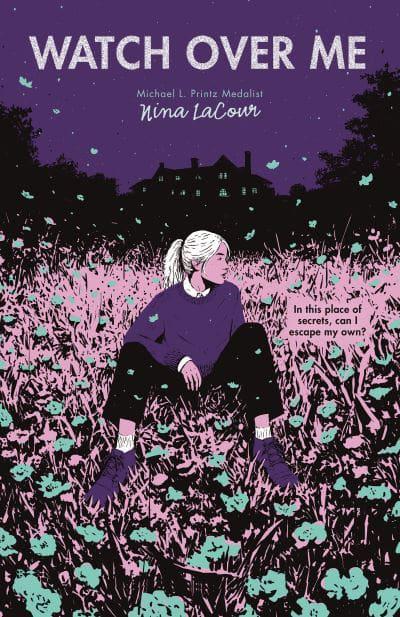
Watch Over Me – Nina LaCour

Watch Over Me is quiet – which is exactly what I said about Nina LaCour’s book We Are Okay In this award winning YA novel, LaCour tells the story of eighteen-year-old Mila who has recently aged out of the foster care system, but is offered the opportunity to remake her life as an intern at a farm in Northern California. She’s told

“Quite a few people have turned it down. And some people haven’t known what they were getting into and it hasn’t worked out. You need to want it. It’s a farm. It’s in the middle of nowhere – to one side is the ocean and in every other direction is nothing but rocky hills and open land. It’s almost always foggy and cold and there’s no cell service and no town to shop in or meet people…”

The farm is owned by Terry and Julia, an older couple who have fostered dozens of young people including Nick Bancroft, a former resident who now interviews prospective residents and who tells her that the farm “becomes home if you let it.”

It sounds sort of perfect to Mila, though, a place to take a breath and think about what might happen next. She will be teaching a nine-year-old with a traumatic past and helping out with the farm’s booth at the local farmer’s market.

Once at the farm, she meets her fellow interns, Billy and Liz, and her new student, Lee, with whom she forms an immediate bond. Mila finds comfort in the farm’s structure and in Terry and Julia, who are patient and kind. There is a kind of magic in working hard and being with these people.

But there are also ghosts – figurative and literal.

The ghost hovered in place on the moonlit field. It lifted its arms to the sky and spun in a slow circle. A girl, I thought, by the way she moved. And, in spite of myself, I was mesmerized.

This is not the first ghost Mila has ever seen, and it’s not the only ghost on the property. But Watch Over Me isn’t a ghost story, per se. It is a story about one girl’s path to healing, the memories which haunt her, and finding a place to belong in the world. It’s a beautifully written book and, strangely, a page-turner, too. (Not that those two things are mutually exclusive.) And that cover!

Highly recommended.

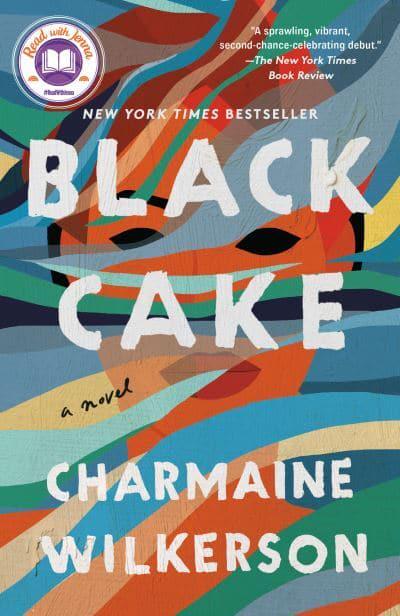
Black Cake – Charmaine Wilkerson

I wanted to like this novel way more than I did. I kept waiting for the story of Eleanor Bennett to be more than what it appeared to be, but that never happened.

When their mother dies, adult siblings Byron and Benny reunite (after a years-long estrangement) to bury her, but also to listen to the recording she left for them, which recounts the story of a girl named Covey.

B and B, I know, I need to explain why you never knew any of this. But it won’t make any sense if I don’t start at the beginning.

You children need to know about your family, about where we came from, about how I really met your father. You two need to know about your sister.

Sister?! This revelation is shocking to the siblings. Over the course of an afternoon, Benny and Byron listen to their mother’s voice and readers will be taken on a journey that spans decades.

This isn’t only about your sister. There are other people involved, so just bear with me. Everything goes back to the island and what happened there more than fifty years ago. The first thing you need to know about is a girl named Covey.

My main problem with Black Cake is that it is all tell. I never felt as though I was inhabiting any of these character’s lives. I was told what I needed to know before being shuffled off to the next character/scene -and there are a lot of characters and a lot of moving parts in this story. (And at almost 400 pages…) The story itself was interesting and the writing was fine, but I just never settled into the narrative. Maybe that’s a me thing because the accolades are numerous and who am I to disagree?

Ultimately, this is a story about family and the secrets we sometimes keep from them. Benny and Byron really shouldn’t have been so surprised that their mother had a life before they came along. Don’t we all keep secrets from the people we love to some degree? Wilkerson also offers some commentary about racism and the environment (Byron is an ocean scientist, so there’s lots of talk about the health of our oceans) that feel less organic and more didactic. Then there are all the convenient plot – I won’t call them twists – contrivances.

This is a debut novel, and it’s an ambitious one. It didn’t necessarily work for me, but so what? Loads of people love it and it’s definitely worth a read.