The Devil Crept In – Ania Ahlborn

If Ania Ahlborn’s novel The Devil Crept In had been the first book I’d read by her, I am not 100% positive that I would be adding her backlist to my TBR, but it was not. My first encounter with this author was her novel Brother and that book was both creepy and emotionally devastating and made my top books of the year list, pretty close to the top. This novels suffers only by comparison because The Devil Crept In is an objectively creepy book.

Ten-year-old Stevie lives with his deadbeat teenager bother, Duncan, his mother and his bully of a stepfather. Stevie has some weird ticks; his words jumble up in his head and come out sounding like nursery rhymes. And sometimes he’s prone to an overactive imagination, like that time he hallucinated and stuck his hand in the garbage disposal, losing a couple fingertips in the process.

Stevie’s best friend (and cousin) Jude, 12, lives next door. They are each other’s only friends and even though Jude is a bit of a hell raiser, was “tough [and] unforgiving”, Stevie worships him. Then one day, Jude vanishes.

Jude Brighton was gone, like he’d never existed; vanished as though he and Stevie hadn’t spent their entire lives stomping the pavement of Main Street and living the summer in those woods. To them, the ferns were landmarks. Each bend in Cedar Creek, a compass. If someone had chased Jude through those trees, he would have outrun them. If they had dragged him deep into the wilderness, he would have broken free.

But then, one day, Jude reappears. He doesn’t remember where he’s been and although the adults are certainly glad to see him, Stevie’s concern soon turns to dread because Jude is “Like a corpse brought back from the dead.”

There is another narrative thread in this novel and that belongs to Rosie Aleksander. I wasn’t quite as invested in this part of the novel because it felt like exposition — although it is necessary to the whole plot.

The action really ramps up in the last third of the book and I read until the wee hours (on a school night, no less) so that I could see how it would all wrap up. One thing I have admired about Ahlborn is her willingness to draw the reader down a dark path without the promise of a happy ending.

The Devil Crept In is a solid read.

Those Across the River -Christopher Buehlman

Those Across the River is my second novel by Christopher Buehlman (The Lesser Dead) and he now joins the ranks of my auto buy authors.

Frank Nichols and his soon-to-be-wife Eudora have just landed in Whitbrow, a backwater town in Georgia. Their life is a little bit in flux. Frank was essentially chased out of Chicago, where he’d worked at a college, because Eudora had been married to a colleague. The two meet at a faculty luncheon.

She was twenty, wearing a sweater the color of an Anjou pear. I was still built like the St. Ignatius basketball center I had been fifteen years before.

We were in love before the salads came.

It is 1935 and Frank is a WW1 veteran, prone to night terrors; Dora is a school teacher. They land in Whitbrow because Frank has inherited a property. The letter that tells him about this inheritance also cautions him to sell the property, that there is “bad blood” there, but with limited options, they decide to move. Frank is going to write the history of Savoyard Plantation, a derelict property owned by his ancestors.

As Frank and Dora settle into their new lives, they find it to be both secretive and charming. For one thing, the townspeople gather once a year to release pigs into the woods as a sort of sacrifice. But to what? Then there’s the plantation, which is located somewhere across the river, but Frank finds that no one is interested in taking him there. One of the locals tells him “Them woods is deep and mean.”

Just how mean? Well, it takes a while for Frank (and the reader) to figure out just what the heck is going on. Some readers might get frustrated with the slow pace at which the story unfolds, but I liked it. I really enjoy the way the Buehlman writes; he’s also a poet and it shows in his prose. One reviewer suggested that the main characters are wooden and the plot not that compelling, but I disagree. I was wholly invested in this story.

I won’t spoil the reveal. I did figure it out before the end, and while it isn’t a scary horror novel, it is atmospheric and a compelling read.

Goodbye Days – Jeff Zentner

Oh, Jeff, what are you doing to me?

The Serpent King, Jeff Zentner’s YA debut, was one of my favourite books of 2024. I figured I couldn’t go wrong with reading his follow-up, Goodbye Days. Geesh. Who is this Jeff Zentner guy and why does he insist on breaking my heart?

Carver Briggs, aka Blade, would have been pretty excited about his final year at Nashville Arts Academy if he hadn’t just buried his three best friends: Blake Lloyd, Eli Bauer and Mars Edwards. Now, though, he has to navigate this last year of high school without the rest of the Sauce Crew and deal with the overwhelming guilt that he is, in fact, responsible for their deaths.

He doesn’t think he killed them on purpose. And he knows that no one thinks he “slipped under their car in the dead of night and severed the brake lines.” But he did text Mars, who was driving, and the authorities did find Mars’s phone at the crash scene with a “half-composed text” to Carver. That was right before his friends slammed into the semi.

Now Carver is having panic attacks and debilitating feelings of guilt which are compounded by the fact that he is growing closer to Jesmyn, Eli’s girlfriend. It’s all too much. And he knows that he is not the only one who is suffering.

When Blake’s grandmother suggests that the two of them share a “goodbye day” for Blake, Carver is initially reluctant. She proposes that they spend a day together, doing the things that Blake used to love to do, and sharing their stories about him. A ‘goodbye day’ of sorts.

“Funny how people move through this word leaving little pieces of their story with the people they meet, for them to carry. Makes you wonder what’d happen if all these people put their puzzle pieces together.”

Goodbye Days is my first five star read of 2025. In all the ways I loved The Serpent King, I loved this one just as much. Zentner is so gifted at writing teenagers who are thoughtful and funny and broken and hopeful. This book was profoundly moving and yep, I cried.

For the most part, you don’t hold the people you love in your heart because they rescued you from drowning or pulled you from a burning house. Mostly you hold them in your heart because they save you, in a million quiet and perfect ways, from being alone.

I will read anything this guy writes.

My Brilliant Friend -Elena Ferrante

A former student, someone for whom I have a lot of respect and admiration, encouraged (aka begged) me to read Elena Ferrante’s novel My Brilliant Friend, a book that was recently named #1 Book of the Century by the New York Times. I didn’t own the book and I don’t know whether I would have ever gotten around to reading the book given the state of my physical TBR pile, but I was next up for book club and so I chose this one, mostly in deference to Luke. Despite the fact that it was published in 2012 and is relatively popular (and has its own series on Prime), none of the members of my book club had ever read it.

This novel is the first of a quartet by the famously private Ferrante. Apparently, no one actually knows who she is, so the author’s name is actually a pseudonym, and since we don’t know very much about her, claims that My Brilliant Friend is autofiction is also an unfair characterization. How can we say the events of the novel are drawn from the author’s own life if we don’t know anything about her? Or him? Whether or not who the author is makes any real difference is beside the point at any rate.

Luke loved it. Two of the women in my book club of eight didn’t finish it. Three women loved it. (My best friend, Michelle, is on book three and has already watched the entire series.) Two women hated it (one of these is one of the DNFers). And two of us (myself included) felt just meh about it.

In a nutshell, the novel opens when 60-something Elena (also known as Lenu) receives a phone call from Rino, the adult son of her oldest friend, Lila (also known as Raffaella or Lina). Lila is missing. Poof. Vanished. This news seems unsurprising to Elena even though “it’s been three decades since [Lila] told [her] that she wanted to disappear without leaving a trace.”

Elena seems annoyed by the news and she doesn’t offer Rino much in the way of comfort. Instead she thinks

I was really angry.

We’ll see who wins this time, I said to myself. I turned the computer on and began to write– all the details of our story, everything that still remained in my memory.

And that’s essentially what My Brilliant Friend is, the written account of the friendship/rivalry love/hate relationship between these two girls beginning in the 1950s, in a neighbourhood outside of Naples, Italy. It’s the story of poverty, crime, the power of education, loyalty, family and friendship.

This is what Luke said:

“I loved the portrayal of friendship and how central it was to forming them into who they are. I loved the background setting of Naples and how poverty is corrupting everyone’s life. All of the characters come alive for me and I find her such an incredibly powerful writer. I was so invested in Lila and Elena’s relationship. […] I think she’s a beautiful writer telling a wonderful story…”

Luke and I talk about books whenever we have the chance. When he was in my Young Adult Lit class he read more than anyone and he read widely. If I talked about a book I really loved, chances were pretty high that he would read it. So it hurt me a little bit not to love this book as much as he loved this book. For me, I found it sort of slow and dry and although the friendship between the two characters was well-drawn, I didn’t especially care about either of them. I certainly feel no compulsion to carry on with the books, although I may watch the series this winter.

The New York Times compiled their Top 100 books by asking 503 literary luminaries to provide their list of all-time best books based on the following criteria: impact, originality and lasting influence. It’s an interesting list which demonstrates just how subjective a ‘best books’ list can be. Number 2 was The Warmth of Other Suns, a book I have never heard of by an author I have never heard of. Kazou Ishiguro’s Never Let Me Go barely made the top ten. Atonement by Ian McEwan was #26. 26!!! Both my children would say Atonement is one of the best books ever written…and I would agree. Donna Tartt’s The Goldfinch, which won the Pulitzer (although not without controversy), came in at #46. Station Eleven was #93.

I tasked the ladies in my book club to pick their top three books of all time based on the criteria provided by the Times. We’ll share those Top 3 lists at our next meeting and with their permission, I will share them with you here after we meet.

The fact that no one reads the same book is one of the best things about reading, but I am sad that I didn’t love My Brilliant Friend more than I did. Sorry, Luke.

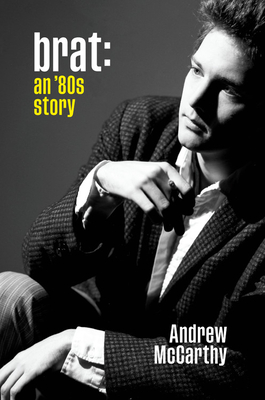
Brat: an 80s story – Andrew McCarthy

Andrew McCarthy was a member – although according to his memoir Brat: an 80s story only peripherally – of the “Brat Pack“, a group of young up-and-coming actors making their way in the 1980s. The moniker comes from a less-than-flattering Rolling Stone article which was initially intended as a bit of press for Emilio Esteves in advance of St. Elmo’s Fire, but was ultimately “a stinging indictment of a group of young, successful actors.” (Judd Nelson, Rob Lowe, Demi Moore, Ally Sheedy, Molly Ringwald)

McCarthy’s membership in this group was reduced to a footnote in the article.

one of the New York-based actors in St. Elmo’s Fire, a costar says “He plays all his roles with too much of the same intensity, I don’t think he’ll make it.”

I was coming of age at the same time as these young actors were. In fact, McCarthy is just one year younger than me…and it is almost impossible to think of this guy being in his 60s. I loved St. Elmo’s Fire and Pretty in Pink (you couldn’t be a person of a certain age the 80s and not love anything John Hughes did).

Brat: an 80s story isn’t a tell-all memoir. It’s an introspective look at a kid from New Jersey who stumbled into acting in high school. The youngest of four boys, McCarthy was introverted and lacked ambition, but he decides, after a fluke part in the school play, that he has discovered something that he actually might be good at.

He heads to NYC and fumbles around, taking classes and drinking himself into oblivion. He lands some great roles and is definitely in some iconic movies, but he eventually shifted to a behind-the-camera rolls and has directed many, many episodes of television – everything from Orange is the New Black to New Amsterdam. He has also written a travel memoir, The Longest Way Home, and the YA novel Just Fly Away.

Although Brat wasn’t particularly juicy, I really enjoyed my read. I knew all the players and I liked how honest McCarthy was about his own shortcomings, idiosyncrasies, and insecurities. He’s self-deprecating and he doesn’t throw anyone under the bus – except maybe himself.

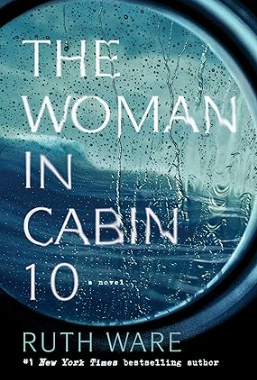
The Woman in Cabin 10 – Ruth Ware

I just wanted something quick and mindless to read and Ruth Ware’s novel The Woman in Cabin 10 ticked the boxes. Kinda sorta.

Travel writer Laura “Lo’ Blacklock is about to go on a five-day cruise, the inaugural voyage of the Aurora, a “boutique super-luxury cruise liner traveling around the Norwegian fjords” and nothing is going to stop her, not even the fact that she recently woke up in the middle of the night to discover a strange man in her flat.

Lo is certain that she can parlay this experience into a promotion at Velocity, the magazine she writes for. At the very least, she might be in line to take over as editor when hers goes out on maternity leave.

As is often the case with first-person narration, Lo isn’t very reliable. For one thing, she drinks a lot. For another, she takes anxiety medication. And she’s already sleep deprived when she boards, due to the aforementioned home invasion. Still, she is determined to make the most of this opportunity, until the woman in the cabin next door to hers (there are only ten on this ship) goes missing. Lo had only met her briefly when she knocks on her door on day one to borrow mascara. (Who would ask to borrow a stranger’s mascara? Yikes.)

Anyway, after a dinner with far too much alcohol, Lo is woken from a dead sleep.

I don’t know what woke me up – only that I shot into consciousness as if someone had stabbed me in the heart with a syringe of adrenaline. I lay there rigid with fear, my heart thumping at about two hundred beats per minute…

What she thinks she witnesses is someone being thrown overboard; what she thinks she sees is blood on the glass partition that separates her balcony from the balcony of the woman next door. When she relates her story to the ship’s head of security, though, he assures her that no one is staying in cabin ten. For the next 150 pages or so, Lo tries to figure out what she actually saw and who this woman is.

The Woman in Cabin Ten is a locked room mystery that takes way too long to get where it’s going, but it’s easy to read and if you don’t read a ton of this type of story, you’ll probably find it fun.

Look for it on Netflix in the coming months.

Wink Poppy Midnight – April Genevieve Tucholke

I knew I was going to love Wink Poppy Midnight pretty much from the opening line when Midnight tells us that “The first time I slept with Poppy, I cried.” Midnight isn’t much at sixteen but Poppy, the school’s icy queen bee, tells him

You’re going to be so beautiful at eighteen that girls will melt just looking at you, your long black lashes, your glossy brown hair, your blue blue eyes. But I had you first, and you had me first. And it was a good move, on my part. A brilliant move.”

Thing is, Poppy doesn’t want Midnight, not really. She wants Leaf Bell (yes, everyone in this novel has a weird name.) Poppy fell in love with Leaf “the day he beat the shit out of DeeDee Ruffler.” The fact that Leaf doesn’t want anything to do with Poppy; he “saw right through the pretty, saw straight through it.”

Leaf’s younger sister, the dreamy red-haired Wink lives at a farm across the road from the house Midnight moved into with his antiquarian book-seller father after his mother and half-brother, Alabama, move to Paris so she can write her latest novel. One day, Wink shows up on Midnight’s doorstep and in her odd presence, Midnight feels peaceful because “Wink wasn’t taking stock. She wasn’t trying to figure out if I was sexy, or cool, or funny, or popular. She just stood in front of me and let me keep on being whoever I really was.”

April Genevieve Tucholke’s (Between the Devil and the Deep Blue Sea) YA novel is dreamy and other worldly. These teens inhabit a world outside of the halls of a high school, but their imaginations, petty cruelties and longings will be recognizable. I enjoyed my time with them and loved the way this book was written.

Talking at Night – Claire Daverley

If I had read Claire Daverley’s debut Talking at Night a little bit earlier, it would have most certainly made my list of the top twenty books I read this year because I LOVED it! I am always talking about how straight-up romances just don’t float my boat, how I need a little pain with my pleasure. This book delivered and then some.

Rosie and Will meet at a bonfire when she is seventeen and he a little older. Although they go to the same school and share some friends, and Will tutors Rosie’s twin, Josh, in further maths (advanced A level math), these two don’t really know each other until Will suddenly finds himself telling Rosie things he’s never said to anyone.

Will and Rosie could not be more different. Will is “detached and standoffish, despite his popularity and a long list of girlfriends.” Rosie is “a virgin, and she is vanilla.” She also suffers from OCD and is far less outgoing than Josh. It is clear, though, that these two are drawn to each other in ways that neither of them quite understand.

When Rosie tries to pre-emptively end things (because things haven’t really even begun, although they both understand that there is something between them), Will tells her that he thinks about her “On my bike. And in the garage. And when I’m cooking, and running, and trying to sleep.” This is new territory for Will.

Watching these two navigate these feelings over the years – because the novel does span decades – is truly a thing of beauty. There are lots of obstacles preventing them from having the HEA that I wanted for them, but that’s the bit I like best. Where’s the story if they meet, fall in love and suddenly have everything they didn’t even know they wanted?

Will has demons and a past. Rosie has a complicated relationship with her mother and subverts her own desires to make others happy. Tragedy looms around the corner which further complicates things. Rosie goes off to university, but Will stays home in Norfolk. And through it all – Will and Rosie pine and hell yes! so did I.

I loved these two characters. I loved the secondary characters. I loved the unexpected bonds that are forged. I loved the way this book is written. I read it in two sittings, turning the last page way past my bedtime.

If I had my Top Twenty list to do over again, this one would definitely be in the Top 3! Although perhaps not objectively the best book ever…it hit all my sweet spots and so it’s 100% a winner in my book, and that’s the beautiful thing about reading – my opinion is the only one that counts.

Adelaide – Genevieve Wheeler

Adelaide Williams is drunk when she first meets Rory Hughes.

Late that afternoon, tipsy and tanned, she saw him.

He was wearing a scarf and a blue button-down and Adelaide loved him instantly – all brown curls and razor-sharp jawline. Like a young Colin Firth.

She is compelled to waltz right up to him and tell him that he looks “like a Disney prince.

Nothing comes of that meet cute, but several months later Rory and Adelaide match on a dating app, something she has been using for casual hook ups. She figures that this night will be no different from the string of other nights she’s recently had. It turns out though that meeting Rory again upends her world.

Genevieve Wheeler’s debut Adelaide tracks the titular character’s time in London where she is first finishing her Master’s and then working. Their first date and first kiss lights a fire inside Adelaide and “in her memory, standing on that street corner, the sky was bright. Birds chirping, clouds parted, sun shining. It’s painfully clichéd, but darkness didn’t exist here, not in this little universe Adelaide entered when she first kissed Rory Hughes.”

At twenty-six, Adelaide is navigating young adulthood. She has her roomies, Celeste and Madison, and her stateside best friend, Eloise. Rory, perfect Rory, is – she is sure – her soul mate. Except, you know, he’s not. He’s got a lot of baggage and it turns out he’s not the best boyfriend. It’s one of those “all that glitters is not gold” situations; when he’s with her, it’s impossible not to feel the heady thrall, but he often disappears or breaks plans; he’s emotionally unavailable.

I am not 26, but I sure understood Adelaide. Her relationship with Rory mimicked many of my own twenty-something relationships which required a lot of work on my behalf, a lot of subjugating my own feelings in service to others, mostly because I was always choosing the wrong others. Adelaide’s fumbling wasn’t frustrating to me; it was relatable.

This is a book about loving someone else fiercely, but ultimately learning that the person most deserving of that sort of care and attention is actually yourself.

Loved it.

The Spoon Stealer – Lesley Crewe

After my first experience with a book by Maritime author Lesley Crewe (Amazing Grace), I would never have willingly chosen to read another book, but The Spoon Stealer was selected for my book club and so my options were to either suck it up and read it or just not bother. I sucked it up.

Emmeline Darling is a senior living alone with her dog, Vera, in England. She joins a memoir writing workshop at her local library and she begins to share her life story with the other ladies in the group, several of whom become her fast friends. Her memoir begins on a summer morning in Nova Scotia in 1894 when Emmeline’s mother was hanging out a line of clothes and Emmeline arrives suddenly, dropping “into a basket full of freshly laundered linen.”

The ladies in the memoir group, with the exception of the workshop leader, become fast friends and continue to meet after the workshop ends because they are so invested in Emmeline’s story. And it’s quite a tale.

Two of Emmeline’s older brothers had gone off to fight in the Great War and when Teddy, her favourite, ends up in hospital in England, Emmeline races to his side. That’s how she comes to spend the majority of her life in England.

As with any life, Emmeline’s is full of joy and heartache. She makes friends along the way; she experiences extreme luck and devastating loss. She is a ‘character’ – stealing hearts and spoons wherever she goes. Oh, and Vera talks – but just to her, of course, because that would be ridiculous, right?

I had an easier time with The Spoon Stealer than I did with Amazing Grace. I’m not sure that this is actually high praise or not because I still had a lot of problems with this one. For one thing, people do not talk the way they do in this book. And relationships aren’t magically repaired after decades of estrangement, which is what happens when Emmeline’s brother, Martin, dies and leaves her the family farm even though they haven’t spoken in years and years (and years). In fact, Emmeline hasn’t spoken to any of her remaining family for ages, but when she returns to Nova Scotia it’s poof! magic. The dialogue between the characters often serves as exposition/character development and, for me at least, it wasn’t believable.

There was at least one eye-rolling character twist and a tug-at-your-heart-strings ending that felt manipulative. And also – talking dog. 😦

I know people love this author, but she just isn’t my cup of tea.