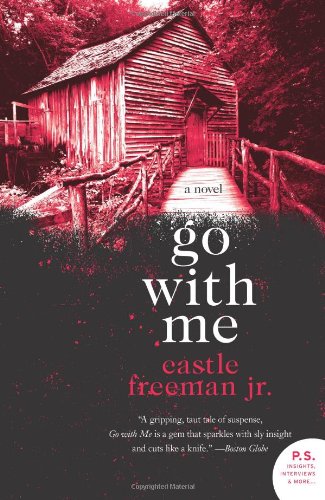
Go With Me – Castle Freeman Jr.

Lillian is a young woman who has recently moved to a small Vermont town. Early one morning, the town sheriff finds Lillian asleep in her car in the police station parking lot. She’s come for help. The town thug, Blackway, has been harrassing her; has, in fact, driven her boyfriend out of town and killed her cat. The sheriff’s advice is simple: go home.

Blackway is an enigmatic, altogether menacing, figure. The sheriff himself is afraid of him.

“You’re telling me you can’t do anything. You’re telling me I have to wait till he does something. till he gets to me, kills me, before you can do anything?”

“You could put it that way, I guess,” the sheriff said.

“How would you put it?”

“That way.”

The sheriff’s advice is to head over to the mill and find Scotty Cavanaugh because “he and Blackway have had dealings.” But Cavanaugh is not at the mill and instead Lillian solicits the help of the strange, quiet brute, Nate, and an old man named Lester to help her find and confront Blackway.

Go With Me is the strangest book I’ve read in a long time. It is both laugh-out-loud funny and strangely creepy. The book tracks Lillian and her small posse to various places where they might find Blackway, breaking the tension of their search with the commentary of the men at the mill who wonder – Greek chorus style –  at how it might all turn out.

Blackway, as it turns out, is not a man to be trifled with. He deserves his reputation. Lester is resourceful, though, and Nate “ain’t scared” and this slim book rockets along to its shocking climax.

I’d never heard of Castle Freeman Jr. before, but this book was well received and although it wasn’t really my cup of tea, it was weirdly compelling.

The Book of Lost Things by John Connolly

Once upon a time – for that is  how all stories should begin – there was a boy who lost his mother.

Thus begins John Connolly’s amazing story The Book of Lost Things. When I finally turned the last page of this book this morning, I felt that keen sense of satisfaction one feels when they have read an amazing book, a book you know you are going to recommend to everyone. I loved every minute of it.

David is just twelve when his mother dies. An only child, David is devoted to his mother and does everything in his power to keep her alive.

He prayed. He tried to be good, so that she would not be punished for his mistakes….He created a routine, and he tried to keep to that routine because he believed in part that his mother’s fate was linked to the actions he performed.

David is not able to save his mother however; she dies. Soon after, his father remarries and he and his new wife, Rose,  have another son, Georgie. David, still heart-broken over the loss of his mother, resents his father’s wife and his new brother.

This family drama plays against the backdrop of WW2. One night, after a fight with Rose, David escapes to the garden. From the sky, a German bomber falls and to escape, David slips into a crack in the swimming pool cum sunken garden. He finds himself, suddenly, in another world — a world of dark and twisted fairy tales.

I am making the book sound much simpler than it actually is. The Book of Lost Things is a coming-of-age-tale and a hero’s journey, a quest for truth and a horror story all rolled into one. Fairy tales, many familiar, are upended, revealing their slimy and rotten underbellies. David’s youth is slowly taken from him as he must fight, both alone and with companions, for his survival.

David begins his journey as a scared and self-involved adolescent, but as he makes his way towards the castle where the old king apparently has a ‘book of lost things’ which may have the answer to how David can get home, he matures and comes to understand certain truths. It’s an exciting  story — funny in places, creepy in others.

And like Dorothy’s journey to Oz, David soon comes to understand the value of what he has left behind. At journey’s end, he is  a changed person. I was profoundly moved by the book’s final pages.

Love Falls by Esther Freud

Esther Freud (Sigmund’s great-granddaughter) has written a compelling, if slightly unsatisfying,  coming-of-age tale with her novel, Love Falls. When 17 year old Lara heads to Tuscany with her father (a man who is practically a stranger to her) for a summer holiday, she isn’t quite sure of what to expect. Her father, a slightly distant intellectual historian called Lambert, has been invited to visit an old friend and wants Lara to accompany him. Lara is well-traveled: she and her bohemian mother, Cathy, have been all over together, but Lara has never been to Italy, so she’s excited at the prospect of leaving London for a few weeks.

Italy is transformative for Lara. She has the opportunity to observe her father, his relationship with the woman they are visiting, the elegant and slightly snobbish, Caroline, and observe the complicated and fraught relationships of the adults around her.

At a nearby villa, Lara meets Willoughbys. There are a lot of names and relationships to keep track of but the most important Willoughby is Kip – a boy about Lara’s age who is irreverant and beautiful.

Lara spends her weeks swimming and visiting with the Willoughbys and the days unfold in a sort of dreamy, hot haze. It’s as you imagine a summer in Italy might be…or, at any rate, as I imagine it.

There’s menace, though, in Lara’s world and it’s this menace that speeds the reader along. Even though it doesn’t amount to much in the end, Lara is certainly changed by the events which she experiences. I think Freud does a terrific job of suspending Lara in that particular space between youth and adulthood. Lara is as much an observor as a participant in what happens during those long, hot days. And because we see things only from Lara’s point of view, many of the tangled relationships are never untied; animosities are never explained and wrongs never quite righted.

As a coming-of-age tale, though, it is compelling and well-written.

The Sister by Poppy Adams

It’s ten to two in the afternoon and I’ve been waiting for my little sister, Vivi, since one-thirty. She’s finally coming home, at sixty-seven years old, after an absence of almost fifty years.


Thus begins Poppy Adams’ strange debut novel, The Sister.  Narrated by the incredibly brilliant Ginny, The Sister tells the story of the sisters and their parents, Maud and Clive. They share  a crumbling English estate known as The Red House because of the Virginia Creeper. Whole areas of the house have been shut down because Clive, a moth expert, and Maud can’t afford the estate.

Ginny takes the reader back in time, to the moment that her mother brought Vivi home from the hospital “her fluffy hair sticking up and her big round eyes gazing at me”. She recounts the time Vivi fell off the bell tower, an injury which very nearly cost her her life, but which did make it impossible for her to bear children. Ginny is the keeper of the memories and is in sole possession of the secrets, too.

Why did Vivi leave, never to return? It will be left to the reader to decide whether her homecoming is worth the hype. For me, the book falls short of the opening line’s promise. I was expecting something altogether more suspenseful. Instead, Adams spends a great deal of time instructing the reader on the nature of moths – a subject that holds absolutely no interest for me- and not nearly enough time examining just what keeps two sisters apart for fifty years.

The novel is well-written, certainly, but it moved too slowly and didn’t deliver on its early promise.

Moth lovers will likely be delighted.

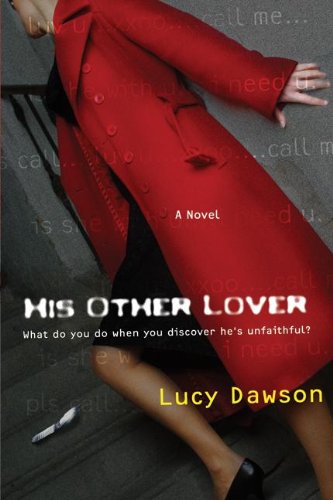
His Other Lover by Lucy Dawson

I seem to be on an infidelity kick lately. I read Lucy Dawson’s debut novel, His Other Lover, over two nights, reading until my eyes burned. In all the ways Love and Other Natural Disasters failed, His Other Lover succeeded.

One night, Mia, a 20-something woman who works for a small advertising firm somewhere near London, discovers a text message on her live-in boyfriend’s phone. Mia thought Pete was the one. Turns out he’s someone else’s one, too. That someone else is an actress named Liz.

The discovery of the text message begins a downward spiral of destructive behviour which upends Mia’s life. But hers is not the only life shattered by the discovery.

It’s interesting, but true, I think: women who are cheated on often blame the other woman. Mia pours all her anger and hatred on top of Liz. She almost makes Pete seem like another victim, someone who fell into Liz’s Black Widow trap and was helpless against her sticky charms.

Of course it’s all much more complicated that that. Mia goes completely off the rails, calling in sick for days on end while she tries to track down Liz. She wants her boyfriend back and the only way to do that is annihilate the enemy.

Dawson does a terrific job of getting inside of Mia’s head. The whole range of emotions are there: grief, anger, the hot desire for revenge. Mia is single-minded in her thirst for getting back her man. The thing is: he’s not worth it.

But the book is.

Love and Other Natural Disasters by Holly Shumas

When Eve, a young mother pregnant with her second child, overhears her husband having what sounds like a very intimate conversation on the phone in the middle of Thanksgiving dinner, her whole neatly ordered world is turned upside down. She overhears her husband say: “Shh, you’re going to be okay” and that’s all it takes to know that something is going on.

Holly Shumas’ novel Love and Other Natural Disasters explores the effects of an affair – not a physical affair, but an  emotional one – on a marriage. I suspect that there are probably some people who would say that if there isn’t any sex, it’s a “no harm, no foul” situation. Shumas does a pretty good job, though, of illustrating that looking outside of your marriage for any sort of fulfillment can have devastating consequences.

Love and Other Natural Disasters traces Eve and Jonathan as they try to put their marriage back together. It’s a push/pull affair as they both try to cope with their own issues and the unresolved issues in their marriage.

Shumas herself is a licensed marriage and family therapist and if I have any niggles with the book it’s that sometimes it seems instructional. The characters each have a part to play to demonstrate the various stages of grief: the disbelief and anger, forgiveness and acceptance. Sometimes their reactions seemed over-the-top or not quite harsh enough. For example, after she discoveres her husband’s relationship, she reads his emails looking to understand what’s gone wrong. Later, in therapy, Jon blows up about her invasion of his privacy. Um, hello, there wouldn’t have been any need for her to go snooping if you hadn’t done something inappropriate. But I know the therapist’s point of view might be to suggest that Jonathan has a right to his anger.

Some of Love and other Natural Disasters resonated with me, but not because the book was beautifully written or original. And even though I sometimes felt as though it was too instructional, and that the characters weren’t particularly nuanced – Love and Other Natural Disasters is topical.

Dark Love by various authors

Dark Love, edited by Nancy Collins, Edward E. Kramer and Martin H Greenberg, was published in 1995 and has been sitting on my tbr shelf for two or three years. This is a collection of short stories where “there’s no love without obsession…and obsession is the underlying theme of every story.”

Given the pedigree of the included authors Ramsey Campbell and Stephen King among them, readers should approach this book with caution. Some of the stories are downright icky. “The Penitent” by John Peyton Cooke I’m looking at you. That one starts out with the line: “Every since I was a young girl  I’ve wanted to torture a beautiful young boy.” Trust me, it goes downhill from there.

The Stephen King story, “Lunch at the Gotham Cafe” was a new original story at the time of this anthology’s publication. I like King and while this story has much to recommend it – mainly a narrator I believed in – the story was kinda silly. For some reason, I kep thinking about the Muppet’s Swedish chef as I was reading.

My favourite story of the bunch was “Hidden” by Stuart Kaminsky. It would make a great episode of Criminal Minds – more creepy than anything else.

Fans of the genre will likely enjoy this volume.

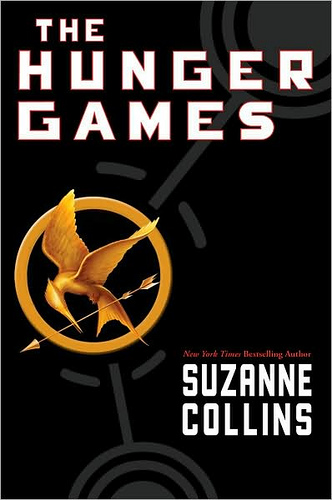
The Hunger Games by Suzanne Collins

There’s been a lot of excitement in the house over Suzanne Collins’ book, The Hunger Games.  Both of my kids have read it and have been harassing me to read it, which I finally did. I have to say – I loved it as much as they did. So we thought we’d talk about the book a little.

Mallory: This book takes place in post-apocalyptic North America. The people of North America had attempted a rebellion against the government, but weren’t successful. So, the government split them into 13 Districts, and each year as a punishment,  every child ages 12-18 in every District has their name put into the Hunger Games. They draw two names from each District and those people must compete against kids from other Districts in an arena. It’s a fight to the death; last one standing wins. Basically, the main character, Katniss Everdeen from poor District 12 takes her sister’s place to go into the Games.

Christie: That’s a great summary, Mallory. It’s a terrific premise for a book, not altogether dissimilar from the 1987 film The Running Man.  Of course the stakes are a little higher in the book especially since the players are just kids.

Mallory: Katniss is 16 when she went to into the Hunger Games, so she was one of the older kids competing. Imagine how hard it would be if you were just 12, trying to kill 17 and 18 year olds. Katniss is such a great character, and Collins did an incredible job building her up. Every moment of the book I was so scared because I loved Katniss and didn’t want her to get hurt.

Christie: I agree, Mallory. I loved Katniss from the very start of the novel. She’s resourceful, mature, and brave. When we first meet her, she demonstrates her willingness to break the rules to provide for her family. She’s a good hunter, she wastes nothing, and you get the sense that she could handle herself in just about any situation. But she’s not the only admirable character in the novel. Who else did you like, Mallory?

Mallory: Well, I must say that I love Gale, Katniss’ best friend, and Prim, her sister (who were introduced at the very beginning of the novel). But as the novel progresses, we meet many more amazing characters, some that we love, and others that we hate. Like, Rue, a contestant in the Games who I adored. What about you?

Christie: I’m with you, Mal. All the characters were really well drawn – even characters you don’t get to know very much about, like Cinna and Thresh. As you get to know some of the other Tributes (contestants), it’s impossible not to get attached and what’s remarkable is that Katniss feels admiration for some of these people too, even though she knows she might have to kill them to stay alive. The Games themselves were very exciting, didn’t you think?

Mallory: Well yeah! They were amazing! What an incredible concept for a book. I wish I had thought of it first, because it’s just so clever. Everything about the Games seems so real, so legitimate. She doesn’t make them seem like a board game, or something you play. Collins really gets it across to you that the Hunger Games are about fear, and death, and despair. The Games are so scary, that you just feel really sad for the Tributes, even if they are merely characters that came out of Collins’ mind.

Christie: Beyond the suspenseful plot and characters, Collins has created an interesting and scary future-world and, for me, the writing was crisp and readable – a nice change from a lot of the Young Adult fiction out there. How does this book compare to other books you’re reading, Mallory?

Mallory: Honestly, The Hunger Games isn’t really comparable to the books I’ve been reading because it’s just so different, and that’s what I love about it. Most YA Fiction out there at the moment is either about vampires or rich girls with dirty secrets. Sure, I like Twilight, and books like Pretty Little Liars, but The Hunger Games sets itself apart from all the generic and boring books.

Christie: A lot of kids I teach are reading it (or have read it) and I’d say 99% of them have loved it. And for my money – this book is heads and tails better than the Twilight series.

Mallory: My school is having the same Hunger Games craze too! Most of my friends (I’d say 85%) hate to read, and will only force themselves to open a book if it’s absolutely necessary. But surprisingly, a ton of them have read The Hunger Games (girls and boys) and they loved it! The book has been passed around the entire grade 8 French immersion population, and instead of gossiping at lunch time, we all discuss our favourite parts. It’s a nice change.

Christie: Well, I guess that makes it unanimous, then. The Hunger Games: loved by boys, girls and moms!
Breaking the Girl by Kim Corum

I’m not going to lie – I enjoyreading erotica. But I have standards, people. And Kim Corum’s ridiculous novella, Breaking the Girl doesn’t meet any of them.

Kristine is a stripper in New Orleans. She didn’t set out to be a stripper. She’d gone on holiday with her friend to escape her recent marital break up and suddenly she and her friend found themselves bumping and grinding on stage at a strip club. The money was good so Kristine – who doesn’t have any other talents besides sex – stuck with it.

Enter Frank. Handsome and rich (although we never find out what he does), he takes a shine to Kristine and invites her to come live with him. Yeah – it really is that simple.

Thus begins her training. To the untrained eye beating someone with a belt until they’re so disoriented they fall down the stairs might be considered abuse, but everything Frank does is for Kristine’s own good.

Breaking the Girl is meant to be a novel about domination and submission. Okay, I’m down with that. But this book just doesn’t have anything to recommend it. The sex was pretty tame (and let’s face it, isn’t that why we read this stuff?), the characters were cardboard cut-outs and Corum tries to add heft to the story with a bunch of hooey about why Frank needs to “break the girl”.

So, so mediocre.

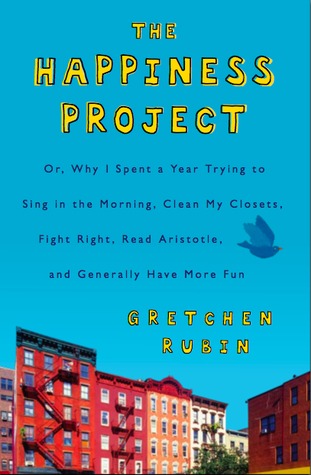
The Happiness Project by Gretchen Rubin

I have a friend who is all about the self-help books.  Of course, she also believes in reiki. I don’t know if she’s read Gretchen Rubin’s book The Happiness Project but I know she’d love it. I’m a skeptic (a hopeful skeptic) and I really liked this book. Perhaps I read it at the perfect time in my life – lots of changes and upheaval and uncertainty, but hope, too. In less capable hands, The Happiness Project might have been a different book. (a la Eat, Pray, Love, a book I didn’t love.) Instead, Gretchen Rubin’s musings on what happiness means and how to achieve it comes across as less how-to manual and more why happiness should be pursued and valued.

Rubin’s personal happiness project was inspired by that moment (which will likely come to us all) when she realized she was “in danger of wasting [her] life.” Okay, truthfully, who hasn’t thought that a time or two? Of course, she knew all the ways her life was pretty damn perfect: great husband, wonderful kids, work she loved, terrific extended family, lived in NYC etc etc…Still.

What I liked the most about Rubin’s happiness journey was that she understood and even poked fun at her personal shortcomings: her need for praise and her short fuse. I also liked that her quest for happiness wasn’t all abstract and metaphysical. She understood the sinple joy of getting rid of junk and splurging once and a while on something you really needed or wanted.  Rubin herself seems incredibly down-to-earth…someone you’d like to sit and have a cup of tea with (I’d say a glass of wine, but she’s mostly given that up!)

 Threaded through the entire book was this notion that “the days are long, but the years are short.” It’s true, isn’t it? When she and her husband take a moment to watch their sleeping children, it is a moment of sheer happiness – if only because that moment will never come again.

 Happiness spreads. I know this is true. I know the power of a smile because I use it every day in the classroom….even when I don’t feel like smiling, it’s amazing how smiling at a surly kid makes them smile, too. I want to be happier. I deserve to be. And so I owe it to myself to make that happen.

If you’re looking for inspiration, for a way to make your life happier, The Happiness Project is a great place to start. You can visit Rubin’s website, The Happiness Project, for lots more info.