The House of Mirth by Edith Wharton

Edith Wharton’s novel, The House of Mirth, seems every bit as relevant now, some 105 years after it was first published. The novel follows the fortunes (and misfortunes) of Miss Lily Bart, a stunningly beautiful woman about town. The town in question: New York City.  Despite her attractiveness, Lily is without a husband and without a fortune. In order to maintain her lifestyle – which up until now has depended on the kindness of her rich friends – Lily must marry…soon and to her financial advantage.

Wharton’s novel trails after Lily and her consorts, following them to the Hamptons and Monte Carlo, in and out of fabulous homes where words are carefully chosen and one small misstep can cost someone their standing in society. This is a novel about class and entitlement. Lily has nothing but her beauty and although it is clear from the beginning that she is in love with someone else, and he her, marrying is out of the question.

Lily is a wonderful creation and Wharton’s novel is filled with the minutia of the time. My copy even had footnotes to help me navigate some of the more unfamiliar terms of the day. For that reason, the novel certainly isn’t a quick read. The prose is dense and often seems artificial; surely people didn’t speak this way?

As a heroine, Lily might be hard to sympathize with. Modern women might find her quest to marry for money reprehensible. She uses her looks to her advantage, spends money she doesn’t have and seems impossible naive for someone who is pushing 30. But then, really, I know lots of women who play the very same games nowadays, always looking for an advantage and willing to climb the ladder (social or otherwise) by any means necessary.

I thoroughly enjoyed Wharton’s novel and am glad it was chosen as one of our ‘classic’ reads for this year’s book club.

My copy of the novel is one of Penguin’s Product Reds, an imprint where 50% of the profits from sales go towards  the Global Fund to help eliminate Aids in Africa. About bloody time, don’t you think?
The books I didn’t get around to reviewing at the end of 2010

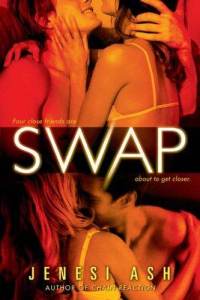
I totally picked up Jenesi Ash’s erotic novel Swap  on a whim. Plus, it was in the bargain bin. Therefore, I am not going to give myself too much grief for wasting the money…and it was a waste of money.

Jamie and Mia are best friends who live in a really small town with a stupid name. Jamie is bisexual, but Mia doesn’t know – so they’re apparently not best best friends. Oh, but wait, Mia is having trouble with her smokin’ red hot boyfriend, Aiden, so Jamie suggests a weekend of swapping. Luckily, Jamie’s boyfriend, Caleb (equally smokin’ hot) is all for it – he even knows Jamie wants to make it with Mia.

What follows is a bunch of reasonably well-written sex scenes, strung together with what passes off as insight into what motivates these characters to swap bodily fluids. It’s smut, people.

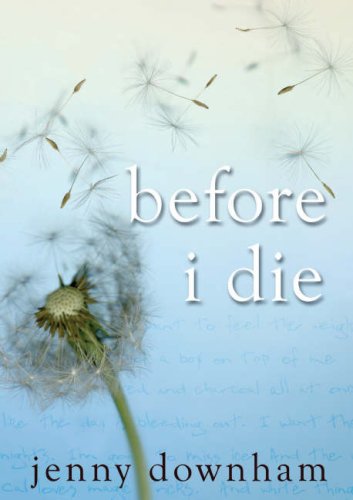
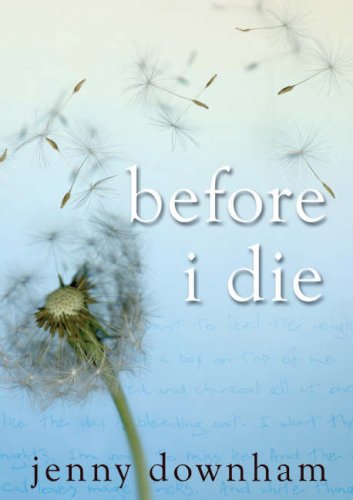
Sixteen year old, Tessa, is dying.  She’s been sick with leukemia since she was 12, but there’s nothing more they can do for her. When Jenny Downham’s moving novel Before I Die  opens, Tessa has decided to make a list of all the things she wants to do before she leaves the earth. Right off the top, she wants to have sex.

Tessa is a believable character, sullen and bitchy one minute and hopeful and loving the next. She lives with her dad and younger brother, Cal. Her mother left the family to follow another man to Scotland. The relationship didn’t work out and she’s in the neighbourhood, but Tessa’s care is really left to her father, who has given up work to stay homelook after Tessa.

Before I Die is a book about living the best way you can with the time you have. There’s a lesson in there for all of us. When Tessa meets Adam, the boy next door, her world starts to expand. When her best friend, Zoey, finds herself pregnant, Tessa has something to look forward to. Ultimately, though, this is a novel about dying and the last twenty pages or so are amoung the most moving I have ever read.

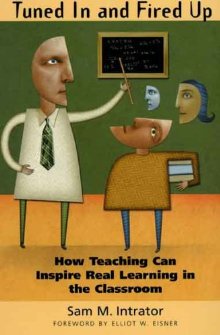
Intrator, a professor at Smith College, spends a whole year observing high school teacher, Mr. Quinn, in his classroom in a high school on the West Coast. His observations about the classroom are captured in his book, Tuned In and Fired Up. Obviously, this isn’t the sort of book that will interest the casual reader, but as a high school English teacher, I found it illuminating, inspiring and practical.

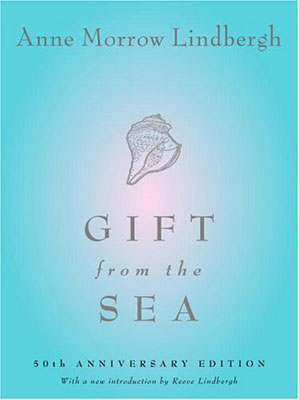
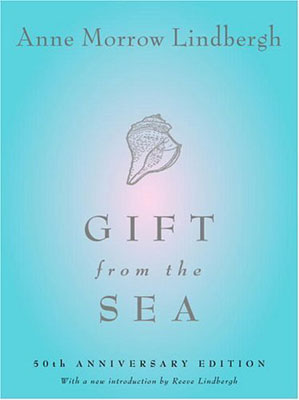
Anne Morrow Lindbergh’s meditation on “youth and age; love and marriage; peace, solitude and contentment” is slightly old-fashioned. It was, after all, published 50 years ago.  Lindbergh spends time at the beach, reflecting on her life, and writing in a journal – perhaps never having intended to share her thoughts with the world. Still, she invites the reader to consider how to attain balance in ones own life and that is certainly a modern question.

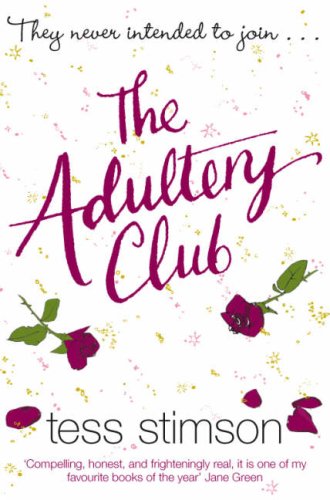
Not quite as frothy as you might think, Tess Stimson’s novel The Adultery Club tells the story of a  happily married couple, Nicholas and Mal, whose lives and marriage are torn apart when Nicholas decides to have an affair. The novel is told from various points of view and was certainly an entertaining read.

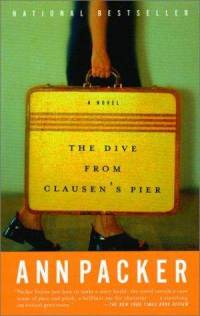
Twenty-three year old Carrie Bell has spent her whole life in the same small Wisconsin town. She’s engaged to her high school sweetheart, Mike, and it seems like her future is set. Except she’s not happy. She wants more.  The  Dive from Clausen’s Pier is a great book, well-written, thoughtful and would make an excellent choice for book clubs.

Ron is a creepy vacuum repair man who falls in love with nine-year-old Rachel. He builds her a fairy tale bedroom in the basement of his shop and then, one hot summer night, he kidnaps her. Helpless is a riveting novel from start to finish. And it isn’t compelling just because of the situation, Ron is one of the most complex characters I’ve read in recent memory and Gowdy is a masterful story teller.

An unexpected gift…

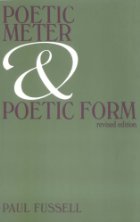
A colleague presented me with a gift the other day. While digging through the books at The Salvation Army, she came across the book Poetic Meter and Poetic Form. As English teachers, we’re always looking for books to add to our collections and she thought this might be a good one for me (I’ve only just returned to teaching after many years doing other things.) She bought the book and then, while flipping through it, discovered that the book had been mine!
No joke – my name and student number and dorm name and room number were printed on the inside front page.  That younger version of myself is 25 years ago…at least! And I’ve lived all over in the interim. What a strange and wonderful  thing to have the book back.

Have you ever had a book reunion?

Books and movies…

I finally bit the bullet and rented The Time Traveler’s Wife a few nights ago. I didn’t go see it in the theatre despite my deep and abiding love for the book. Mostly I was afraid that the film wouldn’t do the book justice…and I was right. I really like Rachel McAdams and although Eric Bana might not have been my first choice for Henry, I don’t mind him either…but the movie just wasn’t good. Maybe it’s impossible to create a faithful adaptation of a novel like TTTW, I don’t know. That said, Peter Jackson did a pretty impressive job with Tolkien.

In any case, it got me thinking about other book – to – film adaptations. What works and what doesn’t?

An example of one that  works which immediately springs to mind is Ordinary People. The book, by Judith Guest, was published in the 1976. The film, directed by Robert Redford, came out in 1980. I’d read the novel and I went to the movie. You’d be hard pressed to say which is better. The film stars Donald Sutherland, Mary Tyler Moore (I know!), Timothy Hutton and Judd Hirsch. I can highly recommend the film because it’s so faithful to the novel and the performances are so rich. The book’s excellent, of course. Back in the day, Mary Tyler Moore’s performance garnered all sorts of praise as the character she played was so different from the one we were used to seeing on the Mary Tyler Moore Show. Really, rent the film. (It won  four Oscars: Best Director, Best Picture, Best Supporting Actor and Best Screenplay)

I also think Clint Eastwood’s adaptation of Robert James Waller’s The Bridges of Madison County is terrific. The book is actually on my Reader’s table, but not because I think it’s great literature. Nevertheless, that novel made me cry so hard. And so did the movie. I loved that they didn’t try to pretty it up. Meryl Streep and Clint Eastwood played the title characters, two people who fall in love — deeply and unexpectedly– later in life. Clint Eastwood is a terrific director anyway and this movie was simple and beautiful and hey, is there any character Streep can’t play?

Speaking of Streep, I was first introduced to her back in the 70s through a film called Sophie’s Choice. That film was based on a novel by William Styron, which I read after I saw the film. The film is a doozy. The book, although excellent, is slightly drier.

One author whose work has often been adapted successfully is Stephen King. The Shawshank Redemption based on King’s short story “Rita Hayworth and Shawshank Redemption” is fantastic.

So is Brian De Palma’s adaptation of King’s novel Carrie. I saw this movie when it came out in the theatre back in the 1970s and it scared the living crap out of me.

[youtube=http://www.youtube.com/watch?v=yJe0iVo8y3A&hl=en_US&fs=1&]

One thing I’ve realized doing this is how much movie trailers have changed!

What about you? Do you have any favourite film adaptations? Any movies you felt really didn’t capture the essence of the book? I’d love to hear about them.

Freedom to Read…

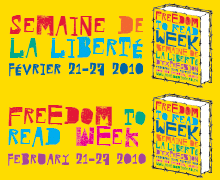
Freedom to Read Week is an annual event that encourages Canadians to think about and reaffirm their commitment to intellectual freedom, which is guaranteed them under the Charter of Rights and Freedoms. – from the Freedom to Read site

I personally don’t believe in censorship; I’m a pro-choice chick all the way. I agree – there’s a lot of abhorrent crap out there, but my problem with censorship is who gets to decide whether it is or isn’t abhorrent crap. The closest I’ve come to questioning the merit of a book was reading about Karla Homolka and Paul Bernardo, a married couple responsible for the death of three young girls including Homolka’s sister.

Freedom to Read has a wonderful list of writing that has been banned over the ages including:

“George Eliot’s novel Adam Bede was attacked as the “vile outpourings of a lewd woman’s mind,” and the book was withdrawn from circulation libraries in Britain.

Walt Whitman’s Leaves of Grass (published in 1833) was threatened with banning by Boston’s district attorney unless the book was expurgated. The public uproar brought such sales of his books that Whitman was able to buy a house with the proceeds.

Alice in Wonderland by Lewis Carroll was banned by the governor of Hunan province in China because, he said, animals should not use human language and it was disastrous to put animals and humans on the same level.

D.H. Lawrence’s novel Lady Chatterley’s Lover was the subject of a trial in England, in which Penguin Books was prosecuted for publishing an obscene book. During the proceedings, the prosecutor asked: “Is it a book you would wish your wife or servant to read?” Penguin won the case, and the book was allowed to be sold in England. A year earlier, the U.S. Post Office had declared the novel obscene and non-mailable. But a federal judge overturned the Post Office’s decision and questioned the right of the postmaster general to decide what was or was not obscene.”

And here’s a real shocker…”The U.S.A. PATRIOT Act, 2001,  passed by the American Congress in response to terrorist attacks on New York and Washington on September 11, gave the FBI power to collect information about the library borrowings of any U.S. citizen. The act also empowered the federal agency to gain access to library patrons’ log-ons to Internet Web sites—and protected the FBI from disclosing the identities of individuals being investigated.”

Read more about censored books here.

Here in Canada, the following books have been challenged at one point or another:

  • Margaret Laurence, The Diviners
  • J.D. Salinger, Catcher in the Rye
  • Rosamund Elwin, Asha’s Mums
  • Alice Munro, Lives of Girls and Women
  • Elizabeth Laird, A Little Piece of Ground
  • Mordecai Richler, The Apprenticeship of Duddy Kravitz
  • John Steinbeck, Of Mice and Men
  • Harper Lee, To Kill a Mockingbird
  • J.K. Rowling, Harry Potter
  • Mark Twain, Huckleberry Finn
  • Margaret Atwood, The Handmaid’s Tale

A full list of  material challenged in Canada can be found here.

Do you have personal feelings about censorship?

Over to you…great books for teens

When I only begin to read, I forget I’m on this world. It lifts me on wings with high thoughts.” – Anzia Yezierska

So, we’re in a deep freeze here in Eastern Canada. That’s what happens when you get complacent about winter, I guess. Until the last few days we’ve had a perfectly respectable winter…but minus 30 with the wind chill, come on!

In the real world I teach high school. I don’t have a long career behind me because I started teaching, got frustrated, abandoned it and did other stuff and have only recently returned. It’s shocking how many kids today don’t read. Shocking. What I would like to do is compile a list of great books for teens and I am looking for suggestions. I would also like to make a list of books/poems/plays that every teen should read before they leave high school. Yes, we have a curriculum, but I am shocked at the gaps in their reading.

Great books for teens.

A comprehensive reading list for teens.

Any thoughts?

Help an author…

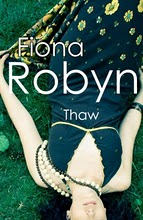
Fiona Robyn is going to blog her next novel, Thaw,  starting on the 1st of March. The novel follows 32 year old Ruth’s diary over three months as she decides whether or not to carry on living.

To help spread the word she’s organizing a Blogsplash, where blogs will publish the first page of Ruth’s diary simultaneously (and a link to the blog ).

She’s aiming to get 1000 blogs involved – if you’d be interested in joining in, email her at fiona@fionarobyn.com or find out more information at http://www.fionarobyn.com/thawblogsplash.htm.

Still waiting to be read…

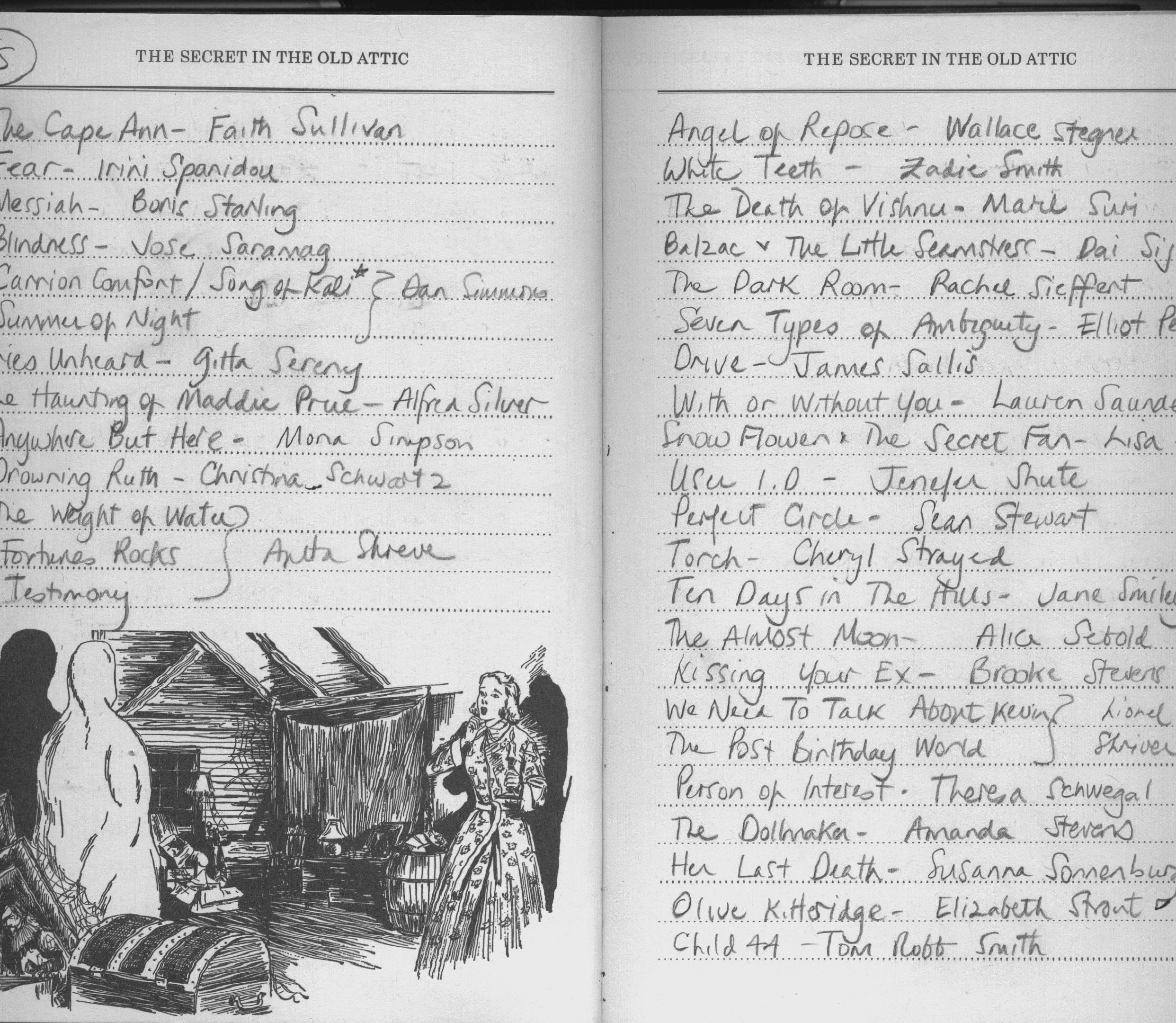
A couple of days ago I asked readers of this blog (okay, perhaps readers should be singular, but I can dream!) to help me sort through my endless tbr pile, which I’d posted here. These are books I actually own; my tbr list is likely 1000 books long! (And, yes, I do have a list – well, a book actually:

I keep track of all the books I want to read, listed alphabetically, by author. It’s ridiculous, isn’t it? I’d have to give up sleep and food and work…and apparently when you have kids you’re required to spend time with them. Who knew?

Anyway. I wanted some help going through the list and trying to decide what should get moved up to the top. You can still help out, if you’d like. If you’ve read anything on that list which you think should make my reading list this year, I’d love to hear about it.

But it did make me wonder – what prevents us from reading books we should (I mean I did, after all, select and purchase 90% of the books on my shelf!)

Then I came across this great little article on AbeBooks. com

Remaining Unread: The Top Ten Reasons We Don’t Get To Certain Books

It’s a wonderful (and wonderfully funny) look at book procurement and guilt. I, too,  have purchased books because I’ve liked something else the author has written; I’ve snatched something out of the bargain bin even though…I’ve caved under peer pressure. There are classics I have never read…and I call myself an English teacher!

What are your reasons for not getting to certain books?

Here’s a challenge for you…

If you check out my page On My tbr Shelf…oh dear, you’ll see that I have more than enough books to keep me reading for the next year (or three). My goal this year is to watch less TV and read more…and also to try not to buy any books other than what’s required for my book club.

Currently my tbr list is organized alphabetically. I’d love it if you’d take a look and help me prioritize my reading list. What’s on that list that I should be reading straight away because it’s awesome? What should I relegate to the bottom because, quite frankly, you have no idea why I’d want to read that.

I’d love to compile a list of 50 because that’s my reading goal for the year, so by all means…tell me what I should be reading in 2010.

Blast from the past…just not mine…

According to a recent article in the New York Times, The Babysitter’s Club series is coming back.  That series was wildly popular — 213 titles and 176 million copies sold– in its day.  I can’t comment on the series’  literary merit because I’ve never read one. When the series began in 1986, I was already an adult.

For me, the equivalent of The Babysitter’s Club would be The Bobbsey Twins. Oh, how I loved the adventures of Nan and Bert and Flossie and Freddie, two sets of twins solving mysteries in and around Lakeport. Laura Lee Hope, the series’ author, was actually several authors overseen by Edward Stratemeyer, the man behind The Hardy Boys and Nancy Drew and several other juvenile series.  Of course, I didn’t know that back in the day. I thought Miss Hope was wonderfully inventive and I thought the  Bobbsey twins were courageous and funny and clever.

The first Bobbsey Twins books was published in 1904 and the never-aging twins continued to solve mysteries until the mid-seventies.

Every year for my birthday, my uncle would give me a couple hard cover Bobbsey Twins books and I would devour them. They were always my favourite gift. I’ve never reread them as an adult and I have no doubt that they wouldn’t be nearly as magical as I remember them…but no matter. They served their purpose and did what all great literature does — transported me to another place.

I still own several of the books — although many were lost or given away during my childhood. They now have pride of place on my daughter’s shelf. Although she’s read them, she is not — of course — the same sort of kid I was. Still, it’s wonderful to know they are cherished.

I was an avid reader of these books when I was 8 and 9, and while they weren’t the only books I loved (I adored Trixie Beldon books and The Famous Five and The Secret Seven by Enid Blyton, too) they have a very special place in my heart.

How about you – I’d love to hear about your first literary love(s).