The Reading Promise – Alice Ozma

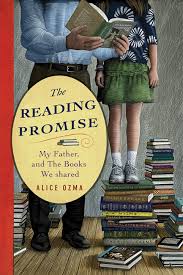
readingpromiseAlice Ozma’s dad, Jim,  made a promise to his daughter: he’d read to her every single night for 1000 consecutive nights. When they reached that pretty impressive goal they extended “The Steak” which, ultimately,  lasted for nine years. Nine years! Ozma shares their  story in her memoir, The Reading Promise.

“Our rules were always clear and firm: we had to read at least ten minutes (but almost always much more) per night, before midnight, with no exceptions. It should come from whatever book we were reading at the time, but if we were out of the house when midnight approached, anything from magazines to baseball programs would do. The reading should be done in person, but if the opportunity wasn’t there, over the phone would suffice. Well, just barely.”

Reading is something that Alice’s dad clearly values and is passionate about. As a librarian/teacher at an elementary school, he believes in the research that clearly shows that reading aloud is  “the single most important activity for building the knowledge required for eventual success in reading.”   But this nine-year reading “Streak” serves another very important purpose: as a single father, Jim is doing his best to spend quality time with Alice. His older daughter, Kathy, had announced when she was in grade four that she no longer wished to be read to. Alice is different.

The Reading Promise isn’t all about the books Jim and Alice shared. I found the book more interesting when Alice talked about the books, though. I laughed when Jim read Dicey’s Song to fifteen-year-old Alice, skipping over the parts he felt too embarrassed to read aloud. I admired Jim and Alice when they patched up small squabbles through reading together. Not even teenage hormones or adult frustration stymied their reading. I was as incensed as Alice was when the principals at both schools where Jim worked decided he should read no more than five minutes a day to his students, that he should, instead, teach them how to use a computer.

Ozma clearly had no notion that she’d be committing the story of “The Streak” to paper when she started her reading journey with her father. If her memoir suffers a little because of it, so what? Their commitment to reading and to each other makes for a lovely story.
Early Decision – Lacy Crawford

Early Decision PB

Here is what was going to happen: Anne was going to wake up one morning in full possession of the authority she needed to go out and start her life.

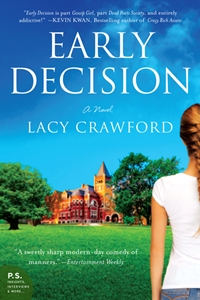
Anne Arlington hasn’t quite figured out what to do with her life, but while she figures it out  she acts as a consultant to parents hoping their (mostly) spoiled, coddled and rich offspring make it into the Ivy League. Even Canadian readers will know that the Ivy League is comprised of eight schools considered, by reputation and name, to be  academically excellent, selective, and socially elitist. For those who need a refresher, the  schools  are Brown, Columbia,  Cornell, Dartmouth College, Harvard, Princeton, the University of Pennsylvania and Yale.

Early Decision‘s author, Lacy Crawford, spent fifteen years working as just such a counselor, coaching parents and high school students through the highly competitive world of college applications and entrance essays. Although the names of the schools will be familiar, the process itself will be less so to Canadian students (unless they have made applications to American schools.) No matter, there’s a little something for everyone in Early Decision.

The novel follows Anne’s interactions with five of her students and their (mostly) helicopter parents. For five grand, she all but guarantees her students will get into the school of their (parent’s) dreams.  The interesting thing about Early Decision is that  the parents often don’t have a clue what their children actually want. These children are often merely an extension of their parents’ egos.

Anne isn’t that far removed from this process herself; she’s only 27. As she coaches her students through the essay writing process, she encourages them to consider what they really want for themselves. As a high school writing teacher, I particular appreciated Anne’s attempts to get the students as close to the truth of themselves as they could, to strive for an authentic voice.

And I don’t know whether it’s these students in particular or just where Anne happens to be in her own journey, but she finally gets the courage to make a change in her own life.

tlc tour hostEarly Decision was provided to me by the folks at TLC Book Tours in exchange for my honest review. I can honestly say that this is not a book I would have ever picked up on my own, but there’s a lot of great stuff here. The writing is terrific and Anne is a character who manages to see straight into the heart of the people she deals with, yet lacks the confidence to take her own life by the horns. Although the college application process isn’t quite as onerous here in Canada, Early Decision is a great book for people who are on the cusp of adulthood, trying to figure out what they want – juggling their dreams with those of their parents – and eventually figuring out what it means to be true to themselves.


The Birthing House – Christopher Ransom

Birthing_HouseConrad Harrison takes a wrong turn after leaving his father’s funeral and ends up in Black Earth, Wisconsin. He stops for food, glances at the paper someone left behind, and sees a listing for a house he decides to check out. When he goes to meet the real estate agent, Conrad had to admit that the house “made his heart beat faster.”

Faster than you can say “sold,” Conrad has bought the house. Then he returns home to Los Angeles to tell his wife Joanna. Except that when he gets home he discovers that Jo is not alone.

Christopher Ransom’s debut novel The Birth House is a lot of things, but sensical ain’t one of them. Okay, yes, I get it that Conrad was itching for change and that catching his wife with another guy (although not really) could certainly be impetus for said change, but he bought a house in a hick town without consulting his wife. Was it grief over the death of his father and the fact that he had a huge insurance cheque burning a hole in his pocket? The reader will never know because we never learn very much about his relationship with his dad other than he wasn’t around much. Clearly his relationship with Jo is at a crossroads because almost as soon as they move to Black Earth, Jo is head-hunted and takes a new job which requires her to leave for eight weeks of training.

That means Conrad is all alone in the house.  (Well, not completely alone; he has his dogs.)

Cue creepiness.

First there’s the guy who used to live in the house with his wife and kids, all of whom have birth defects.

Then there’s the book of the house’s history, delivered by its former owner. The book explains that the house used to be a birthing house, a place women went to have their babies, but it freaks Conrad out so much that he burns the book in the fireplace.

Then there’s the woman who appears at night.

And something weird is happening with Conrad’s snakes. (Yes, he keeps snakes except that they seem more like a convenient plot point than an actual thing that could potentially escape and wreak havoc.)

And let’s not forget about the mind-blowing orgasms Conrad has in his…sleeps? dreams?

As if that’s not enough, Conrad has a back story involving a girl called Holly and while his wife is away he befriends the nineteen-year-old daughter of his next door neighbours who just happens to be pregnant.

Conrad just keeps getting dumber and dumber. And so does the book.

Blech.


Totally Joe – James Howe

totally joeWhen Joe Bunch is given an ‘alphabiography’ as a seventh grade English project he thinks it’s lame. Joe’s teacher, Mr. Daly wants students to write about themselves from A-Z and that’s all well and good, except as Joe writes “I’m not exactly your average Joe.” But that, as it turns out, is just one of the many charms of Totally Joe by James Howe.

Howe is a prolific writer; he’s written over 70 books including the Bunnicula series. Totally Joe is also part of a series, The Misfits. Anyone who has read that book will be familiar with Joe and his friends, Addie, Skeezie, and Bobby, but you don’t need to have read it to fully appreciate Totally Joe.

It won’t take the reader very long to figure out that Joe is gay. When he meets Addie for the first time she says: “I thought you were supposed to be a boy. Why are you wearing a dress?” They were four at the time and have been fast friends ever since.

Joe is totally self-aware. It’s one of the pleasure of Totally Joe, really, that he is a person who understands and accepts himself. That doesn’t mean he’s not susceptible to the taunts of others. For instance, Kevin Hennessey who has “an IQ smaller than his neck size” has been picking on Joe forever.

“I’m not calling you a name, faggot, I’m calling you a girl, which you are.”

Somehow, though, despite the name-calling, Joe manages to rise above and he does this with the help of his parents (who are pretty awesome), his aunt Pam and even his older brother, Jeff whom despite being a “total guy-guy who’s all “yo” and “dude” and grabbing at his crotch and belching” is still decent.

Totally Joe is aimed at a 12-14 year-old audience and if Joe does, at times, sound way more mature than the average teenager it’s pretty easy to cut him some slack. He’s had time to settle into himself and he’s smart. The novel manages to be both funny and affirming and Joe even manages some sympathy for the mostly undeserving Kevin Hennessey. It would be a great middle school novel to generate discussion about what it means to be yourself, be a friend, and the positive outcome of standing up to the bullies. I really liked it.


1Q84 – Haruki Murakami

I am very excited to turn this blog over to my 15-year-old son, Connor, for his review of 1Q84 by Haruki Murakami.

IMG_0760*

A strategy I use often to pick books, one which my mom wholeheartedly disagrees with, is by cover only. I had never heard of Murakami before (I don’t know how, he takes up nearly an entire shelf of the fiction section at the book store, and has been on the scene since the late seventies) but when I saw the cover of 1Q84, designed by Chip Kidd, I thought it was a masterpiece, and bought the book. When I told people that the Murakami I was starting with was 1Q84, his 1150 page contemporary odyssey, they were shocked and confused, wondering why I didn’t start with something modest like Norwegian Wood or The Wind-Up Bird Chronicle. I soon found out why.

1Q84 alternates chapter by chapter between Aomame and Tengo, both 30 or so and living in Tokyo. Aomame is an isolated woman who works as a physical therapist and personal trainer for an elderly woman living in a grand estate, (though she has a second job which is… interesting, to say the least, but I won’t give anything away.)

Tengo is a struggling novelist slash cram school math teacher who is convinced by editor Komatsu to take part in a dangerous plan that will shock the literary scene. Komatsu, seeing the potential in sixteen year old Eriko Fukada’s short story, which she submitted to a contest, ropes Tengo into re-vamping it and publishing it as a novel.

These two characters share a metaphysical connection from their days spent in the same elementary school, but have since drifted very far apart. As a student, children were put off from Aomame because she was fanatically religious and from Tengo because he was the son of an aggressive, work obsessed NHK fee collector. Over the course of the novel, they are slowly drawn back together by the strange series of events, and each character’s utterly depressing past is revealed, much to the dismay of the reader.

Murakami infuses into this fantastical urban idyll themes of sexual promiscuity, aggression towards women, death, violence, and abuse, the supernatural, and memory, among other things; themes you may not expect in a novel which is primarily a speculative fiction romance. Along with this, Murakami skillfully blends every possible genre you can think of. 1Q84 is crime; it is mystery, romance, fantasy, science fiction. It is drama, erotic, historical, philosophical and political. Seriously, you name it, 1Q84 has it.

1Q84The book itself is split into three parts. The first part takes place between April and June, the second between July and September, and the third between October and November. The first two parts I really loved, mostly because so much was happening and because I instantly took to both Tengo and Aomame. I regret to say that in the third part, the book crashed and burned. I can’t quite explain why without giving anything away, but let’s just say there is a violent change in pace and the density and speed (as Donna Tartt would say,) that Murakami had built up over those 600 or so pages, slows nearly to a stop. It was like a disappointing punch to the gut.

Luckily, 1Q84 has a really pretty and ever so slightly redeeming ending, enough to stop me crying about it, but just barely.

Reviewers are far too hyperbolic about this book, trashing it every chance they get. That’s ridiculous. It’s a huge book, and I have no trouble believing that it’s the magnum opus of his career. He is clearly a talented writer, and it’s clear that 1Q84 was an immensely challenging novel to write. It’s 1 000 pages long for heaven’s sake!

Recommended.


The Twisted Thread – Charlotte Bacon

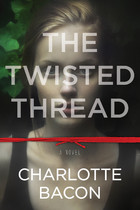
TwistedThread The Twisted Thread is the story of Madeline Christopher, a twenty-something teaching intern at the prestigious Armitage Academy, a New England boarding school. In the novel’s expository opening we get to hear all about Madeline’s education and lack of job prospects, her prickly relationship with her mother (who apparently suggested Madeline get some Botox), her equally prickly relationship with her older sister, Kate (an Armitage graduate and the reason Madeline has this job at all), and her thoughts about the year she’s spent at Armitage. All this while she is running during the forty-five minutes she has to herself.

Upon her return to campus, Madeline is shocked to discover the place crawling with cops and EMTs. A student in  Madeline’s dorm has died. And not just any girl: Claire Harkness, a girl whose “crystalline beauty and complete disdain for the adults around her” had awed Madeline.

There is a lot going on in this novel and several subplots which add nothing to the book’s central ‘mystery’ – which is what happened to Claire? There are also a million characters, some mentioned in passing and then recalled as essential after the fact. Teachers are called upon for their expertise in French and scrutinized for strange behaviour (of which there is a lot.) Madeline’s sister Kate shows up unannounced, refuses to answer a few questions about this secret Armitage society and then stomps off in a huff – never to be seen again.

Madeline is desperate to figure out what happened to Claire. While comforting a hysterical student in clear view of Claire’s dead and naked body, Madeline realized something was not quite normal with Claire. “It was her breasts. They were full and rigid with veins…” Claire, Madeline figures, has recently given birth. OMG! Where’s the baby!?

The Twisted Thread is an okay book. The back cover calls it a “gripping and suspenseful story in the tradition of Donna Tartt’s The Secret History,” but I respectfully disagree. Although it’s been twenty years since I read The Secret History, that’s a book that has stayed with me. My 15-year-old son just finished reading it and called it “the best book he’s ever read.”  I think The Twisted Thread  desperately wants to be more than the sum of its parts, but at the end of the day it’s only just a pleasant enough beach read. I doubt anyone will be talking about it twenty years from now.

Painting Juliana – Martha Louise Hunter

Painting Juliana My children are avid readers and we often share and discuss the books we read. My son, Connor, in particular, always wants to know what I am currently reading and what it’s about and whether or not I like it. More often than not, I feel relatively ‘meh’ about a book. The books I really love are few and far between, a fact which makes Con roll his eyes. “You never love any books, Mom,” he says.

It’s not true, of course. I love lots of books. I read constantly and I’m always ready to be wowed by a book. I want it to be the book that makes me shout from this blog: you MUST read this book. I have a whole list of books like that here.

So that brings me to Painting Juliana, the debut novel by Texan writer Martha Louise Hunter.  About thirty pages into the book I thought to myself, I can’t read this.  Then I thought, Am I missing something? I went off to read other reviews – most of which were glowing. So, I attacked the book again. I eventually settled into the book, but I have to admit that this one falls into the decidedly ‘meh’ category for me.

Painting Juliana is the story of Juliana Morrissey née Birdsong. She’s married to Oliver, a big-shot lawyer, and mother to thirteen-year-old twins Lindsey and Adam. When the novel opens, she’s just been told (while at a marriage counselling session, no less) that Oliver is divorcing her. It’s apparent pretty early on that Oliver is a total asshat, but Juliana is absolutely floored by the news that he’s kicking her to the curb. She has twenty minutes to pack her bags and get out of the family home. Oh, and the kids are staying put.

Juliana has no place to go and she has more problems than just dealing with Oliver and her fractured family. She’s got a rocky relationship with her gay brother, Richard, and her father has been diagnosed with Alzheimer’s. Plus, she has no skills. She was going to go to law school, but she got married instead. Now all she has are  designer bags and a lot of debt.  Also, there are some unresolved mommy issues and mysterious paintings that come to life.

Painting Juliana is the story of  a woman  reinventing herself and that’s a story that I can get behind. Having recently gone through a divorce myself, I empathized with her predicament and there were some moments when I felt as though Hunter got it just about right.

Where the book didn’t work for me, though, was some of the dialogue. For example, when Oliver and Juliana meet for a supposed conciliatory lunch, Oliver dismisses the waiter by loudly announcing: “Be gone with you, Jim. I must make out with my wife now” to which Juliana replies, “Unhand me, sir! I’m a married woman.”

At lunch with her friend, Kimberley, the women are interrupted by a man in his mid-forties who says: “I hear you’re in real estate now…I’ve been wanting to get into some real estate…preferably between your legs.” Do grown people really speak this way?

Another friend says to Juliana,”You’ve always gotten what you wanted, Juliana. The successful husband, the decked-out house, great car, the best clothes and jewelry. Plus you’re gorgeous with a smoking bod.” Seriously. Are we thirteen?

Moments like this – and there are many of them – made me cringe. The dialogue often felt clunky and expository and not at all the way people actually speak.

I also felt that perhaps Hunter tried to pack too much into this novel – as though the story of a woman trying to find herself post divorce wasn’t enough. There’s enough material in here for at least another novel and a half. I do think that some of the subplots were simply distracting and the novel might have benefitted from some judicious editing.

When, at the end of the day, I don’t feel strongly about a book one way or the other – it falls into the ‘meh’ category for me, and Painting Juliana is that kind of book. However, it appears that my feelings about the novel are eclipsed by readers who felt the novel is amazing, so let’s chalk my feelings about it to my own book snobbery.

tlc tour hostPainting Juliana was provided to me by TLC Book Tours in exchange for my review. Thanks to them for the opportunity.

The Qualities of Wood – Mary Vensel White

qualities-of-wood-pb-200Mary Vensel White’s debut novel The Qualities of Wood was provided to me by TLC Book Tours.  It looks like I’m first up on the blog tour and I sure wish I had better news for you, folks.

The Qualities of Wood is Vivian Gardiner’s story. She has given up her life in the city to join her husband, Nowell, in a small town where they will live in the house he inherited from his grandmother. The plan is that they’ll do some cosmetic work to the property and in a year or so, sell it. Nowell will also use the time to work on his second mystery novel. On the day Vivian arrives at the Gardiner homestead the body of a teenage girl is found in the woods at the back of their property.  Although her death is almost immediately ruled accidental, it still seems to be the sun around which all the players in this novel orbit. All that sounds promising, right?

I liked this novel when I started reading it. White is a lovely writer and there were several moments in the novel where I lingered over her words. For example:

They turned at the back corner of the house and the open space hit her like a deep breath.

So my issues with the book don’t have anything to do with the quality of the writing. My issues have to do with pacing and characterization. And I am a reader who can generally read books that don’t have much of a forward thrust.

Okay – so Vivian arrives at this run-down house. She and Nowell, who have only been married for about four years, have been separated for four weeks.  It’s going to take some adjusting.  Soon enough they seem to fall into this pattern. Nowell gets up early and gets to work in a little space he has partitioned off from the rest of the kitchen with a sheet. Vivian alternately lazes about or works at sorting through the lifetime of junk Grandma Gardiner left behind. The reader is treated to a laundry list of this detritus: “used paperback romances, sewing things and scraps of fabric, and entire box of plastic silverware, plates and cups.” There’s dressers full of clothes and other personal items. There’s even a gun, which seems promising – but sadly isn’t used to kill anyone.

And I think that’s my main complaint about The Qualities of Wood. There’s no mystery here. Vivian is stuck in a small, unfamiliar town with a husband who becomes increasingly strange to her. But she’s strange, too. I never really warmed up to either of them – or any of the characters for that matter. When Nowell’s brother, Lonnie, and his new bride, Dot, show up it just ups the ante of strange behaviour. The narrative alternates between Vivian doing mundane things like subscribing to the local newspaper, visiting with her new friend Katherine and running a three-day yard sale (and did we really need to hear about all three days?) and breaking into her neighbour’s house in the middle of the night. Okay, sure Mr. Stokes is odd, but Vivian this is not the behaviour of a rational person; you know that, right?

There’s also some back story – like the time Vivian got lost in the woods (I thought that was going somewhere)  and the time she snuck out of her house to go to a party (so is this, then, meant to be a novel about someone who barely had a chance to rebel and now she’s married and her husband is pressuring her to have kids and she just wants to be free?)  In some ways I think part of my dissatisfaction with this novel is that there’s too much going on. Some of it feels like filler (like describing Katherine’s driving skills) and some of it feels like unrealized potential (glimpses into Nowell’s latest novel). Either way,   I was ready to pack it in at page 100.

If The Qualities of Wood is meant to be about secrets, as the blurb on the back of the novel claims it is,  they better be worth spilling. When all is revealed in the novel’s final pages,  none of what is exposed makes up for the minutiae the reader has plodded through to get there.


Saturday Sum Up – May 3

I know, I know – I haven’t summed on a Saturday in ages. It’s been busy!

I am fascinated with zines and am playing with the idea of having my students make one as part of our study of Romeo and Juliet. I found a terrific link for How to Make a Zine and the simple instructions allowed me to build a zine in about two minutes  without the need for glue or staples or anything! IMG_0400

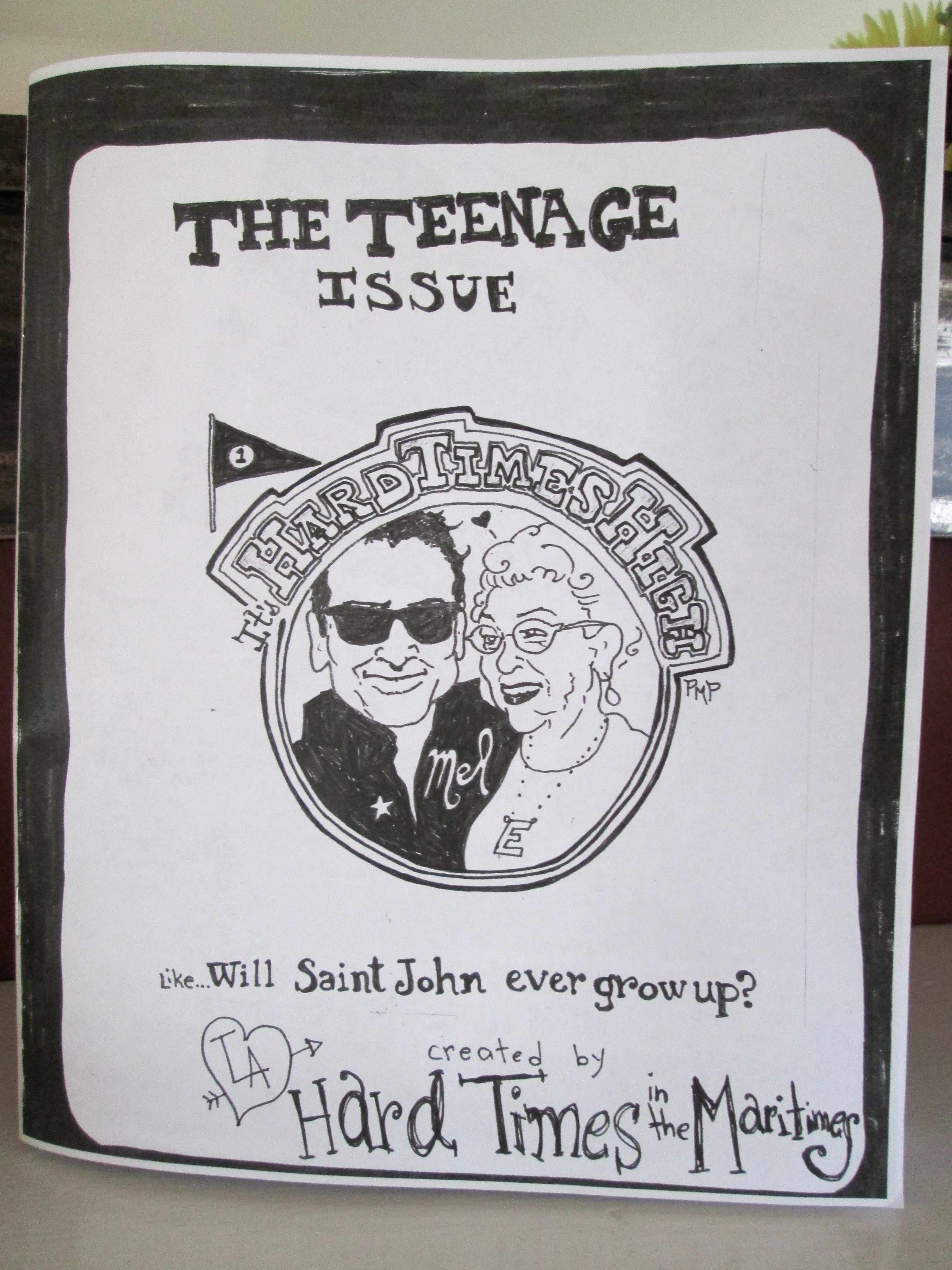
By a strange coincidence, my 14-year-old son was invited to an event last night hosted by a zine produced here in Saint John, Hard Times in the Maritimes. He had a ball and came home with a copy of the zine, which will be an excellent example to show my students.

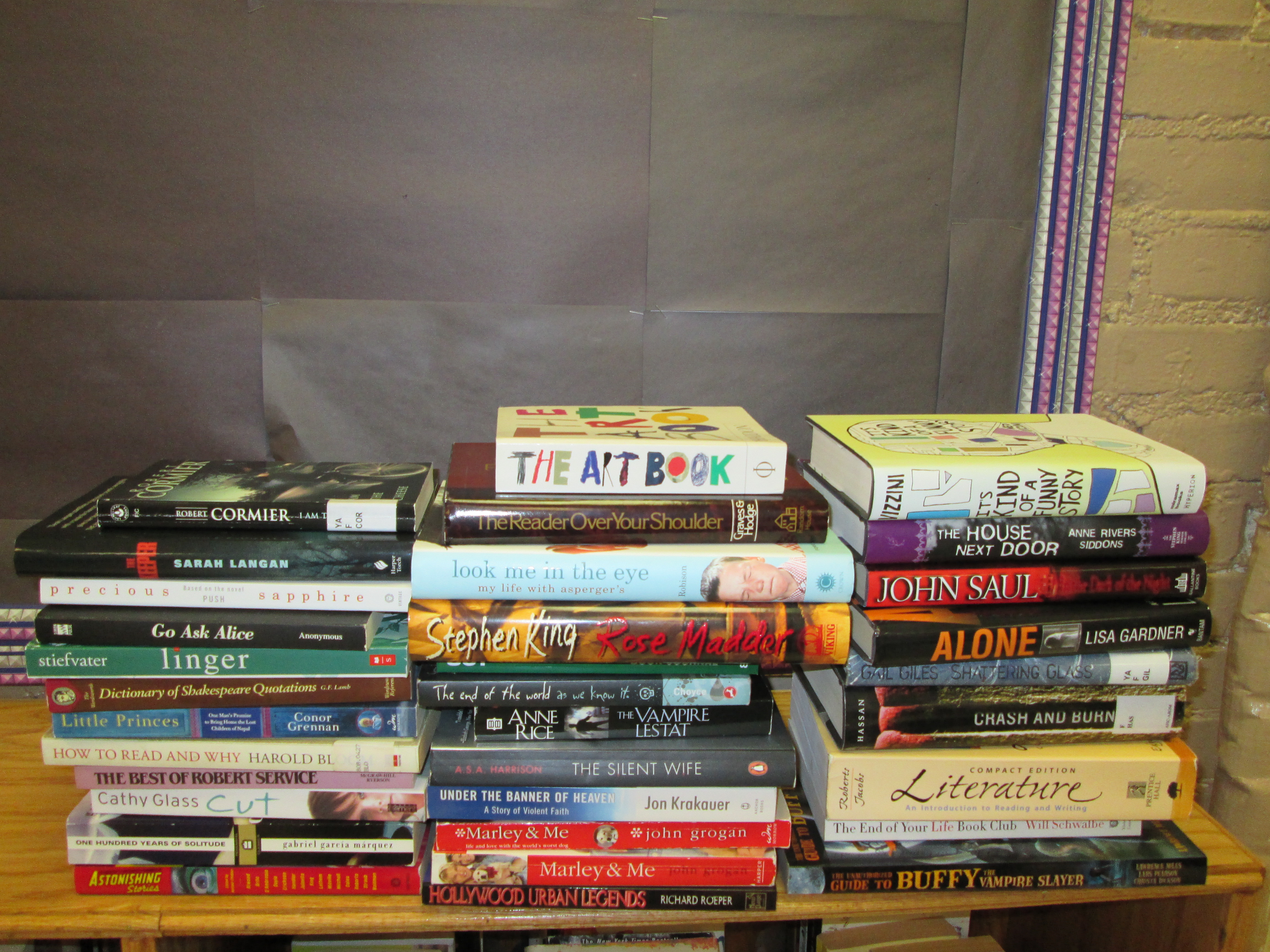
Today is the second and last day of the library’s annual book sale, an event which I love. I didn’t find quite as many treasures as I usually do – oh who am I kidding. I lugged home three big bags full of books including some which were actually on my tbr list. I also nabbed a couple dozen new books for my classroom library. If you live here in Saint John, check it out today at Market Square until 3pm. Here’s my haul – well part of my haul because I was there first thing yesterday morning and then went back with my son after school. All those books cost me just $27.IMG_0397

This is hilarious: the Ottawa public library was asked to remove Dr. Seuss’s book Hop on Pop from its shelves because it apparently condones, promotes even, violence against fathers. What other strange requests for censorship has the library had? Read about them here.

Speaking of censorship, F. Scott Fitzgerald’s stories are being published without censorship for the first time.


Keep Holding On – Susane Colasanti

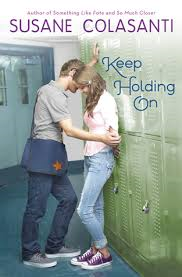
keepholdingonNoelle, the narrator of Susane Colasant’s YA novel Keep Holding On,  is just trying to make it through high school so that she can get the hell out of Dodge. (Dodge isn’t actually the name of the town where she lives; Noelle actually calls it “Middle of Nowhere, USA.” ) Every day Noelle wishes she could “be transported to another school in an alternate universe where required learning doesn’t have to involve this traumatic test of survival skills.” Noelle doesn’t stand out, not really, but nevertheless she’s an outsider. Mostly she’s a target because she’s poor; her lunch and clothes are often cause for ridicule. There’s also some stuff following her from her middle school days – a misunderstanding that was blown out of proportion and hangs over her like a dark cloud. The biggest problem in Noelle’s life, besides the jerks at her school who make her life miserable, is her mother.

This one time last year, she came home really late and woke me up when she slammed the front door. Then she whipped my door open. I could see her glaring at me, the light from the hall illuminating the hate in her eyes. She didn’t say anything. She just slammed my door.

Noelle’s mom isn’t abusive per se, but she is neglectful. Noelle can’t remember a time when her mother really looked at her, but it’s certainly been since her stepfather, her mom’s second husband, died of cancer. This was clearly a traumatic event for mother and daughter and yet it’s hard to feel any empathy for Noelle’s mom; she’s just awful.  “There are plenty of days,” Noelle observes,” when mother says less than ten words to me.” Noelle’s biological father isn’t in the picture at all. Then there’s Matt, the boy Noelle likes who seems to like her back at least enough to make out with her – although the fact that they make out is top-secret. Even though you can see the reason for Matt’s need for secrecy a mile away, it still a believable situation for Noelle. Keep Holding On treads familiar teen ground, but the book separates itself from the pack in part because Noelle is immensely sympathetic. She wants, more than anything, to fit in, but what she eventually figures out is that fitting in isn’t nearly as important as finding your own place to belong.