Saturday Sum-up – Feb 8

Here’s what I found bookish & interesting on my tour around the Internet this week:
Bfz5b4yCQAADeUU

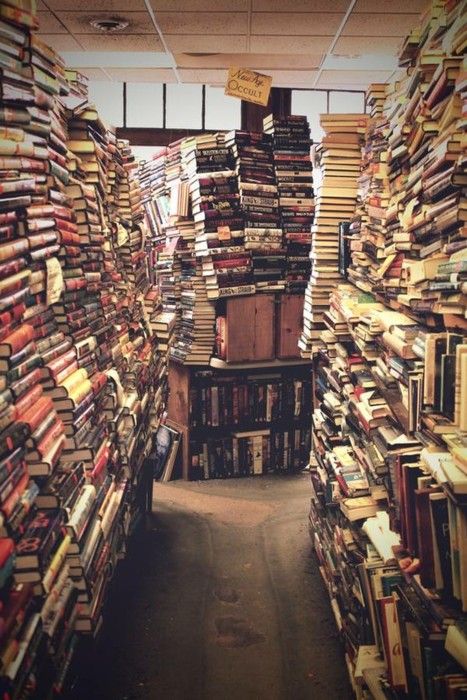
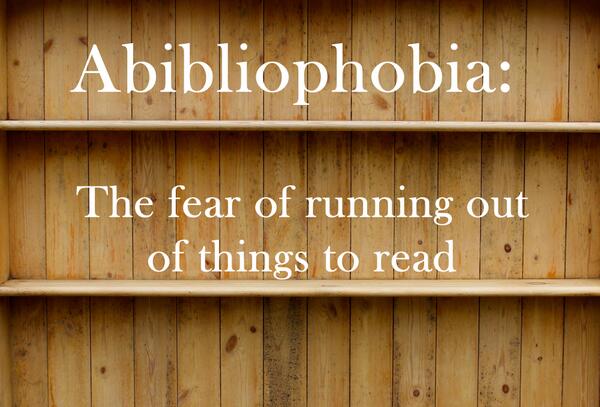
The above picture will never happen to me. That’s because this is my to be read shelf!  IMG_0211

It is both awesome and daunting to have so many books waiting to be read, especially when I also have a little notebook filled with hundreds more titles

Not nearly as often as I should, I visit the blogs I’ve linked to (see right) to see what other bloggers are reading and talking about. One click led to another and suddenly I came across this fabulous page: 100 Essential Sites for Voracious Readers. I’m just – gah! Where has this page been all my life?

I suspect that many of you are already familiar with Book Drum, a wonderful site that allows readers to offer (academic) insight into the books they love by way of pictures, video, footnotes etc. I actually submitted a project – for lack of a better word – on Helen Humphreys’ magnificent novel, The Lost Garden. For teachers out there – try Teaching with Book Drum.

I suspect that everyone and their dog has seen this sweet little video – but just in case you missed it:

Happy Saturday!
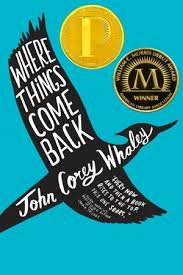
 

Where Things Come Back – John Corey Whaley

wherethingsThe members of the English department at my school decided before Christmas that it might be fun to have a book club to look specifically at Young Adult fiction. There’s so much great fiction for teens…and this will be a no-pressure way to look at some of the titles.

Last night I hosted the first meeting where we discussed John Corey Whaley’s much-lauded debut novel Where Things Come Back. Seriously, this book has won several prizes including two of the biggest: Michael L. Printz and William C. Morris. I’ve learned that prize winners don’t always live up to the hype and I am sad to say that I’d put this book in that category.

It started off okay.

I was seventeen years old when I saw my first dead body. It wasn’t my cousin Oslo’s. It was a woman who looked to have been around fifty or at least in her late forties. She didn’t have any visible bullet holes or scratches, cuts or bruises, so I assumed that she had just died of some disease or something; her body barely hidden by the thin white sheet as it awaited its placement in the lockers. The second dead body I ever saw was my cousin Oslo’s

Intriguing enough. And the character’s voice was distinct and I was interested. But to say that Where Things Come Back fulfilled its early promise would be a lie. And my fellow teachers agreed; not a single one of them liked it either.

The first question I asked at last night’s gathering was whether or not we should hold YA  to the same rigorous standards we hold other literature to. And the answer is – of course. As a teacher I want my students to read the really, really good stuff, but I also know that often times they will read stuff that is below my lofty standards. Geesh – I often read stuff that is below my lofty standards! I have many books on the shelves in my classroom that are just…yuck. But someone will read those books and love them and as long as they are reading I feel like they are walking that path towards better literature.

Once we determined that no one liked the novel, we set about trying to determine why.

“Fiction is driven by character,” said Karen. (Karen is a colleague and has also been one of my dearest friends for the past 30-odd years. Our philosophies are quite similar when it comes to teaching and reading.) “I just didn’t like any of the characters in this book.”

Other teachers had problems with the novel’s narrative structure.

And who cares about the woodpecker? None of us.

Where Things Come Back  is mostly Cullen  Witter’s story. He lives with his parents and younger brother, Gabriel, in Lily, Arkansas. Lily is a backwater little town where nothing ever happens. One day Gabriel just vanishes.  Where Things Come Back is also, superficially at least, the story of Benton Sage, a teenager doing missionary work in Ethiopia who suddenly has a crisis of faith. How Cullen and Benton’s stories connect finally becomes apparent in the novel’s final pages – but by then I didn’t care. And that’s a failing of two things: character and telling. So much of this story is told to the reader.

Perhaps there was just too much story to handle. Cullen’s journey after Gabriel’s disappearance might have made for some riveting reading.  Benton’s story, too, had potential. But the clunky denouement tipped over into melodrama that didn’t serve either character, really.

One teacher had a student who read this book and loved it and I will happily add it to my classroom bookshelf – but I won’t be rushing to recommend it.


I’ve made up with Facebook

I recently rejoined the land of FB, after years of saying it was ‘the devil.’ (I have my reasons; I am working through it.) Anyway, I thought FB might be a great way to share The Ludic Reader with people, so please drop by and like the brand-spanking new fb page for The Ludic Reader  I’ll be sharing some content with this blog, but also posting lots of other book-related content exclusively to FB as well.

While you’re at it, there are loads of fabulous writers/bookish things on FB and you should like their pages, too.

Lauren B. Davis – Our Daily Bread

Jennifer McMahon – Promise Not to Tell

John Connolly – The Book of Lost Things

Gillian Flynn – Dark Places, Gone Girl

Nikki Gemmell – With My Body, Cleave, Shiver, I Take You

John Green – The Fault in Our Stars, Paper Towns

Stephen King – Joyland

Book Outlet

The New York Times Review of Books

And I am sure this is just the tip of the toppling bookpile of stuff to like on FB.

Saturday Sum-up – Feb 1

Here’s what I found bookish & interesting on my tour around the Internet this week:

1798123_544057602359625_1338580076_n

I think bookshelves are the best thing ever…and I’m not alone. Check out this interesting article written by local designer, Judith Mackin: By the Book Design

I have a nice collection of book shelf pictures on Pinterest or for the motherlode you could check out Book Shelf Porn.

Everyone knows I am an avid reader. I am also an English teacher. Even when you put those two fact together, it still  doesn’t mean I’ve read every book I should have read. That’s why this brief guide to faking your way literary classics when you haven’t actually read them guide is so handy.

The whole world went gaga over Gillian Flynn’s novel Gone Girl and in case you’re looking for something else to read in the mad matrimony genre, check out this list of like titles.

On this day in literary history in 1918, Scottish writer Muriel Sparks was born. Ms. Sparks is best known for her novel The Prime of Miss Jean Brodie

Saturday Sum up – January 25

Here’s what I found bookish & interesting on my tour around the Internet this week:

I loved this story about people forming a human chain to move books to a new library – now that’s bookish dedication!

For the past couple of years I’ve taken part in Goodreads Reading Challenge. I also track my reading at the 50 Book Pledge, which I love even more as it’s very visual.  I view participating in these things as a way of challenging myself to read more and do other stuff (watch tv, waste time online) less. The Guardian views the reading challenge another way. Read The bad side of Goodreads’ Reading Challenge.

My brother Mark bought me a Kobo for Christmas. He’s a dear man. “You read a lot,” he said to me when I thanked him. Yep, I read a lot….of BOOKS. Like… books that I can hold in my hand with real pages I can turn and then store on my shelves when I am done.  Nevertheless, I tried to set the damn thing up and failed and now it’s just sitting on my bedroom table, abandoned. So…

this makes me inordinantly happy: How Book Porn is Actually Revolutionalizing the Book World

Check out this comprehensive list of 50 Essential Mystery Novels. It’s missing Thomas H. Cook, a mystery writer at the top of my list, but it’s still a great start for newbies to the genre.

Finally – here’s a fantastic list of books for booklovers.

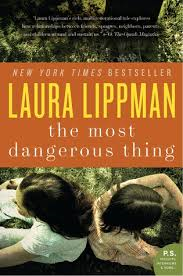
The Most Dangerous Thing – Laura Lippman

mostdangerousIt took me forever (it seems) to finish Laura Lippman’s novel The Most Dangerous Thing, a book that the Wall Street Journal called “a creepy, genre-bending, stand-alone novel.”

Lippman’s novel is the overly long story of five childhood friends, Gwen, Mickey, Tim, Sean and Go-Go who are reunited as adults after Go-Go is killed in a car accident that may or may not have been deliberate.  The real story, though, is about what happened to these five when they were kids – a bit of nasty business that is alluded to and then covered up. It’s the seventies, after all.

The story bounces between then and now and the big reveal  – which comes in the novel’s final pages – doesn’t really equal the sum of its parts. My problem with the book is that it took forever to get anywhere and when I finally arrived I was just sort of meh about the whole affair. As a novel of “psychological suspense,” as the Globe and Mail purports it to be, it was lacking the actual suspense.

Actually, I think the real mystery in The Most Dangerous Thing is  who is telling the story because Go-Go is dead and the remaining four are all referred to in the third person. In the author’s notes at the back of the book Ms. Lippman says: “I don’t want to tell you.”

As another kind of story, The Most Dangerous Thing is quite compelling.  The children are children only in flashback; we are actually dealing with them as adults and their lives are messy and complicated – as lives tend to be. We also spend time with their parents and those lives aren’t much better. But the thing is – is The Most Dangerous Thing a family drama  times three or is it a mystery, or a thriller, Maybe it’s social commentary?

Ms. Lippman says it’s her most autobiographical novel – geographically speaking. She says “I have been circling the unusual neighbourhood in which I grew up, determined to write about it, but wanting to wait for the right time and story.”

If I hadn’t been itching for the book to move along already, I would probably have enjoyed it more. Ms. Lippman is a wonderful writer, no question…but this book was only just okay for me. Maybe if I hadn’t been expecting something different, I would have been less disappointed.

Saturday sum-up – Jan 18th

Here’s what I found bookish & interesting on my tour around the Internet this week:

92c2cc6b9654ff6d9dce2f856a9988e2

Why does too many books still not seem like hoarding to me?

Looking for a way to spice up your reading lives? Check out these cool Reading Bingo Challenge cards over at Random House.

I love The Nerdy Bookclub and they recently posted about Canadian children’s books.

I am a big fan of Nick Bantock. He’s probably best known for his Griffin and Sabine trilogy and if you haven’t read them I highly recommend them. Anyway, my son and I made our weekly pilgrimage to Indigo last night and I stumbled upon Bantock’s latest endeavour, The Trickster’s Hat. I didn’t purchase it, but I’m going to. It’s a beautiful little book about creativity with 49 activities you can do to promote it in your own life. Visit Nick’s Etsy page. (Edited on Feb 22 to add this review of The Trickster’s Hat from the National Post.)

And here’s something avid readers already know: Great novels can change your life…and your brain

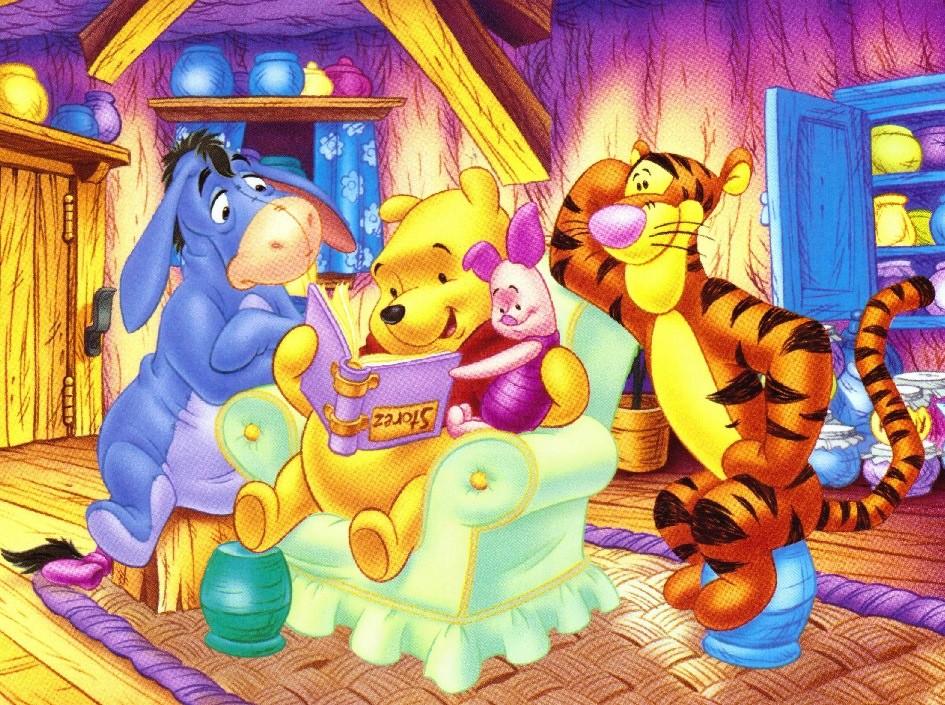
Today in literary history: A.A. Milne, author of Winnie the Pooh was born in London on this day in 1882. My mom read me and my brotheKumpulan gambar kartun winnie the pooh Yang Lucu dan Imut Brs Winnie the Pooh  all the time when we were kids. I loved those stories, but I loved my mom reading to me even more.

““If you live to be a hundred, I want to live to be a hundred minus one day so I never have to live without you.”  A.A. Milne

I Take You – Nikki Gemmell

tlc tour hostThanks to the folks at TLC, I’m back with another book by Nikki Gemmell. You’ll recall that I took a look at her novel With My Body last month and today I am going to talk about her book I Take You. Beginning with The Bride Stripped Bare, With My Body and I Take You form a trilogy of sorts, although the characters and plots don’t really overlap so each book could be read independently of the others. I Take You

I Take You is the story of Connie Carven, wife to Clifford, a banker who has been seriously injured in a skiing accident and can no longer – erm – perform certain husbandly duties. No matter, Cliff has found other ways to satisfy his wife, most of them involving his Mont Blanc pen and a wicked imagination. At first Connie seems like a willing participant in her husband’s increasingly perverse sexual games, but one night Cliff takes things a teensy bit  (okay, a lot) too far and something in Connie–I don’t want to say snaps–changes.

Truthfully, I didn’t get Connie’s relationship with Cliff. Like, at all. Pre-accident he was  “her American…someone to be laughed at and admired and feared in equal measure.” Cliff is over-the-top rich and Connie “grew quickly addicted to this way of living — loved the sparkly, unthinking splash of it.”

When she tries to explain her relationship with Cliff to her father she says:

“We’re happy , Dad. As we are. I’m his wife and I have a job to do. A very important one. Now more than ever. Only I can help him, only me. I’ve become crucial to him in a way that’s impossible to explain.”

We are meant to believe that Cliff’s accident was the impetus for her to fall in love with her husband because “it tipped their sex life into something else. Because Cliff gouged out — patiently, gently, beseechingly — the very marrow of his impenetrable wife. It had been the trigger that now tipped him into something else.”  But the thing is, I don’t see these two as having very much of anything at all except perhaps for a co-dependent relationship and a penchant for kinky sex. And I never saw Cliff as a nurturing, kind man and he can’t kiss worth a damn, apparently.

Then, matters get more complicated when Connie meets Mel — he’s the gardener who takes care of the private communal garden that belongs to the houses on their square. It was at this point that I had a ‘wait a minute’ moment. I Take You was starting to sound suspiciously like another book: D.H. Lawrence’s novel Lady Chatterly’s Lover.  According to the blurb on the back (which I hadn’t bothered to read) Gemmell was indeed inspired by Lawrence’s infamous book.

Everything you think is going to happen, happens. Mel and Connie start an illicit affair; Cliff gets all bent out of shape about it; Connie chooses personal happiness over marital responsibility.

So how does I Take You compare with the other erotica out there? Well, Gemmel’s writing is still lovely (although I think I might have appreciated this book a bit more if I’d had more of a breather between this one and With My Body.) It’s often quite graphic, so if that’s not your cup of titillation tea — perhaps this isn’t the book for you.

I can’t say I was quite as enamoured with I Take You as I was with With My Body. I may need a little while longer to figure out why Connie’s journey just didn’t resonate with me the way the narrator in With My Body did.

Saturday Sum-up

Here’s what I found bookish & interesting on my tour around the Internet this week:

I do a lot of reading about reading. The longer I teach, the less I care about testing and grammar and the more I care about reading. When students leave these hallowed halls (and the hallowed halls of whatever post-secondary route they take) they’re not going to read and then make a poster. At best, they might start a book blog, but even then they’re not going to talk about the figurative devices they come across in the books they read. The question then becomes, ultimately, how do I instill in my students a life-long appreciation for reading.

This article was an interesting look at that very topic: How to teach reading for pleasure.

Yet one more reason to love Jon Stewart: https://twitter.com/JasonElsom/status/421800162143789056/photo/1

(with thanks to @JasonElsom for the original post)

And, egads, The Telegraph shares its list of the Top Ten Young Adult books of 2013 and not only have I not read any, I’ve only heard of two.

On this day in literary history (in 1928) Thomas Hardy (Jude the Obscure; The Mayor of Casterbridge) died.  He was 87. His heart is buried in the grave of his first wife and his ashes are buried next to Charles Dickens in Westminster Abbey.

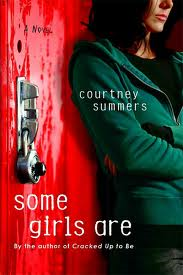
Some Girls Are – Courtney Summers

somegirlsareSome girls are bitches. In Courtney Summers’ compelling and disturbing YA novel Some Girls Are, calling the characters bitches is an extreme understatement. Some of these girls are psychopaths.

Regina Afton used to be one of the Fearsome Fivesome – a pack of girls led by Anna Morrison. Every high school has them, I suppose, that group of mean girls who take extreme pleasure in ruining the lives of others. That said, I don’t recall any from my high school days (yeah – okay, it was a million years ago!) and I don’t know of any at the school where I teach – at least none as venomous as this. And man, these girls are really, really awful.

The novel opens at a party where “everyone is wasted.” Everyone except Regina, that is,  because it’s her turn to be the designated driver, a job she takes relatively seriously even though it’s “boring.”  When she tries to rouse a passed out Anna, she encounters an obstacle of another kind: Anna’s equally intoxicated boyfriend, Donnie.

I’d turned him down in the ninth grade. Anna says we’ve been close to hate-fucking ever since, which is too gross for me to even contemplate. It’s a gunshot kind of thing for her to say – a warning. The way she says it, it’s like she can see it happening, and the way she says it lets me know I better not let it happen.

But then the unthinkable almost does happen and when Regina turns to another member of the Fearsome Fivesome for help and advice, she suddenly finds herself frozen out of the group she was once an integral part of.

The interesting thing about Regina is that she isn’t all that likeable. She’s mean. She wasn’t always mean, though. That would have to be true for readers to root for her even a little bit, but her exterior is so prickly it takes a while to warm up to her. Like, a long while. And I found that interesting. She’s an anti-hero.

Life becomes almost unbearable for Regina once Anna and Kara, Regina’s replacement, get going. It’s not just covert tactics they employ to ostracize Regina – they humiliate her, physically abuse her and truly make her life a living hell. Regina has no allies because when she was part of the clique, she’d been horrible to just about everyone in the school.

I’m  used to everyone’s eyes on me; that’s nothing new. When you’re Anna Morrison’s best friend, people look. We’re the kind of popular that parents like to pretend don’t exist so they can sleep at night, and we’re the kind of popular that makes our peers unable to sleep at night. Everyone hates us, but they’re afraid of us, too.

There’s really no relief for Regina until Michael  Hayden – one of her former victims – slowly lets her into his life. And with his friendship comes Regina’s redemption.

Okay, I’m a teacher – I know that the vast majority of teens aren’t like the people portrayed in this book – but some of them are. Some teenagers are nasty, messy, insecure, and hateful. And hopefully some of those will, like Regina, have the opportunity to make amends for the damage they do.

Some Girls Are crackles with real energy and I couldn’t put it down.