Scribbling the Cat by Alexandra Fuller

Alexandra Fuller’s memoir Don’t Let’s Go to the Dogs Tonight has been on my tbr list forever.  It was universally praised and having recently finished Scribbling the Cat I am even more anxious to read it.

Fuller was born in England and moved, with her family, to Rhodesia when she was 3.  Here’s an even more interesting fact: Fuller received her B.A. from Acadia University.  Since I live next door to Nova Scotia –  I feel a certain kinship to her now; she’s an honorary Maritimer!

Scribbling the Cat is Fuller’s story of  ‘K’,  a man she meets on a trip back to Zambia to visit her parents who still live and work there. Fuller has left her husband and two children behind in the States. She does a wonderful job, throughout this book, of juxtaposing those two very different worlds: one of excess and waste and one where nothing is wasted, where potential danger always seems to be lurking.

K  is something of an enigma.  She hears about him before she actually meets him and when she meets him, he takes her breath away.

Even at first glance, K was more than ordinarily beautiful, but in a careless, superior way, like a dominant lion or an ancient fortress.

Of course, I immediately thought that Scribbling the Cat was going to be about a sexual relationship between Fuller and K –  but their relationship turns out to be far more complicated than that. K was a soldier in the Rhodesian war and having grown up there, Fuller is intensely interested in his story. As their friendship develops, she gets the idea that they should journey to the places he had fought. She is, after all, a writer and he is a remarkable subject.

K is an endlessly fascinating subject – he rants, he weeps, he recalls with equal vigor.

Scribbling the Cat is an unflinching look at war – the horrible things people do and how they must find some sort of peace with their actions when the war is over. This is K’s story, to be sure, and it’s a horrific one.  But this is Fuller’s story, too, and it’s a remarkable.

Read for the Memorable Memoir Challenge.

The Adoration of Jenna Fox by Mary E. Pearson

Well, we’re back with another mother/daughter review.  This time we’re going to talk about The Adoration of Jenna Fox. It tells the story of a young girl, Jenna, who wakes up after having been in a coma for a year. Her parents tell her she’s been in a terrible car accident and it’s taken this long to recover.  The thing is, Jenna doesn’t remember very much about her life before the accident.

There were all sorts of clues  about what this book was going to be about. I had it figured out pretty early on, but that doesn’t mean I didn’t enjoy the book. How quickly did you figure out Jenna’s story, Mallory?

Mallory: Well, I was pretty clueless at the start. I thought she was just a girl who’d woken up from a coma — and everything was normal. But near the middle of the story, I started to put things together and by the end, I’d already figured it out.

Christie: Pearson does an excellent job, though, of stringing the reader along. Under normal circumstances, waking up from a long coma would be disorienting. Jenna doesn’t even live in the same state as she had before the accident. Her friends aren’t there. Nothing is familiar. Strangely, her grandmother (who is living with them) is almost hostile. Plus, Jenna is also trying to cope with being a teenager and that’s all complicated by this 12 month hiatus from her own body.

Pearson does something else in this novel which seems to be popping up more regularly in fiction – she’s included some poetry which has been written by Jenna. What did you think of that, Mal?

Mallory: To be honest, I didn’t like the poetry. I’ve never been a massive fan of poetry and I didn’t really look forward to the regular poetry pieces that were scattered throughout the whole book. They were interesting, but I think the book could have done without it. All the pieces in the book were more or less the same. They were either about Jenna not remembering words or her being confused. It bored me; I’m sorry.

Christie: No need to be sorry. LOL

The Adoration of Jenna Fox reads like a mystery/thriller. You really race along trying to get at the novel’s center because even if you think you’ve figured Jenna’s story out, there are all sorts of little pieces that have to be fit together.

Mallory: Yeah, I agree. The whole book (like the cover art) is like a puzzle. You need to take all the little events and clues and piece them together. Some pieces may not fit, and then you have to start over. Because I have no patience at all for puzzles, I didn’t try to figure out the book at the start because I just ended up angry and frustrated. But everything makes perfect sense in the end.

Christie: I’m not sure how Mallory feels about this, but I liked how this book made me think about what makes us human. I liked the way it echoed  Kazuo Ishiguro’s Never Let Me Go, which is obviously a much more sophisticated novel, but Pearson’s book is a terrific book for its intended audience. I think it would be a great novel to teach. What was your overall feeling about it, Mal? Would you recommend it to your friends?

Mallory: Unfortunately, barely any of my friends care about reading, and they absolutely hate reading in class. But, if more of my friends read, I’d recommend this. I don’t know if this matters to you, Mom, but a huge part of a book– to me at least– is the characters. I need to fall completely in love with the characters and that makes the whole reading experience so much better. An example would be Meg Rosoff’s How I Live Now. I probably mention this book wayyy too much,  but I’m obsessed. The first time I read this book I felt like I was a sister to all the characters. I loved them all, and my heart was bursting out of me whenever they were in danger. This is how I want to feel about a book, and I honestly didn’t feel that for Jenna Fox. If I had, I would’ve liked the book a lot more, but during the read I didn’t really care what happened to her. This disappointed me because it wasn’t me who was making the decision to not care for Jenna; it was just the way Pearson developed her main character.  Rosoff took nearly half the book to develop all of her characters, and it took me three words to become attached to Daisy. I wish every book could be like How I Live Now, but overall this book was good. Not amazing. But good.

Christie: Wordy much? That’s my kid- talking about character. It makes the book nerd (and English teacher) in me  swoon with delight.

I guess I liked this book a little more than you because I could see it from a couple different points of view. I understood Jenna’s mom, for example, and her motivations. I understood the grandmother…and as I have a daughter who is minutes away from being a teenager, I sort of got that perspective, too. It’s a great book for discussion…but it’s hard to discuss without giving stuff away…and we don’t want to do that.

After Life by Rhian Ellis

After Life was a delight to read from beginning to end. The novel opens with the compelling line: “First I had to get his body into the boat.”   The narrator is Naomi Ash, a woman in her early 30s who lives in Train Line, a whole town owned by The Church of Spiritualist Studies in Upstate New York.

My first impression of the town was of clutter. Cars were parked nearly on the front steps, cats jumped from porch roofs and windowsills, hanging plants and wind chimes and mobiles dangled by every door. Winnie Sandox – said one painted wooden sign – Reader. And another: Mrs. Lawrence, Medium, is out. I couldn’t believe it: a town made just for us.

It really is a town for Naomi and her mother, Madame Galina, who is a medium.

After Ellis is Naomi’s story. It’s the story of her relationship with her mother, the story of her relationship with the quirky little town and its odd assortment of characters and her relationship with Peter.

It is also about Naomi’s relationship with the dead. Although she grew up helping her mother augment her readings with sounds and voices, Naomi doesn’t really believe in any of it or as she says: “I sort of believed. I pretended to. I enjoyed the attention I got when I worked message services and sat for seances , and sometimes I felt the thrill of connection, but part of me held back.”

When Naomi hears her first voice, everything changes.

After Life is a wonderful novel. Naomi is a terrific character: flawed and odd and vulnerable. The novel’s mystery – who is this ‘body’ she has to get in the boat and why – propels the story along at a thriller-like clip, but ultimately After Life is really about a woman trying to make her way in the world, which just happens to include a few ghosts.

Loved it.

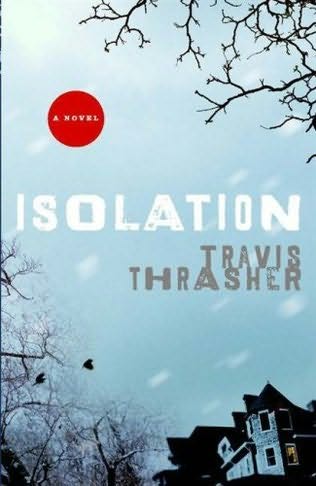
Isolation by Travis Thrasher

Travis Thrasher’s novel Isolation is a sheep  in wolf’s clothing. It pretends to be one thing, but it’s actually something very different indeed.

Isolation tells the story of missionaries James and Stephanie Miller. They’ve recently returned home from Papua New Guinea with their two young children, Zach, 8 and Ashley, 5. Something traumatic happened in Papua New Guinea and Jim and Stephanie are feeling disillusioned and isolated – from each other and from their church.

Jim wants to take some time to recharge his spiritual battery and so he moves his family  to North Carolina, to an isolated lodge built by an eccentric millionaire. The house has secrets though and so, apparently, does Stephanie’s family history.

Now, if this had been a book about how this couple and family overcome obstacles to find their way back to their faith, that might have been one thing. But this is supposed to be a ‘horror’ novel. Thrasher even thanks scare-master Stephen King in his acknowledgments. I’m not saying the book doesn’t have a certain creep-factor. It does. But I think that this book is more about God and putting your faith him him. Evil in this book is the work of the devil and the ability to fight against it comes from a higher power.

I’m not religious. In my book club, I proudly wear the flag of heathen. Organized religion irritates me. Hopefully that will explain, in part, why I felt duped by Isolation.  Whole sections of the novel felt preachy to me, like when we learn about how Stephanie’s character came to be Christian.

The camp was run by Christians who were sincere and loving. They weren’t like the televangelists her parents mocked or the pious churchgoers in her neighbourhood who never even bothered to wave hello. They weren’t like the preachy kids at school who made others feel bad for not believing. These were simply loving, fun men and women who wanted to befriend the campers.

Oh, so there are different kinds of Christians, then.

Apparently, because the author takes great pains to describe Stephanie’s friend, Michelle’s “no-nonsense” qualities.

Why aren’t there women elders in the church, and why can’t they serve Communion, and what’s the big deal about having a beer every now and then, and why can’t Christians get off their high horse sometimes?

It’s stuff like this that made me feel as though Isolation‘s agenda was not actually to scare, but to instruct. Too bad because all the ingredients were there for a creepy little story…if only it hadn’t felt so much like a sermon.

Memory by Philippe Grimbert

Although Philippe Grimbert’s book,  Memory, claims to be a novel, the story has the ring of truth.

Although an only child, for many years I had a brother. Holiday friends and casual acquaintances had no option but to take my word for it. I had a brother. Stronger and better looking. An older brother, invisible and glorious.

Grimbert’s novel is the story of a family. The narrator, a sickly child of  athletic and beautiful parents whose “every muscle had been buffed and toned”, recounts the family’s history as it is told to him by, Louise,  a woman who runs a sort of homeopathic consulting business in two rooms in the same building as the narrator’s parents have their whole sportswear business.

It is clear from the beginning that the family is Jewish and that their story has been deeply affected by the Nazi’s.  It is Louise who unspools the narrative for the boy after he discovers  a toy dog in an attic filled with suitcases and furniture.

Memory is a scant 145 pages long, but it packs a punch as, I think, all personal stories about Hitler’s regime do.  It won numerous prizes and was a bestseller in France. Despite its claim of being fiction, it is impossible to deny its ring of authenticity and the knowledge that some (if not all) might have happened gives the book even more emotional heft.

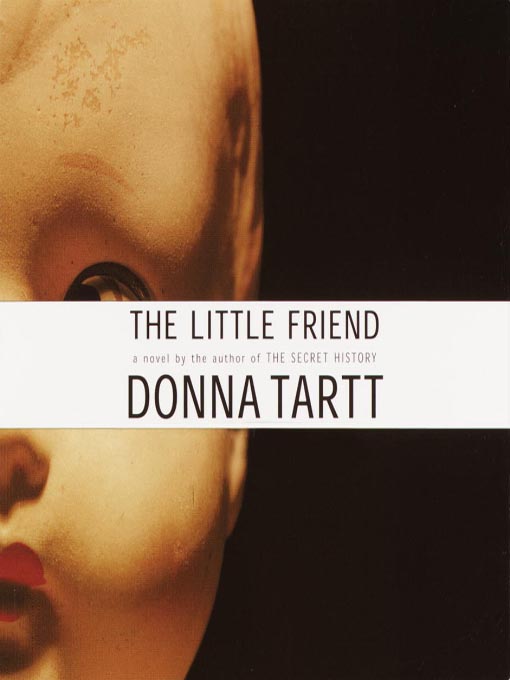
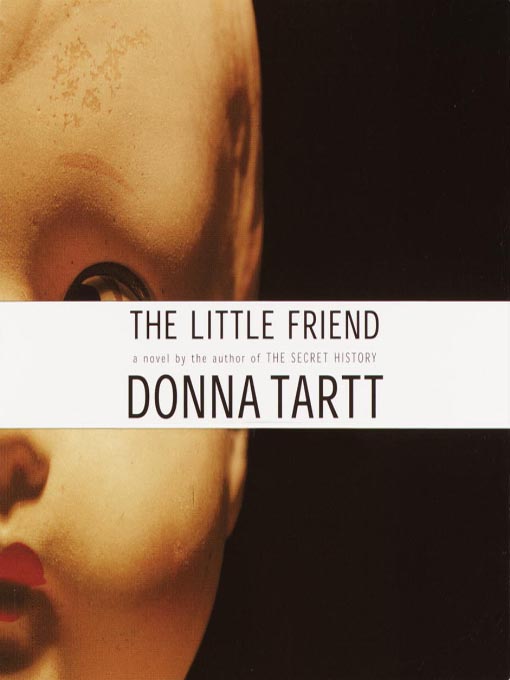
The Little Friend by Donna Tartt

Almost 20 years ago I stumbled upon Donna Tartt’s fantastic novel The Secret History, a novel which has stayed with me all these years. Having recently finished her second novel (and I believe there was almost ten years between the two books), I now have an overwelming desire to re-read The Secret History to see if it’s as good as I remember. I wonder if I’ll be saying the same thing about The Little Friend in 20 years?

There’s no doubt, Tartt is a talented writer. The Little Friend is a gorgeous book, certainly a book to linger over. (It’s over 600 pages long.) It concerns 12 year old Harriet Dufresnes. On Mother’s Day, when Harriet is just an infant, her older brother, Robin, is found hanging from a tree in the yard. His murderer is never found. Harriet has decided that she will discover who has killed her brother because  while she is neither pretty or sweet, Harriet is smart.

The Little Friend is a densely-written, slow-moving novel. Set in Alexandria, Mississippi in the 1970s,  the novel evokes the period (without bothering to fuss with specific details) and sets a tone which it sustains throughout. Harriet is surrounded by a cast of eccentric characters including her grandmother, Edie and Edie’s unmarried sisters. Harriet’s mother, Charlotte, has never fully recovered from the loss of her son. Harriet’s father, Dix, has long since removed himself to Nashville. Harriet’s best friend, Hely, is her constant companion. Harriet’s family once had money, but they don’t any longer. They all have ‘negro’ help, though. The maid/cook/surrogate mother in Harriet’s household is Ida Rhew and Harriet loves her fiercely.

On the other side of town live the Ratliff’s: Farish, Eugene, Danny and Curtis. Farish runs a meth lab out of a trailer on the property. Eugene is a self-proclaimed preacher and Danny is addicted to the drug his brother produces. Curtis is Harriet’s age and a little on the slow side. Harriet decides that Danny is responsible for her brother’s death – something Ida told her reinforces her belief that Danny hated Robin. She and Hely set out to prove his guilt and exact their revenge.

The Little Friend isn’t really about Harriet’s quest to find a murderer, though. It is about Harriet on the cusp of adulthood; about that long, hot summer between innocence and experience. This is a novel about loss. Harriet has more to lose than she might have thought and what she learns about herself and others surely shapes the woman she will become.

This is a novel to savor. It evokes a time and place that is both familiar and exotic. I have to say, though,  that when the end came I didn’t feel all together rewarded for my time and effort. But maybe that’s exactly what it feels like to leave childhood behind.

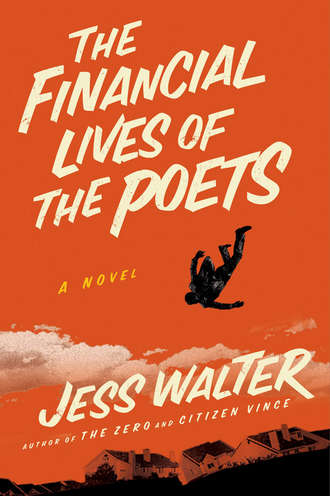
The Financial Lives of Poets by Jess Walter

Here’s a book I never would have chosen for myself in a million years, but which actually turned out to be better than I thought it would. The Financial Lives of Poets follows one week in the life of a middle-aged guy named  Matt Prior. Matt lives somewhere in America with his wife, two young sons and senile father. Matt used to be a newspaper business writer, but he took a buy-out so he could start a website which would deliver financial advice through poetry. It’s no surprise that it flopped. A couple bad investments and the economy’s belly flop later and Matt (and his family) are in serious financial trouble.

The plot of The Financial Lives of the Poets really begins when Matt hits the 7-11 to buy a gallon of milk. He’s not sleeping much these days – his mind is in a constant state of chaos trying to figure out how he’ll pay the bank the $30,000 plus he’s missed in mortgage payments, how he’ll keep his two young sons in private Catholic school and how, most importantly, he’ll keep their dire situation from his wife, a woman he loves but is sure is having an Internet relationship with an old boyfriend. At the 7-11 he meets a couple of low-level thugs. He ends up getting stoned with them and before you know it, Matt’s selling hydroponic weed.

Despite its serious subject matter, The Financial Lives of Poets is often laugh-out-loud funny.

Should anyone doubt that our miserable time here on Earth is just a sad existential joke, here is the cruelest thing I can imagine describing: my father (who is obsessed with sex, like a lot of dementia sufferers) – at seventy-one years of age, frail, balding, with a paunch that looks like it should wear its own pair of jockey shorts –  recently had ten days of crazy sex with a twenty-one-year-old stripper with long smooth legs and two big round silicone funbags, and the poor son-of-a-bitch doesn’t remember a thing about it.

Despite the often comical narrative, Walter tackles some weighty issues: how do people cope with the failing health of their parents, (Matt’s desire for his father to have just one moment of lucidity is heartbreaking); how do you save a marriage, why are we so concerned with having more stuff The Financial Lives of Poets doesn’t necessarily offer solutions, but time spent with Matt as he works through his problems is time well-spent. Funny and intelligent.

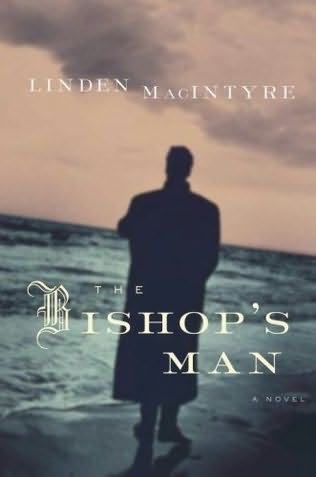
The Bishop’s Man by Linden MacIntyre

The Bishop’s Man was the 2009  Giller Prize winner. For those of you who aren’t familiar with the Giller, it’s Canada’s largest annual prize for fiction, netting the winner $50,000. MacIntyre, a well-known Canadian journalist who has won nine Geminis for broadcast journalism, beat out Anne Michaels, Colin McAdam, Annabel Lyon, and Kim Echlin.

I’m not sure The Bishop’s Man is a book I’d pick up on my own, but it’s this month’s book club pick. Still, the novel’s opening pages had me intrigued.  Its narrator, Father Duncan MacAskill,  is an intriguing character, but then he starts to spiral out of control and so does the book.

MacAskill is known as the “Exorcist.”  The Bishop  sends him to clean up after fallen priests – men who have sullied the name of the priesthood by engaging in sexual relationships with – well – anyone. As we all know, celibacy is one of the tenets of the priesthood.

MacAskill isn’t without his own secrets, though. When the bishop decides to send him back to his childhood home, MacAskill is forced to confront his own demons. Isolated from the world in backwoods  Cape Breton MacAskill suddenly realizes how lonely he is and he begins to drink heavily.

The Bishop’s Man is a page-turner. Lots of things are hinted at, enough to make the reader wonder: about the suicide of a young man and his relationship with a charismatic priest who has since left the order and married; about MacAskill’s time  in Honduras, revealed in snippets from his diary; about where his relationship with Stella, a woman in the village, might be headed; about his childhood.

MacIntyre juggles all these various threads and I guess this is where the book failed for me. I’m not a moron,  but sometimes the out of sequence narration was really a pain-in-the-ass. I’m all for the elliptical, but I’m not sure it served the story in this instance (unless MacIntyre was trying to mimic the disordered state of MacAskill’s mind.)

I haven’t read the other novels on the Giller shortlist and so I’d be curious to see how they stack up against this one. I guess the one thing The Bishop’s Man has going for it is a sense of immediacy. The Catholic Church has certainly had its share of troubles. Whether or not the novel’s verisimilitude is enough to overlook its other issues is up to the reader, I suppose.

Just Listen by Sarah Dessen

Just Listen is my first Young Adult novel by Sarah Dessen, although I was certainly aware of her name. She’s always on Best Books for Young Adults lists and so I figured that, as a teacher of young adults, I should at least see what all the fuss was about.

It also gave Mallory and I another opportunity to share a book. She read this one a couple weeks ago, but I was in the middle of something else which I had to finish first.

I’ll let Mallory start by telling you a little bit about the novel.

Mallory: This book is about a model named Annabel Greene.  She’s the youngest of three girls and both of her older sisters are models, too. Even though on the outside it would seem as though Annabel’s got it all (the looks, the best friend, the beautiful house, basically a charmed life) she’s actually going through some pretty serious things. For one thing, her middle sister, Whitney, has an eating disorder that weighs down the whole family. Secondly, Annabel’s best friend is no longer speaking to her. In fact, no one is speaking to her. This is a book about how Annabel learns how to express her true feelings about things.

Christie: That’s a good summary of what the book’s about.  One of the book’s main points is about how appearances can be deceiving. Annabel often comments about the glass house her architect father has built and how people slow down when they drive by. What they might see is a family sitting down together to dinner, but Annabel knows that it’s much more complicated than that.

Did you like the book?

Mallory: Yes, I liked the book. I’ve read a couple of books before this one about eating disorders. They’re pretty scary, but this one seemed easier to read. Instead of describing everything Whitney does to deprive herself of food, it explains how even though she’s beautiful, she’s still struggling with her appearance. I really liked that part of the book. What about you?

Christie: Well, what I liked was that Whitney’s struggles were only one part of the book. What I liked was how Annabel struggled to make her own voice heard. Something horrible has happened to her (something I found sort of easy to guess at), but she isn’t able to say anything. Instead, she lets her former best friend, Sophie, treat her badly.  It isn’t until Owen, the school’s misunderstood ‘thug’ (by reputation only) befriends her, that she allows herself to be more assertive.

Mallory: I agree. Owen seemed to open up something that Annabel didn’t even know was inside of her. Even though she and Owen only talked about music, she was allowed to express her opinion (mostly about her hate of techno) without any repercussions. And I also predicted the reason for the fallout  between Annabel and Sophie, but I knew all along that Annabel was the real victim, not Sophie. She just didn’t know how to explain the truth.

Christie: There are lots of novels out there that deal with these subjects: eating disorders, failed friendship, parents who don’t understand their kids (although I have to say that the adults in this novel were decent)…what do you think Dessen did well in Just Listen?

Mallory: The main thing that I loved about Just Listen is the way Dessen built up her characters’ personalities. By the end of the book I knew that Annabel was a complicated person on the inside, Owen was extremely misunderstood, and Sophie was crazy — basically a wildchid. She made it so clear who each one of these people were. It makes a book so much more enjoyable when you feel like you know the characters. Like they’re your friends.

Christie: I agree. I think Annabel’s voice was well done here. And I have to admit that I fell in love with Owen from the very beginning. I guess I have a soft spot for big, hulking, slightly off-center guys.

Mallory:  I must say that I also knew that Owen wasn’t a ‘thug’ or anything that people had said at the start. I always try to see the character in a couple different ways before really deciding if they’re the good guy or the bad guy in a book. I didn’t really have to do this with Owen. He was the quiet, music-lover that was stereotyped for his height and tough persona. Just by Dessen’s description I could tell that Owen was protective, but gentle. And I loved his little sister from the very moment her name was mentioned. Mallory. That says it all.

Christie: So – overall…would you recommend this book?

 Mallory: One of my friends is a Sarah Dessen fan and she raved about this book when she saw me reading it at school. She pulled out Dessen’s novel Someone Like You and said “You must read this when you’re done.” I think she basically recommended it for me. But I would like to add that if you can sympathize with the characters in this book, and the situations that they’re in, you’ll love it. It has a moral, it teaches a lesson, and it’s a great read for young adults. I’d definitely say that if you’ve never heard of Sarah Dessen you need to read this book– and check out her other books as well. They look very promising. 

Christie: I don’t disagree. I think she’s topical. The writing is generally crisp. The characters are well drawn. Young adults could do far worse. 
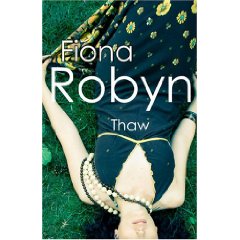
Here’s a novel idea…

Novelist Fiona Robyn is releasing her new novel Thaw via the blogsphere and I’m thrilled to be able to offer the first part here. You’ll be able to continue to read the novel by following the link at the end of the first entry.

*

These hands are ninety-three years old. They belong to Charlotte Marie Bradley Miller. She was so frail that her grand-daughter had to carry her onto the set to take this photo. It’s a close-up. Her emaciated arms emerge from the top corners of the photo and the background is black, maybe velvet, as if we’re being protected from seeing the strings. One wrist rests on the other, and her fingers hang loose, close together, a pair of folded wings. And you can see her insides.

The bones of her knuckles bulge out of the skin, which sags like plastic that has melted in the sun and is dripping off her, wrinkling and folding. Her veins look as though they’re stuck to the outside of her hands. They’re a colour that’s difficult to describe: blue, but also silver, green; her blood runs through them, close to the surface. The book says she died shortly after they took this picture. Did she even get to see it? Maybe it was the last beautiful thing she left in the world.

I’m trying to decide whether or not I want to carry on living. I’m giving myself three months of this journal to decide. You might think that sounds melodramatic, but I don’t think I’m alone in wondering whether it’s all worth it. I’ve seen the look in people’s eyes. Stiff suits travelling to work, morning after morning, on the cramped and humid tube. Tarted-up girls and gangs of boys reeking of aftershave, reeling on the pavements on a Friday night, trying to mop up the dreariness of their week with one desperate, fake-happy night. I’ve heard the weary grief in my dad’s voice.

So where do I start with all this? What do you want to know about me? I’m Ruth White, thirty-two years old, going on a hundred. I live alone with no boyfriend and no cat in a tiny flat in central London. In fact, I had a non-relationship with a man at work, Dan, for seven years. I’m sitting in my bedroom-cum-living room right now, looking up every so often at the thin rain slanting across a flat grey sky. I work in a city hospital lab as a microbiologist. My dad is an accountant and lives with his sensible second wife Julie, in a sensible second home. Mother finished dying when I was fourteen, three years after her first diagnosis. What else? What else is there?

Charlotte Marie Bradley Miller. I looked at her hands for twelve minutes. It was odd describing what I was seeing in words. Usually the picture just sits inside my head and I swish it around like tasting wine. I have huge books all over my flat; books you have to take in both hands to lift. I’ve had the photo habit for years. Mother bought me my first book, black and white landscapes by Ansel Adams. When she got really ill, I used to take it to bed with me and look at it for hours, concentrating on the huge trees, the still water, the never-ending skies. I suppose it helped me think about something other than what was happening. I learned to focus on one photo at a time rather than flicking from scene to scene in search of something to hold me. If I concentrate, then everything stands still. Although I use them to escape the world, I also think they bring me closer to it. I’ve still got that book. When I take it out, I handle the pages as though they might flake into dust.

Mother used to write a journal. When I was small, I sat by her bed in the early mornings on a hard chair and looked at her face as her pen spat out sentences in short bursts. I imagined what she might have been writing about; princesses dressed in star-patterned silk, talking horses, adventures with pirates. More likely she was writing about what she was going to cook for dinner and how irritating Dad’s snoring was.

I’ve always wanted to write my own journal, and this is my chance. Maybe my last chance. The idea is that every night for three months, I’ll take one of these heavy sheets of pure white paper, rough under my fingertips, and fill it up on both sides. If my suicide note is nearly a hundred pages long, then no-one can accuse me of not thinking it through. No-one can say; ‘It makes no sense; she was a polite, cheerful girl, had everything to live for’, before adding that I did keep myself to myself. It’ll all be here. I’m using a silver fountain pen with purple ink. A bit flamboyant for me, I know. I need these idiosyncratic rituals; they hold things in place. Like the way I make tea, squeezing the tea-bag three times, the exact amount of milk, seven stirs. My writing is small and neat; I’m striping the paper. I’m near the bottom of the page now. Only ninety-one more days to go before I’m allowed to make my decision. That’s it for today. It’s begun.

Continue reading tomorrow here…