Surrender – Sonya Hartnett

I honestly don’t know what to make of Sonya Hartnett’s YA novel, Surrender, except to say that days after I finished it, I am still thinking about it.

I am dying: it’s a beautiful word. Like the long slow sigh of a cello: dying. But the sound of it is the only beautiful thing about it.

Meet Anwell. He’s 20 and some unnamed disease (some degenerative disease or cancer, maybe) is eating him up, slowly and painfully. Confined to a bed, tended to by his Aunt Sarah, he is spending his final days on earth remembering all the days that came before.

Hartnett’s novel is not a straightforward tale. I am a pretty proficient reader and sometimes I really felt lost in the story. I definitely felt lost in the prose, which is beautiful.

Breathing is an undertaking: it takes minutes to sigh. My ribcage is the hull of a wrecked and submerged ship. My arms, thin as adders, are leaden as dropped boughs. the mattress, my closest friend, has been carved by the flesh of my unfleshed bones into a landscape of dents. The soul might rise, but the body pulls down, accepting the inevitable, returning to where it began.

Anwell – or Gabriel as he is called by his closest (only) friend, Finnigan, lives in a scrubby community somewhere in rural Australia. His father, a lawyer is distant; his mother is frail. Neither of them pay very much attention to Anwell.  Anwell had an older brother, Vernon, but he’s dead now. Anwell is responsible.  And this is where the story gets tricky.

I have a theory abut the book, but despite having read several reviews I haven’t found anyone else who might share it.

*spoiler alert*

*spoiler alert*

I actually don’t think that Finnigan is real. I think the fact that Anwell killed his brother damaged him irrevocably. The further the book went along, the more convinced I was that Anwell had suffered from sort of psychic break and that Finnigan was a manifestation of a sick mind.

Whether I am right or wrong, though, does not detract from Hartnett’s vivid, poetic prose, or the novel’s heartbreaking conclusion.
Me and Mr. Jones

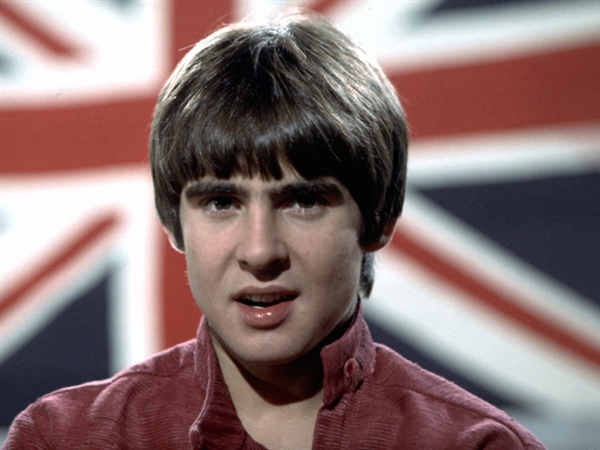
I can’t even pretend to be young anymore, especially now that Davy Jones has died, suddenly, from a heart attack.  I mean, I came home from work, fired up my laptop to check my email and Twitter and the news greeted me like a smack in the face. Davy Jones. Davy freakin’ Jones. Even his name sounds perpetually youthful.

I’ve been a fangirl for ever. And Davy Jones was my first ever boy crush. I was young, only 5,  when The Monkees aired on tv, so I am guessing that I fell in love with Mr. Jones during re-runs at a not-too-much-later date.  But love him I did. Maybe it was only because he was impossibly cute and had that groovy British accent (and England would have been totally exotic to me). It probably wasn’t because I understood  The Monkees, which I remember as being sort of goofy and loud and the best bit was always when the band sang.

I loved The Monkees’ music, though. If you didn’t know any better, you might be able to dismiss them as a made-up TV band pre The Partridge Family (albeit with  slightly more  pedigree because we all know Danny Bonaduce was not playing that bass, right?) But what you might not know is that at the height of their popularity, in 1967, The Monkees sold more albums than The Beatles and The Rolling Stones combined times two! Those are some serious bragging rights.

Of course as a kid I didn’t know – or care – about that. All I knew was that when Davy sang “Day Dream Believer” or “Valleri” he was singing to me and I was swooning. (Or, okay, singing along into my hairbrush slash mic.)

I saw The Monkees live once in the mid 80s. They were doing a reunion tour with Herman’s Hermits and Gary Puckett and the Union Gap and ended up at Ontario Place. I took my father. It was a beautiful summer day and while it was pleasant to listen to the first two acts, but I was really waiting for The Monkees. Mike Nesmith had declined to be part of any reunion, even way back then, but it didn’t matter. Peter, Mickey and Davy rocked that joint. And I sang every single song at the top of my lungs – joyfully. Because that music was joyful. And it still is.

There are tributes flying all around the Internet. Here. And here.  And here.

It will be interesting to see what the media makes of Davy’s death and his place in pop music’s canon (especially given all the fuss over Whitney) in the coming days. No disrespect to Ms. Houston, but she did kinda have a hand in her own demise. Davy, on the other hand, is being remembered as a man who loved his fans, loved to perform and never once badmouthed the  tv show that made him an international superstar.

I am not ashamed to admit that his death has made me very sad.

Book spoilers

I NEVER read the last page of a book – there’s something SO wrong about that. But say you want to dazzle people at a cocktail party with your bookishness – these guys happily spoil the endings of 50 novels for you in just four minutes. Personally, I can’t watch!

How do you choose what to read next?

I was sort of looking forward to a weekend of being snowed in. I love knowing that the weather prohibits me from getting out and I don’t feel even remotely guilty about curling up on the couch in my pyjamas with whatever book I am currently reading. But the storm they were predicting overnight Friday night never materialized, at least in this part of the province. So, I ended up doing my typical weekend stuff – most of which consists of driving kids to various events and activities.

If I had been able to stay snuggled indoors all weekend, I probably would have finished the book I am currently reading: Laura Munson’s This Is Not the Story You Think It Is.  Then I would have enjoyed starting the next book chosen for our book club, The Slap by Christos Tsiolkas.

Which brings me to today’s Sunday Salon topic: how do you choose what to read next? Do you have a small bedside stack? Do you have way too many books on your tbr pile (so then how do you choose?) Do you head out to the bookstore? I’d love to hear how you go from finished book to new book?

Book trailers

The world of book marketing has certainly changed over the past few years.  When I was a kid, all you had to go on when choosing a book was the blurb on the back or prior knowledge of the author, which would explain all the Nancy Drew and Bobbsey Twins books in the collections of people of a certain age – we bought what we knew.  I also used to love pouring over the Scholastic flyers when they came to school, those little snippets enticing me to part with my hard-earned cash. (Come to think of it, I still love the Scholastic flyers!)

We didn’t have access to books the way we do now – no book superstores like Chapters/Indigo, no online stores like The Book Depository or Bookcloseouts. For me, I went to the library a lot and received books as gifts.

Now, in addition to the scads of information on the Internet, savvy book publishers are making awesome little book trailers to promote books. They aren’t all created equal, of course, but some of them can make the book seem really appealing (just like a movie trailer).  I also love doing book trailers with kids in the classroom. I’ve done them a couple times with different groups and the kids really enjoy doing them and the results are almost always thoughtful and creative.

Here are some great book trailers.


and this one, Amazon’s Best Book Video of 2009!


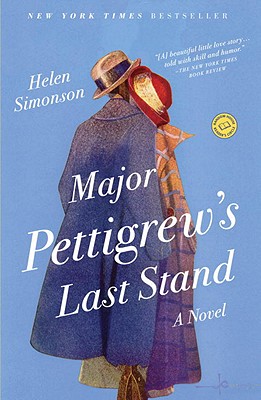
Major Pettigrew’s Last Stand – Helen Simonson

Helen Simonson’s debut novel Major Pettigrew’s Last Stand is the next best thing to spending a holiday in the English countryside. When we meet the title character, Major Ernest Pettigrew (retired), he’s just received the news that his younger brother, Bertie, has died. He’s trying, rather unsuccessfully, to cope with the news when Mrs. Ali, proprietress of the local village shop, appears at his door to collect the paper money. She takes note of his unsteady appearance and  offers to make him a cup of tea. Thus begins their relationship.

Mrs. Ali was, he half suspected, an educated woman, a person of culture. Nancy had been such a rare person, too, fond of her books and of little chamber concerts in village churches. But she had left him alone to endure the blunt tweedy concerns of the other women of their acquaintance. Women who talked horses and raffles at the hunt hall and who delighted in clucking over which unreliable young mother from the council cottages had messed up  arrangements for this week’s play group at the Village Hall. Mrs. Ali was more like Nancy. She was a butterfly to their scuffle of pigeons. He acknowledged a notion that he might wish to see Mrs. Ali again outside of the shop, and wondered whether this might be proof that he was not as ossified as his sixty-eight years, and the limited opportunities of village life, might suggest.

Major Pettigrew’s Last Stand is one of those little gems of a novel – beautifully written, with characters so remarkably authentic they seem to jump off the page. Pettigrew is a widower and Mrs. Ali, too, has lost a spouse. They are drawn together because of a shared love of Kipling, but they live in a small town – everysmalltown, really, where everyone knows your name and your business – and not everyone would have them together. Although Mrs. Ali was born in England, she’s Pakistani and therefore viewed by some as ‘unsuitable.’ I think Pettigrew’s feelings for her take him quite by surprise.  I suspect he thought that at 68, that part of his life was over.

In some ways, Pettigrew is a stuffed shirt. He likes things ‘just so.’ He desires attention and often  believes he’s entitled. The beautiful thing about him, though, is his willingness to change, and he does, too. His relationship with his son, a pompous banker who lives in London, undergoes a transformation. He starts to care less about tangible things, like a pair of shotguns that had once belonged to his father, and more about feelings and people.

To say that nothing much happens in Simonson’s novel is to miss the quiet patina of daily  life – much of which, at least as it’s written here, is laugh out loud funny. As people plan parties that can only go awry, as children squabble over their rightful inheritance, as the battle-lines are drawn between cultures, Major Pettigrew tries to find a way to navigate the messy business of living. He is proof that life does offer second chances, if we are brave enough to open our hearts to receive them.

For the love of books

“During the Bosnian war, a group of men and women risked their lives to rescue thousands of irreplaceable Islamic manuscripts – and preserve a nation’s history. Amid bullets and bombs, this handful of passionate book-lovers safeguarded more than 10,000 unique, hand-written antique books and documents – the most important texts held by Sarajevo’s Gazi Husrav Beg Library, founded in 1537.”

Check it out.

Sadly, unless you are living in the UK, you’re not able to watch the documentary.

I don’t have priceless manuscripts, but I would hate for something to happen to my library.