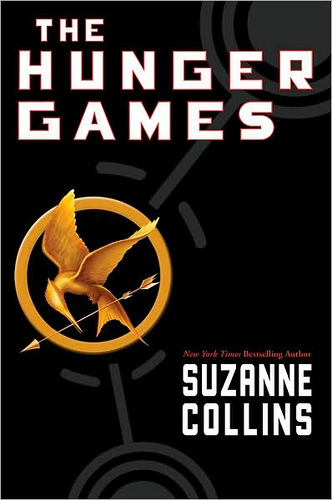
The Hunger Games by Suzanne Collins

There’s been a lot of excitement in the house over Suzanne Collins’ book, The Hunger Games.  Both of my kids have read it and have been harassing me to read it, which I finally did. I have to say – I loved it as much as they did. So we thought we’d talk about the book a little.

Mallory: This book takes place in post-apocalyptic North America. The people of North America had attempted a rebellion against the government, but weren’t successful. So, the government split them into 13 Districts, and each year as a punishment,  every child ages 12-18 in every District has their name put into the Hunger Games. They draw two names from each District and those people must compete against kids from other Districts in an arena. It’s a fight to the death; last one standing wins. Basically, the main character, Katniss Everdeen from poor District 12 takes her sister’s place to go into the Games.

Christie: That’s a great summary, Mallory. It’s a terrific premise for a book, not altogether dissimilar from the 1987 film The Running Man.  Of course the stakes are a little higher in the book especially since the players are just kids.

Mallory: Katniss is 16 when she went to into the Hunger Games, so she was one of the older kids competing. Imagine how hard it would be if you were just 12, trying to kill 17 and 18 year olds. Katniss is such a great character, and Collins did an incredible job building her up. Every moment of the book I was so scared because I loved Katniss and didn’t want her to get hurt.

Christie: I agree, Mallory. I loved Katniss from the very start of the novel. She’s resourceful, mature, and brave. When we first meet her, she demonstrates her willingness to break the rules to provide for her family. She’s a good hunter, she wastes nothing, and you get the sense that she could handle herself in just about any situation. But she’s not the only admirable character in the novel. Who else did you like, Mallory?

Mallory: Well, I must say that I love Gale, Katniss’ best friend, and Prim, her sister (who were introduced at the very beginning of the novel). But as the novel progresses, we meet many more amazing characters, some that we love, and others that we hate. Like, Rue, a contestant in the Games who I adored. What about you?

Christie: I’m with you, Mal. All the characters were really well drawn – even characters you don’t get to know very much about, like Cinna and Thresh. As you get to know some of the other Tributes (contestants), it’s impossible not to get attached and what’s remarkable is that Katniss feels admiration for some of these people too, even though she knows she might have to kill them to stay alive. The Games themselves were very exciting, didn’t you think?

Mallory: Well yeah! They were amazing! What an incredible concept for a book. I wish I had thought of it first, because it’s just so clever. Everything about the Games seems so real, so legitimate. She doesn’t make them seem like a board game, or something you play. Collins really gets it across to you that the Hunger Games are about fear, and death, and despair. The Games are so scary, that you just feel really sad for the Tributes, even if they are merely characters that came out of Collins’ mind.

Christie: Beyond the suspenseful plot and characters, Collins has created an interesting and scary future-world and, for me, the writing was crisp and readable – a nice change from a lot of the Young Adult fiction out there. How does this book compare to other books you’re reading, Mallory?

Mallory: Honestly, The Hunger Games isn’t really comparable to the books I’ve been reading because it’s just so different, and that’s what I love about it. Most YA Fiction out there at the moment is either about vampires or rich girls with dirty secrets. Sure, I like Twilight, and books like Pretty Little Liars, but The Hunger Games sets itself apart from all the generic and boring books.

Christie: A lot of kids I teach are reading it (or have read it) and I’d say 99% of them have loved it. And for my money – this book is heads and tails better than the Twilight series.

Mallory: My school is having the same Hunger Games craze too! Most of my friends (I’d say 85%) hate to read, and will only force themselves to open a book if it’s absolutely necessary. But surprisingly, a ton of them have read The Hunger Games (girls and boys) and they loved it! The book has been passed around the entire grade 8 French immersion population, and instead of gossiping at lunch time, we all discuss our favourite parts. It’s a nice change.

Christie: Well, I guess that makes it unanimous, then. The Hunger Games: loved by boys, girls and moms!
Breaking the Girl by Kim Corum

I’m not going to lie – I enjoyreading erotica. But I have standards, people. And Kim Corum’s ridiculous novella, Breaking the Girl doesn’t meet any of them.

Kristine is a stripper in New Orleans. She didn’t set out to be a stripper. She’d gone on holiday with her friend to escape her recent marital break up and suddenly she and her friend found themselves bumping and grinding on stage at a strip club. The money was good so Kristine – who doesn’t have any other talents besides sex – stuck with it.

Enter Frank. Handsome and rich (although we never find out what he does), he takes a shine to Kristine and invites her to come live with him. Yeah – it really is that simple.

Thus begins her training. To the untrained eye beating someone with a belt until they’re so disoriented they fall down the stairs might be considered abuse, but everything Frank does is for Kristine’s own good.

Breaking the Girl is meant to be a novel about domination and submission. Okay, I’m down with that. But this book just doesn’t have anything to recommend it. The sex was pretty tame (and let’s face it, isn’t that why we read this stuff?), the characters were cardboard cut-outs and Corum tries to add heft to the story with a bunch of hooey about why Frank needs to “break the girl”.

So, so mediocre.

The Happiness Project by Gretchen Rubin

I have a friend who is all about the self-help books.  Of course, she also believes in reiki. I don’t know if she’s read Gretchen Rubin’s book The Happiness Project but I know she’d love it. I’m a skeptic (a hopeful skeptic) and I really liked this book. Perhaps I read it at the perfect time in my life – lots of changes and upheaval and uncertainty, but hope, too. In less capable hands, The Happiness Project might have been a different book. (a la Eat, Pray, Love, a book I didn’t love.) Instead, Gretchen Rubin’s musings on what happiness means and how to achieve it comes across as less how-to manual and more why happiness should be pursued and valued.

Rubin’s personal happiness project was inspired by that moment (which will likely come to us all) when she realized she was “in danger of wasting [her] life.” Okay, truthfully, who hasn’t thought that a time or two? Of course, she knew all the ways her life was pretty damn perfect: great husband, wonderful kids, work she loved, terrific extended family, lived in NYC etc etc…Still.

What I liked the most about Rubin’s happiness journey was that she understood and even poked fun at her personal shortcomings: her need for praise and her short fuse. I also liked that her quest for happiness wasn’t all abstract and metaphysical. She understood the sinple joy of getting rid of junk and splurging once and a while on something you really needed or wanted.  Rubin herself seems incredibly down-to-earth…someone you’d like to sit and have a cup of tea with (I’d say a glass of wine, but she’s mostly given that up!)

 Threaded through the entire book was this notion that “the days are long, but the years are short.” It’s true, isn’t it? When she and her husband take a moment to watch their sleeping children, it is a moment of sheer happiness – if only because that moment will never come again.

 Happiness spreads. I know this is true. I know the power of a smile because I use it every day in the classroom….even when I don’t feel like smiling, it’s amazing how smiling at a surly kid makes them smile, too. I want to be happier. I deserve to be. And so I owe it to myself to make that happen.

If you’re looking for inspiration, for a way to make your life happier, The Happiness Project is a great place to start. You can visit Rubin’s website, The Happiness Project, for lots more info.

The House of Mirth by Edith Wharton

Edith Wharton’s novel, The House of Mirth, seems every bit as relevant now, some 105 years after it was first published. The novel follows the fortunes (and misfortunes) of Miss Lily Bart, a stunningly beautiful woman about town. The town in question: New York City.  Despite her attractiveness, Lily is without a husband and without a fortune. In order to maintain her lifestyle – which up until now has depended on the kindness of her rich friends – Lily must marry…soon and to her financial advantage.

Wharton’s novel trails after Lily and her consorts, following them to the Hamptons and Monte Carlo, in and out of fabulous homes where words are carefully chosen and one small misstep can cost someone their standing in society. This is a novel about class and entitlement. Lily has nothing but her beauty and although it is clear from the beginning that she is in love with someone else, and he her, marrying is out of the question.

Lily is a wonderful creation and Wharton’s novel is filled with the minutia of the time. My copy even had footnotes to help me navigate some of the more unfamiliar terms of the day. For that reason, the novel certainly isn’t a quick read. The prose is dense and often seems artificial; surely people didn’t speak this way?

As a heroine, Lily might be hard to sympathize with. Modern women might find her quest to marry for money reprehensible. She uses her looks to her advantage, spends money she doesn’t have and seems impossible naive for someone who is pushing 30. But then, really, I know lots of women who play the very same games nowadays, always looking for an advantage and willing to climb the ladder (social or otherwise) by any means necessary.

I thoroughly enjoyed Wharton’s novel and am glad it was chosen as one of our ‘classic’ reads for this year’s book club.

My copy of the novel is one of Penguin’s Product Reds, an imprint where 50% of the profits from sales go towards  the Global Fund to help eliminate Aids in Africa. About bloody time, don’t you think?

A new year begins…

I have been a horrible blogger in the last few months. Worse, I have been a horrible reader. I didn’t quite make my 50 Book challenge, either – topping out at 46. What I did manage to do – effortlessly – was add to my already heaving tbr pile. I mean, really, did I actually need  anymore books? I have over 300 books now, waiting to be read.

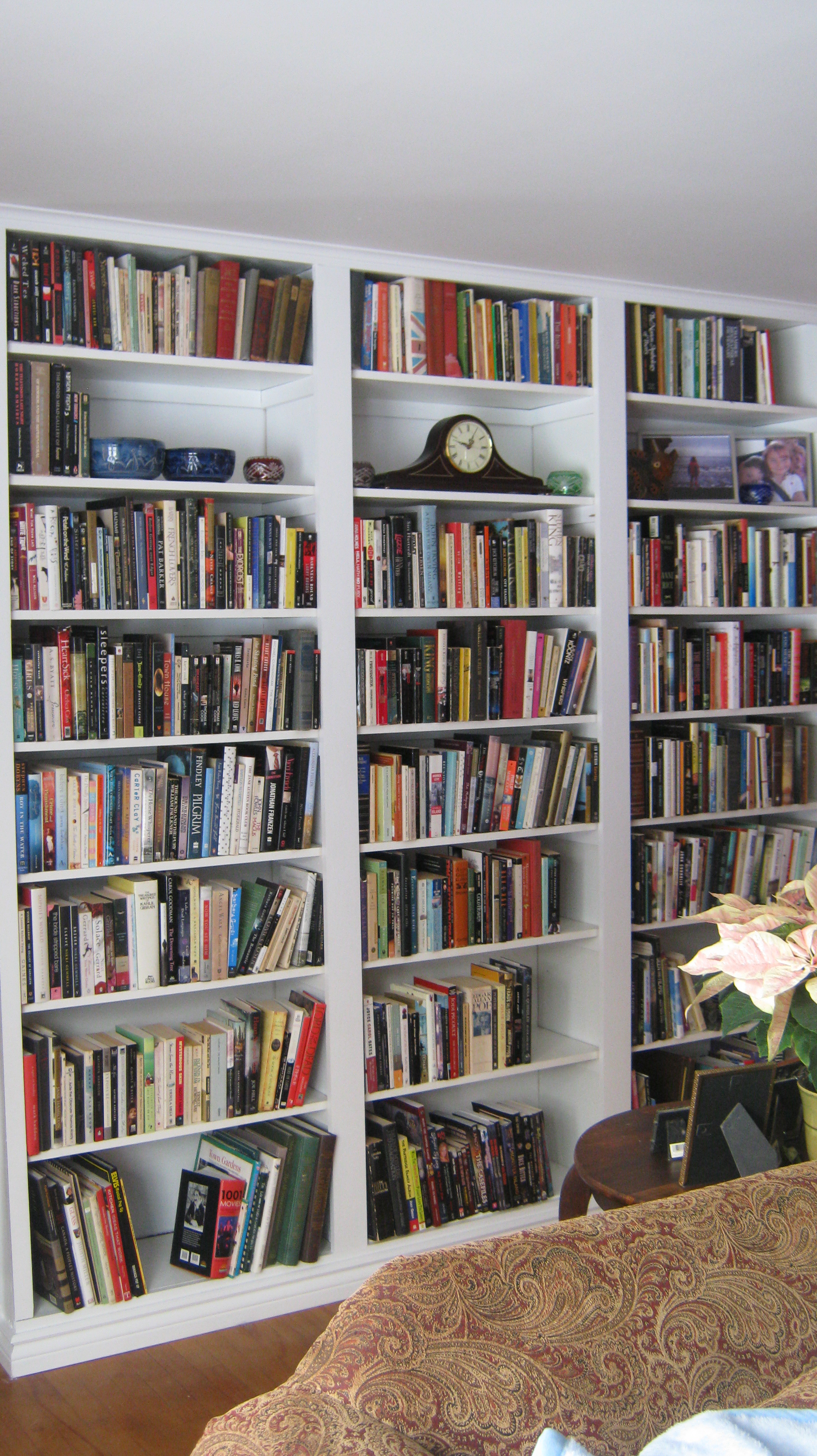
One extremely exciting thing happened to me in December. I decided to paint my living room and my brother built me beautiful bookshelves to house my already-read books. When the project was over (after a few weeks of chaos and dust because of the painting/building) I sat in a chair admiring these shelves and even announced to my 11 year-old son, that I thought I might actually love the shelves more than I loved him. *g*

The books I didn’t get around to reviewing at the end of 2010

I totally picked up Jenesi Ash’s erotic novel Swap  on a whim. Plus, it was in the bargain bin. Therefore, I am not going to give myself too much grief for wasting the money…and it was a waste of money.

Jamie and Mia are best friends who live in a really small town with a stupid name. Jamie is bisexual, but Mia doesn’t know – so they’re apparently not best best friends. Oh, but wait, Mia is having trouble with her smokin’ red hot boyfriend, Aiden, so Jamie suggests a weekend of swapping. Luckily, Jamie’s boyfriend, Caleb (equally smokin’ hot) is all for it – he even knows Jamie wants to make it with Mia.

What follows is a bunch of reasonably well-written sex scenes, strung together with what passes off as insight into what motivates these characters to swap bodily fluids. It’s smut, people.

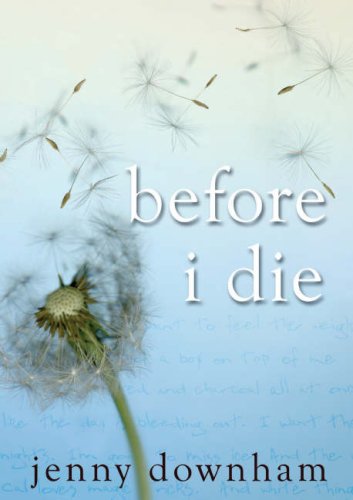
Sixteen year old, Tessa, is dying.  She’s been sick with leukemia since she was 12, but there’s nothing more they can do for her. When Jenny Downham’s moving novel Before I Die  opens, Tessa has decided to make a list of all the things she wants to do before she leaves the earth. Right off the top, she wants to have sex.

Tessa is a believable character, sullen and bitchy one minute and hopeful and loving the next. She lives with her dad and younger brother, Cal. Her mother left the family to follow another man to Scotland. The relationship didn’t work out and she’s in the neighbourhood, but Tessa’s care is really left to her father, who has given up work to stay homelook after Tessa.

Before I Die is a book about living the best way you can with the time you have. There’s a lesson in there for all of us. When Tessa meets Adam, the boy next door, her world starts to expand. When her best friend, Zoey, finds herself pregnant, Tessa has something to look forward to. Ultimately, though, this is a novel about dying and the last twenty pages or so are amoung the most moving I have ever read.

Intrator, a professor at Smith College, spends a whole year observing high school teacher, Mr. Quinn, in his classroom in a high school on the West Coast. His observations about the classroom are captured in his book, Tuned In and Fired Up. Obviously, this isn’t the sort of book that will interest the casual reader, but as a high school English teacher, I found it illuminating, inspiring and practical.

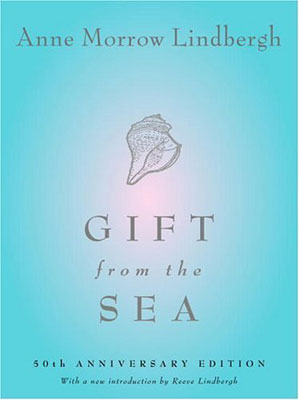
Anne Morrow Lindbergh’s meditation on “youth and age; love and marriage; peace, solitude and contentment” is slightly old-fashioned. It was, after all, published 50 years ago.  Lindbergh spends time at the beach, reflecting on her life, and writing in a journal – perhaps never having intended to share her thoughts with the world. Still, she invites the reader to consider how to attain balance in ones own life and that is certainly a modern question.

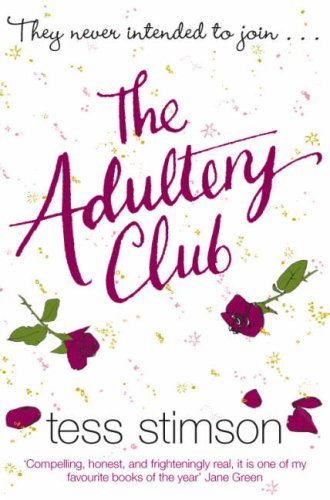
Not quite as frothy as you might think, Tess Stimson’s novel The Adultery Club tells the story of a  happily married couple, Nicholas and Mal, whose lives and marriage are torn apart when Nicholas decides to have an affair. The novel is told from various points of view and was certainly an entertaining read.

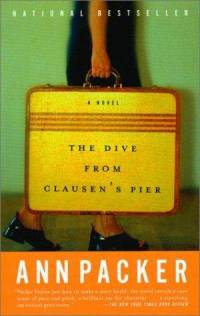
Twenty-three year old Carrie Bell has spent her whole life in the same small Wisconsin town. She’s engaged to her high school sweetheart, Mike, and it seems like her future is set. Except she’s not happy. She wants more.  The  Dive from Clausen’s Pier is a great book, well-written, thoughtful and would make an excellent choice for book clubs.

Ron is a creepy vacuum repair man who falls in love with nine-year-old Rachel. He builds her a fairy tale bedroom in the basement of his shop and then, one hot summer night, he kidnaps her. Helpless is a riveting novel from start to finish. And it isn’t compelling just because of the situation, Ron is one of the most complex characters I’ve read in recent memory and Gowdy is a masterful story teller.

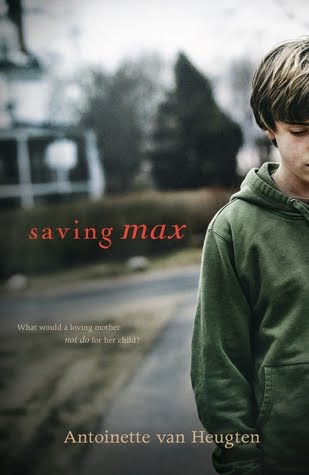
Saving Max by Antoinette van Heugten

Van Heugten’s debut novel, Saving Max, is the story of single mother, Danielle, whose son, Max, is accused of murder while in a psychiatric facility for evaluation. Danielle has taken Max from Manhattan, where she works as a lawyer, to the renowned Maitland clinic in Plano, Iowa, where Max can be assessed. Although he’s already been diagnosed with Aspergers (a mild form of autism), Max’s behaviour has become increasingly more troublesome (so we’re told) and Danielle is out of options.

Once at Maitland, Danielle meets Marianne, another mother whose son, Jonas, is there to be assessed. Jonas has several severe problems including being non-verbal. Danielle admires Marianne’s devotion to her son and constantly questions her own abilities as a mother. When Jonas turns up dead and Max is found holding the smoking gun (figuratively speaking), her mother lion instinct kicks in and she stops at nothing to get to the bottom of what really happened.

Saving Max isa  rather pedestrian whodunit. The characters are stock figures: Doaks, for example, is the hard-boiled ex-cop who now works  as a private investigator. It’s almost impossible to believe he’s never used a computer yet he claims not to know what “googled” means. He says  “ain’t” and calls Danielle “cookie”. Then there’s  the guy she slept with once after meeting him at a bar. Theirs is a love connection – which we’re supposed to buy. In a completely contrived twist of fate, he end up being the lawyer hired by Danielle’s NYC law firm to represent her.  Danielle herself is resourceful and smart, but I never connected with her – not even as a mother. And this is 2010, am I really expected to believe that she’d get a poodle perm and wear pant suits?

Then there are some problems with the story – little things a reader shouldn’t notice if they are wholly invested in the book. van Heugten has Danielle on a flight back from  Phoenix where she has gone to retrieve some evidence. In one chapter Danielle is buckling in as the plane begins its descent. A couple paragraphs later, she’s asking for a coffee and settling in to continue reading the evidence she’s found. A couple chapters later, she’s working her way through the traffic in Des Moines; two chapters after that, she’s on the plane again.  The author also compensates for showing, by telling the reader things when it suits the story. Danielle knows, for example, the nursing schedule at 11pm. How?  I hate when I notice stuff like that.

The story itself is written in present tense, perhaps to give the reader a sense of immediacy and urgency – but the story just isn’t propulsive. I understand how desperate Danielle must be to clear her son, but the pieces of this puzzle just fit together too neatly. And the ending is trite.

All that said, I had no trouble reading the book. I think van Heugten might have the goods. Her background as a lawyer showed in the court scenes. The writing was strightforward, although not particularly original. The story had legs. What this book lacked, for me, was any really connection to the people who inhabited its pages. Ultimately, if you don’t care about the characters, you’re not going to care about their fate.

Purging…

 We’ve spent the day getting ready to paint my daughter’s bedroom. She already has a lifetime of keepsakes, most of which we packed away for her. She had a hard time parting with half-written stories and scraps of paper with a meaningful doodle on it, but when we stood in front of her bookcase, she was ruthless. The books she’s loved – The Little House on the Prairies series, Little Women, Miss Happiness and Miss Flower, (which was my book and is definitely worse for the wear but I am thrilled that Mallory loves it as much as I did!), A Little Princess,  get pride of place, but many others were kicked to the curb without a second thought. How can she be my kid?

I am much more precious about my books and have always hated parting with them – even the books I’ve hated and wouldn’t recommend to anyone. I’ve gotten a little bit better in the past couple of years because I don’t have the luxury of limitless space. Oprah’s site recommends these tips for culling books from your shelves.  I guess she’s sort of applying the same rules we use to strip the dead wool from our wardrobes: if we haven’t worn/read it in the last season/year we should probably say bye-bye.

When I do relent and make some wiggle room for new books on my shelves (this is my already-read shelf) I generally remove:

books I hated and wouldn’t pass on

mysteries I would never read again (aka Harlen Coben but not Thomas H. Cook)

books I have made several attempts to read, but just couldn’t get through

Books on my tbr shelf will remain there (I’m nothing if not stubborn) until I have read them.

How about you –  do you keep all your books? If not, how do you decide what stays and what goes?

Along Comes A Stranger by Dorie McCullough Lawson

Okay – so another book that sounded so promising and ended up being mediocre. What’s up!?

Kate Colter has lived in small-town Wyoming for 15 years. Her husband, George, is a paleontologist; her daughter, Clara, is just seven and suffers from MCADD, a disease that requires her to eat regularly or else her body runs out of glucose and starts to shut down.

What we’re expected to believe – because the author tells us , is that Kate is somehow dissatisfied with her beautiful family and lovely life, that she’s  an East Coast girl at heart and has never really settled into life in the West. That’s why when she meets her mother-in-law’s new boyfriend, Tom Baxter, she’s immediately smitten. He’s from away and as far as Kate’s concerned, he’s exciting and intelligent and they have things to talk about.

About 50 pages in, Kate mentions her aunt Joanie. She’s clearly a plot device, so the author can tell us about Kate’s fascination with criminals.

I can’t say Joanie’s and my interest in the underworld arises from a concern for something greater, like justice, nor does it come from something emotional or psychological within either one of us, like a deep-seated fear of evil, for instance. No, Joanie and I just like to talk about all these crimes and criminals because they make for good, fast-moving stories.

So, life ticks on. George goes off on a dig and Kate is required to fill her days – which she does. Maybe this is the reason why she doesn’t notice, at first, the huge red flags that something is not 100% square with Mr. Baxter. Oh no! Then, even the tiniest things start alarm bells ringing until the novel’s wholly ridiculous conclusion.

Look, I’ve read dozens of these stories – you have, too – lots of them are terrific. This one is not. The characters, every last one of them, are one-dimensional and the  whole thing is contrived and lacks any sort of suspenseful momentum.

The Bronte Project by Jennifer Vandever

I am starting to get annoyed with the recommendations slapped on book covers. For example, Karen Quinn called The Bronte Project “a brilliant first novel of love. ” On the back  there’s more praise: “So original, so enchanting, so poignantly true that it defies you to put it down.” But wait- that’s also by Quinn. Was there only one author willing to give this book their seal of approval? After reading The Bronte Project, I’m not surprised.

The blurb makes this sound like a great read, especially for someone as enamored of Brontes as I am.

Shy young scholar Sara Frost’s unsuccessful search for the lost love letters of Charlotte Bronte hasn’t won her any favours at her university, particularly now the glamorous new Head of Princess Diana Studies has introduced her media-savvy exploits to the staid halls of academia. But it’s not until Sara’s fiance suddenly leaves her that she begins to question her life’s vocation.

I thought the book sounded like it had promise…but not so much. By about half way through I was totally exasperated with the expository nature of the writing, the mini-lessons on the Brontes, the ridiculous decisions Sara made and the even more outlandish denouement. Then I realized that Vandever is a Film School graduate. Like Sara, maybe she hoped her work would somehow make the perfect fodder for a film.

Let’s face it – I don’t have anything intelligent to say about this book…except perhaps – don’t waste your time reading it. Even if, like me, you love Jane Eyre and Wuthering Heights.