Maeve is a book editor in NYC. She’s got a pretty good life, including a friends with benefits arrangement with Ryan. What Maeve doesn’t have is family. She grew up in a matriarchal cult, Mother Collective, a situation from which she escaped/was rescued when she was just a child. The only thing she really misses from that time in her life is her cousin, Andrea. They lost touch and Maeve hasn’t looked for her in years. Then, on a whim, she takes a DNA test and suddenly Andrea is back in her life…and things get, well, complicated.
This is the premise of Anne Heltzel’s first novel for adults Just Like Mother. And it started out really well. I love cult stories, and although this once doesn’t spend too much time in the cult, there is certainly enough information for readers to know that it’s whackadoodle (although, really, are there any cults out there that aren’t?) This is a cult of women, the one male child mentioned is referred to as ‘Boy’. There’s a locked room and strange sounds come from behind the door, a puppy Maeve thinks.
When Maeve and Andrea are reunited, Maeve is both elated and wary. After all, their shared childhoods weren’t idyllic. Andrea seems to have landed on her feet though. She’s made millions as the “CEO of a start-up that had been making the news for its groundbreaking contributions to the lifestyle market.” But almost as soon as Andrea re-enters her life, Maeve’s life starts to implode. She loses her job and then, a personal tragedy catapults Maeve to upstate New York, where Andrea lives in a fabulous mansion with her husband, Rob.
That’s when things get weird. Just Like Mother is one of those books that you keep reading because it is so ridiculous that you can’t stop. Some readers called it “terrifying” and “deeply disturbing” but it was neither of those things for me.
Grady Hendrix (The Southern Book Club’s Guide to Slaying Vampires, My Best Friend’s Exorcism) digs through the horror vault in Paperbacks from Hell. Subtitled The Twisted History of ’70s and ’80s Horror Fiction, Hendrix, no slouch himself when it comes to things that go bump in the night, traces the history of mainstream horror fiction and his observations are both astute and often comical.
For anyone who grew up in the 1970s, lots of these authors will be familiar. Personally I was reading a lot of Stephen King back then, and there’s not really a lot about him in this book. Instead, Paperbacks from Hell (mostly) looks at the seedier side of horror, tracing the resurrection of the genre to Ira Levin’s Rosemary’s Baby, Thomas Tyron’s The Other and William Peter Blatty’s The Exorcist.
As Hendrix explains “All three spawned movies and, most importantly, set the tone for the next two decades of horror publishing.
Hendrix catalogues the specific sub-genres of horror, everything from satanic cults, haunted houses, explicit sex, creepy kids, possessed animals, zombies and vampires. The book is filled with lots of amusing turns of phrase and enough specifics to make a horror aficionado happy.
Then there’s the cover art. If you have any interest in pulp horror from this period – you should just go right ahead and order the book. It’s a whole lot of creepy fun.
This would make a great gift for any horror reader on your list. And while you’re at it – pick up one of Hendrix’s novels, too. He clearly loves the genre and he’s a great writer.
It’s 2020, the scary beginning of Covid, when Ann Patchett’s latest novel Tom Lake opens. Lara and her husband, Joe, and their three adult daughters Emily, Maisie, and Nell are hunkered down on the family’s Michigan cherry farm. The girls have asked Lara to tell them the story of how she came to date Peter Duke, a famous actor. Emily, the eldest and the child who intends to stay on the farm, has long believed that Peter Duke is her father and it has caused quite a bit of friction between her and her mother over the years.
Lara’s story really begins when, in high school, she and her best friend, Veronica, are roped into helping at a community theatre casting call for a production of Thornton Wilder’s Pulitzer Prize winning play Our Town. Although she was really only there to take the names of those who’d come to audition, Lara ends up auditioning herself and lands the part of Emily, a role which is to change her life. Later, at college, she plays the part again and as she remarks “Luck was everything.” A Hollywood producer, there to see his niece in the role of Mrs. Gibbs, is enamoured with Lara’s portrayal of Emily and thinks she’d be perfect for a movie he’s casting. That opportunity leads her to Tom Lake, a summer stock theatre in Michigan where she will reprise the role of Emily for a third time. This is also where she meets Peter Duke, or, as everyone calls him: Duke. He’s playing Mr. Webb, Emily’s father, even though he is only four years older. Everyone could see that he was destined for greater things, though.
This is a story about falling in love with Peter Duke who wasn’t famous at all. It’s about falling so wildly in love with him – the way one will at twenty-four – that it felt like jumping off a roof at midnight. There was no way to foresee the mess it would become in the end, nor did it occur to me to care.
Almost from the moment that they meet, Lara and Duke are a couple and their summer together is one that changes the course of Lara’s life. Lara’s daughters think they know (most of) the story, but she parcels out the narrative, editing and obfuscating because “There was always going to be a part of the story that [she] didn’t tell Joe or the girls.”
Honestly, I will read anything Patchett writes. Even if I didn’t know anything about Our Town, I would have loved this story of a mother and her daughters, of first love and the devastation it can leave in its wake, of friendships and marriage, of family. But because I am very familiar with Wilder’s play, which is really about some of the very same things Patchett writes about, I found this book extra meaningful. Wilder once said that his play was about finding “a value above all price for the smallest events in our daily life.” Much of the action of Patchett’s novel takes place on the family cherry farm where mother and daughters spend their days picking fruit. In the evenings, they share dinner, conversation, and movies. Covid made the circumstances perfect for this sort of thing because where were you going to go and what else were you going to do?
Tom Lake is a quiet novel but that is not to say that you won’t be swept along by these characters and their story. Like Lara’s daughters, I wanted to know what became of Peter Duke and there were some other surprises in this novel, too.
Almost twenty-five years ago, I happened upon the tail end of a television show where two people were staring at each other across a smoke-filled parking lot. There was so much longing in their eyes, I was immediately captivated. I didn’t know what the show was; I didn’t know who these actors were. I knew nothing but that fraught moment – and it changed my life.
Buffy the Vampire Slayer (1997-2003) and its spin-off series, Angel (1999-2004) sucked me into a world I did not know existed: fandom. First of all, I had to rent all of the episodes of the show I hadn’t seen – three seasons’ worth. That was back in the days of Blockbuster, way before dvds and streaming. I am not sure what sent me down the internet rabbit hole, but down it I went. That’s where I discovered websites devoted to Buffy and fanfiction and then LiveJournal. It was a slippery slope, people. When I finally decided to try my hand at fanfiction – because I have always been a writer – well, that was so much fun. Then I decided to build my own (now defunct) website, which I coded from scratch. I attended two Buffy fanfiction writers’ conventions, one in Las Vegas and one in Atlanta. I met so many talented writers and made so many amazing friends. It was a a lot of fun.
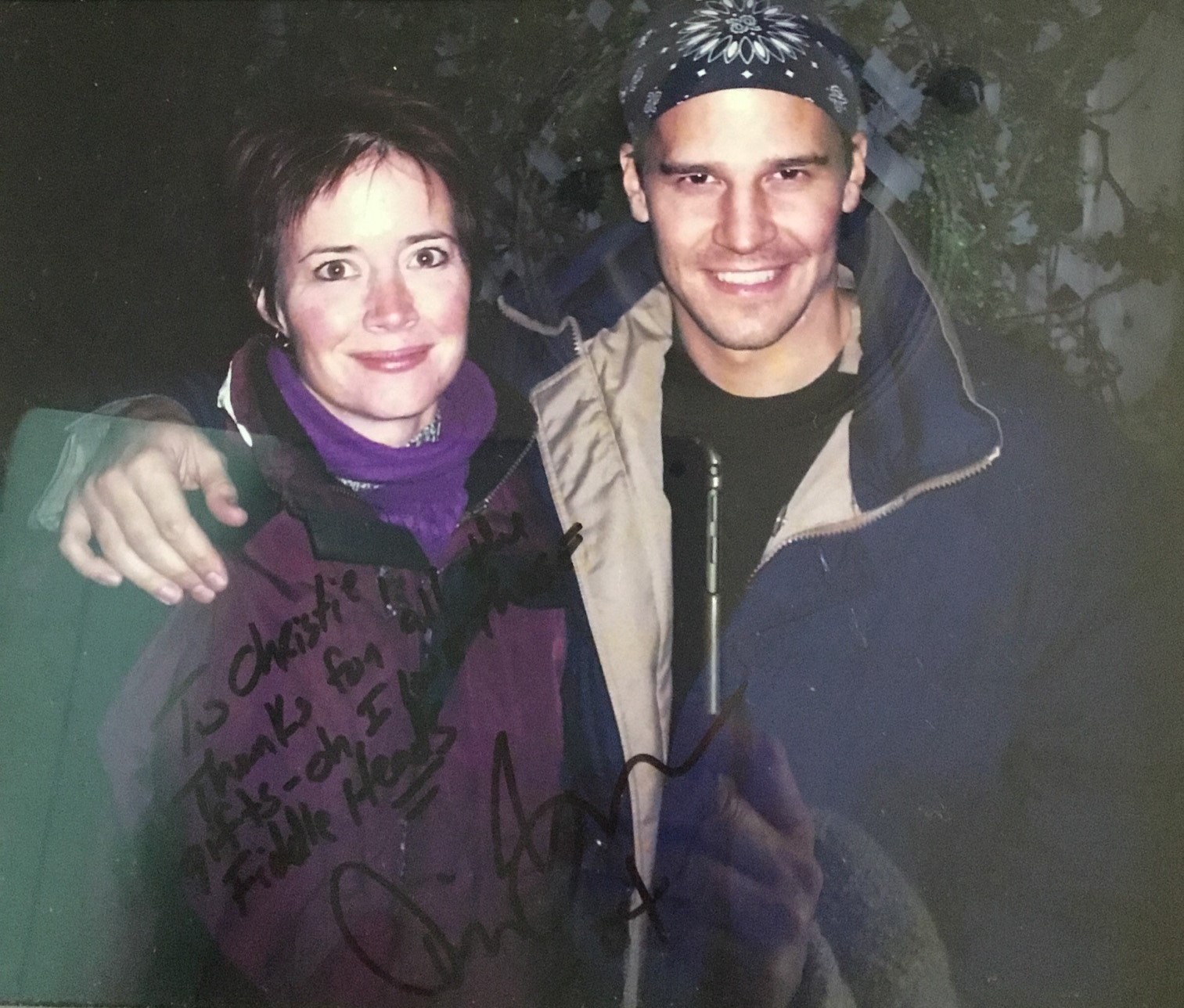
The pinnacle of my time in fandom was when David Boreanaz (who played Angel) came to New Brunswick to shoot the movie These Girls and I got to go to set and meet him. I was not okay.
Fandom was a huge part of my life for about a decade, and then life just got busier, the shows ended and I gradually stepped away. All my fanfic lives at Archive of Our Own and there are still people reading, which is lovely, but for the most part fandom is in the rearview mirror. My love for these shows, however, is not.
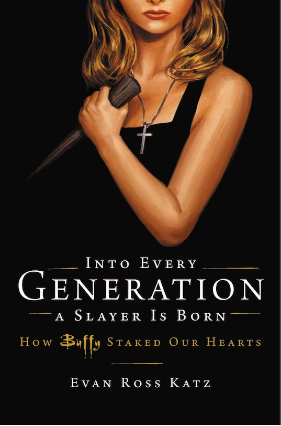
So, when Evan Ross Katz’s book Into Every Generation A Slayer is Born: How Buffy Staked Our Hearts came out, there was no question that I was going to read it. The book examines Buffy‘s place in pop culture – and it has a place and I will fight anyone who says otherwise. People who dismiss the show because of the movie (which even though Joss Whedon wrote the screenplay was not ultimately his vision of what it could be) or because of the show’s name, don’t have a clue. The show is profoundly moving, often laugh-out-loud funny, creepy, witty, and layered. You can watch it a million times and always see something new.
Katz is clearly a fan of the show. He says “to love Buffy is to both contextualize and reexamine it.” It is a show the has spawned legions of rabid fans (see above), dissertations, volumes of analysis, billions of words of fanfiction, university courses. It’s a show that keeps on giving. A couple of years ago I rewatched all seven seasons with my son and I was amazed by how well it has held up, and how many new things I spotted. Still made me laugh. Still made me cry.
But it is also a show that, ultimately, unmasked Joss Whedon as a misogynist – which was crushing for those of us who thought he had our backs. This is one of those instances where I have to be willing to separate the art from the artist. Trust me, I don’t wear my “Joss Whedon is my master now” shirt anymore.
Katz examines Sarah Michelle Gellar’s glorious portrayal of the titular character. Gellar shares her memories of the show, her working relationship with other castmates and her thoughts about playing the “one girl in all the world.”
“As an actor, you want to do something that leaves a mark, that makes a difference, that stands the test of time […] So the fact that twenty-five years later, we’re still talking about it means that I did something right. And I think that with time comes appreciation.
The book also shares the thoughts of Nicholas Brendan (Xander), Charisma Carpenter (Cordelia), Seth Green (Oz), Anthony Stewart Head (Giles), and James Marsters (Spike) as well as many other recurring cast members (but not a single mention of Wesley Wyndam-Pryce (Alexis Denisof; it was like he didn’t even exist in the Buffyverse! and a planned interview with Alyson Hannigan (Willow) fell through.) Other major actors, David Boreanaz, for example, spoke through quotes taken from previously published interviews – so nothing new. Bummer.
The book looks at story arcs, queer and BIPOC representation, the writers’ room, and Joss Whedon himself, especially his toxicity on the set and his mistreatment of female actresses, particularly Charisma Carpenter. It also talks about Buffy’s relationships with Angel, Spike and Riley; it seems pretty obvious that Katz is team Angel and so we agree on that at least.
I had a lot of fun reading this book. It wasn’t groundbreaking or anything, but that didn’t diminish my enjoyment of revisiting this show or these characters who occupied so much space in my life and introduced me to people from all over the world. I will always love these characters and this world.
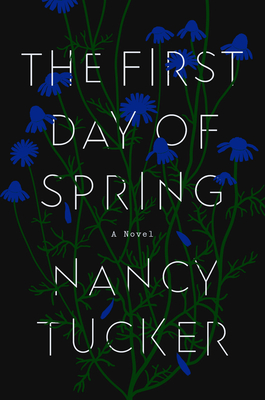
The opening line Nancy Tucker’s debut The First Day of Spring is a corker.
I killed a little boy today.
That’s eight-year-old Chrissie speaking. Yep – you heard that right; Chrissie is eight. She lives an impoverished life with her mother, but beyond being poor, her mother is emotionally distant and Chrissie is mostly left to fend for herself. Her clothes are never clean; she often wets the bed and there is never anything to eat at her house “even though the whole point of a kitchen was to have food in it.”
Chrissie survives because of free school dinners and by hanging around at her best friend Linda’s house at tea time, even though she is fairly certain Linda’s mother doesn’t really like her. In fact, no one seems to like Chrissie very much; she’s bossy, often kicks people who talk back to her, and brags and lies in equal measure.
After she kills the little boy, Chrissie has a “belly-fizzing feeling [like when she] remembered a delicious secret, like sherbet exploding in [her] guts.” Somehow the secret sustains her and provides opportunities for her to receive the attention she so desperately craves. Besides, Chrissie is fairly certain the little boy will come back from the dead: Jesus did and so does her father, who disappears and reappears at random intervals.
The novel also features an adult Chrissie, now going by the name Julia. She and her young daughter, Molly, live by a strict set of rules.
…back to the apartment at three forty-five, […] a snack at four, […] read the reading book at four-thirty, […] watched Blue Peter at five, […] had tea at five-thirty.
Julie’s life is structured because bad things happen “when [she] stopped concentrating.”
Julia has already had to move and change her name once because people are not kind when they find out who she is and what she has done. When she starts getting phone calls, she thinks her life is going to be upended again. And when Molly accidentally breaks her wrist, Julia is sure that the authorities are going to take her daughter away from her. That sends her on a journey back into her past.
The First Day of Spring is suspenseful, heart-breaking and hopeful, and I highly recommend it.
An invitation novelist Kersti Kuusk receives to attend the 100th anniversary of the boarding school she went to in Switzerland coincides with the news that one of her former classmates has died after a battle with cancer. In her last letter to Kersti, Lille reasserts that their mutual friend Cressida had not fallen by accident and that incriminating evidence to prove this might be found in the Helvetians ledger.
Canadian novelist Joanne Goodman’s novel The Finishing School toggles between the present, where Kersti and her husband Jay are struggling to conceive and Kersti is also out of ideas for her next novel, and the past, where Kersti’s time at the Lycee International Suisse is unspooled.
Born to Estonian immigrants, Kersti is the youngest of four sisters. The honour of attending the Lycee had fallen to Kersti because “her sisters didn’t have the grades to earn the Legacy Scholarship,” but Kersti also suspected that “her parents are sending her away because they’re exhausted.”
Kersti’s new roommate is the beyond beautiful Cressida.
…she’s far from ordinary. She has a beautiful, unruly mane of hair, spiraling out in all directions. Her head is just slightly to big for her slender body, but she’s dazzling, with pale green eyes, exquisitely long lashes, and a prominent, arched brow […] all of it together a masterpiece of teenage magnificence.
Kersti spends the next few years of high school loving and loathing Cressida in equal measure. Cressida can be a lot, but she is also fiercely loyal and generous and her friendship affords Kersti a life she would never have had access to otherwise.
We learn early on that Cressida had fallen from the balcony of her dorm room, and Lille’s letter many years later dredges up all those old memories. When Jay suggests that there might be a new novel in this story, it is both a distraction from Kersti’s failed attempts to get pregnant (which is causing a lot of strife in her otherwise happy marriage) and also sends her down a rabbit hole in an attempt to figure out what really did happen almost 20 years ago.
The Finishing School is a real page turner and also a book about friendship, motherhood and loyalty. I could barely put it down.
At 30, Katy Silver, has just lost her mother to cancer and suddenly she isn’t quite sure what to make of her life: she doesn’t know who she is without her mom.
I cannot yet conceive of a world without her, what that will look like, who I am in her absence. […] I do not ever imagine coming to terms with the loss of her body – her warm, welcoming body. The place I always felt at home. My mother, you see, is the great love of my life. She is the great love of my life, and I have lost her.
The only thing she can think to do, to help her make sense of this senseless tragedy, is to go on the trip to Positano, Italy, that she and her mom had been planning for ages. So, she leaves her husband, the affable Eric, and grieving father behind and lands at Hotel Poseidon (an actual real place where you too can see what Katy saw for a measly $1500 a night -in high season; you can stay for about a third of that in the off season). There, itinerary for two in hand, Katy tries to do the things that she and her mother had planned which was, essentially, to revisit her mother’s own transformative 30th summer on the Amalfi Coast.
Katy isn’t going to have to do it alone, though. First, she meets Adam, a handsome American property developer, who has been coming to Positano for years because “it’s special here […] a little piece of paradise.” Then, miraculously, Katy meets her mother.
Of course, this turn of events is going to take some suspension of disbelief – but just go with it. For anyone who has ever lost a loved one, especially a mom, this reunion will be bittersweet. Suddenly, Katy finds herself actually living that life-changing summer her mother lived 30 years ago…with her mother. It’s a game changer for Katy as she comes to understand her mother in a way it would have been impossible to before.
I see a woman. A woman fresh into a new decade who wants a life of her own. Who has interests and desires and passions beyond my father and me. Who is very real, exactly as she is right here and now.
It’s hard to imagine our parents as anything but our parents. It’s almost like they didn’t have a life before we came along, and I know that this is likely how my son and daughter, both in their twenties now, see me. I am their mom, but before that – just one yawning blank. I wonder if that is also how I saw my own mother? I lost my mother to cancer when I was 45; she was just 67. There are so many things I wish she was here for, so many milestones and heartaches, so many vacations we never had the change to take, and so many questions I wish that I had asked.
For this reason, One Italian Summer is a balm for the soul. The other reason is Italy itself. As anyone who has ever been there knows, it is a magical place. I wrote about my last visit in 2018 here.
Lisa Jewell’s most recent novel, None of This is True, could have been ripped straight from the true-crime headlines. And just like a true-crime podcast or documentary, Jewell’s book is totally binge-able.
Alix Summer, a successful podcaster who lives a polished life with her successful husband, Nathan, and her two young children in a tony London neighbourhood, meets Josie Fair, a part-time seamstress with two adult children and a husband, Walter, who is old enough to be her father. Their meet cute happens at a local gastropub, not the sort of place Josie would normally be dining, but it is her 45th birthday and she wanted, for once, to do something special. Turns out, it is also Alix’s 45th birthday.
This incidental meeting seems momentous to Josie, so when she accidentally on purpose runs into Alix again she confesses that she doesn’t “break free of the past now, then when will [she]?” She wants to tell her story and Alix is looking for another project. Josie and her messed up life seems like the answer to her creative prayers.
It doesn’t take long for Josie to start becoming full-on obsessed with Alix’s house and the casual elegance of her life. She asks Alix to help her buy new clothes. She takes small, inconsequential things from the Summers’ home, which she visits regularly because Alix’s podcast studio is in the back garden. She captivates Alix with the story her relationship with Walter, which began when she was 13 and he was 42, and of a daughter who ran off at 16. Another daughter, Erin, never comes out of her bedroom. It is clear that Josie’s life is messed up.
Or is it?
As with all of Jewell’s really great books – you really won’t know what to believe…or in this case – who to believe. The book’s structure is comprised of podcast recordings, Netflix documentary transcripts and chapters told from both Josie and Alix’s point of view. It makes for easy reading; I read it in two days. Like the media it mimics, None of This is True is easily consumable, a big bowl of buttered popcorn that’s fun to eat but not exactly life-sustaining.
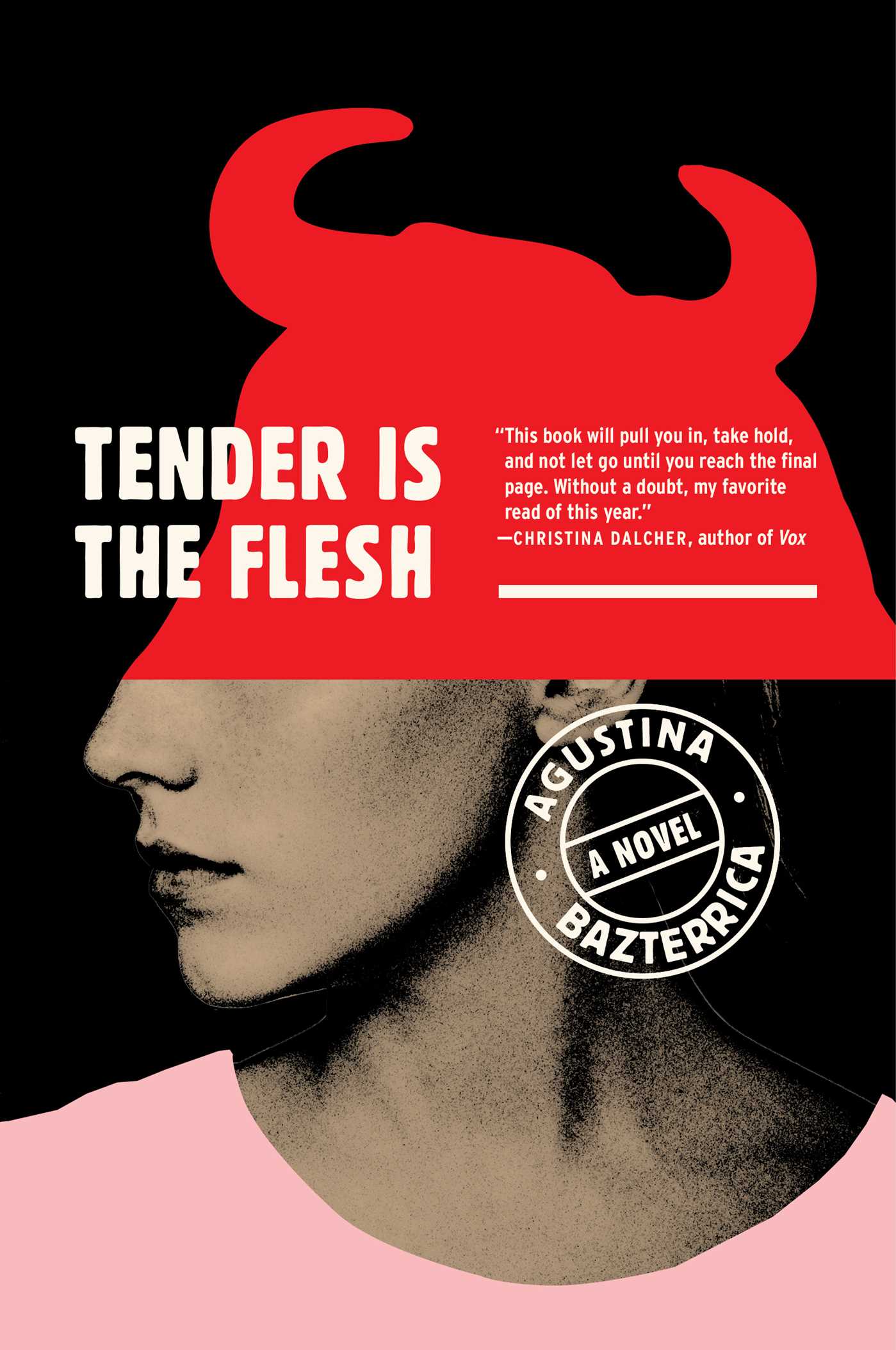
I mean, there are dystopian novels and then there’s Tender is the Flesh.
Marcos Tejo’s life has fallen apart. His father has dementia and is existing in assisted living. His wife has had an emotional breakdown and has left to stay with her mother after the death of their infant son. Oh, yeah, and a deadly virus – well, that’s what the government claims anyway – has made it impossible to eat animals, so everyone now eats humans. That, of course, helps with population growth too, so it’s a win win.
People are specially bred as meat and Marcos works at one of the country’s best slaughterhouses.
No one can call them human because that would mean giving them an identity. They call them product, or meat, or food. Except for him; he would prefer not to have to call them by any name.
Bazterrica’s book is all kinds of ick. In scene after scene, we are treated to graphic descriptions of how this “special meat” is treated. And trust me when I say, it’s not good. It will be impossible not to imagine how the animals we eat every day are treated, and if there ever was a case for veganism, this book would be it. But, according to the scientists in Tender is the Flesh,
animal protein [is] necessary to live [and] doctors confirmed that plant protein didn’t contain all the essential amino acids, [and] experts assured that methane emissions from cattle had been reduced but malnutrition was on the rise, [and] magazines published articles on the dark side of vegetables.
When Marcos is gifted an F.G.P. (First Generation Pure) “head” to consume, his ambivalent feelings – which he mostly keeps buried – come to the surface. Once he cleans her up and discovers she’s beautiful he moves her from the barn to the house and one thing leads to another. The head can’t talk, of course; their vocal chords are removed – the killing is less noisy that way – so I guess their relationship is based on a needs must basis.
I mean, sure, I guess Tender is the Flesh has stuff to say, but Marcos is a hard character to warm up to. And you have to wade through a bucket of entrails and other gruesome stuff to get there. You’d kind of hope that Marcos would have some sort of epiphany or something, but this book is bleak start to finish.
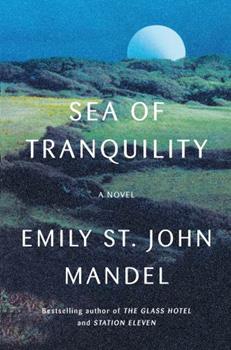
It’s funny how some time travel books work for me and some don’t. Earlier this year I read This Time Tomorrow and I think that is probably my favourite book of the year. Years ago – before I started this blog – I read The Time Traveler’s Wife and cried so hard at the end, I couldn’t see the pages. So, I definitely went into Emily St. John Mandel’s Sea of Tranquility with an open mind, plus I loved Station Eleven.
The novel opens when Edward St. John St. Andrew is exiled from his home in England to the wilds of Canada, landing first Halifax before heading to the West Coast. It is 1912. While walking in the woods near the remote coastal community where he is staying, Edward has a strange experience
like a sudden blindness or an eclipse. He has an impression of being in some vast interior, something like a train station or a cathedral, and there are notes of violin music, there are other people around him, and then an incomprehensible sound–
Flashforward to 2020, where we are introduced to Mirella and Vincent – well to Mirella because Vincent is dead. The two women (yes, Vincent is a woman) had lost touch after Mirella’s husband had lost all his money in a Ponzi scheme orchestrated by Vincent’s husband and “how could Vincent not have known.” Now Mirella is at a concert waiting to talk to the composer, who is Vincent’s brother. It is here that we also are also introduced to Gaspery Roberts and the imminence of Covid-19.
Finally, in 2203, we meet Olive Lewellyn, who has come to Earth from the moon colonies to promote her latest novel, Marienbad, which is about “a scientifically implausible flu.” She has left her husband and daughter in Colony Two, “a city of white stone, spired towers, tree-lined streets and small parks.”
These three timelines are connected by Gaspery, but readers won’t really know it straight away. I am not a person who really digs into – or digs – the science of time travel: I enjoyed This Time Tomorrow and The Time Traveler’s Wife without spending too much time trying to figure out how all the pieces fit together. I found all the metaphysical stuff in St. John Mandel’s book a bit above my pay grade, honestly. And while Sea of Tranquility was easy enough to read, I didn’t really care too much about any of the characters so when it got to the end, and the discussion of life’s meaning – well, honestly…I just wasn’t invested.
I think my ambivalence is more about me than the book’s quality, though.







 The Ludic Reader