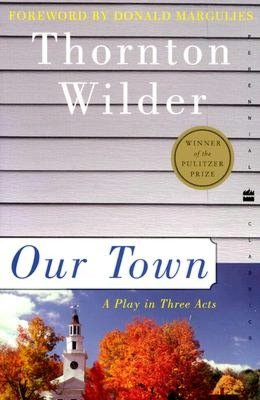
Our Town – Thornton Wilder

ourtownI have loved Thornton Wilder’s Pulitzer Prize winning play, Our Town, since I was fourteen or fifteen. I was trying to figure out how I would have come into contact with it, as I certainly didn’t read it while in school. My best guess is that it was because of Robby Benson, who starred in an adaptation of the play which must have aired on television. If you are a regular visitor to this blog, then you know that Robby and I go way (way) back.

I probably purchased my copy of the play around then – it’s an Avon paperback which, according to the cover, cost $1.75. (I know, eh?) It’s dog-eared and highlighted and marked up and the words contained within still, after all these years, move me.

In the Foreward of the HarperPerennial edition of the play Donald Marguiles, an American playwright and professor, calls Wilder “the first American playwright.” Marguiles further posits that Wilder paved the way for many of the playwrights who came after, and are perhaps better known: Albee, Williams, Miller.

First produced for the stage in 1938, Wilder’s play takes place in Grover’s Corner, New Hampshire. The play is performed on a bare stage. The actors mime their stage business. For theatre goers attending that first production, Wilder’s play must have seemed wildly modern.

“Stripping the stage of fancy artifice, Wilder set himself a formidable challenge,” says Marguiles. “With two ladders, a few pieces of furniture, and a minimum of props, he attempted to “find a value above all price for the smallest events in our daily life.””

Our Town could be any town. That’s the point. The characters on the stage are us. The three act structure of the play mirrors the circle of life: birth, love and marriage, death. One might easily argue that nothing happens. Yet the exact opposite is true: everything happens.

The Stage Manager guides us through the play.  Our Town is a fine example of metadrama; that is a play which draws attention to the fact that it is a play. The Stage Manager acts both as a sort of Greek chorus and bit player. He has the power to alert the audience to events in the future and to allow characters to revisit the past, as he does – famously –  for Emily in Act Three.

The language of the play is simple. Characters speak colloquially. They are just average citizens, concerned with the weather, town gossip, and their children. Even my class of grade ten students were able to see themselves in George and Emily. It is a tribute to the timeless quality of the play that despite the intervening years – from the play’s debut until now –  not much has changed.

DR. GIBBS: Well, George, while I was in my office today I heard a funny sound…and what do you think it was? It was your mother chopping wood. There you see your mother – getting up early; cooking meals all day; washing and ironing  – and still she has to go out in the backyard and chop wood. I suppose she just got tired of asking you. And you eat her meals, and put on the clothes she keeps nice for you., and you run off and play baseball, – like she’s some hired girl we keep around the house but that we don’t like very much.

As a teenager I would have certainly seen myself in that passage. Now, I see my own children.

We are all the same: we are born, we live and we die. The Stage Manager remarks  that even in Babylon “all those families sat down to supper, and the father came home from his work, and the smoke went up the chimney, – same as here.”  It underscores one of the play’s motifs: time and its passing. What do we know of those people? “…all we know about the real life of the people is what we can piece together out of the joking poems and the comedies they wrote for the theatre back then,” remarks the Stage Manager.

In the Joss Whedon’s landmark television show Angel, the title character says “If there’s no great glorious end to all this, if nothing we do matters… , then all that matters is what we do. ‘Cause that’s all there is. What we do. Now. Today.” (Epiphany, 2001)

In Our Town‘s final act Emily comes to the same realization, albeit too late. “Do human beings ever realize life while they live it? – every, every minute?” she cries.

The Stage Manager replies: “No. (pause) The saints and poets, maybe – they do some.”

Perhaps my students aren’t quite ready to acknowledge life’s brevity. I know, for sure, they don’t live “every, every minute.” Why should they? I didn’t. I don’t.

Wilder’s play is a powerful reminder, though, that we should. And that message is as meaningful now in 2013 as it was in 1938.

Bliss – Lauren Myracle

blissBliss Inthemorningdew (no, I’m not joking!) is new at Crestview Academy. It’s tough enough to be the new girl, but Bliss’s life is further complicated by her unusual last name and the fact that her parents are hippies. Bliss has spent her entire fourteen years living in unusual places: a tent, the basement of a college and, most recently, a commune. Now she lives with her very formal maternal grandmother in Atlanta, dumped there by her parents who have run off to Canada to protest the Vietnam War. Or Nixon. Something, anyway. They’re sort of non-entities, in a very strange way.

This is a situation neither Grandmother not I would have chosen, but Grandmother is nothing if not morally upright, which made it impossible for her to turn me away. She’s also uptight, and it seems that often the two go together.

Although life with her Grandmother is odd (at least in the beginning), Bliss is looking forward to having something she hasn’t ever had before: a friend. Soon is she is navigating the impossibly complicated world of teenage drama and it’s a world about which she knows very little.

Lauren Myracle’s novel Bliss isn’t really a coming-of-age story, though. It’s sort of part mystery, part ghost story, part thriller. On some levels it works very nicely; I had no trouble turning the pages as I raced along to the book’s conclusion. In other ways, the book is perhaps a bit bloated. There’s commentary on racism, mentions of the Klan and many of the characters in this book are concerned with Charles Manson and the now infamous murders which took place during the summer of 1969.  Myracle opens chapters with quotes from Manson and quotes from the Andy Griffith Show, perhaps as a way of balancing extreme good and extreme evil. For my money, Bliss might have benefited from a little judicious editing and more of a focus on what was really intriguing:  new girl tries to fit in and gets caught up in creepy hi-jinx.

Bliss is a likable character. I’m not sure I understand why her parents dumped her. She’s smart and kind and open-minded. It was easy to be with her and to fear for her safety. I’m certain teens will find lots to like about this book

The Guardians – @andrewpyper

guardiansAndrew Pyper’s been on my literary radar for a few years now – ever since I read his first novel, Lost Girls. (This was well before I blogged, or even knew what blogging was, so I have no review. I do remember that I thought it was smart, well-written and creepy.) A couple years ago I read Pyper’s novel. The Trade Mission, a book I had some trouble with. Not because of the writing, more because I felt like I was in way over my head.  The Guardians was a much easier read, well, perhaps not easier, but more accessible.

Carl, Ben, Randy and Trevor, the novel’s narrator, grow up in Grimshaw, Ontario. It’s a one-horse town, a place they can’t wait to leave. They are solid friends and have been since they were kids. They play hockey for the Grimshaw Guardians, smoke up in Carl’s car before class and fantasize about Ms. Langham, their young and beautiful music teacher. On one level, The Guardians is about this friendship. But there’s more to this story than four boys making out with their girls and smoking dope.

Because there’s this house which just happens to be across the street from Ben’s house and as Trevor recalls: “it alone is waiting for us. Ready to see us stand on the presumed safety of weed-cracked sidewalk as we had as schoolchildren, daring each other to see who could look longest through its windows without blinking or running away.”

The Guardians opens with Ben’s suicide in the present. Trevor must return to his old stomping grounds to attend the funeral. He’s at a bit of a crossroads, Trevor. He’s recently been diagnosed with Parkinson’s and he’s a man of a certain age (40) and he’s feeling the full force of death’s lingering gaze. Pretty much the last place he wants to be is back in Grimshaw, where he’ll have no choice but to remember certain events from his youth that he has sworn a pact with his buddies to never talk about.

I hope Mr. Pyper will consider it a compliment when I say that The Guardians reminded me a little bit of Stephen King’s brilliant novel, It. I loved that book, not just because it scared the bejeesus out of me  (which, frankly, seems silly now given that the monster was a giant girl spider that lived in a cave) but because of the friendships between the characters – which King always handles so deftly. Pyper does a fine job, too, of giving us characters to care about even when they make bad decisions. And they do; they’re kids.

The house has a part to play, too. It’s long abandoned and creepy as hell and bad things happen there, both real and imagined. Their relationship with the house drives the narrative both in the past and now, present day.

The strength of the story, though, is that it taps into that very human feeling of helplessness, and frailty. Trevor’s feeling it as his body begins to betray him. There’s also this notion of “you can’t go home again.” I’m not a 40 year-old-man, but I understand perfectly that idea of returning to the place of your youth but no longer being young. Trevor feels it when he is reunited with Randy. “That’s what we see in each other’s eyes, what we silently share in the pause between recognition and brotherly embrace.”  Their youth is gone, but they are haunted by it nonetheless.

The Guardians is a sad tale, well told.


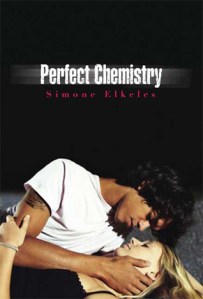
Perfect Chemistry – @SimoneElkeles

perfect chemistryI admit it: I have a type. I like bad boys with kind hearts. Stories that feature these guys (and I’ve read a lot of them) fill in those ticky boxes faster than you can say smoldering eyes and tattoos. You’d think by now I’d be over it, but clearly not. I devoured Simone Elkeles YA novel Perfect Chemistry in one sitting.

Brittany Ellis is eighteen and just beginning her senior year of high school in a Chicago suburb. She’s pretty and popular, captain of the cheerleading team, dating the hunky high school quarterback.  She lives in a huge house on the right side of town.

Everyone knows I’m perfect. My life is perfect. My clothes are perfect. Even my family is perfect. And although it’s a complete lie, I’ve worked my butt off to keep up the appearance that I have it all. The truth, if it were to come out, would destroy my entire picture-perfect image.

Alejandro “Alex” Fuentes is also eighteen and also in his senior year, but his life is vastly different from Brittany’s. For one thing, he comes from the wrong side of the tracks. For another, he’s a gang banger.

Senior year. I should be proud I’ll be the first family member in the Fuentes household to graduate high school. But after graduation, real life will start. College is just a dream. Senior year for me is like a retirement party for a sixty-five-year-old. You know you can do more, but everyone expects you to quit.

The interesting thing about both of these characters is that what the reader sees on the surface is only part of their story. The alternating first person points of view allows us a glimpse into lives which are much more than what they initially appear. Brittany and Alex would have no reason to ever interact. In fact on the first morning of school, Brittany’s reaction at almost hitting Alex while trying to nab a parking spot pretty much says it all:

Alex takes a step toward my car. My instincts tell me to abandon my car and flee, as if I was stuck on railroad tracks with a train heading straight for me….

But Brittany is no shrinking violet and when, later that day, she’s paired with Alex for a year-long chemistry project, she gives as good as she gets. So, naturally, sparks fly.

Perfect Chemistry is a love story, true, but it is also a story about making choices, standing up for what you believe in,  and breaking down those stereotypes which often hold us prisoner.  Brittany and Alex are well-written characters, believable and relateable. I really wanted things to work out for them.

Back in the 70s there was a movie very similar to this book. It’s cheesy now because frankly, blue-eyed Robby Benson was never going to make a very convincing “Chicano”. Still, it has similar themes. In case you have some time to kill, check out Walk Proud.

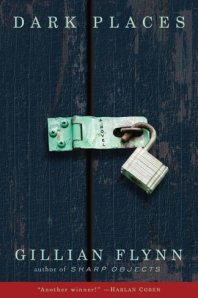
Dark Places – Gillian Flynn

dark-places-book-coverLibby Day is a survivor. She’s survived a drunken, dead-beat father, Runner,  extreme poverty, and the horrific massacre of her mother, Patty, and two older sisters, Michelle and Debby. Well, maybe to call her a survivor is a stretch because Libby is reclusive and mean. She says it herself at the beginning of Gillian Flynn’s terrific novel, Dark Places.

I have a meaness inside me, real as an organ. Slit me at my belly and it might slide out, meaty and dark, drop on the floor so you can stomp on it. It’s the Day blood. Something’s wrong with it. I was never a good little girl, and I got worse after the murders.

Ah, yes, the murders. For the past 24 years Libby’s older brother, Ben, has languised in prison for the crime. He was 15 when he is alledged to have killed his mother and younger sisters. Libby has never once visited him partly, perhaps, because it was her testimony that sent him there. She was seven at the time.

Now, at 30, Libby is alone, broke and desperate. That’s how she comes to accept The Kill Club’s offer. Lyle, one of the Kill Club’s members, reaches out to Libby and makes her a propostion. If she’s willing to come to a meeting and talk about the case, they’ll pay her $500. That original deal morphs into something more and suddenly Libby is revisiting the night that changed her life forever.

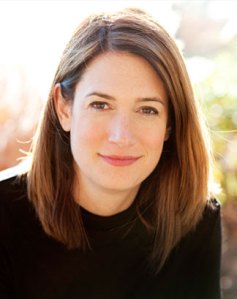
gillian-flynnGillian Flynn (right) is a new-to-me writer although everyone and their dog has likely heard about her by now due to her recent novel, Gone Girl. She started her writing career as a journalist and was the TV critic for Entertainment Weekly for a decade before turning her hand to fiction. Look at her: she’s beautiful. And scary. And it just occurred to me that her writing reminds me of one of my all-time favourite writers, Lisa Reardon. Her writing is fearless…and fear-inducing.

Dark Places unspools the Day murders in two ways: as Libby digs for the truth and as the events of the day unravel. For this, we spend time with Patty and Ben. Patty is a sympathetic character, a mom who loves her children and tries to care for them, but whose dwindling emotional and financial resources make it nearly impossible. Ben, on the other hand, is a fifteen-year-old boy in a house full of women. He’s desperately searching for a place to belong and an outlet for the anger which bubbles inside him.

Flynn skilfully weaves the threads of this story together offering the reader equal measures of horror and heartbreak.  I couldn’t put the book down – that’s just about the highest praise I can give a book.

I love me some lists

The end of a year always inspires listmakers to reflect on the days gone by. I love all the ‘Best of’ book lists – more titles to add to my notebook. Here are some great Best of 2012 lists from bloggers and others to help you decide what to read next:

A Guy’s Moleskin Notebook

Bart’s Bookshelf

Book Addiction

You’ve Gotta Read This

Dot Scribbles

Savidge Reads, Part One

Savidge Reads, Part Two

SCC English

What’s Not Wrong

If you’ve done a list, let me know and I’ll add it here.

My reading/blogging year, 2012

My goal was to read 60 books this year but I didn’t make it. I blame Italy. (Too much Prosecco does not, in fact, allow for close reading – or any reading for that matter. I was, however, sober enough to snap a few picures of bookstores in Rome.) My summer road trip with the kids also took a chunk out of my summer – when I would normally be reading at the beach while the kids swim, I was drivingdrivingdriving…and shopping. Still I am currently on book 54, so I am happy with that. Of course if I only read 50-ish books a year, it will take me TEN years to read all the books on my to-be-read shelves. Never mind the titles listed in my want-to-read notebook (which I anally copied over into a new notebook yesterday).

Still, it’s time to reflect on what I have read. A couple days ago I did this nifty survey, which came from The Perpetual Page-Turner.

Here are some additional thoughts about my reading/blogging year:

1. Not all Young Adult books are created equal.

I have been reading a lot more YA fiction these days. I have two teenagers at home (a daughter, 15 and a son, 13) who are both avid readers. My son, in particular, is constantly telling me I have to read [insert title]. I also teach high school English and I am really, really working hard to create a culture of book love in my room. I am slowly, but surely, building a classroom library and I am trying to read my way through it so that I can offer real advice to those kids who need it.  So when I say that not all YA is created equal I feel like I have a little bit of credibility.  Here are the YA titles I read this year:100_2088
1. Reality Check – Peter Abrahams
2. I Am Not Esther – Fleur Beale
3. Things Change – Patrick Jones
4. Between – Jessica Warman
5. Chasing Boys – Karen Tayleur
6. Nevermore – Kelly Creagh
7. The Day I Killed James – Catherine Ryan Hyde

100_20908. Ashes – Ilsa J. Bick
9. The Fault in Our Stars – John Green
10. Drowning Anna – Sue Mayfield
11. Jane – April Lindner
12. He’s After Me – Chris Higgins
13. The Returning – Christine Hinwood
14. I’ll Be There – Holly Goldberg Sloan
15. Divergent – Veronica Roth
16. Nothing But Ghosts – Beth Kephart
17. Things You Either Hate or Love – Brigid Lowry
18. Monsters of Men – Patrick Ness
19. Gone – Kathleen Jeffrie Johnson
20. Nevermore – Linda Newbery
21. The Heights – Brian James
22. 40 Things I Want To Tell You – Alice Kuipers
23. The Death of Jayson Porter – Jaime Adoff
24. Surrender – Sonya Hartnett
25. The Ask and The Answer – Patrick Ness
26. The Invention of Hugo Cabret – Brian Selznick
27. Played – Dana Davidson
28. Right Behind You – Gail Giles

Of those titles here were my favourites.

#1   NO CONTEST: The Fault in Our Stars – John Green  ( I have SO MUCH love for this book. Everyone should read it.)

#2  Nevermore – Kelly Creagh

#3  Ashes – Ilsa J. Bick

#4 The Ask and the Answer /  Monsters of Men – Patrick Ness (Yes, I know it’s cheating to put two books in one slot, but these are the second and third books in Ness’s amazing Chaos Walking trilogy, which starts with The Knife of Never Letting Go.

#5 Between – Jessica Warman

#6 Nothing But Ghosts – Beth Kephart

#7 The Death of Jayson Porter – Jaime Adoff

#8 Surrender – Sonya Hartnett

#9 Right Behind You – Gail Giles

#10 Played – Dana Davidson

When I read YA fiction I am looking for good writing, authentic characters, good writing. I mean, if we want kids to know what that is – we have to make sure they have opportunities to read it.  I think YA has come a long way from where it was, but there is still a lot of junk  out there. (Sparkly vampire books, I am looking at you!)

2. I have less patience for books than I used to. ( aka I am aware of the dwindling sand in my reading hour glass.)

Last year I started a Book Graveyard, a place to keep track of the books that I just couldn’t get through – for whatever reason. If I give a book a couple tries, or a few dozen pages and I just can’t read it – I make note of it here. Robby Benson’s novel Who Stole the Funny? recently landed there. Sorry, Robby. I still love you.

3. I don’t love any books. (At least that’s what my kids tell me.)

I actually love all books; I just don’t like some of them. Here are some of the  titles  I read this year, which I didn’t like at all.

Now You See Her – Joy Fielding

The Heights – Brian James (YA)

The Returning – Christine Hinwood (YA)

Jane – April Lindner (YA)

Death Comes to Pemberley – P.D. James

Graveminder – Melissa Marr

Until It’s Over – Nicci French

4. But here are the ten titles I did love this year. (I’ve left the YA books off this list and the titles aren’t in any particular order.)

#1 The Casual Vacancy – J.K. Rowling

#2 A Spell of Winter – Helen Dunmore

#3 Room – Emma Donoghue

#4 The House at Riverton – Kate Morton

#5 The Sense of an Ending – Julian Barnes

#6 The Slap – Christos Tsiolkas

#7 Major Pettigrew’s Last Stand – Helen Simonson

#8 Stitches – David Small (graphic novel)

#9 So Much Pretty – Cara Hoffman

#10 Evidence of Blood – Thomas H. Cook

If I am going to consider my entire year of reading, though, my absolute favourite book would be John Green’s The Fault in Our Stars – which I can’t recommend highly enough.

5. Blogging failures.

I started 2012 with this ridiculous notion that I would post book-related content every day. Yeah. That lasted until April 17th.

6. My blogging year in review. A look back at some of my favourite posts.

I posted several entries this year I was really proud of. Who knows if anyone saw them but me.

Become a fangirl of writers

Let’s talk about love

My shelves, my life part one (although I don’t think I ever did a part two, come to think of it!)

Me and Mr. Jones (my thoughts after the death of Davy Jones)

The importance of a classroom library

Scary books for All Hallows’ Eve

7. Some content that wasn’t mine, exactly, but which is worth a second look.

The Fantastic Flying Books of Morris Lessmore

The Joy of Books

Ryan Gosling loves books

8. Blogs I admire

Bella’s Bookshelves –  crazy smart reviewer and Canadian!

Books I Done Read –  witty and honest and also Canadian

Nerdy Book Club – keep your finger on the pulse of kid-related books and stuff

Savidge Reads – Simon is a voracious reader and promoter of all things literary

Dot Scribbles – I always add new titles to my want-to-read list after visiting this blog

The Perpetual Page-Turner – content galore, well-written, too

bite by Michelle – if you are even remotely interested in food, this is a keeper

9. And my first ever giveaway…was

The Golden Book of Bovinities by Robert Moore which went to Lynne from Dartmouth, NS

10. Looking ahead to 2013

I am currently reading Gillian Flynn’s novel Dark Places…I might even finish it today (although it’s not likely).  I’ll head over to chapters.indigo.ca and roll the calendar over on my little group 50 Books in 2012…Speaking of Chapters/Indigo, I have a shopping cart order just waiting to be placed. I will continue to read read read – nothing gives me quite as much pleasure.

And how about another giveaway. Hey, if you made it to the end of this really long post, you deserve the chance to win something…so I’ll draw a name at random from anyone who comments on this post between Jan 1 and 31st…and send a book-related gift your way!

Happy New Year…and all the best for 2013.


Best in 2012

This meme comes from The Perpetual Page-Turner. I love an opportunity to reflect on my reading year, so here goes.

Best In Books 2012

1. Best Book You Read In 2012? (You can break it down by genre if you want)

I spend most of my time reading either Young Adult fiction (mostly chosen from my classroom library) or books from my own massive to-be-read pile. (And I am not exaggerating, I’m talking hundreds of books).

Best YA  – no contest…The Fault in Our Stars – John Green.

In fact this might have been my favourite book of the entire year despite the fact that, you know,  it ripped my heart out.

Best Fiction – Room – Emma Donoghue

I actually had a harder time choosing this one. I read a handful of books that I really liked this year, all of them for different reasons. This one, though, was just so unusual and compelling I had to put it on top.

2. Book You Were Excited About & Thought You Were Going To Love More But Didn’t?

Graveminder – Melissa Marr

This was the first book I read in 2012 and I’d been really looking forward to it. I loved the cover. I loved the premise. But the writing and the plot and the characters = hot mess.

3. Most surprising (in a good way!) book of 2012?

I just wasn’t anticipating liking The Casual Vacancy at all. I haven’t read the Harry Potter books (except for The Philosopher’s Stone) and I just couldn’t imagine liking a really long book about a small British town. But I did like it. A lot.

4. Book you recommended to people most in 2012?

I have happily recommended The Fault in Our Stars over and over to students in my classes. That’s generally who gets the brunt of my bookish enthusiasm. Other books I’ve flogged include: Patrick Ness’s Chaos Walking trilogy (which I can include here because I read the second and third books in 2012!), Nevermore by Kelly Creagh and Ashes by Ilsa Bick.

5. Best series you discovered in 2012?

Nevermore by Kelly Creagh The second book, Enshadowed, is currently available in hardcover.   This series features a feisty heroine, a creepy Edgar Allan Poe-ish nightmare world and some terrific writing.

Ashes  trilogy by Ilsa J. Bick. The second book, Shadows, is currently available in hardcover. This series features a world gone horribly awry, flesh-eating zombies and a fabulous main character.

6. Favorite new authors you discovered in 2012?

John Green. Emma Donoghue. Kelly Creagh. Ilsa J. Bick. Kate Morton. These are all authors I will definitely read more of.

7. Best book that was out of your comfort zone or was a new genre for you?

Because I am reading a lot of young adult fiction these days I find that I am reading genres (fantasy, for example) that I wouldn’t normally read. I still don’t think I would enjoy straight up sci fi, but who knows. I want to be able to have those discussions and if I’m gonna talk the talk, I’m gonna have to walk the walk. (Or, read the book!)

8. Most thrilling, unputdownable book in 2012?

Nevermore – Kelly Creagh

I’m not sure it was the most thrilling book, but I did have a hard time putting it down.

9. Book You Read In 2012 That You Are Most Likely To Re-Read Next Year:

If I re-read any book from this year, it would probably be The Fault in Our Stars…or I might skim through Ashes and Nevermore before I read the second books in the series.

10. Favorite cover of a book you read in 2012?

major

11. Most memorable character in 2012?

Samantha from J.K. Rowling’s The Casual Vacancy. I totally got her.

Hazel and Augustus from John Green’s The Fault in Our Stars. I just can’t say enough about these characters and my love for them.

Jack from Emma Donoghue’s Room. Incredible.

12. Most beautifully written book read in 2012?

Oh dear. I am going to have to go with…Helen Dunmore’s A Spell of Winter. I am a longtime fan of Dunmore; she never fails me when it comes to the quality of her prose. But I was also really surprised by how impressed I was by Rowling’s The Casual Vacancy. It was really good.

13. Book that had the greatest impact on you in 2012?

The Fault in Our Stars. I laughed out loud and I sobbed uncontrollably  into my fist in the middle of the night.

14. Book you can’t believe you waited UNTIL 2012 to finally read?

I actually don’t get all hung up on not reading books when they first come out. I don’t often jump on the hype wagon. I just add books to my tbr list, purchase the books eventually and read them when I get around to it…or I am in the mood.

15. Favorite Passage/Quote From A Book You Read In 2012?

Oh dear. I will have to get back to you on this one.

16.Shortest & Longest Book You Read In 2012?

Shortest: The Uncomon Reader – Alan Bennett, 120

Longest: The Casual Vacancy – JK Rowling, 503

17. Book That Had A Scene In It That Had You Reeling And Dying To Talk To Somebody About It? (a WTF moment, an epic revelation, a steamy kiss, etc. etc.) Be careful of spoilers!

I can’t tell you of any one particular scene. I can tell you that my book club had an excellent night discussing The Slap by Christos Tsiolkas. I have also loved talking books with students in my class.

18. Favorite Relationship From A Book You Read In 2012 (be it romantic, friendship, etc).

Hazel and Augustus from The Fault in Our Stars. Just perfection on the page.

19. Favorite Book You Read in 2012 From An Author You Read Previously

Evidence of Blood – Thomas H. Cook

A Spell of Winter – Helen Dunmore

I really love both of these authors and enjoyed both of these books in 2012.

20. Best Book You Read That You Read Based SOLELY On A Recommendation From Somebody Else:

None. Other than books I read for book club, I don’t run out and buy books based on someone else’s recommendation.

The Blue Notebook – James A. Levine

blue notebookIt’s easy to become complacent when you live in Canada. I live in a nice house; I have a car; I have a job; my children are healthy and go to school wearing the clothes they want, with full bellies. They sleep in warm beds. They are safe and loved.  So when I read a novel like James Levine’s The Blue Notebook it sticks with me. Not because it’s beautifully written literature — which I have to say, it’s not — but because it tells a story so compelling and upsetting and alien to my everyday life, I can’t quite wrap my head around it.

Batuk is just nine when her beloved father sells her to Master Gahil. I got the sense that he was strapped for cash and Batuk was his only asset. Thus begins her life of sexual slavery, a life she learns first at the hands of a variety of men in “the orphanage” and then under the watchful eye of Mamaki Briila. She is one of six children housed in “nests” on Common Street in Mumbai. Here she makes “sweet-cake” all day long.

It’s a ghastly life, but Batuk is somehow able to separate herself from the act of sex by retreating into a world of stories. She is literate because she spent several weeks in a TB hospital as a child and a kind nurse taught her to read and write. She commits her story to the pages of a blue notebook and this is how the reader comes to know her story.

And so I look within myself and assemble myself in words. I take the words that are my thoughts and dreams and hide them behind the dark shadow of my kidney. I compress my need for love into words and hide that as a drop of blackness next to my liver (it will be safe there until I need it.)

James Levine, the author of The Blue Notebook, is actually a  professor of medicine and a respected scientist and researcher. He was compelled to write Batuk’s story after seeing a young girl on the Street of Cages in Mumbai. He says, “The image of the girl in the pink sari haunted me so that I was compelled to write The Blue Notebook, a work of fiction based on field-workers’ reports and observation of the conditions that such children survive.” There is an interesting article about Dr. Levine and the book here.

Batuk’s story is a dark one. There is really no reprieve for her or the reader but to be fair — why should we come out of this experience unscathed? The truth is horrific. According to Child and Women Abuse Studies Unit (CWASU) there are an estimated 10 million prostitutes in India. A February 2012 UN report indicated that India was the most dangerous place in the world to be born a girl. Not only are girls less desirable to their families, extreme poverty often leads them to a life of prostitution.(http://www.telegraph.co.uk/news/worldnews/asia/india/9054429/India-most-dangerous-place-in-world-to-be-born-a-girl.html)

If you are interested in helping the children of India there are several charitable organizations, including HOPE.