He’s After Me – Chris Higgins

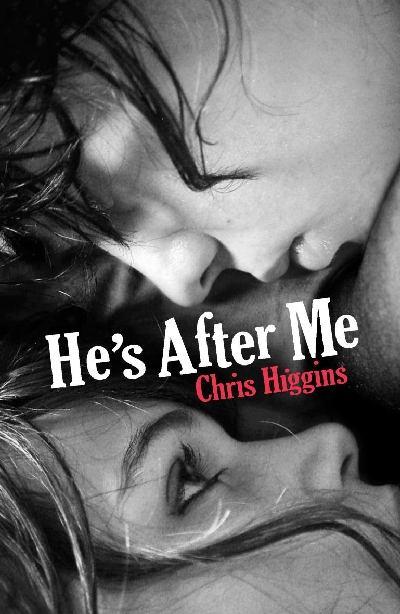
When smart but plain Anna meets Jem in Chris Higgins’ novel He’s After Me, her life is falling apart. Her parents have recently separated, her mother has retreated from the world and her younger sister, Olivia, is suddenly dressing far too provocatively and hanging out with kids that Anna doesn’t particularly like.

Jem is, well, electrifying. “…his smile faded and our eyes held and that’s when it happened. A charge passed through me like an electric shock.”

The first person narration sweeps the reader along and allows us to see both Jem’s many charms and also Anna’s growing doubts about the intensity of  her first serious relationship. Her best friend Zoe sees it though. “He’s got inside your head, Anna! He controls you. Can’t you see it?” she says.

But Anna can’t – or won’t see it. As Jem leads her further and further away from the safety of her life, she takes risks and chances she would never have previously considered.

That might have been enough to drive this YA novel’s breakneck pace – but there’s more. Someone seems to be watching Anna and Jem.

And so love’s arrow finds its target.

And she’d seemed like such a sensible girl too, not the kind to lose her head over some bloke.

That’s love for you.

Anna is a likeable character. I found myself really turning the pages to find out what was going on – wavering between believing in Jem’s charms and wanting to scream at Anna for not seeing through them. The anonymous third person kept me guessing, too. So, in that respect – good little page turner.

But I didn’t like the ending much.

Evidence of Blood – Thomas H. Cook

Jackson Kinley, the protagonist of Evidence of Blood,  is a true-crime writer. His career has brought him close to unimaginable horrors: rapists and murderers and people who torture others for pleasure. Kinley (as he is most often called) seems somehow immune to these horrors. Perhaps it’s his IQ, which is reportedly off the charts. Perhaps it’s his own childhood – he was raised by his grandmother in backwater Sequoyah, Georgia. Whatever the reason, Kinley  is able to face the dark deeds of the world’s most reprehensible criminals without flinching.

His armor is breached, however, when he gets the call that his childhood friend, Ray Tindall, has been found dead. He returns to Sequoyah and learns that Ray was trying to uncover the truth about a murder which had occurred many years before.

Thomas H. Cook  – as those of you who are regular readers here already know – is my favourite mystery writer. True, I am not a mystery scholar by any stretch, but an accidental discovery of his book Breakheart Hill several years ago has turned me into a fan and I have read several of his books (and I am thrilled to know there are more waiting to be read.)

Cook is particularly adept at creating nuanced characters and Kinley is no exception. Kinley’s past is deeply rooted in Sequoyah, but even he is unaware of just how deep those roots go. He can’t help himself – he’s an investigator and the shocking death of his oldest (and perhaps only) friend, has him sifting through the past. Ray, it turns out, was looking into the mysterious disappearance of Ellie Dinker, a sixteen year old whose bloody dress was found on a tree branch in 1954. A man was sentenced to death for that crime and Ray was trying to prove his innocence.

Like all of Cook’s novels, the mystery will keep you guessing. I tried out several potential (and I thought entirely plausible) solutions and was still surprised at the end of the book. I like the way Cook writes; his are literary mysteries. I feel like the craft of writing is just as important to him as telling a cracking good story – which he does. You keep turning those pages.

As Kinley follows Ray’s paper trail, interviews the players who are still alive and recalls childhood memories, he slowly begins to understand the implication of Ray’s words to him at one of their final meetings: “It’s better to know, don’t you think, Kinley? No matter what the cost?”

If you like well-written  mysteries, you really can’t beat Cook.

Death Comes to Pemberley – P.D. James

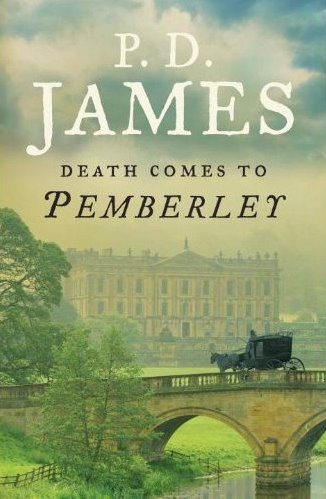
Death Comes to Pemberley by famous British crime novelist P.D. James is fan fiction. That’s right: P.D. James borrowed characters and settings made famous by Jane Austen and wrote them into a new story which takes place six years after Elizabeth and Darcy marry. That’s essentially what fan fiction is; writers (albeit, generally amateur writers) find new ways to breathe life into familiar characters. Because James is a crime writer, she wrote a mystery (although a relatively tame one, even by my standards.)

Fan fiction is (according to Wikipedia) “a broadly-defined term for fan labor  regarding stories about characters or settings written by fans of the original work, rather than by the original creator. Works of fan fiction are rarely commissioned or authorized by the original work’s owner, creator, or publisher; also, they are almost never professionally published.”  I would have agreed with that definition except for all the fan fiction that has found its way into bookstores recently (Fifty Shades of Grey, for example, literally started its life as Twilight fanfiction; Pride and Prejudice and Zombies and Android Kareninaare two examples from Quirk Classics). Perhaps I am misinterpreting the definition of fan fiction, but to me when you borrow another writer’s characters and just give them a new plot — that’s fan fiction. Yes, even if it’s a parody. (Fan fiction writers write parodies all the time.)

But, hey, I’m a huge fan of fan fiction and so pointing it out isn’t meant as a criticism. Even Pulitzer Prize winning author, Michael Chabon understands the merits of derivative fiction. In his book of essays Maps and Legends: Reading and Writing Along the Borderlands he says:

 …all literature, highbrow or low, from the Aeineid onward, is fan fiction. That is why Harold Bloom’s  notion of the anxiety of influence has always rung so hollow to me. Through parody and pastiche, allusion and homage, retelling and reimagining the stories that were told before us and that we have come of age loving – amateurs – we proceed, seeking out the blank places in the map that our favorite writers, in their greatness and negligence, have left for us, hoping to pass on to our own readers – should we be lucky enough to find any – some of the pleasure that we ourselves have taken  in the stuff we love to get in on the game. All novels are sequels; influence is bliss.

No matter the source material, all literature, ultimately, has to stand on its own two feet. Readers needn’t be a fan of Austen — or even know who she is — to read Death Comes to Pemberley because in the opening chapter James fills us in on the backstory. Once readers have the lay of the land, they can jump into the mystery which for me was only so-so. I like Austen fine, although I wouldn’t say I am a huge fan. I love a good mystery. I don’t have any problem with dense, old-fashioned prose (really good fan fiction mimics the original author’s style and recreates characters that are recognizable to readers of the original work). But Death Comes to Pemberley was a big YAWN. Seriously: nothing happens.

Elizabeth and Darcy are madly in love — although they spend virtually no time together. Elizabeth is preparing for Pemberley’s yearly Lady Anne’s ball when her younger sister, Lydia, arrives screaming that her husband George Wickham has been murdered in Pemberley Wood. Wickham is a bad apple and has been a constant source of embarrassment for Darcy. When it turns out it’s not Wickham who is dead but another male who was traveling with him, Darcy isn’t sure Wickham actually committed the crime.

It’s not much to make a mystery meal out of, but James fills page after page with lengthy descriptions of relationships and manners and protocol and the moon on the woods and it was so S-L-O-W. If it hadn’t been our first book club pick (and by a new member, no less) I would have abandoned it, for sure. I kept plodding along, but for me, the original charm of the Elizabeth/Darcy relationship was absent and the rest of the book just wasn’t my cup of tea.

Reading, Writing and Leaving Home – Lynn Freed

Although I have never read any of Lynn Freed’s fiction, I was interested in her collection of essays, Reading, Writing and Leaving Home: Life on the Page because as a high school writing teacher I am always looking for writing advice to share with my students. You know, something like King’s “If you don’t time to read, you don’t have the time or tools to write.” While there aren’t necessarily any pithy quotes in this collection, it was an interesting book because Freed herself has had an interesting life.

Born and raised in South Africa, Freed’s parents were actors, and she grew up – the youngest of three girls – surrounded by books.

Most of the books in the house were kept in my parent’s study, a cosy room with leather chairs, teak bookshelves, leaded windows, and piles of scripts stacked around on the floor. It was there that my mother was to be found during the day, either timing scripts or drilling a new actor. And there that I was allowed to read whatever was available – mostly plays, but also opera libretti, the odd history, a few biographies, a selection of popular novels – as long as I didn’t interrupt.

Her writing career began when she wrote “ninety tedious pages” for an AFS scholarship application. The following year, when she actually landed in New York after having won the scholarship, she was told that the organization had put a two-page limit on the essay because of her entry. That story and those characters continued to swirl around in Freed’s head and eventually found their way into her novel. But none of it was easy.

The world I was writing about was the same world I had tackled for AFS, but now  could life it from the restraints of myth and detail and report and do with it anything I pleased. Or, at least, so I thought.

Freed writes about writing as I believe writing is: hard freakin’ work. Frustrating. Painstaking. A labour of love, sure, but it’ll kick your sorry ass.

…I would suggest that one should never overlook two essential elements in the development of the writer: long years of practice and a ruthless determination to succeed. Writers come to their material in different ways, but come they must if they are to succeed.

Even though this sounds like advice, Leaving Home isn’t actually a how-to book. The book chronicles Freed’s journey from girlhood to adulthood and covers everything from her relationship with her sisters to a trip back to the house she’d once called home – and all if it is fodder for her writing. If, as she claims, she has chosen truth over safety in her writing – I suspect her novels would be worth a look. I certainly enjoyed this collection of essays.


Room – Emma Donoghue

Today I am five. I was four last night going to sleep in Wardrobe, but when I woke up in Bed in the dark I am changed to five abracadabra. Before that I was three, then two, then one, then zero. “Was I minus numbers?”

Jack is the narrator of Emma Donoghue’s stunning novel, Room. (Yes, I am late to the bandwagon; everyone and their dog was talking about this book when it first came out. But you all know I buy more books than it will ever be possible for me to read, right?)

From the book’s opening scene until I closed the novel a few hours later I was totally mesmerized by Jack and his Ma and the eleven by eleven world they lived in, their ‘Room.’  Jack and Ma live in this Room because of Old Nick, a predator who kidnapped Ma when she was 19 and has held her captive for seven years. Room is a prison, but it’s also the only home Jack has ever known. He doesn’t understand Outside, but he’s curious and  Ma knows that time is running out. They must find a way to escape.

Jack is a mesmerizing character and although it was risky to allow the story be told entirely through him, it’s a risk that pays off.  His worldview is so naive. He has no real concept of time (his sixth birthday will happen next week, his birthday cake takes hours and hours to make) and he believes that the people in TV “are made just of colors.”  His world is structured: sleep, eat, exercise, watch TV, read. His only playmate is his mother, but even through his innocent eyes he can see that Ma is struggling. Sometimes she spends entire days “Gone.” Sometimes she displays emotions Jack is unable to understand.

What wakes me up is a noise over and over. Ma’s not in bed. There’s a bit of light, the air’s still icy. I look over the edge, she’s in the middle of Floor going thump thump thump with her hand. “What did Floor do?”

Ma stops, she puffs out a long breath. “I need to hit something,” she says, but I don’t want to break anything.”

“Why not?”

“Actually, I’d love to break something. I’d love to break everything.”

“I don’t like her like this. “What’s for breakfast?”

Room is a remarkable achievement. It reads like a thriller; I couldn’t turn the pages fast enough. But it is also a beautiful testament to the power of love. What wouldn’t Ma do for Jack? Even more amazing, is what Jack is willing and able to do for Ma. I’ll be thinking about this book for a long time.

Highly recommended.

I’ll Be There – Holly Goldberg Sloan

Holly Goldberg Sloan is a screenwriter/director (Angels in the Outfield, Made in America) and maybe that’s the problem with her debut novel, I’ll Be There. It’s the story of Emily and Sam who lock eyes in a church where Emily is singing, badly, her first solo, The Jackson Five’s hit I’ll Be There.

Emily is the daughter of Tim, a music professor, and Debbie, an ER nurse. Her younger brother is Jared. She leads a nice life. She believes in order and destiny.

Emily’s interest in personal histories made her accessible to people’s deepest emotions. It was as if she had some kind of magnet that pulled at someone’s soul, often when he or she least expected it.

And that same magnet, which had to have been shaped like a horseshoe, allowed someone to look at her and feel the need to share a burden.

Hers was a gift that didn’t have a name.

Even she didn’t understand what it all meant.

Emily just knew that the grocery store clerk’s cousin had slipped on a bathmat and fallen out a second-story window only to be saved because the woman landed on a discarded mattress.

But what interested Emily the most about the incident was how the cousin had subsequently met a man in physical therapy who introduced her to his half brother who she ended up marrying and then running over with her car a year later after a heated argument. And that man, it was discovered, had been the one to dump the mattress in her yard.

He’d saved her so that she could later cripple him.

Emily found that not ironic but intriguing.

Because everything, she believed, was connected.

I quote this passage because it’s a great example of how Sloan’s omnipotent narrator does the work for the reader. This character is like this; here is a story to illustrate that.

Sam is the son of Clarence,  a  psychotic criminal. Sam’s brother, Riddle, is somewhere on the autism  spectrum. He is also plagued with constant colds. Sam and Riddle have been on the run with their father for the last ten years. They sleep in their truck or in run-down houses. Sam looks after Riddle as best he can. They don’t go to school; they don’t eat properly. Everything they know they’ve learned from books they’ve found. Riddle is artistic. He draws intricate mechanical drawings in a phone book. Sam is a self-taught musical genius. He’s also beautiful, selfless and perfect.

So, Emily and Sam’s eyes meet and that sets off a chain of events which propels the novel forward. Not everyone gets what Emily sees in Sam. Yes, he’s good-looking and polite, but he’s not forthcoming with details about his life and that’s worrying to Emily’s parents. Until Tim hears Sam play the guitar and then all bets are off. Suddenly Sam and Riddle are pulled into the Bell’s warm and welcoming circle and it’s unlike anything they’ve ever experienced. So, clearly, it can’t last.

There are reasons to like I’ll Be there. Riddle is a terrific character and the relationship between the brothers is lovely. The narrative moves along quickly, perhaps because it’s written in short little scenes. But that happens to be one of the book’s weaknesses for me. The omniscient narrator doesn’t take the trouble to develop any one character particularly well. The novel is like a bunch of soundbites strung together. Worse, even minor characters (the hairdresser who cuts Sam’s hair; an old lady who finds Clarence’s stash of stolen goods; the guy who buys his stolen penny collection) get their moment in the sun. Do I really need to know how their stories pan out? I guess I do if I want to wholeheartedly buy into Ms. Sloan’s over-arching theme of destiny.

The tone of the novel is off-kilter for me, too. It careens from swoony romanticism to lives-in-peril to  slap-stick comedy.

Will young adults enjoy this novel? Probably. It’s easy to read and Sloan does most of the work for you – right down to putting white hats on the heroes and tying the whole thing with a pink bow.

Oh, wait, that’s just destiny.


Divergent – Veronica Roth

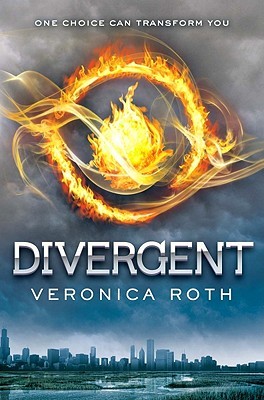
The dystopian landscape is popular in young adult fiction. If it’s not vampires and werewolves, angels or fairies – it’s likely some future version of our world where society has run amok and children are often left to fend for themselves. The most famous recent example is likely Suzanne Collins’ beloved book,  The Hunger Games. Veronica Roth’s popular novel Divergent has gained its own rabid fans and while I understand the book’s appeal, I didn’t like it as much as The Hunger Games.

Beatrice is sixteen. When you turn sixteen you must choose a faction: Abnegation (selflessness), Amity (peaceful harmony), Candor (frankness, honesty), Erudite (seeking knowledge) or Dauntless( fearless). Beatrice has grown up in an Abnegation household with her parents and older brother (by just a few months, so  her brother, Caleb, must also choose a faction), but she has never felt like she belonged. Selflessness doesn’t come easily to Beatrice.

When I look at the Abnegation lifestyle as an outsider, I think it’s beautiful. When I watch my family move in harmony; when we go to dinner parties and everyone cleans together afterward without having to be asked; when I see Caleb help strangers carry their groceries, I fall in love with this life all over again. It’s only when I try to live it myself that I have trouble. It never feels genuine.

So when it comes time to choose a faction, Beatrice chooses Dauntless. Most of Divergent is concerned with Beatrice’s (renamed Tris) training at the Dauntless compound. It’s a bit like a reality show: candidates are put through a series of tests and the best man (or woman) wins. Those who don’t make it – because they either quit or fail – suffer worse fates. You can’t go home again so you’re factionless, left to scrounge for food or do the most menial jobs available.

Tris is smart, no question, but what was missing for me was the back story which Katniss Everdeen had in spades. Katniss is a beautifully written character, someone I rooted for and understood. Tris, despite her upbringing, adapts relatively easily to her new faction – learning how to fight and lie with relative ease. Perhaps Roth was thinking of the nature versus nurture debate: how much of what we are is because of environment and how much is because of biology?

My issues with the book are minor quibbles, though. Despite being almost 500 pages long, I breezed through it. Sometimes I felt like the plot was being served rather than unraveled in a meaningful and organic way. Characters turned up conveniently and were dispensed with equally trouble-free. I know many will argue that Divergent offers lots of talking points, but I didn’t leave that shattered Chicago landscape feeling all that inclined to revisit.

All that said, I know there will be students in my class who will enjoy the novel and I would have no trouble recommending it – even if only as a way to talk about characterization: it’s difficult to mourn for people you don’t feel you know.

Rape: A Love Story – Joyce Carol Oates

Joyce Carol Oates wastes no time cutting to the chase in her novella, Rape: A Love Story.

After she was gang – raped, kicked and beaten and left to die on the floor of the filthy boathouse at Rocky Point Park. After she was dragged into the boathouse by the five drunken guys – unless there were six, or seven – and her twelve-year-old daughter with her screaming Let us go! Don’t hurt us! Please don’t hurt us!

Teena  Maguire and her 12-year-old daughter, Bethie, leave a July 4th party after midnight and cut through Rocky Point Park.  They take a short-cut through the woods and encounter the group of drunken men, many of whom are known to Teena from around her Niagara Falls neighbourhood.

Although Bethie is beaten, she manages to escape and hide under a boat. She listens as her mother is raped and savagely beaten and left for dead. The reader is not spared from the horror of this crime, but Oates — skillful writer that she is — never crosses the line into gratuitous.

Bethie manages to attract the attention of a police officer and it happens to be Officer Dromoor, a man who knows Teena because of an encounter they’d had one night at a local bar. Dromoor is a good man– a married father-to-be with a finely attuned sense of justice.

Teena survives the attack, but her life is forever altered. Rape: A Love Story sets about examining the ways in which this horrific incident changes her and Bethie and Dromoor and even three of the perpetrators and their families. It asks questions like was Teena dressed inappropriately and thus ‘asking for it’? Oates doesn’t offer any answers, though.

I have a love/hate relationship with Oates. There’s no denying her considerable talent, but sometimes I find her hard work. It’s not style over substance — although, no question she has some stylistic tics which take some getting used to. In Rape, she employs second person narrative (always a risky choice, imho, although clearly well-handled here), choppy sentences, and a narrative that jumps around. But, let’s face it, she’s Joyce Carol Oates.

I always want to like her more than I actually do.

The House at Riverton – Kate Morton

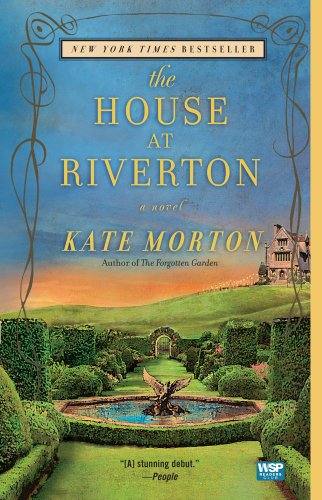
I’m sure many of you have already read Kate Morton’s debut novel, The House at Riverton, but I only just finished it yesterday afternoon. If you haven’t already found a book to while away the dog day’s of summer, might I suggest you run to your bookstore immediately and purchase this one. Whew. What a read!

Grace Bradley is fourteen years old when she comes to Riverton House to work. Her mother had also worked at the sprawling Essex manor house, but had to leave under mysterious circumstances.  It is through Grace that we learn of Riverton and its inhabitants.

I have been thinking about the day I started at Riverton. I can see it clearly. The intervening years concertina and it is June 1914. I am fourteen again: naive, gauche. terrified, following Nancy up flight after flight of scrubbed elm stairs. Her skirt swishes efficiently with every step, each swish an indictment of my own inexperience.

The story, though, starts in the present. Grace is an old woman now. Her husband is dead; her daughter is in her sixties and her beloved grandson, Marcus, has been missing for several weeks. When a filmmaker from America writes to ask if Grace would consult on a film she’s making about a tragedy at Riverton, Grace is pulled back into her memories.

Fans of Downton Abbey will be able to picture Grace’s life perfectly: the servants downstairs, their dedication to service, their hierarchy. But Grace is more concerned with the Hartford siblings: David, Hannah and Emmeline. Over the years she becomes particularly close to Hannah and  when Hannah marries, she is whisked off to London to live.

The House at Riverton is about an aristocratic family in decline. Set between the two great wars, characters go off to their deaths, or come home damaged. The Roaring Twenties usher in an era of shifting sensibilities. Morton does a spectacular job of evoking a time and place. It’s easy to sympathize with the female characters who yearn for  a different life and although criticism has been leveled at Grace for choosing service over personal happiness, I believe I understand her choice.

Because Grace is looking back, the reader knows early on that some tragedy has befallen the Hartford family. That alone would be enough to turn the pages. But the novel takes its time arriving at its conclusion. Perhaps some readers found the novel slow and the prose over-written; I know it took me a while to settle into the story.

However, when I left Grace, 468 pages later, it was with great sadness because even though this is the story of Riverton, Grace’s own story is inextricably linked.

So Much Pretty – Cara Hoffman

I rarely pick up a book randomly anymore, but So Much Pretty was calling my name. Not only was it calling my name, it actually jumped the pile instead of languishing on my bookshelf for months and months. Still, despite the endless glowing praise I had a hard time settling into the book. Perhaps it was the time of year I started to read it — late June, when school is busy. I took the book with me on a family holiday and while the kids were swimming, I sat on a beautiful screened porch and lost myself in Cara Hoffman’s small-town drama.

Told from multiple perspectives, So Much Pretty flips over the small town of Haeden, NY and exposes its creepy underbelly. When the body of a missing teenager, Wendy White, is discovered in Tern Woods, it kick starts an examination of several lives particularly Flynn, the brittle newspaper reporter and  Claire and Gene and their daughter, Alice, transplants from NYC. The book also includes police reports and interviews. In this way, the book is difficult to navigate at first. It really deserves to be read in one sitting because once I made time for it, it really wouldn’t let me go.

Although there is a horrific crime at the center of this book, the real crime has more to do with the ways in which people are often complicit.  Parents misreading their children; neighbours turning away from each other; individuals looking for the spotlight. The story unfolds at a leisurely pace, making sure the reader understands all the players and their connections, but I feel like I missed a lot of clues — no, not even clues — signs that things were not quite right in Haeden because my mind was occupied trying to figure out how Alice was connected to Wendy. I got it horribly wrong, btw.

There are questions to be answered here, but Hoffman’s  feelings are opaque. She masterfully navigates all the pieces, but I never got the preachy feeling I often get with, say, a Jodi Picoult novel. The bulk of what happens to Wendy is left to the reader’s imagination, and her fate is far worse because of it. This would be a fantastic book club pick because of the inherent opportunities  for discussion. So, while it took me a bit to get into, I ended up loving So Much Pretty. Its copious praise is well-deserved.