Wildman – J.C. Geiger

Eighteen-year-old Lance Hendricks is on his way home after auditioning for a spot at a prestigious music school when his ’93 Buick breaks down. Lance is really anxious to get home to a party where he and his long-time girlfriend, Miriam, are finally going to do the deed, but his car is towed off and it looks like he’s going to be stranded in the middle of nowhere because he is not leaving his car behind. Not the car his father left for him.

J.C. Geiger’s YA novel Wildman is essentially the story of what happens when a person whose life is all figured out discovers that maybe that buttoned-up life isn’t the one he wants after all.

Lance takes a room at the Trainsong – a dumpy roadside motel – and heads over to The Float, the only spot for miles where someone can get something to eat (and drink, even if you are underage). There he meets Mason, Rocco, and Meebs. And Dakota.

She was watching him.

A girl in the darkness. In possession of perfect stillness. Her stillness made him stop, and because he stopped, it came. The feeling he’d been aching for. Toes in ice water. feathers up his calves. A hair-prickling, teeth rattling rush of a shiver so good it made his eyes sting.

As Lance waits for his car, he gets caught up in a world vastly different from his own. Lance was on the fast track to success: valedictorian of his graduating class, a full-ride scholarship, a summer internship at the bank. The future is all mapped out. Until he loses his way or, maybe, finds a different more appealing way.

I enjoyed my time with Lance and the people he meets on this journey. The book is well-written, often laugh-out-loud funny and asks some big questions at a pivotal time in a young person’s life.

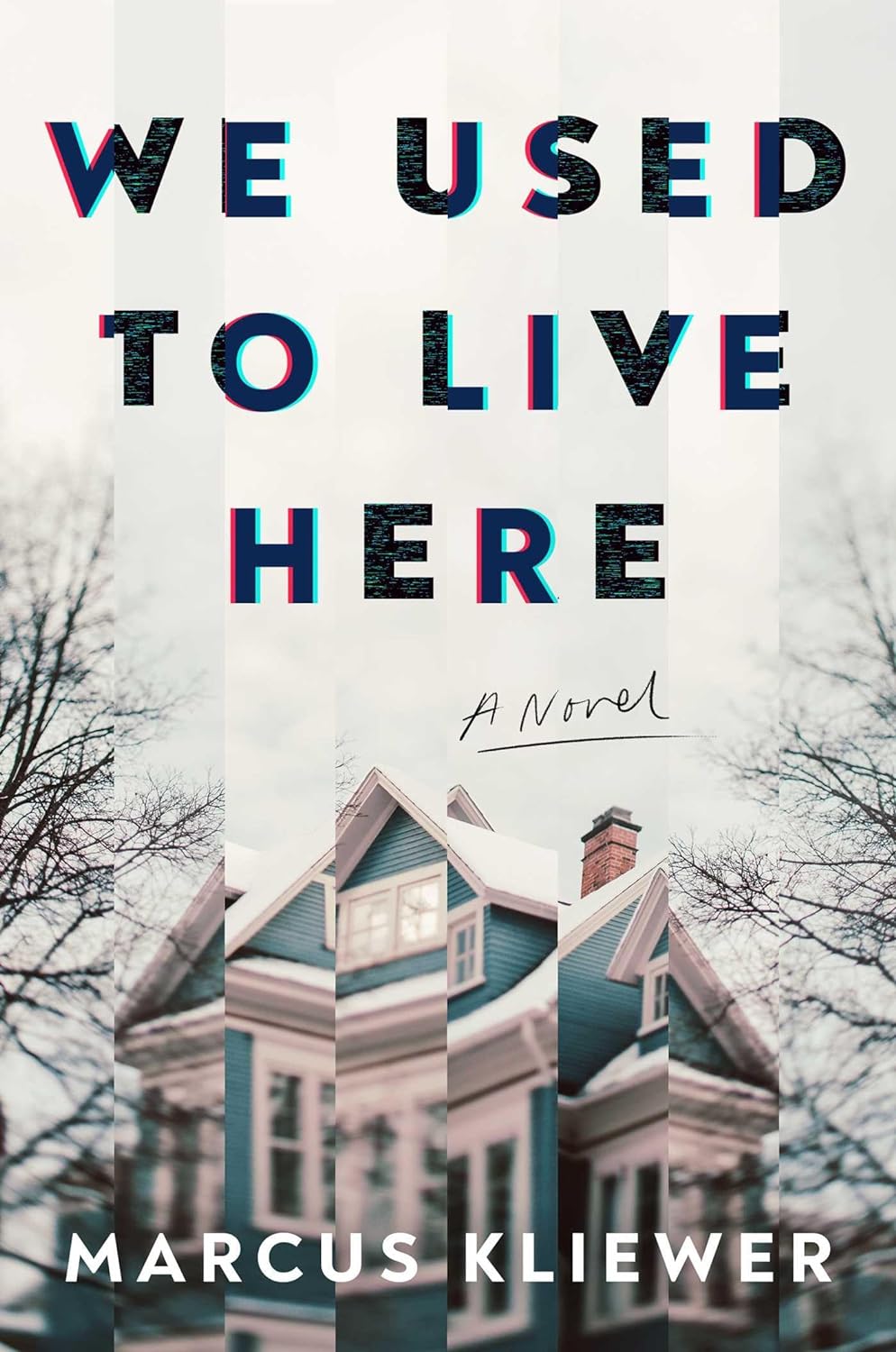
We Used to Live Here – Marcus Kliewer

Years ago, I started to watch the movie The Strangers and I couldn’t make it past the first twenty minutes. Totally creeped me out.

While I eventually did make it through the whole thing, I don’t think I’d ever be looking to repeat the experience. Except maybe in book form.

Marcus Kliewer’s novel We Used to Love Here began its life on Creepypasta. I have only had one other experience with a book with the same starting point: Pen Pal. Like that book, this one started off with a bang and ended with a bit of a whimper.

Eve and Charlie have recently purchased an old fixer-upper in a secluded location with the intent of either renovating or demolishing and rebuilding. Eve is home alone one evening when the doorbell rings. There’s a family on her doorstep and Eve concludes

All in all, they seemed the kind of brood that would cap a Sunday-morning sermon with brunch at Applebee’s. Eve was more than familiar with this crowd.

The father wants to know if he can bring his family in because he used to live in the house. Weird, right?

Eve is reluctant to let them in and so she plays the only card she has: she’ll check with her girlfriend because

The distant alarm bells of her subconscious rang out. She vaguely remembered hearing stories. Stories of strangers showing up at houses, claiming they had lived there once, asking to take a quick look around. Then, when the unsuspecting victims had let down their guard: robbery, torture, murder.

What starts as a relatively straightforward domestic thriller soon morphs into something completely unhinged. The family starts to seem less “off” and Eve starts to feel way more unreliable. And the house, yeah, the house is changing, too. “”The basement’s bigger that you’d think,”” Thomas tells Eve. “”Lots of nooks, crannies, places to hunker down.”” Similarly, the attic is labyrinthine. But this discovery, like the basement, is new to Eve – discovered only after the arrival of the family.

We Used to Live Here was certainly easy to read – but I found it sort of disjointed, especially as things went along. It wasn’t scary, although there were certainly some creepy moments. I didn’t finish it feeling satisfied, mostly because I wasn’t 100% sure I understood exactly what had happened. That may be my own fault rather than the book’s – so your mileage might vary.

The Sealed Letter – Emma Donoghue

I started reading Emma Donoghue’s 2008 novel The Sealed Letter at the start of September, in anticipation of our book club discussion on Sept 25. I figured it would take me a while because of the many pages (close to 400) and tiny font, so I wanted to leave myself a lot of time. I barely finished in time – and not because of either of the aforementioned reasons. I couldn’t read more than three or four page before I nodded off.

Emily “Fido” Faithfull is a business woman in 1860s London. She runs a printing press where she gives young woman an opportunity to make their own money. True, she hasn’t had any luck in love and is, at 29, a spinster, but she is a woman of independent means.

When the novel opens, she runs into Helen Codrington, a slightly older woman with whom she was once friends. Their friendship lost its way due to miscommunication, but now Helen and her husband, a ranking officer in the navy, are back in London and the two women begin to see each other again.

It isn’t long, though, before Fido is drawn into Helen’s extra-marital intrigue and I would like to say that that speeds things up, but it doesn’t. When Helen’s husband, Harry, a stiff older man, gets wind of his wife’s shenanigans and decides to leave her, Fido suddenly finds herself pulled into a court case (because divorces were settled in court with a jury and witnesses etc) which upends the life she had created for herself.

I would have definitely abandoned this book if it hadn’t been for the fact that it was a book club pick and I hate not finishing those. Although the writing was fine (although not really my cup of tea), I didn’t like Fido or Helen. I really could not have cared less about how things were all going to work out. For someone so smart, Fido sure was blinded by her affection for Helen who was manipulative and duplicitous.

The “sealed letter” of the title comes to play only near the end and is ultimately a disappointment. And while it’s alluded to throughout the novel (and the LAMBDA winning status is on full display), that aspect of the novel feels like a plot point.

If you’re looking for a historical page-turner, I recommend Fingersmith. This one is a no from me.

In the Wild Light – Jeff Zentner

Well, that’s three 5 star books for Jeff Zentner. There’s just something about the way he writes characters that breaks my heart and Cash Pruitt, the sixteen-year-old protagonist of In the Wild Light now joins the ranks of Dill (The Serpent King) and Carver (Goodbye Days) as one of my all-time favourites.

Cash lives with his Papaw and Mamaw in Sawyer, Tennessee. It’s a backwater town and Cash doesn’t imagine much of a future for himself even though it is a place he loves. His mother died of a drug overdose; he never knew his father, but his grandparents are just salt of the earth people.

Cash’s best friend is Delaney Doyle. They met at a support group for people with family members who are addicts. Delaney is a genius, and that’s not an overstatement. For Cash, tying to understand how her mind works “is like trying to form a coherent thought in a dream.”

When Delaney makes an important scientific discovery, it earns her a full ride at Middleford Academy, a fancy private school in Connecticut. Delaney has no reason to stay in Sawyer – and every reason to go – but she isn’t going without Cash. Cash isn’t sure he wants to leave his grandfather who has end stage emphysema.

Cash agrees to go with Delaney and it is a decision that changes his life. First of all, he makes friends with a Alex, a boy he meets on the rowing team. He develops a crush on Delaney’s roommate, Vi, and he takes a poetry class, and this experience (and the teacher, Dr. Adkins) blow his world wide open. She tells him:

“I have two intuitions about you. The first is that you’ve got in your hear that poetry has to be elaborate, and that’s what’s fueling your hesitancy.

[…]

Number two: that you’re someone who pays attention to the world around him.”

Dr. Adkins is not wrong. Cash notices everything: the way people smell, the way Delaney worries the skin on her thumbs, the way water looks. “Ever since I first became aware that the world contains mysteries and incomprehensible wonders, I’ve tried to live as a witness to them.”

In the Wild Light is a coming-of-age story about a kid who has had to grow up way too fast, who feels out of his depth, but who learns to trust himself. Like every Zentner book I’ve read, this one made me cry on more than one occasion.

Highly recommended.

The Spirit Bares Its Teeth – Andrew Joseph White

Andrew Joseph White (Hell Followed With Us) has written another amazing YA novel that feels especially timely given what is currently happening in the USA.

Sixteen-year-old Silas Bell, the protagonist in The Spirit Bares Its Teeth, wants to escape his future. In this version of 1883 London, the Speakers take what they want and what they want is to be married to violet-eyed girls. Except Silas isn’t a girl. That’s just biology. What he wants is to find a way to trick the system into giving him a spirit-work seal and then he hopes to slink off, and find a way to study medicine and become a doctor like his older brother, George.

But it all goes horribly wrong, and Silas is taken to Braxton’s Finishing School and Sanitorium, where the Headmaster and his wife turn young girls with “veil sickness” into women men will want to marry. Think conversion therapy, with ghosts. Because Braxton is haunted and as girls born with violet eyes have the ability to reach through the veil, it isn’t long before Silas realizes that something really horrible has been happening at the school.

Silas doesn’t have anyone to trust at Braxton’s, until she gets to know Edward Luckenbill, the young man to whom she is engaged. Is it just possible that Edward is not like the other men Silas has encountered?

You really only come to understand yourself by comparing other’s stories to yours; you find where things are the same, and where they’re not. … Its difficult when the story isn’t one the world wants to hear.

Silas is determined to find out what happened to some of the students that have gone missing, but it isn’t going to be easy and it’s definitely going to get bloody.

White has a remarkable imagination, but this book feels especially timely given the way the rights of marginalized people are being eroded. As Silas seeks to learn the truth about Braxton, he also comes into his own power and it is impossible not to root for him. If you haven’t yet discovered this author, I can highly recommend. You won’t read anything else like it.

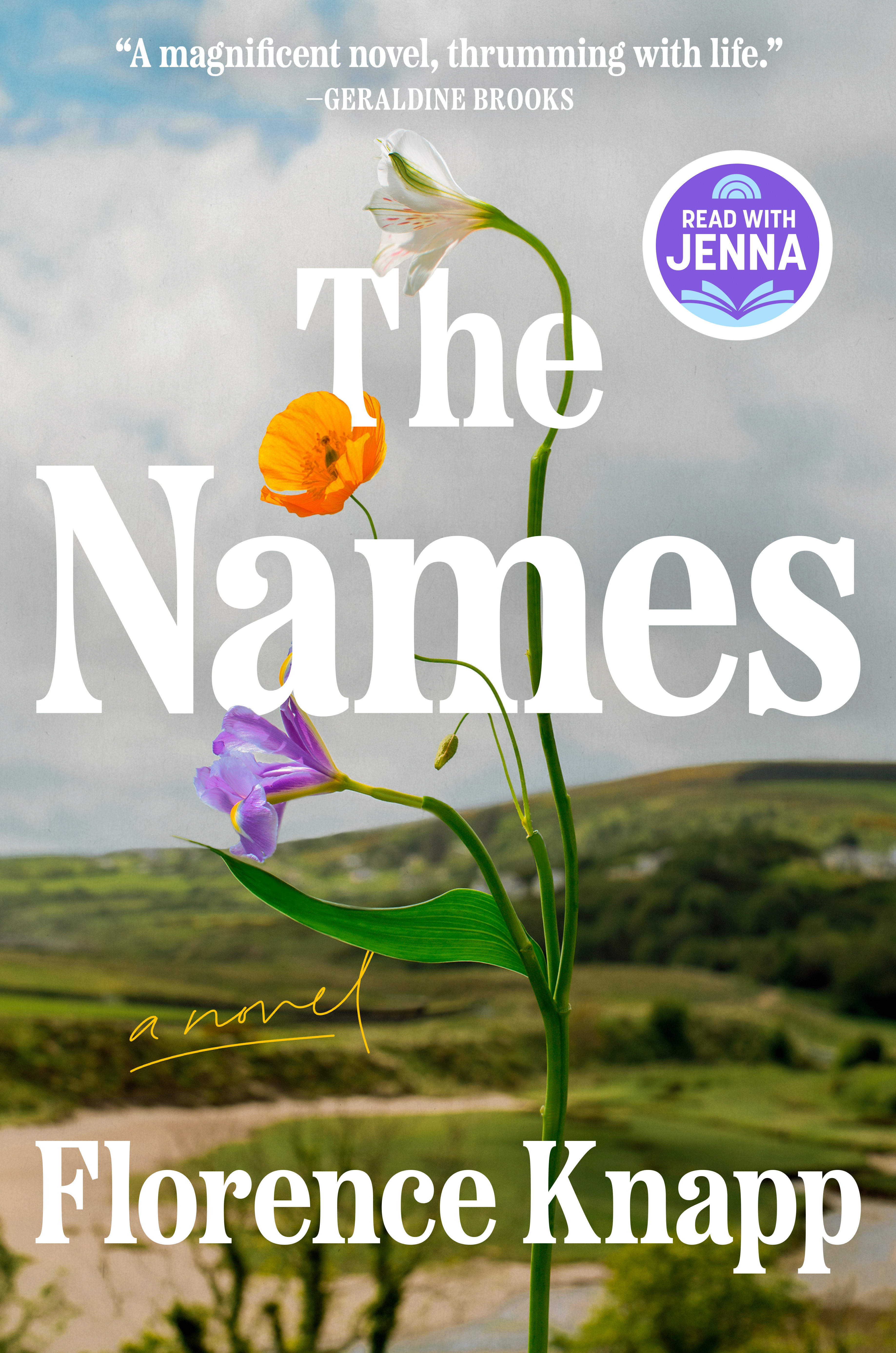
The Names – Florence Knapp

Cora has never liked the name Gordon. The way it starts with a splintering sound that makes her think of cracked boiled sweets, and then ends with a thud like someone slamming down a sports bag. Gordon. Bu what disturbs her more is that she must now pour the goodness of her son into its mold, hoping he’ll be strong enough to find his own shape within it.

This is Cora’s dilemma after the birth of her second child. She doesn’t want to name the baby after his father, a prominent, beloved doctor who is also a physically and mentally abusive husband. So, on the day that Cora and her daughter Maia, 9, walk to the registry office to officially register the baby’s name, they imagine other names instead of Gordon. Maia is fond of Bear because “It sounds all soft and cuddling and kind.” Cora is partial to Julian, which means “sky father.”

Florence Knapp’s novel The Names imagines the lives of these characters if the baby had been named Bear, Julian or Gordon – skipping forward at seven year intervals for thirty-five years. Who dos this little boy become and how does his name affect the people in his life?

I loved everything about this book, honestly. Although the author has written books previously, The Names is her debut novel and it’s a corker. I loved the glimpses into Bear/Julian/Gordon’s life, loved seeing what things were similar in each iteration an what things were vastly different.

But the novel is not just concerned with his life. We are also privy to Cora’s story, her early courtship with Gordon, her upbringing in Ireland, and what becomes of her in each of these scenarios. Maia, too, gets her story.

What’s in a name? Turns out, quite a lot. Highly recommended.

Save Me – Mona Kasten

Not gonna lie, the only reason I read Mona Kasten’s novel Save Me (Maxton Hall #1) was because of this

I watched the series on Prime when it first came out and despite the fact that it’s dubbed (from German) it is a swoon worthy masterpiece of teen angst. Damian Hardung (James Beaufort) says more with his eyes than practically any actor I have ever watched.

At the time the first season of the the series came out, the book was not yet available in English. It finally came out this summer and I just finished reading it.

Ruby Bell (played by Harriet Herbig-Matten, also a terrific actor) is a scholarship student at the prestigious private school Maxton Hall. Her dream is to attend Oxford (the story is set in England), and she is smart enough and driven enough to make this happen. She has spent the last two years keeping her head down; she doesn’t really have much in common with most of the uber rich students that attend Maxton Hall anyway.

James Beaufort and his twin sister, Lydia, are part of the upper upper crust. James is heir to the Beaufort company, which makes exclusive menswear and is worth billions. He’s a really good looking jerk. One day, Ruby sees something she wasn’t meant to see and James tries to bribe her to stay quiet. Thus begins their enemies to lovers journey.

I loved every single second of the series. I enjoyed how buttoned down Ruby was – she colour codes her life and is so determined to achieve her dreams. She is principled and kind. James is, on the surface at least, an egotistical jackass who doesn’t have to work hard for anything because of his parents’ money. But there is much more to him than meets the eye, which is why ultimately you root for these two to get together.

The book, sadly, doesn’t add anything to the series. It was nice to picture the characters as they are portrayed on the screen, but I found the book sort of lackluster, tbh. Ruby comes across as sort of ditzy and none of James’s inner turmoil is developed in a meaningful way. The series does a great job of portraying Ruby’s relationship with her family, and that was missing from the book. Some of my favourite scenes in the series are missing from the book.

I didn’t have as many problems with the fact that this is a translation. I often find dialogue stilted, but since this was translated by a British translator, that helped. But where I found so many conversations in the series impossibly angsty and romantic – the book was devoid of this. The one sex scene was kind of insert a into b, whereas on screen it was all the things.

Season 2 comes out on Prime November 7. The second book in the series is out now in English, but I doubt I will be reading it.

Broken – Daniel Clay

It’s hard to ignore the similarities between Daniel Clay’s 2008 debut, Broken, and Harper Lee’s 1961 Pulitzer winner To Kill a Mockingbird. For example, in Clay’s novel, the residents of a small suburb in the south of England, Hedge End, are people like single-father solicitor, Archie, and his children, Jed and Skunk (aka Atticus Finch and his children, Jem and Scout). Across the square lives single dad Bob Oswald (Bob Ewell), an unemployed thug whose council house backs onto a dump. Rick Buckley (Boo Radley), a shy awkward 19-year-old disappears into his house one day and is never seen again. Then there’s Dillon (Dill), a gypsy, who briefly enters Skunk’s life.

In the notes at the back of Broken Clay says “I don’t think my characters and plot resemble To Kill a Mockingbird [but] I really can’t stress enough that I would never have sat down to write Broken had I not read To Kill a Mockingbird.”

I am not sure I totally agree with Clay’s assertion that his plot and characters don’t resemble Lee’s. It was pretty obvious to me even before I read the notes at the back of the book. Even the structure is similar; the book begins with something horrible having happened to one of the characters and then circles back around to that event, filling in all the details. But plot structure and character similarities aside, Broken more than holds its own.

Skunk and Jed have an okay life with their father. Skunk is a keen observer of the people around her. She watches on the day that 19-year-old gets beaten by Bob Oswald because one of Bob’s daughters told him that Rick had raped her. Rick is never quite right after that and earns the nickname “Broken.” Of course, he is not the only broken character in the book. The Oswalds are broken, too. The other children in the neigbourhood live in fear of the older Oswald girls who steal lunch money and threaten physical violence if their victims don’t comply. Skunk’s teacher, the handsome Mr. Jeffries, is Skunk’s live-in babysitter Cerys’s former boyfriend. Skunk is pretty sure he’s the smartest person on the planet and if nothing else, he makes learning interesting. Then he runs afoul of Bob Oswald, too.

Broken is really about how all these characters’ lives intersect in ways that are often humourous, but also devastating. The writing is fresh and evocative. It is hard not to fall in love with some of them and easy to loathe others. While I wasn’t a huge fan of the ending, I really enjoyed my time in Hedge End.

Count My Lies – Sophie Stava

Time is running out on my summer break; I head back to my classroom on August 25. So it’s back-to-back thrillers for me.

Sloane Caraway is a compulsive liar. Always has been from the time she was a kid and when her life (single mom, constant moves) didn’t suit her, she just made up a better version for herself. Now she’s in her early 30s living in a two bedroom apartment with her mom in Brooklyn, working as a nail technician. One day in the park, she rushes to the aid of a father whose daughter has been stung by a bee. She starts by telling the father, Jay Lockhart, that she’s a nurse. Then, she adeptly handles the crisis, earning the father’s gratitude. When he asks her name, she lies about that, too.

The first part of Sophie Stava’s debut, Count My Lies, follows Sloane as she finds herself pulled into the Lockhart’s orbit. Jay’s wife, Violet, is perfect and Sloane finds herself wanting to be like her. Their daughter, Harper, it turns out, is in need of a nanny and suddenly Sloane finds herself with a new job and, she hopes, a new friend.

But, of course, things are not as they seem. Sloane outs herself as unreliable from the get go, but about half way through, the book switches perspectives and we find ourselves seeing things from Violet’s point of view. It turns out, Violet is lying, too.

Count My Lies isn’t exactly original, but let’s face it — with so many domestic thrillers on the market these days, you’d be hard pressed to find one that doesn’t remind you of something else. I don’t think my issues with this book have anything to do with the plot, I mostly just didn’t care about the characters. I think we’re supposed to like Sloane and Violet, but I didn’t really understand what motivated either of them. Well, we’re told why Violet makes the choices she does, but none of it felt real. By the time we get to her part in the story, the narrative feels more like plot points being clicked together like Lego pieces.

As for Jay, he gets his own section of the book too, but generally he is a non-entity – just a dude who is “handsome in an obvious, teenage heartthrob sort of way.”

Look – if you don’t read a ton of thrillers, you would probably have a good time with this book. It was just okay for me.

Don’t Let Him In – Lisa Jewell

Pretty much any book by British author Lisa Jewell is a guaranteed slump buster. While I haven’t always loved every book I’ve read (and I’ve read several: None of This is True, The Family Remains, The Night She Disappeared, Invisible Girl, The Family Upstairs, Watching You, I Found You, The Girls in the Garden), every single one of them has been an entertaining, fast-paced read. Jewell’s latest novel, Don’t Let Him In, is no exception.

Ash Swann’s life has taken a bit of a turn. Her father has recently died, she’s had a bit of trouble at work, and she’s moved back home to recover from both of these traumatic events. That’s when Nick Radcliffe enters her life– well, her mother’s life. He reaches out to the Swanns after her father’s death and before you can say “to good to be true” he has insinuated himself into their lives.

Martha and her husband Alistair live a quiet life with their three children. Martha has a thriving florist business, and Al has a busy job in the hospitality industry where “Sometimes he’s home all the time, other times they call him in at the last minute and he’s away for days.” Martha forgives him time and again because she never imagined that as a forty-four-year-old divorcee she’d meet someone like Al.

There’s a third voice in the book, this one belonging to a male character and set four years in the past. He’s very forthcoming about his marriage to an older woman, Tara, whose adult children disapproved of the union. Tara’s daughter, Emma,

doesn’t like me at all. Neither of Tara’s children does. I don’t care too much about that. I can’t say I particularly like them either. I don’t need to like them, and they don’t need to like me. The most important thing, the key to everything, is that my wife trusts me. And she does. Implicitly.

Careful readers will have no trouble figuring out how these three separate narratives and timelines connect. The fun in this story is really in watching women band together – spearheaded by Ash – to out a snake in the grass. Does it strain credulity? Yes. Did that matter? No. Don’t Let Him In is a fun time and I gobbled it up in just a couple sittings.