My Brilliant Friend -Elena Ferrante

A former student, someone for whom I have a lot of respect and admiration, encouraged (aka begged) me to read Elena Ferrante’s novel My Brilliant Friend, a book that was recently named #1 Book of the Century by the New York Times. I didn’t own the book and I don’t know whether I would have ever gotten around to reading the book given the state of my physical TBR pile, but I was next up for book club and so I chose this one, mostly in deference to Luke. Despite the fact that it was published in 2012 and is relatively popular (and has its own series on Prime), none of the members of my book club had ever read it.

This novel is the first of a quartet by the famously private Ferrante. Apparently, no one actually knows who she is, so the author’s name is actually a pseudonym, and since we don’t know very much about her, claims that My Brilliant Friend is autofiction is also an unfair characterization. How can we say the events of the novel are drawn from the author’s own life if we don’t know anything about her? Or him? Whether or not who the author is makes any real difference is beside the point at any rate.

Luke loved it. Two of the women in my book club of eight didn’t finish it. Three women loved it. (My best friend, Michelle, is on book three and has already watched the entire series.) Two women hated it (one of these is one of the DNFers). And two of us (myself included) felt just meh about it.

In a nutshell, the novel opens when 60-something Elena (also known as Lenu) receives a phone call from Rino, the adult son of her oldest friend, Lila (also known as Raffaella or Lina). Lila is missing. Poof. Vanished. This news seems unsurprising to Elena even though “it’s been three decades since [Lila] told [her] that she wanted to disappear without leaving a trace.”

Elena seems annoyed by the news and she doesn’t offer Rino much in the way of comfort. Instead she thinks

I was really angry.

We’ll see who wins this time, I said to myself. I turned the computer on and began to write– all the details of our story, everything that still remained in my memory.

And that’s essentially what My Brilliant Friend is, the written account of the friendship/rivalry love/hate relationship between these two girls beginning in the 1950s, in a neighbourhood outside of Naples, Italy. It’s the story of poverty, crime, the power of education, loyalty, family and friendship.

This is what Luke said:

“I loved the portrayal of friendship and how central it was to forming them into who they are. I loved the background setting of Naples and how poverty is corrupting everyone’s life. All of the characters come alive for me and I find her such an incredibly powerful writer. I was so invested in Lila and Elena’s relationship. […] I think she’s a beautiful writer telling a wonderful story…”

Luke and I talk about books whenever we have the chance. When he was in my Young Adult Lit class he read more than anyone and he read widely. If I talked about a book I really loved, chances were pretty high that he would read it. So it hurt me a little bit not to love this book as much as he loved this book. For me, I found it sort of slow and dry and although the friendship between the two characters was well-drawn, I didn’t especially care about either of them. I certainly feel no compulsion to carry on with the books, although I may watch the series this winter.

The New York Times compiled their Top 100 books by asking 503 literary luminaries to provide their list of all-time best books based on the following criteria: impact, originality and lasting influence. It’s an interesting list which demonstrates just how subjective a ‘best books’ list can be. Number 2 was The Warmth of Other Suns, a book I have never heard of by an author I have never heard of. Kazou Ishiguro’s Never Let Me Go barely made the top ten. Atonement by Ian McEwan was #26. 26!!! Both my children would say Atonement is one of the best books ever written…and I would agree. Donna Tartt’s The Goldfinch, which won the Pulitzer (although not without controversy), came in at #46. Station Eleven was #93.

I tasked the ladies in my book club to pick their top three books of all time based on the criteria provided by the Times. We’ll share those Top 3 lists at our next meeting and with their permission, I will share them with you here after we meet.

The fact that no one reads the same book is one of the best things about reading, but I am sad that I didn’t love My Brilliant Friend more than I did. Sorry, Luke.

The Serpent King – Jeff Zentner

The Serpent King by Jeff Zentner has been in my classroom library for ages, but a friend on Litsy recommended I read it based on some other recent books I have read and enjoyed (Shiner, Midnight is the Darkest Hour).

No question – The Serpent King will be in my Top Ten books of the year. It’s a five-star read.

Dill, Travis and Lydia live in Forrestville, Tennessee – a backwater, Bible belt town near Nashville. In their senior year of high school, the three are each other’s besties. Actually, they are each other’s only friends.

Dill Early is the son of a disgraced preacher, currently serving time for possessing child pornography. He and his mother live in abject poverty, buried under the weight of the debts which have piled up due to the senior Early’s incarceration and a car accident which has left Dill’s mother suffering from chronic pain. Dill worries constantly about his faith, his future, and his unrequited feelings for Lydia.

Travis Bohannon is a 6’6″ dork. He “wore a necklace with a chintzy pewter dragon gripping a purple crystal ball” and often carried a staff and a battered copy of a book from the Bloodfall series. He belonged to the same church as Dill – back before Early sr. was arrested – and that’s where the two became friends. Travis’s older brother Matthew had been killed in the Middle East and the loss of his older brother had soured Travis’s father even more towards Travis. He is a truly odious human.

Lydia Blankenship runs a successful fashion blog called Dollywould, named after one of her sheroes, Dolly Parton. She takes crap from no one, but she is often the target of the school bullies, who poke at her for everything from her appearance to her Internet success. Every time she claps back against the asshats in her school, I just wanted to high-five her. Lydia is different from Dill and Travis though in that she lives in a nice house (her father is the town dentist) and her parents support her dreams. Her parents are also two of the only adults in this novel I actually didn’t want to run over with my car. Lydia speaks her mind and she wants more for her friends, particularly Dill.

So, it’s their last year of high school. Time to start thinking about the future. Lydia’s life is planned. She has a list of schools she’s gunning for; NYU at the top of the list. Travis intends to stay in Forrestville and work at the family lumber yard. Dill’s mother wants him to work full time at the grocery store and help pay off the family debt. In fact, she’d be just as happy if he quit school now and went straight to work.

I cannot tell you how much I loved these three teenagers. Their dreams (or lack thereof), their insecurities, their successes, their complicated family dynamics and, most of all, their love for each other. These characters are so heartbreakingly human that when tragedy strikes, it rips your heart out.

When I think about the qualities of a five star book, I am looking for a great story, great writing, realistic characters. Icing on the cake is a book that makes me laugh – which I did. Sometimes these characters, particularly Lydia, say amusing, quippy things. The needle goes up a notch – don’t ask me why – if a book makes me cry. The Serpent King definitely made me cry.

Growing up is hard enough without having all the cards stacked against you. I have never hoped for the wellbeing of characters, particularly Dill and Travis, more than I did in this book. That this is Zentner’s debut is astounding. It’s a knockout.

Highly times a thousand recommended.

Brother – David Chariandy

New-to-me Canadian writer David Chariandy’s novel Brother is an elegy to family. Published in 2017, this novel topped all the Best Of lists and won a Writers’ Trust of Canada award, as well as being nominated for the Giller. I have had it on my TBR shelf for several years, and in an attempt to tackle some of my backlist, I finally read it.

Michael and his older brother Francis live with their Trinidadian mother in The Park, a “cluster of low-rises and townhomes and leaning concrete apartment towers” – a not-so-nice suburb of Toronto. Their father is long gone.

When the novel opens, Michael is meeting with his friend, Aisha. They haven’t seen or spoken to each other in a decade and her arrival opens Michael up to the trauma of an event that transpired many years ago – one that he and his mother have never gotten over. This tragedy is alluded to early on in the book, but I’ll be vague about it here.

Brother toggles back and forth between Aisha’s return – which dredges up the past – and the past itself.

Francis was my older brother. His was a name a toughened kid might boast of knowing, or a name a parent might pronounce in warning. But before all of this, he was the shoulder pressed against me bare and warm, that body always just a skin away.

Francis and Michael are close, especially as young boys when they are often left to fend for themselves as they are left alone while their mother works. Their mother worked as a cleaner, and often took on extra work to try to make ends meet.

She was never happy about abandoning us, and if she learned the evening before of an impending night shift, she would spend precious sleep time cooking and worrying over the details of meals and activities for the following day.

Chariandy captures the poverty, violence, and hopelessness of the lives of the people who live in The Park, but he also captures the sibling bond, the friendships and the hope for a better future. I particularly admired the subtlety of Francis’s relationship with Jelly, a wannabe DJ.

When Aisha arrives back at The Park, she tries to unclog the grief Michael and his mother have been stifled by for many years. And by allowing Michael to finally tell his story, perhaps she has succeeded.

Beautiful writing and a timely story about police violence and the immigrant experience make Brother worth checking out.

Small Things Like These – Claire Keegan

Irish writer Claire Keegan seems to be having a moment these days, at least in the bookish circles in which I travel. Her novella Small Things Like These was shortlisted for the 2022 Rathbones Folio Prize, awarded for the finest work of literature published in English, and it won several other awards including the Kerry Group Irish Novel of the Year.

At just over 100 pages, the story follows Bill Furlong, “the coal and timber merchant” as he goes about his daily rounds in New Ross. It is 1985, in the weeks leading up to Christmas, and Bill, married father of five daughters, is in an introspective mood. He is aware of his humble beginnings: “Furlong had come from nothing” and he is also aware of his relative success – he owns his business and is able to provide for his family and he feels “a deep, private joy that these children were his own.” He is aware that in some ways he is an outsider: his mother was an unwed teen and he grew up in a large house under the care of his mother’s employer, Mrs. Wilson, a widowed Protestant. He doesn’t know who his father is. He thinks about this sometimes as he also considers the daily grind of life, but ultimately Furlong seems to be a glass half full sort of bloke.

Before long, he caught a hold of himself and concluded that nothing ever did happen again; to each was given days and chances which wouldn’t come back around. And wasn’t it sweet to be where you were and let it remind you of the past for once, despite the upset, instead of always looking on into the mechanics of the days and the trouble ahead, which might never come.

A delivery to the local convent shakes something loose in Furlong, though. He grapples with what makes someone good and how can one be truly good if they turn a blind eye.

Small Things Like These is a essentially about one good man’s defiant act. It is a quiet, beautiful novella.

Mayflies – Andrew O’Hagan

I had no real expectations going into Andrew O’Hagan’s 2020 novel Mayflies, but even if I had know what I was getting myself into, my reading experience would have exceeded all of them.

The novel opens in 1986 and the narrator, James, and his best friend, Tully, are just finished secondary school. They live in Glasgow and things aren’t easy for them. James’ father “wandered off in search of himself” and his mother “decided that the life of a single mother was not for her, and flitted to Arran.” He spends a lot of time at Tully’s house.

James admires Tully.

Other guys were funny and brilliant and better at this and that, but Tully loved you. He had the leader thing, when he was young, the guts of the classic frontman, and if any of us got together we instantly wanted to know where he was.

The first part of the novel focuses on one weekend when James, Tully and some of their other friends, travel down to Manchester to a music festival. It’s a weekend of total debauchery, as you might imagine when a group of young lads get together. I was in my 20s in the 1980s – and big into British music because I had a boyfriend from England – and so I loved all the pop culture references. The bands playing the festival included Orchestral Maneuvers in the Dark (which they trash, but which I recall liking) and The Smith (whom I didn’t appreciate then, but do now).

What we had that day was our story. We didn’t have the other bit, the future, and we had no way of knowing what that would be like. Perhaps it would change our memory of all this, or perhaps it would draw from it, nobody knew. But I’m sure I felt the story of that hall and how we reached it would never vanish.

Tully and James also quote movies back and forth at each other and engage in the silly banter you might expect from boys their age, but they also talk meaningfully about James’ missing parents, Tully’s strained relationship with his father, and the politics of the day. Theirs is a true and profound relationship, which makes the second part of this novel even more poignant.

Flash forward to 2017, when James receives a call from Tully. I’ll leave it at that. The second half of the book is a love letter to the friendship and shared memories between the two men and it is utterly beautiful. In fact, I found the whole book just, well, truly heartbreaking.

They say you know nothing at eighteen. But there are things you know at eighteen that you will never know again. Morrissey would lose his youth, and not just his youth, but the gusto that took him across the stage with a banner saying ‘The Queen Is Dead’ is a thing of permanence. We didn’t know it at the time, but it was also, for all of us, a tender goodbye, and we would never be those people again.

For anyone who has more behind them than ahead of them, this book will certainly speak to the person you were, the memories and the people you shared the journey with. But even for a young person, this book will surely resonate. I found it deeply moving and cried on more than one occasion.

Highly recommended.

Demon Copperhead – Barbara Kingsolver

I might have never gotten around to reading Barbara Kingsolver’s Pulitzer Prize winning novel Demon Copperhead if it hadn’t been chosen for our book club. Like A Little Life , the book seems to be pretty divisive. I hated that book; I did not hate this one.

“First, I got myself born,” says Demon, mimicking Charles Dickens’ classic David Copperfield in which the titular narrator says “To begin my life with the beginning of my life, I record that I was born…” in the book’s opening paragraph. Kingsolver thanks Dickens in her acknowledgement and her novel definitely owes a debt to him.

Born Damon Fields to a teenage mother with few prospects, Demon survives poverty, his mother’s addictions, and physical abuse at the hands of her boyfriend, Stoner, mostly because he lives next door to the Peggots and their grandson, Demon’s best friend, Maggot. (Yes, there are a lot of weird names in this book, but they correspond to names from Dickens’ novel.) The Peggots’ home in rural Virginia was “a place where things got put where they went.” The Peggots were de facto grandparents to Demon, Mrs. Peggot making sure that “she played no favorites: same Hostess cakes, same cowboy shirts she made for both of us with the fringe on the sleeves. Same little smack on the shoulder with her knuckles if you cussed or wore your ball cap to her table.” For this reason, with the exception of his mother having difficulty staying sober, Demon would probably say that he had a wonderful childhood, until he didn’t.

Forced into the foster system at age 11, Demon’s life deteriorates and I won’t spoil the ups and downs of his journey to adulthood because those details are the meat and potatoes of his story. Let’s just say that I was wholly invested until about the midpoint of the story (which clocks in at 546 pages).

I was happy to spend time with Demon. I enjoyed his ‘voice’ and admired his resilience in the face of tremendous adversity. I shared his minor victories and bemoaned his poor choices and bad luck. I didn’t 100% believe all of it. He was lucky and unlucky in equal measure and despite having a really solid supporting cast, he still didn’t always make the best choices. That’s probably to be expected, though, as he’s young and young people do stupid things even when they acknowledge that they are stupid.

Kingsolver has lots of opinions on capitalism, pharmaceutical companies, education, the foster system, rural life and readers will certainly be aware when didactics trickle into fiction. It doesn’t interfere, per se, although sometimes it’s pretty obvious when her point of view wants to take center stage.

I am not sure when I stopped being 100% invested in his story. I will say that I really didn’t like the ending of the book. I will also say that I had zero trouble turning the pages even though Demon’s story was generally grim. He is a memorable character and I was invested in his survival.

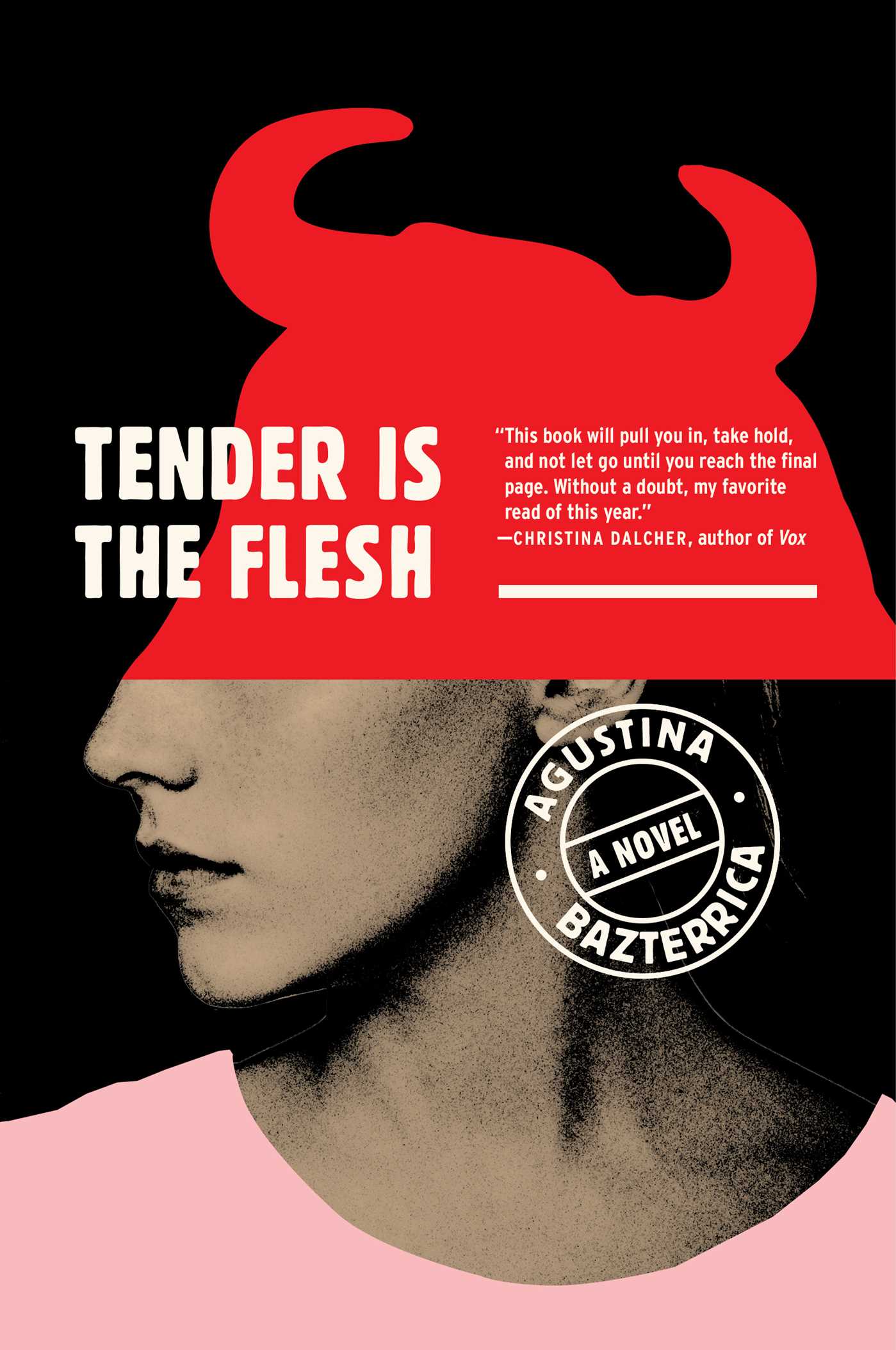
Tender is the Flesh – Augustina Bazterrica

I mean, there are dystopian novels and then there’s Tender is the Flesh.

Marcos Tejo’s life has fallen apart. His father has dementia and is existing in assisted living. His wife has had an emotional breakdown and has left to stay with her mother after the death of their infant son. Oh, yeah, and a deadly virus – well, that’s what the government claims anyway – has made it impossible to eat animals, so everyone now eats humans. That, of course, helps with population growth too, so it’s a win win.

People are specially bred as meat and Marcos works at one of the country’s best slaughterhouses.

No one can call them human because that would mean giving them an identity. They call them product, or meat, or food. Except for him; he would prefer not to have to call them by any name.

Bazterrica’s book is all kinds of ick. In scene after scene, we are treated to graphic descriptions of how this “special meat” is treated. And trust me when I say, it’s not good. It will be impossible not to imagine how the animals we eat every day are treated, and if there ever was a case for veganism, this book would be it. But, according to the scientists in Tender is the Flesh,

animal protein [is] necessary to live [and] doctors confirmed that plant protein didn’t contain all the essential amino acids, [and] experts assured that methane emissions from cattle had been reduced but malnutrition was on the rise, [and] magazines published articles on the dark side of vegetables.

When Marcos is gifted an F.G.P. (First Generation Pure) “head” to consume, his ambivalent feelings – which he mostly keeps buried – come to the surface. Once he cleans her up and discovers she’s beautiful he moves her from the barn to the house and one thing leads to another. The head can’t talk, of course; their vocal chords are removed – the killing is less noisy that way – so I guess their relationship is based on a needs must basis.

I mean, sure, I guess Tender is the Flesh has stuff to say, but Marcos is a hard character to warm up to. And you have to wade through a bucket of entrails and other gruesome stuff to get there. You’d kind of hope that Marcos would have some sort of epiphany or something, but this book is bleak start to finish.

And also. Yuck.

The Song of Achilles – Madeline Miller

Madeline Miller’s Orange Prize winning debut The Song of Achilles is one of those books that, for a while at least, everyone was talking about. I watched a student in my Young Adult Literature class gasp and weep while reading the book. I just knew that I had to get to it over the summer.

Miller reimagines Achilles’ story through the eyes of Patroclus, a son of King Menoetius. In telling the story of his birth and younger years, Patroclus says

Quickly, I became a disappointment: small, slight. I was not fast. I was not strong. I could not sing. The best that could be said of me was that I was not sickly.

When Patroclus is nine, he commits an act of violence that exiles him to Phthia, and the care of King Peleus who was “one of those men whom the gods love: not divine himself, but clever, brave, handsome, and excelling all his peers in piety.” Peleus is father to Achilles. Even if you know nothing about Greek mythology, you’ll likely know Achilles.

Despite Patroclus’s dim view of himself, Achilles finds Patroclus “surprising” and the two become fast friends.

Our friendship came all at once after that, like spring floods from the mountains. Before, the boys and I had imagined that his days were filled with princely instruction, statecraft and spear. […] One day we might go swimming, another we might climb trees. We made up games for ourselves, or racing and tumbling. We would lie on the warm sand and say, “Guess what I’m thinking about.”

It’s not long before Achilles is all that Patroclus is thinking about, and then the two become lovers – which was not a big deal during the time and may or may not be historically accurate. According to Wikipedia, “The relationship between Achilles and Patroclus is a key element of the stories associated with the Trojan War. In the Iliad, Homer describes a deep and meaningful relationship between Achilles and Patroclus, where Achilles is tender toward Patroclus, but callous and arrogant toward others. Its exact nature—whether homosexual, a non-sexual deep friendship, or something else entirely—has been a subject of dispute in both the Classical period and modern times. Homer never explicitly casts the two as lovers,[1][2] but they were depicted as lovers in the archaic and classical periods of Greek literature, particularly in the works of AeschylusAeschines and Plato.”

Miller’s story follows the two men as they go off to the Trojan war, where Achilles grows into the revered warrior it is prophesized he would become.

Of course, there’s a tragic ending for our characters – as we know going in there will be. How emotional you feel about what happens will depend on how much you care about these characters and how invested you are in their love story. I felt sort of ‘meh’ about the whole thing, to be honest.

This is a book for die-hard fans of re-tellings and Greek mythology, but I think for anyone who is looking to dip their toe into the incredibly rich water of the Greek myths, this is as good a place to start as any. Just not my thing.

You Made a Fool of Death with Your Beauty – Akwaeke Emezi

Akwaeke Emezi’s novel You Made a Fool of Death with Your Beauty is not the book I thought it was going to be. What did I think it was going to be? Hmmm. Good question. Given the accolades (NYT Notable Book, NCAACP Image Award for Outstanding Literary Work) and positive reviews, I thought I was going to get a relatively serious story about overcoming grief…with a side of romance. What I got was a straight-up romance novel ripped from the Erotica 101 handbook. And there’s nothing wrong with that, if that’s your thing…but it’s not really the sort of book I am interested in reading anymore. That’s on me, not on Emezi.

Twenty-nine year old Brooklyn-based visual artist Feyi Adekola is still grieving the tragic death of her husband, Jonah. It’s not something she likes to talk about; it was “an easy secret for Feyi to keep,” but she’s been stuck in this endless cycle of grief for the last five years. Her BFF Joy thinks it’s time she got back out there, and that’s how she meets Milan and then his friend, Nasir.

There’s an immediate connection between between Feyi and Nasir, and Feyi “felt like she was in the path of something, but she wasn’t sure what.” Still, she’s reluctant to move too quickly, and Nasir suggests that they be friends first, which suits her fine. A few weeks into the relationship, Nasir invites Feyi to fly to his family home in the Caribbean. Through his connections, he’s secured her a spot in a gallery show and besides, his father and sister live there and she could get to know them. It isn’t until they are on the plane that Nasir reveals that his father is Alim Blake, a celebrity chef with two Michelin stars.

As soon as Feyi sees Alim she feels, “a twinge of attraction unfurling in her stomach.” She can barely meet his eyes, let alone be in the same room with him. She and Nasir are not sleeping together, and it’s clear once she meets Alim that they never will.

You Made a Fool of Death with Your Beauty leans into familiar romance conventions. Releasing breaths characters didn’t know they were holding and men commenting on how tight the women are — that sort of thing. There was one scene that actually made me burst out laughing. Feyi apparently didn’t know what julienning meant and…this is where my 24-year-old son said, “No, tell me he didn’t stand behind her and put his hands over hers to guide them!” He’s definitely not a romance reader, but he saw that one coming a mile away. So, yeah, this book is filled with the requisite romance writing quirks. Beautiful people in a beautiful setting eventually having beautiful, mind-blowing sex.

Perhaps I am cynical about romance now, but I am not sure that’s it. Alim and Feyi have a connection because Alim is also widowed, although his wife died 20 years ago. And sure, they talk about their loss and the impact it’s had on their lives, but mostly this is a book about Feyi wondering whether this thing she feels is real. Nasir soon becomes a bit player in the story because the heart wants what it wants.

I guess I like my romances to be a little less ripped from the Romance 101 playbook. More The Paper Palace than well….most of the spicy romance book on BookTok these days. That said, I suspect that loads of people will love this book. It wasn’t my cup of romantic tea, but I doubt I’m the book’s intended audience.

Lessons in Chemistry – Bonnie Garmus

I don’t know what it is about hyped books, but I rarely like them as much as everyone else does. It probably says more about me than it does about the book, really. Everyone and their dog loved Bonnie Garmus’s novel Lessons in Chemistry and I was actually looking forward to reading it when it was chosen for my RL book club. Sadly, it just wasn’t for me.

The novel is about Elizabeth Zott, a brilliant woman who is a chemist without the credentials because she was forced to leave her program after being sexually assaulted by a lecherous professor. It’s the sixties and there is no recourse for her. When she files a complaint, the cops ask her if she would “like to make a statement of regret” for defending herself. It’s the 60s and that’s the world Elizabeth is living in.

When the novel opens, Emily Zott is working as the host of a cooking show called Supper at Six. She is not a natural in front of the camera and she certainly won’t play the games demanded of her by the studio execs including smiling a lot and wearing tight fitting clothes. She does, however, tap into something women seem to want: someone who sees them and understands them.

You’d never find Elizabeth Zott explaining how to make tiny cucumber sandwiches or delicate souffles. Her recipes were hearty: stews, casseroles, things made in big metal pans. She stressed the four food groups. She believed in decent portions. And she insisted that any dish worth making was worth making in under an hour.

The novel unravels Elizabeth’s story backwards from this point. We learn how she ended up, a single mother, in front of the camera. We watch as her relationship with Calvin Evans, a brilliant and award-winning chemist unfolds, from its antagonistic meet cute to its tragic ending. We watch as she struggles to be taken seriously in the man’s world of science. We watch her teach her dog, Six-Thirty, to understand human words.

Lessons in Chemistry is a book crammed with characters and ideas and lessons about chemistry equality, but none of it is subtle. The narrative isn’t just Elizabeth’s, either. We get to hear about Calvin and his personal tragedies. We even get to hear from the dog. Yep. This book tried so hard to be funny, but mostly I just rolled my eyes at how unbelievable these characters were. The ideas are sound; the delivery not so much.

I wanted to like it, but I just didn’t.