Please See Us – Caitlin Mullen

Caitlin Mullen’s debut novel – and Edgar Award Winner – Please See Us is well written, but it took me forever to read. I don’t know: is that a bad thing?

Twenty-something Lily has run away from NYC and a messy breakup with about-to-be-famous sculptor Matthew and landed back home in Atlantic City. She needs a job but “it was unsettling to be in Atlantic City again — coming home had filled [her] with an inarticulate dread.” She takes a job as a receptionist at a hotel spa, a job she doesn’t want but needs if she wants to get back to her life, a new life, in New York.

Ava, aka Clara Voyant, is a teenager who reads tarot cards and palms on the strip. She lives with her aunt, Des, above the shop. They’re behind on their rent and Ava lives with the dream of saving enough money to join her mother in California. When the novel opens, Ava reads the cards of a man looking for his niece, Julie. Ava has seen the missing posters around town, but she doesn’t want to mislead the man.

I didn’t want to disappoint him with the truth: what I saw was limited, out of my control. I couldn’t just call up information from the universe as easily as plugging a question into a Google search.

Ava and Lily’s paths cross and soon they are working sort of together to find out what has happened to the missing girl who, turns out, is one of several missing girls. Of course, the reader will already know that the outcome of the man’s search probably won’t be good. The novel’s opening lines tell us that “By the second week of June, there are two dead women laid out like tallies in the stretch of marsh just behind the Sunset Motel.”

Mullen’s novel meanders through the interior lives of Ava and Lily and also, Luis, a deaf and mute janitor who works at the spa. We also get a glimpse into the lives of the girls who end up in the marsh, poignant snapshots into who they are, and the circumstances and choices which led to this most horrifying end.

Ava and Lily are compelling characters, both young enough – especially Ava – to use poor judgement and make bad decisions. Please See Us definitely has a something to say about the violence against women, and how society sees and judges women who, often through no fault of their own, end up using their bodies as a means to an end. (Frankly, the most despicable character in this whole thing is Ava’s Aunt Des who essentially pimps her out to make rent money.) There is a mystery here, but it’s a s-l-o-w burn and might not appeal to readers who want things to move along a little more quickly.

Vladimir – Julia May Jonas

Vladimir, Julia May Jonas’s much-lauded debut novel, tells the story of an unnamed English professor at a small college in upstate New York. She and her husband John cohabitate in a house filled with the detritus of a long marriage, of “times passed and things seen.” Their academic lives are winding down; John has recently been suspended for a series of accusations about sexual misconduct with former students. Their adult daughter lives in the city.

While I wouldn’t call the narrator happy, she has carved out a life for herself. She forgives her husband’s transgressions believing that the accusations against him demonstrate a “lack of self-regard these women have – the lack of their own confidence.” She and John have had a long-standing arrangement: they can sleep with other people without acrimony.

Her life begins to unravel a little with the arrival of celebrated novelist Vladimir Vladinski, the new young professor who has come to teach at the college. Her attraction to him is immediate.

I wanted to be intimate with him, so deeply intimate, from that moment that I saw him with his legs crossed in the reflection of the window. It was as if an entirely new world had opened up for me, or if not a world, a pit, with no bottom – a continual experience of the exhilarating delirium of falling.

The narrator’s infatuation is problematic and not just because of their age difference: she is 58 and he is 40. He is married with a young daughter, too. His wife, Cynthia, is a brilliant, albeit troubled, writer. None of this impedes the narrator’s fantasies, though. She imagines scenarios where Vladimir returns her feelings; they are physically and intellectually aligned.

But the narrator also realizes that she is perhaps past the point where she is sexually alluring.

…as I looked in the bathroom mirror at the webbing around my eyes, my frowning jowls, and the shriveled space between my clavicles, I felt desperation at the idea that I would never captivate anyone ever again. A man might make a concession for me based on mutual agreeability, shared crinkliness, but he wouldn’t, he couldn’t, be in my thrall.

The narrator’s obsession with Vladimir deepens and about three quarters of the way through the novel the story takes a weird left turn. I am not sure I was 100% on board with the last quarter of the book, but it in no way undermined my enjoyment of the book overall. It has interesting things to say about academia, desire, family and marriage and female agency. It is also beautifully written and as a woman of a certain age not too far removed from the narrator, I felt seen on many levels..

Highly recommended

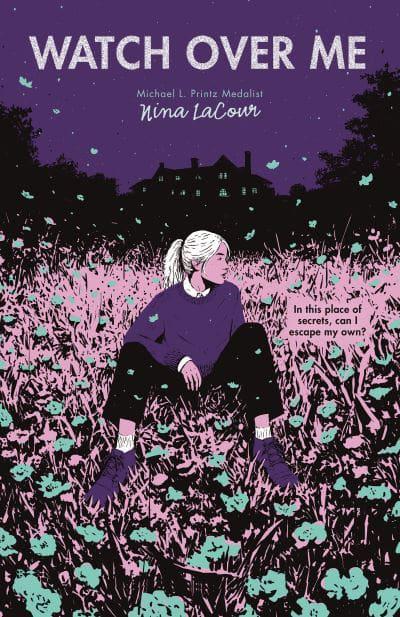
Watch Over Me – Nina LaCour

Watch Over Me is quiet – which is exactly what I said about Nina LaCour’s book We Are Okay In this award winning YA novel, LaCour tells the story of eighteen-year-old Mila who has recently aged out of the foster care system, but is offered the opportunity to remake her life as an intern at a farm in Northern California. She’s told

“Quite a few people have turned it down. And some people haven’t known what they were getting into and it hasn’t worked out. You need to want it. It’s a farm. It’s in the middle of nowhere – to one side is the ocean and in every other direction is nothing but rocky hills and open land. It’s almost always foggy and cold and there’s no cell service and no town to shop in or meet people…”

The farm is owned by Terry and Julia, an older couple who have fostered dozens of young people including Nick Bancroft, a former resident who now interviews prospective residents and who tells her that the farm “becomes home if you let it.”

It sounds sort of perfect to Mila, though, a place to take a breath and think about what might happen next. She will be teaching a nine-year-old with a traumatic past and helping out with the farm’s booth at the local farmer’s market.

Once at the farm, she meets her fellow interns, Billy and Liz, and her new student, Lee, with whom she forms an immediate bond. Mila finds comfort in the farm’s structure and in Terry and Julia, who are patient and kind. There is a kind of magic in working hard and being with these people.

But there are also ghosts – figurative and literal.

The ghost hovered in place on the moonlit field. It lifted its arms to the sky and spun in a slow circle. A girl, I thought, by the way she moved. And, in spite of myself, I was mesmerized.

This is not the first ghost Mila has ever seen, and it’s not the only ghost on the property. But Watch Over Me isn’t a ghost story, per se. It is a story about one girl’s path to healing, the memories which haunt her, and finding a place to belong in the world. It’s a beautifully written book and, strangely, a page-turner, too. (Not that those two things are mutually exclusive.) And that cover!

Highly recommended.

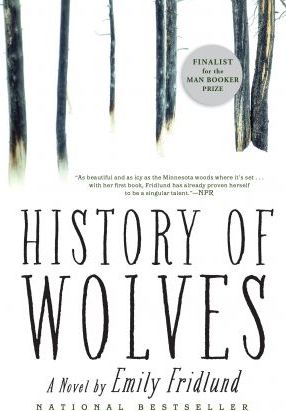
History of Wolves – Emily Fridlund

Emily Fridlund’s debut, History of Wolves, was shortlisted for the Man Booker Prize in 2017 and was the winner of the McGinnis-Ritchie Award for its first chapter. Awards generally mean very little to me because an award is no guarantee of my enjoyment. Just because someone is a NY Times best selling author doesn’t mean they can actually write. cough::Colleen Hoover::/cough

Linda lives with her parents on a lake in northern Minnesota. Once a part of a commune, Linda and her parents are all that remain.

I knew from stories how my parents had ridden in a stolen van to Loose River in the early eighties, how my father had stockpiled rifles and pot, and how, when the commune fell apart, my mother traded whatever hippie fanaticism she had left for Christianity.

The first thing to upend Linda’s life is a new teacher, Mr. Grierson, who “arrived a month before Christmas with a deep, otherworldly tan [and] wore one gold hoop earring and a brilliant white shirt with pearly buttons.”

Friendless and an outsider, Linda watches and “I wanted him to know that I saw how he looked at Lily Holburn.” The scandal about Mr. Grierson breaks in the fall of Linda’s grade nine year when he is accused of “pedophilia and sex crimes at his previous school and was promptly fired at ours.”

Then she meets four-year-old Paul and his mother, Patra, who have moved in across the lake. Thus begins a long, strange relationship which Linda recounts both as she lives it, but also from an adult perspective several years after the events take place.

At the trial they kept asking, when did you know for sure there was something wrong? And the answer was probably: right away.

History of Wolves is beautifully written, slow-moving novel about family, memory, faith and what it is to leave your childhood behind. Highly recommended.

Five Little Indians – Michelle Good

It’s tough to review a book written by an Indigenous author about an important subject (residential schools and their traumatic legacy) and not sound like an asshole when you don’t love it. I had the same problem with The Nickel Boys. Five Little Indians, by Canadian lawyer and first time novelist Michelle Good, won the Governor General’s Literary Award and the Amazon First Novel prize and the book was well-reviewed.

And I am not going to crap all over it because there were some things I did like about the book, which follows five people who were sent to residential school as children and then were either released or escaped into 1960s Vancouver. The novel doesn’t spend much time at the school itself, but we learn enough to see how Kenny, Lucy, Clara, Howie and Maisie suffer at the hands of the priest and the nuns, particularly Sister Mary. And suffer, they did.

The majority of the book follows these five characters after they’ve left the school, their lives intersecting as they try to make sense of a world they know next to nothing about. They are without skills, without family and really, without an education. The only thing they really have is trauma and that follows them throughout their lives.

Each of these five characters has a different experience once they are away from the school. Maisie, for example, seems to have it all together when another survivor, Lucy, arrives at her door. Maisie had gone home after she was released. “I lasted a month. No matter how hard I tried, this place, their house, was no longer home, and these people, though kind and loving, were like strangers pretending to be family.” She deals with her trauma by having sex in an alley with “The Old Man”, someone who berates her as he’s having sex with her, calling her the names the priest had called her as he raped her. “These were Father’s words. They took the rhythm of his thrusts. And I couldn’t breathe without this. I didn’t exist without this.”

Lucy fares a little bit better, going to school to become a nurse until she discovers that she is pregnant with the child of another survivor, Kenny, a boy she loved at the Mission school. They love each other, but Kenny has his own demons and try as he might, he just can’t stay with Lucy.

I did love each of these characters; that wasn’t my issue with the book. I just felt as though I was being told their story rather than shown it. This might have been remedied by sticking more closely with one character and having the others drift into their orbit. I felt like there was so much more that I wanted to know about each of them, but their tales felt somehow superficial – even though their individual trauma certainly wasn’t.

I finished reading Five Little Indians on the National Day for Truth and Reconciliation which “honours the children who never returned home and Survivors of residential schools, as well as their families and communities. Public commemoration of the tragic and painful history and ongoing impacts of residential schools is a vital component of the reconciliation process.” Personally, I think we have a long way to go to make things right.

Odd One Out – Nic Stone

One of the topics the students in my Young Adult Literature class discussed this semester was the importance of diversity in fiction. Nic Stone wrote a wonderful opinion piece called “Don’t Just Read About Racism—Read Stories About Black People Living” where she expressed her own experiences with books featuring Black characters and the problem of having every single ‘diverse’ text tackle issues of police brutality and racism or simply featuring characters she didn’t recognize. Tokens or sidekicks.

“I met three African-American characters in books between 8th and 12th grade,” she writes. “The first was a Black man falsely accused of a horrific crime—literally because of #WhiteWomanTears—who despite his innocence suffers a horrific fate (Tom Robinson in To Kill a Mockingbird). The second was a Black man with a role so minor, most people don’t remember he was Black or don’t remember him at all (Crooks from Of Mice and Men). And the third was an escaped Black slave written (by a white man) in vernacular so dense that half the time, I had zero idea what homie was trying to tell me (Jim from The Adventures of Huckleberry Finn).

I hated all of it.”

Why was it, Stone wonders, that growing up she never read about Black kids going on adventures, solving mysteries, falling in love? “What if we’d seen Black people in books just being human?” she writes.

Cue her 2018 YA novel Odd One Out, the story of seventeen-year-old besties Courtney “Coop” Cooper and Jupiter “Jupe” Charity-Sanchez. Coop has been in love with Jupe for as long as he can remember, but Jupe likes girls. At least she’s pretty sure she likes girls. She hasn’t really had any experience with them. Then Rae Chin moves to town. Suddenly Jupe and Coop find themselves part of a very complicated triangle.

This is exactly the sort of book Stone was talking about when she described the sort of stories that were unavailable to her when she was growing up. The characters in Odd One Out are just trying to navigate family stuff (Jupe has two dads; Coop’s father was killed in a car accident; Rae’s mom took off, but all the parents in this book are professional, loving, sane parents — not a gang banger among them), school and what turns out to be very complicated feelings for each other.

All three main characters get a turn to tell their story (Coop was my favourite; I found him funny, loyal, and charming) and I loved every second I spent with them. The drama is all self-made, but these smart and sensitive teens are trying to figure it out and that sometimes makes for hurt feelings, which Stone doesn’t shy away from. Odd One Out is a coming-of-age story which will appeal to any teen who has ever been in love or questioned their sexuality. The fact that I adored this book proves Stone’s point that “the more we see Black people living—loving and doing and being and feeling and going on adventures and solving mysteries and being the heroes—the more we come to recognize our shared humanity.”

Amen.

Highly recommended.

Nothing – Janne Teller

Translated from the Danish, Janne Teller’s award-winning YA novel Nothing is pretty dang bleak. When fourteen-year-old Pierre Anthon announces on the first day of school that “Nothing matters”, he sets off a chain reaction of events that runs the gamut from the childish to the horrific to the ridiculous.

Pierre Anthon and his hippie father live in a commune, so his classmates figure it makes sense for him to take the position that “It’s all a waste of time. […] Everything begins only to end. The moment you were born you begin to die. That’s how it is with everything.”

Pierre Anthon takes his belongings, leaves school and proceeds to climb the plum tree in front of his house. As his classmates pass by he slings hard plums and his dismal world view at them. His friends decide that they have no choice but to coax him out of the tree and the only way to do that is to prove that life is worth something.

The kids come up with a plan. They’ll create a sort of installation at the old saw mill. The will collect things that matter. At first, they ask their neighbours to make a contribution and the items start to accumulate: old crockery, a rose from a bridal bouquet, photographs. Then, feeling that they didn’t have enough skin in the game and that Pierre Anthon would see straight through them, they decided they needed to pony up and make a personal contribution to the cause. That’s when things start getting tricky.

Pierre Anthon’s view is decidedly nihilistic: religious and moral principles don’t matter, and life is meaningless. As the teens push each other to contribute things that are deeply personal, they cross more than one line. They soon lose sight of what they set out to do and their whole experiment becomes less about trying to help their friend see the value in life and more an exercise in horror.

Translation aside (and you know how I generally feel about them), Nothing is a surprisingly complex book. At first I thought it was going to be juvenile; the characters are barely teens and they sound young; the ideas and the themes in this novel, however, are anything but. The novel starts out quite innocently, but it goes down a very dark path, invites the reader to consider some equally dark ideas and you won’t come out the other end feeling even remotely hopeful about life.

Shuggie Bain – Douglas Stuart

Douglas Stuart’s debut Shuggie Bain won the 2020 Booker and was nominated for many other prizes and awards. For good reason. Stuart’s novel traces the life of Hugh “Shuggie” Bain from childhood until he’s sixteen and it’s a doozy.

Shuggie’s mother, Agnes, is central to this story. She’s thirty-nine and lives in a flat with her parents and “to have her husband and three children, two of them nearly grown, all crammed together in her mammy’s flat, gave her a feeling of failure.” Agnes’s endless struggles with men and alcohol are central to Shuggie’s story. His older brother and sister, Leek and Catherine, are far more jaded about their mother’s problems than Shuggie, who is much younger and much more hopeful that Agnes will get better.

When Big Shug, a philandering cab driver, finds a house for them outside of Glasgow, Agnes swells with hope. But when she sees their new home, surrounded by “huge black mounds, hills that looked as if they had been burnt free of life […] the plainest, unhappiest-looking homes Agnes had ever seen” she no longer views the move as a step in the right direction for her marriage. She and her children are isolated from the support system of her parents, and Big Shug essentially walks out on them, too.

Agnes is one of the most fascinating characters I have encountered in a long time. While it is certainly true that she is a hopeless drunk, she is also charming and intelligent. Despite the ways in which she neglects her children, particularly Shuggie, she loves them. Douglas’s novel gives readers plenty of reasons to admire Agnes, even as we watch her sink further and further into the bottle. It is much easier to hate Big Shug because he deliberately abandons his family and does it in such a way as to cause the most damage.

The novel is bookended with Shuggie at sixteen, living in a bed-sit and fending for himself. If you ever want to understand how a person comes to be where they are, examine their childhood. For better or worse, there’s no escaping the influence our families have on us. Shuggie does his best to look out for his mom, especially after Catherine leaves to get married and Leek is finally put out (and can I just say for the record that I LOVED Leek. There’s a scene when he escapes to the top of a hill with his sketchbook that broke my heart.) Shuggie is too young to realize what his older siblings already know: nothing he can do will save Agnes. But that doesn’t stop him from trying.

Although you might think that a book about an alcoholic living in Glasgow (the setting for so much despair in the 1980s due to Thatcher’s economic policies) would be relentlessly grim, it isn’t. These characters are resilient and determined and so lovingly rendered, they will find a place in your heart.

Apparently, Stuart’s manuscript was turned down 32 times! Imagine. If you haven’t yet read the book, I urge you to give it a go. Stuart is a born story teller and this is clearly a story that needed to be told.

Highly recommended.

The Chain – Adrian McKinty

Whether or not you believe the hype surrounding Adrian McKinty’s novel The Chain will depend on what you look for in a book. If the hype is to be believed, The Chain is “a blazing, full-tilt thriller” (Guardian), “a rare thriller that ends up being highly personal” (USA Today) and “psychologically rich” (Entertainment Weekly). The book also won several awards including the International Thriller Writers Best Novel of the Year. So its pedigree precedes it, and I guess that can be both a blessing and a curse.

The Chain tells the story of Rachel O’Neill, divorced mom to 13-year-old Kylie. The last few months have been shitty for Rachel because she’s been battling breast cancer, but things are looking up because her cancer is in remission and she’s going to be starting a new job as a philosophy lecturer at a local community college. Then the unthinkable happens, and her daughter is kidnapped.

It makes no sense for someone to take Kylie; Rachel has no money, but as the kidnappers tell her, it’s not about the money it’s about the chain.

“You’re in The Chain now, Rachel. We both are. And The Chain is going to protect itself. So, first thing is no cops. If you ever talk to a cop, the people who run The Chain will know and they’ll tell me to kill Kylie and pick a different target, and I will. They don’t care about you or your family; all they care about is the security of The Chain.

The way this thing works is someone whose own child has been kidnapped must pay a Bitcoin ransom and kidnap someone else’s child. Once that person has paid the ransom and kidnapped someone else’s child, the first person’s child will be released. And so on and so on aka The Chain. It’s all pretty clever and diabolical, really.

But.

Look, I had zero trouble turning the pages as Rachel and her brother-in-law Pete (ex-military and low-key heroin addict) try to figure out how they are going to comply with The Chain’s demands. As a mom myself, I could understand her panic and her willingness to do whatever was asked of her. Her motivation was clear. Still, I didn’t feel like she or Kylie (as resourceful and brave as she was) or Pete were particularly fleshed out.

Then there’s the people behind The Chain. I mean, I guess it ultimately doesn’t matter what motivated them, because clearly they’re psychos, but when their identities are revealed and the novel’s final confrontation happens it all just felt a little over-the-top cartoon-y to me.

Lots of thriller lovers will (and clearly did) enjoy the way this book is written: straight forward, unembellished prose. Lots of dialogue. Short, choppy sentences. I mean, there’s something to be said for writing this way for this kind of book, something that mimics the breathlessness that the characters must be feeling. If you don’t have to spend any real time with anybody, there’s a lot you can pack into 350 pages, and I feel like that’s what McKinty did. It’s a case of plot over substance.

So, ultimately, this was a so-so read for me. There was a lot of momentum going in, but the final bit of the book just felt contrived and wayyyyy too implausible for me. Because we never really know the characters, it’s hard to really care too much about them. They feel like cardboard cut outs: the plucky kid, the down-on-her-luck-but-determined mom, the has-his-demons-but-is-a-great-guy uncle. If you don’t care too much about writing or nuance or investing emotionally, then The Chain might be the book for you.

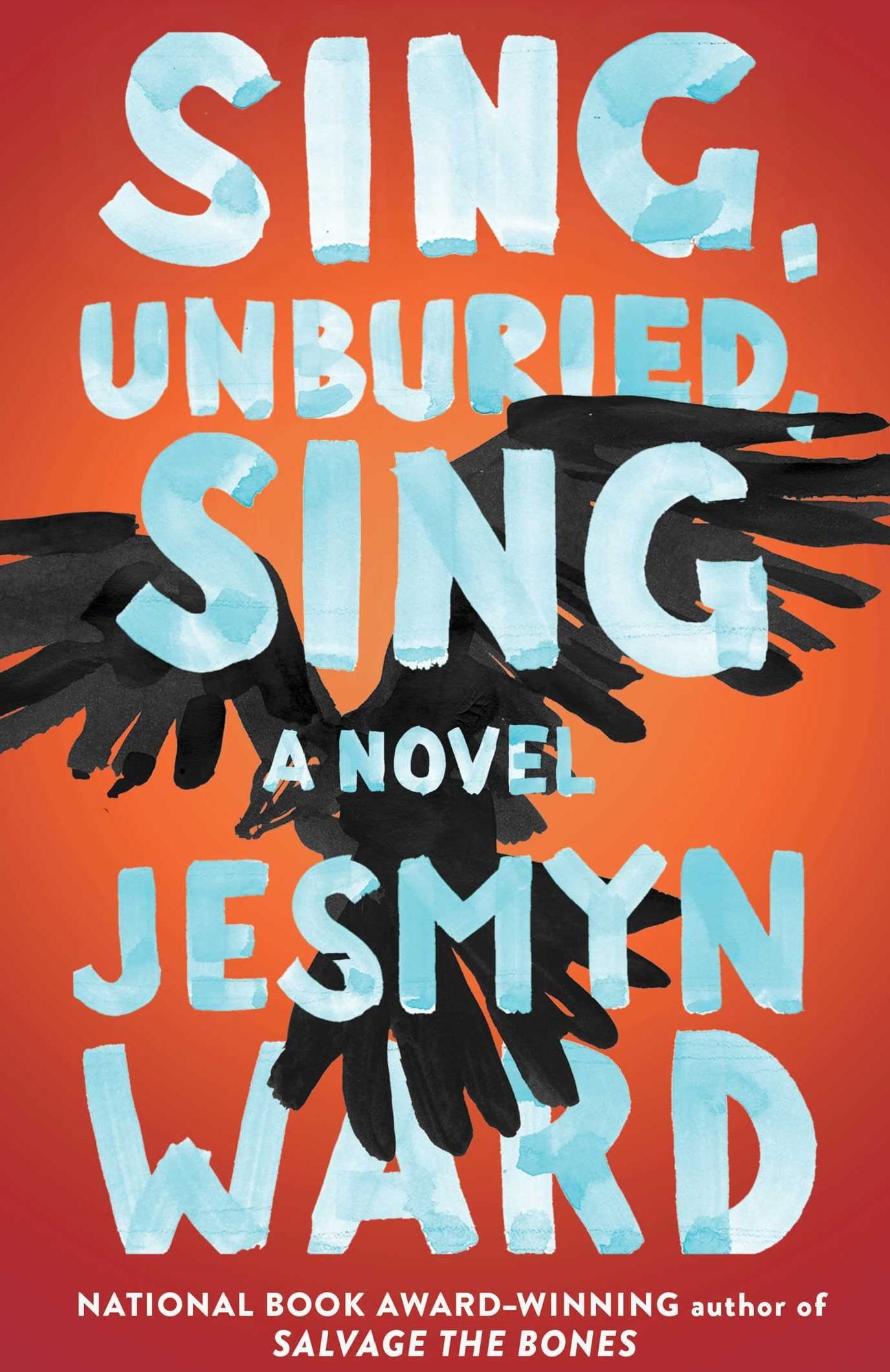
Sing, Unburied, Sing – Jesmyn Ward

Jesmyn Ward’s 2017 award-winning novel Sing, Unburied, Sing is the kind of book you can’t really put down once you pick it up. Partly it’s because the real action takes place over a very short amount of time and is so nerve-wracking I just couldn’t bear to stop reading, and partly it’s because the narrators in the book, Jojo and his mother, Leonie, and Richie, a boy who died years before the action of the story, are just too compelling to turn away from.

Jojo lives with his mother, his little sister, Kayla, and his maternal grandparents, Pop and Mam, in rural Mississippi. It’s Jojo’s thirteenth birthday when the novel begins, and Jojo’s first task of the day is to help his grandfather slaughter a goat for his birthday barbecue. Jojo says “I like to think I know what death is. I like to think that it’s something I could look at straight.” Oh, he’ll be looking at it straight, all right, and so will the reader. Ward doesn’t shy away of any of the details and so you’ll know pretty much from that opening scene that violence is part of the deal in this book.

This family has its share of troubles. Mam is currently bedridden, ravaged by cancer; Leonie is addicted to drugs; Michael, Jojo’s white father is currently in prison. Jojo depends on himself and his grandfather, who is loving albeit taciturn. Pop demonstrates his affection for Jojo by telling him stories, stories about his childhood and stories about his own incarceration.

Sometimes he’ll tell me the same story three, even four times. Hearing him tell them makes me feel like his voice is a hand he’s reached out to me, like he’s rubbing my back and I can duck whatever makes me feel like I’ll never be able to stand as tall as Pop, never be as sure.

Jojo’s main concern is Kayla, who is only three. He no longer depends on his mother and, in fact, thinks of her as Leonie. “It was a new thing, to look at her rubbing hands and her crooked teeth in her chattering mouth and not hear Mama in my head….”

When Michael is due to be released from prison, Leonie decides that she should make the journey to the prison to pick him up. She also thinks it would be a great idea to bring Jojo and Kayla, and her co-worker, a white woman named Misty whose boyfriend, Bishop, is also serving time. It’s hot, Kayla is almost immediately car sick, and the whole journey just seems fraught with danger.

Both Leonie and Jojo see ghosts. Literally. Leonie sees the ghost of her brother, Given, who was killed in a hunting accident fifteen years ago. Given was, by all accounts, destined for greatness: a talented athlete, popular and well-liked. Jojo sees Richie, a young boy who was incarcerated with Pop. In some ways Richie and Given are a manifestation of the guilt carried by those still living, but at the very least they are indicative of the way we are shaped by our pasts. Can we blame Leonie’s vices on the loss of her brother? Can we, at least, empathize with her? I’m not sure I did, she was just so negligent, but I was wholly invested in Jojo and found it impossible not to worry about him the entire time.

Sing, Unburied, Sing tackles the prickly topic of racism, too. Michael’s parents are make-no-bones-about-it racists. Leonie has talked to them exactly four times and is well aware that Michael’s father, Big Joseph (after whom Jojo is named) would rather “hang up in my face […] than speak to me, the nigger his son had babies with.” When a white cop pulls them over, my heart was in my throat the whole time. This is a story that carries the weight of hundreds of years of racism on its shoulders. My white privilege, I know, makes me blind to it.

This is a must-read book.