
The Sealed Letter – Emma Donoghue

I started reading Emma Donoghue’s 2008 novel The Sealed Letter at the start of September, in anticipation of our book club discussion on Sept 25. I figured it would take me a while because of the many pages (close to 400) and tiny font, so I wanted to leave myself a lot of time. I barely finished in time – and not because of either of the aforementioned reasons. I couldn’t read more than three or four page before I nodded off.

Emily “Fido” Faithfull is a business woman in 1860s London. She runs a printing press where she gives young woman an opportunity to make their own money. True, she hasn’t had any luck in love and is, at 29, a spinster, but she is a woman of independent means.

When the novel opens, she runs into Helen Codrington, a slightly older woman with whom she was once friends. Their friendship lost its way due to miscommunication, but now Helen and her husband, a ranking officer in the navy, are back in London and the two women begin to see each other again.

It isn’t long, though, before Fido is drawn into Helen’s extra-marital intrigue and I would like to say that that speeds things up, but it doesn’t. When Helen’s husband, Harry, a stiff older man, gets wind of his wife’s shenanigans and decides to leave her, Fido suddenly finds herself pulled into a court case (because divorces were settled in court with a jury and witnesses etc) which upends the life she had created for herself.

I would have definitely abandoned this book if it hadn’t been for the fact that it was a book club pick and I hate not finishing those. Although the writing was fine (although not really my cup of tea), I didn’t like Fido or Helen. I really could not have cared less about how things were all going to work out. For someone so smart, Fido sure was blinded by her affection for Helen who was manipulative and duplicitous.

The “sealed letter” of the title comes to play only near the end and is ultimately a disappointment. And while it’s alluded to throughout the novel (and the LAMBDA winning status is on full display), that aspect of the novel feels like a plot point.

If you’re looking for a historical page-turner, I recommend Fingersmith. This one is a no from me.

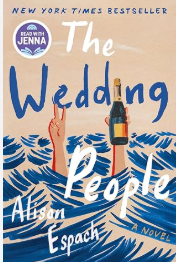
The Wedding People – Alison Espach

Phoebe’s life has fallen apart and one last kick to her heart is the final straw, so she books a one way flight to Newport, Rhode Island and makes a reservation to stay at Cornwall Inn. Just a one night stay because Phoebe intends on killing herself.

Phoebe and her husband Matt had always intended to shake up their vacations and come to this amazing hotel, but they always ended up defaulting to the same old same old, and then one day he just up and left her.

But now Phoebe stands before a nineteenth-century Newport hotel in an emerald silk dress, the only item in her closet she can honestly say she still loves, probably because it was the one thing she had never worn.

Phoebe isn’t expecting the hotel to be full, but it is. There’s a wedding and all the wedding people are here for the entire week leading up to the nuptials. When Phoebe meets the bride, Lila, in the elevator, she blurts out that she intends to kill herself in an attempt to explain to Lila that she is not, in fact, one of the guests.

Alison Espach’s novel The Wedding People is really a book about connections and how sometimes a random and seemingly inconsequential meeting can change the trajectory of your life. Although Phoebe is clearly in emotional pain, she recognizes it in others.

…Phoebe is starting to understand that on some nights, Lila is probably the loneliest girl in the world, just like Phoebe. And maybe they are all lonely. Maybe this is just what it means to be a person

It will be no surprise that Phoebe does not, in fact, kill herself. Instead she finds herself embroiled in the wedding drama, propositioning the wrong man, standing in as the maid of honour, and working through her own trauma. The book is funny, sentimental, and life-affirming because as Phoebe starts to remind herself “I am here.”

Beats the alternative.

Remarkably Bright Creatures – Shelby Van Pelt

Although everyone and their octopus was talking about this book for a while, I probably would never have read it. Then, it was chosen for my IRL book club so…

Sowell Bay is a small community in the Pacific Northwest and it is here that we meet a group of characters including Tova Sullivan, a 70-year-old widow who works as a cleaner at the local aquarium; Ethan, the town gossip and owner of the local grocery store; and Cameron, who is not a native, but who arrives in Sowell Bay to locate the father he has never known. They are not the most interesting characters though; that honour belongs to Marcellus.

Who am I, you ask? My name is Marcellus, but most humans do not call me that. Typically, they call me that guy. For example, Look at that guy–there he is–you can just see his tentacles behind the rock.

I am a giant Pacific octopus. I know this from the plaque on the wall beside my enclosure.

I know what you are thinking. Yes, I can read. I can do many things you would not expect.

Yep, one of the characters in Shelby Van Pelt’s novel Remarkably Bright Creatures is a sentient octopus, and he is actually the most interesting character in the whole book. I wish we had way more of him and way less of some of the other stuff in this book.

This is a novel about people in transition. Cameron is a 30-year-old man, but he acts like he’s a kid. He plays in a rock band with one of his best friends, he keeps getting fired from jobs, his girlfriend has finally had enough of him, his Aunt Jeanne is supportive, but frustrated by his lack of resilience. Sure, his mother abandoned him when he was nine and sure he doesn’t know who his father is but, c’mon. When Jeanne gives him a box of stuff his mom left behind, Cameron uses a clue in the box and sets out for Sowell Bay.

Tova is a taciturn Swede who lives in the house her father built. She has been grieving the loss of her son, Erik, for 38 years. She has never understood what happened to him; he was just about to go off to college; he was happy. Then, one night, he just didn’t come home.

Marcellus, watching from his tank, sees what other people don’t see. His perspective was my favourite and I wish there had been more of it. Known to be highly intelligent in the real world, Marcellus, the character in the book, sees what others do not. He calls humans “remarkably bright creatures”, but I think he is being generous.

I suspect that many readers would love this book. It gave me Bear Town vibes and I didn’t like that book at all. Remarkably Bright Creatures is a little too sweet and the characters’ manufactured quirkiness just wasn’t my cup of tea.

The Spoon Stealer – Lesley Crewe

After my first experience with a book by Maritime author Lesley Crewe (Amazing Grace), I would never have willingly chosen to read another book, but The Spoon Stealer was selected for my book club and so my options were to either suck it up and read it or just not bother. I sucked it up.

Emmeline Darling is a senior living alone with her dog, Vera, in England. She joins a memoir writing workshop at her local library and she begins to share her life story with the other ladies in the group, several of whom become her fast friends. Her memoir begins on a summer morning in Nova Scotia in 1894 when Emmeline’s mother was hanging out a line of clothes and Emmeline arrives suddenly, dropping “into a basket full of freshly laundered linen.”

The ladies in the memoir group, with the exception of the workshop leader, become fast friends and continue to meet after the workshop ends because they are so invested in Emmeline’s story. And it’s quite a tale.

Two of Emmeline’s older brothers had gone off to fight in the Great War and when Teddy, her favourite, ends up in hospital in England, Emmeline races to his side. That’s how she comes to spend the majority of her life in England.

As with any life, Emmeline’s is full of joy and heartache. She makes friends along the way; she experiences extreme luck and devastating loss. She is a ‘character’ – stealing hearts and spoons wherever she goes. Oh, and Vera talks – but just to her, of course, because that would be ridiculous, right?

I had an easier time with The Spoon Stealer than I did with Amazing Grace. I’m not sure that this is actually high praise or not because I still had a lot of problems with this one. For one thing, people do not talk the way they do in this book. And relationships aren’t magically repaired after decades of estrangement, which is what happens when Emmeline’s brother, Martin, dies and leaves her the family farm even though they haven’t spoken in years and years (and years). In fact, Emmeline hasn’t spoken to any of her remaining family for ages, but when she returns to Nova Scotia it’s poof! magic. The dialogue between the characters often serves as exposition/character development and, for me at least, it wasn’t believable.

There was at least one eye-rolling character twist and a tug-at-your-heart-strings ending that felt manipulative. And also – talking dog. 😦

I know people love this author, but she just isn’t my cup of tea.

Real Americans – Rachel Khong

Rachel Khong’s novel Real Americans spans many years (1966-2030) and is told from the point of view of three characters: Lily, Nick, and May.

After a short intro about an event in 1966, the novel fast forwards to 1999, where we are introduced to Lily, who works as an unpaid intern for an online travel magazine. At the company’s holiday party, she meets Matthew, who, despite being “distractingly hot – athletic but not vacant, a muscular nerd” is not her type.

Matthew, it turns out, is actually a great guy and the first part of the novel follows their relationship, break up and make up. Despite the fact that his family is insanely rich and her parents came to America from China with little more than the clothes on their backs (and jobs as research scientists), Matthew and Lily marry and have a son, Nico/Nick.

In Nick’s section, he and his mother are living on a small island off the coast of Washington. Nick is now fifteen and has no idea who his father is. Nick also doesn’t look even remotely Chinese, having inherited none of his mother’s traits. Instead, he is blonde-haired and blue-eyed and tall. Nick can’t figure his physical appearance out, other than to assume it as “some bizarre accident of genetics.”

The story Lily has always told him is that his father wanted nothing to do with them, but when Nick’s best friend Timothy suggests they do DNA tests, he is reunited with Matthew. Matthew has a different version of what happened than he had been told by his mother and Nick “found himself trusting him over [his] mom. Hs face was so like [his] own the [he] believed, correctly or not, [he] knew it.” Thus begins a complicated relationship between father and son.

Finally, we have May’s story. She is Lily’s mother. Her story takes us back to Mao Zedong’s China. The May readers are introduced to in Lily’s part of the book seems cold and distant, unloving even. This section of the book allows us to see how she grew up and ultimately escaped Communist China. It certainly paints her in a much more sympathetic light.

Real Americans is quite a long book, almost 400 pages, but I enjoyed my read. Although the story didn’t quite land for me and I often felt that I didn’t understand the characters or their motivations enough to be fully invested in them, I still enjoyed my reading experience overall.

Demon Copperhead – Barbara Kingsolver

I might have never gotten around to reading Barbara Kingsolver’s Pulitzer Prize winning novel Demon Copperhead if it hadn’t been chosen for our book club. Like A Little Life , the book seems to be pretty divisive. I hated that book; I did not hate this one.

“First, I got myself born,” says Demon, mimicking Charles Dickens’ classic David Copperfield in which the titular narrator says “To begin my life with the beginning of my life, I record that I was born…” in the book’s opening paragraph. Kingsolver thanks Dickens in her acknowledgement and her novel definitely owes a debt to him.

Born Damon Fields to a teenage mother with few prospects, Demon survives poverty, his mother’s addictions, and physical abuse at the hands of her boyfriend, Stoner, mostly because he lives next door to the Peggots and their grandson, Demon’s best friend, Maggot. (Yes, there are a lot of weird names in this book, but they correspond to names from Dickens’ novel.) The Peggots’ home in rural Virginia was “a place where things got put where they went.” The Peggots were de facto grandparents to Demon, Mrs. Peggot making sure that “she played no favorites: same Hostess cakes, same cowboy shirts she made for both of us with the fringe on the sleeves. Same little smack on the shoulder with her knuckles if you cussed or wore your ball cap to her table.” For this reason, with the exception of his mother having difficulty staying sober, Demon would probably say that he had a wonderful childhood, until he didn’t.

Forced into the foster system at age 11, Demon’s life deteriorates and I won’t spoil the ups and downs of his journey to adulthood because those details are the meat and potatoes of his story. Let’s just say that I was wholly invested until about the midpoint of the story (which clocks in at 546 pages).

I was happy to spend time with Demon. I enjoyed his ‘voice’ and admired his resilience in the face of tremendous adversity. I shared his minor victories and bemoaned his poor choices and bad luck. I didn’t 100% believe all of it. He was lucky and unlucky in equal measure and despite having a really solid supporting cast, he still didn’t always make the best choices. That’s probably to be expected, though, as he’s young and young people do stupid things even when they acknowledge that they are stupid.

Kingsolver has lots of opinions on capitalism, pharmaceutical companies, education, the foster system, rural life and readers will certainly be aware when didactics trickle into fiction. It doesn’t interfere, per se, although sometimes it’s pretty obvious when her point of view wants to take center stage.

I am not sure when I stopped being 100% invested in his story. I will say that I really didn’t like the ending of the book. I will also say that I had zero trouble turning the pages even though Demon’s story was generally grim. He is a memorable character and I was invested in his survival.

Starling House – Alix E. Harrow

Alix E. Harrow’s novel Starling House wouldn’t necessarily be a book I would choose to read, even with Reese Witherspoon’s (annoying) endorsement on the cover. (I don’t mind the endorsement, but couldn’t it be a easily removed decal?) I needed to choose a book for my book club, and I needed it to be readily available and even though we have a huge Indigo where I live, its selection of awesome backlist titles seems to be shrinking. Whatever. I read some reviews about this book and I thought, sure. Let’s give it a whirl.

Twenty-something Opal lives in Eden, Kentucky with her sixteen-year-old brother Jasper. Opal works at Tractor Supply, a job she hates but does because her whole raison d’etre is to get Jasper out of Eden and into a Stonewood Academy where he can be afforded the opportunity to make something more of his talents.

The siblings live at the Garden of Eden motel where, Bev, the owner is “obligated to let [them] live in room 12 rent-free because of some shady deal she cut with [their] Mom.” Opal and Jasper’s mother died in a car accident over a decade ago; Opal survived that same crash. Life hasn’t been especially good since then, and it certainly doesn’t get any better when Opal takes a job at Starling House, a creepy mansion on the outskirts of town.

Starling House has a long, mysterious history in Eden. It’s connected to E. Starling, author of the children’s book The Underland, a woman who never wrote another book, or gave a single interview. “the only thing she left behind other than The Underland was that house, hidden in the trees.

The house is inhabited by Arthur Starling, “a Boo Radley-ish creature who was damned first by his pretentious name (Alistair or Alfred, no one can ever agree which), second by his haircut (unkempt enough to imply unfortunate politics, when last seen), and third by the dark rumor that his parents died strangely, and strangely young.”

These two are drawn to each other, despite the strangeness of their first meeting. As Arthur admits, “The house wants her, and the House is stubborn.”

I think Starling House is what as known as urban fantasy, a story that takes place in the modern world with fantastical elements. And that is certainly the case here. Starling House is sentient, there are magical beasts and a rich and complicated history connected to E. Starling’s book. It wasn’t really my cup of tea and even with all that going on, it took me a long time to read it. The writing was good, the secondary characters were interesting, Opal was a likeable protagonist…but at the end of the day, I just never felt all that invested in the story. At our book club discussion last night we all agreed that there was just too much going on, and that we would have been just as happy if there had been no beasts at all.

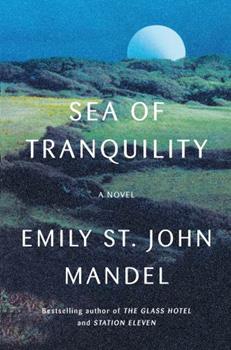
Sea of Tranquility – Emily St. John Mandel

It’s funny how some time travel books work for me and some don’t. Earlier this year I read This Time Tomorrow and I think that is probably my favourite book of the year. Years ago – before I started this blog – I read The Time Traveler’s Wife and cried so hard at the end, I couldn’t see the pages. So, I definitely went into Emily St. John Mandel’s Sea of Tranquility with an open mind, plus I loved Station Eleven.

The novel opens when Edward St. John St. Andrew is exiled from his home in England to the wilds of Canada, landing first Halifax before heading to the West Coast. It is 1912. While walking in the woods near the remote coastal community where he is staying, Edward has a strange experience

like a sudden blindness or an eclipse. He has an impression of being in some vast interior, something like a train station or a cathedral, and there are notes of violin music, there are other people around him, and then an incomprehensible sound–

Flashforward to 2020, where we are introduced to Mirella and Vincent – well to Mirella because Vincent is dead. The two women (yes, Vincent is a woman) had lost touch after Mirella’s husband had lost all his money in a Ponzi scheme orchestrated by Vincent’s husband and “how could Vincent not have known.” Now Mirella is at a concert waiting to talk to the composer, who is Vincent’s brother. It is here that we also are also introduced to Gaspery Roberts and the imminence of Covid-19.

Finally, in 2203, we meet Olive Lewellyn, who has come to Earth from the moon colonies to promote her latest novel, Marienbad, which is about “a scientifically implausible flu.” She has left her husband and daughter in Colony Two, “a city of white stone, spired towers, tree-lined streets and small parks.”

These three timelines are connected by Gaspery, but readers won’t really know it straight away. I am not a person who really digs into – or digs – the science of time travel: I enjoyed This Time Tomorrow and The Time Traveler’s Wife without spending too much time trying to figure out how all the pieces fit together. I found all the metaphysical stuff in St. John Mandel’s book a bit above my pay grade, honestly. And while Sea of Tranquility was easy enough to read, I didn’t really care too much about any of the characters so when it got to the end, and the discussion of life’s meaning – well, honestly…I just wasn’t invested.

I think my ambivalence is more about me than the book’s quality, though.

Hello Beautiful – Ann Napolitano

Ann Napolitano’s novel Hello Beautiful is the story of the Padavano sisters: Julia, Sylvie and twins Emeline and Cecelia who live with their parents, Ruth and Charlie in a Chicago suburb. Because she got pregnant with Julia very young, all Rose wants is for her daughters to get college degrees. Charlie, their dreamy, alcoholic, Whitman-quoting father, just wants them to be happy. And it seems they might be because they have each other.

Enter William Waters who ends up at Northwestern University on a basketball scholarship and meets Julia.

…Julia Padavano stood out in his European history seminar because her face appeared to be lit up with indignation and because she drove the professor – an elderly Englishman who held an oversized handkerchief balled in one fist – crazy with her questions.

Julia takes control of their relationship and draws him into her family life, introducing him to her younger sisters. Over the course of several decades, the sisters shift allegiances, but William is in the middle of it all.

Lots and lots of people loved this book, but I found it long and I found the characters sort of one dimensional. It takes a deft hand to traverse a rocky lifetime of family feuds and secrets, break ups and make ups. Ann Patchett always manages it. (Commonwealth, The Dutch House) I just found myself not caring too much about any of these people.

For example, Rose, the mother. After one of her daughters gives birth, she refuses to speak to her or meet the baby. When Julia gives birth, she flies off to Florida and speaks to Julia only rarely. At the novel’s conclusion – it’s happy families again. I just couldn’t quite figure out why her panties were in such a twist to begin with and this is how I felt through most of the story’s twists and turns. Are we really meant to believe that you are going to stop speaking to the people you love the most in the world for years, decades?

The novel is meant to be an homage to Little Women, with each of the sisters as one of Alcott’s famous siblings. I cared about those sisters; I didn’t care one bit about the Padavanos. There’s a lot of characters in this novel and a lot of telling too. It just wasn’t my cup of tea.

The Little Italian Hotel – Phaedra Patrick

Although on the surface Phaedra Patrick’s novel The Little Italian Hotel might seem like the perfect book for me – someone who adores everything about Italy – I doubt I would have picked this book up on my own. It’s only because it was chosen as this month’s book club pick that I read it.

Ginny Splinter, 49, is the host of well-known radio show called Just Ask Ginny. She offers people advice on a wide variety of problems and “Throughout her fifteen years on the air, there wasn’t a problem Ginny hadn’t tried to fix….”

It’s easy for her to look at the messy lives of other people because her life is, well, perfect. She’s soon to be celebrating her 25th wedding anniversary with her husband, Adrian. Her daughter, Phoebe, is out of the house and planning her own wedding. As a surprise, Ginny has splurged and purchased a three week stay at a fancy hotel in Bologna where she and Adrian can “renew their vows…reaffirm their love and commitment to each other and…have some fun, too.”

But things don’t quite work out that way. Adrian tells her that he can’t take three weeks off and then, worse, he tells her that he needs a break from her and their marriage.

Ginny isn’t able to cancel the trip. The best she can manage is to use the credit to move to a smaller hotel and take other people. She makes a spur of the moment decision to talk about what’s happened on the air and that’s how she ends up at Hotel Splendido with Heather, 43, a school teacher; Eric, 28, a carpenter; 80-year-old Edna; and Curtis, 38, a property developer. What do these five people have in common? Heartache.

Nico and his 18-year-old daughter, Loretta, run Hotel Splendido and the arrival of five guests for three weeks is a minor miracle. “His little Italian hotel had been struggling since the pandemic, but now his five guest rooms were going to be fully occupied for three weeks in June.” Nico is the heart and soul of Splendido and while it may not be as flashy as his friend Gianfranco’s Grand Hotel Castello Bella Vista (Ginny’s original destination), it is charming and comfortable.

As the five strangers get to know each other, they start to reveal their personal struggles to each other and form a sort of de facto family, offering each other support, encouragement and solace. I mean, it sounds awesome, right?

A little too awesome, really, which I guess is my main issue with the story. Look, there is nothing wrong with this book if you like fairy tales. Like the self-help book about repairing relationships Ginny buys at the airport, The Little Italian Hotel offers trite remedies for its characters. Even Ginny realizes those easy soundbites are hokum in the end.