Hang the Moon – Jeannette Walls

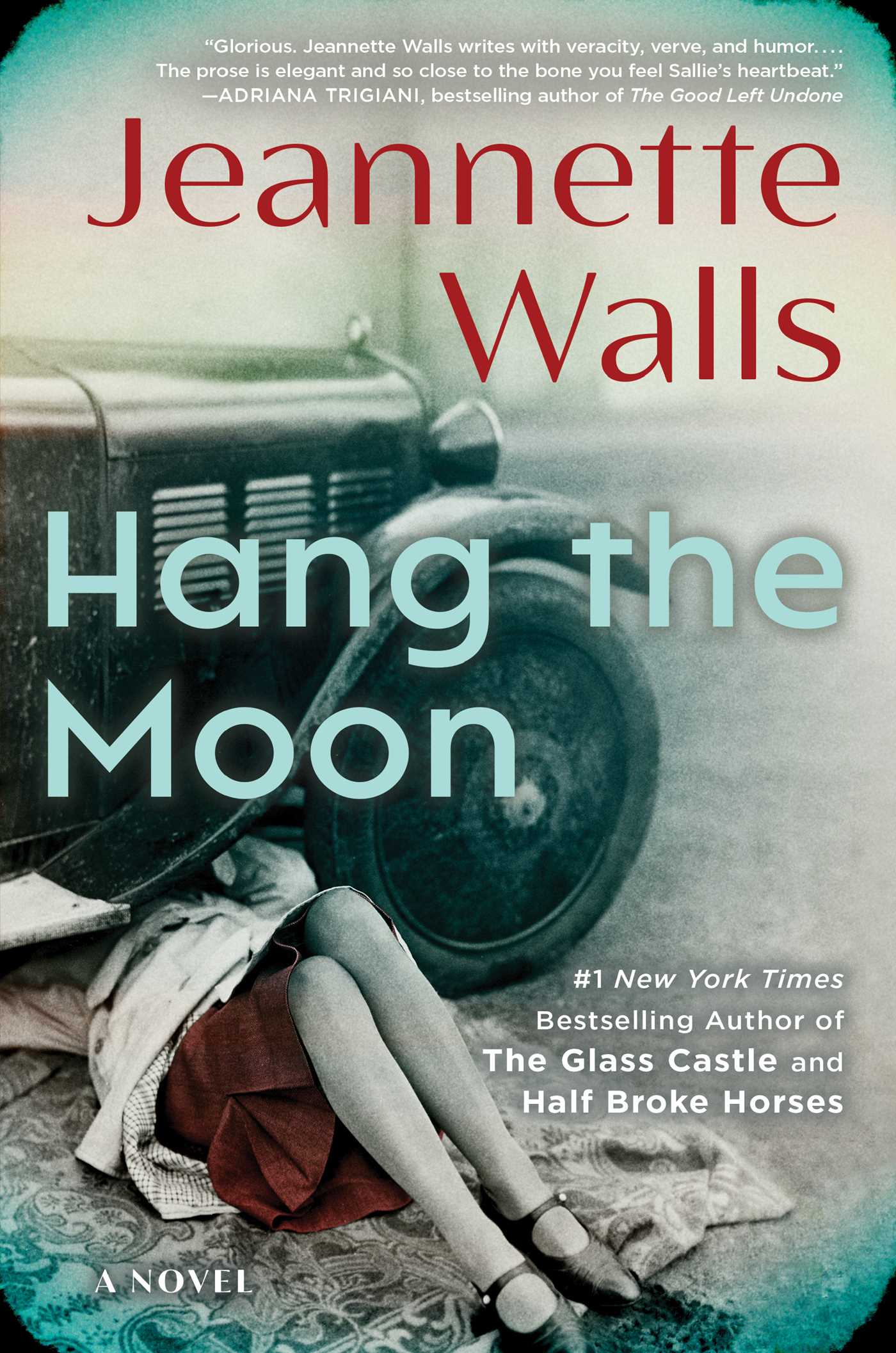
I wouldn’t have read past page 10 if not for the fact that Hang the Moon was this month’s book club read. Although I read and enjoyed Jeannette Walls’ memoir The Glass Castle years ago, this is the only other book I have read by her and I certainly won’t be reading anything else. In fact, since this is a Heather’s Pick – it will be going back to the bookstore for a refund.

Sallie Kincaid is the daughter of Duke Kincaid, a larger-than-life figure in a small town in the 1920s. Sallie admires her father, even though – as it turns out – he’s not really worthy of that admiration. When she is eight, she causes an accident that injures her step-bother Eddie and she is sent away to live with her Aunt Faye. When she returns to the Big House, she is 17. Do we really know what happens during that time? How she is molded by this experience? How it shapes her opinion of her father and the other members of her family? Nope.

Back at the Big House, Duke gives Sallie a job collecting the rents from all the farmers who live on his land. She’s really good at it…because she just is. She can drive a car, and shoot a gun, and also talk to people. Sallie says “it is a horrible job, grueling and dusty, grimy and greasy, thankless and endless. And I love it.” Sallie is determined to carve her own way in the world, and to win her much-adored (but undeserving) father’s approval.

Despite the accolades this book received – including a starred review from Kirkus – I thought this book was just awful. I didn’t believe any of the characters. It was an eye-rolling, over-the-top series of “shocking” deaths and familial reveals that just strained credulity.

Save your time and money.

Lessons in Chemistry – Bonnie Garmus

I don’t know what it is about hyped books, but I rarely like them as much as everyone else does. It probably says more about me than it does about the book, really. Everyone and their dog loved Bonnie Garmus’s novel Lessons in Chemistry and I was actually looking forward to reading it when it was chosen for my RL book club. Sadly, it just wasn’t for me.

The novel is about Elizabeth Zott, a brilliant woman who is a chemist without the credentials because she was forced to leave her program after being sexually assaulted by a lecherous professor. It’s the sixties and there is no recourse for her. When she files a complaint, the cops ask her if she would “like to make a statement of regret” for defending herself. It’s the 60s and that’s the world Elizabeth is living in.

When the novel opens, Emily Zott is working as the host of a cooking show called Supper at Six. She is not a natural in front of the camera and she certainly won’t play the games demanded of her by the studio execs including smiling a lot and wearing tight fitting clothes. She does, however, tap into something women seem to want: someone who sees them and understands them.

You’d never find Elizabeth Zott explaining how to make tiny cucumber sandwiches or delicate souffles. Her recipes were hearty: stews, casseroles, things made in big metal pans. She stressed the four food groups. She believed in decent portions. And she insisted that any dish worth making was worth making in under an hour.

The novel unravels Elizabeth’s story backwards from this point. We learn how she ended up, a single mother, in front of the camera. We watch as her relationship with Calvin Evans, a brilliant and award-winning chemist unfolds, from its antagonistic meet cute to its tragic ending. We watch as she struggles to be taken seriously in the man’s world of science. We watch her teach her dog, Six-Thirty, to understand human words.

Lessons in Chemistry is a book crammed with characters and ideas and lessons about chemistry equality, but none of it is subtle. The narrative isn’t just Elizabeth’s, either. We get to hear about Calvin and his personal tragedies. We even get to hear from the dog. Yep. This book tried so hard to be funny, but mostly I just rolled my eyes at how unbelievable these characters were. The ideas are sound; the delivery not so much.

I wanted to like it, but I just didn’t.

The Four Winds – Kristin Hannah

Although I am certainly familiar with Kristin Hannah, The Four Winds is the first book I have read by her. This novel has loads of positive reviews and made several ‘Best of’ lists, and while I certainly had no trouble reading it, I am not sure this book has turned me into a fan.

Elsa Wolcott has been lonely her whole life. She is tall and awkward, skinny and shy.

It didn’t take a genius to look down the road of Elsa’s life and see her future. She would stay here, in her parents’ house on Rock Road, being cared for by Maria, the maid who’d managed the household forever. Someday, when Maria retired, Elsa would be left to care for her parents, and then, when they were gone, she would be alone.

Elsa is twenty-five when she meets Rafe Martinelli, a young man “so handsome she felt a little sick.” Soon after meeting Rafe, she discovers that she is pregnant and her father packs her up and drives her out to the Martinelli farm in Lonesome Tree and leaves her there. Although Rafe is not unkind, he is also not all that interested in marrying Elsa, but his parents, Mary and Tony, insist and soon Elsa finds herself absorbed into this warm, Italian family. Despite knowing nothing about farming life, Elsa is a hard worker and proves herself willing to do whatever it takes, which turns out to be a lot more than she bargained for when the droughts and wind storms come.

Years of drought, combined with the economic ravages of the Great Depression, had brought the Great Plains to its knees.

They’d suffered through these dry years in the Texas Panhandle, but with the whole country devastated by the Crash of ’29 and twelve million people out of work, the big-city newspapers didn’t bother covering the drought. The government offered no assistance, not that the farmers wanted it anyway. They were too proud to live on the dole.

Elsa and her family stumble through devastating windstorms, lack of water, dying animals, devastated crops, scorching temperatures and dust for many years until Elsa’s youngest child, Anthony, gets ill from dust pneumonia and Elsa makes the decision to take her children to California, the supposed land of milk and honey. It turns out things are not any better there.

The Four Winds is an easy read and I liked some of these characters a lot, especially Elsa’s in-laws. I was familiar with the Dustbowl and what happened during the 1930s, but I didn’t know anything about how migrant workers were treated in California, when they arrived by the hundreds of thousands in the 1930s.

What I didn’t like was Hannah’s very obvious emotional manipulation. I knew she wanted me to cry – which I did not. Perhaps that’s because the last 75 pages or so felt rushed, or maybe it’s just that I could hear the swelling music and the language felt purposely manipulative. I love a good cry, and there were certainly some things in this book that should have had me reaching for the tissue, but it just didn’t work for me.

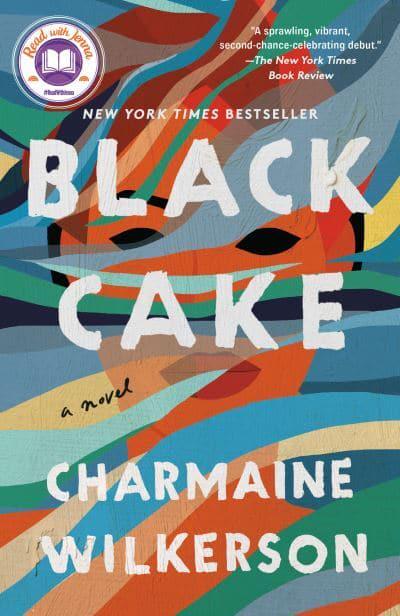
Black Cake – Charmaine Wilkerson

I wanted to like this novel way more than I did. I kept waiting for the story of Eleanor Bennett to be more than what it appeared to be, but that never happened.

When their mother dies, adult siblings Byron and Benny reunite (after a years-long estrangement) to bury her, but also to listen to the recording she left for them, which recounts the story of a girl named Covey.

B and B, I know, I need to explain why you never knew any of this. But it won’t make any sense if I don’t start at the beginning.

You children need to know about your family, about where we came from, about how I really met your father. You two need to know about your sister.

Sister?! This revelation is shocking to the siblings. Over the course of an afternoon, Benny and Byron listen to their mother’s voice and readers will be taken on a journey that spans decades.

This isn’t only about your sister. There are other people involved, so just bear with me. Everything goes back to the island and what happened there more than fifty years ago. The first thing you need to know about is a girl named Covey.

My main problem with Black Cake is that it is all tell. I never felt as though I was inhabiting any of these character’s lives. I was told what I needed to know before being shuffled off to the next character/scene -and there are a lot of characters and a lot of moving parts in this story. (And at almost 400 pages…) The story itself was interesting and the writing was fine, but I just never settled into the narrative. Maybe that’s a me thing because the accolades are numerous and who am I to disagree?

Ultimately, this is a story about family and the secrets we sometimes keep from them. Benny and Byron really shouldn’t have been so surprised that their mother had a life before they came along. Don’t we all keep secrets from the people we love to some degree? Wilkerson also offers some commentary about racism and the environment (Byron is an ocean scientist, so there’s lots of talk about the health of our oceans) that feel less organic and more didactic. Then there are all the convenient plot – I won’t call them twists – contrivances.

This is a debut novel, and it’s an ambitious one. It didn’t necessarily work for me, but so what? Loads of people love it and it’s definitely worth a read.

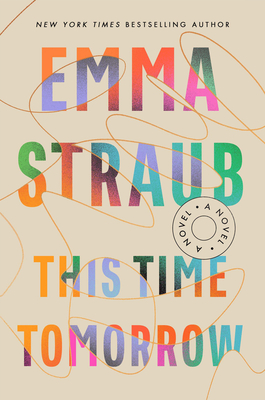
This Time Tomorrow – Emma Straub

I am not even going to try to hide the fact that I loved Emma Straub’s novel This Time Tomorrow. Never mind that it takes place in New York City, a city I adore, never mind that it references all the great time travel movies (Peggy Sue Got Married, 13 Going on 30, Back to the Future), never mind that Sarah Michelle Gellar is mentioned, this novel would be fantastic even without those things.

Alice Stern is turning 40. She likes her life just fine, even if it hasn’t turned out exactly as she might have imagined. She has good friends, a sweet apartment, a boyfriend, a decent job in admissions at her old school. But her father, Leonard Stern, is currently ailing in the hospital “heavily pregnant with death” and because they are close – her mother skipped out early after “she’d had a self-actualized visit from her future consciousness” – Alice spends as much time with him as she can.

Leonard is the author of the cult classic Time Brothers, “a novel about two time-traveling brothers that had sold millions of copies and gone on to become a serialized television program that everyone watched”. She and her father had lived on Pomander Walk “a straight dash through the middle of the block, cutting from 94th to 95th Street between Broadway and West End […] with two rows of tiny houses that looked straight out of “Hansel and Gretel” locked behind a gate.”

On her 40th birthday, Alice gets drunk and ends up heading back to Pomander where she passes out in the little guardhouse and wakes up the next morning back in 1996, on the morning of her 16th birthday. It’s disconcerting because Alice was “herself, only herself, but she was both herself then and herself now. She was forty and she was sixteen.” And her father was young, “forty-nine years old. Less than a decade older than she was.”

This is an opportunity for a do-over. Perhaps she can convince Leonard to make healthier choices; perhaps she can treat herself a little more kindly because “Every second of her teenage years, Alice had thought that she was average. Average looks, average brain, average body[…] But what she saw in the mirror now made her burst into tears.”

Okay, a book about time travel logistically seems ridiculous so I didn’t spend too much time worrying about the physics/magic/science fiction of it. Instead, I paid attention to the things that Alice noticed as if for the first time. Like Emily in Thornton Wilder’s play Our Town, Alice begins to appreciate “every, every moment.”

In her acknowledgements, Straub thanks her father, acclaimed novelist Peter Straub, who died the same year this book was published – making the book just that much more poignant. She writes “thank you to my dad, for showing me what fiction could do, and for knowing that the real story is both here and not here, that we are both here and not here”.

This Time Tomorrow is full-hearted, life-affirming, and heartbreaking and I highly recommend it.

Sorrow and Bliss – Meg Mason

Martha Friel, the protagonist of Meg Mason’s widely praised novel Sorrow and Bliss, is in the middle of a crisis: her marriage is imploding. Things have gotten so bad that, on their way home from the last party they attend as husband and wife, she says to him “When you do that pointing thing it makes me want to shoot you with an actual gun.” Patrick’s response? “How about we don’t talk until we get home.”

Things weren’t always so vitriolic between the pair. Once upon a time, they were each other’s most favourite person and Martha felt as though “we had been melted down and made into another thing. […] It was the happiest I have ever felt.”

Happiness, as it turns out, is a rare commodity for Martha. She and her younger sister, Ingrid, comes from a relatively dysfunctional family. Her father, Fergus Russell, is a failed poet; her mother, Celia Barry, a sculptor. Fergus and Celia still live in the family home in Shepherd’s Bush (a district in West London), but they can only afford their lives because of Celia’s sister, Winsome, who at first seems like a rich snob, but in the end turns out to be the rock in the lives of these fragile, broken people. Patrick was childhood friends with Winsome’s son, Oliver, and Martha has known him since she was sixteen.

It is around the same time that Martha meets Patrick that she wakes up with “no feeling in [her] hands and arms.” It is the beginning of a long period of ill (mental) health for Martha. No one seems able to diagnose the problem, and her family reacts with varying degrees of sympathy. Her mother “no longer came into [her] room, except one with the vacuum cleaner. She pretended not to notice [her], but made a point of vacuuming around [her] feet.” Her father “stayed up with [her] in the night, sitting on the floor, leaning against [her] bed.” Ingrid tells her “You’ve basically turned into Mum.”

Sorrow and Bliss traces Martha’s journey through this unnamed mental illness (Mason uses dashes — instead of naming it, and a nurse in my book club said it sounded like schizophrenia), but Mason herself says that the book is not really about mental illness. In an article in The Guardian, Mason said “It’s not the schizophrenia book, the bipolar book, the borderline personality book, it’s a book about what it feels like to have X or to look after someone with X and what it does to the extended family and the marriage.”

By the time the book begins, Martha has been – with varying degrees of success -managing her mental health issues, the myriad dysfunctions of her family, her own stalled career aspirations and for the last eight years, her marriage to Patrick, whom one woman tells her she should feel so lucky to be “married to a man like that.” The truth of the matter is that life and relationships are complicated and Martha’s life sometimes spins itself into a deep, dark hole from which there is often no escape. Strangely, it is a tattoo artist who puts things into perspective for Martha

Everything is broken and messed up and completely fine. That is what life is. It’s only the ratios that change. Usually on their own. As soon as you think that’s it, it’s going to be like this forever, they change again.

I loved this book. I loved Martha’s family, particularly Winsome. I loved Martha’s relationship with Ingrid – which was often laugh-out-loud funny. I loved Patrick, who somehow didn’t come across as a martyr even though he was self-sacrificing. And I loved Martha, in all her messy glory.

This book is a winner and I highly recommend it.

Writers & Lovers – Lily King

From my vantage point, a 31-year-old college grad should have it all together. Of course, that’s a ridiculous assumption to make especially given that the last thing I was when I was that age was together.

Casey, the first-person-narrator of Lily King’s novel Writers & Lovers, lives in what is essentially a potting shed, hiding from the creditors who are after her for defaulted student loans, desperately trying to finish the novel she’s been working on for the past six years, and trying to come to terms with the sudden and devastating loss of her mother.

Casey is aware that she is “not the youngest kind of adult anymore.” She has a crap job at Iris, a restaurant located on the third floor of a building owned by Harvard. She doesn’t get the best shifts and is shafted by her co-workers who are always “making sure everything is to their advantage.” Anyone who has ever worked in the service industry will recognize the hierarchy and kitchen shenanigans as King has written them here.

I look beat up. like someone who has gotten ill and aged a decade in a few months. I look into my eyes, but they aren’t really mine, not the eyes I used to have. They’re the eyes of someone very tired and very sad, and once I see them I feel even sadder and then I see that sadness, that compassion, for the sadness in my eyes, and I see the water rising in them. I’m both the sad person and the person wanting to comfort the sad person.

Working at Iris isn’t the only thing sucking the life out of Casey though. Shortly after her mother died unexpectedly, she went to a writer’s retreat and met Luke. It ended badly. Casey has been struggling with the double loss ever since.

King’s novel is a coming-of-age story, really. It is a story of the difficulties of navigating life when you are stuck, as Casey most decidedly is. Enter Silas and Oscar, two different men who offer two different opportunities. I very much enjoyed her journey, even though she seemed very young. I suppose I was once, too.

The Maid – Nita Prose

Back-to-back books with autistic main characters – what are the chances? I just read The Kiss Quotient, and I also recently finished Nita Prose’s debut The Maid.

In this novel, 25-year-old Molly Gray (and don’t worry, even Molly sees the joke) works as a maid at the Regency Grand Hotel. It is a position that she is very proud of because “Never in [her] life did [she] think [she’d] hold such a lofty position”. She loves everything about her job, her “perfectly stocked maid’s trolley”, the scent of the hotel, a “mélange of ladies’ fine perfumes, the dark musk of the leather armchairs, the tangy zing of lemon polish”; even her uniform gives her pleasure, a joy to see it hanging on her locker every morning, her “second skin – clean, disinfected, newly pressed.”

Her job, her ability to do it as well as she does, makes her confident because

The truth is, I often have trouble with social situations; it’s as though everyone is playing an elaborate game with complex rules they all know, but I’m always playing for the first time. I make etiquette mistakes with alarming regularity, offend when I mean to compliment, misread body language, say the wrong thing at the wrong time.

Raised by her grandmother, Molly is alone in the world now. It isn’t always easy for her to know who to trust, and that’s how she gets into trouble when one of the VIP guests at the hotel turns up dead.

There’s nothing wrong with The Maid. It’s like a locked room mystery, or a game of Clue. Someone killed Mr. Black and the someone to find him is Molly. There’s a whole cast of characters in the hotel: the manager, the hunky bartender, the immigrant dishwasher, the friendly doorman, the sneaky head maid. The fact that she trusts the wrong people to help her is certainly no surprise given her inability to read people. The mystery isn’t all that sophisticated, and the ending is so sweet it’ll make your teeth ache.

I feel like this is a book that’s gotten a lot of buzz because the main character is neurodiverse. And there’s nothing wrong with that, either. Just not my cup of tea.

Migrations – Charlotte McConaghy

In the not-too-distant-future Charlotte McConaghy imagines in her novel Migrations, “The animals are dying. Soon we will be all alone.”

When the novel opens, Franny Stone is in Greenland tagging Arctic terns. Now she needs a way to follow them. Enter Ennis Malone, captain of the fishing vessel Saghani. Franny just needs a way to convince him to let her come along. She tells him that the terns will lead him to the fish; all they have to do is follow them, and they can do that because of her electronic tags. This is a big deal because fish are scarce, but it’s a risk for Ennis because the birds are likely going further south than he normally sails and Franny has zero experience on a boat.

Franny is an enigma. Born in Australia to an Irish mother, Franny spends the first ten years of her life in Galway before her mother disappears and she is sent back to Australia to live with her paternal grandmother. Her father’s whereabouts are unknown. She spends much of her young adulthood trying to figure out what happened to her mother.

Then she meets Niall, a lecturer at the National University of Ireland, where Franny works as a cleaner.

My heart is beating too fast and I will myself to be calm, to breathe more slowly, to really take this in. To savor it and remember every detail because too soon I will be gone from the circle of his perfect words.

Their attraction is immediate and deep, and while Franny is on the Saghani, she writes letters to Niall to tell him of her progress. He is, she knows, as invested in her results as she is.

There is a lot going on in McConaghy’s novel: tracking the terns, Franny’s hunt for her mother, the complicated relationships which develop on the Saghani and, of course, Niall. Some might argue that there is too much going on and that the multiple, shifting timelines are unnecessary. But those shifting timelines unspool Franny’s complete story and keep you turning the pages. Franny is a complicated character. She is the sum total of all her experiences, plus also a victim of her own restless nature and readers must parse the information she provides.

I found Migrations almost unbearably beautiful. Although the Epilogue was a tad contrived, it didn’t spoil my overall reading experience. And sure, you could argue that McConaghy has never actually been to Newfoundland, but niggles like that are a waste of energy. This is a novel that asks some big questions: what are we doing to our climate? what does any of this mean? what will we take when we go?

Highly recommended.

Fight Night – Miriam Toews

I have mixed feelings about Canadian writer Miriam Toews’ eighth novel Fight Night, which was a 2021 Giller prize finalist. On the one hand, it irked me and on the other hand, I could appreciate its charms.

Nine-year-old Swiv (although she certainly doesn’t seem like any nine-year-old that I’ve ever encountered), lives with her pregnant mother (the fetus has already been named Gord) and her grandmother, Elvira. Precocious doesn’t begin to describe Swiv. She’s been expelled from school and demonstrates no interest in going back. Instead her grandmother homeschools her; her lessons include things like suduko, Boggle, “How to dig a winter grave”, and letter writing. (The novel is actually Swiv’s letter to her absent father.)

Swiv’s mother is an actress who seems to always be in trouble with a stage manager or director. Elvira is the stabilizing influence and even she seems half crazy.

Grandma says fragments are the only truth. Fragments of what? I asked her. Exactly! she said. She asked me what my dream was last night. I told her I dreamt that I had to write a goodbye letter using the words one and blue. Na oba! Grandma said. That’ll be your assignment for today, Swivchen. She has a secret language.

Swiv recounts her families’ idiosyncrasies with a matter-of-factness that seems beyond her years. She is responsible for bathing her grandmother, and putting on her compression socks, for picking up the pills and conchigliette her grandmother drops on the floor yelling “Bombs away!” and, when the two of them travel to Fresno to see Elvira’s nephews, being her travel companion.

Elvira’s open-heartedness is contagious. She sees the dual nature of life, that it is both hilarious and devastating. “Do you know the story of Romeo and Juliet?” she asks Swiv. “Well, I mean in a nutshell. It was a tragedy. Do you know Shakespeare’s tragedies? People like to separate his plays into tragedies and comedies. Well, jeepers creepers! Aren’t they all one and the same.”

Toews mines her personal history here – as she has on past occasions – and it makes for fascinating reading, for sure, but maybe this is just a case of the right book/wrong time or maybe I was distracted while reading it. Fight Night worked for me in some ways. Swiv’s voice is singular. The way she relays the things she hears, her mimicry, charming. But the novel is written without quotation marks, and the paragraphs are often long with multiple speakers and I found it hard-slogging sometimes. Some things that happened at the end just seemed sort of over-the-top ridiculous and undermined that novel’s potential emotional impact. Or maybe tragicomedy is what Toews was after all along.

Life certainly can be ridiculous.