I very much enjoyed Julian Barnes’ novella The Sense of an Ending when my book club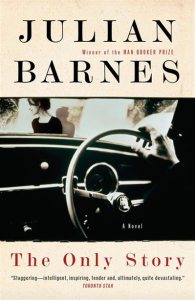 read it eight years ago. (Yikes!) I can’t say that my experience with The Only Story was quite as enjoyable; however, we had a fantastic chat about it at book club.
Would you rather love the more, and suffer the more; or love the less, and suffer the less? That is, I think, finally, the only real question.
It’s the 1960s. Paul is an only child and has a relatively distant relationship with his parents who are solidly middle-class. Home from university, Paul is “visibly and unrepentantly bored.” His mother looks for a diversion for him and hopes Paul might find a “nice blonde Christine, or a sparky, black-ringleted Virginia” at the tennis club. Instead he meets Susan Macleod, a middle-aged, unhappily married mother of two daughters who are older than our protagonist. Paul recalls “Who would have thought it might begin there?” The whole novel is a rambling recollection of their affair and the way such relationships are framed by memory, which is a theme Barnes visited in The Sense of an Ending.
Barnes wants the reader to believe, perhaps because Paul does, that this relationship is one for the ages. “Most of us only have one story to tell,” Paul tells us. “This is mine.”
I didn’t really like anything about this book and it pains me to say it because on the surface it seems like this book would be 100% up my angsty alley. Instead, I had a hard time connecting with either of these rather dull characters, who fumble their way through sex, and living together, and life in general. In the beginning, Paul spends a lot of time at Susan’s house; sometimes his university friends stay over, too. Paul is so self-involved that he doesn’t understand why Susan’s husband, Gordon, doesn’t seem to like him. Um, you’re sleeping with his wife! Under his own roof! Not that Gordon is at all sympathetic and he and Susan haven’t done the deed pretty much since the birth of their daughters.
Once they move in together – into a little house Susan buys in London – she (I thought) out-of-the-blue becomes a raging alcoholic, and things between the lovers start to deteriorate.
At first, Paul tells their story in the first person, but as things between him and Susan start to fall apart, he switches to the second person and then, finally, the third person. I liked this because I know how I view things from my past: sometimes it feels as though they’ve happened to someone else.
But for a story about love, the ‘only’ story – this one just didn’t work for me. No question Barnes is a master craftsman, and others in book club really liked it, but I found it a bit of a slog.
 You know you’re getting old when…
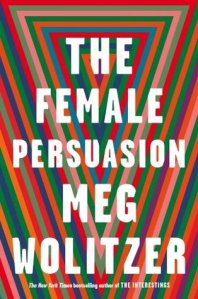 meaning that women are afforded the same privileges as men: personal, economic, social, and political equality. It’s hard to look at the state of the world and think that we’re actually there, though.
 Although I don’t usually trust author endorsements on book covers (except for Stephen King’s praise; he’s a pretty reliable reader), Simone St. James’s novel The Broken Girls had an equal number of positive reviews from places like Kirkus, Library Journal and Booklist. I felt pretty confident when I chose it as my book club pick back in March.
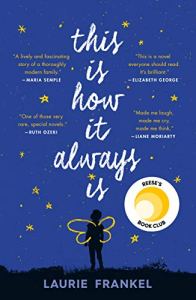 Penn is a writer-cum-stay-at-home- dad. They have five sons: Roo, Ben, the unfortunately named twins, Rigel and Orion, and finally, Claude. In almost every way the Walsh-Adamses seem to have life figured out.
 A friend once told me that I was the most romantic person they’d ever met. I don’t actually think that’s true. Or, if it used to be true, it’s not true anymore. I think I am cynical about romance now and it’s through that cynical lens I read Nina George’s much lauded novel The Little Paris Bookshop which made me cringe on so, so many levels.
 Eleanor Oliphant, the titular character of Gail Honeyman’s debut novel Eleanor Oliphant is Completely Fine, is not like anyone else you have likely met before. She has worked in the same office for the last nine years, she has no friends and she lives on a diet of vodka and pizza or pasta and pesto. Her life is structured and predictable, right down to her weekly calls from “Mummy.”
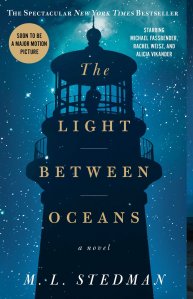 I feel heartless for saying it – but I didn’t particularly like M.L. Stedman’s first novel The Light Between Oceans. I’ve had the book for a while, but it was last month’s book club pick, so I finally had occasion to read it. [insert long-suffering sigh]
 I actually put Fredrik Backman’s novel Beartown in my ‘to donate’ bag before I had reviewed it…and I guess that’s pretty telling. This was a book club selection, and not a book I would have ever chosen to read otherwise, so I guess I was skeptical from the beginning. Beartown made me cranky.
 The Ludic Reader