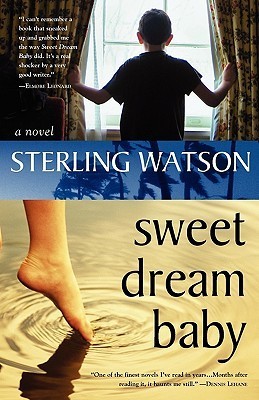
Sweet Dream Baby – Sterling Watson

In an effort to do something about my toppling Mount Doom of backlist books, I am going to read one for every newer release I read. Not sure it will help, but maybe I will luck out and the majority of books languishing on my shelves will be as good as Sweet Dream Baby by Sterling Watson.

In this book, 12-year-old Travis Hollister is sent to Widow Rock, Florida to live with his paternal grandparents and 16-year-old aunt, Delia. It is 1958 and Travis’s father can’t cope. Travis’s mother is convalescing because, as Travis explains, “One day, I came home from school and found Mom curled up under the kitchen sink.” This will be the break everyone needs.

Travis’s grandparents are two sides of a coin: his grandmother is an effusive women, given to retreating to her room with headaches; his grandfather, the town sheriff, is a hard man who demands respect. The real surprise for Travis is his father’s much younger sister, Delia, whose smile “is like a sunrise over the wheat fields back in Omaha.”

Delia takes Travis everywhere and Travis is soon privy to things he doesn’t really understand. Ultimately, it makes this novel more than just the story of one boy’s coming of age. I blame Delia. Delia’s super power is her ability to wrap people, particularly men, around her little finger.

When Travis first meets Delia, he can see the effect she has on her father after she speeds into the garage, music blaring.

Grandpa Hollister’s eyes change. They look like I never expected them to. They say he doesn’t care about the loud radio or the reckless driving. Nobody’s gonna get arrested. They say he can’t do nothing about how he feels right now. Nothing at all.

It seems that every male who comes into Delia’s orbit, from Princeton-bound Bick Sifford, to the the local James Dean wannabe Kenny Griner, wants something from Delia. And soon, Travis wants something from her, too.

Sweet Dream Baby captures the innocence of youth, and the sharp tang of sexual longing and sets it all to the soundtrack of the music of the period. The book doesn’t go where you expect it to and ends up being quite a bit darker, too.

I loved every second of it.

Small Things Like These – Claire Keegan

Irish writer Claire Keegan seems to be having a moment these days, at least in the bookish circles in which I travel. Her novella Small Things Like These was shortlisted for the 2022 Rathbones Folio Prize, awarded for the finest work of literature published in English, and it won several other awards including the Kerry Group Irish Novel of the Year.

At just over 100 pages, the story follows Bill Furlong, “the coal and timber merchant” as he goes about his daily rounds in New Ross. It is 1985, in the weeks leading up to Christmas, and Bill, married father of five daughters, is in an introspective mood. He is aware of his humble beginnings: “Furlong had come from nothing” and he is also aware of his relative success – he owns his business and is able to provide for his family and he feels “a deep, private joy that these children were his own.” He is aware that in some ways he is an outsider: his mother was an unwed teen and he grew up in a large house under the care of his mother’s employer, Mrs. Wilson, a widowed Protestant. He doesn’t know who his father is. He thinks about this sometimes as he also considers the daily grind of life, but ultimately Furlong seems to be a glass half full sort of bloke.

Before long, he caught a hold of himself and concluded that nothing ever did happen again; to each was given days and chances which wouldn’t come back around. And wasn’t it sweet to be where you were and let it remind you of the past for once, despite the upset, instead of always looking on into the mechanics of the days and the trouble ahead, which might never come.

A delivery to the local convent shakes something loose in Furlong, though. He grapples with what makes someone good and how can one be truly good if they turn a blind eye.

Small Things Like These is a essentially about one good man’s defiant act. It is a quiet, beautiful novella.

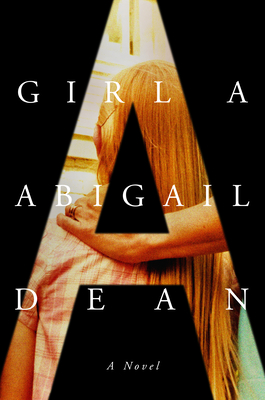
Girl A – Abigail Dean

You don’t know me, but you’ll have seen my face.

At just fifteen, Lex Gracie escapes her family home on Moor Woods Road, flags down a car and thus rescues her siblings from what is soon dubbed by the press as the “House of Horrors”. She is named Girl A to keep her identity secret from the world. Her siblings, Ethan, Evie, Gabriel, Delilah and Noah, are similarly named.

Now, years later, Lex, a lawyer based in NYC, is off to the prison where her mother has just died. Lex has been named executor of the estate, which is comprised of the house and a little bit of money. Lex feels the right thing to do is to build a community centre where the house stands, but in order to do that she needs her siblings to sign off. Abigail Dean’s accomplished debut Girl A traces Lex’s journey through the trauma of her past as she locates and visits with her siblings in an effort to secure their signatures.

Wisely, Dean chooses to leave much of what happens in the house to the reader’s imagination. It’s more than enough, trust me.

Sometimes, in my head, I visit our little room. There were two single beds, pressed into opposite corners, as far away from each other as they could be. My bed and Evie’s bed. A bare bulb hung between them and twitched at footsteps in the hallway outside. It was usually dull. but sometimes, if Father decided, it was left on for days. He had sealed a flattened cardboard box against the window, intending to control time, but a dim, brown light seeped through and granted us our days and nights.

The disintegration of the Gracie family doesn’t happen all at once, although the father, Charlie, is definitely volatile. As he becomes more and more evangelical – even going so far as to start his own church – he becomes more rigid and violent. Lex and Evie finds solace in a hidden book of Greek myths and school is a safe place until Charlie forbids them to go. Lex’s mother shrinks into the background, often disappearing for days into her bedroom to care for the newest baby.

Lex unspools the story of her childhood as she visits with each of her siblings, all adopted into different families after the rescue. Thus, this is a story about the aftermath of trauma as much as it is about the trauma itself. What becomes of these children makes for compelling reading.

Highly recommended.

Seven Summers – Paige Toon

I am not sure why I keep setting myself up for romantic failure. I admit that I am a hopeless romantic, but my personal experiences have definitely skewed the way I look at romantic love. There’s a certain type of romance that hits just right for me. I am more The Paper Palace than This Summer Will Be Different.

In Paige Toon’s novel Seven Summers, Liv returns to her home in St. Agnes, Cornwall after finishing her degree in sculpting at Edinburgh College of Art, and a brief stint studying the masters in Florence.

Her parents are delighted to have her home, as is her older brother Michael, who has Down Syndrome. Liv has a plan. She is hoping to make enough money to move to London, but she hasn’t quite figured out how to tell her parents.

At a local bar, The Seaglass, she reunites with her best friends, Amy and Rach. Their high school friend Dan’s band is playing there, and Liv is immediately drawn to the new singer, Finn. Apparently, he was also a classmate, but “The Finn we went to school with as really shy. […] This Finn is next-level hot….”

Liv and Finn are drawn to each other as is the way of these things. The problem is that Finn doesn’t live in St. Agnes anymore; he relocated to Los Angeles to live with his father after the death of his mother. He is only home for the summer to visit with his younger half-brothers and help out Dan’s band. (He’s got his own musical aspirations State-side.) And, of course, Liv’s life is in flux, too. That’s not going to prevent them from developing feelings for each other. But as we all know, the course of true love never runs smoothly.

Seven Summers follows Liv and Finn over the course of, well, I’m sure you’ll have figured it out, seven summers. But those summers are in the past when the novel begins. Things are slightly different for Liv in the present. She’s still in St. Agnes, working at The Seaglass and managing some holiday properties, and that’s where she meets Tom, he of the broad shoulders and “a very, very solid facial structure” which I take to mean he is attractive. Liv develops feelings for Tom which are reciprocated.

So, the question is how does Liv get from Finn to Tom. Well, I’ll leave that for you to discover.

I did not want to hurl this book across the room when I was done, and so that’s a compliment to Toon. Yes, I found the characters young, but then again that’s not going to be a problem for the majority of readers. My biggest problem with this book was the “have your cake and eat it too” denouement. Some people will absolutely eat it up and there is nothing wrong with that, obviously. I guess I am just a little bit too old to believe in the romantic fantasy of happily-ever-after. I found it all to be a little over-the-top.

For those of you who like low-spice, characters who are nice to each other, and an all’s well that ends well conclusion – you could do far worse than Seven Summers.

Darling Rose Gold -Stephanie Wrobel

If you’re at all familiar with Gypsy Rose and Dee Dee Blanchard, then you’ll settle right into Stephanie Wrobel’s novel Darling Rose Gold. In this story, told in alternating voices, Patty and Rose Gold are reunited after Patty’s five year prison term. She was incarcerated for aggravated child abuse. Patty denies the allegations.

Once upon a time, they said, a wicked mother gave birth to a daughter. The daughter appeared to be very sick and had all sorts of things wrong with her. She had a feeding tube, her hair fell out in clumps, and she was so weak, she needed a wheelchair to get around. For eighteen years, no doctor could figure out what was wrong with her.

The novel begins on the day Patty is released from prison. She is hopeful that she and her daughter will be able to repair their relationship. She wonders, “if I spent almost two decades abusing my daughter, why did she offer to pick me up today.”

Rose Gold is 18 when her mother is convicted and her narrative focuses on the past, specifically the period of time that her mother is in prison. She is making a valiant effort to reclaim her life. She is working and trying to save money to get her teeth fixed; they have rotted from years of throwing up. Five years later, when Patty is released, Rose Gold is living in the house she has purchased and raising her infant son, Adam, solo.

When mother and daughter are reunited, things are tense and strange. Neither narrator is particularly reliable or sympathetic. Patty is given a room with eyes painted on the ceiling; Rose Gold keeps her bedroom locked. The people in their small town make it clear that Patty is not welcome. She is friendless and dependent on her daughter. As she watches her grandson, she reminisces about Rose Gold’s childhood.

When I brought Rose Gold home that first night, I was captivated. Give me another kid to watch sleep, and I’ll tell you I’d rather watch a couple of geezers golf eighteen holes. But when it’s your own kid? Ask any mother. They know.

Darling Rose Gold landed on all sorts of Best Of lists when it came out in 2020, but I would have to say that my reading experience was nothing special. I didn’t particularly like the way it was written; I felt as though I was being told everything. This is a game of cat and mouse except that both characters are rats.

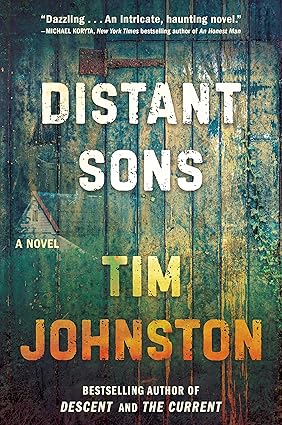
Distant Sons – Tim Johnston

It was on page 32 of Tim Johnston’s latest novel Distant Sons when I realized that I recognized his main character, Sean Courtland. It wasn’t his name; it was a passing reference to “the high pines of the Rockies, the summer she was eighteen, a track star floating up the mountain on pink Nikes while he, age fifteen, fell increasingly behind on the bike.” Wait a minute! I know that scenario. I raced for my copy of Descent and sure enough there he was. Cool, I thought. I LOVED Descent and I loved Sean, so I was happy to spend more time with him. Then, a while later, when we are introduced to Dan Young, I had the same niggle in the back of my head. Again, it wasn’t the name, it was the fact that he had a twin brother named Marky. Wait a minute! I ran for my copy of The Current. Yep. Tim Johnston is cannibalizing his previous novels and, oh, what a feast it is.

First of all, you don’t need to know anything about Descent or The Current to understand the plot of Distant Sons. This is not the sort of novel where the reader loses out if they are not familiar with the backstories. That said, I highly recommend both of those novels. Descent, in particular, blew me away and made Johnston an auto buy author for me. Nevertheless, you will not suffer for not having read these books before reading this one because Distant Sons isn’t really a sequel.

It’s ten years past the events of Descent (not totally sure what that means for the timeline of The Current.) Sean Courtland, now 26, has landed in small town Wisconsin and isn’t able to go much farther because his car has broken down. He finds a job doing some carpentry work for Marion Deveraux, an elderly reclusive oddball. The townspeople have long been suspicious of Devereaux because of three boys who’d gone missing thirty-odd years ago.

Not long after he arrives in town, he finds himself in trouble with the local police for getting into a bar fight, where he was defending the honour of local waitress Denise Givens against jack off Blaine Mattis. Then, he crosses paths with Dan Young, who has also run into some of his own bad luck with a vehicle. Sean offers him some work because, as luck would have it, Dan has plumbing experience and the job at Devereaux’s needs plumbing work done.

These are the main characters in Johnston’s story. Their intertwining lives, the stuff of chance, has a profound impact on each of them. As much as I loved Sean when I first met him, I love him just as much – or more – in this book. I feel as though he has been punishing himself for a decade and I wanted him to be able to let the past go and find something good to hold on to. His new relationships with Dan, Denise and Denise’s father are thoughtful and it is refreshing to see male relationships in particular that are not merely posturing. Sean’s interactions with other people errs on the side of kindness always. Although Dan and Sean are reluctant to reveal too much about themselves, I felt as though I was watching an authentic relationship unfold.

There is a mystery at the core of this novel, and Johnston certainly has a few surprises in store for the reader, but this is a novel about people – some of whom who are just trying to do the right thing. Slow burn, for sure, but 100% worth the effort. I gasped. I teared up. I loved every second of this book.

If you haven’t ever read this author, I beg you to give him a try. He’s fantastic.

You Are Here – David Nicholls

As I age, my desire to read straight-up frothy romances has waned. Sure, I used to love them: hot boy meets hot girl and sexy fun times ensue. But now? Boring. Give me the characters who have lived a life and are neurotic, flawed, cynical, searching, hopeful…human. Bonus if they’re past 30. (Extra points if they’re past 40.)

I love David Nicholls. His outstanding novel One Day introduces us to Emma and Dexter on the eve of their graduation from university, but then follows them for the next twenty years. (If you have not watched the incredible series on Netflix, I highly recommend it. It’s perfection.) Us follows Douglas and Connie, a couple whose marriage is disintegrating after twenty years, just as they are about to head off on a European vacation with their 17-year-old son. Sweet Sorrow is Charlie and Fran’s story. They meet at sixteen while participating in a production of Romeo and Juliet, but their story is told from a future vantage point complete with the requisite melancholy.

Nicholls’ most recent novel You Are Here is the story of 38-year-old copywriter, Marnie, and a high school geography teacher named Michael who is 42. Marnie is divorced and lives a relatively solitary life in London. She used to have an active social life, was “A nice addition to the group if not the core, well liked if never adored or idolised.” Now all her friends are married and having babies and Marnie feels like “perhaps this was natural, this falling away.” Nevertheless, Marnie does admit that she is lonely. Michael and his wife, Natasha, are separated and Michael resists all efforts to shake off the lethargy. Instead of staying in the house they shared, where she had “left enough of her possessions to keep it comfortable but he could never quite escape a feeling that something had gone missing”, Michael walks. A lot.

Although Michael and Marnie are unknown to each other at the beginning of the book, they do have one common friend, Cleo. When Michael turns down one too many invites because he will be walking, she insists that she’ll come, too and bring other people. Thus, Michael, Marnie, Cleo and company set off to hike from one side of England to the other (well, at least, that’s Michael’s intent; the rest are only going to walk for three days.)

Initially Cleo had thought to match Marnie up with Conrad, “perhaps the most handsome man” Marnie had ever seen. The woman she’d invited for Michael cancelled at the last minute and so you can see where this is going to go from miles away….and miles is just how long it’s going to take for Marnie and Michael to really see each other…to let their guards down and trust themselves and each other.

Trust me, it’s the journey not the destination that matters in this one. It’s filled with flirty banter, heartfelt revelations, and beautiful descriptions of the English countryside. This book will make you want to plan your own ramble and open yourself up to the possibility of love.

Another winner by one of my favourite authors.

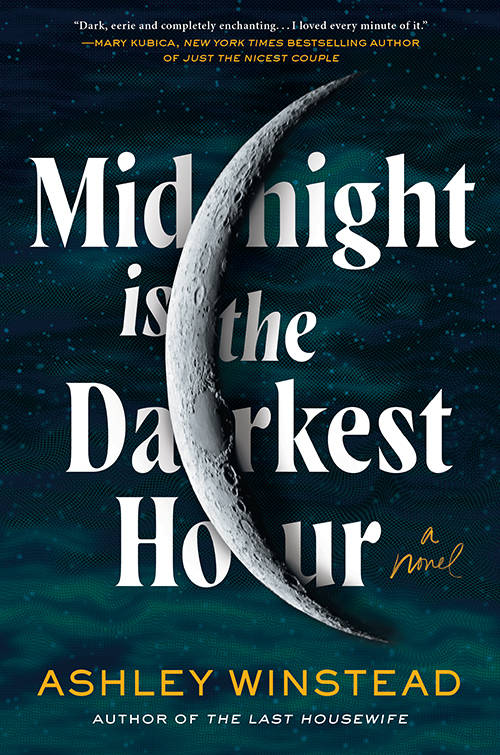
Midnight is the Darkest Hour – Ashley Winstead

I really wish the cover flap hadn’t compared Ashley Winstead’s novel Midnight is the Darkest Hour to Verity because it really does her book a disservice. Winstead’s book is far superior to Hoover’s (but I am not a fan of Hoover at all, so there’s that).

Ruth Cornier lives in Bottom Springs, Louisiana, where her father is the evangelical preacher in charge of Holy Fire Baptist. An only child, Ruth leads a sheltered, friendless life; her only companions are books, in particular, Twilight. She dreams of one day finding her own Edward Cullen.

…in the vampire Edward, I found everything I’d ever wanted in a man. He loved Bella with single-minded devotion, a self-effacing passion beyond anything a human man was capable of. That’s in turn how I loved him.

(I too have loved a taciturn vampire, although mine was a little less sparkly than Edward. LOL)

But anyway.

Everett Duncan also lives in Bottom Springs. An act of violence brings Everett and Ruth together and bonds them when they are seventeen and the story flips between this early period of their relationship and several years later, when they are 23. When a skull is discovered in the swamp, Everett and Ruth work together to uncover Bottom Springs’ dark underbelly.

In the present day, Ruth lives on her own and works at the local library. She has very little to do with her parents, stepping away from the church’s fire and brimstone teachings. Everett has left Bottom Springs, returning “every year on the first true day of summer.” Things are different this year, though, and not only because the discovery of the skull, but because Ruth has a boyfriend, Deputy Barry Holt.

I read Midnight is the Darkest Hour in one sitting. It’s the perfect blend of southern gothic and mystery, plus a dash of angsty romance. (Which, c’mon, if you’re going to love a vampire, you gotta love the angst.) This book has a lot to say about the patriarchy, religion, and family. Ruth has been cowed all her life, but when she decides she’s not going to take it anymore – well, that’s a journey worth taking.

I think Winstead’s only gotten better. I wasn’t a huge fan of In My Dreams I Hold a Knife (although there were some parts of it I really did enjoy), but I LOVED The Last Housewife. Midnight is the Darkest Hour is another winner and I can’t wait to see what she writes next.

Theme Music – T. Marie Vandelly

T. Marie Vandelly’s debut Theme Music promises a lot with its prologue. At just eighteen months, Dixie Wheeler is the only member of her family to survive a chilling event in the family home. One day at breakfast, her father left the kitchen, went to his shed and returned with an axe.

He rentered the kitchen, extra warm and cozy thanks to a turkey in the oven, looked upon the bewildered faces of his adoring family, and butchered them all. Well, not all, of course. I lived.

After he was done, her father slit his own throat.

Now, twenty-five years later, Dixie happens upon an advertisement announcing the sale of her family home – not that she has any real memories of it. After the death of her family, Dixie lived with her father’s sister, Celia, and her uncle, Ford, and her cousin, Leah. Now, as an adult, she cohabitates with her boyfriend, Garrett. What can it hurt to go check out the house, she wonders.

The house is “charming” in fact, despite its horrific history. Garrett falls in love with it, too, although he isn’t aware of what happened there. In fact, Dixie hasn’t been forthcoming with the details of her past at all. That’s bound to cause some friction and it does which ultimately means that Dixie moves into the house solo. Not only does she move in, but she brings with her all the household belongings that her father’s brother Davis had stored in his own basement. This includes, unfortunately, a file folder filled with crime scene photos. Davis, it seems, always believed his brother was innocent and until his death was working to prove it.

Theme Music isn’t quite sure whether it wants to be a thriller or a horror novel. Dixie’s house is haunted because of course it is, but most of the book is concerned with Dixie picking up the threads of her uncle’s investigation, and trying to figure out what really happened that day.

Books of this type depend on a likable main character, which I am sad to say, Dixie was not. Was there peril? Yes. Did she do some stupid things? Yes. Were there some twists and suspense? Also yes. But I also often found the tone uneven, sarcasm when it was uncalled for and a fair number of unbelievable plot machinations that caused a little bit of eye rolling.

All that said, Theme Music is a promising debut even if it wasn’t quite sure what kind of book it wanted to be.

Mayflies – Andrew O’Hagan

I had no real expectations going into Andrew O’Hagan’s 2020 novel Mayflies, but even if I had know what I was getting myself into, my reading experience would have exceeded all of them.

The novel opens in 1986 and the narrator, James, and his best friend, Tully, are just finished secondary school. They live in Glasgow and things aren’t easy for them. James’ father “wandered off in search of himself” and his mother “decided that the life of a single mother was not for her, and flitted to Arran.” He spends a lot of time at Tully’s house.

James admires Tully.

Other guys were funny and brilliant and better at this and that, but Tully loved you. He had the leader thing, when he was young, the guts of the classic frontman, and if any of us got together we instantly wanted to know where he was.

The first part of the novel focuses on one weekend when James, Tully and some of their other friends, travel down to Manchester to a music festival. It’s a weekend of total debauchery, as you might imagine when a group of young lads get together. I was in my 20s in the 1980s – and big into British music because I had a boyfriend from England – and so I loved all the pop culture references. The bands playing the festival included Orchestral Maneuvers in the Dark (which they trash, but which I recall liking) and The Smith (whom I didn’t appreciate then, but do now).

What we had that day was our story. We didn’t have the other bit, the future, and we had no way of knowing what that would be like. Perhaps it would change our memory of all this, or perhaps it would draw from it, nobody knew. But I’m sure I felt the story of that hall and how we reached it would never vanish.

Tully and James also quote movies back and forth at each other and engage in the silly banter you might expect from boys their age, but they also talk meaningfully about James’ missing parents, Tully’s strained relationship with his father, and the politics of the day. Theirs is a true and profound relationship, which makes the second part of this novel even more poignant.

Flash forward to 2017, when James receives a call from Tully. I’ll leave it at that. The second half of the book is a love letter to the friendship and shared memories between the two men and it is utterly beautiful. In fact, I found the whole book just, well, truly heartbreaking.

They say you know nothing at eighteen. But there are things you know at eighteen that you will never know again. Morrissey would lose his youth, and not just his youth, but the gusto that took him across the stage with a banner saying ‘The Queen Is Dead’ is a thing of permanence. We didn’t know it at the time, but it was also, for all of us, a tender goodbye, and we would never be those people again.

For anyone who has more behind them than ahead of them, this book will certainly speak to the person you were, the memories and the people you shared the journey with. But even for a young person, this book will surely resonate. I found it deeply moving and cried on more than one occasion.

Highly recommended.