Demon Copperhead – Barbara Kingsolver

I might have never gotten around to reading Barbara Kingsolver’s Pulitzer Prize winning novel Demon Copperhead if it hadn’t been chosen for our book club. Like A Little Life , the book seems to be pretty divisive. I hated that book; I did not hate this one.

“First, I got myself born,” says Demon, mimicking Charles Dickens’ classic David Copperfield in which the titular narrator says “To begin my life with the beginning of my life, I record that I was born…” in the book’s opening paragraph. Kingsolver thanks Dickens in her acknowledgement and her novel definitely owes a debt to him.

Born Damon Fields to a teenage mother with few prospects, Demon survives poverty, his mother’s addictions, and physical abuse at the hands of her boyfriend, Stoner, mostly because he lives next door to the Peggots and their grandson, Demon’s best friend, Maggot. (Yes, there are a lot of weird names in this book, but they correspond to names from Dickens’ novel.) The Peggots’ home in rural Virginia was “a place where things got put where they went.” The Peggots were de facto grandparents to Demon, Mrs. Peggot making sure that “she played no favorites: same Hostess cakes, same cowboy shirts she made for both of us with the fringe on the sleeves. Same little smack on the shoulder with her knuckles if you cussed or wore your ball cap to her table.” For this reason, with the exception of his mother having difficulty staying sober, Demon would probably say that he had a wonderful childhood, until he didn’t.

Forced into the foster system at age 11, Demon’s life deteriorates and I won’t spoil the ups and downs of his journey to adulthood because those details are the meat and potatoes of his story. Let’s just say that I was wholly invested until about the midpoint of the story (which clocks in at 546 pages).

I was happy to spend time with Demon. I enjoyed his ‘voice’ and admired his resilience in the face of tremendous adversity. I shared his minor victories and bemoaned his poor choices and bad luck. I didn’t 100% believe all of it. He was lucky and unlucky in equal measure and despite having a really solid supporting cast, he still didn’t always make the best choices. That’s probably to be expected, though, as he’s young and young people do stupid things even when they acknowledge that they are stupid.

Kingsolver has lots of opinions on capitalism, pharmaceutical companies, education, the foster system, rural life and readers will certainly be aware when didactics trickle into fiction. It doesn’t interfere, per se, although sometimes it’s pretty obvious when her point of view wants to take center stage.

I am not sure when I stopped being 100% invested in his story. I will say that I really didn’t like the ending of the book. I will also say that I had zero trouble turning the pages even though Demon’s story was generally grim. He is a memorable character and I was invested in his survival.

This Summer Will Be Different – Carley Fortune

I think at this point it is safe to say that I buy Carley Fortune’s books not because I like them but because I want to support a Canadian writer. This Summer Will Be Different is her latest book, but I had pretty much the same experience reading it as I did reading Every Summer After and Meet Me at the Lake. But, I also think that I am not the right reader for her books. I am too old to buy into the frothy type of romance she is selling.

In this book, Fortune has stepped away from Muskoka and landed in Prince Edward Island. And there’s the first problem, but we’ll get to that later. Lucy (who wears her hair in braids) has left her life in Toronto for a little break in PEI with her best friend, Bridget. Bridget is from PEI and can’t wait to show Lucy the island’s magical wonders. Except Bridget has missed her flight and Lucy has arrived solo. She ends up at Shack Malpeque and it is there that she meets Felix.

His eyes were the most dazzling shade of iceberg blue, striking against his deep tan. A cleft parted the center of his chin. His face hadn’t seen a razor in at least two days, and it was a study in contrasts. Strong jaw. Soft pink lips, the bottom fuller than the top. The bright eyes trimmed in black lashes.

We’re very much in Romance 101 territory and it’s only page 5.

Felix and Lucy experience a connection – as is the way of these things – and before you can say Anne of Green Gables these two crazy kids (Lucy is 24 and Felix, 23) are have mind-blowing sex. Things get complicated because Lucy doesn’t realize that Felix is actually Wolf, Bridget’s younger brother. (How she manages to have a bestie whose younger brother is called Wolf, a name she isn’t curious enough to ask about…I dunno, but there you have it – the meet cute.)

Over the course of five years, Lucy and Felix keep this ‘relationship’ a secret for slightly silly reasons because it would seem that they have undeniable feelings for one another. The novel toggles back and forth from this first meeting to subsequent visits to PEI where Felix and Lucy both keep their distance from each other (because Bridget can’t find out for reasons that make zero sense) and also have hot sex (which is made less hot by the amount of times Lucy asks for “more”).

We are reminded of the location at every opportunity. Like every time someone is buttering toast, it’s with Cows Creamery Churned Butter. And apparently all people eat in PEI is oysters. (I myself have never eaten oysters in PEI, but I am one of those weirdo Maritimers who doesn’t like seafood.) Yes, there is the requisite trip to Green Gables, and the necessary mention of red dirt and ocean vistas etc etc.

The problem isn’t the book per se because I have a feeling that a) I am not the intended audience and b) every single 20-something will be planning a trip to PEI this summer to meet their own version of Felix. For me, all these people were just meh. Bridget is keeping a huge secret days before her wedding and the reveal is anticlimactic. You know Felix and Lucy are going to get their happily-ever-after. At this point in my life, I guess I am looking for characters who have logged a few more miles than these physically perfect twenty-somethings have. So, I really shouldn’t be poo-pooing a book for which I am certainly not the intended audience.

If frothy, sun-kissed, sweet (with a little spice) fiction is your jam, put this in your beach bag and hit the sand. You’ll probably love it.

Sisters – Daisy Johnson

Sisters is a fever dream of a novel. It is the story of siblings July and August who have left Oxford with their mother, Sheela, to escape something horrible that has happened there. They’ve gone to the crumbling Settle House, a dwelling owned by their deceased father’s sister.

The house is here, squatting like a child by the small slate wall, the empty sheep field behind pitted with old excrement, thornbushes tall as a person. […] The white walls of the house are streaked with mud handprints and sag from their wrinkled middles, the top floor sunk down onto the bottom like a hand curved over a fist.

July, the younger of the two sisters, is the main narrator of this story. Their mother, a children’s book author and illustrator, rarely says anything, although one part of the novel does provide us a glimpse into her life with the girls’ father. Mostly, though, she “has been this way, taciturn or silent, ever since what happened at school.”

The “what happened” at school is the “mystery” – I did guess one thing, although not the specifics. What separates Daisy Johnson’s novels from other stories is the writing, which is innovative and compelling. It’s a gauzy, disconcerting narrative and it is almost impossible to feel as though your feet are on firm ground.

This the year we are houses, lights on in every window, doors that won’t quite shut. When one of us speaks we both feel the words moving on our tongues. When one of us eats we both feel the food slipping down our gullets. It would have surprised neither of us to have found, slit open, that we shared organs, that one’s lungs breathed for the both, that a single heart beat a doubling, feverish pulse.

Sisters is a gripping book and reminded me a little of I’m Thinking of Ending Things.

Whisper Down the Lane – Clay McLeod Chapman

I don’t really have any personal memory the Satanic Panic of the 80s – I was perhaps more concerned with trying to make myself look like a brunette Madonna – but I do find it to be a fascinating subject. A few months ago I read Remembering Satan, which was a true account of one family’s descent into a hellish landscape of satanic rituals and false memories. Clay McLeod Chapman’s novel Whisper Down the Lane leans into these ideas.

Richard teaches art at the hoity toity Danvers School in Virginia. He is newly married to fellow teacher Tamara, and step-father to her young son. He seems like a good guy, although he is prone to drifting off from conversations, a habit that causes him great anxiety but which he seems unable to prevent.

Then there’s Sean, a young boy living with his mother in 1982. Things start to go off the rails in his life when his mother notices bruises on him. His mother asks Sean if Mr. Woodhouse, Sean’s teacher, had given him the bruises. It’s such a strange question because “Of course he hadn’t.[…]He had more energy than any of Sean’s other teachers. Even more than his classmates. To Sean, he was like a clown without makeup.”

Whisper Down the Lane is inspired, in part, by the McMartin Preschool trial of 1987. You can watch a little bit about that here:

As Chapman’s book toggles back and forth between Sean’s story and Richard’s, it won’t take readers very long to figure out the connection. The book has some creepy moments, but I also found it slow moving and not wholly satisfying.

The Butterfly Garden – Dot Hutchison

Dot Hutchison’s novel The Butterfly Garden requires some suspension of disbelief. It is the story of Maya, one of several young girls who have been rescued from a horrifying situation. FBI agents Victor Hanoverian and Brandon Eddison are tasked with questioning Maya about what happened, but she is a bit reticent to reveal many details.

After a night working at a restaurant, Maya wakes up in a strange place with “a splitting headache.” She is being cared for by a woman who calls herself Lyonette who tells her “Don’t bother telling me your name because I won’t be able to use it.” Where is Maya? She’s in The Garden.

Lyonette led me out from behind the curtain of water into a garden so beautiful it nearly hurt to look at it. Brilliant flowers of every conceivable color bloomed in a riotous profusion of leaves and trees, clouds of butterflies drifting through them. A man-made cliff rose above us, more greenery and trees alive on its flat top, and the trees on the edges just brushed the sides of the glass roof that loomed impossibly far away.

Maya is a prisoner. And she is not alone. She is one of many “butterflies” being held captive in this garden, young women who must submit to having intricate butterfly wings tattooed on their backs, and worse, must endure being raped by The Gardener and his sadistic son.

Just how Maya and the rest of the ‘butterflies’ come to be rescued makes up the main part of the story. We also get a little bit of insight into her troubling childhood. What we don’t really get is why The Gardener, a man who seems devoted to his frail, clearly out-to-lunch wife, would go to the lengths he has to hold these girls captive.

It’s hard to imagine this place he has built. It’s even harder to imagine that he hasn’t been found out. And when his younger son, Desmond, is introduced to this creepy garden, it’s hard to imagine him not ratting his father out, especially when he seems to develop feelings for Maya.

Still, The Butterfly Garden is oddly compelling. It’s not nearly as graphic as you might imagine it to be, but is still potentially triggering. It was an easy read.

The Inheritance – Joanna Goodman

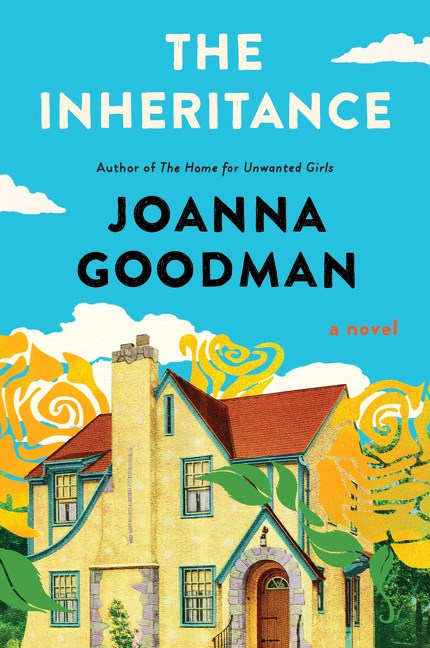
Arden Moore’s life was perfect. She lives in a too-big, slightly run down “Depression-era Tudor Revival built in 1931.” Her husband, Scott, “was infatuated with it, from its steeply pitched, twin triangular gables and multipaned windows to the arched front door with the wrought-iron knocker.” Better yet, it was in the right part of town, and such things mattered to Scott. But now Scott is dead, and Arden is left with a too-big house she can’t afford to renovate let alone pay the mortgage on.

Joanna Goodman’s (The Finishing School) novel The Inheritance examines the aftermath of the death of a spouse, sibling relationships, (Arden has an older sister, Tate, who is “the glamorous, successful sister”) and mother/daughter relationships. It also looks at aging, as Virginia Bunt, Arden and Tate’s mother, is trying to come to terms with, and self-harm. Actually, there’s A LOT going on in this book. Some might say too much, but I actually think that Goodman did a good job of keeping all the spinning plates in the air. As a woman of a certain age, I related to Virginia’s story; as the mother of a daughter – albeit, no longer a teenaged one – I related to Arden and 13-year-old Ivey’s acrimony (Arden has six-year-old-twins besides).

And then, there’s the inheritance. Virginia had tried many years ago, after the death of Arden’s father, Wallace, to claim her share of Wallace’s money for Arden. In fact, the fight had consumed her life and ended her marriage with Hal. Now, the death of Arden’s half brother (if her mother is to be believed) and advances in DNA testing means that Arden might actually get what is rightfully hers. Thirty million dollars worth.

The Inheritance was a page-turner, for sure, but also a thoughtful examination of grief, moving on and all the complicated relationships that exist in our lives. I enjoyed the read.

Shiner – Amy Jo Burns

Amy Jo Burns’ debut novel Shiner is my first five-star read of the year. It is the story of Wren Bird who lives with her parents Briar and Ruby in West Virginia outside of the aptly named no-where town of Trap. Wren tells us

The story of a snake handler’s daughter began when I’d just turned fifteen. I knew little then of the outside world my father kept from me. Ours is an oral civilization, I used to hear him say, and it’s dying. He blamed coal, he blamed heroin. He never blamed himself.

Briar is a preacher. As a young man, so the story goes, he’d been struck by lightning, causing one of his irises to go milky white and apparently giving him the power to heal and handle venomous snakes.

My father obeyed the rituals of snake-handling law, which meant he pretended we still lived in the 1940s instead of the age of the internet and all the things people did on their cell phones that I couldn’t understand. […] Daily my father lifted his serpents to the sky and uttered a prayer in tongues that no one could interpret.

Wren has never known any other life. Briar has kept her and her mother isolated on the “mountain’s western ridge.” Their only visitor is Ivy, Ruby’s childhood best friend, and her sons. When they visit, Briar hides in his snake shed because “He couldn’t bear to share my mother mother with anyone – not with Ivy, not even with me.”

A terrible accident sets off a summer of discovery for Wren and it is a breathtaking journey, where secrets are revealed and new relationships are forged.

There are so many things to admire about Shiner, not the least of which is the writing. But you can have great writing that is somehow distancing and impedes the plot. I loved the way this book was written, but I also loved the characters, particularly Wren and Flynn, the local ‘shiner’ (someone who makes moonshine) who is connected to Wren in a meaningful way, although she doesn’t know it.

Shiner is about the way “mountain men steered their own stories, and women were their oars.” It’s about finding your voice and making choices. It is about family. I loved every single second of it.

Highly recommended.

Chasing the Boogeyman – Richard Chizmar

I have been suffering from the slump of all slumps over the past few weeks. I haven’t been able to concentrate on a single book, and have abandoned more than a few. For anyone who has suffered from a book slump, you’ll understand how frustrating it is to want to read without actually being able to settle into a book.

Then, along comes Richard Chizmar’s novel Chasing the Boogeyman. Although I was familiar with Chizmar’s name (he has co-authored three books with Stephen King), this was the first time I have ever read anything by him and it was a thoroughly enjoyable experience. I started and finished the book in a couple of sittings. #slumpbuster

Chasing the Boogeyman is a novel, but it reads like true crime. That’s because Chizmar himself is purportedly telling the story of the summer after college when he returns home to Edgewood, Maryland to write, assemble his horror magazine, Cemetery Dance – a publication that actually does exist – and save money before he gets married.

Just before Chizmar arrives back home in 1988, a young girl was taken from her bedroom in the middle of the night, her savaged body discovered in the woods the next day. Over the coming weeks, more girls end up dead.

I can’t explain how or why it happened the way it did, the timing of me being back there on Hudson Road when the murders occurred. […] I was there. I was a witness. And, somehow, the monster’s story became my own.

With the help of a high school friend who works at the local newspaper, Chizmar begins to try to piece together what happened to the victims. Although Edgewood wasn’t crime-free before these horrific murders, “no one could remember anything remotely this violent or depraved. It was almost as an invisible switch had been thrown….”

Chasing the Boogeyman is a clever and compelling (fake) true crime book complete with photos, that is also a nostalgic look at coming home again. It is clear that Chizmar is a fan of the genre and he certainly does it justice here. I really enjoyed my read and I would definitely read more by this author.

The Berry Pickers – Amanda Peters

If you looked at my reading habits the last few weeks, you wouldn’t say I was much of a reader. I’ve been suffering from the slump of all slumps: hashtag the struggle is real! I started Amanda Peters’ debut The Berry Pickers but, sadly, it was not the book to kickstart my reading mojo.

Joe and his family, older siblings Ben, Charlie, Mae and younger sister, Ruthie, always travel from their home in Nova Scotia to Maine to pick blueberries at the Ellis farm. They are Mi’kmaw and this is their summer ritual, gathering with many other Indigenous pickers from New Brunswick and Nova Scotia. It is 1962. This is the summer that Ruthie, 4, disappears.

The Berry Pickers is told from Joe’s perspective. It is years later, and he is dying. From his death bed, he recounts the summer Ruthie went missing and the guilt that has plagued him his whole life.

There is another narrator, too. Her name is Norma and she lives with her parents, a quiet father and an overbearing mother. As a young girl, she’d had bad dreams that she couldn’t understand. In one she was in a fast moving car, and she “turned to see the face of a woman who wasn’t my mother but had my mother’s face.” It won’t take much effort for readers to figure out that Norma is Ruthie. I figured it out in the first paragraph.

The Berry Pickers covers a lot of ground and some readers might not mind that too much but, for me, it was a lot of life lived in just 300 pages. That said, the inevitable reconciliation did offer some poignant moments and having recently lost a very important family member, I did find it moving. I also enjoyed the fact that the story takes place close to home.

I think this was a good book, perhaps if I had read it at a different time, I would have motored through it.

A Little Princess -Frances Hodgson Burnett

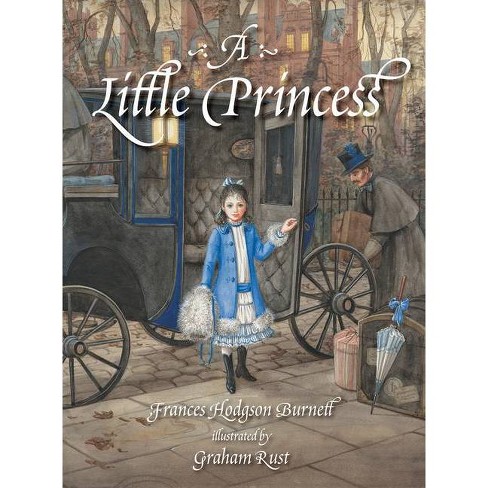
This month’s theme for our school’s student book club was childhood classics and students were invited to read or re-read a beloved story. I chose Frances Hodgson Burnett’s A Little Princess, a story I have read several times over the course of my life, but not for at least twenty years.

This is the story of Sara Crewe. At seven, she and her father leave their lives in India and head to London, England, where Sara is to become a pupil at Miss Minchin’s Select Seminary for Young Ladies. Sara’s mother is dead and she and her father share a close bond and “They had always played together and been fond of each other.”

Sara is a curious, self-possessed child, with “a queer old-fashioned thoughtfulness in her big eyes.” She seems to draw the ire of Miss Minchin almost immediately, but she befriends several of her classmates, and the housemaid, Becky, by telling them imaginative stories.

When something horrible happens to change Sara’s financial position, Miss Minchin send her to the attic to live with Becky and mistreats her horribly. Plucky Sara never complains, though. She has her imagination to keep her company, and soon enough, she draws the attention of the Indian gentleman that lives next door and the family across the square.

I loved A Little Princess when I first read it as a kid and I still love it now. Sara is so determined to see the good in everyone and her intelligence and kindness are admirable traits.

Time spent with Sara Crewe is always well spent.