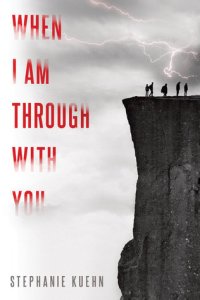
When I Am Through With You – Stephanie Kuehn

throughwithuCharm & Strange  was my introduction to Stephanie Kuehn’s work and I have been a fan ever since. When I Am Through With You is her latest YA offering and it’s a layered and tense thriller.

The narrator of the story, Ben Gibson, is a high school senior.  From the very beginning, readers know that something has gone horribly wrong Ben’s life.

This isn’t meant to be a confession. Not in any spiritual sense of the word. Yes, I’m in jail at the moment. I imagine I’ll be here for a long time, considering. But I’m not writing this down for absolution and I’m not seeking forgiveness, not even from myself. Because I’m not sorry for what I did to Rose. I’m just not.

Rose is (was) Ben’s girlfriend. She chose him, not the other way around. She is an exotic combination of her French Peruvian heritage, a “girl with bright eyes and brown skin and very short hair.”

…Rose was my first everything. First kiss, first touch, first girl to see me naked and lustful without bursting into laughter (although she was the first to do that, too). We did more eventually. We did everything. Whatever she wanted, Rose dictated the rhyme and rhythm of our sexual awakening, and I loved that. I never had to make up my mind when I was with her.

Ben is an engaging narrator, even though the reader might consider him unreliable. Kuehn wisely keeps her cards close to her chest, unspooling Ben’s backstory carefully. Why does he suffer from debilitating migraines? Why does he feel like his life is on the road to nowhere? What happened to Rose?

Much of the action happens in the middle of the book. Ben is helping his teacher, Mr. Howe, lead a camping trip out in the wilderness. Rose and her twin Tomas, Duncan (the high school drug dealer), Clay ( a quiet , studious kid), Archie (the wild card), Avery (Ben’s childhood friend), and Shelby (volleyball goddess) are the other campers. It’s kind of like the Breakfast Club of orienteering. Out of their natural element (with the exception of the teacher, who isn’t really front and centre, but manages to be important nonetheless), alliances fray and a combination of bad luck, bad decisions and bad weather cause total chaos and panic.

When I Am Through With You wasn’t at all what I was expecting. I knew to expect great writing, and I knew that the characters would be smart and prickly – something I’ve come to expect from Kuehn. This book asks you to  consider the moral choices these characters make. Ben is unrepentant, but he is also sympathetic. I felt tremendously sorry for him throughout the novel. It’s not all introspection, though. There are some truly heart-racing moments in this novel, and its propulsive plot will keep you turning the pages.

He Said/She Said – Erin Kelly

It seems as though everyone is writing thrillers these days, but as someone who loves a hesaidgood page-turner, I know that they are not all created equal. This is the third book I’ve read by British writer Erin Kelly and although The Dark Rose is still my favourite,  and I have also read The Burning Air,  He Said/She Said is a terrific read.
Kit is an eclipse chaser. I know, it’s weird, but whatever. At an eclipse festival in Cornwall, his relatively new girlfriend, Laura, stumbles upon what looks like a sexual assault. The man, handsome and charming Jamie, denies it. The woman, Beth, insists that the crime has taken place. This chance meeting inserts Beth into their lives, binding the three of them together in a way that proves to be problematic for all parties.

The novel moves seamlessly between past and present. In the past, Kit and Laura are called as witnesses to the crime. In the future, they are married and appear to be in hiding. They’ve changed their names; they don’t have social media; they live quiet lives as they await the arrival of their twins.

Although Kit and Laura are clearly in love, it is also obvious that whatever happened in the past has taken a toll on their marriage and their day-to-day lives. Kit is about to head off to the Faroe Islands for another eclipse, and it is causing a great deal of anxiety because while “It seems unlikely that Beth will be on my ship [it is] not impossible that she will be somewhere on the Faroes.”

The reader, at least in the early part of the book, is left to wonder just why Kit and Laura are avoiding Beth. (More than avoiding really. Laura seems to be experiencing some serious PTSD and Kit has his own share of nerves.)  It’s only one of the reasons to turn the pages.

I think that what separates the wheat from the chaff in thrillers like this is character development and twists that you really can’t see coming. I thought I’d figured things out on more than one occasion, but I really hadn’t. When things really started to ramp up – and they did, by about the midway point – I just couldn’t stop reading. I was wholly invested in these characters, even though I wasn’t sure whom to trust. He said/ She Said for sure, and that’s one of the great things about this book, but there are other dynamics at play here. New relationships are tricky at the best of time, but what if at the root of things are secrets you just don’t know how to share?

If you haven’t yet discovered Erin Kelly, I can highly recommend her. Her novels are smart, well-written and definitely have a few surprises up their sleeves.

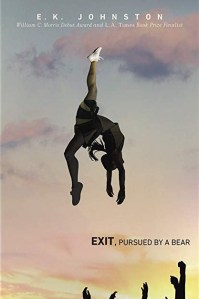
Exit, Pursued By a Bear – E.K. Johnston

Seventeen-year-old Hermione Winters is a spitfire. Co-captain of her high school bearcheerleading team, she is looking forward to one last cheerleading camp, one last year of school and then the freedom her future offers her. She is smart, fun-loving and although she loves cheerleading and takes it seriously, she is not the stereotypical cheerleader. To be honest, there isn’t actually a mean or petty girl in E.K. Johnston’s YA novel Exit, Pursued by a Bear. 

I wonder if Johnston chose Hermione’s name as an allusion -to the character from Shakespeare’s play The Winter’s Tale. That’s where the novel’s title comes from; it’s is a famous stage direction from the same play. Never mind, as a character she is sympathetic and admirable. And her life is about to get a lot more complicated.

Every year, the cheerleaders meet at Camp Manitouwabing, which is about an hour from Parry Sound. Teams from different schools meet there for two weeks of intense training. At a dance, just before the end of the camp, someone slips something into Hermione’s drink, and when she wakes up, she’s in the hospital. She has no memory of what happened, but she spends the next year dealing with the aftermath of the event.

There are lots of YA novels out there that deal with rape, but I have to say that this is one of the better ones I have read. After the attack, Hermione’s squad closes rank, insulating her from the inevitable rumours. Only Hermione’s boyfriend, Leo, fails to step up. Not that she needs him; she’s got her bestie, Polly, a pit bull of a friend, who is always at the ready to fend of anyone who even looks sideways at Hermione.

There are lots of great people in her corner, actually. Her psychiatrist, the female police officer tasked with finding the perp, Hermione’s parents who want to protect her, but know that offering too much protection would do their daughter a great disservice at the end of the day.

The novel is brisk, but it does allow readers a glimpse into Hermione’s PTSD, and how she tries to figure out the best way to deal with what has happened to her. Will she let this one incident set the course for her life? I am happy to say that the answer is a resounding no.

One scene I particularly liked was when Hermione and Polly are interviewed by a local reporter. Their cheerleading squad is a pretty big deal, but the journalist does manage to ask a question about the attack:

“Hermione, after your attack at the end of last summer, do you have any words of advice on how other girls can be smart, and stop such awful things happening to them.”

Polly, as always, speaks the truth.

“You’re okay with asking asking a girl who was wearing a pretty dress and had nice hair, who went to the dance with her cabin mates, who drank from the same punch bowl as everyone else – you’re okay with asking that girl what mistake she made, and you wouldn’t think to ask a boy how he would avoid raping someone?”

The conversation has to change. Polly knows it. Hermione knows it. It’s time everyone did.

I really liked this book for a lot of reasons. It’s Canadian, it’s well-written, it says important things without being didactic and you will root for Hermione.


A List of Cages -Robin Roe

cagesI could NOT put this book down. From the moment I met Julian and Adam, the two narrators of Robin Roe’s debut novel A List of Cages, I was immediately invested. This is a book with so much to say, but its messages are never didactic. It’s horrifying and heart-warming in equal measure.
So, Julian, aged 14, is a loner. He has just started high school and he is friendless and often in trouble at school – even though he does his level best to make himself invisible. When he’s called to the principal’s office he calls himself “a microscopic boy”; his English teacher tells him he’s “too quiet” and the other kids are horrible to him. He eats lunch alone in a small room in the attic of the auditorium. There he can dream about the life he used to have.

Adam is a senior. He’s a popular kid and even though Julian  has “only been in this school for a little while…heard his name a hundred times, mostly from girls who are in love with him.” Adam is happy, clumsy, and popular.

Adam and Julian have history, though. When Adam was in Grade 4 and Julian in kindergarten, they worked together to improve Julian’s reading skills. When Julian’s parents are tragically killed in an accident when he is 9, he goes to live with Adam and his single mom, who is a social worker. The arrangement falls apart when Julian’s Uncle Russell turns up out of the blue and claims him.

Their reunion is awkward at first. Julian is shy and distrustful, but it doesn’t take long for him to figure out that Adam is, above all else, kind. And Julian could certainly use a little kindness in his life.

It won’t take readers long to figure out that Russell is a monster – there’s really no other word to describe him. Roe drops clues early on and I have to admit to feeling very uneasy from the first couple of pages. Maybe it’s the mother in me; maybe it’s the teacher, but either way, I knew that Julian was neglected for sure, and certainly not safe.

The first time Russell ever punished me was for hanging a picture in this room. I should have checked with him first, I know that now, but I didn’t think to do so at the time. In my old room I could hang pictures whenever I wanted. Russell’s punishment wasn’t all that severe, but that had never happened to me before, and it shocked me. After it was over, he asked if I would nail holes into a stranger’s wall.

Roe’s book is a wonderful reminder of how little we know about the lives of others. Our snap judgments and cruel remarks never take into account what the subject of our derision might be facing on a daily basis. Adam is naturally empathetic. Even Julian notes that while “Hate ricochets…kindness does, too”.

A List of Cages is important, genuine and brimming over with heart.

I can’t recommend it highly enough.

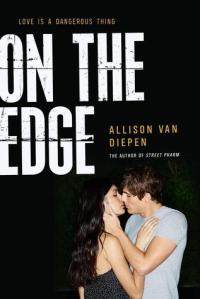
On the Edge – Allison Van Diepen

ontheedgeOne of my favourite YA tropes is bad boy/good girl. I can’t seem to get enough of it, really, and if there’s a heaping helping of angst thrown in, well, it doesn’t really get much better than that. Allison Van Diepen’s novel On the Edge seemed like it might have the goods, but it was only just okay.

Maddie Diaz is headed for college on a full scholarship. She lives with her single mother, works part time at McDonald’s and has a posse of good girlfriends.

One night after work she’s cutting through the park on her way home when she witnesses to members of the Reyes gang kicking the crap out of a homeless guy, someone everyone in the neighbourhood knows by name. She does the right thing and identifies the guys, but that means that her own life is in danger.

Enter Lobo, tall, dark, handsome and mysterious. After Maddie gets jumped, Lobo swoops in to rescue her and sparks fly.

He wore a black bandanna over his face. That couldn’t be a good thing – I should be scared of him, shouldn’t I? But I wasn’t. I knew that I was safe. I felt it in the gentle way he was supporting my head.

To complicate things, there’s also Maddie’s growing attraction to Ortiz, the guy who works at the local convenience store and is unbelievably hot with his “unruly black hair…chiseled, clean-shaven face.”

There’s nothing really wrong with On the Edge, but it doesn’t really break any new ground, either. The characters are mostly stereotypes; Maddie has a vein of heroism; Lobo is more than he seems, including seeming way older than 19.

I wouldn’t dissuade students from reading this book, but as for scratching my bad boy/good girl itch, it didn’t quite fit the bill.


The Chalk Man – C.J. Tudor

I’d really been looking forward to reading C.J. Tudor’s thriller The Chalk Man  and I chalkfinally picked it up. The book was well-reviewed and was a finalist for Crime Writers’ Association’s Steel Dagger Award. What can go wrong, right?

There was definitely an IT vibe when I first started reading the novel. (Stephen King’s IT, I mean.) Adult Eddie is recounting the events of 1986, when he and his gang of friends, Fat Gav, Metal Mickey, Hoppo and Nicky (who “didn’t have a nickname because she was a girl, even though she tried her best to pretend she wasn’t.”) used to hang out together in their small English town of Anderbury. They do normal kid stuff: ride their bikes, go to the fair, play in the woods, and try to stay out of way of Metal Mickey’s older brother Sean and his thug friends.

As an adult, Eddie lives in the house he grew up in and teaches at his former school. He’s single and lives with Chloe who is “youthful and cool and could pass for a teenager.” There’s nothing romantic between them; she’s just a boarder, but Eddie likes to think of her as a friend, too.

The Chalk Man  flashes back and forth between kid Eddie and adult Eddie and, at least in the beginning, that worked just fine for me. One of Tudor’s writerly quirks was to foreshadow events or drop hints at the end of chapters and I always wish writers didn’t tell us things like “I found out eventually. After the police came round to arrest him for attempted murder” before the fact. But oh well.

The title of the book refers to the chalk stick figures Eddie and his friends used to leave for each other on the sidewalk outside each other’s houses and in the playground. When Eddie was a kid, a series of these chalk figures lead him and his friends to a horrible discovery, and now in present day someone has sent him a letter with a single chalk figure. Bound to stir up old memories.

It doesn’t take very long for Tudor’s story to get convoluted and, for me at least, lose momentum. I raced through the first 50 pages, but then something happened. It lost some of its initial charm. Doesn’t mean it’s a dud, it just wasn’t a home run for me.


The Broken Girls – Simone St. James

Broken GirlsAlthough I don’t usually trust author endorsements on book covers (except for Stephen King’s praise; he’s a pretty reliable reader), Simone St. James’s novel The Broken Girls  had an equal number of positive reviews from places like Kirkus, Library Journal and Booklist. I felt pretty confident when I chose it as my book club pick back in March.
The Broken Girls tells two stories. In one, we follow four friends (Katie, CeCe, Roberta and Sonia) who are attending Idlewild Hall, a boarding school for troubled young ladies. It’s 1950. Idlewild Hall is an unforgiving place, and while none of the girls is a delinquent by any stretch, they each have their own troubles. And the school has troubles of its own, in the shape of Mary Hand, a ghost many girls have seen on the school grounds.

Flash forward to 2014 and meet Fiona Sheridan. She’s a local journalist, still struggling with the death of her older sister, Deb, whose body was found in an overgrown field on the grounds of the now ruined Idlewild. When Fiona hears that someone has bought the derelict school with plans to renovate and re-open it, Fiona is determined to get the scoop. The blurb on the back of the book announces a “shocking discovery” during the renovations, but I am just going to tell you now {{{{SPOILER ALERT}}}} that another body is found, one that connects the past to the present.

Fiona races around to try to connect all the dots, and that’s one of the problems I had with this book: there was a lot going on. There’s the back stories of all four of the 1950s girls; there’s the ghost; there’s Fiona and her boyfriend, Jamie, a local cop; there’s the death of Fiona’s sister, which although Deb’s boyfriend is currently in prison for the crime, still niggles in the back of Fiona’s mind, even though twenty years have passed. It’s not that it’s all that difficult to keep track of all these threads, it’s just that it felt like there were too many of them to make a coherent story. There’s a boatload of red herrings, but again, I think St.James just attempted too much here because by the end, I felt all the pieces clicked together just a teensy bit too neatly.

On the plus side, Fiona is a likable character, and so is Jamie. The four girls from the past are also sympathetic. The writing is straightforward and there were a couple of truly creepy moments.

Was it a popular choice with my book club? Nope. Only one of my friends gave it a thumbs up. Luckily for me, dinner was fantastic.

We Are Okay – Nina LaCour

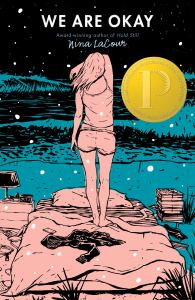
Nina LaCour’s award-winning YA novel We Are Okay, is a lyrical and moving look at the weareoknature of grief. This is a quiet novel, and so I would caution readers not to expect histrionics or very much action. Instead, LaCour focuses on the protagonist’s interior life, which has been altered by loss.

Eighteen-year-old Marin is attending school on the East Coast, far away from her hometown, San Francisco. It’s Christmas, and everyone has left the dorm except Marin, who has no place to go. Her roommate, Hannah, is clearly worried about her and Marin knows

why she’s afraid for me. I first appeared in this doorway two weeks after Gramps died. I stepped in – a stunned and feral stranger – and now I’m someone she knows, and I need to stay that way. For her and for me.

Marin is anticipating the arrival of her best friend, Mabel.  She knows “Mabel is coming tomorrow, whether I want her to or not.” The idea fills Marin with a sort of dread, even though she knows she should be happy.  She hasn’t communicated with Mabel in months though, and has, in fact, ignored all of Mabel’s attempts to make contact. She thinks she can fool Mabel into thinking that everything is okay but

Mabel knows me better than anyone else in the world, even though we haven’t spoken at all in these four months. Most of her texts to me went unanswered until eventually she stopped sending them.

There will be no way to fool her.

Nothing much happens in We Are Okay, but that’s just plot, anyway. The story toggles between Marin’s reunion with Mabel and the story of their friendship back in California. We also learn that Marin has been raised by her grandfather, a fierce but tender man, who has a few secrets of his own. Her grandfather’s death clearly accounts for some of Marin’s sadness, but flashback’s reveal that Mabel is also central to Marin’s story.

There is a lovely, melancholy cadence in LaCour’s book. It’s poetic without being showy and the nature of Marin’s grief is unspooled in a way that will keep readers turning the pages. I guess that’s what prevents We Are Okay from being all doom and gloom. Yes, Marin is sad, but she’s trying to come to terms with her derailed life. She finds small ways to tether herself to the world, a pair of pottery bowls, the “perfect shade of yellow” for instance.

This is a thoughtful, lovely and moving novel and I highly recommend it.

A Short History of the Girl Next Door – Jared Reck

shortI can’t remember the last time I cried actual tears reading a book, but Jared Reck’s debut novel A Short History of the Girl Next Door actually made me cry. And also laugh.
This is the story of 15-year-old Matt Wainwright, who is in love with his childhood bestie, Tabby, who lives – not exactly next door – but across the cul-de-sac from him.

I am completely in love with my best friend from childhood, she has absolutely no idea, and now she’s interested in older, more popular guys.

This sounds like a bad movie already.

Matt is a talented basketball player and a writer, big brother to four-year-old Murray. He is pretty awesome in every category, actually, but Tabby has definitely friend-zoned him. They’re freshmen at Franklin High and by October, she’s caught the attention of senior stud Liam Branson, starter on both the school’s football and basketball teams. Matt is consumed with jealousy, even though, as it turns out, Liam is a pretty awesome guy.

And it’s not like Tabby is flaunting her new relationship in Matt’s face. They’ve always been just friends. They like Star Wars movies and Nerds and, until Liam started picking Tabby up in the mornings, riding the school bus together. Tabby has always been a part of Matt’s family dynamic because his “mom started babysitting Tabby when she was four months old. And since my mom stayed home with me until I started school, Tabby was at our house nearly every day. She’s part of our family.”

Matt imagines a different future with Tabby, but his longings live in his head. He never actually gathers the courage to tell her how he feels, and their relationship endures some bumps along the way as she navigates her first relationship and Matt tries to tamp down his feelings about that relationship.

Their relationship starts to deteriorate and then the unspeakable happens.

Reck’s novel is everything a great YA novel should be. The characters are believable and appealing; even the adults get a fair shake. I especially loved Matt’s grandfather and this book really made me miss my own grandparents, long gone now. Matt is, often, immature, as you’d expect him to be, but he’s smart and sensitive, too. Tabby is more than just the gorgeous object of both Matt and Liam’s affections. She has feelings and depth.

I loved everything about A Short History of the Girl Next Door and highly recommend it.


The Handmaid’s Tale – Margaret Atwood & Renee Nault

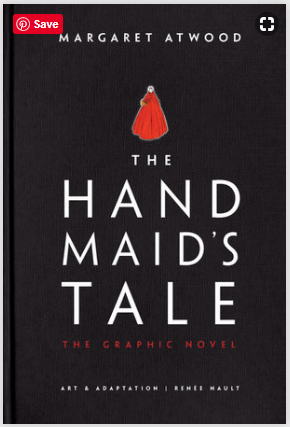
I probably shouldn’t admit this, being both a Canadian and an English teacher, but I have handmaidbestnever read Margaret Atwood’s novel The Handmaid’s Tale. I haven’t watched the series, either. I know, I know. I figured that I could rectify that by reading Renee Nault’s stunning graphic novel of Atwood’s book.

First published in 1985, Atwood’s novel explores a dystopian America. Atwood imagines a totalitarian state where women are commodities without their own names or lives. Some women are sexual servants, that is if they are of the age to bear children. Their names reflect the men they serve, so the book’s narrator is Offred or “of Fred”. In another life, Offred was married, had a daughter, but the family was separated when they tried to escape to Canada. The novel won several awards, including the Governor General’s Award and the Booker.

In many ways, Atwood’s novel was prescient. Flash forward almost 35 years and reflect on what is currently happening in the States (and around the world) and The Handmaid’s Tale  should make your skin crawl.

Nault’s beautiful drawings highlight the horrific lives lived by these handmaids.

handmaidstalegraphicnovel

They dress in red “the colour of blood, which defines us.” Their hats prevent “keep us from seeing, but also from being seen.” Offred reveals her defiance to her situation early on claiming that “I never looked good in red, it’s not my colour.” Friendships are discouraged between the handmaids. Their only job is to be an incubator.

It’s easy to see why Atwood’s novel was ground-breaking when it was first published. It’s difficult to read it even now. Nault’s adaptation should introduce a whole new generation of readers to Atwood’s acclaimed novel. I might just go read the original now.