Wish You Were Here – John Allore & Patricia Pearson

I don’t read too much true crime these days, but Wish You Were Here, the story of a young woman who goes missing from her university residence in Sherbrooke, Quebec and is later discovered in a farmer’s field, sounded interesting and, the girl’s parents live (lived) in Saint John, NB, which is my home town.

In 1979 (the year I graduated from high school), a body is discovered. It’s later determined that this is Theresa Allore, a student at Champlain College, who had disappeared without a trace in November 1978.

Co-author Patricia Pearson, who was a friend of the family (and for a short time dated Theresa’s brother, John) recalls Theresa as being “intelligent, independent, witty” .

The police at the time seemed to do very little investigative work to determine exactly what happened to Theresa when she first went missing. In fact, they told the Allore family that

their daughter, a fearless girl who rock-climbed and skydived and was excelling at school, had overdosed on drugs (unspecified) and had been taken (surely) from her dorm to the creek a mile or so away by panicked friends. They’d heard speculative talk of her choking on vomit, or perhaps having an allergic reaction. The friends must have dumped her, the police explained, after stripping off her clothes and stealing her purse and tossing her wallet in a ditch. As friends do.

Many years later, John and Patricia try to do what the police never manage: find out what happened to Theresa. Thus begins their exhaustive search for the truth, which is hindered by missing evidence, a closed-ranks system (both at the college and within the police force) and the passage of time.

At the time this happened, I wouldn’t have been much younger than Theresa, but I can’t say I remember anything about her murder. Shows you how oblivious we sometimes are as teenagers. Wish You Were Here is a thoughtfully written (and how could it not be) examination of the devastating impact of a violent death, the problems inherent in the criminal justice system, and the dangers facing young women.

Visit John Allore’s blog Who Killed Theresa? Allore worked tirelessly for families of missing and murdered young women until his accidental death in 2023.
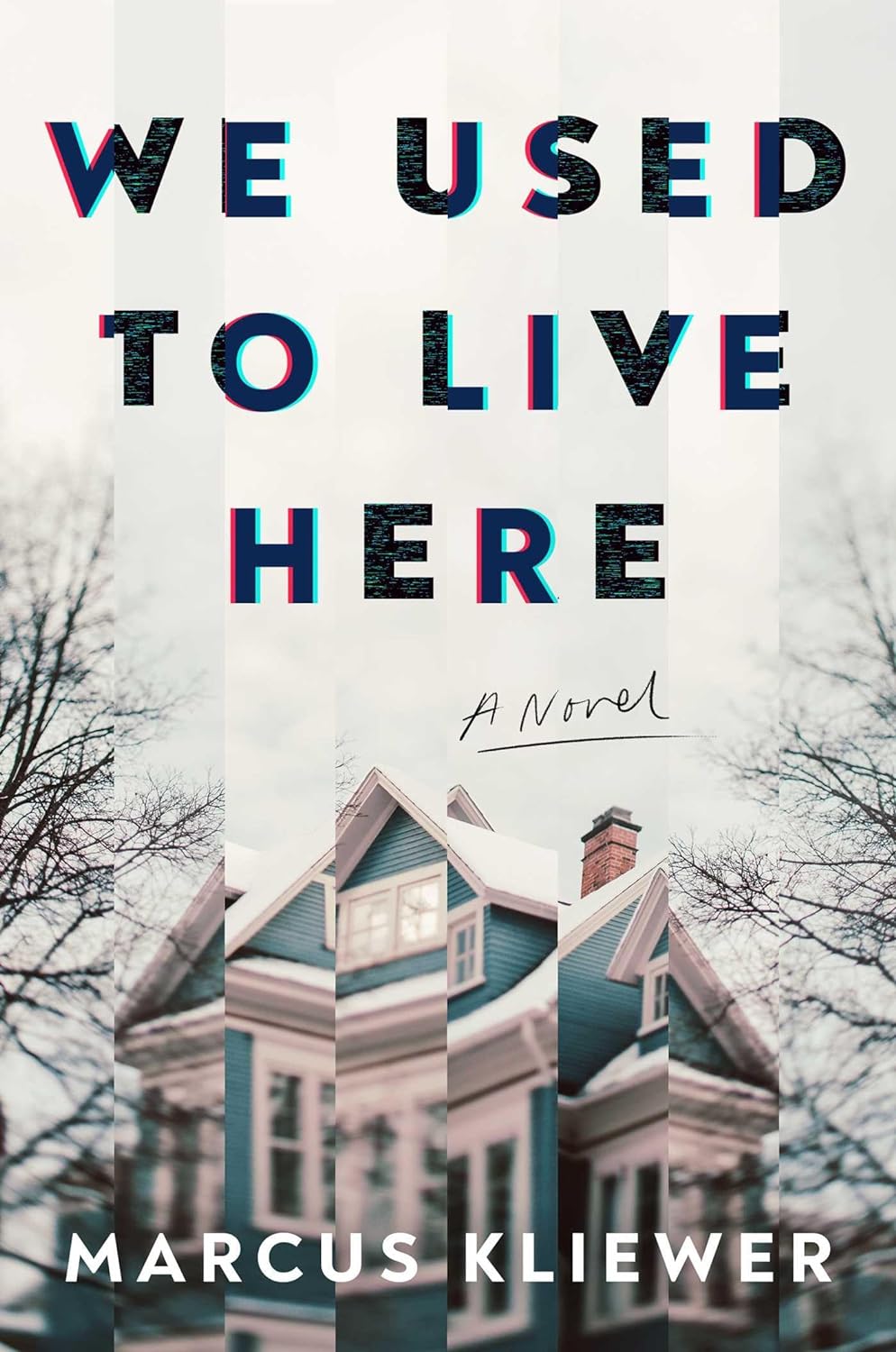
We Used to Live Here – Marcus Kliewer

Years ago, I started to watch the movie The Strangers and I couldn’t make it past the first twenty minutes. Totally creeped me out.

While I eventually did make it through the whole thing, I don’t think I’d ever be looking to repeat the experience. Except maybe in book form.

Marcus Kliewer’s novel We Used to Love Here began its life on Creepypasta. I have only had one other experience with a book with the same starting point: Pen Pal. Like that book, this one started off with a bang and ended with a bit of a whimper.

Eve and Charlie have recently purchased an old fixer-upper in a secluded location with the intent of either renovating or demolishing and rebuilding. Eve is home alone one evening when the doorbell rings. There’s a family on her doorstep and Eve concludes

All in all, they seemed the kind of brood that would cap a Sunday-morning sermon with brunch at Applebee’s. Eve was more than familiar with this crowd.

The father wants to know if he can bring his family in because he used to live in the house. Weird, right?

Eve is reluctant to let them in and so she plays the only card she has: she’ll check with her girlfriend because

The distant alarm bells of her subconscious rang out. She vaguely remembered hearing stories. Stories of strangers showing up at houses, claiming they had lived there once, asking to take a quick look around. Then, when the unsuspecting victims had let down their guard: robbery, torture, murder.

What starts as a relatively straightforward domestic thriller soon morphs into something completely unhinged. The family starts to seem less “off” and Eve starts to feel way more unreliable. And the house, yeah, the house is changing, too. “”The basement’s bigger that you’d think,”” Thomas tells Eve. “”Lots of nooks, crannies, places to hunker down.”” Similarly, the attic is labyrinthine. But this discovery, like the basement, is new to Eve – discovered only after the arrival of the family.

We Used to Live Here was certainly easy to read – but I found it sort of disjointed, especially as things went along. It wasn’t scary, although there were certainly some creepy moments. I didn’t finish it feeling satisfied, mostly because I wasn’t 100% sure I understood exactly what had happened. That may be my own fault rather than the book’s – so your mileage might vary.

Moon Road – Sarah Leipciger

Kathleen and Yannick, the protagonists in Sarah Leipciger’s 2024 novel Moon Road, haven’t spoken to each other in almost twenty years. Their marriage

lasted only a few years, but they remained good friends over two decades because of Una, their daughter. And because they never stopped being fond of each other. So, a lasting friendship, but then one day, they had an argument. The argument was bad enough that they didn’t speak for nineteen years. Not a card, not a text message, not an email.

Another momentous thing happened all those years ago, too: Una, who had left Ontario and moved to the West Coast, disappeared. In the intervening years, Kathleen keeps track of how long Una has been missing by marking the days in a notebook (over 7000 of them by the time the novel starts) and hosting an annual party in her honour. Now 65, she grows flowers to sell to local businesses. Yannick, 73, is on wife number four and has three sons and a daughter. Now Yannick is back in Birchfield because he has “received some unexpected news” and “it’s about time they saw each other again.”

The news concerns Una, of course. It is her disappearance that has driven Kathleen and Yannick apart, as grief sometimes does, but it is also the thing that pulls them back together. Yannick has decided that he will drive to Tofino and he wants Kathleen to come.

This is a road trip novel, but only marginally. As Yannick and Kathleen set off on their cross-country drive, they talk and bicker and reminisce, weaving together the past and the present. They’ve both dealt with their grief and their guilt separately and neither knows for sure what they are going to find when the arrive on Vancouver Island.

The novel also provides a glimpse of Una and her time in BC, living rough, working odd jobs and trying to figure out what her life is meant to be. These sections are strung out throughout the novel and it isn’t until the very end that we learn what actually happened to her. The mystery of her fate, the subsequent searches, and the leads that go nowhere definitely keep the pages turning.

But what I loved about this novel was Yannick and Kathleen and how connected they were despite the intervening years. Their marriage didn’t work, but they have a child and that is a bond that sticks. (Unless it doesn’t and I have first-hand knowledge of that scenario.) It was wonderful to read a book featuring mature characters who have lived a life, suffered a terrible loss, and then made an effort to keep moving forward.

The book is also beautifully written – not quite a travelogue, despite the road trip, but Canada is a gorgeous country, and anyone who has even driven from coast to coast (I have!) will likely recognize some of the descriptions of the vastness of the prairies and the majesty of the mountains.

Highly recommended.

The Spoon Stealer – Lesley Crewe

After my first experience with a book by Maritime author Lesley Crewe (Amazing Grace), I would never have willingly chosen to read another book, but The Spoon Stealer was selected for my book club and so my options were to either suck it up and read it or just not bother. I sucked it up.

Emmeline Darling is a senior living alone with her dog, Vera, in England. She joins a memoir writing workshop at her local library and she begins to share her life story with the other ladies in the group, several of whom become her fast friends. Her memoir begins on a summer morning in Nova Scotia in 1894 when Emmeline’s mother was hanging out a line of clothes and Emmeline arrives suddenly, dropping “into a basket full of freshly laundered linen.”

The ladies in the memoir group, with the exception of the workshop leader, become fast friends and continue to meet after the workshop ends because they are so invested in Emmeline’s story. And it’s quite a tale.

Two of Emmeline’s older brothers had gone off to fight in the Great War and when Teddy, her favourite, ends up in hospital in England, Emmeline races to his side. That’s how she comes to spend the majority of her life in England.

As with any life, Emmeline’s is full of joy and heartache. She makes friends along the way; she experiences extreme luck and devastating loss. She is a ‘character’ – stealing hearts and spoons wherever she goes. Oh, and Vera talks – but just to her, of course, because that would be ridiculous, right?

I had an easier time with The Spoon Stealer than I did with Amazing Grace. I’m not sure that this is actually high praise or not because I still had a lot of problems with this one. For one thing, people do not talk the way they do in this book. And relationships aren’t magically repaired after decades of estrangement, which is what happens when Emmeline’s brother, Martin, dies and leaves her the family farm even though they haven’t spoken in years and years (and years). In fact, Emmeline hasn’t spoken to any of her remaining family for ages, but when she returns to Nova Scotia it’s poof! magic. The dialogue between the characters often serves as exposition/character development and, for me at least, it wasn’t believable.

There was at least one eye-rolling character twist and a tug-at-your-heart-strings ending that felt manipulative. And also – talking dog. 😦

I know people love this author, but she just isn’t my cup of tea.

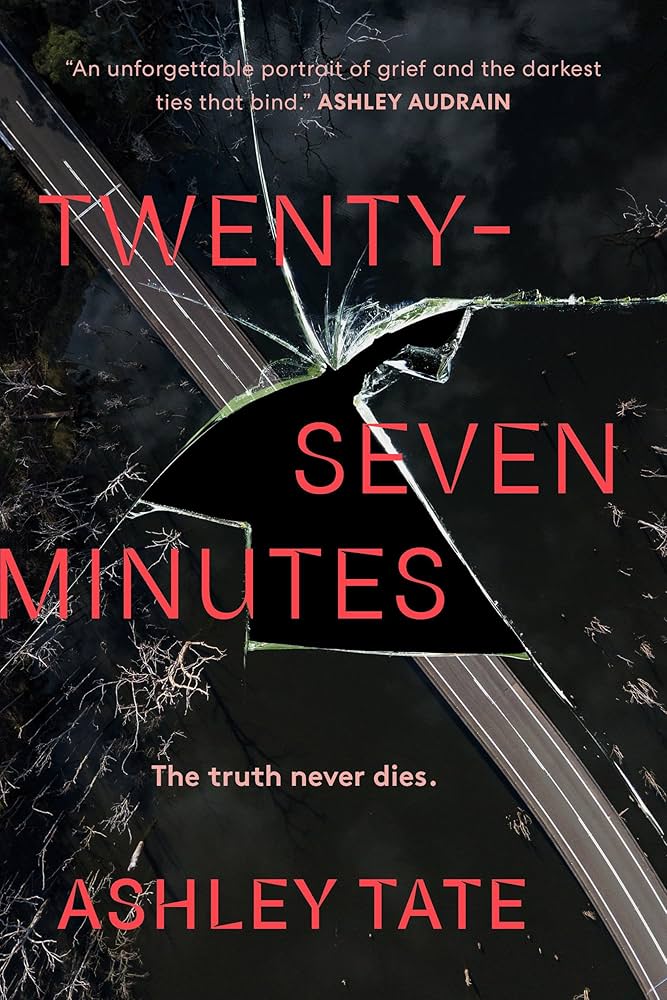
Twenty-Seven Minutes – Ashley Tate

Canadian author Ashley Tate’s debut Twenty-seven Minutes begins with a horrific car accident in which teenager Phoebe Dean, who is “too young and too beautiful and too good to die”, dies. Her older brother Grant, was driving. Her friend, Becca, was in the back seat. They survived.

Ten years later, as Grant’s mother plans a memorial for the perfect daughter she lost, townsfolk are petitioning to have the bridge where the accident happened demolished. Not so much because of what happened to Phoebe but because of Rose Wilson, an elderly woman who has also had on accident on the bridge.

The memorial is stirring up a lot of drama in the town. Grant, who has always been troubled despite the fact that he was a big football star back in the day, is clearly imploding. He drinks, sleeps around and is clearly still grieving over the loss of his sister, but he comes across as an asshole more than as someone who can’t seem to shake off what happened that night.

There is also some sort of weird relationship between Grant and Becca. They have made some sort of agreement about what happened on the bridge the night Phoebe was killed and have also agreed not to talk about the status of their relationship.

June is also in mourning. On the night Phoebe died, her older brother, Wyatt, left home and never returned. Now June’s mother has died, leaving her all alone in the world until, miracle of miracles, Wyatt returns. He won’t tell her where he has been for the last decade, he just hints that all will be revealed.

The novel tracks multiple perspectives, each of them having a vested interest in what actually transpired on the bridge that night. This reveal is what we wait almost 300 pages for. 300 long pages of people shrieking at each other or saying the same thing over and over. It was not a fun time.

The title refers to the twenty-seven minutes between when the accident happens and when Grant actually calls for help. The reveal is both unbelievable and kind of ridiculous. The teenage versions of these characters sound exactly like their twenty-something selves and none of them are particularly likeable or sympathetic. I understand how people can get mired in grief, but this book was interminable and the ultimate payoff not worth the effort.

Not for me.

Brother – David Chariandy

New-to-me Canadian writer David Chariandy’s novel Brother is an elegy to family. Published in 2017, this novel topped all the Best Of lists and won a Writers’ Trust of Canada award, as well as being nominated for the Giller. I have had it on my TBR shelf for several years, and in an attempt to tackle some of my backlist, I finally read it.

Michael and his older brother Francis live with their Trinidadian mother in The Park, a “cluster of low-rises and townhomes and leaning concrete apartment towers” – a not-so-nice suburb of Toronto. Their father is long gone.

When the novel opens, Michael is meeting with his friend, Aisha. They haven’t seen or spoken to each other in a decade and her arrival opens Michael up to the trauma of an event that transpired many years ago – one that he and his mother have never gotten over. This tragedy is alluded to early on in the book, but I’ll be vague about it here.

Brother toggles back and forth between Aisha’s return – which dredges up the past – and the past itself.

Francis was my older brother. His was a name a toughened kid might boast of knowing, or a name a parent might pronounce in warning. But before all of this, he was the shoulder pressed against me bare and warm, that body always just a skin away.

Francis and Michael are close, especially as young boys when they are often left to fend for themselves as they are left alone while their mother works. Their mother worked as a cleaner, and often took on extra work to try to make ends meet.

She was never happy about abandoning us, and if she learned the evening before of an impending night shift, she would spend precious sleep time cooking and worrying over the details of meals and activities for the following day.

Chariandy captures the poverty, violence, and hopelessness of the lives of the people who live in The Park, but he also captures the sibling bond, the friendships and the hope for a better future. I particularly admired the subtlety of Francis’s relationship with Jelly, a wannabe DJ.

When Aisha arrives back at The Park, she tries to unclog the grief Michael and his mother have been stifled by for many years. And by allowing Michael to finally tell his story, perhaps she has succeeded.

Beautiful writing and a timely story about police violence and the immigrant experience make Brother worth checking out.

The Offing – Roz Nay

I have had good luck and so-so luck with Canadian writer Roz Nay. I LOVED Our Little Secret and I enjoyed reading The Hunted, although it was a little bit less successful overall. Her latest novel, The Offing swings more to the so-so side of the scale. It was certainly an easy book to read and it definitely had its heart-pounding moments, but it was also slightly unbelievable – especially the big reveal.

So, Ivy and her bestie, a beautiful model named Regan, have escaped their lives in New York and are currently backpacking in Australia. Ivy, especially, had a need to get out of NYC. Her elicit relationship with one of her professors has imploded and now he seems to be stalking her. She needs to get off the grid, so she convinces Regan to take a job crewing on a sail boat bound for Darwin. The boat’s owner, Christopher, and his eleven-year-old daughter, Lila are on a Christmas Break adventure. The only other passenger will be Desh, the boat’s cook (and also a new hire.)

Christopher gives off total Dad vibes, and the fact that his daughter (and her cat) is with him, makes him seem even more harmless, so the girls sign on and off they go. Of course, nothing is ever that simple in this type of novel, right?

First of all, Ivy’s creepy ex-lover seems to have made his way to Australia. Secondly, Lila suffers from night terrors. Christopher seems indecisive and odd. Desh is friendly and hot and Ivy is drawn to him, but her insecurities over Regan’s physical appearance – what dude wouldn’t find her more attractive? – causes a strain in the girls’ relationship. Then there’s Blake Coleman, skipper of The Salty Dog, a boat that keeps showing up.

As is the way with these books, you are supposed to be thrown off by everyone’s shady behaviour – and there is certainly plenty of it in this book. There are some truly tense moments and some instances where I turned the pages super fast because…what’s going to happen?! But…

That denouement just didn’t totally work for me.

That said, The Offing is a twisty, fun and entertaining book. It’s perfect if you are looking for something fast-paced and not too difficult to read…which, as I was returning to another school year when I picked it up, made it the perfect book for me.

This Summer Will Be Different – Carley Fortune

I think at this point it is safe to say that I buy Carley Fortune’s books not because I like them but because I want to support a Canadian writer. This Summer Will Be Different is her latest book, but I had pretty much the same experience reading it as I did reading Every Summer After and Meet Me at the Lake. But, I also think that I am not the right reader for her books. I am too old to buy into the frothy type of romance she is selling.

In this book, Fortune has stepped away from Muskoka and landed in Prince Edward Island. And there’s the first problem, but we’ll get to that later. Lucy (who wears her hair in braids) has left her life in Toronto for a little break in PEI with her best friend, Bridget. Bridget is from PEI and can’t wait to show Lucy the island’s magical wonders. Except Bridget has missed her flight and Lucy has arrived solo. She ends up at Shack Malpeque and it is there that she meets Felix.

His eyes were the most dazzling shade of iceberg blue, striking against his deep tan. A cleft parted the center of his chin. His face hadn’t seen a razor in at least two days, and it was a study in contrasts. Strong jaw. Soft pink lips, the bottom fuller than the top. The bright eyes trimmed in black lashes.

We’re very much in Romance 101 territory and it’s only page 5.

Felix and Lucy experience a connection – as is the way of these things – and before you can say Anne of Green Gables these two crazy kids (Lucy is 24 and Felix, 23) are have mind-blowing sex. Things get complicated because Lucy doesn’t realize that Felix is actually Wolf, Bridget’s younger brother. (How she manages to have a bestie whose younger brother is called Wolf, a name she isn’t curious enough to ask about…I dunno, but there you have it – the meet cute.)

Over the course of five years, Lucy and Felix keep this ‘relationship’ a secret for slightly silly reasons because it would seem that they have undeniable feelings for one another. The novel toggles back and forth from this first meeting to subsequent visits to PEI where Felix and Lucy both keep their distance from each other (because Bridget can’t find out for reasons that make zero sense) and also have hot sex (which is made less hot by the amount of times Lucy asks for “more”).

We are reminded of the location at every opportunity. Like every time someone is buttering toast, it’s with Cows Creamery Churned Butter. And apparently all people eat in PEI is oysters. (I myself have never eaten oysters in PEI, but I am one of those weirdo Maritimers who doesn’t like seafood.) Yes, there is the requisite trip to Green Gables, and the necessary mention of red dirt and ocean vistas etc etc.

The problem isn’t the book per se because I have a feeling that a) I am not the intended audience and b) every single 20-something will be planning a trip to PEI this summer to meet their own version of Felix. For me, all these people were just meh. Bridget is keeping a huge secret days before her wedding and the reveal is anticlimactic. You know Felix and Lucy are going to get their happily-ever-after. At this point in my life, I guess I am looking for characters who have logged a few more miles than these physically perfect twenty-somethings have. So, I really shouldn’t be poo-pooing a book for which I am certainly not the intended audience.

If frothy, sun-kissed, sweet (with a little spice) fiction is your jam, put this in your beach bag and hit the sand. You’ll probably love it.

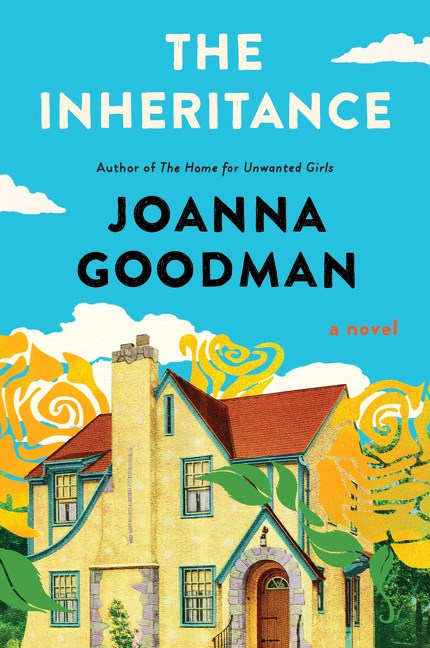
The Inheritance – Joanna Goodman

Arden Moore’s life was perfect. She lives in a too-big, slightly run down “Depression-era Tudor Revival built in 1931.” Her husband, Scott, “was infatuated with it, from its steeply pitched, twin triangular gables and multipaned windows to the arched front door with the wrought-iron knocker.” Better yet, it was in the right part of town, and such things mattered to Scott. But now Scott is dead, and Arden is left with a too-big house she can’t afford to renovate let alone pay the mortgage on.

Joanna Goodman’s (The Finishing School) novel The Inheritance examines the aftermath of the death of a spouse, sibling relationships, (Arden has an older sister, Tate, who is “the glamorous, successful sister”) and mother/daughter relationships. It also looks at aging, as Virginia Bunt, Arden and Tate’s mother, is trying to come to terms with, and self-harm. Actually, there’s A LOT going on in this book. Some might say too much, but I actually think that Goodman did a good job of keeping all the spinning plates in the air. As a woman of a certain age, I related to Virginia’s story; as the mother of a daughter – albeit, no longer a teenaged one – I related to Arden and 13-year-old Ivey’s acrimony (Arden has six-year-old-twins besides).

And then, there’s the inheritance. Virginia had tried many years ago, after the death of Arden’s father, Wallace, to claim her share of Wallace’s money for Arden. In fact, the fight had consumed her life and ended her marriage with Hal. Now, the death of Arden’s half brother (if her mother is to be believed) and advances in DNA testing means that Arden might actually get what is rightfully hers. Thirty million dollars worth.

The Inheritance was a page-turner, for sure, but also a thoughtful examination of grief, moving on and all the complicated relationships that exist in our lives. I enjoyed the read.

The Berry Pickers – Amanda Peters

If you looked at my reading habits the last few weeks, you wouldn’t say I was much of a reader. I’ve been suffering from the slump of all slumps: hashtag the struggle is real! I started Amanda Peters’ debut The Berry Pickers but, sadly, it was not the book to kickstart my reading mojo.

Joe and his family, older siblings Ben, Charlie, Mae and younger sister, Ruthie, always travel from their home in Nova Scotia to Maine to pick blueberries at the Ellis farm. They are Mi’kmaw and this is their summer ritual, gathering with many other Indigenous pickers from New Brunswick and Nova Scotia. It is 1962. This is the summer that Ruthie, 4, disappears.

The Berry Pickers is told from Joe’s perspective. It is years later, and he is dying. From his death bed, he recounts the summer Ruthie went missing and the guilt that has plagued him his whole life.

There is another narrator, too. Her name is Norma and she lives with her parents, a quiet father and an overbearing mother. As a young girl, she’d had bad dreams that she couldn’t understand. In one she was in a fast moving car, and she “turned to see the face of a woman who wasn’t my mother but had my mother’s face.” It won’t take much effort for readers to figure out that Norma is Ruthie. I figured it out in the first paragraph.

The Berry Pickers covers a lot of ground and some readers might not mind that too much but, for me, it was a lot of life lived in just 300 pages. That said, the inevitable reconciliation did offer some poignant moments and having recently lost a very important family member, I did find it moving. I also enjoyed the fact that the story takes place close to home.

I think this was a good book, perhaps if I had read it at a different time, I would have motored through it.