Off the Shelf – So you want to start a book club…

Off the Shelf – CBC’s Information Morning

This morning I talked about the benefits of belonging to a book club. If you can’t find one, you can start one of your own. If you are looking for some advice, check out what I had to say about book clubs here.

If you are looking for some reading suggestions, I have a list of the books my book club has read here. Many are linked to my reviews.

The books I specifically mentioned this morning were:

ourdailybreadOur Daily Bread – Lauren B. Davis

Eat, Pray, Love – Elizabeth Gilbert

Mister Pip – Lloyd Jones

Small Island – Andrea Levy (predates this blog)

The Book Thief – Marcus Zusak

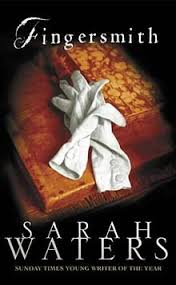
Fingersmith – Sarah Waters finger

If you have questions, by all means, I am happy to help out! Ask away.

Off the Shelf – December 22

Listen to the column here

Some people make grocery lists, I make book lists. Students recommend things, other blogs and traditional reviews, good looking covers. If I don’t buy it immediately, I write it down. This is also the time of year when publishers start to promote new books and I am always on the lookout for the next great book.

Huffington Post recently published an article by young adult book blogger Lisa Parkin about the four next great young adult book trends. According to the article we’ll be seeing less dystopian and “sick lit” in the coming year and readers can be on the lookout for these trends.

  1. Crimes and Cons: stories about characters on the wrong side of the law
  2. Retellings: fairy tales with a YA twist…this isn’t a new trend exactly, but these types of stories are picking up traction
  3. Quirky and moving: these are novels that feature memorable characters in unusual (but not out-of-this-world) situations
  4. Dealing with loss: these are stories of teens dealing with loss of loved ones

You can read Parkin’s article and see her recommendations in each category here.

I could stay in my house and read non-stop for the next five years and still not finish all the physical books on my tbr pile, but that won’t stop me from adding these titles to the line-up.

brightAll the Bright Places – Jennifer Niven

So, this book would fit into the “dealing with loss” category. It’s the story of Violet and Theodore who are both struggling with life when they meet on the edge of the bell tower at their school. And they end up saving each other. I’m really looking forward to this one.

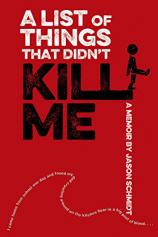
listA List of Things That Didn’t Kill Me – Jason Schmidt, memoir

This book sounds intense. It’s the true story of a boy who has, from the sounds of things, grown up in a world of chaos and has known, from a very young age that what happens in his house must stay a secret. How does a good kid overcome a bad childhood – that’s the question this book asks and answers.

playlistPlaylist for the Dead – Michelle Falkoff

So a couple years ago Jay Asher’s novel 13 Reasons Why was a big hit and early reviews are saying that this is even better. I wasn’t actually a huge fan of Asher’s novel, but most of the teens I know who read it loved it and so I suspect this will be a big hit, too. It’s the story of a teenage boy named Sam who tried to understand why his best friend killed himself by listening to the playlist of songs he left behind.

mosquitolandMosquitoland – David Arnold

So, this book is getting some serious buzz and was chosen as one of the American Booksellers Association’s Indies New Voices novels. It’s a road-trip story and everyone knows road trips are fertile literary ground. This one is about a girl who takes a bus from Mississippi to Ohio and meets some quirky characters and learns a lot about herself on the way. Sounds great.

It’s so important that young adults are able to see themselves in the characters of the books they read. Not everyone is beautiful or athletic or brilliant – some of us are mortal and have human failings and frailties. If books can show teens that there is hope and happiness and humour to be found, let’s let them find it.

What books, YA or otherwise, are you looking forward to reading in 2015?

Off the Shelf – December 8

This morning on CBC’s Information Morning I talked about some of my favourite YA novels of 2014. You can listen to that interview here.

At the end of the year, some people reflect on whether or not they made good on their resolutions, I think about my reading year. Book junkies like me start considering the state of their bookshelves.

There are usually a few memes floating around that ask book bloggers to consider what they’ve read this year. It’s always fun to go back through my blog and think about the books I’ve read.

It’s also the time of year when all the major book players start posting best of…lists. That’s good and bad for people like me – because if there’s one thing I don’t need…it’s more books. However, if you’re looking for some new reading material, here are some great lists to get you started:

Kirkus: Best Teen, Best Fiction; Best Nonfiction

Huffington Post

The Guardian

Telegraph’s Best Teen Books

Book Riot’s Must Read Books from Indie Presses

School Library Journal

and the Mother lode of book lists…

Today, I thought I’d talk about three stand-out YA reads for 2014, one of which is geared to 12-14 year olds, so middle school.

totally joeTotally Joe – James Howe

So, James Howe is super prolific (he’s written over 80 books) and is probably best known for his Bunnicula series. That’s a vampire rabbit that sucks the juice out of vegetables. Totally Joe is part of the Misfit series, the Misfits being this group of friends who are sort of picked on in school and band together. These books actually inspired ‘no name-calling’ weeks at North American schools.

Totally Joe is the second in the series, but I didn’t read the first book and it didn’t really matter. This is the story of Joe Bunch, a kid in 7th grade who is given this very cool class project…and alphabiography. He has to come up with something about his life for every letter. Joe is funny and smart and kind and has a great, supportive family. He also happens to be gay and so he takes a lot of grief from some of the meatheads at school. I loved how open and honest Joe was about his sexual orientation – he’s a really positive role model. I think it’s super important to see kids reflected in the books they read, and I think Totally Joe is age-appropriate and important.

raftThe Raft – S. A. Bodeen

This book is fantastic. I’m not really one for survival stories, but this book is a real page-turner. It’s the story of fifteen-year-old Robie who lives with her scientist parents on Midway, an island about 1300 miles from Honolulu which is where Robie is when the book opens. She’s visiting her aunt. Midway’s teeny, about 2.4 square miles so every once and a while, Robie needs a little taste of civilization. Anyway, she’s on Honolulu and her aunt gets called away on business, which is no big deal, Robie’s used to being on her own…but then something happens on the street and it freaks her out and she decides to take the cargo plane back to Midway. Phone and Internet service is spotty, as you can imagine, and she can’t let her parents know what that she’s coming and then – of course – the plane crashes in the middle of the Pacific and of the three people on board, only she and Max, the co-pilot, survive. They’re on this raft with nothing. It’s a real OMG book with a feisty protagonist, lots of interesting things to say about the environment (none of it preachy) and a terrific, propulsive plot. Great book.

morethanthisMore Than This – Patrick Ness

So I’ve talked about Patrick Ness before, he’s the author of the Chaos Walking series. I actually chose this book for my book club this year. We don’t normally read Young Adult books, but this one seemed interesting and because I’m a fan I figured why not. There was mixed reactions in the group, but the students in my classes who’ve read the book have loved it…and that’s really the litmus test.

When the novel opens, a boy is drowning. Then he wakes up and he’s not dead. But he’s also alone and he actually remains alone for about 160 pages. At first he doesn’t have any memory, then he figures out that his name is Seth and he appears to be in the English town he grew up in before he moved to the States. This is a post-apocalyptic town though. There are houses and business, but they’re empty and it’s all just creepy. Then, about half-way in Seth meets Thomasz and Regine and “the driver” this faceless, seemingly indestructible guy whose mission in life seems to be to hunt the three teenagers down.

This is a smart book. It works on a bunch of levels: sort of a crazy hybrid between thriller and speculative fiction and a book that asks BIG questions about that journey between self-centered adolescence and manhood and what Seth discovers is that “whatever is forever certain is that there’s always more.”

Any of these books would make great Christmas gifts for the young readers in your family.

Off the Shelf – CBC November 10, 2014

This morning on Information Morning I talked about books…about other books.

Here’s what I prepared in advance.

I am a tsundoku. That’s the Japanese word for a person who buys books and leaves them unread. Some women buy shoes, I wear my Birks and buy books. Apparently it’s hereditary because when I tell my 15-year-old son, Connor, that there’s no point in him buying any more books when he has at least a half dozen that he hasn’t read yet, he just shoots me this incredulous look, You’re kidding, right? I have over 500 books on my ‘to- be- read’ shelf at home, to say nothing of the books on my shelves at school.

Think I’m kidding? This is my TBR shelf at home:

IMG_0211

I’m a life-long bibliophile and I do a lot of thinking about what it is about books that I love so much. So today I thought I’d talk about some books that are also about the love of books. These are books in which people talk about their own reading lives.

bookchangedThe Book That Changed My Life – Roxanne J. Cody and Joy Johannessen, editors

This books consists of 71 essays by writers who share with readers the story of the book that cracked open the world of reading for them. For example, Wally Lamb’s (author of She’s Come Undone and I Know this Much is True) wrote about To Kill a Mockingbird, which has been a staple in high school English classes for ever. (I am, in fact, currently sharing it with my grade ten class). Mr. Lamb says that “Until Mockingbird, I’d had no idea literature could exert so stong a power.”


shelfsiscoverylittler_thumb[2]Shelf Discovery – Lizzie Skurnick

This is a reading memoir, where Skurnick, who’s been a columnist for the New York Times and NPR and several other publications, revisits the books that shaped her growing up. Skurnick describes herself as “ravenous toward each book, like a vampire”. Voracious readers will know that exact feeling – like you can’t put the book down and carry it everywhere in case you find yourself with five idle minutes. For some people, Skurnick’s book will be a trip down memory lane; for teens, especially girls, this would be a great primer for all that fiction produced from 1960 on. It also answers that question: why do we re-read a book? Who has time for that? This a great memoir for people who have been profoundly influenced by their adolescent reading lists.


the-ultimate-teen-book-guideThe Ultimate Teen Book Guide – Daniel Hahn & Leonie Flynn, editors

This is a fantastic primer listing over 700 books – there’s something for everyone in this one. Authors and young readers offer up their picks for most amazing books. It offers, among other things, Top Ten lists in a variety of categories, a list of what to read next, so for example if you loved To Kill a Mockingbird it suggests you try John Knowles’ A Separate Peace or In Cold Blood by Truman Capote (Capote was reportedly the inspiration for the character if Dill in Lee’s book.) Terrific resource and really user-friendly.


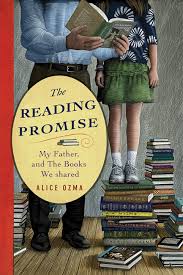
readingpromiseThe Reading Promise – Alice Ozma

I love books where people talk about their own relationship with reading and Ozma’s memoir is very YA friendly. It’s the story of an agreement that she made with her dad that he would read to her every single night for 1000 nights. So that’s a lot of reading. When they hit that goal they decided to extend it – and in the end Alice’s dad read to her every single night for nine years – until she finally went off to college. Clearly books mattered to both of them, her dad was a teacher/librarian, and this book has a lot to say about the power that stories have to create conversation, develop empathy…all that good stuff.
myidealbookshelf1_grandeFinally, I want to talk about a book that Connor gave me for my birthday last year: My Ideal Bookshelf by Thessaly LaForce and Jane Mount

This is a beauty of a book and totally appealed to that part of me who makes a beeline for bookshelves no matter where I am – the houses of friends and strangers, no bookshelf is safe from me. These guys asked 100 people (writers, actors, poets, designers, artists) to think back over their reading lives and come up with their ideal bookshelf. What would be on it? Mount then did an artistic interpretation of the books. The paintings are accompanied by conversations in which the bookshelf owner talks about their personal relationship with the books – they might focus in on one or just talk about their reading life in general. It’s fascinating reading – even if you don’t know the people doing the telling.

I actually did this with some grade ten students and it was a terrific activity. It forced the students to think back to books that have made a real difference in their lives. There’s a template at the back of the book (and online) for students to recreate their own ideal bookshelf – although if you’re not at all artistic (which I am not) you could take a picture, too.

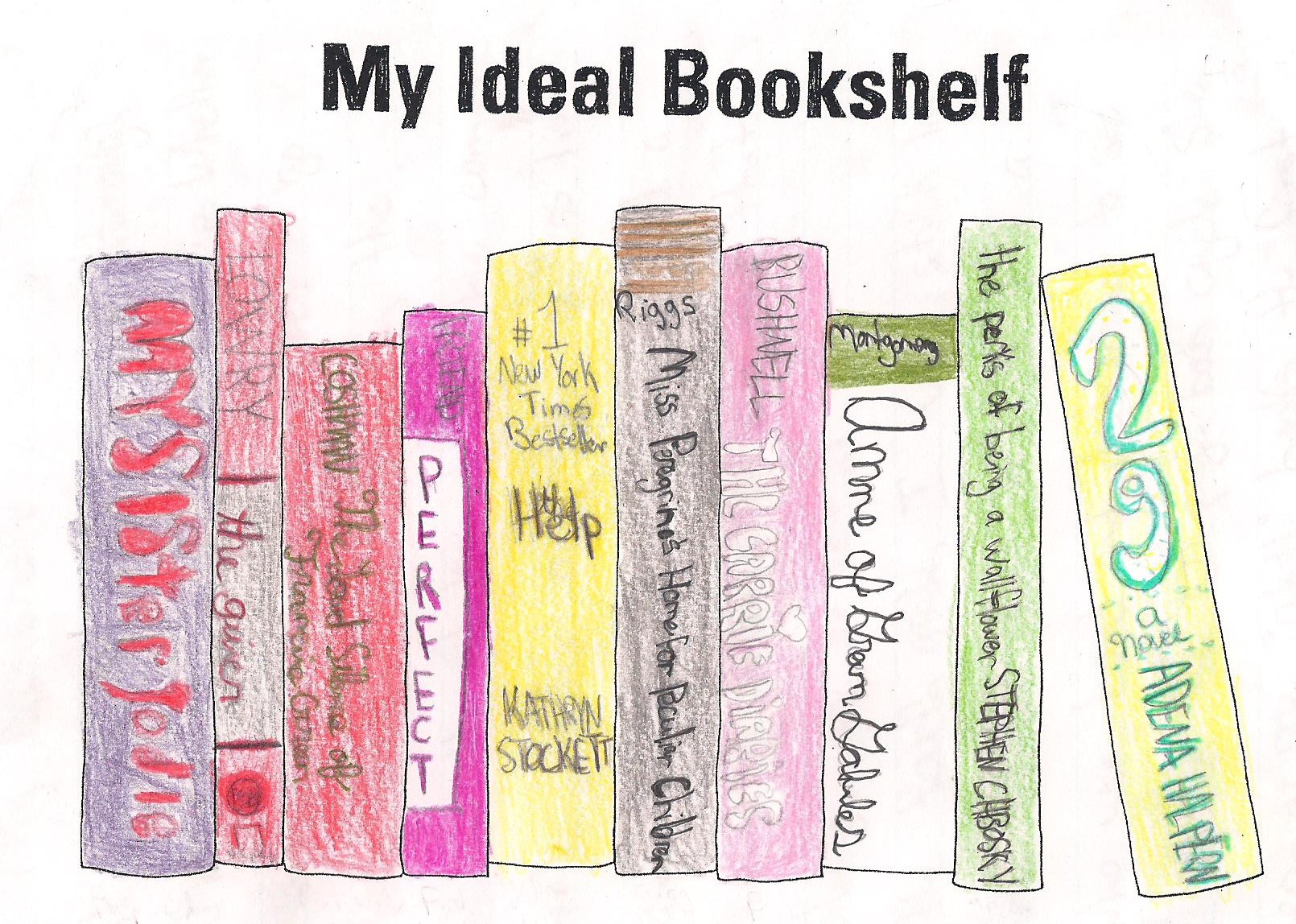
Here’s a sample from one of my students – her bookshelf and an excerpt of what she had to say about books:

LouiseT


“In the fourth grade I was stuck in a Geronimo Stilton phase and I had a cousin who was bound and determined to see me break out of the 100-page cycle. She began sending me “adult” books. The first was The Giver by Lois Lowry. My mother read it first and then advised me to put it away for a few years until I could better handle it. I read it anyway, mainly out of sheer curiosity. And although it kept me up at night thinking about it, maybe that’s what I liked about it. I’ve read it every year since, and it always feels like I’m reading it for the first time.”

Come on – that’s like hitting the literature lottery for an English teacher.

To see some of my students’ bookshelves and read what they had to say about their reading lives,  check out this post


Off the Shelf – CBC Radio

So I did my second book column on CBC Radio this morning.

Listen to it here.

Here’s what I prepared for the talk about scary books.

Literary historian J. A. Cuddon defines the horror story as “a piece of fiction which creates an eerie and frightening atmosphere. Horror is usually supernatural, though it can be non-supernatural. Often the central menace of a work of horror fiction can be interpreted as a metaphor for the larger fears of a society.” One of the first horror novels was The Castle of Otranto by Horace Walpole, 1764 – probably not going to get too many young people reading that one today.

R.L. Stine is probably the best known writer of horror novels for the middle grader. He’s the author of all the Goosebumps books and then went on to write Fear Street, a series of over 150 titles for older teens. To date he’s sold over 400 million books, so I guess the proof is in the gloopy pudding.

Teenagers love to be scared. No one knows that better than Stephen King, who’s made a career out of scaring us. King said: “horror stories allow us to safely vent our “uncivilized emotions…lifting a trap door in the civilized forebrain and throwing a basket of raw meat to the hungry alligators swimming around in that subterranean river beneath. In addition, for some young people, reading a scary story can be a rite of passage, a way of earning bragging rights: “That didn’t scare me!”

Heart-pounding, palms-sweating, doors locked, lights on – who doesn’t love a good scare? It’s like riding a rollercoaster, thrilling, scary, but ultimately safe. A really good book can creep you out way more than a movie – where the scary stuff is often in your face and you become desensitized. A good scary book can be way more unsettling.

So – in honour of Halloween, here’s a list of my favourite scary books.

I’m going to talk about some of the books in the genre geared for Young Adults – plus one.

First off – here’s a quick guide:

If you want to read a book about vampires – definitely check out Holly Black’s The Coldest Girl in Cold Town.

If you want to read a book about werewolves, check out NB writer Kathleen Peacock’s novel Hemlock.

If you want to read a book about zombies, I highly recommend Ilsa J Bick’s series, Ashes.

If you want to read a book about a ghost hunter, check out Anna Dressed in Blood by Kendare Blake

Now for a closer look at some of my recent scary reads.

Nevermore – Kelly Creagh

It sounds like your typical good girl, bad boy set up…but this book is awesome and super creepy. Isobel is a popular cheerleader who gets partnered up with Varen the goth kid (of course he’s a goth kid with a name like that!) to work on a project about Edgar Allan Poe. There’s your clue right there that things are going to take a seriously gothic turn and they do. I mean Poe’s the granddaddy of creepy and Creagh makes good use of his personal story. Fans of Poe will eat this book up, but even if you’re not a fan or know very much about him, you’ll get gooseflesh reading about the truly nightmarish world and Pinfeathers, the character who inhabits it. There’s a sequel, too, called Enshadowed.

Through the Woods – Emily Carroll

I just read this one last week. It’s a collection of short stories written by Canadian author and illustrator, Emily Carroll. I don’t know anything about art, but I can say that the art in this book is really striking, the colours are kind of menacing. Can you say that about a colour? Anyway – these are stories about dark places and strangers and people who are not whom they seem. The first story is about three girls who live with their father in the woods and one day he leaves them to go hunting and tells them, if I’m not back in three days, head to the neighbours. Of course he doesn’t come back, and then the narrator’s two sisters disappear and the ending will just give you goose bumps. You could certainly read the five stories contained in this volume in one sitting, but I think it’s the sort of book you’ll want to revisit again and again – especially at this time of year.

Miss Peregrine’s Home for Peculiar Children – Ransom Riggs

Fifteen-year-old Jake Portman has a special relationship with his grandfather, who has always been a teller of tales. Thing is, his tales are pretty fantastic and concern children who could fly or make themselves invisible. When his grandfather is killed, Jake goes to Wales to visit the orphanage that his grandfather was sent to during the war and finds out the stories might actually be true. The book is full of pretty dang creepy pictures culled from private collections, but the story itself is magical with a side of monsters.

Plus one.

I had a student a couple of years ago who insisted he’d never been frightened by a book. I promised him that I could remedy that and gave him Stephen King’s novel, It. Okay, anyone around in the 1970s will remember the miniseries starring Richard Thomas aka John Boy Walton and that clown, Pennywise. “They all float down here.” Stephen King is the king (pun intended) of making everyday things scary. He’s also really excellent at tapping into childhood fears – something all great horror fiction does – and nobody captures adolescence quite like he does. I don’t love everything King has written, but I loved It and so did my student.

Read something scary for Halloween. With the lights on, of course!


Let’s talk about books – on CBC radio!

I had an opportunity to share my thoughts about young adult fiction on CBC radio’s show, Information Morning. I hope it will be a regular gig because it was SO MUCH FUN. I had a whole big thing prepared – but eight minutes goes so fast and I didn’t have a chance to say everything that I wanted to say. You can listen to the segment here.

For the hell of it, I’ll include my prepared notes below:

**

Want to make an English teacher cringe? Talk about the declining number of teens who read for pleasure.

Sadly the number of young people who read for pleasure has been on the decline and as far as I can tell it’s because they’re reading Tumblr and Facebook and texts – or not reading anything at all. I also think that in school we often expect them to read things they just aren’t interested in. I’m not an expert on the subject, but I do have anecdotal evidence about the lack of interest in books. I sometimes feel like I am on a mission to connect students to books they’ll love. I’m not alone – lots of Language Arts teachers are trying to turn kids on to the love of reading.

The National Reading campaign identifies several benefits of reading including the fact that it is essential to the well-being of society and to our functioning as a democracy; it empowers critical thinking skills, lays the foundation of future learning; it increases individuals’ health and well-being. And those are all awesome reasons to read – but I tell my students that I read to know that I am not alone, to understand what it means to be human, to learn how to be more empathetic. Most importantly I read for pleasure (which is also on the list, by the way).

I’ve been a life-long reader. I’m going to date myself here, but I’m old enough to talk about The Bobbsey Twins…I value reading, partly because my parents valued it. My kids are readers because I am. They’ve been surrounded by books their entire lives. My home is filled with books and so is my classroom and I think one of the most important things I can do as a teacher is to connect students to books because I really believe that all it takes is one good reading experience to reignite that fire that has gone out in so many kids. That sounds totally evangelical, I know.

Okay – so I am going to get off my soapbox.

One of the best parts of my job is talking about books with my students. I LOVE it. I love pulling a book off the shelf and physically putting it in someone’s hand and saying “Read this.” I’ve got about 1000 books in my classroom, so it’s a very immediate thing. I read A LOT of (though not exclusively) YA/teen fic and there’s some great stuff out there…but there’s also some junk…it’s like comparing Stephanie Meyer to Joss Whedon (pop culture reference my students will get!) A quick survey always shows that most kids read when they were younger…and then it starts to drop off as they get older. I just have to remind them of why they used to love it. And I have to find them the right book.

What makes a great teen book? The same thing that makes a good adult novel. (And, by the way, I don’t subscribe to the notion that adults shouldn’t read YA fiction. There are some amazing YA writers that adults should check out and I’m going to talk about just three.)

Character – that’s true for any book, of course, but I think young readers want to see themselves reflected back to them; they want characters to care about and root for

Plot – not overly convoluted – although subplots are great, keep turning those pages; worlds they recognize and worlds they do not

Writing – obviously, although this is subjective…which is why some people love Twilight and others do not. To each his or her own.

A conversation with the student is always the way I start – what’s the last book you read? (Often times they haven’t read anything, but I have built in reading time in my class and so I insist they get back on the reading saddle.) What are you interested in? Are you a confident reader?

So today I thought I’d just talk about three books that invariably come back to me with a student stamp of approval. These aren’t necessarily new releases, but over the past few years they’ve been books that have been borrowed a lot so they’re definitely keepers.

The Book Thief – Marcus Zusak, 2005

He’s an Australian writer and this book was originally intended – I believe – for adult audiences. It’s mostly touted as YA here – and I think teens would enjoy it, although they may find it a little slow to start. So it’s the story of Liesel Meminger.  Liesel is almost ten when she ends up in Molching with Hans and Rosa Hubermann, her new foster parents. It is 1939. In Nazi Germany. Death is personified and he’s the book’s narrator. Sometimes events are reported without comment – you forget Death’s there – other times Death weighs in on events. It might take some readers a bit to get used to. John Green – and voracious teen readers will know exactly who this guy is, called The Book Thief “brilliant and hugely ambitious.” Liesel is just a beautiful character; it is impossible not to fall in love with her. She literally steals books, the first one: The Grave Digger’s Handbook is stolen at her brother’s funeral. She doesn’t even know how to read. The Book Thief is about hope and sacrifice and love and family – all big ticket items. It’s also about the power of words and so of course I love it.

The Knife of Never Letting Go – Patrick Ness, 2009 (part of the Chaos Walking trilogy, which also includes The Ask and the Answer and Monsters of Men); American writer who lives in Britain; also author of A Monster Calls and More Than This, both of which I highly recommend

It’s about a kid named Todd who is just about to turn 13 and when he does he’ll be a man. He lives in this place called Prentisstown, which strangely sounds like some town ripped out of a Clint Eastwood spaghetti western…but it’s remarkable for a couple other reasons: there are no women and everyone can hear everyone else’s thoughts. It’s dystopian. Then one day, Todd’s out with his dog Manchee (he can hear the dog’s thoughts, too – which is often pretty comical) and he suddenly hears…nothing. When he reveals that to the men who have been looking after him they tell him to run…and keep on running and, literally, all hell breaks loose. The second and third books are every bit as fantastic as the first and, in fact, I had a grade ten student burn through all three in about a week…and the fact that he loved them and talked about them encouraged a couple more kids to start and one girl to actually go out and purchase the first book. Yay!

The Fault in Our Stars – John Green- sold 6,000,000 worldwide – movie came out a few months ago

There’s probably not a teen out there who hasn’t read this book, but I am going to talk about it because I think all the moms and dads should read it, too. Kelley Armstrong was recently at Harbour View to talk to students. In case you don’t know who she is, she’s a Canadian writer of both adult and teen fiction – a best-selling writer. She was talking about trying to sell her first book, Bitten, which is about werewolves…and it was just sort of by way of explaining how publishing changes. She said that what publishers are looking for now is the next John Green. I love the guy. He’s super smart and super nerdy and The Fault in Our Stars is just one of those books that – yes, it’s a “disease of the month” book, but it not. Hazel Grace is seventeen and she has lung cancer which is being controlled by some drug (not real). She’s addicted to America’s Next Top Model – which tells you the state of her life. Her parents insist that she attend a cancer support group and so she does, reluctantly, and that’s where she meets Augustus. This book is driven by the magic that is Hazel and Augustus and it will make you laugh and cry and curl up in a ball sobbing hysterically at 3 a.m. Possibly all at once. My favourite book in 2012. Not just my favourite teen book…my favourite book.