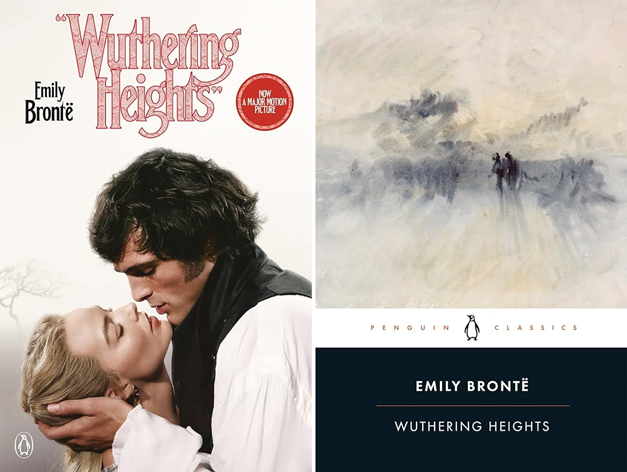
Wuthering Heights – Emily Brontë & “Wuthering Heights” – Emerald Fennell

Just before my daughter and I went to see Emerald Fennell’s movie “Wuthering Heights”, I decided to re-read Emily Brontë’s one and only novel, Wuthering Heights. The novel was published in 1847, just one year before Emily, a reclusive spinster, died at the age of 30. Critic V.S. Pritchett said “There is no other novel in the English language like Wuthering Heights“. Indeed, the novel has endured for 179 years and, if nothing else, might expect an uptick in readers based on Fennell’s movie. New readers, however, are likely to be flummoxed.
I read Wuthering Heights for the first time when I was in high school, so 50 years ago. My memories of it going into this re-read were of Catherine and Heathcliff, tortured lovers on the moors of Yorkshire. I always credit this novel for setting up my romantic expectations/aspirations, which may explain why I have always been drawn to angsty love affairs: couples who love each other but can’t be together, or lovers who shouldn’t love each other but do, are totally my romantic jam. Probably also explains why I am single. My romantic expectations were skewed at an early age.

In my memory, Catherine and Heathcliff were passionately in love with each other, but he wasn’t the right guy for her socially; she needed to marry up the social ladder. Enter Edgar Linton. What I didn’t remember was that Catherine was dead by page 200 and for the rest of his miserable life, Heathcliff tries to ruin the lives of everyone around him including his son, Linton, and Catherine’s daughter, Cathy.

As a teenager, I saw Wuthering Heights as a tragic but ultimately romantic love story, but upon re-reading I discovered it’s slightly more complicated than that.

Catherine and Heathcliff’s story is told to Mr. Lockwood, a lodger at Thrushcross Grange, who falls ill and convalesces under the care of Ellen “Nelly” Dean, housekeeper at both Thrushcross and Wuthering Heights, Catherine Earnshaw’s family home. She tells Mr. Lockwood about how Mr. Earnshaw, in an act of benevolence, plucks Heathcliff from the streets and brings him back to Wuthering Heights, “a sullen, patient child; hardened, perhaps to ill-treatment”, ill-treatment which he further endures at the hands of Catherine’s older brother, Hindley, the most odious of characters.

Catherine takes an immediate shine to Heathcliff. “”She was much too fond of Heathcliff,” Nelly tells Mr. Lockwood. “”The greatest punishment we could invent for her was to keep her separate from him””. They pass their childhoods running wild on the heath.

Catherine has a willful streak and a fiery temper; she is no shrinking violet. In fact, even Mr. Earnshaw favoured Heathcliff over his own daughter “who was too mischievous and wayward for a favourite.”

Certainly, she had ways with her such as I never saw a child take up before; and she put all of us past our patience fifty times and oftener in a day: from the hour she came downstairs till the hour she went to bed, we had not a minute’s security that she wouldn’t be in mischief. Her spirits were always at high-water mark, her tongue always going–singing, laughing, and plaguing everybody who would not do the same. A wild, wicked slip she was–but she had the bonniest eye, the sweetest smile, and the lightest foot in the parish; and, after all, I believe she meant no harm.

When Edgar Linton asks Catherine to marry him, she tells Nelly “I’ve no more business to marry Edgar Linton than I have to be in heaven […] It would degrade me to marry Heathcliff now; so he shall never know how I love him: and that’s not because he’s handsome, Nelly, but because he’s more myself than I am. Whatever our souls are made of, his and mine are the same.”

So, she does marry Edgar and moves to the palatial Thrushcross Grange to live with him and his sister, Isabella. Heathcliff disappears and when he reappears, three years later, he is much changed.

He had grown a tall, athletic, well-formed man; beside whom my master seemed quite slender and youth-like. His upright carriage suggested the idea of his having been in the army. His countenance was much older in expression and decision of feature than Mr. Linton’s; it looked intelligent, and retained no marks of his former degradation. A half-civilized ferocity lurked yet in the depressed brows and eyes full of black fire, but it was subdued; and his manner was even dignified: quite divested of roughness, though too stern for grace.

His reappearance shakes up everyone. To Edgar Linton, Heathcliff was nothing more than “the gypsy–the ploughboy” but, well, we know what Catherine thought of him. Surely, this will not end well.

And, of course, it doesn’t.

The vitriol against Emerald Fennell’s adaptation of what she says is her favourite book of all time is both deserved and undeserved. “Wuthering Heights” is Wuthering Heights adjacent; it is not a faithful adaptation of the book. My daughter, who is 28, loved the movie. She sobbed for the last fifteen minutes. She has never read the book.

Fennell encountered the book when she was about 14, so a similar age to my first exposure. I think she saw something similar to what I saw when I first read it: a great love story. Her movie is fanfiction, really, because it imagines (in a kind of annoying music video montage), a lot more sex than exists in the novel. In fact, Heathcliff and Catherine are never physically intimate in the book. The on-screen sex is not graphic, despite one of my friends calling it “porny.” As an avid consumer of fanfiction back in the day, I know how graphic writers can be when describing what they ‘imagine’ happens when the source material fades to black–and truthfully, that’s what Fennell is doing here–but what we see on screen is pretty tame; nary a breast or a butt.

It also portrays Nelly as the villain of the piece; she deliberately coaxes from Catherine the confession that she can’t marry Heathcliff because he is beneath her when she knows that Heathcliff will hear, but he doesn’t hear when Catherine when says she loves him or see how tortured she is about the decision. Hindley doesn’t exist in this version. Isabella is played for laughs and as a submissive in a bizarre scene where she is chained up in Heathcliff’s house and barks like a dog.

Another criticism of the movie is the casting. Margot Robbie is 35; Catherine was 18 or 19 when she died in childbirth. Jacob Elordi is not by any stretch (and at 6’5″ there’s a lot of stretching to be done) a “dark-skinned gipsy”. But I didn’t care too much about that because both of these people can actually act and they are beautiful to look at and since the movie isn’t *really* Wuthering Heights, I was content to let the whole thing play out. Yes, I understand this is problematic whitewashing, but it was clear to me that Fennell was making a version, her 14-year-old wishful thinking version, of the book. For example, the actor who plays Edgar Linton is played by Shazad Latif, who is by no means the insipid Edgar I imagined. In the book he is described as light-skinned, blue-eyed, and slender. So, make of that what you will.

The whole movie is beautiful, really, but certainly not the Wuthering Heights of my teenage imagination. (In fact Wuthering Heights, the house, looked like it was made of plastic. It was weird.) The costumes, the landscape, the overall aesthetic was easy on the eyes. But the movie doesn’t demand anything of you beyond your belief that Heathcliff and Catherine love each other. That’s what I believed at 15.

Maybe now I think their relationship is more obsessive, complicated, and toxic, but I will not deny that I still find the tale hopelessly romantic even though Catherine and Heathcliff are not especially likeable and are certainly, on occasion, horrible to each other and others. The movie doesn’t portray anything beyond Catherine’s death, but the book still has 200 pages to go after she dies and in those pages we see Heathcliff destroy everything in his path. Does he do it because of grief? Eighteen years after her death, he admits to Nelly that he bribed a sexton to open her coffin, and when he saw her face again “it was hers yet.”

…she has disturbed me, night and day, through eighteen years–incessantly–remorselessly. […] I felt Cathy was there: not under me, but on the earth. A sudden sense of relief flowed from my heart through every limb. I relinquished my labour of agony, and turned consoled at once: it remained while I refilled the grave, and led me home.

Emily Brontë’s novel is a masterpiece of mood, passion, and tension. In her introduction to the Modern Library edition of the novel, Diane Johnson writes: “In their rage and frustration at the impediments that society and conventional morality impose on them, preventing the perfect expression of the erotic life force they embody, the two lovers symbolize the ultimate tragedy of man’s earthly condition.”

Emerald Fennell’s movie is Wuthering Heights for the TikTok generation. I enjoyed watching it, but I enjoyed my re-read far more.

The Hellbound Heart – Clive Barker

So, apparently British horror writer Clive Barker’s 1986 novella The Hellbound Heart is a classic. It spawned the cult movie Hellraiser, which I have never seen…and am not likely to see after having finished the book.

Frank is tired of the world. In fact, “there was nothing left out there to excite him. No heat. No sweat. No passion, only sudden lust, and just as sudden indifference.” Then he finds Lemarchand’s box, which offers him an intriguing puzzle to solve and if he does, untold pleasure of the darkest kind.

Of course, you can’t make a fair bargain with the Cenobites. They are tricky entities. Frank soon discovers “There was no pleasure in the air; or at least not as humankind understood it.”

Frank’s brother Rory and his wife Julia have recently moved into Frank and Rory’s childhood home. One of the rooms is damp and creepy and Julia soon discovers the reason why. Some version of Frank inhabits the walls and in order to be made whole he needs blood. Julia, who had a pre-marital tryst with Frank, an event that “had in every regard but the matter of her acquiescence, all the aggression and joylessness of rape”, feels her lust for Frank reunited. despite the abhorrent form he currently takes.

It was human, she saw, or had been. But the body had been ripped apart and sewn together again with most of its pieces either missing or twisted and blacked as if in a furnace. There was an eye, gleaming at her, and the ladder of a spine, the vertebrae stripped of muscle, a few unrecognizable fragments of anatomy. That was it. That such a thing might live beggared reason–

The plot is relatively straightforward – equal parts predictable and revolting. I didn’t love it, but I didn’t hate it either.

Seventeenth Summer – Maureen Daly

Published in 1942, Seventeenth Summer was written while Maureen Daly was still in college. Although S.E. Hinton’s debut The Outsiders is often considered to be the first work of Young Adult fiction, a case can be made for Daly’s book as it has all the hallmarks of the genre.

Angie Morrow lives with her parents and sisters in Fond du Lac, Wisconsin. As the summer begins, she locks eyes with Jack Duluth at McKnight’s, a drug store/soda bar, and thus begins a romantic summer.

I remember just how it was. I was standing by the drug counter waiting for the clerk. The sides of the booths in McKnight’s are rather high and in one, near the back, I could just see the top of someone’s head with a short crew cut sticking up. He must have been having a Coke, for he tore the wrapping off the end of his straws and blew in them so that the paper covering shot over the side of the booth. Then he stood up to see where it had landed. It was Jack. He looked over at me, smiled, and then sat down again.

Although Seventeenth Summer is tame by today’s standards, the young people in this book drink and smoke (pipes!) and make out, but there is something blissfully innocent about Angie’s account as she navigates her feelings for Jack, a handsome basketball player. Angie doesn’t think that’s she’s pretty enough or clever enough for Jack, but despite his initial swagger, Jack proves himself to be sweet and sincere.

Daly’s book is a sweet look at a time past, but it will surely resonate with anyone who has ever been young and in love.

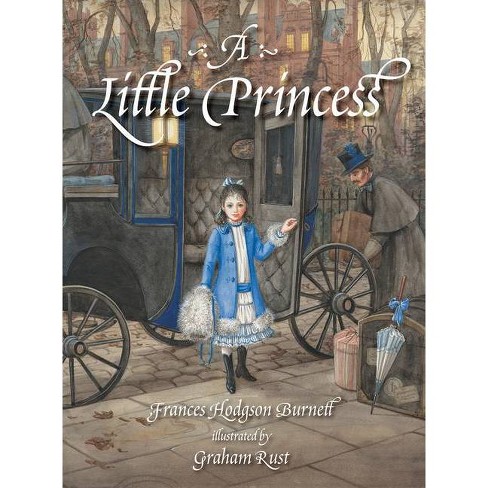
A Little Princess -Frances Hodgson Burnett

This month’s theme for our school’s student book club was childhood classics and students were invited to read or re-read a beloved story. I chose Frances Hodgson Burnett’s A Little Princess, a story I have read several times over the course of my life, but not for at least twenty years.

This is the story of Sara Crewe. At seven, she and her father leave their lives in India and head to London, England, where Sara is to become a pupil at Miss Minchin’s Select Seminary for Young Ladies. Sara’s mother is dead and she and her father share a close bond and “They had always played together and been fond of each other.”

Sara is a curious, self-possessed child, with “a queer old-fashioned thoughtfulness in her big eyes.” She seems to draw the ire of Miss Minchin almost immediately, but she befriends several of her classmates, and the housemaid, Becky, by telling them imaginative stories.

When something horrible happens to change Sara’s financial position, Miss Minchin send her to the attic to live with Becky and mistreats her horribly. Plucky Sara never complains, though. She has her imagination to keep her company, and soon enough, she draws the attention of the Indian gentleman that lives next door and the family across the square.

I loved A Little Princess when I first read it as a kid and I still love it now. Sara is so determined to see the good in everyone and her intelligence and kindness are admirable traits.

Time spent with Sara Crewe is always well spent.

I Capture the Castle – Dodie Smith

I Capture the Castle has been on my physical book shelf for at least twenty years. I have always meant to read it because it’s just one of those books that I felt like I should read. In her article “Why I Capture the Castle has gained a secret cult of book lovers”, Constance Grady writes “I Capture the Castle is that kind of book. It’s not quite famous, even among Smith’s works (her most famous title would be 101 Dalmatians), but for a certain kind of reader — mostly women, mostly bookish — it is perfect. Once you read it, you fall in love with it, and from then on you’re part of a secret club, self-selecting and wildly enthusiastic.” (Vox)

The novel’s narrator, 17-year-old Cassandra Mortmain, lives with her family (her father, his much younger second wife, Topaz; older sister, Rose; younger brother, Thomas, and Stephen, son of their deceased housekeeper) in a crumbling old castle in rural England. They leased the castle – crumbling though it was – when they weren’t quite so financially destitute. Cassandra’s father had written a successful book, Jacob Wrestling, a “mixture of fiction, philosophy and poetry.” The book was very successful, “particularly in America, where he made a lot of money by lecturing on it, and he seemed likely to become a very important writer indeed.” Then he stopped writing and with no income, the family fell on hard times.

The novel takes the form of Cassandra’s journal, which she writes in a short hand that no one can read but her. In it she recounts encounters with people from the village, the Vicar and Miss Marcy, the local school teacher/librarian, chief among them. She talks about her relationships with her siblings and father and stepmother. She writes about food – or lack thereof. She struggles with the awareness that Stephen has developed feelings for her.

He grows vegetables for us and looks after the hens and does a thousand odd jobs – I can’t think how we should get on without him. He is eighteen now, very fair and noble looking but his expression is just a fraction daft. He has always been rather devoted to me; father calls him my swain.

The minutiae of Cassandra’s daily life is not as dull as you might think. It’s the 1930s and it’s wonderful to read about a much simpler time and place. The castle itself, though falling down and without modern conveniences, is as romantic as you might imagine. And things don’t stay bucolic for long, anyway. Simon and Neil Cotton, American grandsons of the deceased owner of the castle, arrive and shake things up for the Mortmains.

Dodie Smith is probably best known for writing 101 Dalmatians, and while everyone has certainly heard of that story, it feels lovely to now be among the special group of women who have spent time with Cassandra. She is intelligent, kind and self-deprecating and watching her negotiate her growing feelings for one of the Cotton brothers is sheer delight. I Capture the Castle is charming, beautifully written and well worth your time. Make a cup of tea, eat a scone and sink into its myriad pleasures. It will not disappoint.

jake, reinvented – Gordon Korman

jake reinventedGordon Korman’s YA novel jake, reinvented takes a page straight out of F. Scott Fitzgerald’s classic,  The Great Gatsby. Like, straight out of it. This is the story of Rick, a high school kid who is only marginally cool because he is the kicker and back-up quarterback for the F. Scott Fitzgerald (yep!) high school football team and hangs out with Todd Buckley, the team’s hyper-masculine starting quarterback.

Rick Paradis is an observer, much in the same as Nick Carraway watched the action in The Great GatsbyWhen the story opens, he’s observing a raucous party being held at the un-parented home of new-to-town Jake Garrett, the football team’s new long-snapper. It’s the first of many Friday night parties that Jake hosts, each one getting bigger and more out-of-control.

Jake is an enigma. He watches his house getting trashed with an “unruffled calm.” His speech is peppered with ‘baby’ as in “Good hang time, baby”, I suspect an outdated tag even back in 2003 when the book was published.

He looked like he just waltzed off the pages of the J. Crew catalog, or maybe Banana Republic. I mean, nothing he was wearing was all that special – just a plaid shirt, untucked over a white tee and khakis. But everything went together perfectly, and hung on him with that rumpled casual effect that you can’t get by being casual. This guy worked it.

Jake befriends Rick, pulling him into his orbit. It seems like an odd friendship at first, but Rick does have something that Jake needs: a connection to Didi, Todd’s self-absorbed, but perfect girlfriend.

Like in Fitzgerald’s novel, none of these characters are particularly likeable. Todd aka Tom is a big-feeling womanizer; Didi aka Daisy is vapid and spineless; Rick is an observer who is soon calling himself Jake’s bestie, but I was never really sure how they managed to get to that place beyond acquaintances.

The novel’s plot mirrors Fitzgerald’s too, so for anyone familiar with that book, this book will not require much effort. And love or hate Fitzgerald’s novel, there’s no denying the quality of the writing. Korman’s novel suffers a little by comparison in that department.

On the other hand, Korman’s novel does speak to that crappy period of time when you are no longer a kid, but you are not quite an adult. There aren’t any of those (adults, I mean) in this novel, anyway. These kids are pretty much left to their own devices. Like Gatsby, everything Jake has done, the persona he has manufactured for himself, has been done to attract the attention of Didi. Is she worthy of his love? Probably not. As Rick says to Jake: “They’re crappy people. You’re worth more than the lot of them put together.”

As an homage to its source material, jake, reinvented will likely speak to any teen who has desperately wanted to reinvent themselves. And if it encourages students to read The Great Gatsby, then that’s a win in my book.

That Was Then, This Is Now – S.E. Hinton

that was thenBack in the day, there probably wasn’t a teenager alive who hadn’t read The Outsiders, S.E. Hinton’s first novel. Written when Hinton was just sixteen and published around the time she graduated from high school, The Outsiders tells the story of the Curtis brothers Darry, Soda, and Ponyboy. It’s considered the seminal young adult novel and remains a classroom favourite almost 50 years after its publication.

I read it as a teenager, of course. Then I read Hinton’s second novel, That Was Then, This is Now and I remember that it had a profound impact on me. So, when it came time to choose the novel I wanted to begin my first ever Young Adult Literature class with, I chose Hinton’s second book – mostly because I knew that although many students would be familiar with The Outsiders, they might not know this book. Plus, it gave me an excuse to read it 40 odd years later after my first go-around.

That Was The, This is Now treads familiar ground (and in fact Ponyboy even makes an appearance in this book). It concerns the fates of Bryon, the novel’s sixteen-year-old narrator and his boyhood best friend and de facto brother, Mark.

I had been friends with Mark long before he came to live with us. He had lived down the street and it seemed to me that we had always been together. We had never had a fight. We had never even had an argument…He was my best friend and we were like brothers.

The two boys live a relatively hard-scrabble life with Bryon’s single mother mom. They hustle pool, chase ‘chicks’ and generally get up to no good. Occasionally, they meet up with M&M, a younger kid from their neighbourhood.

M&M was the most serious guy I knew. He always had this wide-eyed, intent, trusting look on his face, but sometimes he smiled and when he did it was really great. He was an awful nice kid even if he was a little strange.

That Was Then, This Is Now  is a coming of age story. The catalyst for Bryon’s transformation from dime-store hood to responsible young adult is his blossoming relationship with M&M’s older sister, Cathy, and an incident which puts M&M in harm’s way.

There’s no question that some of the references are dated. It was kind of funny to read about hippies and parents who are cross with their kids because their hair is too long. On the other hand, although styles come and go, some things remain the same. Parents and their children still have disagreements. Lots of teenagers are left to their own devices, as Bryon and Mark often are. There were several moments in the book that felt as relevant and fresh to me now as I am sure they did then.

Ultimately, Bryon must make a decision that changes the course of his life. It’s a hard epiphany to swallow, but it’s one that makes That Was Then, This Is Now as relevant as it was when it was first published.

Off the Shelf – Bookish Bits

Listen here.

I’ve had a very ‘bookish’ few day…my colleagues and I hosted the seventh annual Write Stuff at the Saint John Arts Centre last week. We hosted about 120 students from six different high schools and launched our sixth literary magazine. This is an event that always reaffirms for me the power of the written word and that students want to share their thoughts with others.

I also attended the Eclectic Reading Club’s soiree last Wednesday night as the guest of Dr. Stephen Willis. For those who don’t know, this club is the oldest of its kind in Canada – established in 1870. It’s not a book club per se, it’s more like a throwback to the time when entertainment consisted of gathering in the warmth of someone’s drawing room chatting, and listening to readings, perhaps sipping a cup of tea or a glass of sherry. On the night I attended, the theme was pirates and privateers and those of us gathered listened to some interesting historical true-life accounts of pirates both close to home and in seas far away. It was a lovely evening. Everyone dresses up, there was the promised hot chocolate at the end of the evening and I saw people I haven’t seen in many years and met new friends. Other than that, of course, what happens in the eclectic stays in the eclectic. Top secret.

We’re only about six weeks away from the end of the school year and I am already thinking about the fall. I am very lucky to be offering a new course at Harbour View called Young Adult Literature. Like how could I not be excited about that?

The rationale behind offering a course like this is to give students who love to read an opportunity to read outside of the traditional English class and to, perhaps, make the experience slightly more authentic. I don’t mean to imply that what happens in traditional English classes isn’t authentic learning because it is – but when I‘ve finished reading I don’t write an essay or make a poster. Mostly what I want to do is talk about the book with someone else, maybe write a review so I can try to articulate my thoughts on paper. YAL is really my go at encouraging students to read widely and to share their reading experiences with others and to hopefully set them on the path to becoming life long readers – because truthfully that is what I think is the most important part of my job.

It’s pretty exciting to be thinking about a course devoted to a genre that actually had a fairly rocky beginning. Where does YA start? Think back to your own beginnings as a reader – not the books that were read to you, but the first books you selected on your own. In 1971, librarian Mary Kingsbury commented that librarians were acting like “frightened ostriches” with regards to accepting the notion of books for a young adult audience. By the 80s though, the genre was staring to take hold and names like Robert Cormier and Judy Blume were more familiar.

sehinton

Photo of a young S.E. Hinton from Penguin

It would be impossible to offer a course like this without revisiting where the YA movement – arguably –  began: S.E. Hinton’s classic The Outsiders. Is there a person on the planet who has not read this book?


First of all – The Outsiders is 50 years old this year. Like – doesn’t that make you feel ancient? I really do remember reading it as a kid in the 70s. That’s a million years ago – so that’s the mark of a powerful book, a formative book.  S.E. Hinton was just 16 when she wrote The Outsiders because she said “there wasn’t anything realistic being written about teenage lives.”  It was published when she was 17.  Theoutsiders novel tells the story of rival gangs in Oklahoma the greasers and the socs – the socials. It’s a simple story, really, about Ponyboy Curtis and his best friend, Johnny, but something about those characters really resonates with young readers and when I recommend the book to students who haven’t read it – the reviews are unanimously favourable. S.E. Hinton said “Teenagers still feel like I felt when I wrote the book, that adults have no idea what’s really going on. And even today, that concept of the “in crowd” and the “out crowd” is universal. The names of the groups may change, but kids still see their own lives in what happens to Ponyboy and his friends.”

thatwasthenHinton wasn’t a one-trick pony(boy) haha either. Her second novel That Was Then, This is Now, is actually better than The Outsiders, in my humble opinion. If students have read The Outsiders – and a lot of them do in middle school, I always suggest That Was Then as a follow-up. Most of them have never heard of it and again – they always like it. It’s about two childhood friends, Bryon and Mark, whose lives diverge when one chooses to go down a different – more dangerous –  path than the other. I loved this book as a kid. Loved it. And for students who’ve loved The Outsiders, Ponyboy makes an appearance – although this novel is not a sequel.

So, I am going to spend my summer thinking about the course. There will be lots of room for self-selection, of course, the only time someone else chooses what I am going to read is for book club or when I am doing a review for a third party. That said – I have read so many amazing YA novels over the past few years, and btw, by 2014, 55% of YA novels were purchased by adults – and I am looking forward to sharing these titles and talking about them with my students.

The Great Gatsby – F. Scott Fitzgerald

gatsbymal.png

It took me four reads before I finally fell in love with F. Scott Fitzgerald’s Great American novel, The Great Gatsby. I might not have ever read it again after the last time (a couple years ago my book club had a ‘year of classics’) had it not been for the fact that I am teaching grade twelve this year. Often referred to as the quintessential American novel, its place in literary canon is certainly undeniable, but I just never bought in. The Great Gatsby  is my daughter Mallory’s favourite novel and she was understandably flummoxed as to why her English teacher geek of a mother never really liked the book. Now we’re on the same page. If you believe that a classic is a book that never runs out of things to say, this book certainly qualifies. I guess I’m just late to the party.

how-whimsical-2006-great-gatsby-book-coverNick Carraway, the novel’s narrator, moves from the mid-west to Long Island’s West Egg to take a job on Wall Street. Across the bay in East Egg lives his cousin, Daisy Buchanan, and her husband, Tom, an old Yale classmate of Nick’s, a man so “enormously wealthy” he’d brought  “down a string of polo ponies from Lake Forest.”  Nick comments “It was hard to imagine that a man in my own generation was wealthy enough to do that.”
Despite their wealth, Daisy and Tom don’t seem particularly happy and on his first visit with them Nick discovers that Tom is having an affair.  When it comes to the Buchanans, all that glitters is not gold.

Next door to Nick’s little house, and directly across the bay from the Buchanans,  lives Gatsby. His mansion is “a colossal affair by any standard.” Gatsby throws lavish parties every weekend  – huge glittering affairs attended by the who’s who of New York and “In his blue gardens men and girls came and went like moths among the whisperings and the champagne and the stars.”  On the first night Nick attends a party at Gatsby’s he is “one of the few guests who had actually been invited.” Soon after meeting his charming and enigmatic host, Nick finds himself drawn into a compelling love affair between Daisy and Gatsby, a love affair that had actually begun five years earlier.

The Great Gatsby operates on two very distinct levels: as a love story and a social commentary on the decadence and decay at the heart of the American Dream.

Gatsby’s single-minded devotion to Daisy, his desire to wipe out the present and reclaim their shared past drives him to create a sort of fantasy life. Everything Gatsby does is for Daisy and Nick remarks on his “extraordinary gift for hope,” his “romantic readiness such as I have never found in another person and which it is not likely I shall ever find again.” But Nick also acknowledges that perhaps Gatsby wants “too much” of Daisy and cautions him  that “You can’t repeat the past.”

On another level, Fitzgerald’s novel captures the glittery, frenetic 20s. A generation of young men had returned from the Great War, Wall Street was booming and in Fitzgerald’s version, anyway, people cared about little else except having fun.   Underneath the façade, though, there is rot and corruption. No one works except for Nick. They just drink and laze about. Nick sees it and when the veil is pulled back he tells Gatsby, “They’re a rotten crowd….You’re worth the whole damn bunch put together.”

The Great Gatsby is a beautiful novel, I see that now. I am sorry it took so long to believe in the dream.


Harry Potter and the Chamber of Secrets – J.K. Rowling

I wish I had jumped on the Harry Potter broomstick a little earlier, and certainly way before I’d watched the films a gazillion times withharry-potter-new-chamber-of-secrets-cover-630 my kids. But I didn’t. I did, however, promise my daughter that I would read the series this summer. I actually made the promise on CBC radio so I feel extra obligated to make an attempt. I actually read Harry Potter and the Philosopher’s Stone out loud to a grade nine class a couple years back and I certainly enjoyed reading it. Now I’ve finished Harry Potter and the Chamber of Secrets and I enjoyed reading that, too. Problem is, I keep seeing the movie in my head, although I guess that’s not the worst thing that could happen when reading a novel.

We join Harry once more at the home of his aunt and uncle, Vernon and Petunia Dursley. They haven’t changed a bit since we met in them in the first book. If possible, Uncle Vernon is perhaps even more odious. Harry is feeling particularly miserable because he hasn’t heard from either Ron or Hermione all summer long. Life is pretty grim and he can’t wait to get back to Hogwarts.

Harry is trying to stay out of everyone’s way when he enters his bedroom and is startled by a “little green creature on the bed [with] large, bat-like ears and bulging green eyes the size of tennis balls.” Meet Dobby, the house-elf.

Like all of Rowling’s characters, Dobby is fully realized and it’s almost impossible not to fall in love with him straight away. One of Rowling’s many strengths is her ability to make her characters gloriously human (or, non-human, but also amazingly well-drawn). Because I knew it was coming, I waited through the whole book for Dobby to be freed from servitude and I loved the written version as much as I loved the on-screen version.

Back at Hogwarts, there are strange and scary things happening in the castle and once more Harry, Ron and Hermione are called upon to figure out how to stop evil in its tracks. That part of the mystery wasn’t so interesting to me since I already knew how it would all turn out.

The part of Harry Potter and the Chamber of Secrets I enjoyed the most was Gilderoy Lockhart, the new Defense Against the Dark Arts tutor.

Although I loved Kenneth Branagh’s portrayal of the narcissistic Lockhart, he was so much funnier in the book.

And then there’s Dumbledore’s famous line, which when I finally came to it, gave me the warm fuzzies and reminded me of why these characters will endure. After all the fuss in the Chamber of Secrets and Harry’s own bouts with self doubt, Dumbledore reassures Harry that “It is our choices, Harry, who show us who we truly are, far more than our abilities.”

Truer words.