

I Capture the Castle has been on my physical book shelf for at least twenty years. I have always meant to read it because it’s just one of those books that I felt like I should read. In her article “Why I Capture the Castle has gained a secret cult of book lovers”, Constance Grady writes “I Capture the Castle is that kind of book. It’s not quite famous, even among Smith’s works (her most famous title would be 101 Dalmatians), but for a certain kind of reader — mostly women, mostly bookish — it is perfect. Once you read it, you fall in love with it, and from then on you’re part of a secret club, self-selecting and wildly enthusiastic.” (Vox)
The novel’s narrator, 17-year-old Cassandra Mortmain, lives with her family (her father, his much younger second wife, Topaz; older sister, Rose; younger brother, Thomas, and Stephen, son of their deceased housekeeper) in a crumbling old castle in rural England. They leased the castle – crumbling though it was – when they weren’t quite so financially destitute. Cassandra’s father had written a successful book, Jacob Wrestling, a “mixture of fiction, philosophy and poetry.” The book was very successful, “particularly in America, where he made a lot of money by lecturing on it, and he seemed likely to become a very important writer indeed.” Then he stopped writing and with no income, the family fell on hard times.
The novel takes the form of Cassandra’s journal, which she writes in a short hand that no one can read but her. In it she recounts encounters with people from the village, the Vicar and Miss Marcy, the local school teacher/librarian, chief among them. She talks about her relationships with her siblings and father and stepmother. She writes about food – or lack thereof. She struggles with the awareness that Stephen has developed feelings for her.
He grows vegetables for us and looks after the hens and does a thousand odd jobs – I can’t think how we should get on without him. He is eighteen now, very fair and noble looking but his expression is just a fraction daft. He has always been rather devoted to me; father calls him my swain.
The minutiae of Cassandra’s daily life is not as dull as you might think. It’s the 1930s and it’s wonderful to read about a much simpler time and place. The castle itself, though falling down and without modern conveniences, is as romantic as you might imagine. And things don’t stay bucolic for long, anyway. Simon and Neil Cotton, American grandsons of the deceased owner of the castle, arrive and shake things up for the Mortmains.
Dodie Smith is probably best known for writing 101 Dalmatians, and while everyone has certainly heard of that story, it feels lovely to now be among the special group of women who have spent time with Cassandra. She is intelligent, kind and self-deprecating and watching her negotiate her growing feelings for one of the Cotton brothers is sheer delight. I Capture the Castle is charming, beautifully written and well worth your time. Make a cup of tea, eat a scone and sink into its myriad pleasures. It will not disappoint.
 who lives in Harlem with her twin brother, whom she calls ‘Twin’) and her Dominican immigrant parents. She’s a good girl; she has no choice. Mami’s rules are law, and Xiomara wouldn’t dream of breaking them. But there are some things Xiomara can’t control. For example, she is “unhide-able”
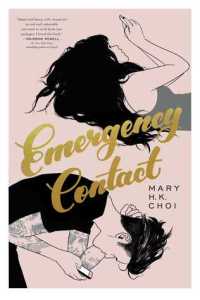 but because Penny has always felt like she’s the parent and her mom’s the kid. Sometimes Penny wanted to “shake Celeste until her fillings came loose.” Now it’s time for Penny to go off to college – University of Texas in Austin, only an hour or so away, but away nonetheless.
 Gordon Korman’s YA novel jake, reinvented takes a page straight out of F. Scott Fitzgerald’s classic, The Great Gatsby. Like, straight out of it. This is the story of Rick, a high school kid who is only marginally cool because he is the kicker and back-up quarterback for the F. Scott Fitzgerald (yep!) high school football team and hangs out with Todd Buckley, the team’s hyper-masculine starting quarterback.
 Back in the day, there probably wasn’t a teenager alive who hadn’t read The Outsiders, S.E. Hinton’s first novel. Written when Hinton was just sixteen and published around the time she graduated from high school, The Outsiders tells the story of the Curtis brothers Darry, Soda, and Ponyboy. It’s considered the seminal young adult novel and remains a classroom favourite almost 50 years after its publication.
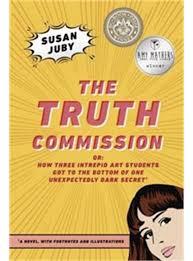 is a celebrated graphic novelist, whose series Diana: Queen of Two Worlds, tells the story of “a suburban girl who lives with her “painfully average” family which includes her high-strung easily overwhelmed mother, her ineffectual father, and her dull-witted, staring lump of a sister.”
 novel tells the story of rival gangs in Oklahoma the greasers and the socs – the socials. It’s a simple story, really, about Ponyboy Curtis and his best friend, Johnny, but something about those characters really resonates with young readers and when I recommend the book to students who haven’t read it – the reviews are unanimously favourable. S.E. Hinton said “Teenagers still feel like I felt when I wrote the book, that adults have no idea what’s really going on. And even today, that concept of the “in crowd” and the “out crowd” is universal. The names of the groups may change, but kids still see their own lives in what happens to Ponyboy and his friends.”
 Hinton wasn’t a one-trick pony(boy) haha either. Her second novel That Was Then, This is Now, is actually better than The Outsiders, in my humble opinion. If students have read The Outsiders – and a lot of them do in middle school, I always suggest That Was Then as a follow-up. Most of them have never heard of it and again – they always like it. It’s about two childhood friends, Bryon and Mark, whose lives diverge when one chooses to go down a different – more dangerous – path than the other. I loved this book as a kid. Loved it. And for students who’ve loved The Outsiders, Ponyboy makes an appearance – although this novel is not a sequel.
 Objecting to reading material is subjective. I object to Stephanie Meyer’s
  Allowing students to self-select reading material is important, but it is a skill and it starts at a young age. Read to your kids when they are young, take them to the library, talk about what they’re reading and read it, too. I know that when my daughter Mallory was about twelve she read a book called
 The Ludic Reader