The Four – Ellie Keel

Donna Tartt’s 1992 novel The Secret History is the dark academia novel all others aspire to be. This is a sub-genre of fiction that I really love, so I am drawn to books that feature isolated campuses, academics, and shifting loyalties. Ellie Keel’s debut The Four definitely scratched the itch.

Rose Lawson is one of four scholarship students admitted to the prestigious High Realms school. Telling the story of her time at the school from some years in the future, Rose paints a picture of extreme privilege and cruelty. She is saved from total desolation due to her friendship with the other scholarship students, Lloyd and Sami and her roommate Marta.

The novel opens with Rose’s admission that

It would have made our lives a lot easier if Marta had simply pushed Genevieve out of our bedroom window on our third day at High Realms. Certainly, it would have been tragic. […] She would have died instantly.

Genevieve Locke is a member of the Senior Patrol (aka a prefect), a member of the hockey team (field hockey as the story takes place in England) and she treats Marta and Rose with “lofty derision”. The truth is most of the students the four friends encounter at school are cruel and horrible, but all of the scholarship students count themselves lucky to have been chosen to attend.

Then something horrible happens and three of the friends find themselves desperately working together to protect the fourth member of their group. The Four has all the things I love in a book like this: secrets, unreliable narrators, a labyrinthine school, and surprising twists and turns that will keep you guessing until the very end. Keel is an award-winning theatre producer, but she is also a gifted writer and I will definitely be watching to see what she writes next.
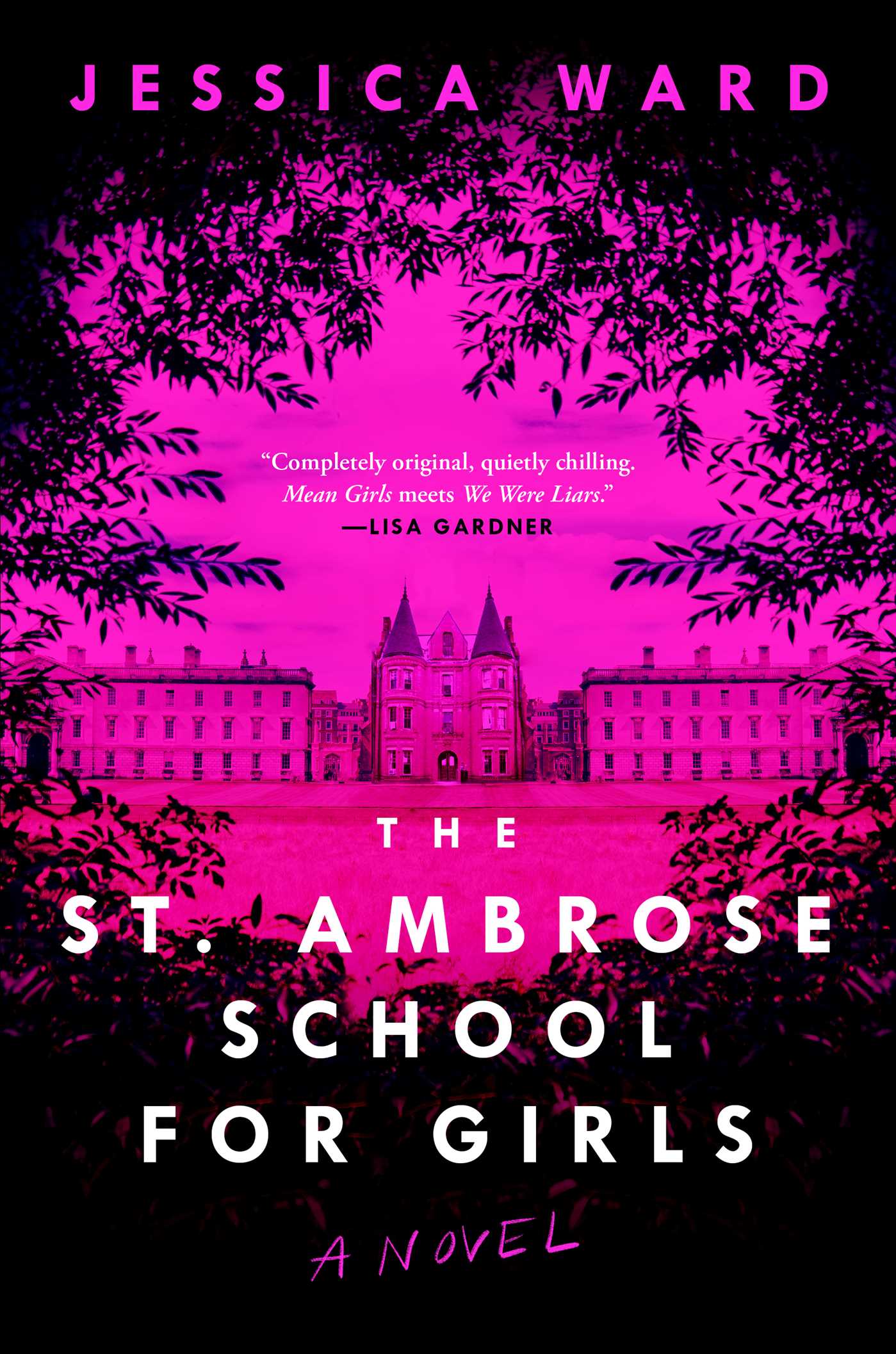
The St. Ambrose School For Girls – Jessica Ward

The St. Ambrose School for Girls by Jessica Ward (perhaps better known as J. R. Ward) has been compared to everything from The Secret History (laughable) to We Were Liars (um, okay maybe in the sense that like Candance, Sarah Taylor is an unreliable narrator). I think I bought the book because I liked the cover and I like dark academia. I still like the cover and I still like dark academia, but this book was…annoying.

Fifteen-year-old Sarah Taylor has won a scholarship to the prestigious St. Ambrose School in Massachusetts. There is NO WAY she’d have been able to attend without the scholarship. Her father is MIA and her mother is a lunch lady who trades in boyfriends as often as one might change their socks.

Sarah, who says she is going to tell people her name is ‘Bo’, but never actually does, is an odd duck.

Unlike the other girls I see walking around campus–who look like they’ve stepped out of the rainbow page of a United Colors of Benetton ad–I’m dressed in black and loose clothing. I’m also not wearing shoes, but lace-up boots with steel toes. My hair is dyed jet black, although my mouse-brown roots are starting to show already, a trail of mud at night.

Things don’t really start smoothly for Sarah. For starters, she finds herself in Greta Stanhope’s crosshairs from day one. When they meet, Sarah notes that Greta “somehow manages to smile wider and narrow her stare at the same time. It’s a cute trick. If you’re Cujo.”

Then the pranks start. They’re minor things, but they are upsetting to Sarah. Her roommate, the star athlete Ellen “Strots” Strotsberry, encourages Sarah to ignore Greta and her minions. “Just don’t give ’em what they’re looking for and they’ll get bored.” Easier said than done, but honestly, the pranks are so benign they’d be easy enough to ignore. And the fact that they make up three quarters of this book is frustrating because nothing happens until about the last fifty pages.

In fact, so much of nothing happens that I started to be distracted by Ward’s weird writing tick of starting multiple sentences with “As.” And when I say multiple, I mean it – sometimes as many as three or four on a single page and it drove me crazy!

The St. Ambrose School For Girls was a long book. The last fifty pages were marginally better, but the truth of the matter is that I didn’t care about any of these characters – even the so-called ‘mean girl’ wasn’t mean enough and the plot was neither “riveting” nor “twisty.”

Not for me.

The World Cannot Give – Tara Isabella Burton

Sixteen-year-old Laura Stearns has left her home in Las Vegas to attend St. Dunstan’s Academy, a ritzy private school in Maine. Laura feels things deeply and cries easily and she is drawn to St. Dunstan’s because of its connection to Sebastian Oliver Webster, author of a singular novel called All Before Them.

He understood about angels, about heroes, about lattices of voices. He understood about beauty and meaning, and about World-History, which he always capitalizes. He understood about green morning light, and also about slant rhymes […] She doesn’t know who she is, not loving him.

The main character in Webster’s novel–a character based on Webster himself– attended St. Dunstan’s and Laura is anxious to walk in his footsteps. She is sure she will meet like-minded students and she does: Virginia Strauss and the band of five boys who make up the school’s choir. Virginia is clearly ‘other’ and “Laura has never seen anyone more beautiful in her life.”

Virginia rules the choir with an iron will.

The choirboys–all handsome; all ebullient; all terrifying–are always with her. She holds court at the head of the table, or at the center of the picnic blanket. Her eyes are always sharp. She rarely smiles.

But you know what they say about power? Yeah, there’s that because as she draws Laura into the choir’s orbit we earn, as Laura does, that Virginia has a black core of narcissism. She demands moral perfection and complete loyalty and when she does not get it, things go sideways.

Luce [is reading] wrote a pretty scathing review of The World Cannot Give and it’s worth a read. That said, I enjoyed this book. I think the pretentiousness of these characters and their desire to achieve what Webster calls the “shipwreck of the soul” suits the isolated setting and lack of (living) adult role models. The one person who might have had a positive influence, Reverend Tipton, struggles to control Virginia and actually seems more interested in one-upping her than in restoring or maintaining balance.

The World Cannot Give is a book that falls into the dark academia category and it has the requisite characteristics. It’s a slow burn novel and I will agree that not much happens with the exception of a lot of banal conversations and posing, but I enjoyed the book nonetheless.