I have been a letter writer my whole life. Perhaps part of it had to do with how much we moved around (and, no, my father was not in the military), but I always wrote letters. For a while in my early teens I had a whole load of pen pals, people you’d meet via ads in teen magazines or through school. One of my oldest pen pals I have known for 52 years. We don’t write letters anymore, which I miss. (Now it’s just the odd message via the internet, which is a poor substitute.) I do not have every letter I have ever received –sadly too many moves– but I do have a handful of special letters. Recently I met an old boyfriend at his father’s funeral and he told me he had saved some of my letters to him…from almost 40 years ago and when I asked if I could have them, he obliged and sent them my way. Talk about an embarrassing blast from the past
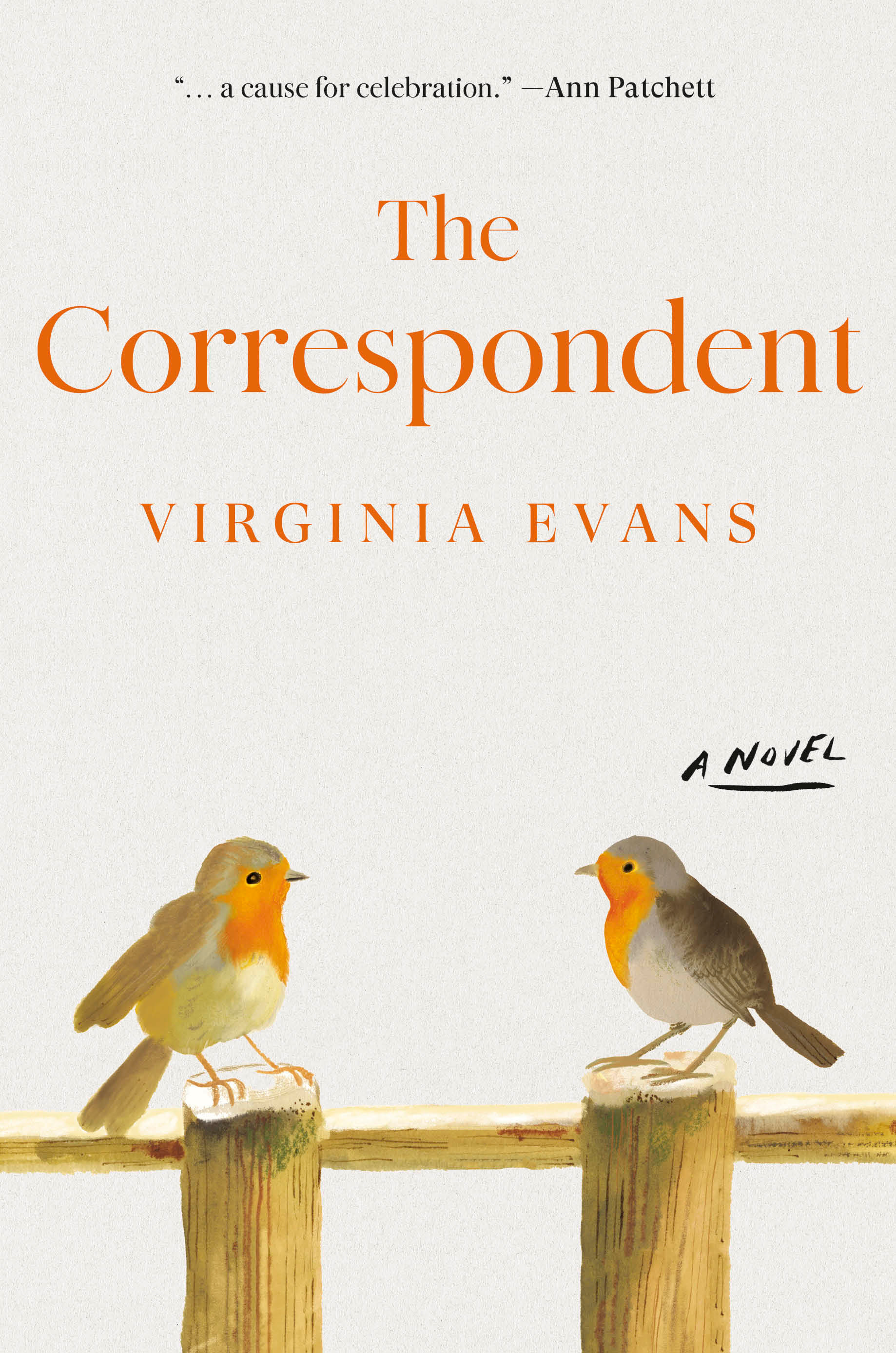
So, you see, I was predisposed to love Virginia Evans’s debut The Correspondent and I did.
Sybil Van Antwerp “is a mother and grandmother, divorced from a distinguished career in law” but it is “the correspondence that is her manner of living.”
This is the only exposition we get in the novel, the rest is Sybil’s correspondence with a variety of people including authors (Joan Didion and Ann Patchett); her adult children (Fiona and Bruce); her best friend, Rosalie; her beloved brother, Felix, and Harry, the young son of a former colleague. There is also one letter, never sent, to someone called Colt.
Some of the letters in the novel are from Sybil to the recipient and some letters are to Sybil, but we are able to piece together a variety of different “plots” based on these letters. For example, we know that Sybil has a fraught relationship with her daughter and a close relationship with Felix. Both Sybil and Felix were adopted. At least one of her correspondents seems to hold a grudge:
I imagine you reading my notes standing at the mailbox, heat growing on your neck and the sick feeling in your stomach. […] I hope you have to look twice, and that little fear keeps you from enjoying the life you have left, in the same way that you impeded me.
It is through Sybil’s correspondence that we learn about a tragedy in her past, her disintegrating marriage (30 years prior, because Sybil is now in her 70s), her stubbornness, her kindness, and her desire to make things right when she can. She is a fully realized character without ever saying a word. As Sybil says in one letter: “my letters have been far more meaningful to me than anything I did with the law. The letters are the mainstay of my life”.
er correspondence (both sent and received) is funny, nostalgic, heartbreaking, and mundane, and it accurately captures the minutia of daily life. Just when Sybil thinks there can be no surprises left for her, she discovers that’s not quite true.
I loved every single thing about this book. An easy five stars, no notes, highly recommended.
 The Ludic Reader