Ten Arguments for Deleting Your Social Media Accounts Right Now – Jaron Lanier

I grew up in an era where we were told too much television would rot our brains. Turns out, our brains are rotting because of a little device that every person in the world, toddlers even, carry around in their pockets. I can see my high school students rolling their eyes at me: blame it on the phones, boomer. They don’t know a life when phones weren’t melded to their palms, though. They don’t actually know what they’re missing and what’s being stolen from them.

When Facebook was launched in 2004, I had two young children and no interest. I think I called it FaceDevil or something. But then FOMO kicked in; all my friends were on there and I just gave in and joined. For a while it was okay, I guess. It was nice to catch up with people I hadn’t seen in a long time and share a little bit of my life. There are all sorts of reasons why the platform has become shittier over the last few years and I opted out in January 2025. Don’t miss it at all. Yes, I still have Instagram; yes, that has to go too.

Jaron Lanier, a well-known computer scientist, author, and philosopher makes a compelling pitch to ditch your social media accounts in his book of essays Ten Arguments for Deleting Your Social Media Accounts Right Now. His argument, that social media platforms are turning us into nasty sheeple lacking in critical thinking skills and ripe for being duped by bad actors, is both horrifying and motivating. Lanier encourages us to be like a cat (which is an apt simile since cute cat videos started taking over the Internet in 2005. And let’s face it, who doesn’t love watching cats get scared out of their wits by tinfoil?) Cats, Lanier suggests

have done the seemingly impossible: They’ve integrated themselves into the modern high-tech world without giving themselves up. They are still in charge. There is no worry that some stealthy meme crafted by algorithms and paid for by a creepy, hidden oligarch has taken over your cat

We, however, are not cats. Every interaction on social media is being tracked or, as Lanier explains, is a BUMMER (Behavior of Users Modified and Made into an Empire for Rent). BUMMER, simply put, is a “statistical machine that lives in the clouds. It gathers data from users to whom it has no responsibility and uses that data to manipulate the user and make tremendous profit while simultaneously undermining the economic dignity of the user…with Google and Facebook we are not the customers, we are the product.” (Law & Liberty)

Big Brother is watching and he’s not benevolent.

It is hard to be optimistic about the state of the world given the current political landscape. Lanier’s argument in the essay “Social media is undermining truth” is that

People are clustered into paranoia peer groups because then they can be more easily and predictable swayed….The only reason BUMMER reinforces this stuff is that paranoia turns out, as a matter of course, to be an efficient way of corralling attention.

In order to benefit in the long term as technology improves, we have to find a way to not let our improved comfort and security turn into cover for a lazy drift into perilous fantasy. Media forms that promote truth are essential for survival, but the dominant media of our age do no such thing.

I come from a generation of newspaper readers. The paper came every evening and we all read it. We watched the supper hour news. News was impartial (or, okay, at least somewhat objective.) Journalism has been steadily eroded and more and more young people get their news from TikTok influencers. Truth, so it seems, is fluid. Or, if you’re Fox News, optional.

In his essay “Social media is destroying your capacity for empathy”, Lanier argues that our “worldview is distorted” and that we “have less awareness of other people’s worldviews.” Empathy, let’s face it, has been seriously eroded as we are pitted against each other by the powers that be. They’re coming for your jobs; interaction with trans or gay people will make you trans or gay. One of my favourite lines from Harper Lee’s novel To Kill a Mockingbird is when Atticus tells Scout “You never really understand a person until you consider things from his point of view…until you climb inside of his skin and walk around in it.” It’s one of the things I love about teaching high school English, encouraging my students to read widely and see that there are other ways of looking at things, that not everyone has the same experience that you have. Of course, as Trump defunds schools and libraries and bans books, well, I guess that’s a topic for another day. (I should also point out that I am Canadian and watching the dumpster fire that is what is happening in the US with abject horror.)

Lanier isn’t a fan of Trump either but he says “What’s really going on is that we see less than ever before of what others are seeing, so we have less opportunity to understand each other.” It seems like the exact opposite of what the Internet should/could be facilitating: a way to see that we share the planet and the human experience and we should be working together for the betterment of both of those things.

But it doesn’t, and that’s a bummer.

As Lanier says, “Delete your accounts!”

Such a Pretty Girl – T. Greenwood

Although T. Greenwood is a prolific writer, Such a Pretty Girl is the first of her books I have read. It’s one of those books where nothing happens–I mean this is a book driven by character, not plot–and yet it is absolutely riveting.

When the novel opens, Ryan Flannigan is counting down the last few days before her daughter, Sasha, heads to the West coast to start college. Ryan’s childhood bestie, Gilly, keeps sending her urgent texts before finally just sending her a link to a story from the Times. Ryan is shocked to discover that the story is about her mother, Fiona, from whom Ryan is mostly estranged. Worse, the story is about the discovery of a very personal photo of Ryan when she was just a girl that was found in the possession of Zev Brenner, a billionaire who has been charged with sex trafficking and pedophilia a la Jeffrey Epstein. This news is followed by even more shocking news and Gilly begs Ryan to come back to New York City.

Such a Pretty Girl bounces between the 1970s and present day 2019. As a child, Ryan lived with her mother, Fiona, in Lost River, Vermont, home to the Lost River Playhouse where Fiona was an aspiring actress. Lost River was meant to be a “summer respite for actors who worked in the city and a place for aspiring actors to apprentice themselves.” Fiona had been there since 1965 and she and Ryan lived there full time. Gilly and his family also live at Lost River, but only in the summer. Gilly’s father is a working actor and his mother an artist in New York.

Fiona decides to leave Lost River and go into the city to give acting a more serious try, but in the end it is Ryan, who is just ten, who is discovered–first as a model and then as an actress. This strains the relationship between mother and daughter. The time the novel spends in NYC

After Gilly gives Ryan the news about the discovery of the photograph, he begs Ryan to come back to Westbeth, an apartment building populated by dancers and actors and artists and, famously, Jackie O. It’s a real place, actually. It’s worth reading about its interesting history and it is definitely a character in Greenwood’s book. So, in the present day Ryan and her daughter head back to the city and to the place that she, for a very important time in her life at least, called home. There are matters to attend to, and ghosts to exorcise.

This book is very evocative of a time and place and as someone who loves New York and grew up in the 1970s, I found that very compelling. I also loved Ryan’s recollection of her childhood, the perspective skewed through the lens of adulthood. When she recalls her first major ad campaign (for Love’s Baby Soft, a mainstay of every teenage girl in the 1970s) she says

I am wearing fake eyelashes, pink rouge on my cheeks, and lip gloss so thick and shiny you can almost see your reflection in my pout. I am holding a pale pink stuffed bunny. But you can’t tell if I am a child made up to look like an adult, or an adult made to look like a child. When I found the ad years later, it felt like someone had punched me in my throat.

And if you are wondering where Ryan’s mother was in all this, yeah, that’s kind of the point.

This is a terrific, well-written book. Highly recommended.

Dark Horses – Susan Mihalic

By page fifteen of Susan Mihalic’s novel Dark Horses, I knew that I was in for a ride – and not just because this is the story of fifteen-year-old equestrian Roan Montgomery. This early into the story I’d learned that Roan is a skilled rider and shares a special bond with her horse, Jasper, that her relationship with her mother is tenuous partly because she’s having an affair with a teacher at Roan’s school, and that her relationship with her father, Monty, is close. And when I say close I mean he enters the bathroom while Roan is in the tub and kisses her, “his mouth gentle and persuasive.”

Roan only cares about riding and her life revolves around training. Her father was an Olympic medal winner and now trains Roan. She goes to school because she has to, but what she really wants is to do well at competitions so that she can earn a spot on an Olympic team.

Roan’s life is pretty insular. Although their farm, Rosemount, employs a handful and people, including Gertrude and Eddie who have been there since before Roan was born, Roan is isolated. She doesn’t have friends or a cell phone; her life is strictly controlled by her father. That is until she starts getting to know Will Howard, a guy at school.

Her friendship with Will amps up the tension between Roan and Monty because she has to keep Will a secret. And she has to keep the sexual relationship with her father a secret from Will. Mihalic does an interesting thing with the incestuous relationship. Roan is trapped by her complicated feelings for her father: she loves him and she loathes him, sometimes at the same time. She acknowledges how confusing it is that “I didn’t fight or scream, […] my body responded to his, the ease with which he made me come–the fact that I came at all.” She has spent a long time compartmentalizing all these feelings. She admires her father’s coaching abilities. But she is becoming increasingly uncomfortable with the sexual relationship. There’s no saying no to Monty.

There’s nobody reading this book who is going to think what Monty is doing to Roan is anything but abuse, but Roan is only coming to that realization as her feelings for Will grow. When Monty realizes that Will is a real threat to this prison he has kept Roan in, he tightens the noose. Then there is no question that he is raping his daughter. It’s devastating.

It’s not right to say that I “enjoyed” this book, although I did fly through it, wholly invested in Roan’s story. If I have one complaint it’s that I hated the way the book ended. Well, maybe ‘hate’ is too strong a word. Something big had to happen, for sure, and something big does happen. For me, it just wasn’t big enough. I hated Monty Montgomery and he just didn’t suffer enough.

Dark Horses is an unflinching look at sexual abuse and what it means to be a survivor. It’s graphic and certainly has the potential to be triggering, but I thought it was a compelling read.

Mercury – Amy Jo Burns

When 17-year-old Marley West moves to Mercury, Pennsylvania with her single mom, Ruth, she has no idea just how much her life is about to change. At a baseball game she meets Baylor Joseph, oldest of the three Joseph boys, sons of local roofer Mick and his wife, Elise. She is soon pulled into the Josephs’ orbit, into rivalries and old traumas she doesn’t understand. She comes to understand that “The Josephs were the close kind of family that fought in equal measure but didn’t know how to make up.”

Amy Jo Burns’ novel Mercury is a family drama that covers several years in the lives of the complicated Joseph family and how Marley comes to love them. Although she initially meets them because of Baylor, it is her relationship with the middle son, Waylon, that cements her place in the family.

It doesn’t take long before Marley figures out that Baylor is “the flinty kind of young man … whom everyone feared and nobody liked.” Their relationship is short lived. Her friendship with Waylon, though, is worth keeping. Waylon is “easier, kinder, gentler”. This is the relationship that sticks.

Although Mercury opens with the discovery of a dead body in a church attic, and although this mystery is important, it isn’t actually what drives the narrative. The book uses the body as a jumping off point before it circles back to the beginning of the story of Marley’s arrival in Mercury and how her relationship with this insular and complicated family shifts loyalties and both frays and strengthens bonds. It’s a very character-driven novel, and all of the characters are complicated and beautifully rendered. There are no bad guys, just people trying to do their best for reasons that don’t always make sense. I really loved Waylon and Marley in particular, but I also loved the secondary characters including Marley’s best friend, Jade, and the youngest Joseph, Baby Shay.

Mercury is my second book by Burns (Shiner) and she is definitely an autobuy author for me now.

Great book.

Talking at Night – Claire Daverley

If I had read Claire Daverley’s debut Talking at Night a little bit earlier, it would have most certainly made my list of the top twenty books I read this year because I LOVED it! I am always talking about how straight-up romances just don’t float my boat, how I need a little pain with my pleasure. This book delivered and then some.

Rosie and Will meet at a bonfire when she is seventeen and he a little older. Although they go to the same school and share some friends, and Will tutors Rosie’s twin, Josh, in further maths (advanced A level math), these two don’t really know each other until Will suddenly finds himself telling Rosie things he’s never said to anyone.

Will and Rosie could not be more different. Will is “detached and standoffish, despite his popularity and a long list of girlfriends.” Rosie is “a virgin, and she is vanilla.” She also suffers from OCD and is far less outgoing than Josh. It is clear, though, that these two are drawn to each other in ways that neither of them quite understand.

When Rosie tries to pre-emptively end things (because things haven’t really even begun, although they both understand that there is something between them), Will tells her that he thinks about her “On my bike. And in the garage. And when I’m cooking, and running, and trying to sleep.” This is new territory for Will.

Watching these two navigate these feelings over the years – because the novel does span decades – is truly a thing of beauty. There are lots of obstacles preventing them from having the HEA that I wanted for them, but that’s the bit I like best. Where’s the story if they meet, fall in love and suddenly have everything they didn’t even know they wanted?

Will has demons and a past. Rosie has a complicated relationship with her mother and subverts her own desires to make others happy. Tragedy looms around the corner which further complicates things. Rosie goes off to university, but Will stays home in Norfolk. And through it all – Will and Rosie pine and hell yes! so did I.

I loved these two characters. I loved the secondary characters. I loved the unexpected bonds that are forged. I loved the way this book is written. I read it in two sittings, turning the last page way past my bedtime.

If I had my Top Twenty list to do over again, this one would definitely be in the Top 3! Although perhaps not objectively the best book ever…it hit all my sweet spots and so it’s 100% a winner in my book, and that’s the beautiful thing about reading – my opinion is the only one that counts.

Adelaide – Genevieve Wheeler

Adelaide Williams is drunk when she first meets Rory Hughes.

Late that afternoon, tipsy and tanned, she saw him.

He was wearing a scarf and a blue button-down and Adelaide loved him instantly – all brown curls and razor-sharp jawline. Like a young Colin Firth.

She is compelled to waltz right up to him and tell him that he looks “like a Disney prince.

Nothing comes of that meet cute, but several months later Rory and Adelaide match on a dating app, something she has been using for casual hook ups. She figures that this night will be no different from the string of other nights she’s recently had. It turns out though that meeting Rory again upends her world.

Genevieve Wheeler’s debut Adelaide tracks the titular character’s time in London where she is first finishing her Master’s and then working. Their first date and first kiss lights a fire inside Adelaide and “in her memory, standing on that street corner, the sky was bright. Birds chirping, clouds parted, sun shining. It’s painfully clichéd, but darkness didn’t exist here, not in this little universe Adelaide entered when she first kissed Rory Hughes.”

At twenty-six, Adelaide is navigating young adulthood. She has her roomies, Celeste and Madison, and her stateside best friend, Eloise. Rory, perfect Rory, is – she is sure – her soul mate. Except, you know, he’s not. He’s got a lot of baggage and it turns out he’s not the best boyfriend. It’s one of those “all that glitters is not gold” situations; when he’s with her, it’s impossible not to feel the heady thrall, but he often disappears or breaks plans; he’s emotionally unavailable.

I am not 26, but I sure understood Adelaide. Her relationship with Rory mimicked many of my own twenty-something relationships which required a lot of work on my behalf, a lot of subjugating my own feelings in service to others, mostly because I was always choosing the wrong others. Adelaide’s fumbling wasn’t frustrating to me; it was relatable.

This is a book about loving someone else fiercely, but ultimately learning that the person most deserving of that sort of care and attention is actually yourself.

Loved it.

Hell Followed With Us – Andrew Joseph White

Andrew Joseph White claims his debut novel Hell Followed With Us was written because he was angry. On his website, we’re told “His work focuses on the intersection of transgender and autistic identity through the lens of horror, monstrosity, violence, and rage.” Got that right.

Benji is on the run. His father has just been killed and the Angels and their Graces are hunting him down, except that there is not really any place to go. That’s because these people – part of the cult that raised Benji – have unleased Armageddon via The Flood, decimating the world’s population.

The hellscape of the world White imagines is unlike anything I have ever read before. This is a world devoid of humanity, where goods are bartered with the exchange of human ears, where the monsters are

made of corpses and the Flood – sharpened ribs lining its back in a row of spines, eyeballs blinking between sinew, muscles so swollen they split the skin

At the beginning of the novel, when Benji is recaptured by the Angels, it is not so they can kill him: he’s important to the cult because he is a Seraph, or about to become one anyway. He has the power to control the Graces and The Flood and also, his mother is kind of a big deal at New Nazareth. Before they can get Benji back to New Nazareth, though, he is rescued by a ragtag group of teen resistors from the local Acheson LGBTQ+ Centre (ALC). It is his relationship with these people, specifically the handsome sharp-shooter, Nick, that propels Benji on a dangerous mission to take down New Nazareth once and for all.

Hell Followed With Us is an allegorical tale. Before Benji was Benji, he was Esther, betrothed to Theo. At their engagement ceremony, Benji’s mother tries to find a passage about marriage, something that would “hammer home” Benji’s role as a wife, something that could “beat the boy” out of him. Throughout the novel, Benji struggles to find acceptance and while the monsters might be dreamt from Whites very scary imagination, the big ideas- of acceptance, or personal autonomy, of the dangers of blindly following are anything but fiction.

Great read.

The Serpent King – Jeff Zentner

The Serpent King by Jeff Zentner has been in my classroom library for ages, but a friend on Litsy recommended I read it based on some other recent books I have read and enjoyed (Shiner, Midnight is the Darkest Hour).

No question – The Serpent King will be in my Top Ten books of the year. It’s a five-star read.

Dill, Travis and Lydia live in Forrestville, Tennessee – a backwater, Bible belt town near Nashville. In their senior year of high school, the three are each other’s besties. Actually, they are each other’s only friends.

Dill Early is the son of a disgraced preacher, currently serving time for possessing child pornography. He and his mother live in abject poverty, buried under the weight of the debts which have piled up due to the senior Early’s incarceration and a car accident which has left Dill’s mother suffering from chronic pain. Dill worries constantly about his faith, his future, and his unrequited feelings for Lydia.

Travis Bohannon is a 6’6″ dork. He “wore a necklace with a chintzy pewter dragon gripping a purple crystal ball” and often carried a staff and a battered copy of a book from the Bloodfall series. He belonged to the same church as Dill – back before Early sr. was arrested – and that’s where the two became friends. Travis’s older brother Matthew had been killed in the Middle East and the loss of his older brother had soured Travis’s father even more towards Travis. He is a truly odious human.

Lydia Blankenship runs a successful fashion blog called Dollywould, named after one of her sheroes, Dolly Parton. She takes crap from no one, but she is often the target of the school bullies, who poke at her for everything from her appearance to her Internet success. Every time she claps back against the asshats in her school, I just wanted to high-five her. Lydia is different from Dill and Travis though in that she lives in a nice house (her father is the town dentist) and her parents support her dreams. Her parents are also two of the only adults in this novel I actually didn’t want to run over with my car. Lydia speaks her mind and she wants more for her friends, particularly Dill.

So, it’s their last year of high school. Time to start thinking about the future. Lydia’s life is planned. She has a list of schools she’s gunning for; NYU at the top of the list. Travis intends to stay in Forrestville and work at the family lumber yard. Dill’s mother wants him to work full time at the grocery store and help pay off the family debt. In fact, she’d be just as happy if he quit school now and went straight to work.

I cannot tell you how much I loved these three teenagers. Their dreams (or lack thereof), their insecurities, their successes, their complicated family dynamics and, most of all, their love for each other. These characters are so heartbreakingly human that when tragedy strikes, it rips your heart out.

When I think about the qualities of a five star book, I am looking for a great story, great writing, realistic characters. Icing on the cake is a book that makes me laugh – which I did. Sometimes these characters, particularly Lydia, say amusing, quippy things. The needle goes up a notch – don’t ask me why – if a book makes me cry. The Serpent King definitely made me cry.

Growing up is hard enough without having all the cards stacked against you. I have never hoped for the wellbeing of characters, particularly Dill and Travis, more than I did in this book. That this is Zentner’s debut is astounding. It’s a knockout.

Highly times a thousand recommended.

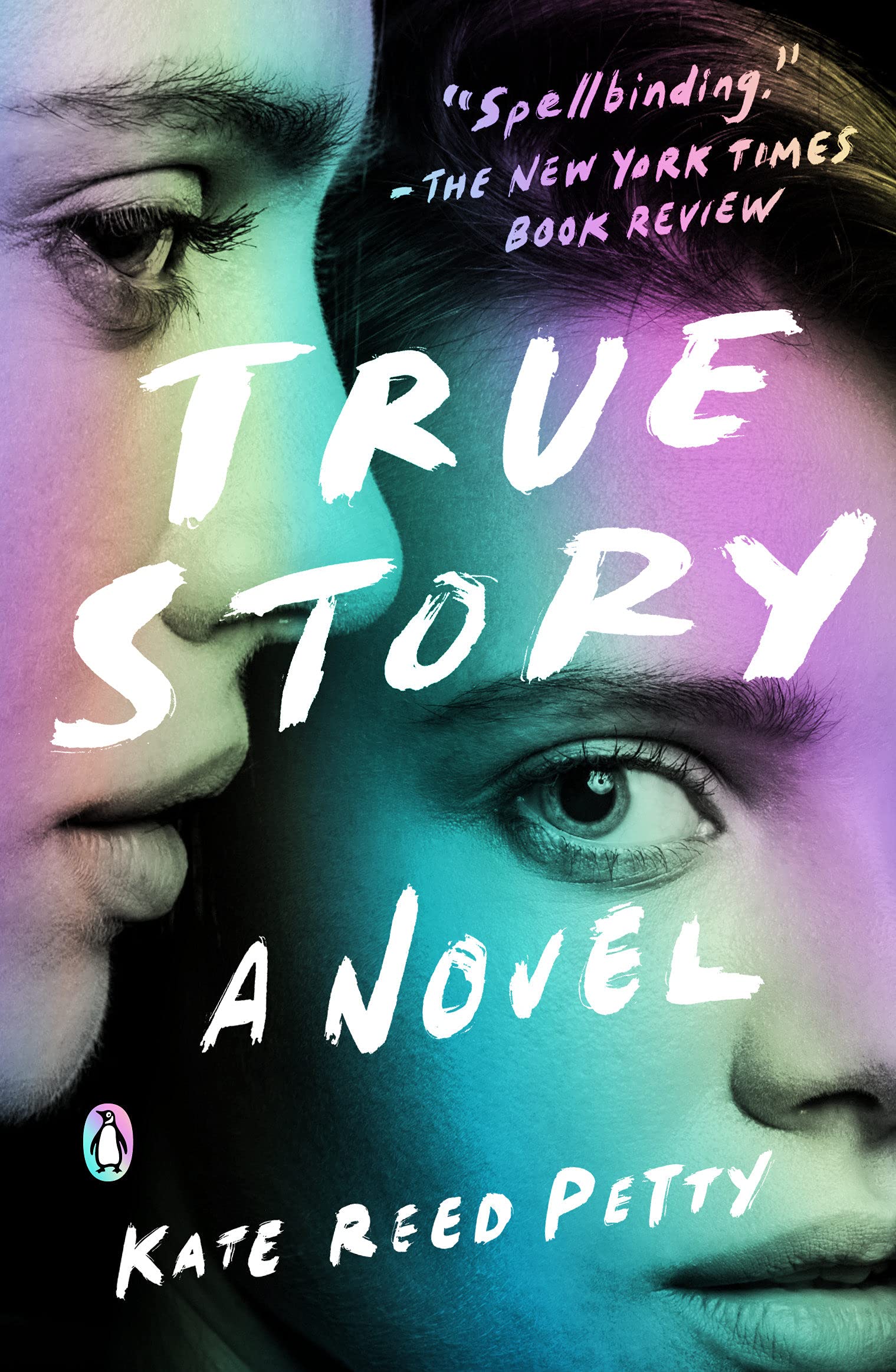
True Story – Kate Reed Petty

Kate Reed Petty’s debut True Story is the story of a high school junior’s sexual assault in the back of a car. Drunk at a party, Alice Lovett is driven home by two lacrosse players, Max and Richard, and the details of the assault spread throughout their town, destroying several lives in the process.

When the novel opens Alice is living in Barcelona and working as a ghost writer. Someone has asked her to tell the story of what happened all those years ago, but Alice is reluctant to even talk to this person.

The truth is I was embarrassed. You’ve always been the one who was brave – no, the one who was sure. You’ve always been so sure of the story you want me to tell. the story you’ve been asking me for since we were seventeen: the story about the things that happened while I was asleep.

Now, Alice hopes this person will accept the version of the story she is prepared to give.

Petty employs a variety of different formats to tell this story. There are movie scripts, college application drafts (complete with teacher feedback); there’s an account from Nick Brothers, a member of the same lacrosse team who was there when Max and Richard came back to the Denny’s and bragged about what they had done to Alice in the backseat of the car; there’s a whole series of email messages from Alice to Haley (the friend who has been encouraging Alice to tell her story); there’s the transcript of an interview Alice is trying to spin into a book for a client. There is nothing necessarily linear about the narrative and it doesn’t matter one bit.

I couldn’t put this book down.

But besides being a page turner, True Story definitely has something to say about rape culture and the way women’s stories are told. I found Alice’s college application essays a perfect example of this. She is trying to write about something that has had an impact on her life (the assault) and she attempts to get there through several drafts, before eventually landing on a benign story about shoes. Society has made it almost impossible for women to tell their own stories and you barely even know that it is happening.

True Story is a horror story, a mystery, a revenge story: it’s well-written and fast-paced and thoughtful and I highly recommend it.

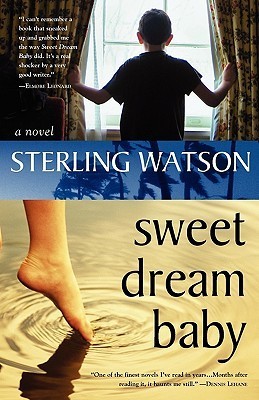
Sweet Dream Baby – Sterling Watson

In an effort to do something about my toppling Mount Doom of backlist books, I am going to read one for every newer release I read. Not sure it will help, but maybe I will luck out and the majority of books languishing on my shelves will be as good as Sweet Dream Baby by Sterling Watson.

In this book, 12-year-old Travis Hollister is sent to Widow Rock, Florida to live with his paternal grandparents and 16-year-old aunt, Delia. It is 1958 and Travis’s father can’t cope. Travis’s mother is convalescing because, as Travis explains, “One day, I came home from school and found Mom curled up under the kitchen sink.” This will be the break everyone needs.

Travis’s grandparents are two sides of a coin: his grandmother is an effusive women, given to retreating to her room with headaches; his grandfather, the town sheriff, is a hard man who demands respect. The real surprise for Travis is his father’s much younger sister, Delia, whose smile “is like a sunrise over the wheat fields back in Omaha.”

Delia takes Travis everywhere and Travis is soon privy to things he doesn’t really understand. Ultimately, it makes this novel more than just the story of one boy’s coming of age. I blame Delia. Delia’s super power is her ability to wrap people, particularly men, around her little finger.

When Travis first meets Delia, he can see the effect she has on her father after she speeds into the garage, music blaring.

Grandpa Hollister’s eyes change. They look like I never expected them to. They say he doesn’t care about the loud radio or the reckless driving. Nobody’s gonna get arrested. They say he can’t do nothing about how he feels right now. Nothing at all.

It seems that every male who comes into Delia’s orbit, from Princeton-bound Bick Sifford, to the the local James Dean wannabe Kenny Griner, wants something from Delia. And soon, Travis wants something from her, too.

Sweet Dream Baby captures the innocence of youth, and the sharp tang of sexual longing and sets it all to the soundtrack of the music of the period. The book doesn’t go where you expect it to and ends up being quite a bit darker, too.

I loved every second of it.