The Cemetery Boys – Heather Brewer

Seventeen-year-old Stephen and his father have packed up their lives in Denver and moved to Spencer to live with Stephen’s taciturn grandmother. It’s the summer before Stephen’s senior year and Stephen isn’t happy about – well – anything. First of all, Spencer is a weird backwater, population 813. Secondly, they’ve left Stephen’s mother behind. Well, she’s been institutionalized. Stephen’s father is unemployed. Stephen’s grandmother is expecting a little help around the house in exchange for their room and board.

At the start of Heather Brewer’s YA novel The Cemetery Boys I was sure I was in for a fast-paced thrill ride.

My fingers were going numb, my bound wrists worn raw by the ropes, but I twisted again, hard this time. I pulled until my skin must have split, because I felt my palms grow wet, then sticky, with what I was pretty sure was my blood. The knots were tight, but I had to get loose. Those things were coming for me, I just knew it.

Those things, it turns out, are The Winged Ones, some supernatural entity that demand a human blood sacrifice every so often for the sake of the town’s prosperity. At first it just seems like some made up bull designed to scare newcomers, but when Stephen meets Devon and the other boys who hang out in “The Playground” aka the local cemetery, he discovers that Devon actually believes in The Winged Ones.

Then there’s Cara, Devon’s beautiful twin sister with whom Stephen experiences an insta-love connection. Not entirely believable.

Despite starting with a bang, The Cemetery Boys ends with a whimper. There is certainly something sort of Stepford-esque about the town and its inhabitants, but nothing really goes anywhere and the book is mostly about a bunch of teenaged boys getting together and drinking their asses off. Until it’s late in the day denouement that is relatively anticlimactic.

Just okay for me.

The Hellbound Heart – Clive Barker

So, apparently British horror writer Clive Barker’s 1986 novella The Hellbound Heart is a classic. It spawned the cult movie Hellraiser, which I have never seen…and am not likely to see after having finished the book.

Frank is tired of the world. In fact, “there was nothing left out there to excite him. No heat. No sweat. No passion, only sudden lust, and just as sudden indifference.” Then he finds Lemarchand’s box, which offers him an intriguing puzzle to solve and if he does, untold pleasure of the darkest kind.

Of course, you can’t make a fair bargain with the Cenobites. They are tricky entities. Frank soon discovers “There was no pleasure in the air; or at least not as humankind understood it.”

Frank’s brother Rory and his wife Julia have recently moved into Frank and Rory’s childhood home. One of the rooms is damp and creepy and Julia soon discovers the reason why. Some version of Frank inhabits the walls and in order to be made whole he needs blood. Julia, who had a pre-marital tryst with Frank, an event that “had in every regard but the matter of her acquiescence, all the aggression and joylessness of rape”, feels her lust for Frank reunited. despite the abhorrent form he currently takes.

It was human, she saw, or had been. But the body had been ripped apart and sewn together again with most of its pieces either missing or twisted and blacked as if in a furnace. There was an eye, gleaming at her, and the ladder of a spine, the vertebrae stripped of muscle, a few unrecognizable fragments of anatomy. That was it. That such a thing might live beggared reason–

The plot is relatively straightforward – equal parts predictable and revolting. I didn’t love it, but I didn’t hate it either.

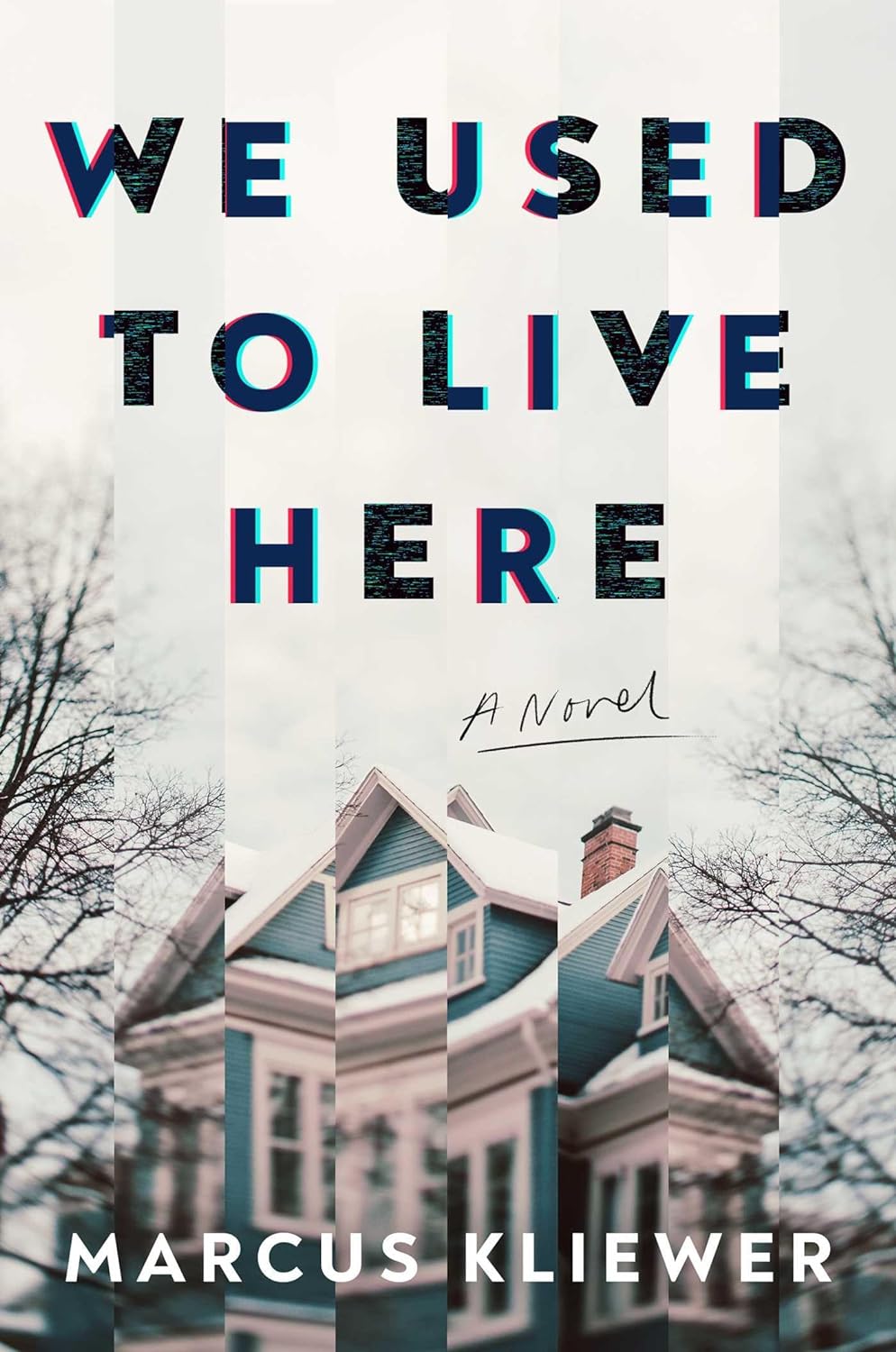
We Used to Live Here – Marcus Kliewer

Years ago, I started to watch the movie The Strangers and I couldn’t make it past the first twenty minutes. Totally creeped me out.

While I eventually did make it through the whole thing, I don’t think I’d ever be looking to repeat the experience. Except maybe in book form.

Marcus Kliewer’s novel We Used to Love Here began its life on Creepypasta. I have only had one other experience with a book with the same starting point: Pen Pal. Like that book, this one started off with a bang and ended with a bit of a whimper.

Eve and Charlie have recently purchased an old fixer-upper in a secluded location with the intent of either renovating or demolishing and rebuilding. Eve is home alone one evening when the doorbell rings. There’s a family on her doorstep and Eve concludes

All in all, they seemed the kind of brood that would cap a Sunday-morning sermon with brunch at Applebee’s. Eve was more than familiar with this crowd.

The father wants to know if he can bring his family in because he used to live in the house. Weird, right?

Eve is reluctant to let them in and so she plays the only card she has: she’ll check with her girlfriend because

The distant alarm bells of her subconscious rang out. She vaguely remembered hearing stories. Stories of strangers showing up at houses, claiming they had lived there once, asking to take a quick look around. Then, when the unsuspecting victims had let down their guard: robbery, torture, murder.

What starts as a relatively straightforward domestic thriller soon morphs into something completely unhinged. The family starts to seem less “off” and Eve starts to feel way more unreliable. And the house, yeah, the house is changing, too. “”The basement’s bigger that you’d think,”” Thomas tells Eve. “”Lots of nooks, crannies, places to hunker down.”” Similarly, the attic is labyrinthine. But this discovery, like the basement, is new to Eve – discovered only after the arrival of the family.

We Used to Live Here was certainly easy to read – but I found it sort of disjointed, especially as things went along. It wasn’t scary, although there were certainly some creepy moments. I didn’t finish it feeling satisfied, mostly because I wasn’t 100% sure I understood exactly what had happened. That may be my own fault rather than the book’s – so your mileage might vary.

The Spirit Bares Its Teeth – Andrew Joseph White

Andrew Joseph White (Hell Followed With Us) has written another amazing YA novel that feels especially timely given what is currently happening in the USA.

Sixteen-year-old Silas Bell, the protagonist in The Spirit Bares Its Teeth, wants to escape his future. In this version of 1883 London, the Speakers take what they want and what they want is to be married to violet-eyed girls. Except Silas isn’t a girl. That’s just biology. What he wants is to find a way to trick the system into giving him a spirit-work seal and then he hopes to slink off, and find a way to study medicine and become a doctor like his older brother, George.

But it all goes horribly wrong, and Silas is taken to Braxton’s Finishing School and Sanitorium, where the Headmaster and his wife turn young girls with “veil sickness” into women men will want to marry. Think conversion therapy, with ghosts. Because Braxton is haunted and as girls born with violet eyes have the ability to reach through the veil, it isn’t long before Silas realizes that something really horrible has been happening at the school.

Silas doesn’t have anyone to trust at Braxton’s, until she gets to know Edward Luckenbill, the young man to whom she is engaged. Is it just possible that Edward is not like the other men Silas has encountered?

You really only come to understand yourself by comparing other’s stories to yours; you find where things are the same, and where they’re not. … Its difficult when the story isn’t one the world wants to hear.

Silas is determined to find out what happened to some of the students that have gone missing, but it isn’t going to be easy and it’s definitely going to get bloody.

White has a remarkable imagination, but this book feels especially timely given the way the rights of marginalized people are being eroded. As Silas seeks to learn the truth about Braxton, he also comes into his own power and it is impossible not to root for him. If you haven’t yet discovered this author, I can highly recommend. You won’t read anything else like it.

Nestlings – Nat Cassidy

When Reid and Ana win an apartment lottery they are thrilled that they can leave their crappy Brooklyn apartment and their crazy landlord, Frank. The Deptford is a swanky building overlooking Central Park. It’s almost too good to be true, but Ana and Reid could use a break.

They’ve recently had their first baby, Charlie, but the birth wasn’t without its complications and Ana has been left in a wheelchair. She isn’t sure living on the 18th floor of the Deptford is the right decision, but she has to admit that the apartment is fabulous even though her first thought upon viewing the space is “We don’t belong here.”

Nat Cassidy’s novel Nestlings is very much a riff on Rosemary’s Baby with less devil worshippers and more…well, I’ll leave that for you to figure out. Reid settles into the space relatively easily, but Ana is trapped in the apartment with Charlie, who never seems to stop crying.

Things are weird in the apartment almost immediately: goopy stuff around the window in her daughter’s bedroom, the sounds of crying from the apartment next door, the strange concierge and even stranger elevator operator, staircases that go nowhere. No one will actually come into the building to deliver food; Reid has to run across the street to collect it when the delivery guy shows up. But, yeah, sure, small price to pay for living in a place that under other circumstances they could never afford.

As the story moves along and as Ana (and the reader) begin to understand just what this building and the assortment of eccentric people who live in it are all about, the stakes get a little higher. This couple is dealing with a whole lot–post partum depression, grief, marital discord, a disability. It makes them sort of the perfect victims but, of course, a mother’s love should not be underestimated.

Lots of creepy (and a few campy) moments in Nestlings. It wasn’t outright scary, though. The first two thirds were pretty slow moving, then things ramped up towards the end. If horror’s your cup of tea, I think you will probably enjoy this one.

Just Like Home – Sarah Gailey

Despite the fact that they have been estranged for several years, when 30-something Vera Crowder’s mother, Daphne, asks her to come home because she is dying, Vera packs up her less-than-stellar life and heads home to the house that was both heaven and hell.

Her father, Francis Crowder, had built the house long before she was born, back when his marriage to Vera’s mother was new. Back before everything else happened, before everyone knew his name. He’d built it with his two strong hands, built it right in the middle of his square patch of green land, built two stories above the ground and dug one below.

It is really Vera’s complicated feelings for her father that drive her back home, “that, and the impossible reality of her mother’s voice on the phone, rippling with sickness.”

Home is now a bit of a circus. In order to make ends meet, Daphne has been renting out the garden shed to artists, writers, and lookie-loos hoping to be inspired by Francis Crowder’s madness. The latest inhabitant is James Duvall, an artist who feels he has a special right to be there because his father had written the definitive book about Francis’s crimes. Vera hates him on sight.

As a child, Vera was convinced that something nefarious was happening in Crowder house, particular in the basement where she was often awoken by “wet slapping noises” coming from down there. Francis kept the basement locked and Vera was given strict instructions to never go down there.

Generally speaking, her relationship with her father is easier than her relationship with her mother.

He’s a big wall of clean soap with curly brown hair that’s thinning in back, a crooked smile with a chipped tooth in front, big ropy muscles in his arms from cutting lumber all day. He’ll scoop Vera up close into a hug after he’s checked the bed and the closet and the curtains and the corners. He’ll tell her that no monsters are there. He’ll check twice.

Just Like Home is a novel about family as much as it’s about anything. And I was wholly invested in watching the family dynamics play out; Vera’s growing understanding (but strangely not horror) of what her father was up to, the erosion of her relationship with her mother. It also examines the weird cult of leeches who feed off the misfortune of others. Vera isn’t particularly likeable, although she is somehow sympathetic.

Then there’s that ending. I was all in until that. Still, worth a read.

The Stopped Heart – Julie Myerson

Julie Myerson’s novel The Stopped Heart clocks in at 500 pages and so while not especially easy to hold up in bed, which is where I do a lot of my reading, I was wholly invested in the story and its dual timelines.

In the present day, Mary and her husband, Graham, have left their lives in the city and moved to a little cottage in Suffolk. It’s clear that something traumatic has happened in their lives to necessitate this move, but the details of that event will take some time to be revealed. The cottage, filled with what Graham hopes will be “possibilities” freaks Mary out a little bit from the start. She sees things and hears things but the truth is that grief has made her a little punch drunk.

Many decades earlier, Eliza lives with her parents and younger siblings on this very property, which was once a working farm. Her life consists of helping her mother and caring for her brothers and sisters, but everything changes the night of the big storm that topples an old elm beside the cottage. “The night he came, a storm. Just like him, it seemed to come from nowhere,” Eliza recalls.

The tree misses the newcomer by inches and suddenly he’s been invited into the house.

His hair was bright red, the reddest I’d ever seen on any person. Thick on top, but shaved short around the sides and over the ears. His face was rough and bitter. He had the look of someone who’d just walked out of a room where bad things had happened.

His name is James Dix and he will change 13-year-old Eliza’s life.

Myerson’s book runs on these parallel tracks, pulling the reader along to places I definitely did not want to go. For example, I figured out relatively early on what haunted Mary, even without knowing the exact details. Her grief was palpable and exhausting and explained her isolation and her strange friendship with the husband of a neighbour Graham befriends and with whom they occasionally have dinner. Why is Mary telling Eddie these things when she should be sharing them with Graham?

Eliza’s story is even more compelling actually. Although he seems to have cast a spell on everyone, she doesn’t like James. He unnerves her and when he looks at her it’s “into the very center of [her] eyes and he smiled as if he had just turned over a card and found he’d won a great fat prize.” She is right to be wary.

I think this book would fit squarely in the grief horror category. That’s a story that explores themes of grief and loss, and includes supernatural elements. It’s beautifully written, the characters are compelling and there are some very creepy moments. I might have left Eddie out of the whole thing and Graham’s daughter from his first marriage, Ruby, is a distraction, but otherwise, this was a surprisingly great read that I plucked from my tbr shelf where it has been languishing for many years.

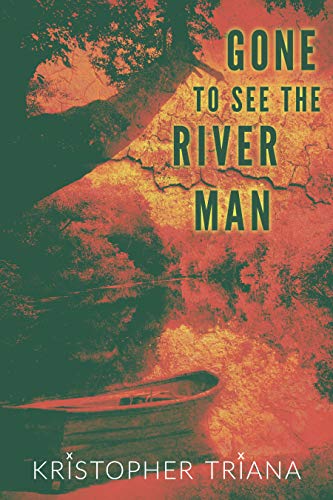
Gone to See the River Man – Kristopher Triana

Kristopher Triana is a new-to-me author, but I think he is relatively well known in the horror community, particularly for readers of cosmic or extreme horror. To be honest, I don’t think I knew much about what constituted those two subgenres of horror, so I did a little research. According to Wikipedia, cosmic horror (also known as Lovecraftian or eldritch horror) is “is a subgenre of horror, fantasy, or weird fiction that emphasizes the horror of the unknowable and incomprehensible more than gore or other elements of shock.It is named after American author H.P. Lovecraft (1890–1937). His work emphasizes themes of cosmic dread, forbidden and dangerous knowledge, madness, non-human influences on humanity, religion and superstition, fate and inevitability.” Extreme horror didn’t have its own entry on Wiki, but it has been called splatterpunk, which is described as a “literary genre characterised by graphically described scenes of an extremely gory nature.”

So that brings us to Triana’s novel Gone to See the River Man, a book that has been described as both cosmic and extreme. What exactly was I getting myself into? I wondered.

Thirty-nine-year-old Lori lives with her older sister Abby, not necessarily because she wants to but because Abby needs care. Lori doesn’t have much of a life. She works at a diner, has just broken up with her boyfriend, and is obsessed with Edmond Cox, a notoriously violent sexual sadist and serial killer. Cox isn’t the first incarcerated psychopath Lori has corresponded with, but she really feels the two share a special bond. She’s visited him a handful of times at Varden prison and she has just agreed to do Cox a favour.

“You’ll find the key in the chest,” he said, reiterating the letter’s instructions. “You’ll find it deep in the low valley of Killen, along the Hollow River, in the shack I done told you about. The one they never knew about.”

“You can count on me. I’ll bring the key as soon as –“

“Nah. Ya ain’t gonna bring it to me. I ain’t the one the key belongs to no more, see? Ya gotta take it to The River Man.”

So, not really understanding the quest or who The River Man is, Lori and her sister set out on a journey that will change her life forever.

Gone to See the River Man surprised me and I mean that in a good way. I tracked it down (not necessarily easy because it’s not traditionally published) because I had heard a lot of book tubers talk about it and I thought, sure, I’ll give it a go. I thought the writing was terrific. Lori herself was a complex character and certainly not who I expected her to be. As her story unravels (told in flashbacks), we see that she has some darkness in her that makes her attraction to Cox more understandable.

As she and Abby head out into the wilderness, first looking for the shack and the key and then heading down the river to find the River Man, things do get weird. Extreme? I don’t know – maybe I have a high tolerance for squick. There was definitely some of that, but mostly the imagery was nightmarish without being necessarily gratuitously violent.

Not gonna lie: I thought this book was great.

The Devil Crept In – Ania Ahlborn

If Ania Ahlborn’s novel The Devil Crept In had been the first book I’d read by her, I am not 100% positive that I would be adding her backlist to my TBR, but it was not. My first encounter with this author was her novel Brother and that book was both creepy and emotionally devastating and made my top books of the year list, pretty close to the top. This novels suffers only by comparison because The Devil Crept In is an objectively creepy book.

Ten-year-old Stevie lives with his deadbeat teenager bother, Duncan, his mother and his bully of a stepfather. Stevie has some weird ticks; his words jumble up in his head and come out sounding like nursery rhymes. And sometimes he’s prone to an overactive imagination, like that time he hallucinated and stuck his hand in the garbage disposal, losing a couple fingertips in the process.

Stevie’s best friend (and cousin) Jude, 12, lives next door. They are each other’s only friends and even though Jude is a bit of a hell raiser, was “tough [and] unforgiving”, Stevie worships him. Then one day, Jude vanishes.

Jude Brighton was gone, like he’d never existed; vanished as though he and Stevie hadn’t spent their entire lives stomping the pavement of Main Street and living the summer in those woods. To them, the ferns were landmarks. Each bend in Cedar Creek, a compass. If someone had chased Jude through those trees, he would have outrun them. If they had dragged him deep into the wilderness, he would have broken free.

But then, one day, Jude reappears. He doesn’t remember where he’s been and although the adults are certainly glad to see him, Stevie’s concern soon turns to dread because Jude is “Like a corpse brought back from the dead.”

There is another narrative thread in this novel and that belongs to Rosie Aleksander. I wasn’t quite as invested in this part of the novel because it felt like exposition — although it is necessary to the whole plot.

The action really ramps up in the last third of the book and I read until the wee hours (on a school night, no less) so that I could see how it would all wrap up. One thing I have admired about Ahlborn is her willingness to draw the reader down a dark path without the promise of a happy ending.

The Devil Crept In is a solid read.

Those Across the River -Christopher Buehlman

Those Across the River is my second novel by Christopher Buehlman (The Lesser Dead) and he now joins the ranks of my auto buy authors.

Frank Nichols and his soon-to-be-wife Eudora have just landed in Whitbrow, a backwater town in Georgia. Their life is a little bit in flux. Frank was essentially chased out of Chicago, where he’d worked at a college, because Eudora had been married to a colleague. The two meet at a faculty luncheon.

She was twenty, wearing a sweater the color of an Anjou pear. I was still built like the St. Ignatius basketball center I had been fifteen years before.

We were in love before the salads came.

It is 1935 and Frank is a WW1 veteran, prone to night terrors; Dora is a school teacher. They land in Whitbrow because Frank has inherited a property. The letter that tells him about this inheritance also cautions him to sell the property, that there is “bad blood” there, but with limited options, they decide to move. Frank is going to write the history of Savoyard Plantation, a derelict property owned by his ancestors.

As Frank and Dora settle into their new lives, they find it to be both secretive and charming. For one thing, the townspeople gather once a year to release pigs into the woods as a sort of sacrifice. But to what? Then there’s the plantation, which is located somewhere across the river, but Frank finds that no one is interested in taking him there. One of the locals tells him “Them woods is deep and mean.”

Just how mean? Well, it takes a while for Frank (and the reader) to figure out just what the heck is going on. Some readers might get frustrated with the slow pace at which the story unfolds, but I liked it. I really enjoy the way the Buehlman writes; he’s also a poet and it shows in his prose. One reviewer suggested that the main characters are wooden and the plot not that compelling, but I disagree. I was wholly invested in this story.

I won’t spoil the reveal. I did figure it out before the end, and while it isn’t a scary horror novel, it is atmospheric and a compelling read.