Those Across the River -Christopher Buehlman

Those Across the River is my second novel by Christopher Buehlman (The Lesser Dead) and he now joins the ranks of my auto buy authors.

Frank Nichols and his soon-to-be-wife Eudora have just landed in Whitbrow, a backwater town in Georgia. Their life is a little bit in flux. Frank was essentially chased out of Chicago, where he’d worked at a college, because Eudora had been married to a colleague. The two meet at a faculty luncheon.

She was twenty, wearing a sweater the color of an Anjou pear. I was still built like the St. Ignatius basketball center I had been fifteen years before.

We were in love before the salads came.

It is 1935 and Frank is a WW1 veteran, prone to night terrors; Dora is a school teacher. They land in Whitbrow because Frank has inherited a property. The letter that tells him about this inheritance also cautions him to sell the property, that there is “bad blood” there, but with limited options, they decide to move. Frank is going to write the history of Savoyard Plantation, a derelict property owned by his ancestors.

As Frank and Dora settle into their new lives, they find it to be both secretive and charming. For one thing, the townspeople gather once a year to release pigs into the woods as a sort of sacrifice. But to what? Then there’s the plantation, which is located somewhere across the river, but Frank finds that no one is interested in taking him there. One of the locals tells him “Them woods is deep and mean.”

Just how mean? Well, it takes a while for Frank (and the reader) to figure out just what the heck is going on. Some readers might get frustrated with the slow pace at which the story unfolds, but I liked it. I really enjoy the way the Buehlman writes; he’s also a poet and it shows in his prose. One reviewer suggested that the main characters are wooden and the plot not that compelling, but I disagree. I was wholly invested in this story.

I won’t spoil the reveal. I did figure it out before the end, and while it isn’t a scary horror novel, it is atmospheric and a compelling read.

The Drift – C.J. Tudor

Although I am posting this review on Jan 9, 2025, C.J. Tudor’s (The Chalk Man, The Hiding Place) novel The Drift was actually my last read of 2024. I finished it up poolside while on a family vacation in Florida. It’s a cheat that it’s ending up in my book count for 2025, but who cares?

Told from three different perspectives, The Drift is a dystopian horror novel that concerns three different groups of people, all of whom seem to be stranded.

There’s Hannah, a medical student who had been on her way to the Retreat, when the bus she was on crashed. That’s not all. “Snowstorm outside, coach tipped over and half buried in a drift.” And Hannah figures abut half the passengers are dead.

Meg wakes up in a cable car suspended a thousand feet in the air. She’s not alone, but nobody can really remember how they got into this situation. Worse, no one is really sure how they’re going to get out of it. It’s a blizzard out there.

Finally, there’s Carter, one of a group pf people holed up at The Retreat.

…the Retreat was large. And luxurious. The living room was all polished wooden floors, thick shaggy rugs and worn leather sofas. There was a massive flatscreen TV and DVD player, games consoles and a stereo. A wooden sideboard housed stacks of CDs, dog-eared novels and a collection of board games. The kitchen was modern and sleek with a huge American fridge freezer and a polished granite island.

Residents at the Retreat were well looked after.

What these three groups of people (and our narrators) have in common is part of the fun of this locked room, puzzle box of a novel. There’s a mysterious virus (C.J. Tudor came up with the idea in 2019, just before Covid slammed its way into our lives), a creepy group of people called Whistlers, some gross body horror and lots of wondering who can be trusted. The voices of the three characters aren’t necessarily distinct, but the pages will practically turn themselves as you try to figure just how everything fits together.

Hell Followed With Us – Andrew Joseph White

Andrew Joseph White claims his debut novel Hell Followed With Us was written because he was angry. On his website, we’re told “His work focuses on the intersection of transgender and autistic identity through the lens of horror, monstrosity, violence, and rage.” Got that right.

Benji is on the run. His father has just been killed and the Angels and their Graces are hunting him down, except that there is not really any place to go. That’s because these people – part of the cult that raised Benji – have unleased Armageddon via The Flood, decimating the world’s population.

The hellscape of the world White imagines is unlike anything I have ever read before. This is a world devoid of humanity, where goods are bartered with the exchange of human ears, where the monsters are

made of corpses and the Flood – sharpened ribs lining its back in a row of spines, eyeballs blinking between sinew, muscles so swollen they split the skin

At the beginning of the novel, when Benji is recaptured by the Angels, it is not so they can kill him: he’s important to the cult because he is a Seraph, or about to become one anyway. He has the power to control the Graces and The Flood and also, his mother is kind of a big deal at New Nazareth. Before they can get Benji back to New Nazareth, though, he is rescued by a ragtag group of teen resistors from the local Acheson LGBTQ+ Centre (ALC). It is his relationship with these people, specifically the handsome sharp-shooter, Nick, that propels Benji on a dangerous mission to take down New Nazareth once and for all.

Hell Followed With Us is an allegorical tale. Before Benji was Benji, he was Esther, betrothed to Theo. At their engagement ceremony, Benji’s mother tries to find a passage about marriage, something that would “hammer home” Benji’s role as a wife, something that could “beat the boy” out of him. Throughout the novel, Benji struggles to find acceptance and while the monsters might be dreamt from Whites very scary imagination, the big ideas- of acceptance, or personal autonomy, of the dangers of blindly following are anything but fiction.

Great read.

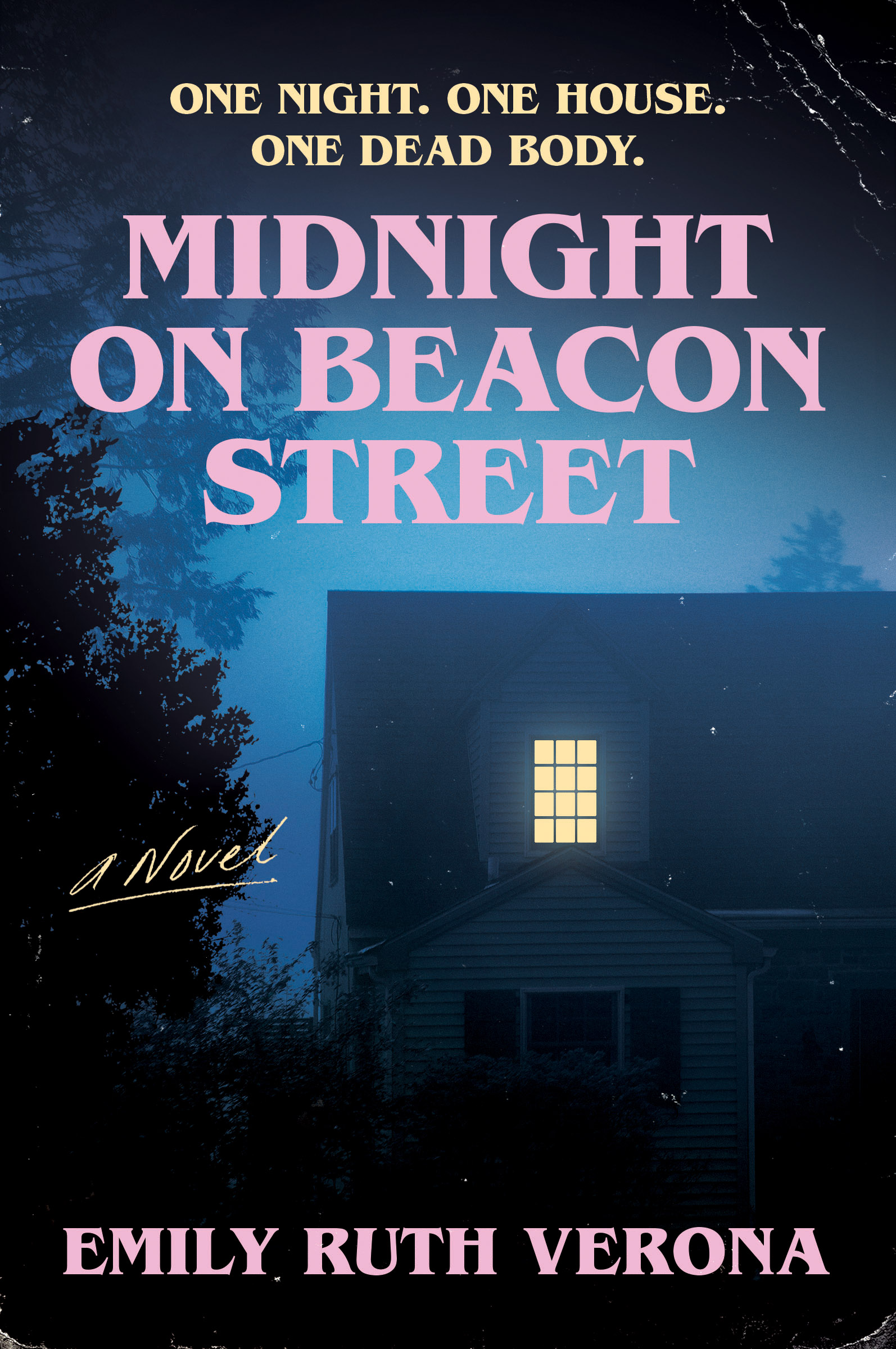
Midnight on Beacon Street – Emily Ruth Verona

Despite suffering from crippling panic attacks, Amy is a much sought after babysitter. Tonight, she is looking after siblings Ben, 6, and his older sister Mira, 12, while their single mother, Eleanor, is out on a date. Amy likes Eleanor, and she likes babysitting there because her boyfriend, Miles, is not only welcome to visit, Eleanor “encourages it.” For someone who hasn’t had the best luck with relationships, she’s relatively smitten with the idea of Amy and Miles and their young love.”

Amy orders pizza and waits on the arrival of Miles. She’s brought a couple horror movies, her favourite genre. There’s something about them that calms her down, strange as she knows that sounds.

Emily Ruth Verona’s debut Midnight on Beacon Street begins at the end.

The blood beneath Ben’s bare feet is too fresh to be sticky. It’s hard not to slip. And so, the little boy holds still – so very still. Stiller than he has ever held before.

This is six minutes after midnight. The novel is non-linear, jumping back and forth to various points earlier in the night, but also to a time six years before, when Amy is being sat by Sadie, “a bright-eyed, fresh-faced fifteen-year-old girl.”

Amy’s night does not go as planned. There are several unexpected visitors; Mira is sullen; Ben is withdrawn. And the whole thing culminates with Ben standing in a pool of blood in the kitchen. Although not particularly swift moving (the novel clocks in just under 200 pages, but it isn’t a fast read), I found it entertaining. Amy is a terrific character and the novel nods and winks at all your favourite horror movies and tropes.

House of Hollow – Krystal Sutherland

I can’t say that fantasy is one of the genres I gravitate towards. I’m not sure what it is about other-worldly fiction; I guess I just like my stories to be rooted in reality. But that doesn’t mean I never read them nor haven’t enjoyed some of the fantasies that I have read. I very much liked Empire of the Vampire; Starling House was slightly less successful for me. Krystal Sutherland’s YA novel House of Hollow lands squarely on the winner side for me.

Sisters Iris, Vivi and Grey are special.  Not only did something remarkable happen to them when they were children (all three disappeared from an Edinburgh street, only to reappear one month later with absolutely no memory of where they’d been), but now the two oldest sisters have fabulous careers in fashion and music, while the youngest, the narrator Iris, is just hoping to get through her last year of high school.

Everyone knew who we were. Everyone had heard our story. Everyone had their own theory about what had happened to us. My sisters used this to their advantage. They were very good at cultivating their own mystery like gardeners, coaxing the heady intrigue that ripened around them into the shape of their choosing. I simply followed in their wake, quiet and studious, always embarrassed by their attention.

Then, strange things start happening in the sisters’ lives. Iris sees a strange man “wearing a horned skull over his head” during her morning run. Then her eldest sister, Grey, disappears without a trace. When she and Vivi go to investigate, they discover a dead body in Grey’s apartment. And that’s not all.

House of Hollow is a breathless romp through a malevolent fairy tale world, but it is also a mystery (just what happened to these girls when they were younger) and a timeless tale of what sacrifices siblings might be willing to make for each other. The language is lush, the body horror just squicky enough and I had a great time reading it.

Theme Music – T. Marie Vandelly

T. Marie Vandelly’s debut Theme Music promises a lot with its prologue. At just eighteen months, Dixie Wheeler is the only member of her family to survive a chilling event in the family home. One day at breakfast, her father left the kitchen, went to his shed and returned with an axe.

He rentered the kitchen, extra warm and cozy thanks to a turkey in the oven, looked upon the bewildered faces of his adoring family, and butchered them all. Well, not all, of course. I lived.

After he was done, her father slit his own throat.

Now, twenty-five years later, Dixie happens upon an advertisement announcing the sale of her family home – not that she has any real memories of it. After the death of her family, Dixie lived with her father’s sister, Celia, and her uncle, Ford, and her cousin, Leah. Now, as an adult, she cohabitates with her boyfriend, Garrett. What can it hurt to go check out the house, she wonders.

The house is “charming” in fact, despite its horrific history. Garrett falls in love with it, too, although he isn’t aware of what happened there. In fact, Dixie hasn’t been forthcoming with the details of her past at all. That’s bound to cause some friction and it does which ultimately means that Dixie moves into the house solo. Not only does she move in, but she brings with her all the household belongings that her father’s brother Davis had stored in his own basement. This includes, unfortunately, a file folder filled with crime scene photos. Davis, it seems, always believed his brother was innocent and until his death was working to prove it.

Theme Music isn’t quite sure whether it wants to be a thriller or a horror novel. Dixie’s house is haunted because of course it is, but most of the book is concerned with Dixie picking up the threads of her uncle’s investigation, and trying to figure out what really happened that day.

Books of this type depend on a likable main character, which I am sad to say, Dixie was not. Was there peril? Yes. Did she do some stupid things? Yes. Were there some twists and suspense? Also yes. But I also often found the tone uneven, sarcasm when it was uncalled for and a fair number of unbelievable plot machinations that caused a little bit of eye rolling.

All that said, Theme Music is a promising debut even if it wasn’t quite sure what kind of book it wanted to be.

Whisper Down the Lane – Clay McLeod Chapman

I don’t really have any personal memory the Satanic Panic of the 80s – I was perhaps more concerned with trying to make myself look like a brunette Madonna – but I do find it to be a fascinating subject. A few months ago I read Remembering Satan, which was a true account of one family’s descent into a hellish landscape of satanic rituals and false memories. Clay McLeod Chapman’s novel Whisper Down the Lane leans into these ideas.

Richard teaches art at the hoity toity Danvers School in Virginia. He is newly married to fellow teacher Tamara, and step-father to her young son. He seems like a good guy, although he is prone to drifting off from conversations, a habit that causes him great anxiety but which he seems unable to prevent.

Then there’s Sean, a young boy living with his mother in 1982. Things start to go off the rails in his life when his mother notices bruises on him. His mother asks Sean if Mr. Woodhouse, Sean’s teacher, had given him the bruises. It’s such a strange question because “Of course he hadn’t.[…]He had more energy than any of Sean’s other teachers. Even more than his classmates. To Sean, he was like a clown without makeup.”

Whisper Down the Lane is inspired, in part, by the McMartin Preschool trial of 1987. You can watch a little bit about that here:

As Chapman’s book toggles back and forth between Sean’s story and Richard’s, it won’t take readers very long to figure out the connection. The book has some creepy moments, but I also found it slow moving and not wholly satisfying.

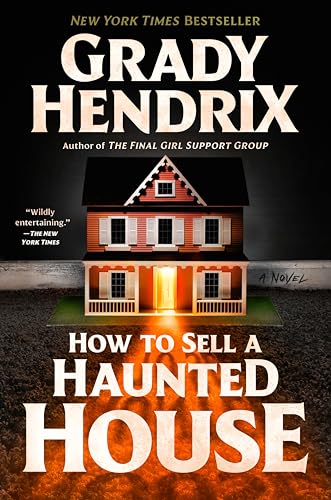
How to Sell a Haunted House – Grady Hendrix

Louise and Mark are estranged siblings who are forced to find a way to work together in an effort to clean out their parents’ house. That’s the starting point for Grady Hendrix’s novel How to Sell a Haunted House.

Louise and Mark squabble over everything, including how they should deal with the contents of the house: Mark calls it “junk”; Louise is more sentimental. It isn’t until things start to get, well, weird, that the siblings discover they have more in common than they realized.

When Louise arrives in Charleston, she discovers that Mark has already arranged for Agutter Clutter to come and cart away all the stuff their parents, Nancy and Eric, have accumulated over the years–and it’s a lot of stuff. Well, it’s a lot of puppets and dolls. That’s because Nancy was a puppeteer with “a Christian puppet ministry”. Neither of the siblings is really a fan and one puppet in particular makes “Louise’s skin crawl.”

Pupkin was a red-and-yellow glove puppet with two stumpy fabric legs dangling down from his front and two little nubbin arms. His chalk-white plastic face had a big smiling mouth and a little pug nose, and he looked out of the corners of his wide eyes like he was up to some kind of mischief. His moth and eyes were outlined in thick black lines and he wore a bloodred bodysuit with a pointed hood and a yellow stomach […]he looked like he’d crawled straight out of a nightmare.

How to Sell a Haunted House is often funny, and also violent and creepy (and this will be especially true if dolls and puppets make you uneasy). And, then, like in the other Hendrix books I have read (My Best Friend’s Exorcism, The Southern Book Club’s Guide to Slaying Vampires), it also offers a deeper look at something more meaningful and real than just straight-up scares. (I didn’t find this book particularly scary, although it did, on occasion, make me squirm.)

This book tracks the emotions attached with grief (each section of the book is named after one of the five stages), the unresolved feelings you’re left with when you lose someone unexpectedly, and the notion that when your loved one is gone, all you have left –if you are lucky — are the people you have shared the journey with. If you are really lucky, that is a sibling.

Super enjoyable read.

Penpal – Dathan Auerbach

Dathan Auerbach’s novel Penpal began life as a series of interconnected stories on an online horror forum, which probably accounts for some of the repetitiveness, wonky timeline issues, and disjointedness.

In the novel, a young boy starts to receive a series of blurry polaroid photos in the mail after his kindergarten class participates in a balloon activity. Each student writes a letter, ties it to a balloon and sets them free. The hope is that whoever finds the balloon will write back and include a photo of where they live. These photos will then be pinned to a map.

The unnamed narrator doesn’t think much of the first photo, but over the coming weeks he receives dozens more and upon closer inspection he discovers that he is in every single one of them. Creepy, right? Well, sure…if it had actually led somewhere.

In many ways, Penpal is a coming-of-age story. The narrator and his best friend Josh spend a lot of time in the woods, a place that is both magical and menacing. Once, the boy wakes up and finds him in the middle of the woods, lost. Once, he and Josh go looking for the narrator’s missing cat and that leads to a heart-pounding segment under a house. Then there’s the crazy denouement, which seems to come out of nowhere. And that was one of my issues with this book. It skips around and twists back on itself and although the narrator tells the reader that “the story I am about to tell you is the product of my own mental archaeology [and] like all great digs, how the artifacts fit together in a timeline is about as immediately clear as which things are important and which are not” I kept waiting for some sort of satisfying resolution.

I think Penpal had a lot of potential. There was a lot of hype surrounding this book – perhaps too much for a self-published debut. Lots of people put it in the extreme horror category. Can’t see that, really. Was I wowed by this book? No. Were there some bits that I enjoyed. Yes. Would I read something else by this author? Probably not.

Paperbacks from Hell – Grady Hendrix

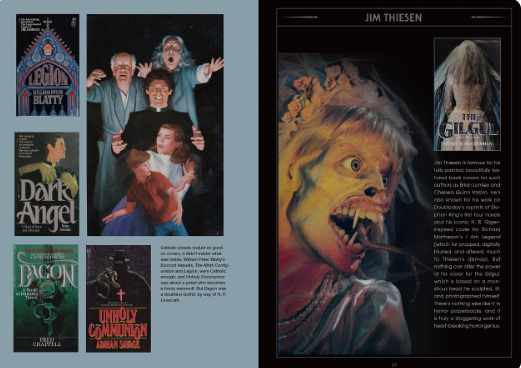
Grady Hendrix (The Southern Book Club’s Guide to Slaying Vampires, My Best Friend’s Exorcism) digs through the horror vault in Paperbacks from Hell. Subtitled The Twisted History of ’70s and ’80s Horror Fiction, Hendrix, no slouch himself when it comes to things that go bump in the night, traces the history of mainstream horror fiction and his observations are both astute and often comical.

For anyone who grew up in the 1970s, lots of these authors will be familiar. Personally I was reading a lot of Stephen King back then, and there’s not really a lot about him in this book. Instead, Paperbacks from Hell (mostly) looks at the seedier side of horror, tracing the resurrection of the genre to Ira Levin’s Rosemary’s Baby, Thomas Tyron’s The Other and William Peter Blatty’s The Exorcist.

As Hendrix explains “All three spawned movies and, most importantly, set the tone for the next two decades of horror publishing.

Hendrix catalogues the specific sub-genres of horror, everything from satanic cults, haunted houses, explicit sex, creepy kids, possessed animals, zombies and vampires. The book is filled with lots of amusing turns of phrase and enough specifics to make a horror aficionado happy.

Then there’s the cover art. If you have any interest in pulp horror from this period – you should just go right ahead and order the book. It’s a whole lot of creepy fun.

This would make a great gift for any horror reader on your list. And while you’re at it – pick up one of Hendrix’s novels, too. He clearly loves the genre and he’s a great writer.