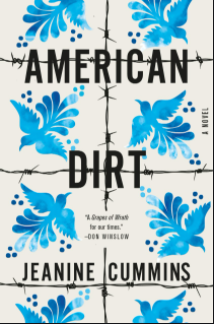
American Dirt – Jeanine Cummins

The debate rages on: does an artist have the right to create something even though it is outside of their lived experience? My answer is always going to be yes, otherwise how do I justify the ten-plus years I wrote vampire fanfiction? I mean, I’ve never met a vampire let alone had sex with one. Jeanine Cummins found herself in the middle of a maelstrom after the release of her novel American Dirt.

Vulture magazine did a whole piece tracing the controversy about the book which “has been called “stereotypical,” and “appropriative” for “opportunistically, selfishly, and parasitically” telling the fictional story of a Mexican mother and son’s journey to the border after a cartel murders the rest of their family.” The entire article is worth the read because it explains the whole situation much more succinctly than I could.

One of the very first bullets comes in through the open window above the toilet where Luca is standing. He doesn’t immediately understand that it’s a bullet at all, and it’s only luck that it doesn’t strike him between the eyes.

Thus begins the story of Luca, 8, and his mother, Lydia. At a family barbecue to celebrate Luca’s cousin Yenifer’s 15th birthday, the entire family (with the exception of Luca and Lydia) are gunned down. It is immediately apparent to Lydia who is responsible. Her husband, Sebastian, is a journalist and he has recently published a piece about Javier Fuentes, the most powerful drug lord in Acapulco. Javier and Lydia had also become friends, not lovers exactly, but there is definitely an intimacy between them born from their love of literature. (Lydia owns a bookstore.) Lydia had no idea who Javier was when she met him; she saw him only as a kindred spirit, someone with whom she could talk “about literature and poetry and economics and politics.”

It was just as Lydia had always hoped life in her bookstore would be one day. In between the workaday drudgery of running a business, that she would entertain customers who were as lively and engaging as the books around them.

Javier’s cartel, Los Jardineros aka The Gardeners, earned their name because they “used guns only when they didn’t have time to indulge their creativity. Their preferred tools were more intimate: spade, ax, sicle, hook, machete. The simple tools of hacking and trenching.”

After the massacre, Lydia takes Luca and runs. She has no choice; she knows that Javier will not rest until she and her son are dead too. The novels traces their arduous journey from their ruined home to the United States, seen here as a beacon of freedom and hope – but, of course, knowing what we know now about undocumented immigrants, perhaps not so much. Still, Lydia feels as though she has only one choice and so they run.

Of course, what does a middle-class business owner know about fleeing under the radar? Not too much. I think the book expects us to believe that because she is protecting her son, she is willing to do just about anything. She’s a quick study because she has to be. She doesn’t dwell too long on the fact that she didn’t see the red flags waving around Javier; she trusts her gut now as the two make their way to el norte.

It’s a gruesome trip. Lydia knows that the cartel has eyes everywhere and that Javier won’t stop until he finds them. Along the way, they meet other migrants with stories of their own. Sisters Soledad and Rebeca are particularly sympathetic.

I enjoyed the book. I guess that’s my white, middle-age, privilege talking, but I found it hard to put down. Criticism claims that there are many inaccuracies, and of course I couldn’t tell you what they are. All I can tell you is that I was wholly invested in Lydia and Luca’s journey and that I tore through the book.

Unspeakable Things – Jess Lourey

Cassie McDowell, the narrator of Jess Lourey’s riveting novel Unspeakable Things, confronts her memories of her thirteenth summer when she returns to her small Minnesota hometown for a funeral. She alludes to writing a novel about a “gravedirt basement”, but now “that cellar stink doubled back with a vengeance.”

It’s the 1980s and Cassie lives with her older sister, Sephie, and her parents on a thirteen acre hobby farm. Her father, Donny, is an artist and her mother, Peg, a teacher. It doesn’t take very long to feel the sense of dread that permeates Cassie’s home life. She “felt a quease leaving [Sephie] up with [her parents] when they’d been drinking” and she sleeps either under her bed, or squirreled away in her bedroom closet. The basement of their farmhouse is off limits. The tension is almost unbearable.

Their town, Lilydale, is full of strange characters, like Sergeant Bauer, the local cop, and Goblin, the creepy guy who lives down the road from the McDowells. And then, boys start disappearing. This causes the town to invoke a 9 p.m. curfew, which does little to alleviate fear.

That sent a shiver up my spine. First, what Betty had said this morning about the boy being raped, and now this. Mom’d told us on the drive over that we didn’t need to worry about anything, but Betty had most definitely seemed concerned. Bauer did, too. He suddenly had our complete attention.

“Always travel in pairs. I don’t want to see ay of you kids out alone this summer.”

That shushed us all up, every last one of us.

This time it wasn’t the words, or even his tone.

I think it was the first moment we caught a whiff of what was coming for us.

Something is coming for the boys of Lilydale, and when it comes for Gabriel, the cute boy Cassie has a crush on, she decides to do some investigating of her own. But, make no mistake, this isn’t a light-hearted Nancy Drew-esque detective story. There are creepy-crawly things in Lilydale’s underbelly and in Cassie’s own home. In fact, there is so much to be worried about the dread quotient is off-the-charts.

Yes, someone is scooping boys off the streets and when they come back they are changed in ways they seem unable to articulate. But Cassie has to deal with what is going on in her own backyard: her father’s mercurial moods, her parents’ ‘parties’ and the implied sexual abuse going on her home. When her father’s footsteps start up the stairs, the terror Cassie – and surely the reader – feels is palpable.

Unspeakable Things is a mystery and a coming-of-age story, and all of it (and Cassie’s voice) will twine around your heart and squeeze hard. Some might find the end of this novel less-than-satisfactory. Lourey wrote an epilogue, but then left it out of the final version. You can read that here. I liked both versions.

I loved this book. Highly recommended, but potentially triggering.

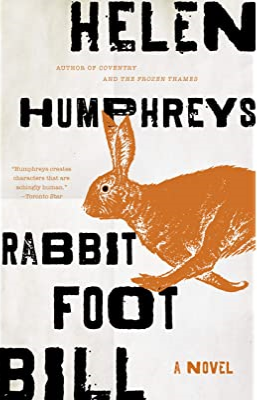
Rabbit Foot Bill – Helen Humphreys

When asked how we (the ladies in my book club) would rate Canadian writer Helen Humphreys’ new book Rabbit Foot Bill on a scale of one to ten, the average score was about six. It’s a shockingly low number for an author whose book The Lost Garden we almost all universally loved. (I have also read her novels Afterimage and Coventry.) I have come to expect a certain degree of poetry in Humphreys’ prose, and while Rabbit Foot Bill is certainly easy to read, it lacked something. Usually after a book club meeting, especially if I am ambivalent about a book, I come away with a deeper appreciation of it. Honestly, I still don’t know how I really feel about this book.

Leonard Flint lives in small-town Saskatchewan with his parents. He’s a solitary kid and his only friend is Bill, a quiet man who lives in Sugar Hill, “right inside the hill.”

We have been friends for a year, Bill and I, and although people don’t approve, we are friends anyway. I like that Bill isn’t bothered by what people say.

The reasons why people don’t like my being friends with Bill are these: first, because he is a man and I am a twelve-year-old boy; and second, because he is a man who is not like other men. He doesn’t talk much. He doesn’t live in a house. He doesn’t have a real job. He doesn’t have a family.

One day, Leonard witnesses a shocking act of violence that lands Bill in prison. It’s fifteen years before he sees his friend again, and when he does it’s at the Weymouth Mental Hospital. Leonard has just accepted his first job as a psychiatrist, a job that he doesn’t really understand how to do. He really is out of sorts and then one night, crossing the yard back to the cottage where he lives he sees a man “moving along the outside of the building. He’s far enough away to be in the shadows and he has his back to me, but I recognize the way he moves as though it was myself moving in my own skin.”

It is indeed Bill, and although Leonard is warned against making contact with him, he can’t help himself. Bill and Leonard’s pasts are so closely linked that it is impossible for him to resist, even though it means that he is derelict in his duties to his own patients.

Rabbit Foot Bill is based a a true story but the real-life relationship between Bill and Leonard is peripheral at best. In Humphreys’ imagination their relationship is far more complex, which is of course the stock and trade of a writer. There were times when I wondered if there wasn’t some sort of homoerotic connection between the men, and the reveal, when it comes, is certainly plausible.

So, I am not sure why I didn’t love this book. Thinking about it now, as I write this, I guess I can see its merits, but I just felt it was somehow superficial. True, as my fellow book club member Karen said, Humphreys doesn’t get in the way of the story. In some ways, though, I wish she had spent just a teensy bit more time making these characters more substantial.

It’s not a total miss for me, but I didn’t love it.

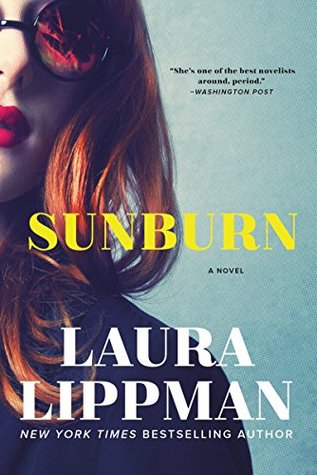
Sunburn – Laura Lippman

Sunburn is my second outing with Laura Lippman. I just re-read my review of The Most Dangerous Thing from 2014 and the issues I have with Sunburn are pretty much the same issues I had with that book.

Sunburn concerns the fates of Polly and Adam. Polly (who has several other names) walks away from her husband, Gregg, and daughter, Jani, while the three are on a beach holiday. She lands in a little backwoods town (Belleville, Delaware), and that’s where Adam finds her. Adam has been hired to find her, actually. He couldn’t have known that he would be so attracted to her. “It’s the sunburned shoulders that get him.”

Adam and Polly end up taking jobs at High-Ho, a dump of a bar, where Polly waits tables and Adam, who happens to be a trained cook, revamps the menu. At first they keep their distance from each other.

He doesn’t go in hard. He’s not that way. Doesn’t have to be, if that doesn’t sound too vain. It’s just a fact: he’s a Ken doll kind of guy, if Ken had a great year-round tan. Tall and muscular with even features, pale eyes, dark hair. Women always assume that Ken wants a Barbie, but he prefers his women thin and a little skittish.

Skittish is certainly one way to describe Polly. Secretive and calculating would also be apt. Polly’s complicated past stretches beyond leaving her family on the beach. “If anyone knew her whole story, that might be the truly shocking part, the way she ruined her own second chance. But no one knows her whole story.”

For a while, the dance between Adam and Polly is interesting. They each have secrets and they are keeping their true feelings and motives close to their chests. Is Polly a player, a maneater? How does a mother walk away from her kid? It’s a question worth asking. And Adam? Who is the mysterious man who has asked him to keep tabs on Polly? What is he really after?

Ultimately, though, in the same way that the climax of The Most Dangerous Thing was anticlimactic, Sunburn doesn’t really get anywhere….and it certainly doesn’t get anywhere quickly. The first third of the novel is far more page-turning than the last third. By the time I got to the end, I didn’t even believe in Adam anymore. He seemed sort of neutered.

I’ll say the same thing about Lippman as I did the first time around: she can write. And maybe some readers won’t mind a meandering journey like this one, but it was just so-so for me.

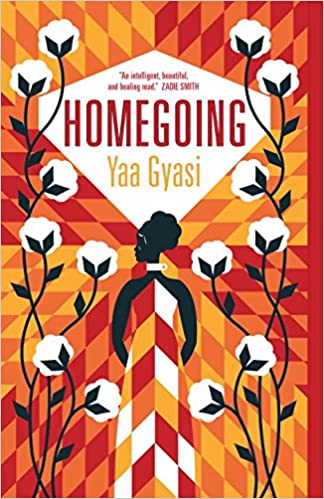
Homegoing – Yaa Gyasi

I am not sure I would have ever come to Yaa Gyasi’s debut novel Homegoing on my own. A former student (now colleague – yes, I am that old) brought it to my classroom a week ago and announced that it was one of the best books she’d ever read and I had to read it. Under normal circumstances, I don’t take books from people because my tbr pile is out of control and I like to read what I want when I want, but how could I say no to that impassioned recommendation?

Homegoing is a sweeping story which begins in the late 1700s with two half sisters, Effia and Esi. Born in different villages in Ghana, neither knows the other exists; they are joined only by a black stone pendant.

Effia, the beloved daughter of Cobbe Otcher, is married to James Collins, newly appointed governor of the Cape Coast Castle, a place where many captured Africans are held captive until they can be sold. Despite the business he’s in, James seems to care for Effia, and she comes to care for him, I guess. Esi, on the other hand, meets a worse fate. She is captured and eventually sold to a plantation owner in America, going through the very castle where her half-sister lives a privileged existence.

Gyasi’s novel, however, isn’t content to follow these women through their whole lives though. Instead, each chapter introduces readers to a new character, a descendant of Effia or Esi, tracking the family lines all the way to modern day. It’s a confusing trip, trying to keep track of the names and their relationships (and I somehow missed the handy family tree provided at the beginning of the book until I got about half way through and started grumbling to myself because I didn’t know who these people were.)

These brief glimpses into so many lives lived is both frustrating and illuminating. Personally, I like to spend time with characters in books, take the whole journey with them, but aren’t we all just drops in the big bucket? Maybe we don’t think about it, but we are part of all the women and men, who came before us. Truthfully, I can’t go much further back than my great-grandparents. Their struggles become a part of our destiny and I think I should know a little bit more about them than I do. At my age, I am running out of relatives to ask, too.

One character, Yaw, is a history teacher. In delivering a lesson to his students he says “We cannot know that which we were not there to see and hear and experience for ourselves. We must rely upon the word of others. Those who were there in the olden days. They told stories to the children so that the children would know, so that the children could tell stories to their children. And so on, and so on.”

We are our stories, and not just the stories we are living, but all the stories that came before. I think we live in a transient world; we care little about the past, and that’s a shame. Gyasi’s novel is elliptical in nature, but the accumulation of all these lives does pack a considerable punch even if, like me, you find the novel’s ending a tad contrived.

Station Eleven – Emily St. John Mandel

Emily St. John Mandel’s award-winning novel Station Eleven, published in 2014, is about as prescient a novel as one might expect to read during these world-wide pandemic times. In her book, the world succumbs to the Georgia Flu in record time, leaving behind a landscape inhabited by only a few hopeless (and hopeful) survivors.

The novel’s main characters, Arthur Leander, a famous Hollywood actor; Jeevan, the man who tries to save Arthur when he collapses onstage in a Toronto theatre; Clark Thompson, Arthur’s friend; Kirsten, a young actress with a troupe of musicians and actors, collectively known as the Symphony, who travel around the post-apocalyptic landscape performing works by Shakespeare, and Miranda, Arthur’s first wife, have, in many respects, a tenuous connection, but their stories intertwine over many years.

Jeevan is the first to learn of the flu’s ferocity. After the incident in the theatre, Jeevan finds himself walking through the Toronto streets and his friend Hau calls him. “You remember the SARS epidemic?” his friend asks?

“We’ve admitted over two hundred flu patients since this morning,” Hua said. “A hundred and sixty in the past three hours. Fifteen of them have died. The ER’s full of new cases. We’ve got beds parked in the hallways. Health Canada’s about to make an announcement.” It wasn’t only exhaustion, Jeevan realized. Hua was afraid.

St. John Mandel’s story skips back and forth in time. We learn about the characters’ backstories, how they survived (or didn’t) and the one person they all have in common: Arthur Leander.

Although, on the surface at least, this might seem like a survival story, Station Eleven is also a story about art, friendship, family, fanaticism and fame. When the end of the world comes, it comes with a vengeance, leaving these people to question their own lives, their pettiness, and their attachment to things.

Station Eleven is our first book for the 2020-21 season of my book club. I am not certain it was the most uplifting choice given that we are still in the clutches of Covid 19.

I live in one of the safest places on the planet, but that doesn’t mean I am immune to the fraught state of the world. Nevertheless, I found this book to be rather beautiful and hopeful. It is possible, the books posits, to be sustained by art and nature and friendship and these, it seems, are worthwhile things to care about. What did I miss when the world shut down back in March? Not shopping. Not dining out. I missed hugging my family and seeing my friends. What will we care about when the end truly comes, as it must for all of us?

The pink magnolias in the backyard of the house in Los Angeles

Outdoor concerts, the way the sound rises up into the sky.

Tyler in the bathtub at two, laughing in a cloud of bubble bath.

Miranda’s eyes, the way she looked at him when she was twenty-five and still loved him.

Any book that requires me to think about my life and its meaning, is worth my time. This book was worth my time.

My Best Friend’s Exorcism – Grady Hendrix

In the way that the monsters and demons in Buffy the Vampire Slayer are a metaphor for the horrors of high school, Grady Hendrix’s page-turner My Best Friend’s Exorcism works on a both a figurative and literal level. Or, at least, it did for me.

Abby and Gretchen have been besties since the day that Gretchen, a new kid in school, turns up to Abby’s tenth birthday party. She’d invited the whole class to the roller rink for an E.T. themed party (it’s the 80s), but Gretchen is the only one who shows up. All the others accepted an invitation to Margaret’s polo plantation (the novel takes place in South Carolina, where apparently there are such things) for a day of horse-back riding. When Abby asks Margaret why she didn’t go to that party, Gretchen replies “You invited me first.” It is from this awkward beginning that the two girls become best friends.

My best friend story has a similar beginning. When Michelle arrived at the country school I attended at the beginning of grade eight, I didn’t like her. And she didn’t like me. At least that’s how I remember it. Her hair was too blonde, her jeans were too tight and she hung out with the older kids. I was about as geeky as they came. We both imagined being writers and I remember that the Prize for English was a hot commodity; I won. Then in grade nine, more than half of the students in our class went on an exchange to Marathon, Ontario. Neither of us went, and that meant that we were without our usual friend groups. One afternoon, we found ourselves talking at the back of a classroom. Turns out, we had way more in common than not and that afternoon cemented a friendship that is now 50 years strong.

Abby and Gretchen have the best friend short-hand. They bond over movies and music. They trade secrets and commiserate about their families; “Everything happened over the next six years. Nothing happened over the next six years.” When Abby’s home life starts to crumble, Gretchen’s family is there to pick up the pieces.

And then. Abby, Gretchen, Margaret (same one, now a friend) and Glee are in high school and one afternoon, they decide to take acid. Just to try it out, not because they’re druggies. It’s 1988. The incident kicks off a descent into a hellscape that causes friendships to fracture. Gretchen disappears that night, and when Abby finds her the next morning she can’t remember anything about her night lost in the woods.

Things take a decided turn for the worst over the coming weeks, and the beauty of this novel (and there are many of them) is that I couldn’t decide whether Gretchen’s possession was literal or just a function of being a high school sophomore. People change, right, especially at this point in their lives. They’re always trying on new personas, shedding one skin to try out another. Abby never gives up on her friend, even when Gretchen behaves horribly; even when her own sanity and safety are threatened.

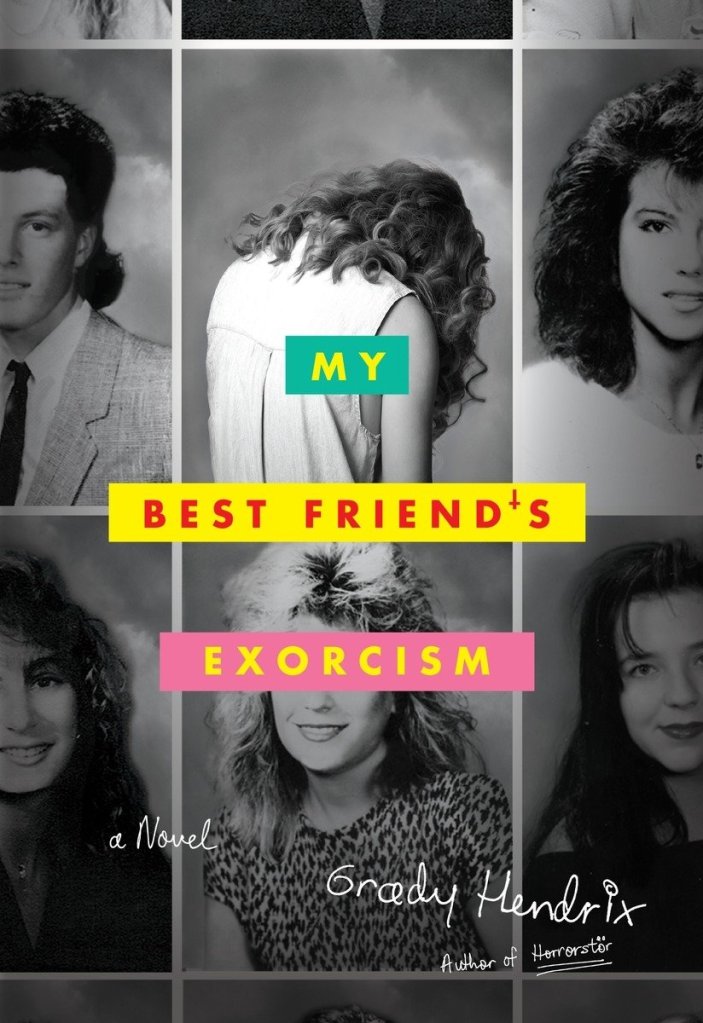
The nostalgia is a river running through Hendrix’s book: the chapters titled after popular songs, the allusions to the TV shows and pop culture of the era. The book is packaged like a high school yearbook. And I was sent hurtling back to my high school days, when friendships are the most important things in your life. About fifty pages in, I couldn’t put the book down.

And for the record, I would fight the devil for you, too, Michelle.

Highly recommended.

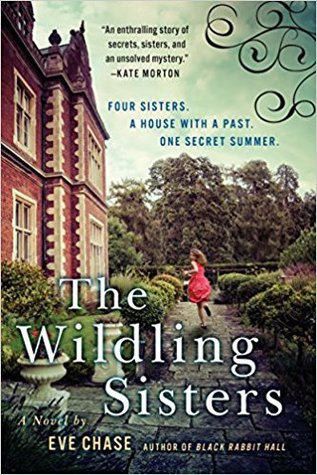
The Wildling Sisters – Eve Chase

The four Wilde sisters (Flora, Pam, Margot and Dot) are spending the summer at Applecote, a manor house in the Cotswolds. They have many happy memories of time spent here, but this summer is different. For one thing, their cousin, Audrey, is gone — having disappeared without a trace five years earlier — and their aunt and uncle haven’t quite recovered from the loss. For another, there’s Tom and Harry, the boys from the estate across the river. Their arrival upsets the easy camaraderie between the three oldest sisters as they vie for the boys’ attention.

Eve Chase’s novel The Wildling Sisters is a slow burn gothic novel that slips back and forth between that summer in 1959 and the present day when Jessie and her husband Will, (and their young daughter Romy, and Will’s teenage daughter from his first marriage, Bella) buy Applecote in an effort to escape London’s madness and settle into a quieter life. There’s also that thing that happened at Bella’s school. Fresh start and all that.

Crime. Crowds. The way a big city forces girls to grow up too fast, strips them of their innocence. It’s time for the family to leave London, move somewhere gentler, more benign.

Jessie also hopes that this will be a new beginning for her and Bella. Being a step mother is hard enough without the shadow of Bella’s mom, the perfect and tragically-killed-in-a-car accident super mom, Mandy, hanging over their heads. The idyllic notion Jessie has of what Applecote might do for her family doesn’t quite come to fruition, though. Will spends a great deal of time in the city dealing with a work crisis, and Jessie begins to feel more and more isolated. Plus, there are all sorts of rumours about Applecote and what happened there 50 years ago.

Fifteen-year-old Margot is our narrator in 1959. The middle sister, she is aware of her shortcomings. She doesn’t “turn heads like Flora” or “command attention in a room like Pam through sheer, unembarrassable life force.” She was closest to Audrey, and so she is the most apprehensive about returning to Applecote.

…the sky is as I remember it: blue, warm as a bath, the air transparent. not washing-up-water-tinged as it is in London, alive with butterflies and birds, so many birds. So much is the same that it highlights the one crushing, unbelievable thing that is not: Audrey isn’t about to come belting out of the house, running down the path, excitedly calling my name.

This is a mystery: what happened to Audrey? It also begins with the image of the girls dragging a body across the lawn of Applecote. That can’t be good, right? It takes a long time to get anywhere, which isn’t a criticism because the book is well-written and does evoke a specific time and place. It also plumbs the depths of family relationships, not just between the Wilde sisters, but also the longings of daughters for mothers and mothers for daughters.

Definitely worth a read.

Wonder When You’ll Miss Me – Amanda Davis

In the Afterward of Amanda Davis’s novel Wonder When You’ll Miss Me, Michael Chabon laments the fact that Davis died in a tragic airplane accident at just 32. “It is unfair, as well as cruel, to try to assess the overall literary merit, not to mention the prospects of future greatness, of a young woman who managed to produce…a single short-story collection, the remarkable Circling the Drain, and a lone novel,” he says. According to Chabon, Davis was the real deal, someone who likely could have written just about anything due to her “sharp, sharp mind, her omnivorous interests, and her understanding of human emotion.”

Wonder When You’ll Miss Me is Faith Duckle’s story. She’s returned to school after several months in hospital after a suicide attempt.

I did it on a clear day, just before Christmas. I had thought about it constantly and planned a little, but when it came right down to it, I didn’t wake up that morning with an idea of what would happen or when I would know. I just knew. The light inside me had flickered and gone out.

The impetus for Faith’s suicide attempt is a horrific assault which had taken place under the bleachers at school during homecoming. A group of junior boys had plied Faith with “red punch that tasted like popsicles” and made her feel “normal.” Now, seven months later, she is back at school, forty-eight pounds lighter, but it seemed like “no one had even noticed I was gone.”

Friendless, except for the fat girl who follows her in the hall and sits behind her in class, offering unsolicited commentary, Faith struggles to regain equilibrium. Eventually, as memories of the event start to resurface, and with the fat girl’s constant prodding, Faith commits an act of violence and then hits the road in search of Charlie, the brother of her friend from the psych ward.

She ends up with a traveling circus, shoveling elephant shit and dreaming of becoming an aerial artist. Seeing Mina perform for the first time is revelatory for Faith, who must learn how to live in a body that has been changed by trauma. Mina “flew lightly, gracefully, as though it were perfectly natural to trust her entire body to this single thread.”

Wonder When You’ll Miss Me is a beautiful book about misfits, kindness, and our ability to heal. I loved Faith’s time with the circus-folk and I was rooting for her success the whole time.

Sweet Sorrow – David Nicholls

Because I have such a backlog of books on my tbr shelf, I rarely make impulse purchases these days. If I buy a new book, it’s usually because I’ve heard of it somehow and even if I do buy it, that doesn’t necessarily mean I will read it straight away. David Nicholls’ (One Day) new book, Sweet Sorrow, was irresistible, though. I bought it and read it immediately.

Charlie Lewis, our narrator, is recounting his post GCSE summer. His life is kind of a mess. His parents have recently split; his mother and younger sister, Billie, have gone off to live with his mom’s new man and Charlie has been left to look after his father, who spends his days in the gloom, listening to jazz albums and drinking or sleeping on the sofa. Of his three best mates from school, Harper, Fox and Lloyd, only Harper seems to understand what a grim time this is for Charlie. When he’s not working his part-time job at a local petrol station, Charlie spends most of his time riding his bike around. That’s how he comes across Fran Fisher.

Fran is part of the theatre troupe Full Fathom Five. They’re rehearsing Romeo and Juliet at Fawley Manor, a country estate owned by senior thespians, Polly and Bernard. The troupe is in desperate need of more males, and so Fran agrees to have coffee with Charlie if he comes back on Monday and participates.

I did go back, because it was inconceivable that I would not see that face again, and if doing so meant a half day of Theatre Sports, then that was the price I’d pay.

Thus begins a summer of Shakespeare and first love for Charlie. “When these stories – love stories – are told, it’s hard not to ascribe meaning and inevitability to entirely innocuous chance events,” Charlie says. But the truth is that Charlie thinks Fran is “lovely” and despite their differences (Fran attended the much posher Chatsborne Academy and is clearly destined for great things; Charlie lives on a council estate with streets named after famous writers and is pretty sure flunked his GCSEs so won’t be going on to college), they fall in love.

The ache of that love — and, trust me, it aches — is heightened because the pair are rehearsing literature’s most famous tragedy, a play Charlie comes to understand and appreciate because he and Fran spend endless lunch hours talking about it, and because Charlie is telling this story twenty years in the future. C’mon – who doesn’t look back at their first love with a certain degree of nostalgia? Y’know, “misty water-coloured memories” and all that.

Not gonna lie, I love Romeo and Juliet. I know what you’re going to say, but I don’t care. I love the language and the heightened emotions and when I first encountered the play, 40 odd years ago, I thought it was the most beautiful thing I’d ever seen. Do I believe in love at first sight? Kinda.

Nicholls has written a book that is both laugh-out-loud funny and also deeply moving. How we ever survive those fraught teen years, I’ll never know, but somehow we do. I wouldn’t hesitate to recommend the book to mature teens in my class, but this is not a YA novel. The tears I shed at the end of the book came from understanding something I could never really know at sixteen: that first love doesn’t last, but it stays with you forever anyway.

Highly recommended.