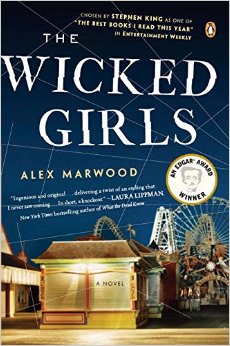
The Wicked Girls – Alex Marwood

wicked.jpgIt’s 1986 when eleven-year-olds Jade and Bel meet in the village store. Their paths weren’t likely to have crossed before because Jade is one of the notorious Walkers – a family from the far side of the tracks – and Bel lives in a fancy house with servants. This fateful meeting is to change the course of the girls’ lives forever because by the end of it another little girl will be dead and Jade and Bel will be arrested for the murder.

This isn’t the only thing happening in Alex Marwood’s novel The Wicked Girls, though.

There’s Amber, head cleaner of Funnland, a boardwalk amusement park in the seaside town of Whitmouth (I imagined Blackpool only smaller and seedier). She lives with Vic, a handsome but slightly passive-aggressive carny. Amber lives a quiet, tidy life. She takes pleasure in overseeing her crew of cleaners and helping them when she can. When Amber discovers a dead girl in the park’s  hall of mirrors, her life becomes significantly more complicated.

Then there’s Kirsty , a freelance journalist married to Jim, an out of work  IT guy, and mother to a couple children. When the body is found at Funnland, Kirsty finds herself on assignment and inevitably comes face-to-face with Amber, the last person she’d ever expected to see again.

The reason: after their release from prison,  Jade and Bel were given new identities and cautioned about ever making contact with each other again. Not that the girls were likely to meet; they barely knew each other to begin with.

Marwood balances the story of Jade and Bel, unspooling the narrative of what happened that long ago day with the present day  Amber and Kirsty, two women who have made a desperate attempt to reinvent their lives.

As if that weren’t enough, let’s not forget Martin, creepy Whitmouth resident. He’s been rebuffed by Jackie, one of the Funnland cleaners. He’s clearly deranged and

the rage of rejection crawls beneath his skin; invisible, unscratchable. All she needs to do is text him back. He doesn’t want to go out, but if she refuses to respond he’s going to have to. As his mother was always assuring him, persistence is the most important quality in life. And he knows he is the most persistent of all.

The seemingly disparate threads of Marwood’s novel do come together, but whether you find the ending satisfying or not will depend on how you like your mysteries. There were a few super tense moments in The Wicked Girls, but there were also moments I found really slow going – not superfluous exactly. I guess I just like a little more ass-kicking and a little less naval-gazing in my thrillers. That said, the characters were definitely nuanced and sympathetic and the writing was good, but over-all I would have to say  The Wicked Girls is more slow burn than page-turner. That’s not necessarily a bad thing, though.

Bittersweet – Miranda Beverly-Whittemore

18339743Mabel Dagmar, the seventeen-year-old narrator of Miranda Beverly-Whittemore’s stunning novel Bittersweet is attending an upper-crust East Coast college on a scholarship. Her roommate, Genevra “Ev” Winslow is from an  influential blue blood family. The two girls couldn’t be any more different and yet somehow Mabel finds herself invited to spend the summer at Winloch, the Winslow family compound in Vermont. Mabel has no interest in returning home to Oregon for the summer, so she gratefully agrees even though she has to help Ev prepare Bittersweet, Ev’s personal cottage, for her father’s “inspection”.
“…if we don’t get that little hovel in shipshape in less than a week, I won’t inherit it,” Ev tells Mabel on the train to Vermont.

Winloch is a strange out-of-time place comprised of an assortment of cottages and a communal Dining Hall set around a beautiful lake,  inhabited by Ev’s immediate family including her parents, Birch and Tilde. It’s isolated and idyllic and Mabel is enchanted. This, she decides, is the life she wants.

Her visit to Birch and Tilde’s cottage only reaffirms her admiration:

Upon the honey-colored floor stood antique wood sideboards and a large mahogany table. An exquisite burgundy Oriental rug tied the furniture together, ending before a large fireplace sporting a brass fender and matching andirons. Canapes were arranged in colorful formations upon hand-painted porcelain platters: crab cakes and mini-lobster rolls and demitasses of chilled pea soup.

Even more impressive, the Winslow’s cottage boasts an impressive Van Gogh, “the most beautiful painting I’d ever seen.”

But there is also something slightly sinister about Winloch. For one thing, Ev installs bolts on the bathroom and bedroom door at Bittersweet. Then Mabel meets Indo, Birch’s sister, who enlists Mabel’s help in locating some important documents lost somewhere in the attic of the Dining Hall, claiming she’d been “looking for a friend like [Mabel] for a while.”

Mabel soon finds herself negotiating a landscape of shifting loyalties and strange tensions. It makes for compelling reading, that’s for sure; I couldn’t turn the pages quickly enough.

Although the bulk of Bittersweet takes place during that one summer, Mabel is actually remembering the events from a vantage point many years later. This will, in part,  help explain why Mabel seems older than seventeen. Her own personal history, revealed in tantalizing snippets, will also help the reader understand her motivations. Bittersweet is Shakespearean in its scope.

Highly recommended.

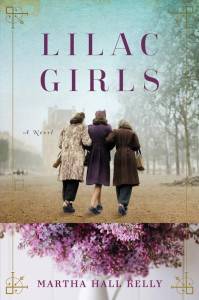
Lilac Girls – Martha Hall Kelly

Lilac Girls, the debut novel by Martha Hall Kelly,  is the first novel for my book club’s 2016-17 reading year. When it was chosen I can’t say that I was all that interested in reading it. We have all summer to read the book chosen for our first meeting of the new reading year, but I tend to like to read fast, snappy thrillers/mysteries in the summer – with the occasional YA or lit fic thrown into the mix. Also – not a tremendous fan of historical fiction. But I always read the book club selection because our get-togethers are a lot more fun when I’ve read the book. All this to say that I started this novel with a relatively negative attitude.

Lilac book jacketKelly’s novel tells the story of three very different women: New York socialite Caroline Ferriday, Polish teenager, Kasia Kuzmerick and German doctor Herta Oberheuser. It is 1939 and the one thing these women have in common is Adolf Hitler.
Caroline is 37 when the story opens. She’s a retired actress who volunteers at the French consulate. Kasia is just 16 when Germany invades Poland and changes her life forever. She is working as a courier for the underground resistance movement when she and her older sister, Zuzanna, and their mother are arrested and shipped off to Ravensbruck, a Nazi concentration camp for women. It is there that she encounters Herta, a young doctor who has taken a post at the camp because it is difficult for women in the medical field to find work.

The novel is told in three separate first person narratives and once the book gets going it’s almost impossible not to be carried along by the horrors of Ravensbruck and Kasia’s desperate attempts to survive. There’s also a little angsty love story between Caroline and famous French actor Paul Rodierre.  I read the first 200 pages in one sitting.

Caroline and Herta are real people, as Kelly explains in her notes. Kazia and her sister are

22907ea70de32fa19f35246c55131f05

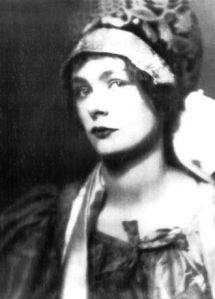
Caroline Ferriday

“loosely based on Nina Iwanska and her physician sister, Krystyna, both operated on in the camps.”

It is almost impossible not to invest in these characters, and the sections concerning Kasia in Ravensbruck are particularly harrowing. There, she and her sister are among hundreds of women used as real-life guinea pigs (or “rabbits” as they are called) for the Ravensbruck doctors to experiment on. Herta’s participation in these horrific experiments,  crimes that are against every aspect of the Hippocratic oath, seal her fate as a villain.

The book is long and the ending seemed a little rushed to me and I could never figure out the title or the dumb book cover- which makes it seem like three girls are the best of friends. I also wasn’t fussy about Kasia and Herta’s showdown, but ultimately Lilac Girls was a good read.

The Girls in the Garden – Lisa Jewell

Although I have hundreds of books waiting for me on my tbr shelf, I can’t seem to stop buying new books whenever I am at the bookstore, which is – let’s face it – often. There’s been all these suspense thrillers out there like I’m Thinking of Ending Things and The Widow and Twisted River  and The Crooked House which I seem to be drawn to like the proverbial moth to the flame. Maybe it’s because it’s summer and I just like to read something that’s fun, I dunno. But I have no trouble ignoring the huge catalogue of back-listed books I have waiting to be read and, instead, buy the shiny new books.

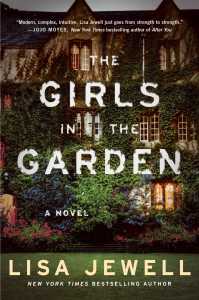
the-girls-in-the-garden-9781476792217_hrThe Girls in the Garden is one of those books. Although it turned out to be not the book I thought it would be, it was a great read nonetheless.
Clare has moved to a small enclave somewhere in urban London. Virginia Park is “formed in the space between a long row of small, flat-fronted Georgian cottages on Virginia Terrace and a majestic half-moon of  stucco-fronted mansions on Virginia Crescent, with a large Victorian apartment block at either end.” She and her children, eleven-year-old Pip and twelve-year-old Grace are recovering from a horrible incident involving Clare’s husband, Chris. (And again, what is it with book blurbs getting it wrong? The back cover says Pip is older, but she’s not.)

From the outside, Virginia Park seems like a miracle of a place. In the boundary formed by the buildings is a beautiful park which Pip describes in a letter to her father as being “like Narnia.”

…there are all these pathways and little tucked-away places. A secret garden which is hidden inside an old wall covered with ivy, like the one in the book. A rose garden which has bowers all the way around and benches in the middle. And then there’s a playground, too.

It’s a place of magic for the girls and a place for Clare to catch her breath. Except, of course, the magic is short-lived.

Adele also lives in Virginia Park with her husband, the handsome and slightly oily Leo, and their daughters Catkin, Fern, and Willow. The girls are home-schooled and the family leads a slightly bohemian life. Soon, Clare and her girls are brought into the welcoming embrace of Adele’s family. (Okay, maybe the girls aren’t 100% welcoming; you know how kids are.)

Tyler, another pre-teen who lives in one of the flats and her best friend, Dylan, the beautiful thirteen-year-old boy who also lives at the park, round out the gang that Grace and Pip find themselves hanging around with.

The Girls in the Garden reads like a thriller. The novel begins with the discovery of Grace’s unconscious and bloody body being discovered by her sister in the rose garden and then backtracks to unspool the story, mainly from the point of view of Clare, Adele, and Pip.

Jewell cleverly manipulates the reader into imagining a variety of very plausible scenarios before the story takes an unexpected (but not unbelievable) turn, ultimately making The Girls in the Garden less of a thriller and more of a domestic drama. But really, is there anything more thrilling than that? Isn’t it absolutely true that we never really know people, even those closest to us?

I thoroughly enjoyed this book.

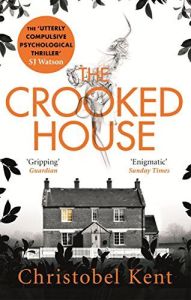
The Crooked House – Christobel Kent

I can certainly see why Christobel Kent’s novel The Crooked House has drawn comparisons with the British mystery Broadchurch. Like that story, Kent’s novel takes place in an isolated village (in this case, Saltleigh) and concerns a horrific crime which has rippled out into the community.

Alison used to be Esme and when she was fourteen her entire family was slaughtered. 748d3761900605840ce32be83a67d549Since that horrible night, Alison has flown under the radar. She lived first with her aunt in the south and then, after school, she moved to London where she worked in publishing, and where she met Paul. Paul is older, in his forties, and a professor. They had “Long, lazy conversations about books and movies and work, eating dinner at his big wooden table, or leaning against each other on his old sofa.” Alison likes him, so when he asks her to accompany him to Saltleigh to attend the wedding of a former girlfriend, she can’t seem to refuse even though she hasn’t been back since the crime.

Saltleigh is the same as Alison remembers. The smells, the colours, the landscape, and the memories of living there with her older brother, younger twin sisters, and her parents are palpable. On the first morning, while Paul sleeps on, Alison answers the memories and goes to her childhood home.

The house was boarded and derelict, weathered plywood splintered and graffitied at each window and the purple spikes of some plant sprouting above the lintel over the front door. The little enclosed yard behind where they had hidden and whispered and left secret messages. Thirteen years.

Despite the fact that she has spent the last thirteen years trying to forget, the memories have been triggered by coming back and she can do nothing but follow where they lead. What really happened that night?

The Crooked House was clearly a big hit in the UK. My version was covered with praise — a combination of praise from other authors, which is always suspect to me, and from the press.  Good Housekeeping said it “Demands to be read in one sitting.” I think that might actually be wise advice because although I did like this book (it’s clever, smart and well-written), I found it really disjointed. It shifts time periods all over the damn place and there are loads of characters and subplots (all relevant, mind you) to keep track of. If I managed to read without interruption, I easily settled into the book’s rhythms. but it definitely wasn’t a book you could pick up on the fly.

I think this book would make an excellent mini-series or movie. Get on that, would you, BBC!

The Vanishing Act of Esme Lennox – Maggie O’Farrell

Maggie O’Farrell’s novel The Vanishing Act of Esme Lennox is the story of sisters Euphemia (Esme) and Kitty and while the novel’s first line announces that the story begins “with two girls at a dance”, the story really begins in India, where Kitty and Esme live with their parents. There, one hot afternoon, Esme, aged four and a half,  recalls an insect getting caught in her ear and letting “out another piercing shriek.” She staggers around the lawn until the insect crawls out of her ear. “Could this be her earliest memory?” she wonders. “It might be. A beginning of sorts – the only one she remembers.”

250729This is also the story of Iris, Kitty’s granddaughter, owner of a small vintage clothing store, and half-heartedly involved with a married man.

The narrative jumps around a lot: present day, India,  Edinburgh in the 1930s after Esme and Kitty and their parents return from India. To confuse matters even more, Kitty now suffers from dementia and her fragmented thoughts are part of O’Farrell’s narrative. If it sounds complicated, it’s actually not.

The main part of the story is Esme’s. The psychiatric hospital where she has spent the last sixty years of her life is closing and she needs to be moved. Kitty clearly can’t care for her – she’s in a nursing home herself. It falls to Iris to look after a woman she’s never met and knows nothing about. When Iris finally meets her great aunt, she seems quite sane.

Iris had, she realises, been expecting someone frail or infirm, a tiny geriatric, a witch from a fairy tale. But this woman is tall, with an angular face and searching eyes. She has an air of slight hauteur, the expression arch, the eyebrows raised.

Esme is a fascinating character and her story is both heartbreaking and compelling. She is a victim of the time, of family tragedy and the will of others, yet she remains somehow sane. She wanted an education, but her parents wanted her to make a good marriage.  The circumstances of her incarceration are revealed to the reader through the novel’s layered narrative and it’s more than enough to keep you turning the pages.

However, I do feel there was more to be said. I was particularly drawn to Iris’s story and her relationship with her brother, Alex, and that felt (in some ways) like another book entirely. Some people probably won’t like the way The Vanishing Act of Esme Lennox finishes, but I didn’t mind how it ended. I think my overall reaction to the book was that it was lightweight despite the novel’s more serious themes. Easy to read, sad, but somehow sort of superficial.

Connected Underneath – Linda Legters

Celeste, the wheelchair-bound narrator of Linda Legter’s novel Connected Underneath,  promises to tell us everything, even the parts too terrible to share. Then she admits “there, already: I’ve hardly begun and I’m already lying.” Whether or not Celeste’s lies are as pivotal to the story as she’d like to think is open to debate and, truthfully, she’s the least interesting part of the story, anyway. Connected Underneath cover

Celeste lives in Madena, a tiny town in upstate New York. She introduces the reader to the novel’s key players: Theo and Natalie – high school friends, although Theo had definitely hoped for more. Natalie, however, liked boys like Mike Teague, high school basketball star, because “Theo was from the wrong side of town, her side, and she wanted a different side.” When she becomes pregnant, Natalie turns to Theo for help and he ends up adopting her daughter, whom he names Persephone. (A fitting name, as it turns out -Persephone was the goddess of the underworld – because Seph, at fifteen, is a little off the rails.)

Theo and Seph are actually disconnected these days. Seph is in love with a girl called Krista, but she trades sex for tattoos. Billie, the tattoo artist, is “sweet, gentle, swift, so it never seemed like a very big deal, not even the first time, the time that drew blood.” Of course, Seph keeps the tattoos and the sex from her father, but even so, Theo is beginning to worry about his daughter; “he was sure his girl was in trouble.”

So that’s the impetus for a visit to Natalie’s house across town. She lives with her husband, Doug, and their son, Max. Natalie doesn’t really want anything to do with Theo and shows little interest in the daughter she gave up fifteen years ago. In fact, when Theo admits he’s afraid of losing her, Natalie’s response is callous and decidedly un-motherly: She tells him, “You’re too late. Not my fault.”

Connected Underneath is a story about secrets – those we keep from each other and those we keep from ourselves. It is also a story about the damage we can do, both willfully and inadvertently. Everyone in Connected Underneath seems to operate, ironically, without actually realizing how they are connected and when the secrets  bubble to the surface, discretion is abandoned and truth is used as a weapon.

Theo is definitely the most sympathetic character. Despite a fraught childhood, he has always tried to do the right thing. He loves his daughter, even if he isn’t quite sure how to keep her safe. Natalie is another story. I didn’t like her and also, more importantly, didn’t believe her. Not for a  minute. And then there’s Celeste. As she watches Theo’s world unravel, her world – miraculously – begins to right itself. Can’t say that I was all that invested in her, either.

On the plus side – Connected Underneath is an elliptical, strangely compelling story about the ways we try to save each other, even when we can’t. It is well-written, even if I didn’t believe in some of the characters. It is almost relentlessly grim, but sometimes life is just like that.

tlc logoThanks very much to TLC Book Tours for  inviting me to be a part of the book tour for Connected Underneath and to Linda Legters and Lethe Press for providing my review copy.


The Paris Wife – Paula McLain

I wouldn’t consider myself an Ernest Hemingway fan by any stretch. Perhaps I read him when I was too young to appreciate his spare and muscular prose. For some reason I always thought of him as a misogynist, although I couldn’t say how I came to that conclusion. He has been criticized for his portrayal of women in his work, so my opinion has clearly been borrowed from something else I’ve read. I do know, however, that he is a significant figure in American literature even if neither the man nor the myth was all that interesting to me as a reader.

parisNow, after reading Paula McLain’s novel The Paris Wife I have to admit to being quite curious about Hemingway and his writing. I think I might come at it a little differently now compared to the way I approached him as a young university student.

The Paris Wife is a fictional account of the relationship between a young Ernest Hemingway and his first wife, Hadley Richardson. The pair meet through mutual friends in Chicago in 1920. “The very first thing he does,” Hadley says, “is fix me with those wonderfully brown eyes…”

Hadley is 28 and has come to Chicago from St. Louis after the death of her mother. Hemingway is just 20 and “seemed to do happiness all the way up and through. There wasn’t any fear in him…just intensity and aliveness.” For Hadley, who says that her life was “stuck” long before her mother’s death, Hemingway is a revelation. When Hemingway announces that he intends on being an important writer, Hadley remarks “I thought poets were quiet and shrinking and afraid of sunlight.” Hemingway is a force and Hadley has no choice but to be swept along with him.

After Hadley returns to St. Louis, the two begin a correspondence which ends in a wedding proposal.  Once they are married, the two return to Chicago briefly before setting sail for Paris. Why Paris? Sherwood

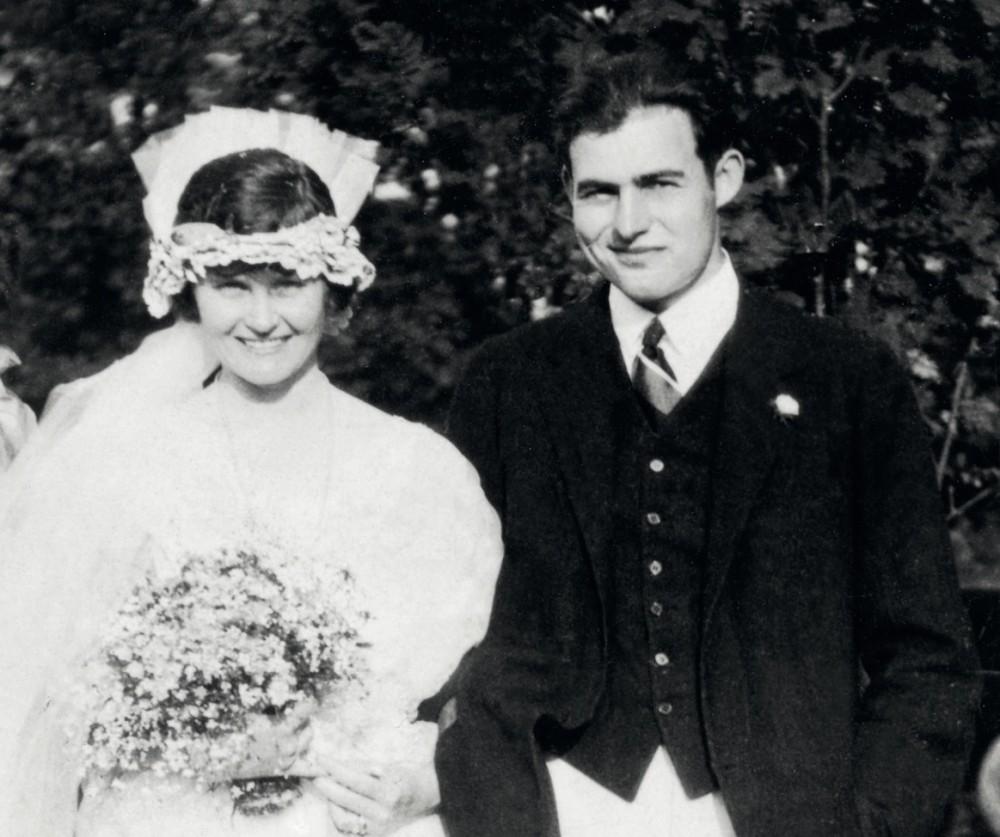
Hadley and Ernest on their wedding day Sept 3, 1921.

Hadley and Ernest on their wedding day Sept 3, 1921.

Anderson (author of the book Winesburg, Ohio, which I’ve never heard of but apparently both the writer and the book were a big deal back in the day) tells Hemingway “…if you want to do any serious work, Paris is the place to be. That’s where the real writers are now.”

Anderson was right, of course. Paris in the 20’s was a mecca for writers and artists, a literary (and artistic) who’s who. Gertrude Stein, Ezra Pound, F. Scott Fitzgerald,  and Archibald MacLeish are just a few of the celebs who enter the Hemingways’ orbit once they find themselves in the City of Light at the end of 1921. This collection of literati came to be known as “The Lost Generation,” a term coined by Stein but made popular in Hemingway’s novel The Sun Also Rises. The term refers to those who came of age after the First Word War.

McLain’s novel does an exceptional job of capturing the literary scene of the time – its parties and squabbles, jealousies and intrigues – but also the relationship between Ernest and Hadley. There is no question they loved each other deeply and in Hemingway’s own memoir about his time in Paris, A Moveable Feast, he writes “I wish I had died before I loved anyone but her.”

I may have to rethink my position on Hemingway. I may have to read A Moveable Feast. I certainly recommend The Paris Wife especially if you love literary name dropping and Paris. Even if you don’t love those things, McLain’s novel is a delight.

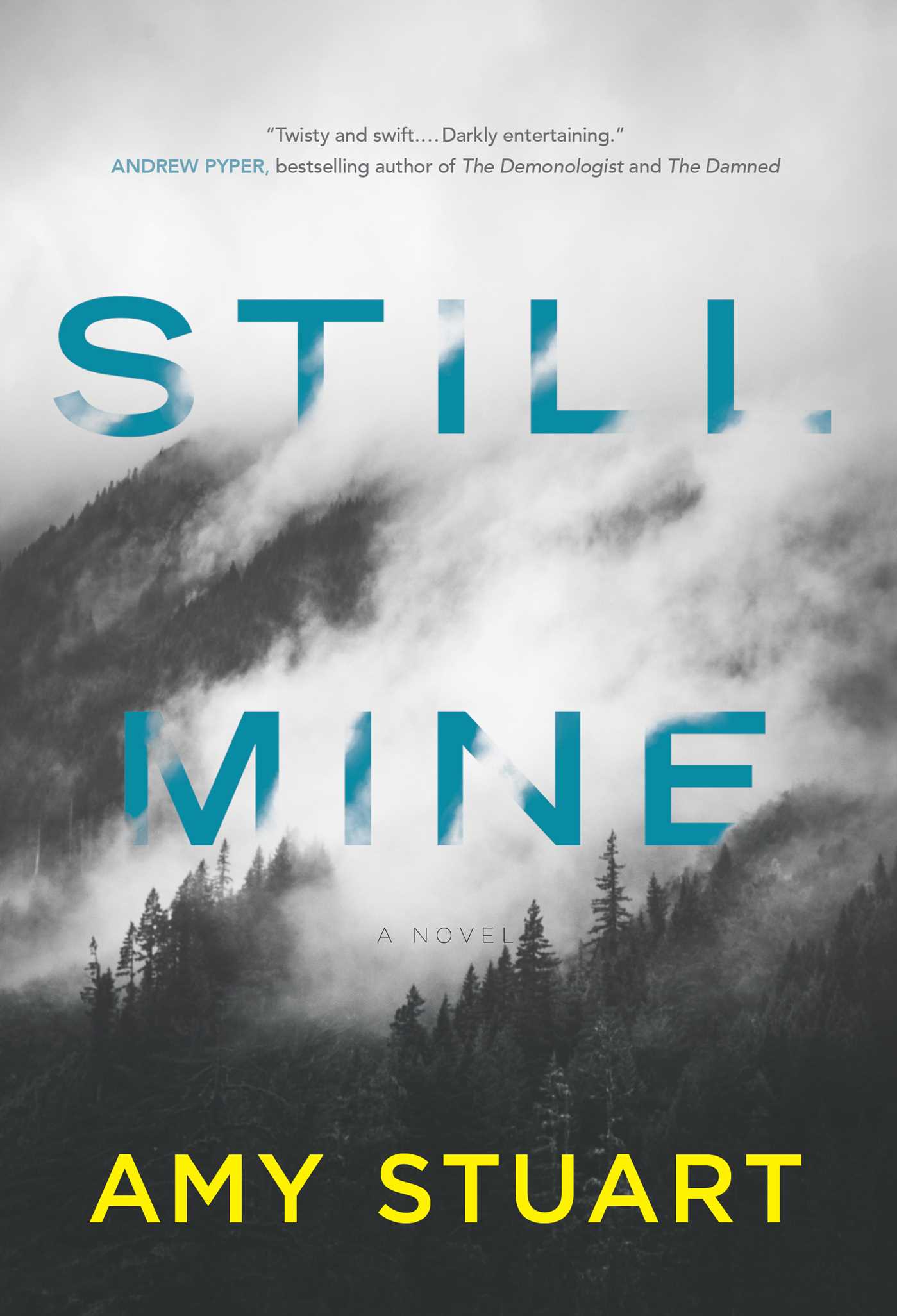
Still Mine – Amy Stuart

I haven’t read a book quite as weird as Amy Stuart’s Still Mine  in a long time and I still can’t decide whether it was good weird or just weird. It reminded me a little of Go With Me – a quirky, but affecting novel by Castle Freeman Jr.

still-mine-9781476790428_hrClare O’Dey has run away from her abusive husband, Jason. In an unusual twist, the man Jason sends to find her, Malcolm Boon,  hires Clare to go to Blackmore, a remote mining town in the mountains, to look for another missing woman, Shayna Fowles.  For reasons that won’t be immediately clear, Clare invests wholeheartedly in the search for Shayna, a woman whose past is as tricky and messed up as Clare’s.

Blackmore is a shriveled up nothing of a town. “A blast at the Blackmore Coal Mine five years ago killed thirty-two men and trapped  eighteen others underground for three weeks,”  Malcolm’s notes tell Clare. She pretends to be a photographer in town to take pictures, but it’s a ruse no one buys. The only hotel in town is closed and so Clare rents a trailer on Charlie Merritt’s property. Charlie is the town drug dealer and his property (his father and brothers were killed in the mine) butts up against Shayna’s parents’ place.  Clare figures it will be a good place to snoop.

Blackmore is filled with broken people: Jared, Shayna’s ex-husband; Sara, her friend; Derek, the town’s only doctor and Shayna’s parents, Louise (who is suffering from early onset Alzheimer’s) and Wilfred, her father, the man responsible for saving the eighteen men who did make it out of the mine alive (but also the man Charlie holds responsible for the deaths of his father and siblings). None of them seem to know what happened to Shayna and with no police in town, no one is looking for her.

As Clare attempts to find out what has happened and which of the town’s odd assortment of outcasts might be responsible for Shayna’s disappearance, her own past is revealed; her own frailties are exposed. Like Shayna, Clare has a penchant for drugs and alcohol, making Charlie particularly dangerous to her. She also finds herself strangely attracted to Shayna’s ex-husband, Jared. She forges a bond with Louise, replacing the mother she recently lost to cancer. In many ways, Clare steps into the life Shayna has abandoned. Even so she realizes

These people in Blackmore, they are not Clare’s friends. Derek and Jared and Sara and Charlie. They are not even one another’s friends. They are only characters in Shayna’s story and Shayna is not here.

Still Mine is an unusual, albeit strange, psychological mystery. Apparently there is a sequel on the way, but I was quite content with how the book ended.

Definitely worth checking out.


The Book of You – Claire Kendal

You know how sometimes you start a book and you just can’t put it down – that’s what happened when I started reading Claire Kendal’s debut novel The Book of You. I mean, it’s not an original story – woman sleeps with guy after a bad break up and guy turns out to be a psychopathic stalker – but Kendal’s novel had an extra layer of creep, plus some interesting things to say about victim-blaming.

Thirty-eight-year-old Clarissa works as an administrator at the university in Bath. Her book of youaffair with Henry, a professor, has recently ended. Rafe also works at the university and has just published a new book on fairy tales and it is at his book launch that Clarissa drinks too much. She hadn’t really wanted to go, but he’d sent her three invitations. Hello, alarm bells.

“It is the night that I make the very big mistake of sleeping with you,” she writes in her journal. She has decided to follow the advice from the literature on stalkers and document everything. Clarissa knows she has to build a case before she can even consider going to the police.

I am trying to piece it all together. I am trying to fill in the gaps. I am trying to recollect the things you did before this morning, when I started to record it all. I don’t want to miss out a single bit of evidence – I can’t afford to. But doing this forces me to relive it. Doing this keeps you with me, which is exactly where I don’t want to be.

Everything about Rafe is skin-crawlingly-creepy.

“It makes me want to scream, the way you say my name all the time,” Clarissa writes. And Rafe has plenty of opportunities to say it. He is everywhere: outside her apartment, lurking at train stations, waiting for her outside the court room where she is on jury duty. He sends her things: chocolates, notes, flowers. He calls and texts her dozens of times. He rallies her friends against her, isolates her further. He makes Clarissa question her own sanity.

If there is a bright spot in Clarissa’s day, it is the time she spends in court, listening to the rather horrific details of a violent drug-related rape. It is here where she meets fellow-juror, Robert, a firefighter who recently lost his wife. As she and Robert become closer, Rafe becomes more aggressive.

The Book of You is an edge-of-your-seat thriller which also happens to be well-written. Clarissa refuses to let herself be a victim, but she is human and doesn’t always make the right choices. I never once thought “What?! Don’t do that!” though – which is certainly due to Kendal’s skill.

It’s a bit graphic, so if that’s not your thing perhaps this isn’t the book for you. However, I couldn’t put it down and highly recommend it.