Come With Me – Ronald Malfi

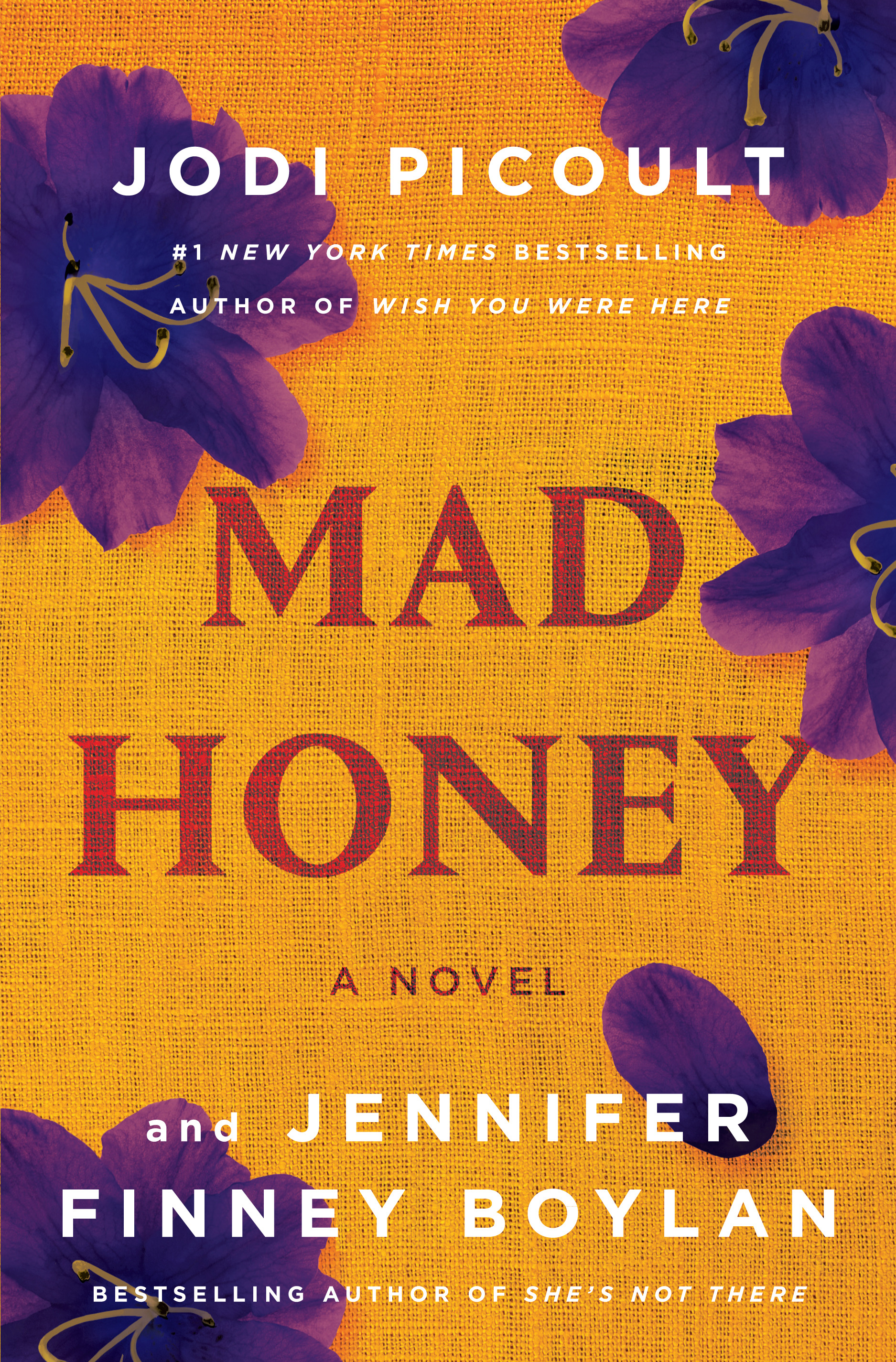
Part ghost story, part serial killer story and part story about grief, new-to-me author Ronald Malfi’s novel Come With Me reminded me of the work of authors like Peter Straub and Thomas H. Cook, both fine authors imho.

Aaron Decker, a translator, and his wife, Allison, a reporter for a community newspaper, are happily married. They live a quiet life, but their happiness is upended when Allison is tragically killed. It is only after she is gone that Aaron discovers a receipt from a motel stay that Allison hadn’t told him about. Was she having an affair?

I’m of the opinion that when it comes to secrets, there is no end to what we don’t know about a person. Even the person who sleeps next to us and shares our lives.

Aaron can’t help himself; he has to go looking and what he discovers takes him on a journey through the back roads of his wife’s childhood and towards a serial killer.

Come With Me is written as though Aaron is talking to Allison and it appears Allison is communicating with Aaron from beyond the grave. Lights flick on. Songs offer clues. Fragments of conversations that previously made no sense click into place. Aaron discovers surprising secrets about his wife and soon he finds that he has no choice but to finish what she had started before her death,

I really enjoyed this book. It isn’t horror, and it isn’t a straight up thriller, either. It’s not a page turner, although I did very much look forward to diving into it every chance I could. There’s definitely some creepy moments and definitely some suspense, but I compared Malfi to Straub and Cook because both of those writers penned literary mysteries/ghost stories. Thoughtful and slow moving. I hope the comparison is understood as the compliment I intend it to be.

I will definitely be checking out more work by this author.

Moon Road – Sarah Leipciger

Kathleen and Yannick, the protagonists in Sarah Leipciger’s 2024 novel Moon Road, haven’t spoken to each other in almost twenty years. Their marriage

lasted only a few years, but they remained good friends over two decades because of Una, their daughter. And because they never stopped being fond of each other. So, a lasting friendship, but then one day, they had an argument. The argument was bad enough that they didn’t speak for nineteen years. Not a card, not a text message, not an email.

Another momentous thing happened all those years ago, too: Una, who had left Ontario and moved to the West Coast, disappeared. In the intervening years, Kathleen keeps track of how long Una has been missing by marking the days in a notebook (over 7000 of them by the time the novel starts) and hosting an annual party in her honour. Now 65, she grows flowers to sell to local businesses. Yannick, 73, is on wife number four and has three sons and a daughter. Now Yannick is back in Birchfield because he has “received some unexpected news” and “it’s about time they saw each other again.”

The news concerns Una, of course. It is her disappearance that has driven Kathleen and Yannick apart, as grief sometimes does, but it is also the thing that pulls them back together. Yannick has decided that he will drive to Tofino and he wants Kathleen to come.

This is a road trip novel, but only marginally. As Yannick and Kathleen set off on their cross-country drive, they talk and bicker and reminisce, weaving together the past and the present. They’ve both dealt with their grief and their guilt separately and neither knows for sure what they are going to find when the arrive on Vancouver Island.

The novel also provides a glimpse of Una and her time in BC, living rough, working odd jobs and trying to figure out what her life is meant to be. These sections are strung out throughout the novel and it isn’t until the very end that we learn what actually happened to her. The mystery of her fate, the subsequent searches, and the leads that go nowhere definitely keep the pages turning.

But what I loved about this novel was Yannick and Kathleen and how connected they were despite the intervening years. Their marriage didn’t work, but they have a child and that is a bond that sticks. (Unless it doesn’t and I have first-hand knowledge of that scenario.) It was wonderful to read a book featuring mature characters who have lived a life, suffered a terrible loss, and then made an effort to keep moving forward.

The book is also beautifully written – not quite a travelogue, despite the road trip, but Canada is a gorgeous country, and anyone who has even driven from coast to coast (I have!) will likely recognize some of the descriptions of the vastness of the prairies and the majesty of the mountains.

Highly recommended.

The Stopped Heart – Julie Myerson

Julie Myerson’s novel The Stopped Heart clocks in at 500 pages and so while not especially easy to hold up in bed, which is where I do a lot of my reading, I was wholly invested in the story and its dual timelines.

In the present day, Mary and her husband, Graham, have left their lives in the city and moved to a little cottage in Suffolk. It’s clear that something traumatic has happened in their lives to necessitate this move, but the details of that event will take some time to be revealed. The cottage, filled with what Graham hopes will be “possibilities” freaks Mary out a little bit from the start. She sees things and hears things but the truth is that grief has made her a little punch drunk.

Many decades earlier, Eliza lives with her parents and younger siblings on this very property, which was once a working farm. Her life consists of helping her mother and caring for her brothers and sisters, but everything changes the night of the big storm that topples an old elm beside the cottage. “The night he came, a storm. Just like him, it seemed to come from nowhere,” Eliza recalls.

The tree misses the newcomer by inches and suddenly he’s been invited into the house.

His hair was bright red, the reddest I’d ever seen on any person. Thick on top, but shaved short around the sides and over the ears. His face was rough and bitter. He had the look of someone who’d just walked out of a room where bad things had happened.

His name is James Dix and he will change 13-year-old Eliza’s life.

Myerson’s book runs on these parallel tracks, pulling the reader along to places I definitely did not want to go. For example, I figured out relatively early on what haunted Mary, even without knowing the exact details. Her grief was palpable and exhausting and explained her isolation and her strange friendship with the husband of a neighbour Graham befriends and with whom they occasionally have dinner. Why is Mary telling Eddie these things when she should be sharing them with Graham?

Eliza’s story is even more compelling actually. Although he seems to have cast a spell on everyone, she doesn’t like James. He unnerves her and when he looks at her it’s “into the very center of [her] eyes and he smiled as if he had just turned over a card and found he’d won a great fat prize.” She is right to be wary.

I think this book would fit squarely in the grief horror category. That’s a story that explores themes of grief and loss, and includes supernatural elements. It’s beautifully written, the characters are compelling and there are some very creepy moments. I might have left Eddie out of the whole thing and Graham’s daughter from his first marriage, Ruby, is a distraction, but otherwise, this was a surprisingly great read that I plucked from my tbr shelf where it has been languishing for many years.

Never Change – Elizabeth Berg

Many years ago, certainly predating this blog, I read Elizabeth Berg’s novel Joy School and found it to be a beautiful and heartbreaking book about a young girl trying to find her place in her family and falling in love with a young mechanic who is, of course, too old for her but who treats her heart like the precious thing that it is.

Never Change is the story of Myra Lipinski, a middle aged unmarried visiting nurse who lives a quiet life with her dog, Frank.

You know people like me. I’m the one who sat on a folding chair out in the hall with a cigar box on my lap, selling tickets to the prom, but never going — even though in the late sixties only nerds went to proms. But I would have gone. I would have happily gone; I would have been so happy.

Myra has always felt like an outsider, even though the pretty girls at school would call her to talk about things that were serious because Myra “knew how to listen.” Even in her own home, Myra felt other. She was not a pretty child, her face “unfortunate, with its too small eyes, its too wide mouth. The hair mousy brown, too thin and straight, greasy after half a day, no matter what.”

Myra is a good nurse though – efficient, kind and well liked by her clients, a motley crew including a teenage mother, a bickering elderly couple, and a man with a gunshot wound who lives in a part of town no one else will visit. Then, a new name is added to her roster: Chip Reardon.

Chip and Myra went to high school together and although they were friendly, they weren’t exactly friends. Chip was “Every girl’s dream boy. The handsome star athlete with a good head on his shoulder’s too. And a genuinely nice guy.” Now he’s back in their home town living with his parents because he has a brain tumour and his clock is running out.

Never Change is the story of how this reunion cracks Myra’s life open in unexpected ways. Opposite to what the title suggests, Myra does change. She opens up to people, including Chip, and allows people to love her, also including Chip.

This is a lovely, albeit sad, story of how sometimes our blinders prevent letting people into our lives in a meaningful way. We don’t always see ourselves as others see us. This is a quiet book and I very much enjoyed my time with these characters.

Such a Pretty Girl – T. Greenwood

Although T. Greenwood is a prolific writer, Such a Pretty Girl is the first of her books I have read. It’s one of those books where nothing happens–I mean this is a book driven by character, not plot–and yet it is absolutely riveting.

When the novel opens, Ryan Flannigan is counting down the last few days before her daughter, Sasha, heads to the West coast to start college. Ryan’s childhood bestie, Gilly, keeps sending her urgent texts before finally just sending her a link to a story from the Times. Ryan is shocked to discover that the story is about her mother, Fiona, from whom Ryan is mostly estranged. Worse, the story is about the discovery of a very personal photo of Ryan when she was just a girl that was found in the possession of Zev Brenner, a billionaire who has been charged with sex trafficking and pedophilia a la Jeffrey Epstein. This news is followed by even more shocking news and Gilly begs Ryan to come back to New York City.

Such a Pretty Girl bounces between the 1970s and present day 2019. As a child, Ryan lived with her mother, Fiona, in Lost River, Vermont, home to the Lost River Playhouse where Fiona was an aspiring actress. Lost River was meant to be a “summer respite for actors who worked in the city and a place for aspiring actors to apprentice themselves.” Fiona had been there since 1965 and she and Ryan lived there full time. Gilly and his family also live at Lost River, but only in the summer. Gilly’s father is a working actor and his mother an artist in New York.

Fiona decides to leave Lost River and go into the city to give acting a more serious try, but in the end it is Ryan, who is just ten, who is discovered–first as a model and then as an actress. This strains the relationship between mother and daughter. The time the novel spends in NYC

After Gilly gives Ryan the news about the discovery of the photograph, he begs Ryan to come back to Westbeth, an apartment building populated by dancers and actors and artists and, famously, Jackie O. It’s a real place, actually. It’s worth reading about its interesting history and it is definitely a character in Greenwood’s book. So, in the present day Ryan and her daughter head back to the city and to the place that she, for a very important time in her life at least, called home. There are matters to attend to, and ghosts to exorcise.

This book is very evocative of a time and place and as someone who loves New York and grew up in the 1970s, I found that very compelling. I also loved Ryan’s recollection of her childhood, the perspective skewed through the lens of adulthood. When she recalls her first major ad campaign (for Love’s Baby Soft, a mainstay of every teenage girl in the 1970s) she says

I am wearing fake eyelashes, pink rouge on my cheeks, and lip gloss so thick and shiny you can almost see your reflection in my pout. I am holding a pale pink stuffed bunny. But you can’t tell if I am a child made up to look like an adult, or an adult made to look like a child. When I found the ad years later, it felt like someone had punched me in my throat.

And if you are wondering where Ryan’s mother was in all this, yeah, that’s kind of the point.

This is a terrific, well-written book. Highly recommended.

Dark Horses – Susan Mihalic

By page fifteen of Susan Mihalic’s novel Dark Horses, I knew that I was in for a ride – and not just because this is the story of fifteen-year-old equestrian Roan Montgomery. This early into the story I’d learned that Roan is a skilled rider and shares a special bond with her horse, Jasper, that her relationship with her mother is tenuous partly because she’s having an affair with a teacher at Roan’s school, and that her relationship with her father, Monty, is close. And when I say close I mean he enters the bathroom while Roan is in the tub and kisses her, “his mouth gentle and persuasive.”

Roan only cares about riding and her life revolves around training. Her father was an Olympic medal winner and now trains Roan. She goes to school because she has to, but what she really wants is to do well at competitions so that she can earn a spot on an Olympic team.

Roan’s life is pretty insular. Although their farm, Rosemount, employs a handful and people, including Gertrude and Eddie who have been there since before Roan was born, Roan is isolated. She doesn’t have friends or a cell phone; her life is strictly controlled by her father. That is until she starts getting to know Will Howard, a guy at school.

Her friendship with Will amps up the tension between Roan and Monty because she has to keep Will a secret. And she has to keep the sexual relationship with her father a secret from Will. Mihalic does an interesting thing with the incestuous relationship. Roan is trapped by her complicated feelings for her father: she loves him and she loathes him, sometimes at the same time. She acknowledges how confusing it is that “I didn’t fight or scream, […] my body responded to his, the ease with which he made me come–the fact that I came at all.” She has spent a long time compartmentalizing all these feelings. She admires her father’s coaching abilities. But she is becoming increasingly uncomfortable with the sexual relationship. There’s no saying no to Monty.

There’s nobody reading this book who is going to think what Monty is doing to Roan is anything but abuse, but Roan is only coming to that realization as her feelings for Will grow. When Monty realizes that Will is a real threat to this prison he has kept Roan in, he tightens the noose. Then there is no question that he is raping his daughter. It’s devastating.

It’s not right to say that I “enjoyed” this book, although I did fly through it, wholly invested in Roan’s story. If I have one complaint it’s that I hated the way the book ended. Well, maybe ‘hate’ is too strong a word. Something big had to happen, for sure, and something big does happen. For me, it just wasn’t big enough. I hated Monty Montgomery and he just didn’t suffer enough.

Dark Horses is an unflinching look at sexual abuse and what it means to be a survivor. It’s graphic and certainly has the potential to be triggering, but I thought it was a compelling read.

The Four – Ellie Keel

Donna Tartt’s 1992 novel The Secret History is the dark academia novel all others aspire to be. This is a sub-genre of fiction that I really love, so I am drawn to books that feature isolated campuses, academics, and shifting loyalties. Ellie Keel’s debut The Four definitely scratched the itch.

Rose Lawson is one of four scholarship students admitted to the prestigious High Realms school. Telling the story of her time at the school from some years in the future, Rose paints a picture of extreme privilege and cruelty. She is saved from total desolation due to her friendship with the other scholarship students, Lloyd and Sami and her roommate Marta.

The novel opens with Rose’s admission that

It would have made our lives a lot easier if Marta had simply pushed Genevieve out of our bedroom window on our third day at High Realms. Certainly, it would have been tragic. […] She would have died instantly.

Genevieve Locke is a member of the Senior Patrol (aka a prefect), a member of the hockey team (field hockey as the story takes place in England) and she treats Marta and Rose with “lofty derision”. The truth is most of the students the four friends encounter at school are cruel and horrible, but all of the scholarship students count themselves lucky to have been chosen to attend.

Then something horrible happens and three of the friends find themselves desperately working together to protect the fourth member of their group. The Four has all the things I love in a book like this: secrets, unreliable narrators, a labyrinthine school, and surprising twists and turns that will keep you guessing until the very end. Keel is an award-winning theatre producer, but she is also a gifted writer and I will definitely be watching to see what she writes next.

Mercury – Amy Jo Burns

When 17-year-old Marley West moves to Mercury, Pennsylvania with her single mom, Ruth, she has no idea just how much her life is about to change. At a baseball game she meets Baylor Joseph, oldest of the three Joseph boys, sons of local roofer Mick and his wife, Elise. She is soon pulled into the Josephs’ orbit, into rivalries and old traumas she doesn’t understand. She comes to understand that “The Josephs were the close kind of family that fought in equal measure but didn’t know how to make up.”

Amy Jo Burns’ novel Mercury is a family drama that covers several years in the lives of the complicated Joseph family and how Marley comes to love them. Although she initially meets them because of Baylor, it is her relationship with the middle son, Waylon, that cements her place in the family.

It doesn’t take long before Marley figures out that Baylor is “the flinty kind of young man … whom everyone feared and nobody liked.” Their relationship is short lived. Her friendship with Waylon, though, is worth keeping. Waylon is “easier, kinder, gentler”. This is the relationship that sticks.

Although Mercury opens with the discovery of a dead body in a church attic, and although this mystery is important, it isn’t actually what drives the narrative. The book uses the body as a jumping off point before it circles back to the beginning of the story of Marley’s arrival in Mercury and how her relationship with this insular and complicated family shifts loyalties and both frays and strengthens bonds. It’s a very character-driven novel, and all of the characters are complicated and beautifully rendered. There are no bad guys, just people trying to do their best for reasons that don’t always make sense. I really loved Waylon and Marley in particular, but I also loved the secondary characters including Marley’s best friend, Jade, and the youngest Joseph, Baby Shay.

Mercury is my second book by Burns (Shiner) and she is definitely an autobuy author for me now.

Great book.

Those Across the River -Christopher Buehlman

Those Across the River is my second novel by Christopher Buehlman (The Lesser Dead) and he now joins the ranks of my auto buy authors.

Frank Nichols and his soon-to-be-wife Eudora have just landed in Whitbrow, a backwater town in Georgia. Their life is a little bit in flux. Frank was essentially chased out of Chicago, where he’d worked at a college, because Eudora had been married to a colleague. The two meet at a faculty luncheon.

She was twenty, wearing a sweater the color of an Anjou pear. I was still built like the St. Ignatius basketball center I had been fifteen years before.

We were in love before the salads came.

It is 1935 and Frank is a WW1 veteran, prone to night terrors; Dora is a school teacher. They land in Whitbrow because Frank has inherited a property. The letter that tells him about this inheritance also cautions him to sell the property, that there is “bad blood” there, but with limited options, they decide to move. Frank is going to write the history of Savoyard Plantation, a derelict property owned by his ancestors.

As Frank and Dora settle into their new lives, they find it to be both secretive and charming. For one thing, the townspeople gather once a year to release pigs into the woods as a sort of sacrifice. But to what? Then there’s the plantation, which is located somewhere across the river, but Frank finds that no one is interested in taking him there. One of the locals tells him “Them woods is deep and mean.”

Just how mean? Well, it takes a while for Frank (and the reader) to figure out just what the heck is going on. Some readers might get frustrated with the slow pace at which the story unfolds, but I liked it. I really enjoy the way the Buehlman writes; he’s also a poet and it shows in his prose. One reviewer suggested that the main characters are wooden and the plot not that compelling, but I disagree. I was wholly invested in this story.

I won’t spoil the reveal. I did figure it out before the end, and while it isn’t a scary horror novel, it is atmospheric and a compelling read.

My Brilliant Friend -Elena Ferrante

A former student, someone for whom I have a lot of respect and admiration, encouraged (aka begged) me to read Elena Ferrante’s novel My Brilliant Friend, a book that was recently named #1 Book of the Century by the New York Times. I didn’t own the book and I don’t know whether I would have ever gotten around to reading the book given the state of my physical TBR pile, but I was next up for book club and so I chose this one, mostly in deference to Luke. Despite the fact that it was published in 2012 and is relatively popular (and has its own series on Prime), none of the members of my book club had ever read it.

This novel is the first of a quartet by the famously private Ferrante. Apparently, no one actually knows who she is, so the author’s name is actually a pseudonym, and since we don’t know very much about her, claims that My Brilliant Friend is autofiction is also an unfair characterization. How can we say the events of the novel are drawn from the author’s own life if we don’t know anything about her? Or him? Whether or not who the author is makes any real difference is beside the point at any rate.

Luke loved it. Two of the women in my book club of eight didn’t finish it. Three women loved it. (My best friend, Michelle, is on book three and has already watched the entire series.) Two women hated it (one of these is one of the DNFers). And two of us (myself included) felt just meh about it.

In a nutshell, the novel opens when 60-something Elena (also known as Lenu) receives a phone call from Rino, the adult son of her oldest friend, Lila (also known as Raffaella or Lina). Lila is missing. Poof. Vanished. This news seems unsurprising to Elena even though “it’s been three decades since [Lila] told [her] that she wanted to disappear without leaving a trace.”

Elena seems annoyed by the news and she doesn’t offer Rino much in the way of comfort. Instead she thinks

I was really angry.

We’ll see who wins this time, I said to myself. I turned the computer on and began to write– all the details of our story, everything that still remained in my memory.

And that’s essentially what My Brilliant Friend is, the written account of the friendship/rivalry love/hate relationship between these two girls beginning in the 1950s, in a neighbourhood outside of Naples, Italy. It’s the story of poverty, crime, the power of education, loyalty, family and friendship.

This is what Luke said:

“I loved the portrayal of friendship and how central it was to forming them into who they are. I loved the background setting of Naples and how poverty is corrupting everyone’s life. All of the characters come alive for me and I find her such an incredibly powerful writer. I was so invested in Lila and Elena’s relationship. […] I think she’s a beautiful writer telling a wonderful story…”

Luke and I talk about books whenever we have the chance. When he was in my Young Adult Lit class he read more than anyone and he read widely. If I talked about a book I really loved, chances were pretty high that he would read it. So it hurt me a little bit not to love this book as much as he loved this book. For me, I found it sort of slow and dry and although the friendship between the two characters was well-drawn, I didn’t especially care about either of them. I certainly feel no compulsion to carry on with the books, although I may watch the series this winter.

The New York Times compiled their Top 100 books by asking 503 literary luminaries to provide their list of all-time best books based on the following criteria: impact, originality and lasting influence. It’s an interesting list which demonstrates just how subjective a ‘best books’ list can be. Number 2 was The Warmth of Other Suns, a book I have never heard of by an author I have never heard of. Kazou Ishiguro’s Never Let Me Go barely made the top ten. Atonement by Ian McEwan was #26. 26!!! Both my children would say Atonement is one of the best books ever written…and I would agree. Donna Tartt’s The Goldfinch, which won the Pulitzer (although not without controversy), came in at #46. Station Eleven was #93.

I tasked the ladies in my book club to pick their top three books of all time based on the criteria provided by the Times. We’ll share those Top 3 lists at our next meeting and with their permission, I will share them with you here after we meet.

The fact that no one reads the same book is one of the best things about reading, but I am sad that I didn’t love My Brilliant Friend more than I did. Sorry, Luke.