The Inheritance – Joanna Goodman

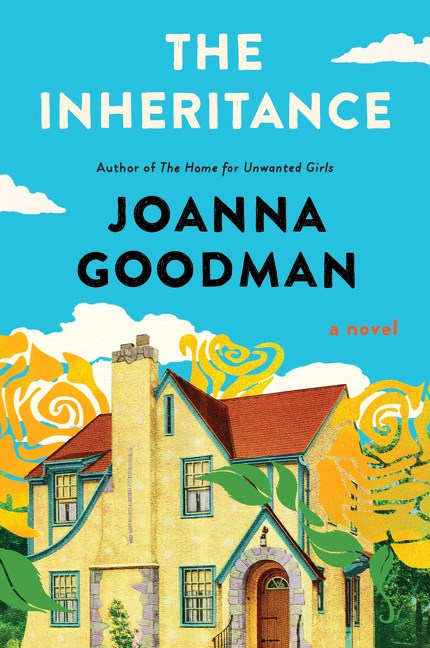
Arden Moore’s life was perfect. She lives in a too-big, slightly run down “Depression-era Tudor Revival built in 1931.” Her husband, Scott, “was infatuated with it, from its steeply pitched, twin triangular gables and multipaned windows to the arched front door with the wrought-iron knocker.” Better yet, it was in the right part of town, and such things mattered to Scott. But now Scott is dead, and Arden is left with a too-big house she can’t afford to renovate let alone pay the mortgage on.

Joanna Goodman’s (The Finishing School) novel The Inheritance examines the aftermath of the death of a spouse, sibling relationships, (Arden has an older sister, Tate, who is “the glamorous, successful sister”) and mother/daughter relationships. It also looks at aging, as Virginia Bunt, Arden and Tate’s mother, is trying to come to terms with, and self-harm. Actually, there’s A LOT going on in this book. Some might say too much, but I actually think that Goodman did a good job of keeping all the spinning plates in the air. As a woman of a certain age, I related to Virginia’s story; as the mother of a daughter – albeit, no longer a teenaged one – I related to Arden and 13-year-old Ivey’s acrimony (Arden has six-year-old-twins besides).

And then, there’s the inheritance. Virginia had tried many years ago, after the death of Arden’s father, Wallace, to claim her share of Wallace’s money for Arden. In fact, the fight had consumed her life and ended her marriage with Hal. Now, the death of Arden’s half brother (if her mother is to be believed) and advances in DNA testing means that Arden might actually get what is rightfully hers. Thirty million dollars worth.

The Inheritance was a page-turner, for sure, but also a thoughtful examination of grief, moving on and all the complicated relationships that exist in our lives. I enjoyed the read.

Shiner – Amy Jo Burns

Amy Jo Burns’ debut novel Shiner is my first five-star read of the year. It is the story of Wren Bird who lives with her parents Briar and Ruby in West Virginia outside of the aptly named no-where town of Trap. Wren tells us

The story of a snake handler’s daughter began when I’d just turned fifteen. I knew little then of the outside world my father kept from me. Ours is an oral civilization, I used to hear him say, and it’s dying. He blamed coal, he blamed heroin. He never blamed himself.

Briar is a preacher. As a young man, so the story goes, he’d been struck by lightning, causing one of his irises to go milky white and apparently giving him the power to heal and handle venomous snakes.

My father obeyed the rituals of snake-handling law, which meant he pretended we still lived in the 1940s instead of the age of the internet and all the things people did on their cell phones that I couldn’t understand. […] Daily my father lifted his serpents to the sky and uttered a prayer in tongues that no one could interpret.

Wren has never known any other life. Briar has kept her and her mother isolated on the “mountain’s western ridge.” Their only visitor is Ivy, Ruby’s childhood best friend, and her sons. When they visit, Briar hides in his snake shed because “He couldn’t bear to share my mother mother with anyone – not with Ivy, not even with me.”

A terrible accident sets off a summer of discovery for Wren and it is a breathtaking journey, where secrets are revealed and new relationships are forged.

There are so many things to admire about Shiner, not the least of which is the writing. But you can have great writing that is somehow distancing and impedes the plot. I loved the way this book was written, but I also loved the characters, particularly Wren and Flynn, the local ‘shiner’ (someone who makes moonshine) who is connected to Wren in a meaningful way, although she doesn’t know it.

Shiner is about the way “mountain men steered their own stories, and women were their oars.” It’s about finding your voice and making choices. It is about family. I loved every single second of it.

Highly recommended.

The Berry Pickers – Amanda Peters

If you looked at my reading habits the last few weeks, you wouldn’t say I was much of a reader. I’ve been suffering from the slump of all slumps: hashtag the struggle is real! I started Amanda Peters’ debut The Berry Pickers but, sadly, it was not the book to kickstart my reading mojo.

Joe and his family, older siblings Ben, Charlie, Mae and younger sister, Ruthie, always travel from their home in Nova Scotia to Maine to pick blueberries at the Ellis farm. They are Mi’kmaw and this is their summer ritual, gathering with many other Indigenous pickers from New Brunswick and Nova Scotia. It is 1962. This is the summer that Ruthie, 4, disappears.

The Berry Pickers is told from Joe’s perspective. It is years later, and he is dying. From his death bed, he recounts the summer Ruthie went missing and the guilt that has plagued him his whole life.

There is another narrator, too. Her name is Norma and she lives with her parents, a quiet father and an overbearing mother. As a young girl, she’d had bad dreams that she couldn’t understand. In one she was in a fast moving car, and she “turned to see the face of a woman who wasn’t my mother but had my mother’s face.” It won’t take much effort for readers to figure out that Norma is Ruthie. I figured it out in the first paragraph.

The Berry Pickers covers a lot of ground and some readers might not mind that too much but, for me, it was a lot of life lived in just 300 pages. That said, the inevitable reconciliation did offer some poignant moments and having recently lost a very important family member, I did find it moving. I also enjoyed the fact that the story takes place close to home.

I think this was a good book, perhaps if I had read it at a different time, I would have motored through it.

The Yonahlossee Riding Camp for Girls – Anton DiSclafani

From a vantage point some time in the future, Thea Atwell looks back at the year she was fifteen in Anton DiSclafani’s debut novel The Yonahlossee Riding Camp for Girls. It is only with this hindsight that Thea is able to make sense of the events which led up to her parents banishing her to North Carolina. She has only ever known her home in rural Florida, where her father is the only doctor for miles and the family’s wealth is buoyed by citrus. There, she and her twin brother Sam spend their days doing exactly what they want: for Thea this means riding her horse, Sasi; for Sam it means examining the natural world. The outside world consists of her aunt and uncle and her two-years-older cousin, Georgie, but they live in Gainesville.

Thea hints at the reasons why she has been sent away. She says early on that her parents were sending her to Yonahlossee so they “wouldn’t have to see me.” When she thinks of home she “wanted to weep, but I would not let myself. I had wept enough for a lifetime. Two lifetimes. Three.”

It doesn’t take her long to settle in to life at Yonahlossee, partly because one of the camp’s more popular girls, Sissy, befriends her and partly because Thea is an exceptional horsewoman. Life here is so different from life back home and the people back home seem to have forgotten her; her parents take turns writing and she hears nothing from Sam, once her closest companion.

The novel moves seamlessly between days at Yonahlossee and the days leading up to the “event” which caused her exile. In the meantime, she begins to understand her power when begins a relationship with an adult at the camp.

One of the students in my Young Adult Literature class read this book and called it “disgusting.” I wholeheartedly disagree. This is a coming-of-age story featuring a young woman trying to figure out what society and her parents expect from her and what she wants for herself. The fact that the novel is set in 1930 makes this all the more problematic. Thea has been sheltered by her parents’ money, but out in the world she comes to understand that everyone has not lived as she has. She is often selfish and petty, but she is also smart and free-spirited. Does she make some bad choices? Certainly. Are her choices “disgusting”? Certainly not.

At Yonahlossee I learned the lesson I had started to teach myself at home: my life was mine. And I had to lay claim to it.

This is a fabulous debut.

The World Cannot Give – Tara Isabella Burton

Sixteen-year-old Laura Stearns has left her home in Las Vegas to attend St. Dunstan’s Academy, a ritzy private school in Maine. Laura feels things deeply and cries easily and she is drawn to St. Dunstan’s because of its connection to Sebastian Oliver Webster, author of a singular novel called All Before Them.

He understood about angels, about heroes, about lattices of voices. He understood about beauty and meaning, and about World-History, which he always capitalizes. He understood about green morning light, and also about slant rhymes […] She doesn’t know who she is, not loving him.

The main character in Webster’s novel–a character based on Webster himself– attended St. Dunstan’s and Laura is anxious to walk in his footsteps. She is sure she will meet like-minded students and she does: Virginia Strauss and the band of five boys who make up the school’s choir. Virginia is clearly ‘other’ and “Laura has never seen anyone more beautiful in her life.”

Virginia rules the choir with an iron will.

The choirboys–all handsome; all ebullient; all terrifying–are always with her. She holds court at the head of the table, or at the center of the picnic blanket. Her eyes are always sharp. She rarely smiles.

But you know what they say about power? Yeah, there’s that because as she draws Laura into the choir’s orbit we earn, as Laura does, that Virginia has a black core of narcissism. She demands moral perfection and complete loyalty and when she does not get it, things go sideways.

Luce [is reading] wrote a pretty scathing review of The World Cannot Give and it’s worth a read. That said, I enjoyed this book. I think the pretentiousness of these characters and their desire to achieve what Webster calls the “shipwreck of the soul” suits the isolated setting and lack of (living) adult role models. The one person who might have had a positive influence, Reverend Tipton, struggles to control Virginia and actually seems more interested in one-upping her than in restoring or maintaining balance.

The World Cannot Give is a book that falls into the dark academia category and it has the requisite characteristics. It’s a slow burn novel and I will agree that not much happens with the exception of a lot of banal conversations and posing, but I enjoyed the book nonetheless.

Penance – Eliza Clark

When Eliza Clark’s novel Penance opens, readers are told that the book is “an examination of the 2016 murder of teenager Joan Wilson by three girls attending the same high school. It was written by journalist Alec Z. Carelli and first published in March 2022.” Wait? Is this non-fiction?

Nope. This is fiction, but it is cleverly masquerading as an examination of a crime that feels as though it could have been ripped from the headlines.

When the novel opens, Carelli describes the lurid details of Joan’s murder, telling us that she “was doused in petrol and set on fire after enduring several hours of torture in a small beach chalet.” Afterwards, her assailants, fellow students Violet, Angelica and Dolly, drove off to the 24-hour McDonalds where they scarfed down fries, McNuggets and hamburgers. The trio are arrested almost immediately, so this isn’t a whodunnit; it’s a whydunnit?

The why is revealed via interviews with family members, including Joan’s mother, Amanda, who finally agrees to talk to Carelli despite her initial skepticism.

She said she hadn’t spoken to anyone in the press about her daughter’s death, even though she’d had offers […]She didn’t know what to make of it. Four years on, she was still in shock – she probably always would be.

Carelli convinces Amanda to talk to him by revealing that his own daughter had committed suicide and that he, in some ways – real or fabricated, because such is the nature of this story – knows exactly how Amanda feels.

But, ultimately, this isn’t a story about Joan; this is a story about the people who killed her. Just like all the true-crime documentaries on Netflix, the bad guys soak up all the oxygen in the room. The lens focuses on bullying (is that the reason these girls snapped? had they been bullied to the brink and then toppled over into the abyss?) on the male gaze (at least one of the girls has been sexually assaulted and there is a character in the novel, mentioned really only in passing, who could be the abhorrent Jimmy Savile‘s twin), social class, the occult (their small seaside town Crow-on-Sea is crowded with ghosts) and most problematic of all – social media. The story takes place at the height of the Tumblr craze and dives into the girls’ fascination and involvement in fandoms that included writing fanfiction about serial killers.

Clark is young herself and it certainly did feel as though she had her finger on the pulse of what makes being a young woman so difficult. The personal attacks, comments about others’ appearance, slights and insults felt authentic and decidedly toxic. Although I found the book slow moving, I also found it fascinating.

These girls “were playing pretend. And then they were not.”

Tom Lake – Ann Patchett

It’s 2020, the scary beginning of Covid, when Ann Patchett’s latest novel Tom Lake opens. Lara and her husband, Joe, and their three adult daughters Emily, Maisie, and Nell are hunkered down on the family’s Michigan cherry farm. The girls have asked Lara to tell them the story of how she came to date Peter Duke, a famous actor. Emily, the eldest and the child who intends to stay on the farm, has long believed that Peter Duke is her father and it has caused quite a bit of friction between her and her mother over the years.

Lara’s story really begins when, in high school, she and her best friend, Veronica, are roped into helping at a community theatre casting call for a production of Thornton Wilder’s Pulitzer Prize winning play Our Town. Although she was really only there to take the names of those who’d come to audition, Lara ends up auditioning herself and lands the part of Emily, a role which is to change her life. Later, at college, she plays the part again and as she remarks “Luck was everything.” A Hollywood producer, there to see his niece in the role of Mrs. Gibbs, is enamoured with Lara’s portrayal of Emily and thinks she’d be perfect for a movie he’s casting. That opportunity leads her to Tom Lake, a summer stock theatre in Michigan where she will reprise the role of Emily for a third time. This is also where she meets Peter Duke, or, as everyone calls him: Duke. He’s playing Mr. Webb, Emily’s father, even though he is only four years older. Everyone could see that he was destined for greater things, though.

This is a story about falling in love with Peter Duke who wasn’t famous at all. It’s about falling so wildly in love with him – the way one will at twenty-four – that it felt like jumping off a roof at midnight. There was no way to foresee the mess it would become in the end, nor did it occur to me to care.

Almost from the moment that they meet, Lara and Duke are a couple and their summer together is one that changes the course of Lara’s life. Lara’s daughters think they know (most of) the story, but she parcels out the narrative, editing and obfuscating because “There was always going to be a part of the story that [she] didn’t tell Joe or the girls.”

Honestly, I will read anything Patchett writes. Even if I didn’t know anything about Our Town, I would have loved this story of a mother and her daughters, of first love and the devastation it can leave in its wake, of friendships and marriage, of family. But because I am very familiar with Wilder’s play, which is really about some of the very same things Patchett writes about, I found this book extra meaningful. Wilder once said that his play was about finding “a value above all price for the smallest events in our daily life.” Much of the action of Patchett’s novel takes place on the family cherry farm where mother and daughters spend their days picking fruit. In the evenings, they share dinner, conversation, and movies. Covid made the circumstances perfect for this sort of thing because where were you going to go and what else were you going to do?

Tom Lake is a quiet novel but that is not to say that you won’t be swept along by these characters and their story. Like Lara’s daughters, I wanted to know what became of Peter Duke and there were some other surprises in this novel, too.

Outstanding.

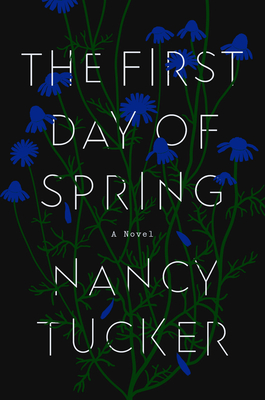
The First Day of Spring – Nancy Tucker

The opening line Nancy Tucker’s debut The First Day of Spring is a corker.

I killed a little boy today.

That’s eight-year-old Chrissie speaking. Yep – you heard that right; Chrissie is eight. She lives an impoverished life with her mother, but beyond being poor, her mother is emotionally distant and Chrissie is mostly left to fend for herself. Her clothes are never clean; she often wets the bed and there is never anything to eat at her house “even though the whole point of a kitchen was to have food in it.”

Chrissie survives because of free school dinners and by hanging around at her best friend Linda’s house at tea time, even though she is fairly certain Linda’s mother doesn’t really like her. In fact, no one seems to like Chrissie very much; she’s bossy, often kicks people who talk back to her, and brags and lies in equal measure.

After she kills the little boy, Chrissie has a “belly-fizzing feeling [like when she] remembered a delicious secret, like sherbet exploding in [her] guts.” Somehow the secret sustains her and provides opportunities for her to receive the attention she so desperately craves. Besides, Chrissie is fairly certain the little boy will come back from the dead: Jesus did and so does her father, who disappears and reappears at random intervals.

The novel also features an adult Chrissie, now going by the name Julia. She and her young daughter, Molly, live by a strict set of rules.

…back to the apartment at three forty-five, […] a snack at four, […] read the reading book at four-thirty, […] watched Blue Peter at five, […] had tea at five-thirty.

Julie’s life is structured because bad things happen “when [she] stopped concentrating.”

Julia has already had to move and change her name once because people are not kind when they find out who she is and what she has done. When she starts getting phone calls, she thinks her life is going to be upended again. And when Molly accidentally breaks her wrist, Julia is sure that the authorities are going to take her daughter away from her. That sends her on a journey back into her past.

The First Day of Spring is suspenseful, heart-breaking and hopeful, and I highly recommend it.

The Finishing School – Joanna Goodman

An invitation novelist Kersti Kuusk receives to attend the 100th anniversary of the boarding school she went to in Switzerland coincides with the news that one of her former classmates has died after a battle with cancer. In her last letter to Kersti, Lille reasserts that their mutual friend Cressida had not fallen by accident and that incriminating evidence to prove this might be found in the Helvetians ledger.

Canadian novelist Joanne Goodman’s novel The Finishing School toggles between the present, where Kersti and her husband Jay are struggling to conceive and Kersti is also out of ideas for her next novel, and the past, where Kersti’s time at the Lycee International Suisse is unspooled.

Born to Estonian immigrants, Kersti is the youngest of four sisters. The honour of attending the Lycee had fallen to Kersti because “her sisters didn’t have the grades to earn the Legacy Scholarship,” but Kersti also suspected that “her parents are sending her away because they’re exhausted.”

Kersti’s new roommate is the beyond beautiful Cressida.

…she’s far from ordinary. She has a beautiful, unruly mane of hair, spiraling out in all directions. Her head is just slightly to big for her slender body, but she’s dazzling, with pale green eyes, exquisitely long lashes, and a prominent, arched brow […] all of it together a masterpiece of teenage magnificence.

Kersti spends the next few years of high school loving and loathing Cressida in equal measure. Cressida can be a lot, but she is also fiercely loyal and generous and her friendship affords Kersti a life she would never have had access to otherwise.

We learn early on that Cressida had fallen from the balcony of her dorm room, and Lille’s letter many years later dredges up all those old memories. When Jay suggests that there might be a new novel in this story, it is both a distraction from Kersti’s failed attempts to get pregnant (which is causing a lot of strife in her otherwise happy marriage) and also sends her down a rabbit hole in an attempt to figure out what really did happen almost 20 years ago.

The Finishing School is a real page turner and also a book about friendship, motherhood and loyalty. I could barely put it down.

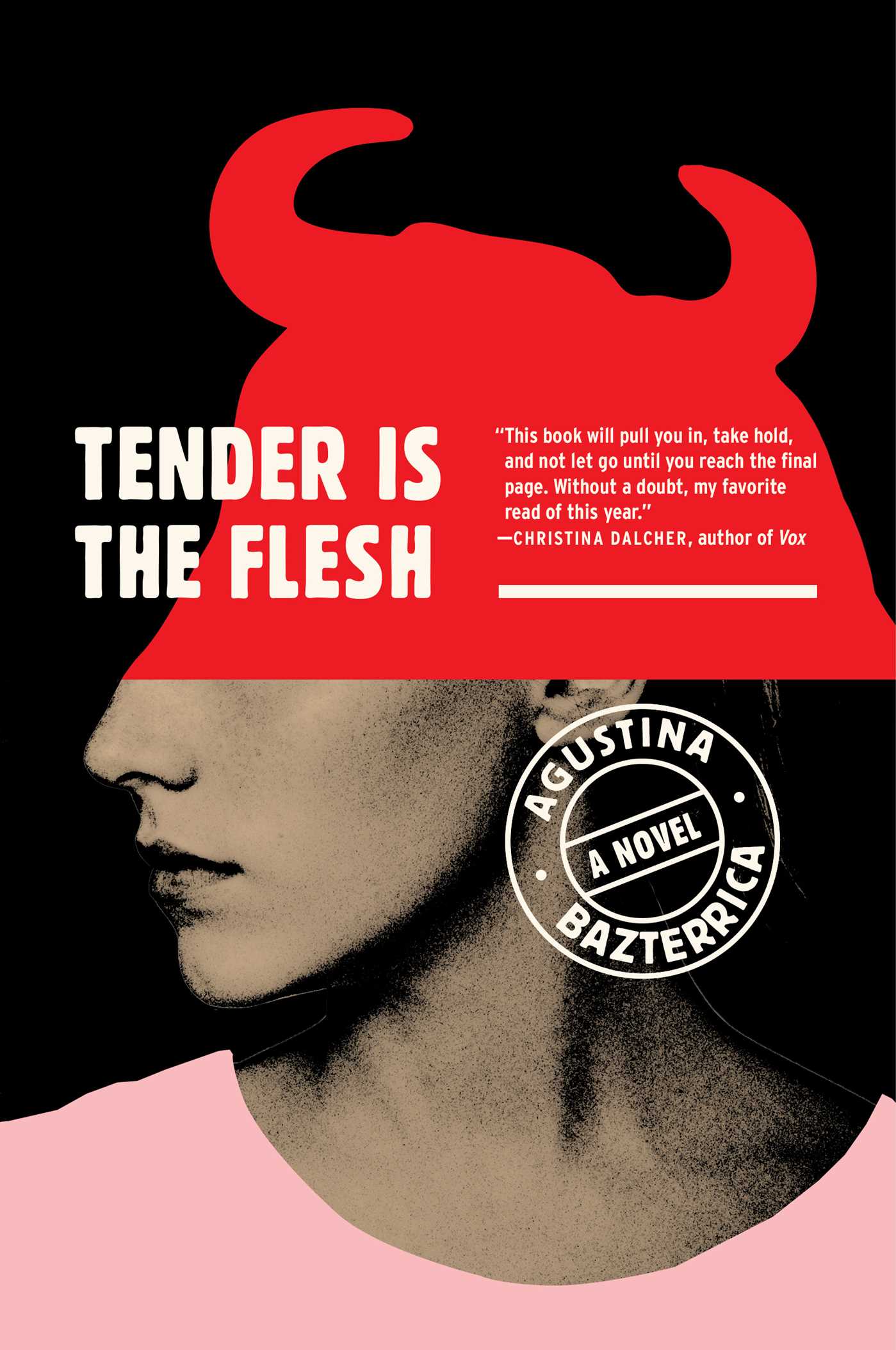
Tender is the Flesh – Augustina Bazterrica

I mean, there are dystopian novels and then there’s Tender is the Flesh.

Marcos Tejo’s life has fallen apart. His father has dementia and is existing in assisted living. His wife has had an emotional breakdown and has left to stay with her mother after the death of their infant son. Oh, yeah, and a deadly virus – well, that’s what the government claims anyway – has made it impossible to eat animals, so everyone now eats humans. That, of course, helps with population growth too, so it’s a win win.

People are specially bred as meat and Marcos works at one of the country’s best slaughterhouses.

No one can call them human because that would mean giving them an identity. They call them product, or meat, or food. Except for him; he would prefer not to have to call them by any name.

Bazterrica’s book is all kinds of ick. In scene after scene, we are treated to graphic descriptions of how this “special meat” is treated. And trust me when I say, it’s not good. It will be impossible not to imagine how the animals we eat every day are treated, and if there ever was a case for veganism, this book would be it. But, according to the scientists in Tender is the Flesh,

animal protein [is] necessary to live [and] doctors confirmed that plant protein didn’t contain all the essential amino acids, [and] experts assured that methane emissions from cattle had been reduced but malnutrition was on the rise, [and] magazines published articles on the dark side of vegetables.

When Marcos is gifted an F.G.P. (First Generation Pure) “head” to consume, his ambivalent feelings – which he mostly keeps buried – come to the surface. Once he cleans her up and discovers she’s beautiful he moves her from the barn to the house and one thing leads to another. The head can’t talk, of course; their vocal chords are removed – the killing is less noisy that way – so I guess their relationship is based on a needs must basis.

I mean, sure, I guess Tender is the Flesh has stuff to say, but Marcos is a hard character to warm up to. And you have to wade through a bucket of entrails and other gruesome stuff to get there. You’d kind of hope that Marcos would have some sort of epiphany or something, but this book is bleak start to finish.

And also. Yuck.