Small Things Like These – Claire Keegan

Irish writer Claire Keegan seems to be having a moment these days, at least in the bookish circles in which I travel. Her novella Small Things Like These was shortlisted for the 2022 Rathbones Folio Prize, awarded for the finest work of literature published in English, and it won several other awards including the Kerry Group Irish Novel of the Year.

At just over 100 pages, the story follows Bill Furlong, “the coal and timber merchant” as he goes about his daily rounds in New Ross. It is 1985, in the weeks leading up to Christmas, and Bill, married father of five daughters, is in an introspective mood. He is aware of his humble beginnings: “Furlong had come from nothing” and he is also aware of his relative success – he owns his business and is able to provide for his family and he feels “a deep, private joy that these children were his own.” He is aware that in some ways he is an outsider: his mother was an unwed teen and he grew up in a large house under the care of his mother’s employer, Mrs. Wilson, a widowed Protestant. He doesn’t know who his father is. He thinks about this sometimes as he also considers the daily grind of life, but ultimately Furlong seems to be a glass half full sort of bloke.

Before long, he caught a hold of himself and concluded that nothing ever did happen again; to each was given days and chances which wouldn’t come back around. And wasn’t it sweet to be where you were and let it remind you of the past for once, despite the upset, instead of always looking on into the mechanics of the days and the trouble ahead, which might never come.

A delivery to the local convent shakes something loose in Furlong, though. He grapples with what makes someone good and how can one be truly good if they turn a blind eye.

Small Things Like These is a essentially about one good man’s defiant act. It is a quiet, beautiful novella.

The World More Full of Weeping – Robert J. Wiersema

worldCanadian writer Robert J. Wiersema packs a punch with his novella, The World More Full of Weeping. On the day before going to spend a week with his mother in the city, eleven-year-old Brian disappears in the woods behind his father’s house. Wiersema manages to capture both the frantic search, and Brian’s journey in the forest in 77 short pages.

Part of the novella’s success can be attributed to Wiersema’s split narrative. Beginning in present day, Brian shares breakfast with his father who explains to him that his mother will be picking him up at four. Brian clearly doesn’t want to go, but lacks the ability, it seems, to articulate his feelings. Instead, he tells his father, Jeff, that “Carly said you wouldn’t understand.”

Carly’s true identity is just one of the mysteries of The World More Full of Weeping. Who is  Carly? At first she just seems like a girl Brian meets in the woods. But after Brian goes missing  and Jeff calls over to his neighbour John’s to see if he’s seen him, the mention of her name causes John to encourage Jeff to call “Chuck Minette at the Search and Recuse…call him right now.”

Many years ago, Jeff also went missing in the woods only to turn up the next day. When men from the community come to help look for Brian, it’s clear everyone thinks his disappearance might be a case of “like father, like son,” with the same happy outcome.

While the search for Brian continues, we see him in the woods with Carly, who is always in the same thin dress despite the uncertain March weather, her cheeks “pink and rosy.” Carly knows secret places in the woods, places Brian has not ever seen.  She asks him if he wants to “see more hidden things” and promises she can show him “a whole hidden world in the forest.”

There are no concrete answers in The World More Full of Weeping. The only certainty is that when given the opportunity Jeff and Brian made different choices. Perhaps some readers will take comfort in Brian’s decision, but for me I can’t quite get the picture of Jeff on his knees, crying for what is lost,  out of my head.

A magical and profoundly moving story.

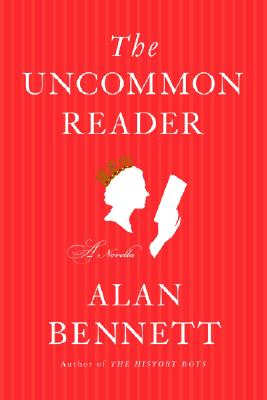
The Uncommon Reader – Alan Bennett

Imagine if the Queen had only discovered reading later in life? That’s the premise of Alan Bennett’s lovely novella, The Uncommon Reader. While taking her corgis for a walk, the Queen happens upon a mobile library parked near Buckingham Palace. Intrigued, she boards the bus and meets Mr. Hutchings, the library’s driver and  Norman, a young man who works in her kitchen.  She feels duty-bound to select a book, but when asked what kind of book she likes her response is, essentially, that she doesn’t know.

She’d never taken much interest in reading. She read, of course, as one did, but liking books was something she left to other people. It was a hobby  and it was in the nature of her job that she didn’t have hobbies.

The Queen casts about, looking for something to borrow and discovers a name she recognizes.

“Ivy Compton-Burnett! I can read that.’ She took the book out and gave it to Mr.  Hutchings to stamp.

“What a treat!” she hugged it unconvincingly before opening it. “Oh. The last time it was taken out was 1989.”

“She’s not a popular author, ma’am.”

“Why, I wonder? I made her a dame.”

The Uncommon Reader is full of laugh out loud moments like this one and is, in fact, an utterly charming book. The Queen, despite a rather rocky beginning, turns into a voracious reader. She promotes Norman from the kitchen to a new position, a sort of personal assistant, and that causes all sorts of problems with other staff members.

For a while nothing comes between the Queen and her books. Like all devoted readers, she’s never without one and dinner party conversations invariably turn to the topic of what people are reading. Instead of being told about the books of authors she  meets, the Queen now wants to read their work.

“But ma’am must have been briefed, surely?”

“Of course, ” said the Queen, “but briefing is not reading. In fact it is the antithesis of reading. Briefing is terse, factual and to the point. Reading is untidy, discursive and perpetually inviting. Briefing closes down a subject, reading opens it up.”

The Uncommon Reader is a love letter to reading.

“Books are not about passing the time,” she admonishes Sir Kevin. “They’re about other lives. Other worlds.”

The Queen proves to be, at the end of the day, just like the rest of us who couldn’t imagine a life without books.

25/365