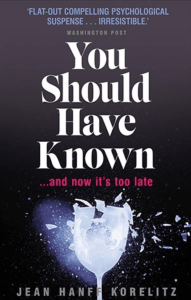
 Grace Sachs, the protagonist in Jean Hanff Korelitz’s compelling domestic thriller You Should Have Known, is an outspoken marriage counsellor who believes that women know from the very beginning if their partners are duds.
Over and over I’ve heard women describe their early interactions with their partner, and their early impressions of their partner. And listening to them, I continually thought: You knew right at the beginning. She knows he’s never going to stop looking at other women. She knows he can’t save money. She knows he’s contemptuous of her…But then she somehow lets herself unknow what she knows.
Grace’s tough talk is easy enough: she’s married to the perfect man, Jonathan, a pediatric oncologist and they have a twelve-year-old-son, Henry.
…she had chosen him, and now, as a result, she was having the right life, with the right husband, the right child, the right home, the right work.
Turns out, though, that all those rights actually make a wrong.
When the mother of one of the students at Henry’s school is murdered, the violent act opens up a fissure in Grace’s perfect life. First, her husband, who is away at a medical conference, stops answering her calls and texts. Then, she discovers his phone – not with him, but hidden in his bedside table. And then the police come knocking.
Grace’s life – it turns out – is a sham, and You Should Have Knownunravels like any good thriller, stringing the reader (and Grace) along. The whodunit part of the story isn’t actually what’s interesting about Hanff Korelitz’s narrative though. It’s that Grace, a therapist who tells her patients to trust their guts, didn’t trust hers.
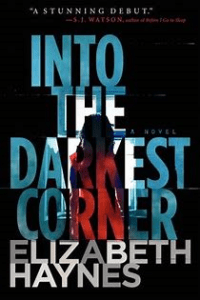 good ever comes from meeting some guy at a nightclub — especially a guy who seems too good to be true. But this meet cute is what sets Elizabeth Haynes’ crazy stalker story in motion. There are two narrative threads in Into the Darkest Corner. There’s the unraveling of Cathy and Lee’s romance (if you can call it that), and there’s Cathy’s subsequent escape from Lee’s clutches and her attempt to live her life.
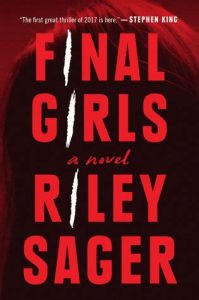 I didn’t realize that the term “final girls” actually referred to the last girl standing in a horror film. I chalk it up to not being a fan of stalker-type films; I can’t deal with the violence. According to
 Holy unreliable narrator, Batman! There seems to be a whole slew of books of this type post
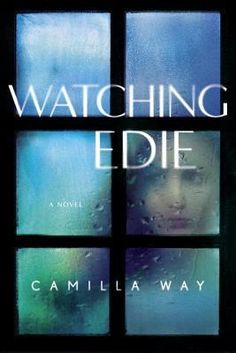 be amenable to reading more. Told by two characters Heather (who narrates ‘Before’) and Edie (who narrates ‘After’), Watching Edie is about the adolescent friendship between the two girls, their subsequent estrangement and what happens when Heather re-enters Edie’s life many years later.
 Beth is sort of a hippie. She and her ex-husband, Paul, had “run a business together buying and selling ginseng and specialty teas.” Paul, after leaving the marriage, has been a relatively absent father and his relationship with Beth is strained mostly because he has a new, much-younger girlfriend.
 Their lives intersect when Louise meets David at a bar and they share a ‘moment’ and then she discovers he’s her new boss and then she bumps into Adele (literally) in the street. Louise is charmed by Adele who seems wholly glamorous and somehow innocent. Adele takes Louise on as a project, encouraging her to quit smoking and join the gym. Soon the women are sharing a close friendship which is complicated by the fact that Louise is in love with David and pretty soon the two have moved from the ‘moment’ to a full-on relationship.
 I have been in a bit of a reading slump this year – which seems like a ridiculous thing to say considering we are only two months in. The first couple of books I read at the start of 2017 were lackluster at best, and I just haven’t been able to find my reading groove. Peter Swanson’s The Kind Worth Killing may have actually changed all that.
 Paul Tremblay’s novel A Head Full of Ghosts has been sucking up all the oxygen on the Internet for the past few weeks and even Stephen King said that it scared the “living hell” out of him. As you might imagine, that’s probably pretty hard to do and therefore high praise.
 y in the summer when I just want to give my brain a break from school. Publishers always want to draw comparisons to

