The Death of Jayson Porter – Jaime Adoff

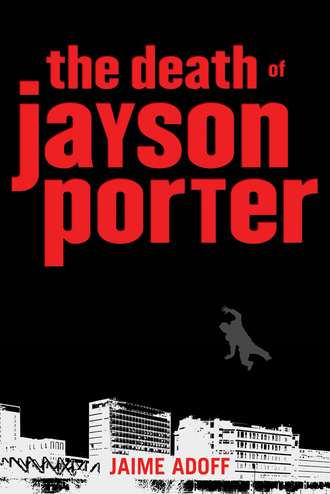
The Death of Jayson Porteris a book that took me way outside of my comfort zone. I don’t mean my reading comfort zone, I mean my human comfort zone. This is a YA novel that packs a significant punch.

Sixteen-year-old Jayson lives with his drug and alcohol addicted mother, Lizzie, in a high rise slum called Sunny Gardens in Bandon, Florida.

Sunny Gardens. The last stop for single moms and their messed-up kids. The last stop before the streets. Sunny Gardens, where the elevators are always broke – but not as broke as the people living here. Where crack is bought and sold like they trade stocks on Wall Street. Shootin’ with needles and guns while I’m tryin’ to do my homework. Babies cryin’ ’cause they hungry.

Jayson takes the reader through hot, hopeless days while he tries to balance school, work and a mother who abuses him physically and emotionally. His father is long gone, although Jayson does visit him a couple times.His life is complicated further by the fact that his mother is white and his father is black, so he isn’t really a part of either world. Jayson is one of those kids you root for, but you also wonder how he’s ever going to survive.

He wonders, too.  In fact, he often contemplates jumping from the railing of his apartment building, imagines what it would be like to be “a bullet screaming to the ground.”

Here’s the bit that was out of my comfort zone. I don’t have any real experience with ‘project’ living. I don’t know any crack addicts or hookers. As a mother, I can’t imagine beating my kids the way Jayson’s mother beats him. And even though I understand that this is fiction, I also know that there are kids out there who live like this. So, the book touched a nerve.

Adoff captures Jayson’s fear and misery. The writing is immediate and unembellished, sometimes even reading like poetry.  There is very little in Jayson’s life that is joyful, but finally and thankfully, there is hope.

Encouraging reluctant readers

As a high school English teacher I believe one of my primary functions is to be a reading cheerleader. Yes, I have other classroom jobs, but the thing I am most passionate about is trying to turn my students on to the pleasures of reading (and writing). I often feel that we approach reading all wrong in the classroom. We read one book, dissect it, give students tests that ask them to recall stupid details and then get them to write an essay – often five paragraphs (don’t even get me started on that!) Where is the pleasure, the joy, then?

If a student is already an avid reader, they are probably more willing to tackle some of the decidedly dry texts found on the curriculum – which, I am shocked to report, are the SAME books I read in high school over 30 years ago! Now, I’m not saying we shouldn’t read books together and talk and write about them, but I’m not sure that if that’s the only reading students do they are going to walk out of high school with a passion for reading.

This is something I think about every day. I work hard to talk about books, read out loud to my students, give them chunks of time to read for pleasure – without any strings attached – and put books directly in their hands. Today in class we’re going to do ‘Book Speed Dating.” Sell your book in 90 seconds. I dunno, maybe it won’t work – but it will be fun to try.

Here are Seven Ways to Encourage Reluctant Readers

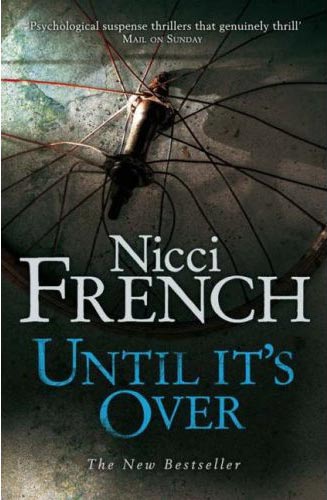
Until It’s Over – Nicci French

I can honestly say I’ve been a Nicci French (husband and wife team, Sean French and Nicci Gerrard) for over a decade, but I may have to quit them after reading Until It’s Over.

Astrid Bell is in her early 20s and works as a bike messenger in London. She lives in a huge house with university pals Pippa and her former boyfriend (and owner of the house) Miles. They share the space with Mick, Dario, Davy and Owen. They’re a family, in a sense.

Until It’s Over opens with an accident. Astrid is riding home from work and is almost at her house when someone opens their car door and Astrid goes flying off her bike. The woman in the car is a neighbour and she’s mortified at the accident she’s caused. Astrid is unhurt except for minor cuts and bruises. But later, the woman turns up dead. And hers is just the first murder connected to Astrid Bell.

Until It’s Over is supposed to be a mystery. About two thirds of the way through, though, the narration changes. Instead of following Astrid’s first person narration, we suddenly find ourselves in the killer’s head. I guess this was so we could understand their motivation. Um. The killer is Crazy.

Nicci French is usually such a dependable author –books that are page turning, psychologically complex and fun. Until It’s Over was none of those things. I didn’t believe in (or care about) any of the characters. It wasn’t suspenseful. I often felt myself shaking my head in disbelief at the way characters interacted each other in a sort of oh please way.

I think if you’ve never read Nicci French – you absolutely should. But don’t read this. Read Killing Me Softly (which remains my favourite) or The Safe House.

Blogs I love @SavidgeReads

Savidge Reads

Simon is one of the most prolific readers and writers I’ve met in the blog world. His site is chock-a-block with reviews and bookishbits. He writes “Savidge Reads to stop boring everyone he meets who may not be a book addict with tales, fact and reviews of books he has read, wants to read or you must read.”

Simon’s blog is a great place to connect to the book world, particularly in the UK, and he has has fingers in a lot of book pies. If you are new to book blogs – Savidge Reads is a great place to start.


Books are like a relationship; sometimes you have to end it.

By now you’ve probably all figured out that I own more books than I’ll ever be able to read – unless I live to be 100 with my eyesight and brain intact. Of course, I don’t care that I have too many books. Seriously, I don’t. And I no longer have any real angst over putting aside books that I don’t like. I give them a fair shake and then, well, I send them to The Book Graveyard.

Books are like a relationship.

I am superficial. I am attracted to the pretty. (Don’t judge me.) I like a nice cover and a good blurb. I like a book that sucks me in from the opening lines and holds me by the throat until the final pages. Okay, wait a minute, that sounds a bit like I am attracted to psychopaths.

Some books demand a little more from you. They aren’t superficial; they want a relationship with you. And they make you work for it. Often times I start a book and, for whatever reason, I just don’t get into them.  The Book Thief springs to mind. I also set aside The Knife of Never Letting Go because after the first couple of lines, which I loved, I just wasn’t feeling it.  I returned to both of those books after a short hiatus and as many of you know,  I have raved about them incessantly. Other books challenge you from the start and keep challenging you until the final page is turned. I think of A.S. Byatt’s Possession.

So, what is it then? Why are some books hard work, but worth the effort, while others are not? Why do books that don’t grab you one day, seem un-put-down-able a few days later? Why are some books re-readable year after year?

Here is a list of reasons I will break up with my book.

1. Style over substance. Okay, like I said, I am attracted to the pretty. But I am also more – how should I say this – seasoned. I am less enthralled by a beautifully written book with nothing to say. It doesn’t take long for  the pretty to wear off.  I’ll compare it to being at the bar. Across the room you see this gorgeous guy. You make eye contact. Then you realize he isn’t actually looking at you; he’s looking at his reflection in the mirror behind you. A book that works so hard to be literary, to impress, but is really just naval gazing loses my interest pretty fast.

2. Unbelievable characters. I don’t have to like the characters, but I do have to believe in them. Even if the author has chosen to put them in crazy situations, I want to share their journey.  I can’t travel with characters who fail to earn my respect or admiration or sympathy. So, I’m back at the bar. Handsome guy across the room. Eye contact made. You move towards each other. He buys you a drink. Then he starts talking and after about five minutes you realize he’s as dumb/self-involved/humourless/dull… as a pet fence.  You stop listening to him because you stop caring about him. Characters like that.

3. S-L-O-W/tooquick  plot. Not every novel is driven by plot. Some stories don’t depend on what happens as much as to whom it happens. I don’t have a preference. Pacing is everything. Back at the bar, you’ve consumed your drink(s); there’s potential. And then he sticks his tongue down your throat. Whoa, buddy, didn’t see that coming! Timing is everything. If you are building suspense, build it. If your characters are going to do the horizontal mambo, let them take their time; but if nothing happens for page after page after freakin’ page while the author describes cutlery and grass clippings, sorry, it’s over. Or, if without any character development or too much exposition the book lands me in an unreasonable place, we’re through.

4. Bad writing. Come on. Who is going to slog through a poorly written book? Not me. Not anymore. It’s amazing to me that these things get published! I mean, Twilight, okay. New Moon. Seriously!? And two more after that? Yikes. Books like that come with buzz – like your handsome friend at the bar. Until he opens his mouth and, dude, you need some breath mints or something.

I might give a book a second chance. I have, too, because sometimes I’m not on my game. Or – my bar friend is  all that and a bag of chips, but I’m just not in the mood. Other books have languished on my shelves for years and years because I have it in my head that I should read them: William Trevor’s The Story of Lucy Gault, which I have attempted more than once and never get past page 50; 0r Stephen King’s The Stand, which always flummoxes me with too many characters; or Jayne Anne Phillips’ Shelter, which I’ve owned for 20 years, tried to read on several occasions and still can’t get into. I just can’t seem to quit those books. Yet. They’re like that guy at the bar – not so flashy, kind of awkward, tries too hard – but you keep giving them another chance to impress you.

The perfect book is like the perfect relationship. All the stars align. You’re ready for each other and you come together with realistic expectations which are perfectly met. Sure, there might be rough patches, but you work through them. And when you finish that final page, you take that book with you in your heart. Like a good partner. Okay – maybe even better.


Should we repurpose books, with thanks to @rielnason

Riel Nason, author of the terrific novel The Town That Drowned, tweeted this morning about some book purses she found on Etsy. Riel, who is very crafty herself (check out her beautiful quilts) wondered how she felt about books being turned into purses.  Novel Creations takes hardcover books and repurposes them into pretty little handbags.

I actually have a book purse. Years ago I came across them at a craft sale. I think I paid $12 for mine.

A quick Google search yielded some great (or, okay, strange) ideas for repurposing your old books.

9 Ways to Turn Old Musty Books Into Something Cool

5 DIY Crafts for Used Books

Cool Non-Literary Uses for Books

80 Awesome Ideas For All Your Old or Unwanted Books

And this Pinterest page offers New Uses for Old Books

I’m not crafty – but some of these ideas are sort of cool. What do you do with old books?