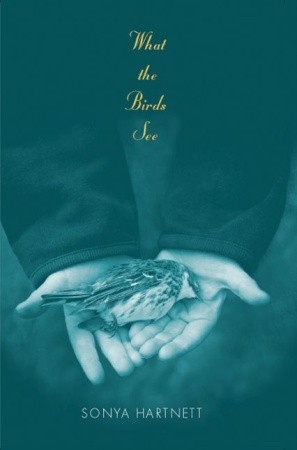
What the Birds See – Sonya Hartnett

Sonya Hartnett’s novel What the Birds See begins with a nod to a real-life mystery. In 1966, siblings Jane, Arnna and Grant Beaumont went to the beach and disappeared without a trace. In Hartnett’s novel, the Metford siblings are heading to the shop for some ice cream. “The route they’d take to the shop would bend around four corners: two right turns, two left.” They never make it to their destination.

In the background of this disappearance, nine-year-old Adrian lives with his grandmother, Beattie, and his uncle Rory. His is a lonely existence. He has ended up here because his mother Sookie can no longer care for him and his father wanted to be free. Beattie is annoyed by her grandson and loves him, although she doesn’t know how to demonstrate that love. Rory, 25, barely comes out of his bedroom. Two years ago, Rory had been in a car accident that had caused much harm and he “had given up much of his vitality […]He has no desire, now, to truly live–none to participate, none to appreciate.”

Adrian is anxious. He “worries about all sorts of things.” The disappearance of the Metfords just gets added to his list of worries: quicksand, his closest door ajar, spontaneous combustion, tidal waves, sea monsters, being locked inside a shopping center, that his grandmother will forget to collect him from school at the end of the day.

Hartnett’s book is about lost children. The Metfords literally disappear; Adrian is lost in a world of adults who pay little attention to him. When siblings move into the house across the road, they are lost children too. Coincidentally, these newcomers are two girls and one boy, similar ages to the Metfords. Their sudden appearance serves as a reminder of the missing children.

All Adrian wants is “a calm and rosy world; he is prepared to accept anything, if anything is what keeps the peace.” The road to adulthood is tricky, littered with landmines and in this version of childhood almost impossible to navigate successfully.

Heartbreaking and highly recommended.
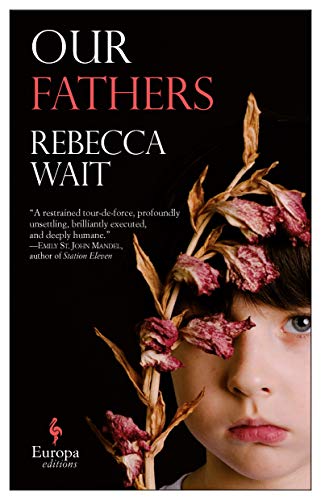
Our Fathers – Rebecca Wait

I knew from the opening line that I was going to love Rebecca Wait’s novel Our Fathers.

If she had survived, Katrina would have said what people always say: that it had been a day like any other.

Set on the remote Scottish island, Litta, Our Fathers tells the story of Tommy, who has returned home after 20 years to confront the trauma of his past. He arrives on his uncle’s doorstep and the two men settle into an uneasy routine. What happened on the island all those years ago belongs to Malcolm, too.

One day, seemingly out of the blue, Tom’s father, John –this is not a spoiler as it’s mentioned in the blurb–shot his mother, older brother, Nicky, baby sister, Beth and then himself. Tommy hid and was spared. John was Malcolm’s brother. Tommy was eight. Obviously, this horrific crime sent a shock wave through the small close-knit community and Tommy arriving back as an adult stirs things up again.

Both Tom and Malcolm have a difficult time talking. That was always Malcolm’s wife Heather’s domain, but she died six years ago. Now in his early sixties, Malcolm has grown used to his solitary life on the island. With Tom’s unexpected arrival, Malcolm is “so shocked that for a few moments he couldn’t even speak.”

Why has Tommy returned now?

By all accounts, John was a loving husband and a good father, but there is no way around what he did that fateful day. For all these years after, Malcolm has tried to grapple with his brother’s crime but

he knew as well as anyone what a strange darkness the past was, how we plucked pieces from it and refitted them to our own purposes. The past was a story we told ourselves.

We spend a lot of time with uncle and nephew as they tiptoe around their shared history, but it is not the only perspective we get. There is also a section where we meet Katrina, Tommy’s mother, before she ever meets John. It’s interesting to get this view of her, to see how her own upbringing (raised by a narcissistic mother) shaped her. Part of Tommy’s return to Litta, I think, has to do with learning a little about her. We also learn about how she met John and their relationship; we can see what people on Litta never did.

There is also a cast of interesting characters on Litta most especially Fiona, who reluctantly hosts a dinner party for Tommy. It is here that some of the cracks start to appear and, later, when we see that Fiona and Katrina had once been friends. Fiona has her own part to play in Tommy’s story. She muses

What do any of us do in the end except what we believe is right at the time, without having all of the information, without knowing how things will turn out? We leap into the darkness with our only protection our idea of what is right, and who can ask more of us than that? We do our best, Fiona thought. I have always done my best.

I loved this book. It is beautifully written – the landscape is wild and rugged. Tommy and Malcolm are taciturn and unable to say what they desperately need to say. Both men are incredibly sympathetic. There is an element of suspense, although that’s not necessarily what drives the plot. It’s a masterful look at memory, guilt, love and family.

Highly recommended.

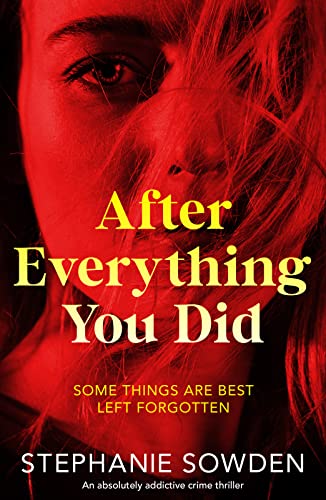
After Everything You Did – Stephanie Snowden

Reeta wakes up from a coma, handcuffed to a hospital bed. She doesn’t know how she got there; she doesn’t know her last name; she doesn’t remember anything about where she came from. And she definitely doesn’t remember committing the horrific crimes for which she is accused.

Inside she felt hollow. No personality lingered, no feeling of happiness or stress or calm or anger filled the void. She felt only weakness. She tried to access the feeling of hate or fury that would surely drive someone to do these things, but she couldn’t. She couldn’t find a malevolent fascination with the macabre, or a perverted desire for blood and gore. She rooted deep into her absent character and could come up with nothing but empty space.

Reeta is accused of murdering two young women who look like her and there are two more missing girls. The FBI know for a fact that it’s her, even though these days the evidence against her might be considered circumstantial at best. But it’s 1966, not 2026. Desperate to figure out who she is, Reeta reaches out to Washington Post reporter Carol Joyce hoping the reporter will help. All Reeta has to go on is the photograph Agent Willow gave to her. Reeta knows the man in the photo is her father.

Carol knows the man in the photo is connected to Pine Ranch, a plantation house turn religious homestead aka cult, led by the charismatic Jeb. But information about Jeb and the cult is meted out at a snail’s pace (and too bad because that was the most interesting part of this story).

I was hoping After Everything You Did was going to be a quick page turner, but it wasn’t. No quick internet searches available to speed things along, sadly. No forensics to clear up any lingering confusion. At 350 pages, it just took a dog’s age to get anywhere and when the twist finally came (and judging from the reaction on Goodreads, it was a shocker to lots of readers), I found myself just sort of weary from all the times characters swallowed thickly.

Just okay for me.

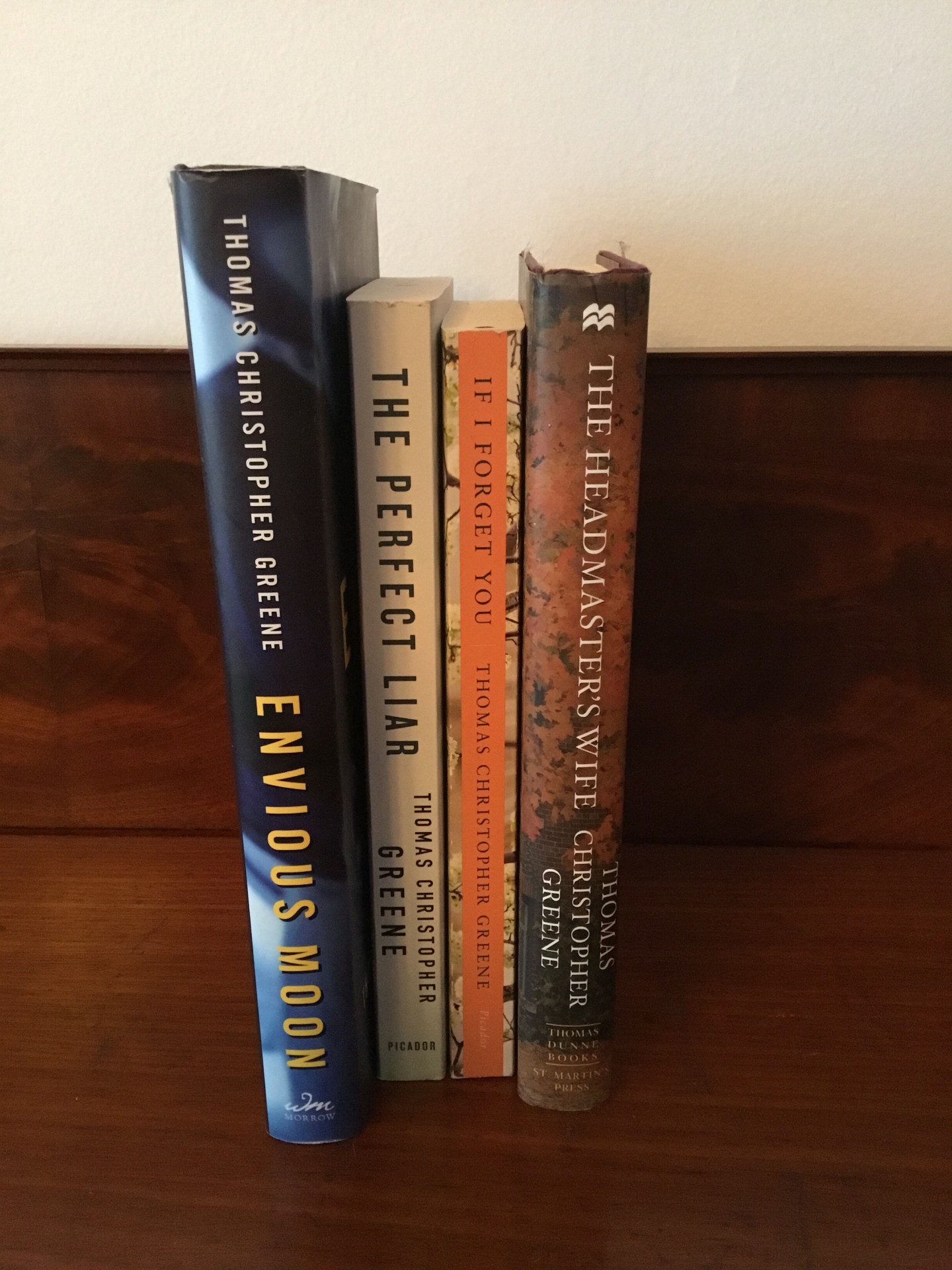
Auto Buy Authors: Thomas Christopher Greene

I decided last month to take a look at my auto buy authors. You know the ones, your ride or die authors whose books you know will deliver. If you want to look at my criteria and read about my first auto buy author, Thomas H. Cook, you can visit that post here.

This month’s auto buy author is another Thomas: Thomas Christopher Greene.

Thomas Christopher Greene is an American writer and co-founder and past president of the Vermont College of Fine Arts. He’s the author of seven books, of which I have read four. There’s a great interview with him here.

My first experience with Greene was back in 2011 when I read his novel Envious Moon. About that book I said: “Love is the one emotion that drives people, especially young people, to reckless behaviour. Greene’s novel captures that love-fueled momentum and propels Anthony, Hannah and the reader on a journey that is both heart-felt and heart-breaking.”

Like I said in my review, I am a sucker for star-crossed lovers or any book that taps into angsty longing and Envious Moon had that in spades, so of course I was going to seek out more books by this author.

Here’s what I’ve read:

The Headmaster’s Wife: One of the delights of this books (if you can actually call a novel about grief ‘delightful’) is letting the pieces of this puzzle click together in their own time. This is a book that sort of reads like a mystery, but isn’t that what life is at the end of the day? An unfathomable mystery. I read it in one sitting.

The Perfect Liar: Max W. and Susannah meet at a fancy art party in New York City. They are drawn to each other almost immediately and soon after, they are married. Now they live in Vermont where Max has taken a job as a lecturer at a small liberal arts college. One morning, while Max is away giving a lecture at an art institute in Chicago, Susannah discovers a note pinned to their front door: I KNOW WHO YOU ARE. Couldn’t put it down.

If I Forget You: The novel opens in 2012. Henry, a poet and lecturer at NYU, sees Margot – for the first time in 20 years – on the street in Manhattan. When their eyes meet, “the face Henry sees travels to him from a lifetime ago.” Instead of speaking to him, though, she runs away. It is from this point that their story unspools – toggling between their college days and this point in the present. Lives lived and all that.

Greene seems to walk that line that I love so much between page turner and literature, often with a heaping helping of angst thrown in.

I still have some Greene books to look forward to: Mirror Lake, After the Rain, I’ll Never be Long Gone, and Notes from the Porch: Tiny True Stories to Make You Feel Better About the World. I can’t wait to track these books down.

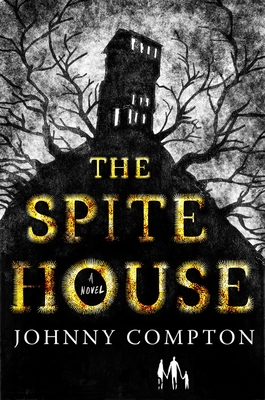
The Spite House – Johnny Compton

Eric and his daughters, Dess and Stacy, are on the run. From who? From what? You have to be patient to find out the why in Johnny Compton’s novel The Spite House. They can’t ever seem to get ahead, though, because Eric has to take jobs that keep them off the grid. Then he finds an ad for a job that “promised “high six figures at minimum upon completion of the assignment, with a much larger upside for the qualifying candidate.”” I mean, if something seems too good to be true, it probably is, right?

But Eric is desperate, so he lands an interview with Eunice Houghton, an old lady who owns a property in Degener, Texas. She needs a caretaker for the Masson House aka the spite house, which Eric explains to his daughters is “A place built just to make someone upset or show the world how pissed you are.”

The spite house is haunted. Eunice has had several rounds of paranormal investigators there. The last ones, Max and Jane Renner, well, let’s just say, it didn’t end well. Basically, all she is asking is that Eric stay there and keep track of any not-of-this-world activity. If it’s too much for Dess and Stacy, they are welcome to stay in Eunice’s mansion. What can possibly go wrong?

Well, of course, lots of things can and do, but for me it wasn’t scary. The ghosts haunting Masson House are vengeful. It seems, at least Eunice thinks, they are looking for payback for something Eunice’s great-great grandfather did back in the day. The land is cursed. Peter Masson, the man who built the house, is also cursed. But there are children in the house, too. How are they connected?

It takes a long time for things to be revealed in this book and it’s pretty much all exposition. Eunice telling Eric the family history; Millie, a local writer, filling in the blanks. There are lots of perspectives in this novel, perhaps too many. It ends up feeling pretty repetitive and it definitely wasn’t a page-turner. More time in the house and perhaps a tighter plot (there are a lot of side stories that just didn’t add to the story overall, and weren’t fully explored — the children in the Masson House, for example) might have helped move things along.

I guess this was Compton’s debut, and it shows promise, for sure. But it was just okay for me.

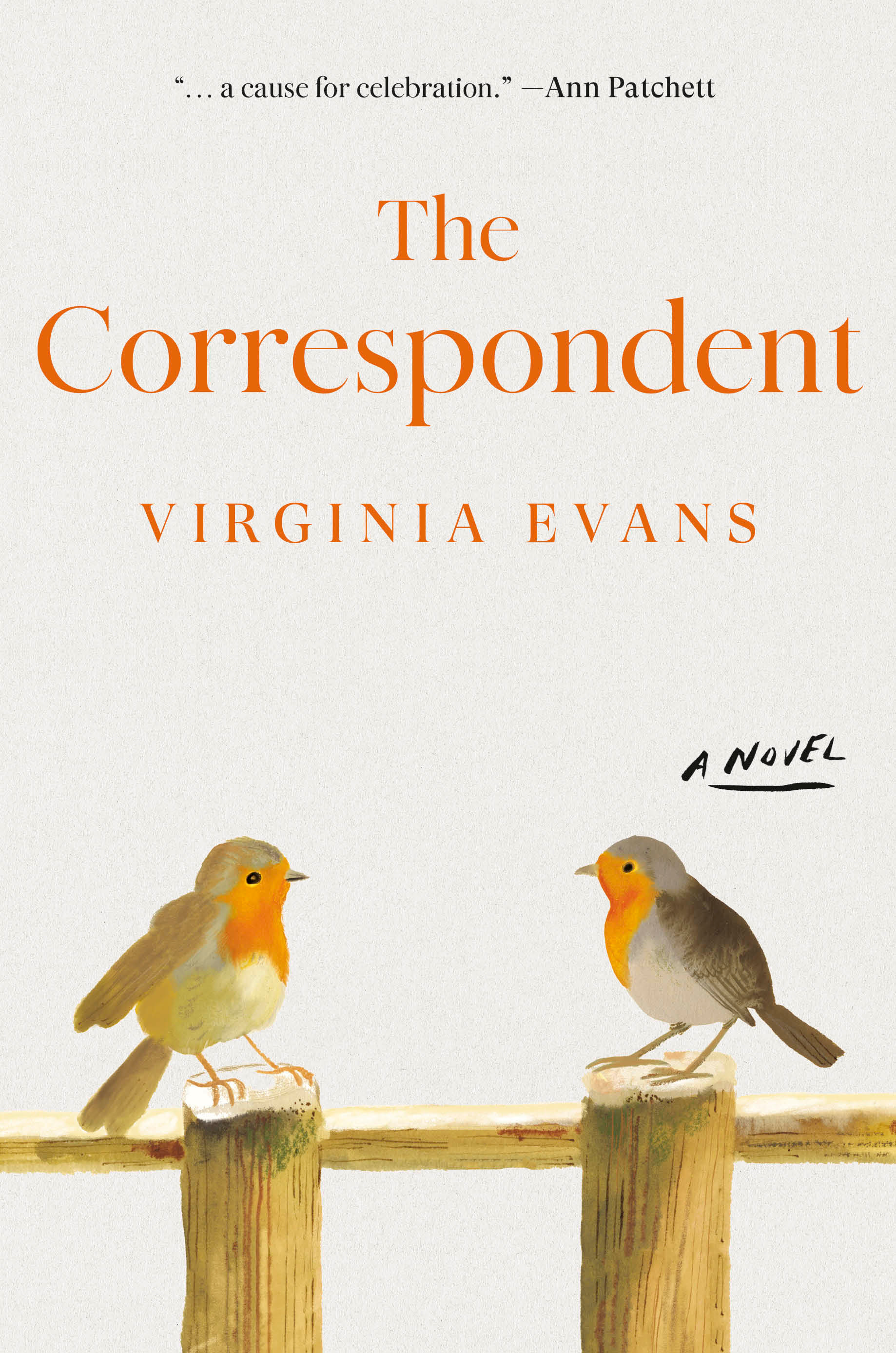
The Correspondent – Virginia Evans

I have been a letter writer my whole life. Perhaps part of it had to do with how much we moved around (and, no, my father was not in the military), but I always wrote letters. For a while in my early teens I had a whole load of pen pals, people you’d meet via ads in teen magazines or through school. One of my oldest pen pals I have known for 52 years. We don’t write letters anymore, which I miss. (Now it’s just the odd message via the internet, which is a poor substitute.) I do not have every letter I have ever received –sadly too many moves– but I do have a handful of special letters. Recently I met an old boyfriend at his father’s funeral and he told me he had saved some of my letters to him…from almost 40 years ago and when I asked if I could have them, he obliged and sent them my way. Talk about an embarrassing blast from the past

So, you see, I was predisposed to love Virginia Evans’s debut The Correspondent and I did.

Sybil Van Antwerp “is a mother and grandmother, divorced from a distinguished career in law” but it is “the correspondence that is her manner of living.”

This is the only exposition we get in the novel, the rest is Sybil’s correspondence with a variety of people including authors (Joan Didion and Ann Patchett); her adult children (Fiona and Bruce); her best friend, Rosalie; her beloved brother, Felix, and Harry, the young son of a former colleague. There is also one letter, never sent, to someone called Colt.

Some of the letters in the novel are from Sybil to the recipient and some letters are to Sybil, but we are able to piece together a variety of different “plots” based on these letters. For example, we know that Sybil has a fraught relationship with her daughter and a close relationship with Felix. Both Sybil and Felix were adopted. At least one of her correspondents seems to hold a grudge:

I imagine you reading my notes standing at the mailbox, heat growing on your neck and the sick feeling in your stomach. […] I hope you have to look twice, and that little fear keeps you from enjoying the life you have left, in the same way that you impeded me.

It is through Sybil’s correspondence that we learn about a tragedy in her past, her disintegrating marriage (30 years prior, because Sybil is now in her 70s), her stubbornness, her kindness, and her desire to make things right when she can. She is a fully realized character without ever saying a word. As Sybil says in one letter: “my letters have been far more meaningful to me than anything I did with the law. The letters are the mainstay of my life”.

er correspondence (both sent and received) is funny, nostalgic, heartbreaking, and mundane, and it accurately captures the minutia of daily life. Just when Sybil thinks there can be no surprises left for her, she discovers that’s not quite true.

I loved every single thing about this book. An easy five stars, no notes, highly recommended.