
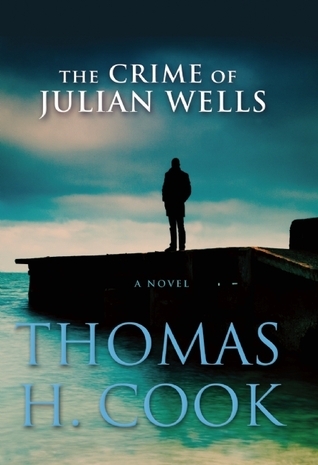
Of the Thomas H. Cook novels I have read, this one probably sits close to the bottom in terms of how much I enjoyed it. But a book by Cook, even a lower tier book, is still worth the read, imho.
Philip Anders’s best friend Julian Wells has killed himself. He rowed himself out into the pond “Far enough that he will appear small and indistinct in the distance so that his sister cannot tell what he is doing, nor get to him before he can complete the task.”
Julian’s death just doesn’t make any sense to Philip and he is determined to figure out what would have driven him to do it. That means he will have to revisit the past.
Julian wrote true crime stories and was quite successful at it. He’d written about serial killers and war crimes and cases of injustice all around the world. Julian once once wrote that “There is no more haunting story than that of an unsolved crime.” All his books were meticulously researched and
As a result of that research, there’d always been considerable sweep to Julian’s work, as his friendlier reviewers had sometimes pointed out. No crime floated freely. It was always part of a larger disorder, one fiber sprung from a hideous cloth.
Philip’s curiosity leads him from Argentina to France to England as he tries to figure out what his friend was up to. Ultimately, he think’s Julian’s death had to do with the disappearance of a young guide they’d met years before while visiting Buenos Aires. It had never occurred to Philip that Julian might have had some part to play in Marisol’s disappearance; he only knew that his friend had been keen to find her after she’d gone missing.
The story of what happened to Marisol is central to The Crime of Julian Wells, but Cook takes his time unspooling the details. That’s his way and I have always happily gone along with him because I knew there’d be some sort of twist in the gut surprise at the end. Not so much with this one, but no matter. As always, the book is well-written and mines the rich depths of friendship, morality, and family. And for a little extra verisimilitude, the crimes mentioned in the novel are all based on real events.

