Unknown's avatar

About Christie

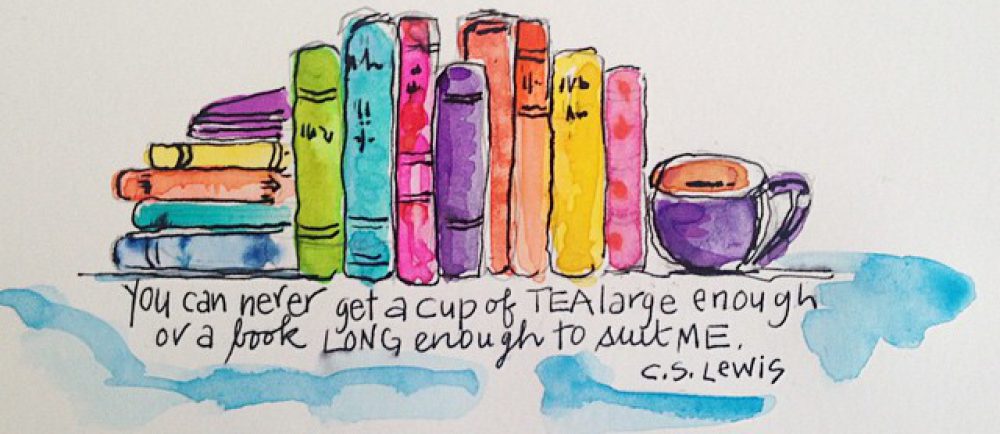
Book lover. Tea Drinker. Teacher. Writer. Mother. Canadian.

The Adoration of Jenna Fox by Mary E. Pearson

Well, we’re back with another mother/daughter review.  This time we’re going to talk about The Adoration of Jenna Fox. It tells the story of a young girl, Jenna, who wakes up after having been in a coma for a year. Her parents tell her she’s been in a terrible car accident and it’s taken this long to recover.  The thing is, Jenna doesn’t remember very much about her life before the accident.

There were all sorts of clues  about what this book was going to be about. I had it figured out pretty early on, but that doesn’t mean I didn’t enjoy the book. How quickly did you figure out Jenna’s story, Mallory?

Mallory: Well, I was pretty clueless at the start. I thought she was just a girl who’d woken up from a coma — and everything was normal. But near the middle of the story, I started to put things together and by the end, I’d already figured it out.

Christie: Pearson does an excellent job, though, of stringing the reader along. Under normal circumstances, waking up from a long coma would be disorienting. Jenna doesn’t even live in the same state as she had before the accident. Her friends aren’t there. Nothing is familiar. Strangely, her grandmother (who is living with them) is almost hostile. Plus, Jenna is also trying to cope with being a teenager and that’s all complicated by this 12 month hiatus from her own body.

Pearson does something else in this novel which seems to be popping up more regularly in fiction – she’s included some poetry which has been written by Jenna. What did you think of that, Mal?

Mallory: To be honest, I didn’t like the poetry. I’ve never been a massive fan of poetry and I didn’t really look forward to the regular poetry pieces that were scattered throughout the whole book. They were interesting, but I think the book could have done without it. All the pieces in the book were more or less the same. They were either about Jenna not remembering words or her being confused. It bored me; I’m sorry.

Christie: No need to be sorry. LOL

The Adoration of Jenna Fox reads like a mystery/thriller. You really race along trying to get at the novel’s center because even if you think you’ve figured Jenna’s story out, there are all sorts of little pieces that have to be fit together.

Mallory: Yeah, I agree. The whole book (like the cover art) is like a puzzle. You need to take all the little events and clues and piece them together. Some pieces may not fit, and then you have to start over. Because I have no patience at all for puzzles, I didn’t try to figure out the book at the start because I just ended up angry and frustrated. But everything makes perfect sense in the end.

Christie: I’m not sure how Mallory feels about this, but I liked how this book made me think about what makes us human. I liked the way it echoed  Kazuo Ishiguro’s Never Let Me Go, which is obviously a much more sophisticated novel, but Pearson’s book is a terrific book for its intended audience. I think it would be a great novel to teach. What was your overall feeling about it, Mal? Would you recommend it to your friends?

Mallory: Unfortunately, barely any of my friends care about reading, and they absolutely hate reading in class. But, if more of my friends read, I’d recommend this. I don’t know if this matters to you, Mom, but a huge part of a book– to me at least– is the characters. I need to fall completely in love with the characters and that makes the whole reading experience so much better. An example would be Meg Rosoff’s How I Live Now. I probably mention this book wayyy too much,  but I’m obsessed. The first time I read this book I felt like I was a sister to all the characters. I loved them all, and my heart was bursting out of me whenever they were in danger. This is how I want to feel about a book, and I honestly didn’t feel that for Jenna Fox. If I had, I would’ve liked the book a lot more, but during the read I didn’t really care what happened to her. This disappointed me because it wasn’t me who was making the decision to not care for Jenna; it was just the way Pearson developed her main character.  Rosoff took nearly half the book to develop all of her characters, and it took me three words to become attached to Daisy. I wish every book could be like How I Live Now, but overall this book was good. Not amazing. But good.

Christie: Wordy much? That’s my kid- talking about character. It makes the book nerd (and English teacher) in me  swoon with delight.

I guess I liked this book a little more than you because I could see it from a couple different points of view. I understood Jenna’s mom, for example, and her motivations. I understood the grandmother…and as I have a daughter who is minutes away from being a teenager, I sort of got that perspective, too. It’s a great book for discussion…but it’s hard to discuss without giving stuff away…and we don’t want to do that.

After Life by Rhian Ellis

After Life was a delight to read from beginning to end. The novel opens with the compelling line: “First I had to get his body into the boat.”   The narrator is Naomi Ash, a woman in her early 30s who lives in Train Line, a whole town owned by The Church of Spiritualist Studies in Upstate New York.

My first impression of the town was of clutter. Cars were parked nearly on the front steps, cats jumped from porch roofs and windowsills, hanging plants and wind chimes and mobiles dangled by every door. Winnie Sandox – said one painted wooden sign – Reader. And another: Mrs. Lawrence, Medium, is out. I couldn’t believe it: a town made just for us.

It really is a town for Naomi and her mother, Madame Galina, who is a medium.

After Ellis is Naomi’s story. It’s the story of her relationship with her mother, the story of her relationship with the quirky little town and its odd assortment of characters and her relationship with Peter.

It is also about Naomi’s relationship with the dead. Although she grew up helping her mother augment her readings with sounds and voices, Naomi doesn’t really believe in any of it or as she says: “I sort of believed. I pretended to. I enjoyed the attention I got when I worked message services and sat for seances , and sometimes I felt the thrill of connection, but part of me held back.”

When Naomi hears her first voice, everything changes.

After Life is a wonderful novel. Naomi is a terrific character: flawed and odd and vulnerable. The novel’s mystery – who is this ‘body’ she has to get in the boat and why – propels the story along at a thriller-like clip, but ultimately After Life is really about a woman trying to make her way in the world, which just happens to include a few ghosts.

Loved it.

Isolation by Travis Thrasher

Travis Thrasher’s novel Isolation is a sheep  in wolf’s clothing. It pretends to be one thing, but it’s actually something very different indeed.

Isolation tells the story of missionaries James and Stephanie Miller. They’ve recently returned home from Papua New Guinea with their two young children, Zach, 8 and Ashley, 5. Something traumatic happened in Papua New Guinea and Jim and Stephanie are feeling disillusioned and isolated – from each other and from their church.

Jim wants to take some time to recharge his spiritual battery and so he moves his family  to North Carolina, to an isolated lodge built by an eccentric millionaire. The house has secrets though and so, apparently, does Stephanie’s family history.

Now, if this had been a book about how this couple and family overcome obstacles to find their way back to their faith, that might have been one thing. But this is supposed to be a ‘horror’ novel. Thrasher even thanks scare-master Stephen King in his acknowledgments. I’m not saying the book doesn’t have a certain creep-factor. It does. But I think that this book is more about God and putting your faith him him. Evil in this book is the work of the devil and the ability to fight against it comes from a higher power.

I’m not religious. In my book club, I proudly wear the flag of heathen. Organized religion irritates me. Hopefully that will explain, in part, why I felt duped by Isolation.  Whole sections of the novel felt preachy to me, like when we learn about how Stephanie’s character came to be Christian.

The camp was run by Christians who were sincere and loving. They weren’t like the televangelists her parents mocked or the pious churchgoers in her neighbourhood who never even bothered to wave hello. They weren’t like the preachy kids at school who made others feel bad for not believing. These were simply loving, fun men and women who wanted to befriend the campers.

Oh, so there are different kinds of Christians, then.

Apparently, because the author takes great pains to describe Stephanie’s friend, Michelle’s “no-nonsense” qualities.

Why aren’t there women elders in the church, and why can’t they serve Communion, and what’s the big deal about having a beer every now and then, and why can’t Christians get off their high horse sometimes?

It’s stuff like this that made me feel as though Isolation‘s agenda was not actually to scare, but to instruct. Too bad because all the ingredients were there for a creepy little story…if only it hadn’t felt so much like a sermon.

Memory by Philippe Grimbert

Although Philippe Grimbert’s book,  Memory, claims to be a novel, the story has the ring of truth.

Although an only child, for many years I had a brother. Holiday friends and casual acquaintances had no option but to take my word for it. I had a brother. Stronger and better looking. An older brother, invisible and glorious.

Grimbert’s novel is the story of a family. The narrator, a sickly child of  athletic and beautiful parents whose “every muscle had been buffed and toned”, recounts the family’s history as it is told to him by, Louise,  a woman who runs a sort of homeopathic consulting business in two rooms in the same building as the narrator’s parents have their whole sportswear business.

It is clear from the beginning that the family is Jewish and that their story has been deeply affected by the Nazi’s.  It is Louise who unspools the narrative for the boy after he discovers  a toy dog in an attic filled with suitcases and furniture.

Memory is a scant 145 pages long, but it packs a punch as, I think, all personal stories about Hitler’s regime do.  It won numerous prizes and was a bestseller in France. Despite its claim of being fiction, it is impossible to deny its ring of authenticity and the knowledge that some (if not all) might have happened gives the book even more emotional heft.

The Little Friend by Donna Tartt

Almost 20 years ago I stumbled upon Donna Tartt’s fantastic novel The Secret History, a novel which has stayed with me all these years. Having recently finished her second novel (and I believe there was almost ten years between the two books), I now have an overwelming desire to re-read The Secret History to see if it’s as good as I remember. I wonder if I’ll be saying the same thing about The Little Friend in 20 years?

There’s no doubt, Tartt is a talented writer. The Little Friend is a gorgeous book, certainly a book to linger over. (It’s over 600 pages long.) It concerns 12 year old Harriet Dufresnes. On Mother’s Day, when Harriet is just an infant, her older brother, Robin, is found hanging from a tree in the yard. His murderer is never found. Harriet has decided that she will discover who has killed her brother because  while she is neither pretty or sweet, Harriet is smart.

The Little Friend is a densely-written, slow-moving novel. Set in Alexandria, Mississippi in the 1970s,  the novel evokes the period (without bothering to fuss with specific details) and sets a tone which it sustains throughout. Harriet is surrounded by a cast of eccentric characters including her grandmother, Edie and Edie’s unmarried sisters. Harriet’s mother, Charlotte, has never fully recovered from the loss of her son. Harriet’s father, Dix, has long since removed himself to Nashville. Harriet’s best friend, Hely, is her constant companion. Harriet’s family once had money, but they don’t any longer. They all have ‘negro’ help, though. The maid/cook/surrogate mother in Harriet’s household is Ida Rhew and Harriet loves her fiercely.

On the other side of town live the Ratliff’s: Farish, Eugene, Danny and Curtis. Farish runs a meth lab out of a trailer on the property. Eugene is a self-proclaimed preacher and Danny is addicted to the drug his brother produces. Curtis is Harriet’s age and a little on the slow side. Harriet decides that Danny is responsible for her brother’s death – something Ida told her reinforces her belief that Danny hated Robin. She and Hely set out to prove his guilt and exact their revenge.

The Little Friend isn’t really about Harriet’s quest to find a murderer, though. It is about Harriet on the cusp of adulthood; about that long, hot summer between innocence and experience. This is a novel about loss. Harriet has more to lose than she might have thought and what she learns about herself and others surely shapes the woman she will become.

This is a novel to savor. It evokes a time and place that is both familiar and exotic. I have to say, though,  that when the end came I didn’t feel all together rewarded for my time and effort. But maybe that’s exactly what it feels like to leave childhood behind.

The Financial Lives of Poets by Jess Walter

Here’s a book I never would have chosen for myself in a million years, but which actually turned out to be better than I thought it would. The Financial Lives of Poets follows one week in the life of a middle-aged guy named  Matt Prior. Matt lives somewhere in America with his wife, two young sons and senile father. Matt used to be a newspaper business writer, but he took a buy-out so he could start a website which would deliver financial advice through poetry. It’s no surprise that it flopped. A couple bad investments and the economy’s belly flop later and Matt (and his family) are in serious financial trouble.

The plot of The Financial Lives of the Poets really begins when Matt hits the 7-11 to buy a gallon of milk. He’s not sleeping much these days – his mind is in a constant state of chaos trying to figure out how he’ll pay the bank the $30,000 plus he’s missed in mortgage payments, how he’ll keep his two young sons in private Catholic school and how, most importantly, he’ll keep their dire situation from his wife, a woman he loves but is sure is having an Internet relationship with an old boyfriend. At the 7-11 he meets a couple of low-level thugs. He ends up getting stoned with them and before you know it, Matt’s selling hydroponic weed.

Despite its serious subject matter, The Financial Lives of Poets is often laugh-out-loud funny.

Should anyone doubt that our miserable time here on Earth is just a sad existential joke, here is the cruelest thing I can imagine describing: my father (who is obsessed with sex, like a lot of dementia sufferers) – at seventy-one years of age, frail, balding, with a paunch that looks like it should wear its own pair of jockey shorts –  recently had ten days of crazy sex with a twenty-one-year-old stripper with long smooth legs and two big round silicone funbags, and the poor son-of-a-bitch doesn’t remember a thing about it.

Despite the often comical narrative, Walter tackles some weighty issues: how do people cope with the failing health of their parents, (Matt’s desire for his father to have just one moment of lucidity is heartbreaking); how do you save a marriage, why are we so concerned with having more stuff The Financial Lives of Poets doesn’t necessarily offer solutions, but time spent with Matt as he works through his problems is time well-spent. Funny and intelligent.

The Last Night I Spent With You by Mayra Montero

The Last Night I Spent With You is a slim volume, only 115 pages. Translated from the Spanish, Montero’s novel tells the story of Celia and Fernando – a middle-aged couple on a cruise. Their only daughter has just been married and Fernando’s friend, Bermudez, has sagely offered this advice: “women lose their inhibitions on ships.”

Actually, it seems as though everyone does.

Both Fernando and Celia are trying to come to terms with suddenly being cut loose from the strings that tied them to their daughter and each other. Fernando, too, seems to be experiencing a bit of a midlife crisis: death is looming. As their ship sails and docks, Fernando falls into an affair with Julieta, a middle-aged passenger.  For her part, Celia reminisces about an affair she’d had several years ago, when she’d been taking care of her ailing father.

Everything about this voyage is sexually charged in a way, one gathers, things haven’t been for several years between this married couple.

At last we were alone, it was true, after almost twenty-three years of winters and vacations, springs and birthdays, when Elena had been the axis of our lives. Elena growing up, becoming pretty, becoming taller than Celia, much more slender, infinitely more flirtatious. Our daughter Elena.

The Last Night I Spent With You is graphic and the writing is – despite it being a translation – good. The characters are selfish and often  behave inappropriately. It’s hard to say what they are searching for. It’s even harder to say whether, by the novel’s end, they’ve found it.

To the Power of Three by Laura Lippman

To the Power of Three was my first novel by Laura Lippman. It’s hard to know what to say about it because while I didn’t love it, I certainly appreciated its merits.

To the Power of Three tells the story of Kat, Perri and Josie, childhood best friends. One June morning, one of the three  brings a gun to school, shoots two of the girls (one fatally) and then herself. The novel then begins to unravel the story of what would have caused this horrible act of violence.

Lippman is an accomplished writer. In some ways, her work reminds me of Carol Goodman. Lippman’s characters were complicated and well drawn – even minor characters have interior lives, hopes and fears. We come to understand these three girls and share their bond through the years of their friendship, but we only come to understand what caused one of the girls to take such drastic measures at the novel’s conclusion.

For me, that was the novel’s weakness. The book’s over 400 pages long – too long, perhaps, for such a mediocre resolution. As a reader, we’ve invested a great deal in these characters (and their parents and peripheral friends) that it’s a let down to discover what actually happened on that fateful day – and why it happened. (After giving this more thought, I think the reason why the ending didn’t work for me is because it gives one of the characters a moral compass that – while not exactly coming out of nowhere – doesn’t seem earned either.)

To the Power of Three wasn’t a page-turner in the way that some mysteries are. Perhaps that balancing act is hard to achieve: literature and suspense; a well-written story that you speed through because you can’t bear not to know whodunit. For my money, no one manages that sort of book better than Thomas H. Cook. Still, Lippman’s skills are apparent and I’d certainly read her again. In fact, I have What the Dead Know waiting on my tbr shelf.

The Shadow of the Wind by Carlos Ruiz Zafon

This novel has been on my tbr list for a long time so I was thrilled when it was chosen as our book club pick.  Zafon’s  novel has been universally praised by famous writers (Stephen King called it “one gorgeous read”) critics  (Booklist said the book was “rich, lavish storytelling”) and everyone in my book club loved it. Except me. I didn’t hate the book; I enjoyed reading it.

Let me explain.

Ten-year-old Daniel, son of an antiquarian bookseller, is still suffering from the death of his mother – whose face he can no longer remember. His father decides to take him to The Cemetery of Forgotten Books, a labyrinth of passages and shelves – almost impossible to navigate.

This is a place of mystery, Daniel, a sanctuary. Every book, every volume you see here has a soul. The soul of the person who wrote it and of those who read it and lived and dreamed with it. Every time a book changes hands, every time someone runs his eyes down its pages, its spirit grows and strengthens.

Traditionally, when someone visits the Cemetery, he or she is allowed to choose one book and then they must promise to safeguard that book for all time. Daniel chooses The Shadow of the Wind by Julian Carax.

Daniel falls in love with the novel, a story about a man searching for his real father. He is so enchanted by the novel that he decides he must read everything by Carax and it is this quest that kick starts the novel.  Carax is something of a mystery himself and Daniel’s quest to learn more spans several years, introduces him a cast of broken and sinister characters and leads the reader on an adventure.

I think that’s what my problem was with this book.

I heard a regular customer say that few things leave a deeper mark on a reader than the first book that finds its way into his heart.

I think my expectations for the book and what the book was actually about didn’t actually jibe.  I had no trouble turning the pages, but ultimately The Shadow of the Wind was more of a stuffed-to-the-brim melodrama than a meditation on first books or even books in general.

As Daniel begins his quest to track down further Carax novels, a strange and somewhat threatening man offers to buy The Shadow of the Wind. Of course, this just redoubles Daniel’s efforts –  a quest that yields some surprises.

I guess, ultimately, my reservations about this book come from the hype. If I hadn’t heard so much, I might have been swept along. The writing is great (despite the fact that it’s a translation), the characters are sympathetic…but for me…the book was too long, and sometimes I felt that all the pieces just locked into place just a little too neatly. Daniel explained it best when he said:

the structure of the story began to remind me of one of those Russian dolls that contain innumerable ever-smaller dolls within.

Despite my own personal feelings, however, I would certainly encourage other readers to check this book out. It’s a lot of fun – the kind of book you can truly lose yourself in.

Bird by Bird by Anne Lamott

I’ve been a writer for as long as I can remember. At first I typed my stories on a little portable Brothers typewriter. I remember that it was blue and that you had to really hit the keys hard. When I graduated from high school, my parents gave me an electric typewriter that weighed at least 50 pounds. At the time it was state-of-the-art, honest.

I have always wanted to be a writer, a published writer and I guess I am. I’ve written and had things published and even been paid for what I’ve written.

Of course the writer’s carrot is the novel and I’ve been slogging away at one – never with the dedication and determination to actually finish it, of course, just enough to say that I’m writing one – for over a decade.

Anne Lamott’s book Bird by Bird speaks to writers who care more about the craft and less about the imagined glory. This is not a how-to book. It’s not a book filled with prompts and practical advice about how to write pithy dialogue or set the scene. Still, it’s a wonderful book.

The very first thing I tell me new students on the first day of a workshop is that good writing is about telling the truth.

Bird by Bird offers  “some instructions on writing and life.” It’s Lamott’s love letter to the written word – and she clearly does love them – the words, I mean.  It  is laugh – out – loud funny and tender, too.  Lamott navigates the writer’s world with a great deal of affection and a healthy dose of tough love. She’s honest about her jealousy when faced with the success of writers she believes to be less talented than she is;  she discusses the pitfalls of the blank page;  she talks about how to negotiate with your characters. But mostly she talks about why we write (and why we read). She says:

Writing and reading decrease our sense of isolation. They deepen and widen and expand our sense of life: they feed the soul.

Writing, says Lamott, is important work. Writers should write, not for the notoriety which they assume comes with publication (and Lamott tells some funny stories about the so-called status of the published author) but because they have to. They want to. They must.